
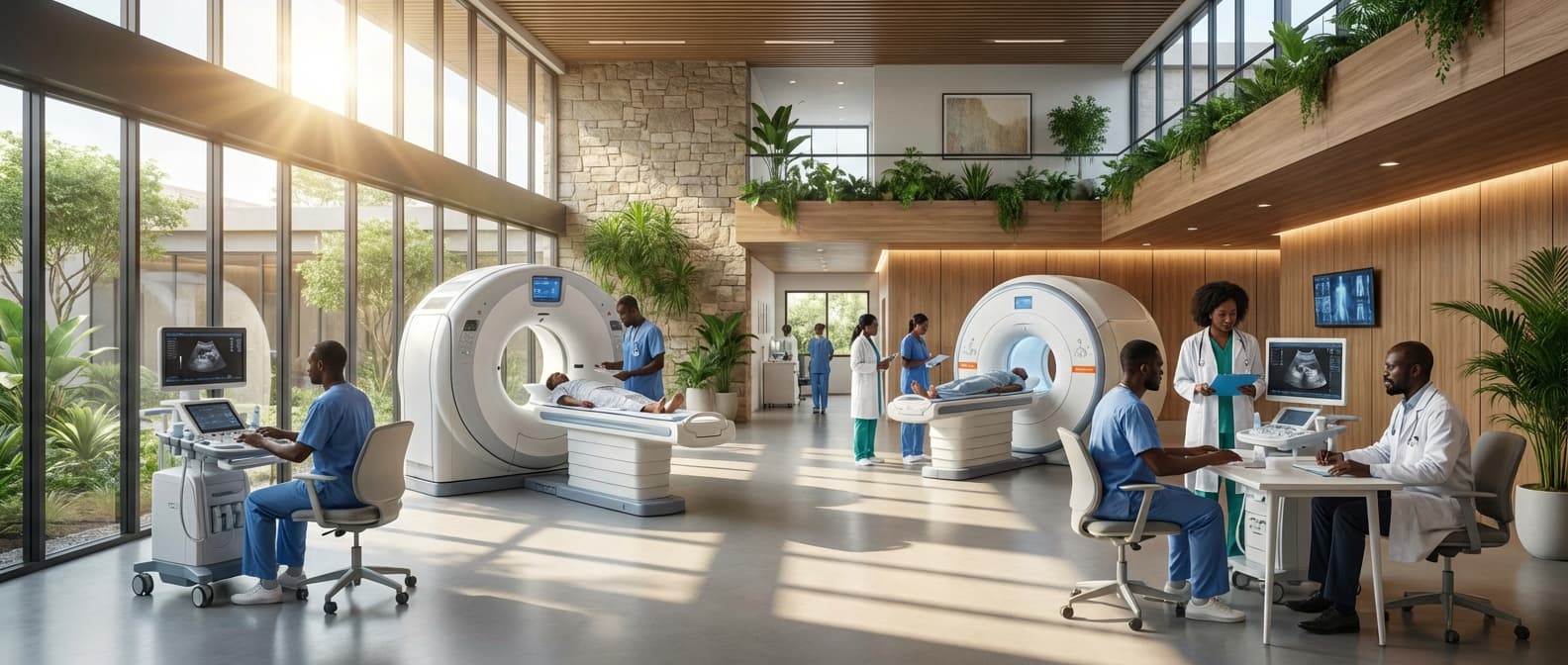
Diagnostic Imaging in Uganda
Engineering Excellence & Technical Support
High-resolution imaging systems including CT scanners, MRI, X-ray, and ultrasound technology for accurate clinical diagnosis. High-standard technical execution following OEM protocols and local regulatory frameworks.
Mobile X-ray Units Reach Remote Communities
Deployment of portable digital X-ray machines in underserved rural areas drastically improves access to essential diagnostic imaging, enabling early detection and treatment of conditions like tuberculosis and pneumonia where fixed facilities are scarce.
Tele-radiology Network Connects Specialists
Implementation of a secure telemedicine platform allows radiologists in urban centers to remotely interpret diagnostic images (CT, MRI, X-ray) from peripheral hospitals, bridging the geographical gap and ensuring expert diagnosis for a larger patient population.
Point-of-Care Ultrasound Training Programs
Initiatives focused on training healthcare workers in basic point-of-care ultrasound techniques empower primary healthcare facilities to perform rapid bedside diagnostics for obstetric emergencies, abdominal pain, and fluid collection, reducing the need for immediate referrals.
What Is Diagnostic Imaging In Uganda?
Diagnostic imaging in Uganda refers to the utilization of advanced medical technologies to produce visual representations of the internal structures of the human body for the purpose of clinical diagnosis, monitoring, and interventional guidance. This service is crucial for identifying, characterizing, and staging diseases and injuries, thereby enabling healthcare professionals to formulate effective treatment plans. The specific modalities employed vary based on the anatomical region of interest and the suspected pathology. The demand for diagnostic imaging services in Uganda is driven by a growing burden of both communicable and non-communicable diseases, an increasing emphasis on evidence-based medicine, and efforts to enhance the accuracy and efficiency of patient care within the national healthcare infrastructure.
| Who Needs Diagnostic Imaging? | Typical Use Cases |
|---|---|
| Patients presenting with acute trauma (e.g., fractures, internal bleeding). | Assessment of injuries following accidents or falls. |
| Individuals experiencing symptoms suggestive of infections (e.g., persistent cough, fever, abdominal pain). | Diagnosis of pneumonia, tuberculosis, appendicitis, and other infectious conditions. |
| Patients with suspected or diagnosed neoplastic diseases (cancers). | Staging of cancer, monitoring treatment response, and detecting recurrence. |
| Individuals with neurological symptoms (e.g., headaches, seizures, weakness). | Diagnosis of stroke, brain tumors, multiple sclerosis, and spinal cord lesions. |
| Pregnant women undergoing prenatal care. | Monitoring fetal development, detecting abnormalities, and assessing placental health. |
| Individuals with chronic conditions requiring ongoing management (e.g., cardiovascular disease, kidney disease). | Monitoring disease progression, assessing organ function, and guiding management strategies. |
| Patients undergoing pre-operative assessments. | Evaluating anatomy and identifying potential surgical risks. |
| Individuals requiring interventional procedures (e.g., biopsies, angioplasty). | Providing real-time guidance for minimally invasive interventions. |
Components of Diagnostic Imaging Services in Uganda
- Radiography (X-rays): Fundamental imaging modality for visualizing bones, lungs, and certain soft tissues. Commonly used for fracture detection, pneumonia, and screening for tuberculosis.
- Computed Tomography (CT) Scans: Provides cross-sectional images of the body, offering detailed visualization of organs, bones, and blood vessels. Essential for trauma assessment, oncology staging, and diagnosis of neurological and vascular conditions.
- Magnetic Resonance Imaging (MRI): Utilizes strong magnetic fields and radio waves to generate highly detailed images of soft tissues, including the brain, spinal cord, muscles, and ligaments. Indispensable for diagnosing neurological disorders, musculoskeletal injuries, and certain cancers.
- Ultrasound (Sonography): Employs high-frequency sound waves to create real-time images of organs, soft tissues, and blood flow. Widely used in obstetrics and gynecology, abdominal examinations, and vascular studies.
- Fluoroscopy: A real-time X-ray imaging technique used to visualize the movement of internal organs or the passage of contrast agents through the body. Applications include gastrointestinal studies and interventional procedures.
- Mammography: Specialized X-ray imaging of the breast tissue, primarily used for breast cancer screening and diagnosis.
- Nuclear Medicine Imaging (e.g., SPECT, PET): Involves the administration of radioactive tracers to assess organ function and detect disease at a cellular level. While less prevalent, its use is expanding for oncological and cardiac evaluations.
Who Needs Diagnostic Imaging In Uganda?
Diagnostic imaging plays a crucial role in modern healthcare, enabling precise diagnosis and effective treatment planning. In Uganda, the demand for these services is driven by a variety of healthcare providers and patient needs. Understanding who requires these services and which departments are most involved is key to strategizing their accessibility and integration within the Ugandan healthcare system.
| Department/Service Area | Primary Imaging Modalities Used | Key Patient Conditions/Needs | Target Customer Profile |
|---|---|---|---|
| Radiology Department (General) | X-ray (plain radiography), Ultrasound | Fractures, pneumonia, abdominal pain, basic soft tissue evaluation, pregnancy monitoring | All patient demographics; requires basic diagnostic capabilities |
| Surgery Department | X-ray, CT Scan, Ultrasound | Trauma assessment, pre-operative planning, post-operative monitoring, identifying surgical targets | Patients with acute injuries, suspected surgical conditions |
| Internal Medicine/General Practice | X-ray, Ultrasound, occasionally CT | Diagnosing respiratory illnesses, gastrointestinal issues, urinary tract infections, general health screening | Broad range of adult and pediatric patients with non-specific symptoms |
| Pediatrics Department | X-ray, Ultrasound | Congenital anomalies, infections (e.g., pneumonia, appendicitis), trauma in children | Infants, children, and adolescents |
| Obstetrics and Gynecology | Ultrasound | Antenatal care (fetal growth, anomalies, placental location), gynecological conditions (fibroids, ovarian cysts) | Pregnant women, women with reproductive health concerns |
| Oncology Department/Cancer Centers | CT Scan, MRI, PET Scan (limited availability), Ultrasound | Tumor staging, treatment monitoring, metastasis detection, biopsy guidance | Patients diagnosed with or suspected of having cancer |
| Cardiology Department/Cardiac Centers | Echocardiography (Ultrasound of the heart), CT Angiography, MRI (for specific cardiac conditions) | Heart disease diagnosis, assessment of cardiac function, coronary artery disease, congenital heart defects | Patients with suspected or known cardiovascular issues |
| Neurology Department/Neuroscience Centers | CT Scan, MRI | Stroke diagnosis, brain tumors, head trauma, spinal cord injuries, degenerative neurological diseases | Patients with neurological symptoms |
| Emergency Department | X-ray, CT Scan, Ultrasound (rapid access required) | Trauma, acute pain (e.g., abdominal, chest), suspected stroke, suspected internal bleeding | Patients presenting with acute, life-threatening conditions |
| Orthopedic Department | X-ray, CT Scan, MRI | Complex fractures, joint diseases, sports injuries, spinal conditions | Patients with musculoskeletal injuries and diseases |
| Pulmonology Department | X-ray, CT Scan | Tuberculosis, lung infections, interstitial lung disease, lung nodules | Patients with respiratory symptoms and lung abnormalities |
Target Customers and Departments for Diagnostic Imaging in Uganda
- Hospitals (Government, Private, Mission-based)
- Polyclinics and Health Centers
- Specialized Clinics (e.g., Cardiology, Oncology, Neurology)
- Diagnostic Centers and Laboratories
- Rural Health Posts (referral basis)
- Emergency Services
- Rehabilitation Centers
Diagnostic Imaging Process In Uganda
The diagnostic imaging process in Uganda, like in many healthcare systems, follows a structured workflow designed to ensure accurate and timely diagnosis. This process typically begins with a physician's inquiry or referral, leading to patient preparation, image acquisition, interpretation by a radiologist, and finally, the delivery of a diagnostic report to the referring physician. Challenges such as equipment availability, skilled personnel, and accessibility in rural areas can impact the efficiency and reach of this workflow.
| Stage | Description | Key Personnel Involved | Common Modalities | Potential Challenges in Uganda |
|---|---|---|---|---|
| Patient Referral/Inquiry | A clinician identifies the need for imaging based on patient symptoms and medical history. This can be a direct request from a physician or a referral from a lower-level health facility. | Referring Physician/Clinician | N/A | Lack of awareness about available imaging services, long distances to facilities, cost barriers for patients. |
| Scheduling and Pre-imaging Preparation | The patient's appointment is scheduled. Depending on the imaging modality, specific preparations might be required (e.g., fasting, contrast agent administration, specific clothing). | Radiology Department Staff, Nurse, Patient | N/A | Limited scheduling systems, poor communication between facilities, inadequate patient education, scarcity of contrast agents. |
| Image Acquisition | The diagnostic images are captured using appropriate imaging equipment by trained technologists. | Radiology Technologist/Technician | X-ray, Ultrasound, CT Scan, MRI (less common, often in larger centers) | Equipment malfunction and maintenance issues, power outages, lack of skilled technologists, limited availability of advanced modalities in rural areas, high radiation exposure protocols. |
| Image Processing and Enhancement | Raw images are processed and enhanced to improve diagnostic quality. This may involve digital manipulation or the use of contrast agents. | Radiology Technologist/Technician | Digital radiography (DR), Computed radiography (CR), Ultrasound post-processing, CT/MRI reconstruction | Outdated or insufficient processing software, limited availability of high-quality contrast media, unreliable IT infrastructure. |
| Radiologist Interpretation | A qualified radiologist analyzes the acquired images, identifies abnormalities, and formulates a diagnosis. | Radiologist | All modalities | Shortage of qualified radiologists (especially outside major urban centers), heavy workload, need for continuing professional development. |
| Report Generation | A formal diagnostic report is compiled by the radiologist, detailing the findings, diagnosis, and recommendations. | Radiologist, Reporting Clerk/System | N/A | Delays in report generation due to workload, reliance on manual reporting in some facilities, transcription errors. |
| Report Delivery to Referring Physician | The diagnostic report is sent back to the referring physician, often through physical delivery, fax, or increasingly, electronic means. | Radiology Department Staff, Courier Service (if applicable) | N/A | Slow or unreliable delivery systems, poor inter-facility communication, lack of integrated electronic health records. |
| Follow-up and Treatment Planning | The referring physician uses the diagnostic report to inform patient management, treatment decisions, and further investigations if necessary. | Referring Physician/Clinician | N/A | Lack of standardized follow-up protocols, potential for misinterpretation of reports, insufficient integration of imaging findings into patient management. |
Diagnostic Imaging Workflow in Uganda
- Patient Referral/Inquiry
- Scheduling and Pre-imaging Preparation
- Image Acquisition (X-ray, CT, MRI, Ultrasound, etc.)
- Image Processing and Enhancement
- Radiologist Interpretation
- Report Generation
- Report Delivery to Referring Physician
- Follow-up and Treatment Planning
Diagnostic Imaging Cost In Uganda
Diagnostic imaging plays a crucial role in modern healthcare, enabling accurate diagnosis and guiding treatment decisions. In Uganda, the cost of these services can vary significantly, influenced by a multitude of factors. Understanding these pricing dynamics is essential for both patients seeking care and healthcare providers offering services. The price of a diagnostic imaging scan in Uganda is not a fixed figure; it's a complex interplay of several elements that contribute to the final cost patients encounter. These include the type of imaging modality used, the specific body part being scanned, the complexity of the examination, the location of the facility (urban vs. rural, private vs. public), the technology and equipment employed by the facility, and the expertise of the radiologist interpreting the images. Additionally, the overhead costs of the facility, including staff salaries, electricity, and maintenance, are factored into the pricing. Furthermore, the demand for specific imaging services in a particular area can also influence pricing. It's common to see higher costs in well-equipped private hospitals in major urban centers compared to public facilities or smaller clinics in remote regions. While precise, universally standardized pricing data is difficult to obtain due to the decentralized nature of healthcare provision in Uganda, general ranges can be identified.
| Imaging Modality | Estimated Cost Range (UGX) | Notes |
|---|---|---|
| X-ray (e.g., Chest X-ray) | 20,000 - 80,000 | Most basic and widely available. Costs vary based on the number of views. |
| Ultrasound (e.g., Abdomen, Pelvis, Obstetric) | 50,000 - 150,000 | Common for soft tissue imaging, pregnancy scans. Advanced ultrasounds may cost more. |
| CT Scan (e.g., Head, Abdomen) | 200,000 - 700,000 | More detailed cross-sectional imaging. Prices increase with the number of slices/sections. |
| MRI Scan (e.g., Brain, Spine, Joints) | 400,000 - 1,500,000+ | Highest resolution imaging for soft tissues, very expensive. Can go higher for specialized scans. |
| Mammography | 80,000 - 200,000 | Specific for breast imaging, cost can vary based on whether it's a screening or diagnostic mammogram. |
| Fluoroscopy | 70,000 - 250,000 | Real-time X-ray imaging, used for procedures like barium studies. |
Key Factors Influencing Diagnostic Imaging Costs in Uganda
- Type of Imaging Modality (e.g., X-ray, Ultrasound, CT Scan, MRI)
- Complexity and Scope of the Examination
- Body Part Being Scanned
- Location and Type of Healthcare Facility (e.g., Private Hospital, Public Hospital, Clinic)
- Technological Advancement and Equipment Quality
- Radiologist Expertise and Interpretation Fees
- Facility Overhead Costs (rent, utilities, staff salaries, maintenance)
- Geographic Location and Local Market Demand
Affordable Diagnostic Imaging Options
Navigating the world of diagnostic imaging can feel overwhelming, especially when considering the costs. Fortunately, there are ways to access necessary imaging services more affordably. Understanding value bundles and implementing cost-saving strategies can make a significant difference in your healthcare expenses.
| Cost-Saving Strategy | Description | How it Helps |
|---|---|---|
| Compare Prices | Shop around for imaging centers. Prices can vary significantly for the same procedure at different facilities. Websites and apps that compare healthcare costs can be invaluable. | Ensures you get the best possible price for the imaging you need. |
| Ask About Self-Pay Discounts | If you don't have insurance or your deductible is very high, ask imaging centers if they offer a discounted 'self-pay' or 'cash price' for uninsured patients. | Can significantly reduce the cost if you're paying out-of-pocket. |
| Understand Your Insurance Benefits | Review your insurance policy to understand your deductible, co-pays, co-insurance, and out-of-network coverage for diagnostic imaging. Know which facilities are in-network. | Helps you anticipate your out-of-pocket expenses and avoid unexpected bills from out-of-network providers. |
| Request Generic or Lower-Cost Alternatives (When Applicable) | While less common for imaging itself, discuss with your doctor if there are less expensive imaging modalities that could still provide the necessary diagnostic information. For example, a CT scan might be an alternative to an MRI in some cases. | Potentially lowers the overall cost of the diagnostic workup. |
| Negotiate with Providers | In some situations, especially for expensive procedures or if you're facing a large bill, you may be able to negotiate the price with the imaging facility directly. | Offers a chance to secure a lower payment, particularly if you're facing financial hardship. |
| Utilize Health Savings Accounts (HSAs) or Flexible Spending Accounts (FSAs) | If you have an HSA or FSA, use these pre-tax dollars to pay for diagnostic imaging. The funds are specifically designated for qualified medical expenses. | Reduces your taxable income, effectively lowering the net cost of your imaging. |
Understanding Value Bundles
- {"title":"What are Value Bundles?","description":"Value bundles, also known as bundled payments or episode-of-care payments, are a healthcare payment model where providers receive a single, predetermined payment for all the services associated with a specific episode of care, such as a knee replacement surgery or a diagnostic imaging procedure like an MRI for a specific condition. This encourages coordination among healthcare providers to deliver comprehensive care efficiently and effectively."}
- {"title":"Benefits of Value Bundles for Imaging","description":"For diagnostic imaging, value bundles can offer cost predictability and potentially lower overall expenses. Instead of paying for each individual scan, interpretation, and follow-up consultation separately, you might pay a set fee. This model incentivizes providers to optimize the imaging process, reduce unnecessary tests, and ensure the right imaging is performed at the right time."}
- {"title":"How to Find and Utilize Them","description":"Value bundles are often offered by larger healthcare systems, insurance providers, or through specific employer wellness programs. Inquire with your doctor's office or your insurance company if they participate in any bundled payment programs for imaging. Sometimes, a bundled price might be presented upfront for a specific procedure or condition."}
Verified Providers In Uganda
In Uganda's evolving healthcare landscape, identifying truly Verified Providers is crucial for ensuring quality and trustworthy medical services. Franance Health stands out as a beacon of excellence, offering a comprehensive suite of credentialing services that rigorously vet healthcare professionals and institutions. Their meticulous verification process goes beyond superficial checks, delving into qualifications, certifications, disciplinary records, and ethical standing. This dedication to thoroughness means that when a provider is 'Verified by Franance Health,' it signifies a commitment to the highest standards of patient care and professional integrity. Choosing Franance Health-verified providers means choosing peace of mind, knowing you are in capable and ethical hands.
| Provider Type | Verification Focus Areas (Franance Health) | Benefits for Patients |
|---|---|---|
| Individual Medical Practitioners (Doctors, Nurses, Specialists) | Medical School Degrees, Board Certifications, Licenses, Continuing Medical Education (CME) Records, Disciplinary History | Assurance of qualified and up-to-date medical expertise, reduced risk of malpractice. |
| Hospitals & Clinics | Accreditation Status, Staff Qualifications, Equipment Standards, Infection Control Protocols, Patient Safety Measures, Governance Structure | Confidence in a safe and well-equipped facility with competent medical teams and adherence to national/international standards. |
| Diagnostic Laboratories | Technician Qualifications, Equipment Calibration & Maintenance, Quality Control Procedures, Accreditation (e.g., ISO standards) | Reliable and accurate diagnostic results you can trust for effective treatment planning. |
| Pharmacies | Pharmacist Licenses, Drug Sourcing & Storage Compliance, Dispensing Practices, Inventory Management | Access to genuine medications, dispensed by qualified professionals, ensuring safety and efficacy. |
Why Franance Health Verified Providers are the Best Choice:
- Rigorous Qualification & Certification Verification
- Thorough Background Checks & Disciplinary Record Review
- Commitment to Ethical Medical Practices
- Enhanced Patient Trust & Confidence
- Access to Competent and Reliable Healthcare Professionals
- Support for a Safer and More Effective Healthcare System in Uganda
Scope Of Work For Diagnostic Imaging
This document outlines the Scope of Work (SOW) for Diagnostic Imaging services, detailing the technical deliverables and standard specifications required. The objective is to ensure high-quality, efficient, and accurate diagnostic imaging services that support patient care and clinical decision-making. The SOW encompasses various imaging modalities, reporting standards, equipment maintenance, and data management.
| Technical Deliverable | Description | Standard Specifications / Requirements |
|---|---|---|
| Radiology Reports | Comprehensive, accurate, and timely interpretation of diagnostic imaging studies. | Reports must be generated by board-certified radiologists. Turnaround time for routine reports: within 24-48 hours. Urgent reports: within 1-4 hours. Reports should adhere to ACR (American College of Radiology) standards and include findings, impressions, and recommendations. |
| Digital Images (DICOM) | Archived and accessible digital images of all performed studies. | Images must be stored in DICOM (Digital Imaging and Communications in Medicine) format. Archiving system must comply with PACS (Picture Archiving and Communication System) standards, with a minimum retention period of 7 years (or as per regulatory requirements). |
| Imaging Protocols | Standardized protocols for each imaging modality. | Protocols should be optimized for diagnostic quality, patient safety, and radiation dose reduction, aligning with ALARA (As Low As Reasonably Achievable) principles. Protocols to be reviewed and updated annually. |
| Equipment Performance Logs | Regular maintenance and calibration records for all imaging equipment. | Logs must include routine preventive maintenance, calibration dates, service reports, and any corrective maintenance performed. All equipment must meet FDA (Food and Drug Administration) regulations and manufacturer specifications. |
| Radiation Dose Monitoring Reports | Data on radiation exposure for relevant imaging procedures. | Regular reporting of radiation dose indices for CT and interventional procedures. Compliance with national and international radiation safety guidelines. Dose management software to be utilized. |
| IT Infrastructure Integration | Seamless integration with the hospital's Electronic Health Record (EHR) system. | Integration must support bi-directional HL7 (Health Level Seven) messaging for patient demographics, orders, and results. PACS and RIS (Radiology Information System) to be interoperable with the EHR. |
| Data Backup and Disaster Recovery Plan | Robust procedures for data protection and business continuity. | Regular data backups (daily or more frequent) with offsite storage. Disaster recovery plan to ensure minimal downtime and data loss in case of unforeseen events. |
| Quality Assurance (QA) Metrics | Performance metrics related to image quality, reporting timeliness, and patient satisfaction. | Regular monitoring and reporting of key QA indicators, such as repeat scan rates, report error rates, and patient wait times. QA program to be compliant with Joint Commission standards. |
| Staff Competency Records | Documentation of qualifications and ongoing training for all imaging personnel. | Records of professional licenses, certifications (e.g., ARRT for technologists), and continuing education. Annual competency assessments for all staff. |
| Equipment Upgrades and Replacements | Plan for maintaining state-of-the-art imaging technology. | A roadmap for regular equipment evaluation, upgrades, and replacements based on technological advancements, clinical needs, and budgetary considerations. Adherence to manufacturer warranty and service agreements. |
Key Areas Covered in the Scope of Work
- Imaging Modalities and Procedures
- Equipment and Technology Standards
- Reporting and Documentation
- Quality Assurance and Control
- Data Management and Security
- Staffing and Training
- Service Level Agreements (SLAs)
Service Level Agreement For Diagnostic Imaging
This Service Level Agreement (SLA) outlines the performance standards for Diagnostic Imaging services provided by [Provider Name] to [Client Name]. It defines the expected response times for critical events and the guaranteed uptime for the diagnostic imaging systems and associated services. The purpose of this SLA is to ensure the reliability, availability, and responsiveness of the diagnostic imaging services, thereby supporting efficient patient care and operational continuity.
| Service Component | Uptime Guarantee | Response Time (Critical) | Resolution Time (Critical) | Response Time (Non-Critical) | Resolution Time (Non-Critical) |
|---|---|---|---|---|---|
| Diagnostic Imaging Hardware (MRI, CT, X-ray) | 99.5% (excluding scheduled maintenance) | 2 hours | 8 business hours | 4 business hours | 24 business hours |
| Picture Archiving and Communication System (PACS) | 99.8% (excluding scheduled maintenance) | 1 hour | 4 business hours | 2 business hours | 12 business hours |
| Radiology Information System (RIS) | 99.8% (excluding scheduled maintenance) | 1 hour | 4 business hours | 2 business hours | 12 business hours |
| Image Viewing Workstations | 99.0% (excluding scheduled maintenance) | 2 hours | 8 business hours | 4 business hours | 24 business hours |
| Network Connectivity (Internal Imaging Network) | 99.9% (excluding scheduled maintenance) | 30 minutes | 4 business hours | 2 business hours | 12 business hours |
Scope of Service
- Diagnostic Imaging Systems: This includes all hardware and software components directly involved in the acquisition, processing, storage, and transmission of diagnostic images (e.g., MRI scanners, CT scanners, X-ray machines, PACS, RIS).
- Network Infrastructure: The dedicated network connectivity supporting the transmission of imaging data and access to the PACS/RIS.
- Technical Support: Availability of qualified technical personnel to address system issues and user inquiries.
- Ancillary Services: Includes features such as image viewing stations, reporting workstations, and integration with Electronic Health Records (EHR) where applicable.
Frequently Asked Questions

Ready when you are
Let's scope your Diagnostic Imaging in Uganda project in Uganda.

Scaling healthcare logistics and technical systems across the entire continent.