
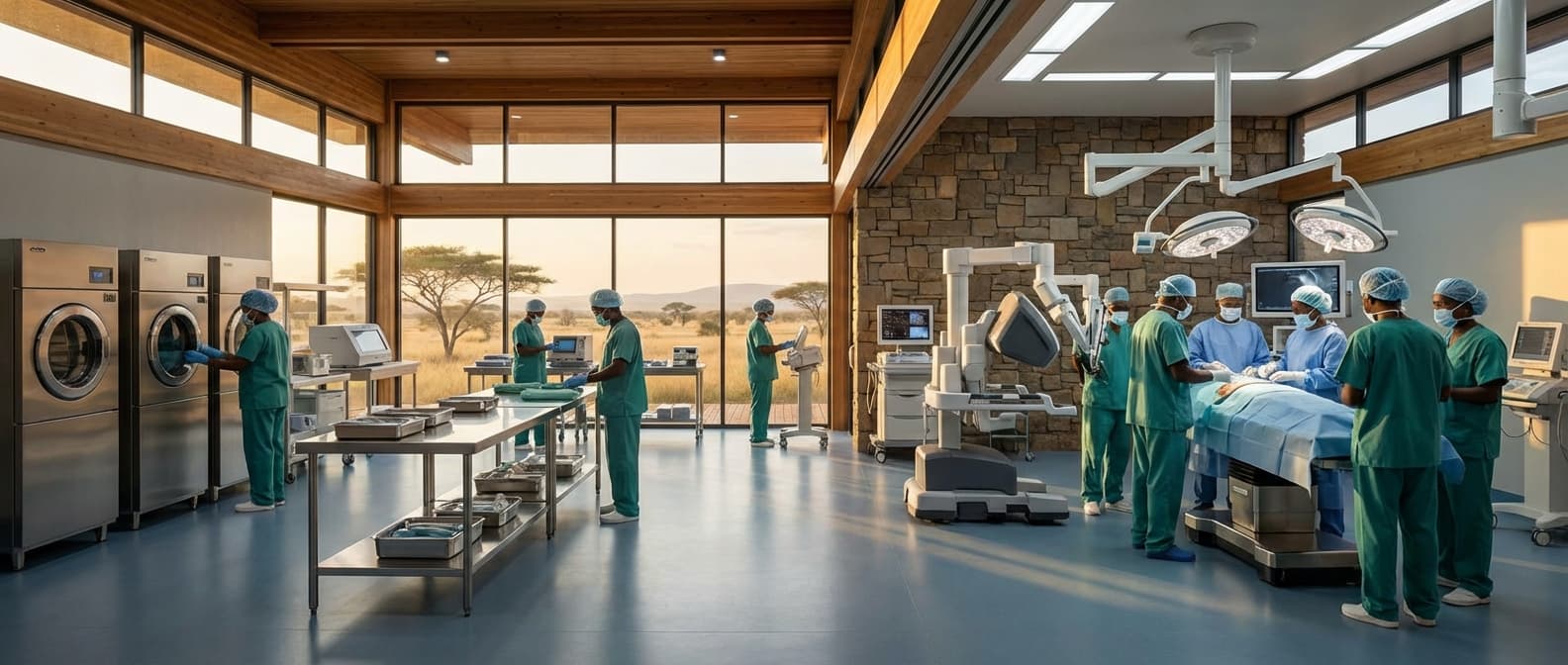
Operating Theatre Turnkey Build in Uganda
Engineering Excellence & Technical Support
Complete OR design, equipment integration and commissioning High-standard technical execution following OEM protocols and local regulatory frameworks.
Advanced Medical Equipment Integration
Seamless installation and calibration of state-of-the-art surgical equipment, including specialized theaters for orthopedics, general surgery, and obstetrics, ensuring readiness for a wide range of procedures.
Optimized Infection Control Systems
Implementation of advanced HEPA filtration, negative pressure ventilation, and UV sterilization systems to maintain ultra-clean environments, minimizing hospital-acquired infections and enhancing patient safety.
Robust Infrastructure & Power Redundancy
Design and construction of resilient infrastructure with dedicated medical-grade power supply, including UPS and backup generators, guaranteeing uninterrupted operation of critical life-support and surgical systems.
What Is Operating Theatre Turnkey Build In Uganda?
An Operating Theatre Turnkey Build in Uganda refers to a comprehensive, end-to-end service for the design, construction, equipping, and commissioning of a fully functional operating theatre suite. This service model encompasses all phases of the project, from initial conceptualization and architectural design to civil works, specialized medical gas systems, HVAC with HEPA filtration, lighting, electromechanical installations, and the procurement and integration of surgical equipment. The objective is to deliver a ready-to-operate facility, minimizing the client's involvement in the intricacies of construction and technical integration. This approach streamlines the process, ensuring adherence to international standards for sterility, safety, and operational efficiency within the Ugandan healthcare context.
| Who Needs an Operating Theatre Turnkey Build in Uganda? | Typical Use Cases | |||
|---|---|---|---|---|
| Hospitals (Public and Private): Healthcare institutions seeking to expand or upgrade their surgical capacity, establish new specialized surgical units, or replace aging facilities. | Specialized Surgical Centers: Facilities focusing on specific surgical disciplines (e.g., cardiac surgery, neurosurgery, orthopaedics) requiring tailored environments and advanced equipment. | Missions and Non-Governmental Organizations (NGOs): Organizations establishing or improving healthcare infrastructure in underserved regions. | Research and Teaching Hospitals: Institutions requiring state-of-the-art facilities for both patient care and medical education/research. | Government Health Ministries: Public health bodies undertaking national healthcare infrastructure development projects. |
| Establishment of New Surgical Suites: Creating operating theatres from greenfield sites. | Renovation and Modernization of Existing Theatres: Upgrading outdated facilities to meet current standards. | Development of Specialized Operating Rooms: Designing theatres for minimally invasive surgery, robotics, or specific imaging requirements. | Capacity Expansion: Increasing the number of available operating rooms to meet demand. | Compliance with International Standards: Ensuring facilities meet global benchmarks for safety, infection control, and operational efficiency. |
Key Components of an Operating Theatre Turnkey Build in Uganda:
- Design and Planning: Architectural layouts, clinical flow analysis, structural engineering, and detailed MEP (Mechanical, Electrical, Plumbing) design incorporating infection control principles.
- Civil and Construction Works: Site preparation, construction of the theatre shell, finishes (including anti-bacterial wall and floor coverings), acoustic treatments, and door systems.
- Specialized Systems Installation: Medical gas pipelines (oxygen, medical air, vacuum, nitrous oxide), anaesthetic gas scavenging systems (AGSS), and central sterile supply department (CSSD) integration.
- HVAC and Air Filtration: Design and installation of sophisticated ventilation systems with HEPA filtration to maintain positive pressure, control air changes per hour (ACH), and manage temperature and humidity to stringent standards.
- Lighting and Electrical Systems: Installation of surgical lighting (e.g., LED surgical lights), ambient lighting, emergency power supply (UPS, generators), and medical-grade electrical outlets.
- Equipment Procurement and Integration: Sourcing, installation, and calibration of essential surgical equipment, including operating tables, anaesthesia machines, patient monitors, electrosurgical units, and imaging modalities.
- Sterilization and Waste Management: Integration of autoclaves, instrument washers, and appropriate medical waste handling systems.
- Commissioning and Validation: Thorough testing and validation of all installed systems and equipment to ensure compliance with regulatory requirements and operational readiness.
Who Needs Operating Theatre Turnkey Build In Uganda?
Operating theatre turnkey builds in Uganda are crucial for healthcare facilities aiming to rapidly upgrade or establish state-of-the-art surgical capabilities. These comprehensive solutions offer a complete, ready-to-use surgical environment, encompassing design, construction, equipping, and commissioning. This significantly reduces project timelines, minimizes logistical complexities, and ensures adherence to international standards for infection control, safety, and efficiency.
| Target Customer Group | Typical Departments Benefiting | Key Needs Addressed |
|---|---|---|
| Public Hospitals (Government-owned) | General Surgery, Obstetrics & Gynecology, Orthopedics, Emergency Medicine | Upgrading outdated facilities, increasing surgical capacity, improving patient outcomes, meeting national health standards. |
| Private Hospitals & Healthcare Groups | Cardiology, Neurosurgery, Urology, Ophthalmology, Plastic Surgery, General Surgery | Attracting specialized medical professionals, offering advanced procedures, enhancing service offerings, competing with international standards, expanding patient base. |
| Specialty Clinics (e.g., Fertility, Dental Surgery) | Specific surgical specialties relevant to the clinic's focus | Creating dedicated, sterile environments, ensuring specialized equipment integration, meeting regulatory compliance for specific procedures. |
| Non-Governmental Organizations (NGOs) & International Aid Organizations | Emergency surgery, trauma care, maternal health, reconstructive surgery | Rapid deployment of functional surgical units in underserved areas, providing essential surgical services, fulfilling project mandates for healthcare improvement. |
| Research and Teaching Hospitals | All surgical specialties for training and research | Providing cutting-edge facilities for training future surgeons, facilitating medical research, housing advanced diagnostic and surgical technology. |
Who Needs Operating Theatre Turnkey Build in Uganda?
- Public Hospitals Seeking Modernization
- Private Hospitals Expanding Capacity
- Specialty Clinics Requiring Advanced Surgical Suites
- NGO-Funded Healthcare Initiatives
- Research and Teaching Hospitals
Operating Theatre Turnkey Build Process In Uganda
Establishing an operating theatre in Uganda involves a comprehensive turnkey build process, ensuring a seamless transition from initial concept to a fully functional medical facility. This process is meticulously managed to meet stringent healthcare standards, local regulations, and client-specific requirements. The workflow typically encompasses several key phases: initial inquiry and consultation, design and planning, procurement and fabrication, construction and installation, commissioning and training, and finally, handover and post-completion support. Each stage is critical for the successful delivery of a modern, safe, and efficient operating theatre.
| Phase | Key Activities | Deliverables | Estimated Timeline (Example) |
|---|---|---|---|
| Inquiry & Consultation | Client briefing, needs assessment, site survey, feasibility study | Project proposal, initial scope definition, budget estimate | 1-2 Weeks |
| Design & Planning | Architectural design, engineering, HVAC, medical gas, electrical design, client review, approvals | Detailed drawings, specifications, Bill of Quantities (BOQ) | 4-8 Weeks |
| Procurement & Fabrication | Material sourcing, equipment ordering, specialized component fabrication | Procurement contracts, equipment delivery schedule, fabricated components | 6-12 Weeks (often overlaps with design/construction) |
| Construction & Installation | Site preparation, civil works, MEP installation, equipment installation | Structural completion, installed systems, operational equipment | 12-24 Weeks |
| Commissioning & Training | System testing, performance verification, staff training, documentation finalization | Commissioning reports, training manuals, trained staff | 2-4 Weeks |
| Handover & Support | Formal handover, final documentation, defect rectification, ongoing maintenance agreement | Completion certificate, operational theatre, support plan | 1 Week (initial handover), ongoing |
Operating Theatre Turnkey Build Process in Uganda: Workflow Stages
- {"title":"1. Initial Inquiry and Consultation","description":"The process begins with a client expressing interest. This stage involves understanding the client's vision, budget, project scope, and specific needs for the operating theatre. Site visits and preliminary assessments are conducted to evaluate the feasibility and identify any site-specific challenges."}
- {"title":"2. Design and Planning","description":"Detailed architectural and engineering designs are developed, adhering to international healthcare standards (e.g., WHO guidelines, HTM) and Ugandan building codes. This includes layout, ventilation systems (HVAC), sterile environments, medical gas systems, electrical infrastructure, lighting, and specialized equipment integration. Client approval is secured at key design milestones."}
- {"title":"3. Procurement and Fabrication","description":"High-quality materials, medical equipment, and construction components are sourced and procured. This may involve local suppliers and international manufacturers. Specialized components for the operating theatre, such as laminar flow systems or modular wall panels, might be fabricated off-site to ensure precision and quality control."}
- {"title":"4. Construction and Installation","description":"On-site construction commences. This involves site preparation, civil works, structural development, and the installation of all MEP (Mechanical, Electrical, Plumbing) systems, including specialized medical gas pipelines and HVAC. Medical equipment is installed and integrated into the theatre's infrastructure."}
- {"title":"5. Commissioning and Training","description":"Once construction is complete, rigorous testing and commissioning of all systems and equipment are performed to ensure they function optimally and meet safety standards. Comprehensive training is provided to the hospital's medical and technical staff on the operation and maintenance of the new operating theatre and its equipment."}
- {"title":"6. Handover and Post-Completion Support","description":"The completed operating theatre is formally handed over to the client. This includes providing all necessary documentation, warranties, and maintenance manuals. Ongoing support, maintenance services, and potential upgrades are offered to ensure the long-term functionality and efficiency of the facility."}
Operating Theatre Turnkey Build Cost In Uganda
Building an operating theatre in Uganda is a significant investment, and its turnkey cost can vary widely due to numerous factors. A turnkey solution implies the contractor handles all aspects of the project, from design and construction to the installation of specialized medical equipment and finishing. Understanding these pricing factors is crucial for accurate budgeting and financial planning.
| Category | Estimated Cost Range (UGX) | Notes |
|---|---|---|
| Basic General Surgery Theatre (Approx. 25-35 sqm) | 150,000,000 - 300,000,000 | Includes essential equipment, basic HVAC, standard finishes. |
| Advanced General/Specialized Surgery Theatre (Approx. 35-50 sqm) | 300,000,000 - 600,000,000 | Higher-end equipment, advanced laminar flow HVAC, specialized finishes, potentially integrated imaging. |
| Highly Specialized/Complex Surgery Theatre (e.g., Cardiac, Neurosurgery) (50+ sqm) | 600,000,000 - 1,500,000,000+ | Top-tier, highly integrated equipment, advanced life support systems, state-of-the-art HVAC, extensive infrastructure, and highest quality finishes. Can easily exceed this range depending on specific technology and size. |
| Medical Equipment Only (Variable) | 50,000,000 - 800,000,000+ | This is highly dependent on the number and type of machines. A basic set might be on the lower end, while a fully equipped suite with advanced imaging and monitoring will be on the higher end. |
| HVAC and Ventilation Systems Only (Variable) | 30,000,000 - 200,000,000+ | Costs vary based on the complexity of filtration, number of air changes per hour, and zoning. |
Key Pricing Factors for Operating Theatre Turnkey Builds in Uganda
- Location: Proximity to major urban centers, accessibility of the site, and local labor costs significantly influence pricing. Remote or difficult-to-access locations may incur higher transportation and logistical expenses.
- Size and Complexity: The square footage of the operating theatre suite, the number of individual rooms (scrub area, prep room, recovery, etc.), and the complexity of the layout will directly impact material and labor costs.
- Level of Specialization: The type of surgeries the theatre is designed for (e.g., general surgery, orthopedic, cardiac, neurosurgery) dictates the required specialization of equipment, ventilation systems (e.g., laminar flow), and safety features, all of which add to the cost.
- Quality of Materials and Finishes: High-grade, medical-certified materials for flooring, wall cladding (e.g., anti-bacterial, seamless), and ceiling systems are essential for hygiene and durability, but come at a higher price point than standard construction materials.
- Medical Equipment and Technology: This is often the largest single cost component. The type, brand, and sophistication of surgical lights, operating tables, anesthesia machines, patient monitors, imaging equipment (e.g., C-arm), sterilization units, and other specialized medical devices will heavily influence the total price.
- HVAC and Ventilation Systems: Operating theatres require sophisticated, medical-grade HVAC systems with precise temperature, humidity, and air filtration (HEPA filters) to maintain sterile environments and prevent cross-contamination. These systems are complex and expensive to design and install.
- Electrical and Plumbing Infrastructure: Specialized power backup systems (generators, UPS), medical gas pipelines (oxygen, medical air, vacuum), and specialized drainage systems are mandatory and add to the overall cost.
- Architectural and Engineering Design Fees: The cost of engaging qualified architects and engineers to design a functional, compliant, and safe operating theatre space.
- Regulatory Compliance and Certification: Costs associated with ensuring the build meets all relevant Ugandan health and safety regulations, as well as international standards, and obtaining necessary certifications.
- Contractor's Overhead and Profit: This varies between construction companies based on their experience, reputation, and business model.
- Contingency: It's prudent to include a contingency fund for unforeseen issues or design changes during the construction process.
Affordable Operating Theatre Turnkey Build Options
Establishing an operating theatre (OT) is a significant undertaking, often involving substantial capital investment. However, for healthcare facilities seeking to expand or upgrade their surgical capabilities without exceeding their budget, exploring affordable operating theatre turnkey build options is crucial. Turnkey solutions offer a comprehensive approach, encompassing design, construction, equipment installation, and commissioning, simplifying the process and providing greater cost predictability. This explanation delves into the value bundles and cost-saving strategies available within the realm of affordable OT turnkey builds.
| Cost-Saving Strategy | Explanation | Impact on Affordability |
|---|---|---|
| Phased Development | Instead of building a fully equipped, state-of-the-art OT immediately, consider a phased approach. Start with essential functionalities and upgrade or add specialized equipment over time as budget allows. | Reduces upfront capital expenditure, allowing for gradual investment. |
| Prioritizing Essential vs. Advanced Equipment | Focus on procuring high-quality, reliable equipment for the most common procedures. Defer investment in highly specialized or niche equipment until the need is definitively established. | Minimizes the cost of initial equipment acquisition by avoiding unnecessary advanced features. |
| Off-the-Shelf vs. Highly Customised Designs | Opt for standardized, pre-engineered modular OT designs rather than bespoke, highly customized solutions. This leverages manufacturing efficiencies and reduces design and fabrication costs. | Significant reduction in design, engineering, and construction labour costs due to simplified processes. |
| Negotiating Bulk Purchasing and Package Deals | Work with turnkey providers who can leverage their supplier relationships to obtain better pricing on equipment and materials through bulk purchasing or bundled packages. | Lower per-unit costs for equipment and materials through economies of scale and supplier discounts. |
| Strategic Site Selection and Preparation | If building a new facility or expanding, consider sites that require minimal structural modifications or where existing infrastructure can be leveraged, reducing civil works and preparation costs. | Minimizes civil engineering and construction costs associated with site development and modifications. |
| Energy-Efficient Design and Equipment | While potentially a slightly higher upfront cost, investing in energy-efficient lighting, HVAC, and equipment can lead to substantial long-term savings on utility bills. | Reduces operational expenditure over the lifespan of the OT. |
| Utilizing Reputable but Less Premium Brands | Research and select equipment from reputable manufacturers known for reliability and good after-sales support, but perhaps not the absolute top-tier, highest-priced brands. | Achieves a balance between quality and cost, avoiding overspending on brand name alone. |
| Efficient Project Management and Timelines | A well-managed turnkey project with clear timelines and minimal delays prevents cost overruns associated with extended construction periods and potential penalties. | Minimizes indirect costs and potential financial penalties due to project delays. |
Value Bundles in Affordable OT Turnkey Builds
- {"title":"Essential Equipment Package","description":"This bundle focuses on core surgical equipment, prioritizing functionality and reliability. It typically includes surgical lights, operating tables, anesthesia machines, basic monitoring devices, and essential surgical instruments. Value lies in providing the fundamental tools for a wide range of procedures at a competitive price point."}
- {"title":"Standardised Modular Design","description":"Many affordable turnkey providers utilize pre-designed, modular components. This standardization reduces customisation costs and speeds up the construction timeline. The value comes from efficient manufacturing processes and economies of scale."}
- {"title":"Integrated Infrastructure Solution","description":"This bundle covers the essential services and infrastructure, such as HVAC (Heating, Ventilation, and Air Conditioning) systems with HEPA filtration, medical gas pipelines, electrical systems, and integrated lighting. The value is in a streamlined installation of critical environmental and utility services."}
- {"title":"Basic Training and Commissioning","description":"Included in most affordable packages, this covers the essential training for staff on the operation of new equipment and the final commissioning of the theatre to ensure it meets regulatory standards. The value is in ensuring operational readiness and compliance."}
- {"title":"Extended Warranty and Maintenance Plan (Optional Add-on)","description":"While sometimes an add-on, affordable maintenance plans can be bundled to provide peace of mind and predictable long-term operational costs, avoiding unexpected repair expenses. The value is in proactive asset management and reduced downtime."}
Verified Providers In Uganda
When seeking healthcare services in Uganda, it's crucial to engage with verified providers. These entities have undergone rigorous checks to ensure they meet established standards of quality, safety, and ethical practice. Among these, Franance Health stands out as a premier choice, demonstrating a deep commitment to excellence in healthcare delivery. Their credentials reflect a dedication to patient well-being and adherence to best practices, making them a reliable and trustworthy partner for your health needs.
| Credential/Aspect | Franance Health's Attainment | Significance for Patients |
|---|---|---|
| National Health Regulatory Body Approval | Fully compliant and licensed by the Uganda Ministry of Health. | Ensures adherence to national healthcare laws, safety standards, and ethical guidelines. |
| International Quality Standards | Demonstrates commitment to implementing best practices, potentially aligned with ISO or JCI standards. | Indicates a focus on consistent, high-quality care and patient safety protocols. |
| Specialized Medical Accreditations | Possesses accreditations for specific departments or services (e.g., laboratory, radiology, specific surgical specialties). | Guarantees that specialized services are delivered by experts using appropriate equipment and procedures. |
| Professional Licensure of Staff | All medical personnel are licensed and registered with their respective professional bodies in Uganda. | Confirms that practitioners have met the required educational and professional standards to practice medicine. |
| Patient Feedback and Grievance Mechanisms | Established systems for collecting patient feedback and addressing concerns effectively. | Provides a channel for patient voice and demonstrates accountability and a commitment to resolving issues. |
| Ethical Practice and Data Privacy | Upholds strict ethical codes and robust data protection policies. | Ensures patient confidentiality, respectful treatment, and protection of sensitive health information. |
Why Franance Health is Your Best Choice:
- Accreditation and Certifications: Franance Health holds recognized accreditations and certifications that validate their operational standards and clinical protocols.
- Experienced and Qualified Professionals: The organization employs a team of highly skilled and experienced medical practitioners, nurses, and support staff who are dedicated to providing compassionate care.
- State-of-the-Art Facilities and Technology: Franance Health invests in modern medical equipment and maintains facilities that adhere to international health and safety guidelines.
- Patient-Centric Approach: Their philosophy prioritizes the patient's needs, offering personalized treatment plans and fostering a supportive environment throughout their healthcare journey.
- Commitment to Continuous Improvement: Franance Health actively engages in ongoing training and quality improvement initiatives to stay at the forefront of medical advancements and patient care.
Scope Of Work For Operating Theatre Turnkey Build
This Scope of Work (SOW) outlines the requirements for a turnkey build of an Operating Theatre (OT) suite. It encompasses all aspects from design and construction to commissioning and handover. The objective is to deliver a fully functional, compliant, and state-of-the-art operating theatre ready for immediate use.
This document details the technical deliverables and standard specifications expected for each phase of the project. Adherence to these specifications ensures the highest standards of safety, infection control, functionality, and technological integration.
Key areas covered include:
- Design and Planning: Architectural, MEP (Mechanical, Electrical, Plumbing), and medical gas systems design.
- Construction: Civil works, finishes, and structural modifications.
- Specialized Systems: HVAC with HEPA filtration, medical gas pipelines, electrical systems with UPS, lighting, audio-visual, and nurse call systems.
- Equipment Integration: Procurement, installation, and integration of OT tables, lights, anesthesia machines, imaging equipment, and other specialized medical devices.
- Testing and Commissioning: Verification of all systems and equipment functionality.
- Documentation and Training: Handover of as-built drawings, O&M manuals, and user training.
| Category | Specification/Standard | Description |
|---|---|---|
| General Construction | ISO 9001 | Quality Management System for construction processes. |
| Cleanroom Environment | ISO 14644-1 (Class 7 or 8) | Specifies air cleanliness classes for cleanrooms and clean zones. |
| HVAC System | ASHRAE 170 | Ventilation of Health Care Facilities. |
| HVAC System (Airflow) | Positive Pressure Differential (e.g., +5 Pa) | Maintains outward airflow to prevent contamination ingress. |
| HEPA Filtration | H13/H14 Grade | High-Efficiency Particulate Air filters for critical air filtration. |
| Medical Gas Pipeline System (MGPS) | HTM 02-01 / ISO 7396-1 | Standards for medical gas pipeline systems in healthcare premises. |
| Medical Gas Outlets (MGOs) | ISO 9170-1 | Medical gas pipeline systems - Outlets for medical gases and vacuum. |
| Electrical Safety | IEC 60601-1 / NFPA 99 | Medical electrical equipment - General requirements for basic safety and essential performance; Essential Electrical Systems for Health Care Facilities. |
| UPS System | IEEE 446 | Recommended Practice for Emergency and Standby Power Systems. |
| Lighting | IES Lighting Handbook / Local Building Codes | Recommendations for illuminance levels and quality of lighting in operating rooms. |
| Infection Control | Guidelines from CDC, WHO, or local health authorities | Best practices for preventing healthcare-associated infections. |
| Fire Safety | NFPA 101 / Local Fire Codes | Life Safety Code; requirements for fire prevention and protection in healthcare facilities. |
| Wall Finishes | Antimicrobial, seamless, non-porous materials | Easy to clean and decontaminate surfaces. |
| Flooring | Antimicrobial, seamless, coved flooring | Resistant to chemicals and easy to clean. |
| Doors | Hermetically sealed, sliding doors | Minimize air leakage and maintain cleanroom integrity. |
| Ceiling | Modular, cleanable, integrated lighting and services | Designed for ease of maintenance and infection control. |
Technical Deliverables
- Detailed Architectural and Interior Design Drawings
- Mechanical, Electrical, and Plumbing (MEP) Design Drawings
- Medical Gas Pipeline System (MGPS) Design Drawings
- HVAC System Design and Performance Specifications
- Cleanroom Construction and Validation Reports
- HEPA Filter Installation and Performance Certification
- Medical Gas Outlet (MGO) Installation and Pressure Testing Reports
- Electrical System Design, Single Line Diagrams, and Load Calculations
- Uninterruptible Power Supply (UPS) System Specifications and Testing Reports
- Emergency Lighting System Design and Testing Reports
- Medical Lighting System Specifications and Photometric Data
- Audio-Visual (AV) System Design and Integration Plan
- Nurse Call System Design and Integration Plan
- Infection Control Measures Implementation Plan
- Integrated Operating Theatre Equipment Layout and Interface Specifications
- Commissioning Plan and Procedures
- Testing and Validation Reports for all Systems (HVAC, MGPS, Electrical, etc.)
- Equipment Calibration Certificates
- As-Built Drawings
- Operation and Maintenance (O&M) Manuals
- User Training Materials and Sessions Records
- Handover Certificate
Service Level Agreement For Operating Theatre Turnkey Build
This Service Level Agreement (SLA) outlines the response times and uptime guarantees for the Operating Theatre Turnkey Build project. It defines the expected performance standards and the remedies available to the Client in case of non-compliance.
| Category | Definition | Service Level Objective (SLO) | Remedy for Non-Compliance | |
|---|---|---|---|---|
| Critical System Failure (e.g., HVAC, power supply, critical medical gas failure) | Failure of a core system that renders the operating theatre unusable for procedures. | Response Time: 1 hour (acknowledgement & initiation of resolution) | Uptime Guarantee: 99.5% operational uptime per month | Service Credit: 10% of monthly fee for every 0.5% downtime below the guaranteed threshold. |
| Major System Malfunction (e.g., imaging equipment failure, lighting malfunction) | Failure of a significant system that impairs but does not completely halt surgical activities. | Response Time: 2 hours (acknowledgement & initiation of resolution) | Uptime Guarantee: 99.0% operational uptime per month | Service Credit: 5% of monthly fee for every 1% downtime below the guaranteed threshold. |
| Minor System Issue (e.g., communication system glitch, minor fixture issue) | Issue that affects comfort, convenience, or non-critical functionality. | Response Time: 4 business hours (acknowledgement & initiation of resolution) | Uptime Guarantee: 98.0% operational uptime per month | Service Credit: 2% of monthly fee for every 2% downtime below the guaranteed threshold. |
Key Performance Indicators (KPIs)
- Response Time: The maximum allowable time for the Vendor to acknowledge and begin addressing a reported issue.
- Uptime Guarantee: The minimum percentage of time the operating theatre facilities and associated systems are expected to be fully operational and available for use.
Frequently Asked Questions

Ready when you are
Let's scope your Operating Theatre Turnkey Build in Uganda project in Uganda.

Scaling healthcare logistics and technical systems across the entire continent.