
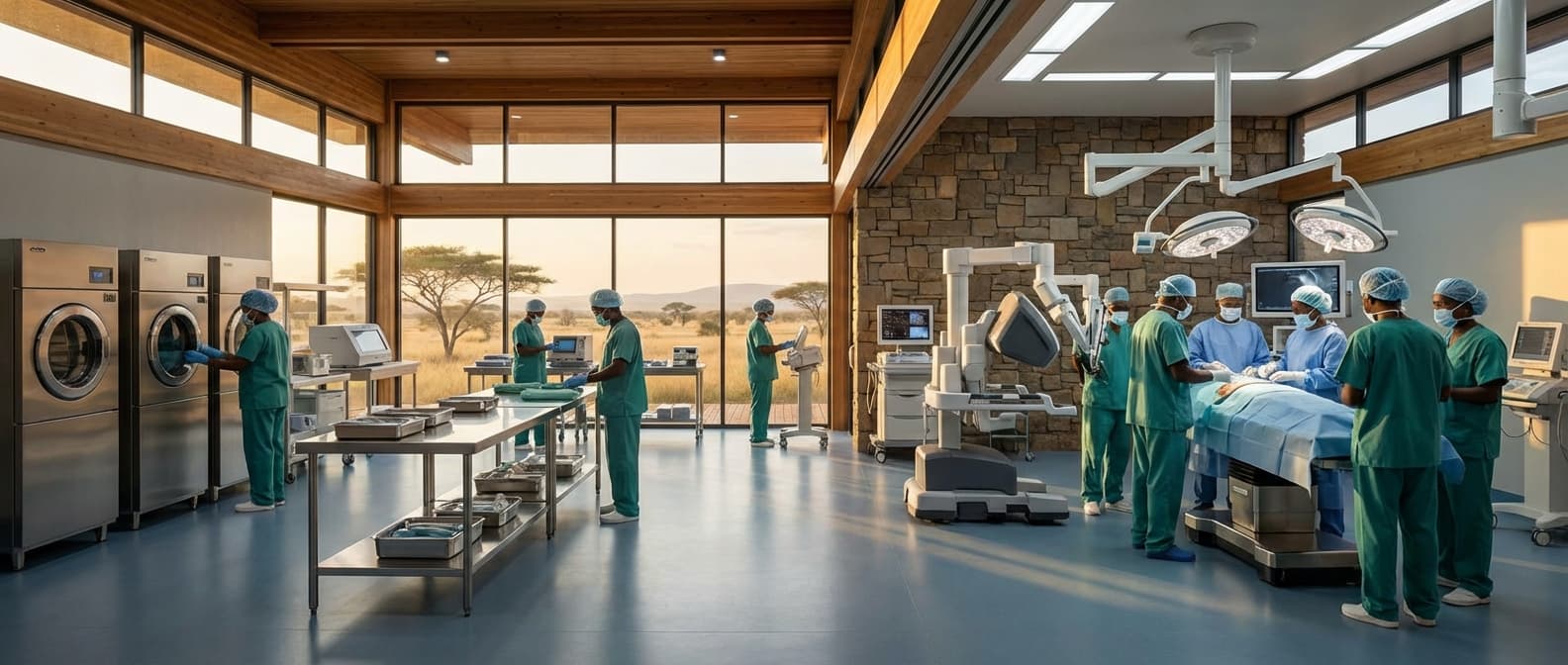
Medical Gas System Design & Installation in Uganda
Engineering Excellence & Technical Support
Medical gas pipeline systems: O2, N2O, air, vacuum High-standard technical execution following OEM protocols and local regulatory frameworks.
Ensuring Patient Safety with Medical Grade Air and Oxygen
Our rigorous design and installation protocols guarantee the supply of medical grade compressed air and oxygen, adhering to ISO 7396 standards. This ensures critical respiratory support for patients in Uganda's healthcare facilities, minimizing risks of contamination and hypoxia.
Optimized Medical Gas Distribution Networks
We implement smart system layouts and utilize high-quality, medical-grade piping materials to create efficient and reliable medical gas distribution networks. This design minimizes pressure drops and cross-contamination risks, ensuring consistent and safe delivery of gases like nitrous oxide and medical vacuum to points of use.
Robust Alarm and Monitoring Systems for Early Intervention
Our installations include sophisticated audible and visual alarm systems that provide real-time monitoring of gas pressures, purity, and supply continuity. This empowers healthcare providers in Uganda with immediate alerts to potential issues, enabling swift intervention and safeguarding patient well-being.
What Is Medical Gas System Design & Installation In Uganda?
Medical Gas System Design & Installation in Uganda refers to the specialized engineering and construction process of creating and implementing the infrastructure responsible for delivering essential medical gases (such as oxygen, medical air, nitrous oxide, vacuum, and waste anesthetic gas disposal) to patient care areas within healthcare facilities. This service encompasses the complete lifecycle from initial concept and detailed engineering design, through procurement of components, construction and assembly, rigorous testing and commissioning, to final handover and ongoing maintenance support. The design phase involves meticulous consideration of flow rates, pressure requirements, material compatibility, safety regulations (national and international standards), system redundancy, alarm integration, and architectural constraints. Installation requires skilled technicians adhering to strict protocols to ensure leak-free connections, proper equipment placement, and compliance with building codes and healthcare facility operational standards. The ultimate objective is to provide a reliable, safe, and efficient supply of medical gases to support a wide range of diagnostic, therapeutic, and life-sustaining patient interventions.
| Stakeholder/Facility Type | Need for Medical Gas Systems | Typical Use Cases |
|---|---|---|
| Hospitals (General, Specialized, Teaching) | Essential for a broad spectrum of patient care, including critical care, surgery, anesthesia, respiratory therapy, and emergency services. | Mechanical ventilation (oxygen, medical air), anesthesia delivery (nitrous oxide, oxygen, medical air, waste anesthetic gas disposal), resuscitation, aerosol therapy, patient suction (medical vacuum). |
| Health Centers and Clinics (Level II, III, IV) | Provides basic but crucial gas services for common medical procedures and stabilization of patients. | Oxygen therapy for respiratory distress, basic resuscitation, wound care (oxygen for healing in some contexts). |
| Surgical Centers and Day Hospitals | Supports elective surgical procedures and recovery phases. | Anesthesia administration, post-operative oxygen therapy, pain management (nitrous oxide). |
| Intensive Care Units (ICUs) and High Dependency Units (HDUs) | Critical for life support and continuous monitoring of critically ill patients. | Mechanical ventilation, high-flow oxygen therapy, continuous suctioning, advanced respiratory support. |
| Operating Rooms (ORs) | Indispensable for anesthesia, surgical procedures, and patient ventilation. | Anesthesia delivery and scavenging, ventilation during surgery, oxygenation of surgical teams (in some specialized applications). |
| Emergency Departments (EDs) | Provides immediate life-saving support for trauma and acute medical conditions. | Resuscitation, emergency oxygen administration, intubation support, management of respiratory emergencies. |
| Laboratories and Research Facilities (within healthcare settings) | May require specific gases for analytical equipment and experimental procedures. | Gas chromatography, mass spectrometry, cell culture incubation (e.g., CO2 mixtures). (Note: This is distinct from pure medical gas delivery for patient care but often integrated or considered in facility design). |
Key Components of Medical Gas System Design & Installation
- Central Gas Supply: Source equipment such as medical air compressors, oxygen generators or tanks, nitrous oxide cylinders, vacuum pumps, and waste anesthetic gas scavenging systems.
- Piping Network: Distribution of gases from the central supply to points of use via specialized, color-coded, and pressure-rated piping made from compatible materials (e.g., copper, stainless steel).
- Pressure Regulators and Control Panels: Devices to reduce and maintain gas pressure at appropriate levels for downstream use and to monitor system status.
- Alarm Systems: Critical for alerting staff to pressure deviations, system failures, or gas supply depletion.
- Outlet Stations: Wall-mounted or integrated connections providing access to specific medical gases at patient bedsides, operating rooms, and other clinical areas.
- Manifold Systems: For the seamless transition between primary and reserve gas supplies (e.g., from bulk liquid oxygen to cylinder backup).
- Safety Features: Including check valves, relief valves, and isolation valves to prevent cross-contamination and ensure operational safety.
- Ventilation and Scavenging Systems: For the safe removal of anesthetic gases from operating rooms.
- Testing and Commissioning: Comprehensive validation procedures, including pressure testing, leak detection, purity analysis, and functional verification of all system components and alarms.
Who Needs Medical Gas System Design & Installation In Uganda?
Specialized medical gas systems are critical components of modern healthcare facilities, ensuring the safe and reliable delivery of essential gases like oxygen, medical air, vacuum, and nitrous oxide. In Uganda, the demand for these systems is driven by a growing healthcare sector, a need for improved patient care, and the expansion of medical services. Various institutions and departments recognize the vital importance of these systems for diagnosis, treatment, and life support.
| Target Customer Segment | Key Departments/Applications | Why Medical Gas Systems are Crucial |
|---|---|---|
| Public Hospitals | Operating Theaters, ICUs, Emergency Rooms, General Wards, Respiratory Therapy | Provide life-saving oxygen, medical air for ventilation, anesthesia gases, and vacuum for suction. Essential for handling a wide range of medical conditions and emergencies. |
| Private Hospitals & Clinics | Surgical Suites, Recovery Rooms, Patient Rooms, Diagnostic Labs | Enhance patient comfort and safety with reliable oxygen supply, support anesthesia procedures, and utilize medical vacuum for procedures and waste management. Drives efficiency and patient satisfaction. |
| Specialty Medical Centers | Cardiac Cath Labs, Oncology Treatment Rooms, Pediatric Wards, Pulmonary Function Labs | Tailored gas mixtures for specific treatments (e.g., heliox for respiratory issues), critical oxygen supply for critical care in oncology and cardiology, and specialized gases for diagnostic equipment. |
| Maternity & Neonatal Units | Neonatal Intensive Care Units (NICUs), Delivery Rooms, Postnatal Wards | Essential for premature infant ventilation (oxygen, air), resuscitation, and pain management during labor (nitrous oxide). Guarantees survival and well-being of vulnerable newborns. |
| Surgical & Operating Theaters | Anesthesia Stations, Surgical Instruments (powered by medical air), Suction | Reliable and precise delivery of anesthetic gases, medical air for pneumatic surgical tools, and high-capacity vacuum for efficient fluid removal during complex surgeries. |
| Intensive Care Units (ICUs) & HDUs | Ventilators, Patient Monitoring Systems, Resuscitation Equipment | Constant and controlled supply of oxygen and medical air for life support ventilators. Crucial for patients with severe respiratory failure and critical conditions. |
| Research & Training Institutions | Laboratories, Simulation Centers, Teaching Hospitals | Support for medical research, training of healthcare professionals on the use of medical gases, and simulated patient care scenarios. |
Target Customers & Departments in Uganda Requiring Medical Gas System Design & Installation
- Public Hospitals (National, Regional, District)
- Private Hospitals & Clinics
- Specialty Medical Centers (e.g., Cardiac, Oncology, Pediatrics)
- Maternity & Neonatal Units
- Surgical & Operating Theaters
- Intensive Care Units (ICUs) & High Dependency Units (HDUs)
- Emergency Departments & Trauma Centers
- Rehabilitation Centers
- Research & Training Institutions with Medical Programs
- Government Health Ministries & Agencies
- International Aid Organizations & NGOs with Healthcare Projects
Medical Gas System Design & Installation Process In Uganda
Designing and installing a medical gas system in Uganda involves a structured workflow, from the initial client inquiry to the final handover and commissioning. This process ensures that the system meets stringent medical standards, regulatory requirements, and the specific needs of the healthcare facility. The stages are interconnected and require close collaboration between the client (healthcare facility), the design and installation company, and relevant authorities.
| Stage | Description | Key Activities | Responsible Parties | Typical Duration (Uganda Context) |
|---|---|---|---|---|
| Understanding the client's requirements and the facility's operational needs. | Site visit, consultation with medical staff and facility managers, defining scope, gas types, flow rates, pressure, number of outlets. | Client (Healthcare Facility), Design & Installation Company | 1-3 Weeks |
| Developing preliminary system layouts and assessing technical and financial viability. | Developing conceptual drawings, estimating costs, identifying potential challenges, preliminary selection of gas sources. | Design & Installation Company, Client | 2-4 Weeks |
| Creating comprehensive engineering drawings and specifications. | Producing detailed P&IDs (Piping and Instrumentation Diagrams), layout drawings, equipment schedules, calculations for pipe sizing, pressure drops, and flow rates. | Design & Installation Company (Engineers) | 4-8 Weeks |
| Obtaining necessary approvals from relevant Ugandan authorities. | Submitting design documents to Ministry of Health, National Drug Authority (NDA), National Environment Management Authority (NEMA), local government. Obtaining building and installation permits. | Design & Installation Company, Client (facilitator) | 4-12+ Weeks (can be a significant bottleneck) |
| Sourcing and purchasing all required components. | Ordering pipes, fittings, valves, regulators, alarms, patient outlets, gas sources (compressors, vacuum pumps, O2 generators), testing equipment. Ensuring compliance with standards (e.g., HTM, ISO). | Design & Installation Company, Suppliers | 4-10 Weeks (depending on lead times and international sourcing) |
| Preparing the construction site for installation. | Installing structural supports, creating trenches for buried pipes, preparing plant rooms, ensuring adequate ventilation. | Client (facility management), Construction Contractors, Design & Installation Company | 2-6 Weeks |
| Laying and connecting the medical gas piping throughout the facility. | Installing pipes (often copper), welding/brazing joints, installing shut-off valves, pressure relief valves, and ensuring leak-tightness. | Design & Installation Company (certified technicians) | 6-16 Weeks (depending on facility size) |
| Setting up the primary and secondary sources of medical gases. | Installing oxygen concentrators, medical air compressors, vacuum pumps, nitrous oxide systems, manifolds for cylinder banks, central control panels. | Design & Installation Company | 2-4 Weeks |
| Installing alarms, pressure gauges, and other monitoring devices. | Connecting alarm panels, local and central pressure/flow indicators, ensuring system can be monitored for pressure and purity. | Design & Installation Company | 1-2 Weeks |
| Verifying system integrity, performance, and safety. | Pressure testing, leak testing, flushing the system, purity testing (using gas chromatographs), flow rate verification, pressure regulation checks, alarm system testing. Final inspection by relevant authorities. | Design & Installation Company, Third-party validators, Client, Regulatory Authorities | 2-4 Weeks |
| Educating facility staff on system operation and maintenance. | Training for biomedical engineers, nurses, and technicians on operating controls, understanding alarms, basic troubleshooting, and emergency procedures. Providing O&M manuals. | Design & Installation Company, Client (staff) | 1 Week |
| Ensuring ongoing system functionality and compliance. | Scheduled preventative maintenance, reactive maintenance, spare parts management, annual system verification. Warranty period. | Design & Installation Company, Client (facility management) | Ongoing |
Key Stages in Medical Gas System Design & Installation in Uganda
- Initial Inquiry & Needs Assessment
- Conceptual Design & Feasibility Study
- Detailed Design & Engineering
- Regulatory Approvals & Permitting
- Procurement of Materials & Equipment
- Site Preparation & Civil Works
- Installation of Medical Gas Pipeline System
- Installation of Gas Sources (Cylinders, Manifolds, Central Plants)
- Installation of Control & Monitoring Equipment
- Testing, Commissioning & Validation
- Training & Handover
- Post-Installation Support & Maintenance
Medical Gas System Design & Installation Cost In Uganda
Designing and installing a medical gas system in Uganda involves several key factors that influence the overall cost. These systems are crucial for healthcare facilities, supplying essential gases like oxygen, medical air, vacuum, and nitrous oxide directly to patient care areas. The pricing is not uniform and varies significantly based on project scope, chosen materials, complexity of the design, and the specific requirements of the healthcare facility. Understanding these variables is essential for accurate budgeting and project planning in Uganda.
| Component/Service | Estimated Cost Range (UGX) | Notes |
|---|---|---|
| Medical Gas Piping (Copper) | 150,000 - 400,000 per meter | Varies by diameter, grade of copper, and installation complexity. |
| Medical Gas Outlets (per unit) | 80,000 - 250,000 per outlet | Depends on gas type, manufacturer, and integrated features. |
| Manifold Systems (e.g., Oxygen, Air) | 5,000,000 - 30,000,000+ per system | Includes automatic changeover, pressure regulation, and alarms. Cost increases with the number of cylinders supported and complexity. |
| Medical Air Compressors (System) | 10,000,000 - 50,000,000+ | Depends on capacity, redundancy (e.g., twin compressors), and quality. |
| Vacuum Pump Systems | 7,000,000 - 40,000,000+ | Similar to air compressors, based on capacity and redundancy. |
| Oxygen Concentrators/Generators (Bulk) | 20,000,000 - 150,000,000+ | For larger facilities; direct purchase or lease options available. Cost is highly dependent on output capacity. |
| Alarm & Monitoring Systems (per zone) | 2,000,000 - 10,000,000+ | Includes pressure monitoring, audible/visual alarms, and central monitoring units. |
| Design & Engineering Fees | 5% - 15% of total project cost | Professional fees for system design, specification, and project management. |
| Installation Labor (Skilled Technicians) | Varies greatly, often bundled in contractor quotes | Hourly or project-based rates; higher for specialized medical gas installation. |
| Testing & Commissioning | 2,000,000 - 15,000,000+ | Includes pressure testing, leak detection, gas purity testing, and system validation. |
| Complete Small Clinic System (Basic) | 50,000,000 - 150,000,000 | For a small clinic with 2-3 gases and limited outlets. |
| Medium Hospital System (Moderate) | 200,000,000 - 800,000,000 | For a medium-sized hospital with multiple departments and gases. |
| Large Hospital/Tertiary Care Center (Comprehensive) | 1,000,000,000+ | For large, complex facilities with high demand and redundancy requirements. Can run into billions of UGX. |
Key Pricing Factors for Medical Gas System Design & Installation in Uganda
- Scope and Size of the Facility: A larger hospital with more wards, operating theaters, and intensive care units will naturally require a more extensive and complex system, driving up costs compared to a smaller clinic.
- Number and Type of Medical Gases: The more gases required (e.g., oxygen, medical air, vacuum, nitrous oxide, carbon dioxide), and the more outlets needed, the higher the installation cost.
- System Complexity and Redundancy: The design's sophistication, including the need for backup systems, pressure monitoring, alarms, and automated switchovers, directly impacts the price.
- Material Quality and Brand: The choice of piping materials (copper is standard but can vary in grade), valves, regulators, outlets, and control panels from different manufacturers will influence the budget.
- Installation Labor and Expertise: The cost of skilled technicians and engineers trained in medical gas system installation is a significant component. Availability of specialized local expertise can affect pricing.
- Regulatory Compliance and Certification: Meeting national and international standards for medical gas systems often involves specific design requirements, material certifications, and rigorous testing, which add to the overall expense.
- Location and Accessibility: Remote or difficult-to-access locations within Uganda might incur higher transportation and logistics costs for materials and personnel.
- Ancillary Equipment: This includes the supply source (e.g., bulk oxygen tanks, medical air compressors, vacuum pumps), manifolds, pressure regulators, alarm systems, and user terminal units (outlets).
- Design and Engineering Fees: Professional services for the conceptualization, detailed design, and engineering of the system are a necessary upfront cost.
- Testing and Commissioning: Thorough testing of the system to ensure safety, performance, and compliance before handover is an integral part of the installation process and adds to the cost.
Affordable Medical Gas System Design & Installation Options
Designing and installing a medical gas system can be a significant investment for healthcare facilities. However, by exploring affordable options, value bundles, and strategic cost-saving measures, facilities can ensure essential medical gas infrastructure is implemented efficiently and economically. This approach prioritizes functionality, safety, and long-term reliability without compromising on quality.
| Strategy | Description | Potential Cost Savings |
|---|---|---|
| Value Bundles | Packages combining design, equipment, and installation from a single provider. | Streamlined procurement, potentially discounted pricing, predictable costs. |
| Phased Installation | Installing the system in stages over time, aligning with construction or expansion. | Spreads capital expenditure, aligns costs with project phases. |
| Strategic Equipment Sourcing | Comparing prices from multiple certified suppliers, considering refurbished parts for non-critical components. | Reduced upfront equipment costs, competitive bidding. |
| Modular Design | Utilizing scalable system components that can be added or modified as needs evolve. | Lower initial investment, avoidance of over-engineering. |
| Energy-Efficient Equipment | Investing in compressors and pumps with lower power consumption. | Reduced long-term operational (electricity) costs. |
| Standardized Components | Using common, widely available parts and fittings. | Lower maintenance and repair costs due to easier parts sourcing. |
| Preventive Maintenance Agreements | Contracts for regular system checks and servicing. | Reduced risk of costly emergency repairs, extended system lifespan. |
| Negotiation | Obtaining multiple quotes and actively negotiating with suppliers and installers. | Securing better pricing and contract terms. |
Value Bundles and Cost-Saving Strategies
- Value Bundles: These are often offered by medical gas system providers, combining design, equipment, installation, and sometimes even initial maintenance into a single package. Bundles can offer predictable pricing and streamline the procurement process.
- Phased Installation: For new construction or major renovations, consider a phased installation approach. This allows for the system to be installed in stages as the facility develops, spreading the cost over time and aligning with construction timelines.
- Equipment Sourcing Strategies: Explore options beyond a single manufacturer. Investigate reputable suppliers for high-quality, certified equipment at competitive prices. Consider refurbished or reconditioned equipment for non-critical components where appropriate, ensuring it meets all safety standards.
- Modular System Design: Modular components can offer flexibility and scalability. This means a smaller initial investment can be expanded later as needs grow, avoiding over-engineering from the outset.
- Energy-Efficient Equipment: While the initial cost might be slightly higher, investing in energy-efficient compressors and vacuum pumps can lead to significant long-term operational cost savings on electricity.
- Standardization of Components: Using standard, widely available medical gas components and fittings can reduce long-term maintenance and repair costs, as parts will be easier to source and less expensive.
- Preventive Maintenance Agreements: While an upfront cost, a comprehensive preventive maintenance agreement can prevent costly emergency repairs and extend the lifespan of the system.
- In-house Training vs. External Service: Evaluate the cost-benefit of training in-house maintenance staff for routine checks and minor adjustments versus relying solely on external service providers.
- Negotiation with Suppliers and Installers: Thoroughly research and obtain multiple quotes from qualified medical gas system designers and installers. Engage in negotiation to secure the best possible pricing for both design services and installation.
- Long-Term Planning and Scalability: Design the system with future expansion in mind. Over-designing for immediate needs can be wasteful. A well-planned, scalable system avoids costly retrofits later.
Verified Providers In Uganda
In Uganda's burgeoning healthcare landscape, identifying truly verified providers is paramount for ensuring quality care and patient safety. Franance Health stands out as a beacon of trust and excellence. This document outlines Franance Health's credentials and explains why they represent the best choice for individuals and organizations seeking reliable healthcare services in Uganda.
| Aspect | Franance Health's Commitment | Why it Matters to You |
|---|---|---|
| Regulatory Compliance | Full adherence to Uganda Ministry of Health standards and licensing. | Ensures you receive care from a legitimate and safe healthcare provider. |
| Medical Expertise | Employment of certified, experienced, and continuously trained medical professionals. | Guarantees you are treated by competent and up-to-date healthcare practitioners. |
| Service Excellence | Robust quality assurance systems and patient feedback integration. | Promises consistent high standards of care and a responsive approach to your needs. |
| Innovation | Adoption of modern medical technology and digital health solutions. | Offers access to advanced diagnostics and treatments for better health outcomes. |
| Patient Focus | Emphasis on personalized care, empathy, and clear communication. | Provides a comfortable and reassuring healthcare experience tailored to your individual situation. |
Franance Health's Verified Credentials and Strengths
- Accreditation and Licensing: Franance Health is fully accredited by the Uganda Ministry of Health and holds all necessary operational licenses. This signifies adherence to stringent regulatory standards and a commitment to ethical medical practices.
- Certified Medical Professionals: All healthcare professionals associated with Franance Health undergo rigorous background checks and possess valid certifications from recognized medical boards. This ensures a team of highly qualified and experienced doctors, nurses, and specialists.
- Quality Assurance Protocols: Franance Health implements comprehensive quality assurance protocols throughout its operations. This includes regular patient feedback mechanisms, continuous professional development for staff, and adherence to international best practices in healthcare delivery.
- Technological Integration: The organization leverages advanced medical technology and digital health solutions to enhance diagnostic accuracy, treatment efficacy, and patient accessibility. This includes electronic health records, telemedicine capabilities, and modern diagnostic equipment.
- Patient-Centric Approach: A cornerstone of Franance Health's philosophy is its unwavering commitment to patient well-being. They prioritize personalized care, transparent communication, and a supportive environment for all individuals seeking their services.
- Community Health Initiatives: Beyond direct patient care, Franance Health actively engages in community health initiatives, promoting preventative care and health education. This demonstrates a dedication to improving the overall health of the Ugandan population.
- Strategic Partnerships: Franance Health collaborates with reputable local and international healthcare organizations, fostering knowledge exchange and ensuring access to specialized expertise when needed.
Scope Of Work For Medical Gas System Design & Installation
This Scope of Work (SOW) outlines the requirements for the design and installation of a medical gas system. It covers all phases from initial conceptualization to final commissioning and handover, ensuring compliance with relevant codes and standards. The project aims to deliver a safe, reliable, and efficient medical gas distribution system tailored to the specific needs of the healthcare facility.
| Phase | Description | Technical Deliverables | Applicable Standards & Specifications |
|---|---|---|---|
| 1. Design & Engineering | Detailed design of the medical gas system, including layout, piping, equipment selection, and integration with existing infrastructure. This includes analysis of gas requirements, pressure drops, flow rates, and safety features. | Design Drawings:<br>- Architectural Layouts<br>- Mechanical Drawings (piping schematics, isometrics)<br>- Equipment Schedules<br>- Control Panel Schematics<br>- Alarm and Monitoring System Design<br>- System Capacity Calculations<br>- <br>Specifications:<br>- Detailed technical specifications for all materials and equipment. | NFPA 99 (Health Care Facilities Code)<br>NFPA 70 (National Electrical Code - for related electrical work)<br>ASME B31.3 (Process Piping)<br>Local building codes and health regulations.<br>Manufacturer's installation and operation manuals. |
| 2. Procurement & Fabrication | Sourcing and purchasing of all required materials, components, and equipment. Fabrication of specialized piping sections and assemblies as per approved design drawings. | Procurement Documentation:<br>- Bill of Materials (BOM)<br>- Purchase Orders<br>- Material Test Reports (MTRs)<br>Fabrication Records:<br>- Weld logs<br>- Fabrication drawings. | ASTM Standards for piping and fittings.<br>ISO 9001 (Quality Management Systems) for suppliers.<br>Project-specific material and equipment specifications. |
| 3. Installation | Installation of all piping, valves, regulators, alarms, outlets, and related equipment in accordance with design drawings, specifications, and relevant codes. This includes system pressure testing and purging. | Installation Reports:<br>- Daily progress reports<br>- Pressure test reports<br>- Purging and cleaning records<br>- As-built drawings. | NFPA 99 (Health Care Facilities Code)<br>ASME B31.3 (Process Piping)<br>Manufacturer's installation instructions.<br>Welding procedures and welder certifications. |
| 4. Testing, Commissioning & Validation | Comprehensive testing and commissioning of the entire medical gas system to ensure it meets design intent and performance requirements. This includes pressure, leak, and purity testing, as well as alarm functionality verification. | Test & Commissioning Reports:<br>- Leak test reports<br>- Pressure test reports<br>- Gas purity analysis reports<br>- Flow rate verification reports<br>- Alarm system test reports<br>- System operational verification report. | NFPA 99 (Health Care Facilities Code)<br>NFPA 101 (Life Safety Code - for related life safety aspects)<br>Manufacturer's testing procedures.<br>Validation protocols. |
| 5. Training & Handover | Provision of comprehensive training to facility maintenance staff on the operation, maintenance, and troubleshooting of the medical gas system. Formal handover of all project documentation. | Training Materials:<br>- Operations and Maintenance Manuals (O&M)<br>- Training agendas and attendance records<br>- As-built drawings<br>- Warranties and guarantees.<br>Handover Documentation:<br>- Final project acceptance certificate. | Manufacturer's O&M manuals.<br>Project-specific training curriculum. |
Key Project Phases and Activities
- Phase 1: Design & Engineering
- Phase 2: Procurement & Fabrication
- Phase 3: Installation
- Phase 4: Testing, Commissioning & Validation
- Phase 5: Training & Handover
Service Level Agreement For Medical Gas System Design & Installation
This Service Level Agreement (SLA) outlines the terms and conditions for the design and installation of a medical gas system, focusing on response times for support and uptime guarantees for critical system components during the initial warranty and ongoing maintenance periods. This SLA is intended to ensure the reliability, safety, and operational continuity of the medical gas system in accordance with relevant healthcare regulations and best practices.
| Service Level | Description | Guaranteed Response Time (during Business Hours) | Guaranteed Response Time (during Emergency/Off-Hours) | Uptime Guarantee (Critical Components) | Uptime Guarantee (Non-Critical Components) |
|---|---|---|---|---|---|
| Design Phase Support | Assistance with system design review, addressing queries related to standards, safety, and functionality. | 4 Business Hours | N/A (Design phase typically occurs during business hours) | N/A | N/A |
| Installation Phase Support | On-site presence or remote support for installation-related issues, troubleshooting, and coordination. | 2 Business Hours (for site-related issues) | N/A (Installation typically occurs during business hours) | N/A | N/A |
| Post-Installation Warranty Support (First Year) | Troubleshooting and repair of system defects or malfunctions arising from design or installation. | 2 Business Hours | 4 Business Hours | 99.5% | 98.0% |
| Ongoing Maintenance Support (Post-Warranty) | Troubleshooting and repair of system malfunctions under an active maintenance contract. | 4 Business Hours | 8 Business Hours | 99.0% | 97.0% |
| Scheduled Preventive Maintenance | Routine inspections, testing, and calibration as per regulatory requirements and manufacturer recommendations. | Scheduled in advance by mutual agreement | N/A | Not applicable (Maintenance is designed to ensure uptime) | Not applicable |
Key Definitions
- Medical Gas System: Refers to the integrated network of piping, outlets, alarms, regulators, and central supply equipment designed to deliver medical gases (e.g., oxygen, medical air, vacuum, nitrous oxide) to patient care areas.
- Critical System Component: Any part of the medical gas system whose failure could directly impact patient safety or the ability to deliver essential medical care. This includes, but is not limited to, central gas supply manifolds, master-type pressure alarms, and main shut-off valves.
- Downtime: The period during which the medical gas system, or a critical component thereof, is unavailable or not functioning correctly, rendering it unusable for its intended purpose.
- Response Time: The maximum allowable time from the initial notification of a service issue to the commencement of troubleshooting or corrective action by the service provider.
- Uptime Guarantee: The guaranteed percentage of time that the medical gas system, or its critical components, will be fully operational.
- Scheduled Maintenance: Routine inspections, tests, and preventative actions performed by the service provider on a predetermined schedule.
- Emergency Support: Support provided outside of standard business hours to address critical system failures that pose an immediate risk to patient safety.
- Business Hours: Typically Monday to Friday, 8:00 AM to 5:00 PM, excluding public holidays. Specific hours will be defined in the contract.
- Preventive Maintenance: Scheduled maintenance activities designed to prevent system failures and ensure optimal performance.
Frequently Asked Questions

Ready when you are
Let's scope your Medical Gas System Design & Installation in Uganda project in Uganda.

Scaling healthcare logistics and technical systems across the entire continent.