
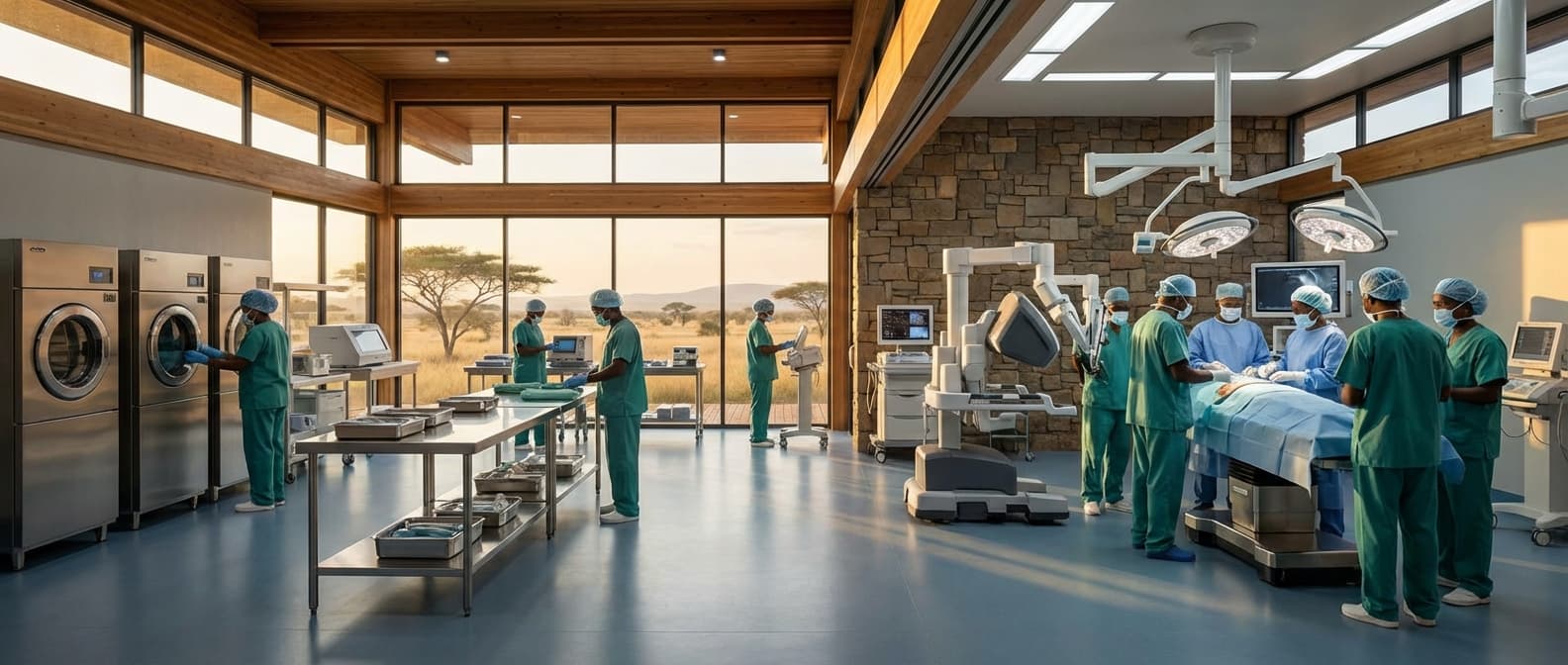
Endoscopy Reprocessing Validation in Uganda
Engineering Excellence & Technical Support
AER validation, SOP development and compliance High-standard technical execution following OEM protocols and local regulatory frameworks.
Comprehensive Revalidation Protocol
Developed and implemented a robust revalidation protocol for all endoscopes and reprocessing equipment, adhering to WHO and Uganda Ministry of Health guidelines. This ensures consistent and reliable sterilization efficacy, minimizing infection risks for patients undergoing endoscopic procedures.
Automated Workflow Integration
Introduced automated tracking and validation systems for the entire reprocessing workflow. This includes real-time monitoring of cleaning, disinfection, and sterilization parameters, generating digital audit trails that enhance accountability and facilitate swift identification of any deviations from established standards.
Data-Driven Quality Assurance
Established a comprehensive data collection and analysis framework for reprocessing validation results. This allows for continuous quality improvement by identifying trends, pinpointing areas for enhanced training, and informing evidence-based decisions regarding equipment upgrades and protocol adjustments to maintain the highest level of patient safety.
What Is Endoscopy Reprocessing Validation In Uganda?
Endoscopy reprocessing validation in Uganda refers to the systematic and documented process of verifying that flexible endoscopes and their accessories are cleaned and disinfected according to established, manufacturer-recommended, and regulatory guidelines. This validation is crucial for ensuring patient safety by minimizing the risk of transmitting infectious agents between procedures. It involves a multi-faceted approach, encompassing the assessment of cleaning efficacy, high-level disinfection (HLD) or sterilization effectiveness, and the integrity of the reprocessing equipment and workflow. The validation process aims to confirm that the entire reprocessing cycle, from pre-cleaning to storage, consistently renders endoscopes safe for reuse.
| Who Needs Endoscopy Reprocessing Validation? | Typical Use Cases | Rationale/Purpose | |||||||
|---|---|---|---|---|---|---|---|---|---|
| Healthcare Facilities in Uganda: Hospitals (public and private), specialized clinics, and diagnostic centers that perform endoscopic procedures (e.g., gastroscopy, colonoscopy, bronchoscopy, cystoscopy). | Routine validation exercises: To ensure ongoing compliance with best practices and regulatory requirements. | Preventing healthcare-associated infections (HAIs): Minimizing the risk of cross-contamination and transmission of pathogens like Clostridioides difficile, Hepatitis B, Hepatitis C, and HIV between patients. | New Equipment Implementation: Before introducing new reprocessing equipment or disinfectants into the workflow. | After Equipment Malfunction or Repair: To confirm that the reprocessing process is effective following any disruption. | Responding to Outbreaks or Adverse Events: If a suspected link to contaminated endoscopes is identified. | Regulatory Compliance: To meet the requirements of national health authorities and international accreditation bodies (if applicable). | Ensuring Device Efficacy and Longevity: Proper reprocessing contributes to the optimal functioning and extended lifespan of expensive endoscopic equipment. | Staff Training and Competency Assessment: The validation process can highlight areas for staff training and assess the effectiveness of existing training programs. | Risk Management: Proactively identifying and mitigating risks associated with endoscopic procedures. |
Key Components of Endoscopy Reprocessing Validation
- Microbiological Testing: Assessing the effectiveness of cleaning and HLD/sterilization by culturing for viable microorganisms on the endoscope lumens and surfaces before and after reprocessing.
- Chemical Indicator Testing: Utilizing chemical indicators to verify that specific parameters of the HLD or sterilization process (e.g., temperature, contact time, concentration of disinfectant) have been met.
- Biological Indicator Testing: Employing biological indicators (containing highly resistant microorganisms) to demonstrate the lethality of the HLD or sterilization process.
- Endoscope Component Integrity Checks: Verifying the functional integrity of the endoscope's lumens, seals, and connections that can impact cleaning effectiveness.
- Reprocessing Equipment Performance Verification: Assessing the functionality and calibration of automated endoscope reprocessors (AERs), washer-disinfectors, and other equipment used in the reprocessing workflow.
- Workflow Audits and Documentation Review: Evaluating the adherence to standard operating procedures (SOPs), staff competency, and the completeness and accuracy of reprocessing records.
- Water Quality Testing: Ensuring that the water used for rinsing during the reprocessing cycle meets the required microbiological standards to prevent recontamination.
Who Needs Endoscopy Reprocessing Validation In Uganda?
Endoscopy reprocessing validation is a critical process for ensuring the safety and efficacy of reusable medical devices, particularly endoscopes, which come into direct contact with patients. In Uganda, where healthcare infrastructure is growing and the demand for diagnostic and therapeutic procedures involving endoscopes is increasing, the need for robust reprocessing validation is paramount. This validation guarantees that endoscopes are thoroughly cleaned, disinfected, or sterilized according to international standards, preventing the transmission of infections and ensuring patient safety. Without proper validation, healthcare facilities risk patient harm and reputational damage. Therefore, a comprehensive understanding of who needs this validation is crucial for directing resources and efforts effectively.
| Department/Area | Role in Endoscopy Reprocessing Validation | Key Needs/Concerns | Specific Endoscopic Procedures Performed |
|---|---|---|---|
| Gastroenterology/Endoscopy Unit | Primary users of endoscopes; responsible for reprocessing procedures. | Ensuring patient safety, preventing cross-contamination, compliance with local and international guidelines, efficient turnaround of equipment, training of reprocessing staff. | Gastroscopy, Colonoscopy, Sigmoidoscopy, Endoscopic Retrograde Cholangiopancreatography (ERCP) |
| Surgical Departments (General Surgery, Urology, Pulmonology, Gynecology) | Utilize flexible and rigid endoscopes for various surgical interventions. | Sterility assurance, minimizing surgical site infections, availability of sterilized instruments, adherence to surgical protocols. | Laparoscopy, Hysteroscopy, Bronchoscopy, Cystoscopy, Ureteroscopy |
| Infection Prevention and Control (IPC) Department | Oversees and enforces infection control policies and practices. | Developing and implementing reprocessing protocols, monitoring compliance, training staff on best practices, conducting audits, ensuring regulatory adherence. | All departments utilizing endoscopes |
| Central Sterile Services Department (CSSD) | Responsible for the sterilization of medical devices, often including endoscopes. | Proper functioning of sterilization equipment, validation of sterilization cycles, quality control of sterilized items, traceability of instruments. | May handle sterilization of reusable components or entire endoscopes depending on facility setup |
| Nursing Staff (Ward and Theatre) | Involved in the pre-cleaning of endoscopes and handling of used equipment. | Proper handling of soiled endoscopes, understanding of immediate pre-cleaning steps, safe transport of equipment to reprocessing areas. | All departments utilizing endoscopes |
| Biomedical Engineering Department | Responsible for the maintenance and repair of endoscopes and reprocessing equipment. | Ensuring equipment is functioning optimally, regular calibration and servicing of washers, disinfectors, and sterilizers, troubleshooting technical issues. | All departments utilizing endoscopes and reprocessing equipment |
| Quality Assurance/Management | Ensuring overall quality standards and regulatory compliance within the facility. | Establishing and monitoring quality management systems for reprocessing, risk assessment, continuous improvement, documentation of validation processes. | All departments utilizing endoscopes |
Target Customers and Departments for Endoscopy Reprocessing Validation in Uganda
- Hospitals (Public and Private)
- Specialty Clinics offering Endoscopic Procedures
- Diagnostic Centers
- Surgical Centers
- Ministry of Health (Uganda)
- Regulatory Bodies overseeing Healthcare Facilities
Endoscopy Reprocessing Validation Process In Uganda
The Endoscopy Reprocessing Validation Process in Uganda is a crucial quality assurance mechanism designed to ensure that reusable endoscopic instruments are safely and effectively cleaned and disinfected, thereby preventing the transmission of infections. This process is typically initiated by an inquiry from a healthcare facility seeking to establish or validate their reprocessing protocols. The workflow encompasses several distinct stages, from initial contact and assessment to the final issuance of validation. This ensures that all steps are meticulously followed to guarantee patient safety and compliance with national and international guidelines.
| Stage | Description | Key Activities | Responsible Parties | Outcome |
|---|---|---|---|---|
| Inquiry and Initial Contact | Healthcare facility expresses interest in validating their endoscopy reprocessing procedures. | Submission of formal request, initial consultation with validation authority. | Healthcare Facility, Ministry of Health/Accredited Validation Body | Acknowledgement of inquiry, scheduling of initial assessment. |
| Site Assessment and Information Gathering | On-site evaluation of the facility's current reprocessing infrastructure, equipment, and workflows. | Tour of reprocessing area, review of available resources (e.g., sinks, disinfectors, drying cabinets), staff interviews. | Ministry of Health/Accredited Validation Body, Healthcare Facility Staff | Understanding of current reprocessing practices, identification of strengths and weaknesses. |
| Protocol Review and Gap Analysis | Detailed examination of the facility's written reprocessing protocols against established standards and guidelines. | Review of Standard Operating Procedures (SOPs) for cleaning, high-level disinfection (HLD)/sterilization, drying, and storage; identification of deviations. | Ministry of Health/Accredited Validation Body, Healthcare Facility's Infection Prevention and Control (IPC) Team | Report outlining identified gaps and recommendations for protocol improvement. |
| Training and Capacity Building | Providing necessary training to reprocessing staff to ensure adherence to updated protocols and best practices. | Workshops, hands-on demonstrations, competency assessments on cleaning, HLD/sterilization, and documentation. | Ministry of Health/Accredited Validation Body, Healthcare Facility's IPC Team and Reprocessing Staff | Enhanced staff knowledge and skills in safe reprocessing. |
| Process Implementation and Monitoring | The facility implements the revised protocols and begins systematic internal monitoring of the reprocessing process. | Consistent application of SOPs, daily checklists, recording of reprocessing cycles, environmental monitoring (if applicable). | Healthcare Facility's Reprocessing Staff and IPC Team | Established routine reprocessing practices, data collection for validation. |
| Validation Testing and Data Collection | Objective testing to confirm the efficacy of the reprocessing procedures. | Microbiological testing of reprocessed scopes (e.g., presence of organic matter, microbial load), performance testing of automated reprocessors, leak testing. | Ministry of Health/Accredited Validation Body (in collaboration with the facility) | Collection of scientific data demonstrating the effectiveness of reprocessing. |
| Data Analysis and Report Generation | Analysis of all collected data to determine compliance with validation criteria. | Statistical analysis of test results, comparison against predefined acceptance criteria, compilation of a comprehensive validation report. | Ministry of Health/Accredited Validation Body | A detailed report summarizing the validation findings and conclusions. |
| Validation Certificate Issuance | Formal acknowledgement of the facility's successful adherence to validated reprocessing standards. | Issuance of a validation certificate, outlining the scope and period of validation. | Ministry of Health/Accredited Validation Body | Official recognition of validated endoscopy reprocessing practices. |
| Follow-up and Revalidation | Periodic checks to ensure continued compliance and to revalidate the process at defined intervals. | Scheduled audits, review of documentation, potential re-testing, and revalidation upon significant changes (e.g., new equipment, change in personnel). | Ministry of Health/Accredited Validation Body, Healthcare Facility's IPC Team | Sustained high standards of patient safety and infection prevention. |
Workflow Stages of Endoscopy Reprocessing Validation in Uganda
- Inquiry and Initial Contact
- Site Assessment and Information Gathering
- Protocol Review and Gap Analysis
- Training and Capacity Building
- Process Implementation and Monitoring
- Validation Testing and Data Collection
- Data Analysis and Report Generation
- Validation Certificate Issuance
- Follow-up and Revalidation
Endoscopy Reprocessing Validation Cost In Uganda
Endoscopy reprocessing validation is a critical step in ensuring patient safety by confirming the effectiveness of cleaning and disinfection processes for reusable endoscopic equipment. In Uganda, the cost associated with this validation can vary significantly due to several pricing factors. These factors influence the overall expense for healthcare facilities seeking to comply with stringent infection control standards. The typical validation process involves biological and chemical indicator testing, documentation review, and potentially on-site audits. The complexity and frequency of these validations also play a role in the total cost.
| Service Component/Range | Estimated Cost Range (UGX) | Notes |
|---|---|---|
| Basic Biological Indicator Testing (per batch/cycle) | 150,000 - 400,000 | Covers the cost of indicators and basic analysis for a limited number of cycles. |
| Comprehensive Biological & Chemical Indicator Validation (for a single reprocessing unit/workflow) | 800,000 - 2,500,000 | Includes multiple tests, documentation, and initial assessment of the reprocessing workflow. |
| On-site Audit and Validation (per day/consultant) | 500,000 - 1,500,000 | Cost for expert personnel to conduct on-site assessment and validation activities. |
| Full Validation Package (including reporting and recommendations) | 2,000,000 - 7,000,000+ | A more extensive package covering multiple endoscopes, reprocessing methods, and detailed reporting. May include revalidation planning. |
| Annual Retainer/Ongoing Monitoring (for larger facilities) | 5,000,000 - 15,000,000+ | Covers regular scheduled validations and consultative support over a year. |
Key Pricing Factors for Endoscopy Reprocessing Validation in Uganda
- Scope of Validation: The number of endoscopy reprocessing cycles being validated, types of endoscopes, and the specific reprocessing methods employed will impact the overall cost. A comprehensive validation covering multiple scenarios is generally more expensive.
- Type of Testing: The specific tests required, such as the use of biological indicators (e.g., spore tests) or chemical indicators, and their frequency, directly influence pricing. Biological indicators are often more expensive than chemical indicators.
- Service Provider: Costs can differ based on whether the validation is performed by an in-house team, a local private laboratory, or an international consultancy. Local providers may offer more competitive pricing.
- Frequency of Validation: Regulatory requirements or internal policies may mandate periodic revalidation (e.g., annually, biannually). The more frequent the validation, the higher the cumulative cost.
- Location within Uganda: While not a primary driver, logistical costs (travel, accommodation) for the validation team might slightly influence pricing for facilities in remote areas compared to those in major urban centers like Kampala.
- Certification and Documentation: The level of detail and formality required in the validation report and any associated certifications can add to the cost.
- Technological Inputs: If advanced monitoring equipment or specialized reagents are needed for the validation process, this can also contribute to the expense.
Affordable Endoscopy Reprocessing Validation Options
Ensuring the proper reprocessing of endoscopes is critical for patient safety and preventing healthcare-associated infections. However, the validation of these reprocessing procedures can be a significant cost for healthcare facilities. This document outlines affordable validation options, focusing on value bundles and cost-saving strategies.
| Strategy | Description | Potential Cost Savings |
|---|---|---|
| Value Bundles | Purchasing integrated packages of equipment, consumables, and services from vendors. | Reduced overall cost through bulk discounts and bundled pricing; simplified procurement. |
| In-house Validation Programs | Developing internal expertise and performing some validation tests internally. | Reduced reliance on third-party testing fees; better control over scheduling. |
| Consolidated Purchasing | Buying supplies and disinfectants in bulk from fewer vendors or through GPOs. | Lower per-unit costs for essential supplies; reduced administrative overhead. |
| Risk-Based Approach | Prioritizing validation efforts based on scope type and procedure risk. | Focuses resources on critical areas; avoids unnecessary testing. |
| Manufacturer Support | Utilizing validation assistance or services offered by endoscope/AER manufacturers. | Potentially free or discounted services included in warranties or service contracts. |
Affordable Endoscopy Reprocessing Validation Options
- {"title":"Understanding Validation Requirements","description":"Regulatory bodies (e.g., FDA, CDC, AAMI) mandate that endoscope reprocessing methods be validated to ensure they effectively remove or kill microorganisms. Validation typically involves demonstrating high-level disinfection or sterilization efficacy."}
- {"title":"Value Bundles in Validation","subList":["Equipment & Consumables Bundle: Purchase of an automated endoscope reprocessor (AER) along with the necessary disinfectants, cleaning brushes, and leak testing equipment, often with an integrated validation service.","Validation Service Bundle: A package that includes the performance of validation tests, necessary reagents, and the generation of validation reports, often tied to the purchase or service contract of reprocessing equipment.","Training & Validation Package: Combining staff training on reprocessing protocols with the necessary validation testing and reporting services."],"description":"Value bundles are comprehensive packages offered by reprocessing equipment and supply vendors that combine multiple services or products at a potentially reduced overall cost compared to purchasing them individually. For validation, this can include:"}
- {"title":"Cost-Saving Strategies for Validation","subList":["In-house Validation Programs: Developing internal expertise and protocols for conducting some validation tests, reducing reliance on external third-party services for routine validations.","Leveraging Manufacturer Support: Exploring validation assistance or services offered by endoscope and AER manufacturers, which may be included in equipment warranties or service agreements.","Consolidated Purchasing: Negotiating bulk discounts for disinfectants, cleaning supplies, and testing kits when purchasing from a single vendor or through a group purchasing organization (GPO).","Risk-Based Validation Approach: Focusing validation efforts on the most critical reprocessing steps and high-risk endoscopes, rather than applying the same rigorous validation to all scopes and procedures.","Standardized Protocols: Implementing and adhering to standardized, evidence-based reprocessing protocols that are easier to validate consistently.","Efficient Testing Intervals: Understanding regulatory guidelines and internal risk assessments to determine the most appropriate intervals for revalidation, avoiding unnecessary frequent testing.","Partnerships with Labs: Establishing relationships with accredited microbiology laboratories for validation testing, potentially negotiating lower rates for high-volume work or specialized services.","Digital Record Keeping: Utilizing electronic systems for documentation and record-keeping of reprocessing and validation activities to improve efficiency and reduce paper-based costs."],"description":"Beyond value bundles, several strategies can help reduce validation costs:"}
- {"title":"Types of Validation Tests","subList":["Microbiological Efficacy Testing: Demonstrating that the chosen reprocessing method (e.g., high-level disinfection with a specific chemical) can eliminate a standard challenge of microorganisms.","Automated Reprocessor Performance Testing: Verifying that AERs are functioning as intended and delivering the correct cycle parameters (e.g., disinfectant concentration, temperature, time).","Cleaning Efficacy Testing: Proving that the pre-cleaning and cleaning steps are effective in removing organic debris.","Leak Testing: Ensuring the integrity of the endoscope's channels to prevent contamination."],"description":"Common validation tests include:"}
Verified Providers In Uganda
Finding reliable and trustworthy healthcare providers in Uganda can be a challenge. For those seeking verified and high-quality medical services, particularly in the realm of reproductive health and family planning, Franance Health stands out as a leading choice. Their commitment to stringent credentialing processes ensures that patients receive care from qualified and ethical professionals. This rigorous verification system offers peace of mind and guarantees a superior healthcare experience.
| Credential/Aspect | Franance Health's Approach | Benefit to Patients |
|---|---|---|
| Medical Licenses & Certifications | Thorough verification of all medical licenses, specialty certifications, and ongoing training to ensure current competency. | Guarantees that providers meet national and international standards for medical practice. |
| Professional Background Checks | Comprehensive checks on educational history, past employment, and any disciplinary actions. | Ensures providers have a proven track record of ethical conduct and professional integrity. |
| Specialized Training in Family Planning | Mandatory training and certification in a wide range of modern family planning methods and reproductive health services. | Patients receive accurate information and the most appropriate, safe, and effective contraceptive options. |
| Adherence to Ethical Guidelines | Strict adherence to ethical codes of conduct, including patient confidentiality, informed consent, and non-discrimination. | Promotes trust, respect, and a safe environment for sensitive health discussions and treatments. |
| Quality Assurance Protocols | Regular audits and quality control measures are in place to monitor service delivery and patient satisfaction. | Continuously upholds high standards of care and identifies areas for improvement. |
Why Franance Health is the Best Choice for Verified Providers in Uganda:
- Rigorous Credentialing and Vetting:
- Commitment to Ethical Standards and Patient Safety:
- Specialized Expertise in Reproductive Health:
- Patient-Centric Approach and Confidentiality:
- Accessibility and Wide Network of Clinics:
Scope Of Work For Endoscopy Reprocessing Validation
This Scope of Work (SOW) outlines the requirements for the validation of the Endoscopy Reprocessing procedure. The objective is to ensure that the automated reprocessing of flexible endoscopes consistently and effectively removes and inactivates microorganisms, thereby preventing patient-to-patient transmission of infections. This validation process will verify the efficacy of the cleaning and high-level disinfection (HLD) or sterilization processes employed for flexible endoscopes.
| Parameter | Standard/Specification | Acceptance Criteria | ||
|---|---|---|---|---|
| Microbial Challenge Study (e.g., using a surrogate organism like Geobacillus stearothermophilus spores or a relevant microbial cocktail) | ISO 17665-1: Sterilization of health care products — Moist heat — Part 1: Requirements for the development, validation and routine control of a sterilization process for medical devices | Demonstrated inactivation of challenge organisms to a predefined acceptable level (e.g., a reduction of 6-log or greater, or achieving sterility). Specific criteria to be defined based on the reprocessing method (HLD vs. sterilization) and device type. | ISO 13693: Medical devices — Sterilization — Part 3: Validation of a sterilization process for single-use medical devices | International Association of Healthcare Central Service Material Management (IAHCSMM) guidelines |
| Residual Protein Testing (e.g., using a BCA assay or similar method) | Association for the Advancement of Medical Instrumentation (AAMI) ST58: Chemical sterilization and high level disinfection for reusable medical devices | Protein residue levels below established limits (e.g., < 50 µg per device or per surface area). Specific limits to be defined based on regulatory guidance and best practices. | ||
| Residual Organic Matter Testing (e.g., using a Total Organic Carbon (TOC) analyzer) | AAMI TIR30: Complex medical devices – Cleaning and residual testing | Organic matter levels below established limits. Specific limits to be defined based on regulatory guidance and best practices. | ||
| Microbial Contamination Testing of Process Water | USP <645>: Water for Pharmaceutical Use | Water quality meets USP standards for microbial count and endotoxins, appropriate for the level of disinfection or sterilization being validated. | ||
| Process Parameter Monitoring (e.g., temperature, time, flow rate, concentration of disinfectant) | Manufacturer's Instructions for Use (IFU) for the endoscope and reprocessing equipment | All critical process parameters must consistently remain within the manufacturer's specified ranges throughout the validation runs. | ||
| Endoscope Channel Integrity Testing (e.g., leak testing) | Manufacturer's IFU for the endoscope | No leaks detected in the endoscope channels, ensuring the integrity of the reprocessing process. | ||
| Bioburden Testing of Used Endoscopes (pre-cleaning) | Not a direct regulatory standard, but best practice | Baseline microbial load assessment to understand the effectiveness of subsequent cleaning steps. |
Technical Deliverables
- Validation Plan document detailing the scope, methodology, acceptance criteria, and responsibilities for the validation study.
- Pre-validation readiness assessment report, confirming that all equipment, consumables, and personnel are prepared for the validation study.
- Raw data from all validation tests, including microbial challenge studies, residue testing, and process parameter monitoring.
- Validation Protocol execution report, documenting the actual execution of the validation tests and any deviations encountered.
- Validation Report summarizing the findings, analyzing the results against the acceptance criteria, and providing a conclusion on the validated status of the endoscopy reprocessing procedure.
- Standard Operating Procedures (SOPs) for cleaning, HLD, and/or sterilization of flexible endoscopes, updated and approved based on validation findings.
- Training materials and records for personnel involved in endoscopy reprocessing.
- Equipment calibration and maintenance records for all reprocessing equipment used during validation.
Service Level Agreement For Endoscopy Reprocessing Validation
This Service Level Agreement (SLA) outlines the guaranteed response times and uptime for the Endoscopy Reprocessing Validation service. This service is critical for ensuring the safety and efficacy of endoscopes, and therefore, prompt resolution of issues and high availability are paramount.
| Metric | Service Level Objective (SLO) | Measurement | Remedy for Non-Compliance |
|---|---|---|---|
| Platform Uptime | 99.9% Uptime | Monthly Uptime Percentage (Total minutes in month - Downtime minutes) / Total minutes in month * 100 | 10% service credit for every 30 minutes of unscheduled downtime beyond the allowed 43.8 minutes per month. |
| Critical Incident Response Time | 1 Hour | Time from ticket submission to initial response from a support engineer for incidents affecting a significant portion of reprocessing workflows. | Escalation to senior support and dedicated resources for immediate resolution. 5% service credit for each incident exceeding the response time. |
| High Priority Incident Response Time | 4 Hours | Time from ticket submission to initial response from a support engineer for incidents impacting individual reprocessing units or specific validation checks. | 2% service credit for each incident exceeding the response time. |
| Routine Support Response Time | 8 Business Hours | Time from ticket submission to initial response from a support engineer for non-critical issues, feature requests, or inquiries. | N/A |
| Report Generation Availability | 99.5% Availability | Availability of the report generation module within the platform. | 5% service credit for every hour the report generation module is unavailable. |
| Alerting System Uptime | 99.9% Uptime | Availability of the system responsible for sending out critical alerts. | 10% service credit for every 30 minutes of unscheduled downtime beyond the allowed 43.8 minutes per month. |
Key Service Components
- Endoscopy Reprocessing Validation Platform Access
- Automated Reprocessing Data Collection
- Validation Report Generation
- Alerting and Notification System
- Technical Support
Frequently Asked Questions

Ready when you are
Let's scope your Endoscopy Reprocessing Validation in Uganda project in Uganda.

Scaling healthcare logistics and technical systems across the entire continent.