
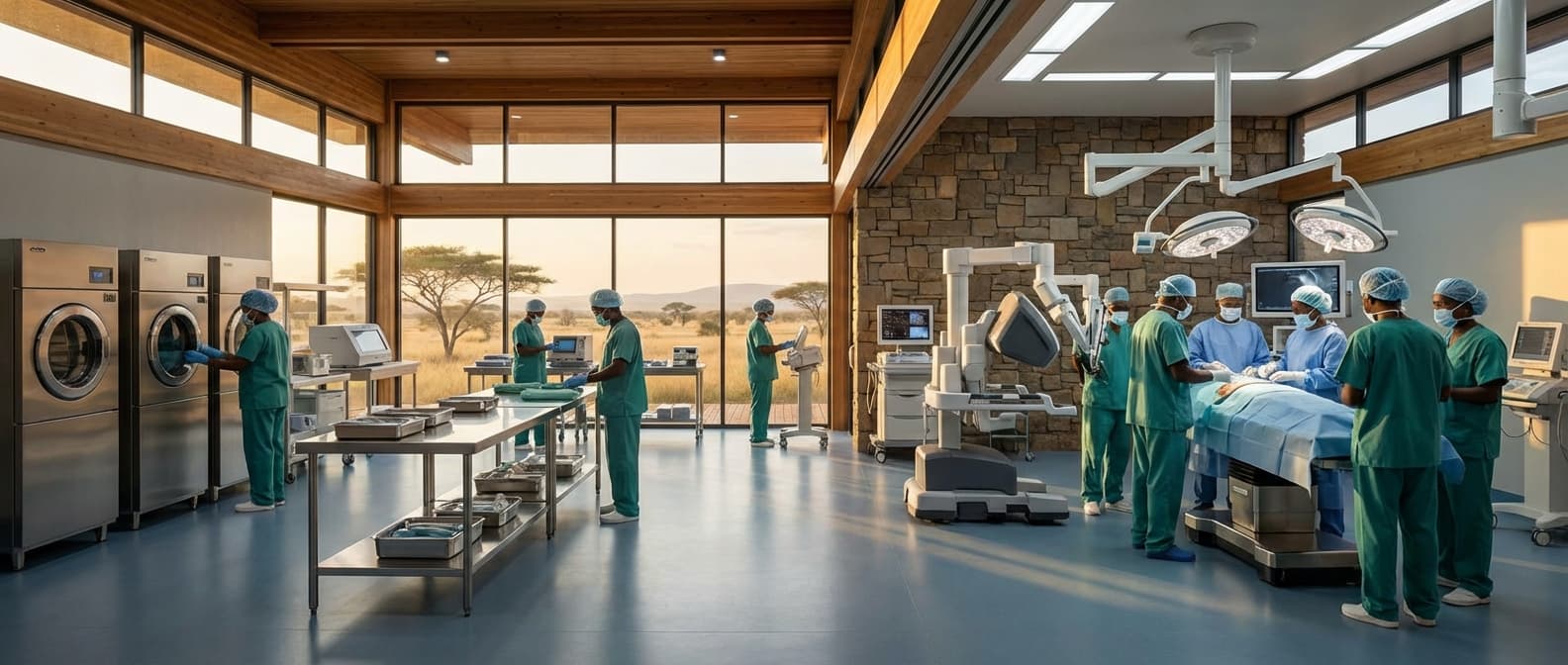
CSSD Design & Validation in Uganda
Engineering Excellence & Technical Support
CSSD workflow design, validation and process development High-standard technical execution following OEM protocols and local regulatory frameworks.
Advanced CAD Modeling for CSSD Layouts
Leveraging state-of-the-art Computer-Aided Design (CAD) software, we create detailed, 3D models of Central Sterile Supply Department (CSSD) layouts. This allows for precise placement of equipment, workflow optimization, and visualization of sterile processing zones, ensuring compliance with international standards and efficient spatial utilization within Ugandan healthcare facilities.
Rigorous Validation Protocols for Sterilization Processes
We implement comprehensive validation protocols to ensure the efficacy and reliability of all sterilization processes within CSSD. This includes IQ (Installation Qualification), OQ (Operational Qualification), and PQ (Performance Qualification) for autoclaves, sterilizers, and associated equipment, guaranteeing that instruments are safely and effectively sterilized to prevent healthcare-associated infections in Uganda.
Workflow Analysis and Process Re-engineering
Our team conducts in-depth analysis of existing CSSD workflows to identify bottlenecks, inefficiencies, and potential risks. We then apply principles of process re-engineering to design streamlined, logical, and safe material flow pathways. This ensures optimal throughput, reduced turnaround times for sterile instruments, and enhanced operational efficiency for Ugandan hospitals and clinics.
What Is Cssd Design & Validation In Uganda?
Central Sterile Supply Department (CSSD) Design & Validation in Uganda refers to the comprehensive process of planning, configuring, and verifying the optimal functionality and compliance of a CSSD facility. This service ensures that the department is engineered to meet stringent international standards for sterilization, disinfection, and the safe reprocessing of medical devices, thereby minimizing the risk of healthcare-associated infections (HAIs). It encompasses the architectural layout, workflow optimization, equipment selection and integration, environmental control systems, and rigorous testing protocols to confirm that all processes and equipment perform within specified parameters and regulatory requirements. This is crucial for healthcare facilities in Uganda seeking to enhance patient safety, improve operational efficiency, and adhere to evolving healthcare regulations.
| Service/Component | Description | Target Audience in Uganda | Typical Use Cases |
|---|---|---|---|
| CSSD Design Consultation | Expert advice on optimal layout, workflow, and space utilization. | New hospital construction, existing hospital expansions, refurbishment of old CSSD units. | Planning a new CSSD facility from inception, optimizing space in a cramped existing facility, ensuring compliance with modern standards. |
| Equipment Specification & Procurement Assistance | Defining technical requirements for sterilization and disinfection equipment. | Hospitals, clinics, surgical centers, diagnostic laboratories with sterilization needs. | Purchasing new autoclaves or washer-disinfectors, upgrading obsolete equipment, ensuring compatibility with existing infrastructure. |
| Process Workflow Engineering | Analyzing and optimizing the movement of instruments and personnel to prevent cross-contamination. | Any healthcare facility performing invasive procedures. | Reducing turnaround time for sterile instruments, minimizing the risk of HAI transmission through instrument reprocessing, improving staff efficiency. |
| Environmental & Infrastructure Assessment | Evaluating and designing HVAC, water, and power systems for sterile processing environments. | Hospitals, specialized surgical centers, facilities with high volumes of sterile processing. | Ensuring correct air pressure differentials in cleanrooms, verifying water quality for sterilization, guaranteeing uninterrupted power supply for critical equipment. |
| Validation Services (IQ/OQ/PQ) | Testing and documenting that equipment and processes meet established performance criteria. | Hospitals, surgical centers, dental clinics, private laboratories, governmental health institutions. | Initial validation of new sterilization equipment, revalidation after maintenance or repair, routine performance verification to ensure ongoing efficacy, compliance with regulatory audits. |
| Regulatory Compliance Audits & Gap Analysis | Assessing existing CSSD operations against national and international standards. | All healthcare facilities seeking accreditation or facing regulatory scrutiny. | Preparing for ISO certification, addressing deficiencies identified in previous audits, ensuring compliance with Ministry of Health directives. |
Key Components of CSSD Design & Validation
- Workflow Analysis & Optimization: Mapping the entire lifecycle of medical instruments from point of use to sterile storage, identifying bottlenecks and redundancies.
- Space Planning & Layout Design: Allocating appropriate zones for receiving, cleaning, disinfection, packaging, sterilization, sterile storage, and distribution, adhering to unidirectional workflow principles.
- Equipment Specification & Selection: Identifying and specifying appropriate cleaning, disinfection, packaging, and sterilization equipment (e.g., autoclaves, washer-disinfectors, ultrasonic cleaners) based on capacity, throughput, and technology.
- Environmental Control Systems: Designing and implementing HVAC systems to manage air changes, temperature, humidity, and pressure differentials in critical areas.
- Material & Finishes Selection: Specifying durable, non-porous, and easily cleanable materials for surfaces, floors, and walls.
- Utilities Infrastructure: Ensuring adequate and reliable provision of water (quality and quantity), electricity, steam, and medical gases.
- Regulatory Compliance Integration: Incorporating requirements from relevant national and international standards (e.g., ISO 13485, AAMI standards, Ministry of Health guidelines).
- Operational Protocols Development: Creating standard operating procedures (SOPs) for all CSSD processes.
- Commissioning & Qualification (IQ/OQ/PQ):
- Installation Qualification (IQ): Verifying that equipment is installed correctly according to manufacturer specifications and design requirements.
- Operational Qualification (OQ): Testing equipment functionality across its operational range to ensure it performs as intended.
- Performance Qualification (PQ): Validating that the entire process, including equipment and personnel, consistently produces sterile products meeting predefined specifications under real-world conditions.
- Staff Training & Competency Assessment: Ensuring personnel are adequately trained on equipment operation, infection control principles, and SOPs.
Who Needs Cssd Design & Validation In Uganda?
Central Sterile Services Departments (CSSDs) are the backbone of any healthcare facility, ensuring the safety and efficacy of medical procedures by sterilizing and managing reusable medical instruments. In Uganda, where the healthcare sector is continuously striving for improvement and adherence to international standards, the need for expert CSSD design and validation services is paramount. These services are not just about meeting regulatory requirements; they are crucial for optimizing workflows, minimizing risks of healthcare-associated infections (HAIs), enhancing patient safety, and ultimately, improving the overall quality of healthcare delivery.
| Target Customer/Department | Key Needs/Reasons for CSSD Design & Validation | Specific Benefits |
|---|---|---|
| Public Hospitals (e.g., Mulago National Referral Hospital, Regional Hospitals) | High volume of surgeries and procedures; need for standardized, efficient workflows; compliance with national health policies; risk reduction of HAIs. | Improved patient safety, reduced infection rates, extended lifespan of expensive medical equipment, optimized resource utilization. |
| Private Hospitals and Clinics (e.g., International Medical Centre, Bugolobi Medical Centre) | Maintaining high standards of patient care and reputation; attracting specialized medical practitioners; efficient turnaround of instruments for busy schedules; compliance with international accreditation standards. | Enhanced patient trust and satisfaction, competitive advantage, operational efficiency, cost-effectiveness through proper equipment maintenance. |
| Specialized Surgical Centers (e.g., Ophthalmology, Orthopedics) | Handling of delicate and specialized instruments; strict sterility requirements for invasive procedures; specific workflow needs for unique instrument sets. | Prevention of surgical site infections, successful procedure outcomes, optimized use of specialized equipment. |
| Dental Clinics | Sterilization of small, intricate instruments; infection control for oral procedures; patient and staff safety. | Safe dental practices, prevention of cross-contamination, increased patient confidence. |
| Endoscopy Units | High-level disinfection and sterilization protocols for flexible endoscopes; prevention of transmission of infections. | Reduced risk of endoscope-related infections, compliance with guidelines for reprocessing endoscopes. |
| Maternity and Neonatal Units | Ensuring sterile instruments for deliveries, C-sections, and neonatal care; preventing neonatal infections. | Improved maternal and infant health outcomes, reduction in neonatal sepsis. |
| Ministry of Health (Uganda) | Setting and enforcing national healthcare standards; oversight of public health facilities; ensuring quality of care across the nation. | Upholding national health objectives, ensuring uniformity in healthcare quality, facilitating effective public health programs. |
| NGOs and International Health Organizations | Establishing and upgrading healthcare infrastructure in underserved areas; ensuring compliance with global health standards for supported facilities. | Effective deployment of resources for healthcare development, sustainable healthcare solutions, measurable impact on public health. |
Target Customers and Departments in Uganda Requiring CSSD Design & Validation
- {"title":"Hospitals (Public and Private)","description":"These are the primary users of CSSD services. Both large national referral hospitals and smaller regional or private clinics rely heavily on sterilized equipment for a wide range of surgical and diagnostic procedures."}
- {"title":"Specialized Clinics and Diagnostic Centers","description":"Facilities focusing on specific areas like dental, ophthalmology, endoscopy, and minor surgical procedures require dedicated and properly designed CSSD spaces to handle their unique instrumentation."}
- {"title":"Maternity and Neonatal Units","description":"These units have critical needs for sterile equipment to ensure the health and safety of mothers and newborns during childbirth and subsequent care."}
- {"title":"Government Health Ministries and Regulatory Bodies","description":"Entities responsible for setting healthcare standards, licensing facilities, and ensuring patient safety will benefit from validated CSSD designs that meet national and international guidelines."}
- {"title":"NGOs and International Aid Organizations","description":"Organizations involved in healthcare provision, particularly those supporting public health initiatives or establishing new health facilities, will require expertise in CSSD setup and compliance."}
- {"title":"Medical Training Institutions","description":"Universities and colleges with medical or nursing programs often have associated hospitals or simulation labs where proper CSSD practices are essential for training future healthcare professionals."}
Cssd Design & Validation Process In Uganda
This document outlines the standard workflow for the Design and Validation Process of a Central Sterile Services Department (CSSD) in Uganda, from initial inquiry to project completion. This structured approach ensures that the CSSD meets all necessary standards, regulatory requirements, and operational needs for effective sterilization and infection control within a healthcare facility.
| Stage | Key Activities | Responsible Parties | Deliverables/Outputs | Typical Duration (Weeks) |
|---|---|---|---|---|
| Facility expresses interest. Initial meeting to understand scope, objectives, and budget. Site visit may be conducted. | Healthcare Facility Management, Potential CSSD Consultant/Designer | Understanding of project requirements, preliminary proposal. | 1-2 |
| Detailed analysis of current sterilization practices, patient volume, types of procedures, infection control policies. Assessment of existing infrastructure and resources. Determination of CSSD size and capacity requirements. Regulatory compliance check (Ministry of Health guidelines, international standards). | Healthcare Facility Management, CSSD Consultant/Designer, Infection Control Team, Biomedical Engineers | Needs assessment report, feasibility study report, preliminary budget. | 2-4 |
| Development of a preliminary layout for the CSSD, including functional zones (decontamination, preparation & packing, sterilization, storage, administration). Consideration of workflow, material flow, personnel flow, ventilation, lighting, and waste management. Adherence to international standards (e.g., ISO, AAMI). | CSSD Consultant/Designer, Architect, Biomedical Engineers | Conceptual drawings, block diagrams, preliminary space allocation, workflow diagrams. | 3-6 |
| Finalization of architectural and engineering designs. Detailed room layouts, electrical, plumbing, HVAC specifications. Preparation of comprehensive specifications for all CSSD equipment (autoclaves, washer-disinfectors, ultrasonic cleaners, drying cabinets, sterile storage cabinets, instrument tracking systems). Procurement strategy development. | CSSD Consultant/Designer, Architects, Mechanical & Electrical Engineers, Procurement Department | Detailed design drawings (architectural, MEP), equipment technical specifications, bill of quantities (BoQ), tender documents. | 4-8 |
| Issuance of tender documents to pre-qualified suppliers/contractors for construction, equipment supply, and installation. Evaluation of bids based on technical compliance, price, and experience. Selection of preferred contractor(s). Contract negotiation and award. | Procurement Department, Facility Management, CSSD Consultant/Designer | Awarded contracts for construction and equipment supply/installation. | 6-10 |
| Construction of the CSSD facility according to approved designs. Installation of all necessary infrastructure (plumbing, electrical, HVAC, medical gases). Installation of CSSD equipment by approved vendors. | Main Contractor, Sub-contractors, Equipment Suppliers/Installers | Completed CSSD construction, installed equipment. | Variable (depending on project scope, typically 3-9 months) |
| Verification of correct installation and functionality of all CSSD equipment. Performance testing to ensure equipment meets manufacturer specifications and operational requirements. Calibration of critical parameters. | Equipment Suppliers/Installers, Biomedical Engineers, CSSD Consultant/Designer | Commissioning reports, performance test results, calibration certificates. | 2-4 |
| Formal verification that the entire CSSD system (equipment, processes, and personnel) consistently meets predefined specifications and quality standards for sterilization. This includes Installation Qualification (IQ), Operational Qualification (OQ), and Performance Qualification (PQ). Testing with biological and chemical indicators. | CSSD Consultant/Designer, Biomedical Engineers, Quality Assurance Team, Ministry of Health Representatives (if required) | IQ, OQ, PQ reports, validation certificates, approved standard operating procedures (SOPs). | 3-6 |
| Comprehensive training for CSSD staff on operating and maintaining all equipment, implementing SOPs, infection control protocols, and quality assurance procedures. Formal handover of the completed CSSD facility and documentation to the healthcare facility. | Equipment Suppliers, CSSD Consultant/Designer, Facility Management, CSSD Staff | Trained staff, training records, operational manuals, as-built drawings. | 2-3 |
| Monitoring of CSSD performance after handover. Review of operational efficiency, adherence to protocols, and identification of areas for improvement. Ongoing quality control and continuous professional development for staff. | Facility Management, CSSD Manager, Quality Assurance Team, CSSD Consultant/Designer (for initial period) | Performance review reports, updated SOPs, optimization recommendations. | Ongoing |
CSSD Design & Validation Process Workflow in Uganda
- Inquiry & Initial Consultation
- Needs Assessment & Feasibility Study
- Conceptual Design & Space Planning
- Detailed Design & Equipment Specification
- Tender Process & Contractor Selection
- Construction & Installation
- Equipment Commissioning & Testing
- Validation & Performance Qualification
- Staff Training & Handover
- Post-Implementation Review & Optimization
Cssd Design & Validation Cost In Uganda
Designing and validating a Central Sterile Supply Department (CSSD) in Uganda is a critical undertaking involving specialized expertise, equipment, and adherence to stringent quality standards. The cost associated with this process is influenced by a multitude of factors, leading to a broad range of pricing. Understanding these determinants is crucial for accurate budgeting and successful project implementation.
| Cost Component | Estimated Range (UGX) | Notes |
|---|---|---|
| CSSD Design & Architectural Fees | 15,000,000 - 75,000,000+ | Varies based on complexity, size, and consultant experience. |
| Sterilization Equipment (Autoclaves, etc.) | 50,000,000 - 500,000,000+ | Highly dependent on brand, capacity, type (steam, plasma), and number of units. Can be the single largest cost. |
| Washer-Disinfectors | 20,000,000 - 150,000,000+ | Depends on capacity, features (e.g., automated loading), and brand. |
| Ancillary Equipment (Surgical Drapes, Trolleys, Lighting, etc.) | 10,000,000 - 50,000,000+ | Includes various support items necessary for a functional CSSD. |
| Validation & Commissioning Services | 10,000,000 - 30,000,000+ | Covers testing, calibration, and documentation to ensure compliance. |
| Infrastructure & Civil Works (if new build/major renovation) | 50,000,000 - 300,000,000+ | Includes construction, plumbing, electrical, ventilation, and finishing. |
| Installation & Setup Costs | 5,000,000 - 20,000,000+ | Professional installation of equipment and systems. |
| Initial Training for Staff | 3,000,000 - 15,000,000+ | Training on new equipment and operational procedures. |
| Contingency (10-20%) | Calculated based on subtotal of other costs | Essential for unforeseen expenses. |
| Total Estimated Project Cost (Small to Medium Facility) | 150,000,000 - 800,000,000+ UGX | This is a broad estimate; individual projects will vary significantly. |
| Total Estimated Project Cost (Large/Specialized Facility) | 800,000,000 - 2,000,000,000+ UGX | For facilities with high volume, advanced technology, or specific compliance needs. |
Key Pricing Factors for CSSD Design & Validation in Uganda
- Scope of the CSSD: The size and complexity of the CSSD directly impact costs. This includes the number of sterilization bays, the types of sterilization processes required (e.g., steam, low-temperature, plasma), the volume of instruments to be processed, and the range of specialized equipment needed.
- Existing Infrastructure: Whether the CSSD is a new build or an upgrade of an existing facility significantly alters costs. New construction involves architectural design, civil works, and utility integration, while upgrades may require demolition, retrofitting, and adaptation of existing spaces.
- Equipment Selection: The choice of sterilization and ancillary equipment is a major cost driver. High-end, technologically advanced machines from reputable international manufacturers will be more expensive than basic, locally sourced options. Factors include the number and type of autoclaves, washer-disinfectors, sterilizers, drying cabinets, and instrument tracking systems.
- Regulatory and Compliance Requirements: Uganda, like other countries, has specific health and safety regulations that CSSDs must adhere to. Designing and validating to meet these standards, which often involve specific ventilation, water, and waste management systems, adds to the cost. International accreditation (e.g., ISO standards) will also increase expenses.
- Consultancy and Design Fees: Engaging experienced CSSD designers, architects, and biomedical engineers is essential. Their fees will vary based on their expertise, reputation, and the extent of their involvement in the design and planning stages.
- Validation and Commissioning Services: Independent validation and commissioning by accredited bodies or specialized firms are crucial to ensure the CSSD operates according to specifications and regulatory requirements. These services involve rigorous testing and documentation, contributing to the overall cost.
- Training and Staffing: While not always directly part of design and validation costs, the initial training of CSSD staff on new equipment and protocols, and the recruitment of qualified personnel, are important considerations for operational readiness and can indirectly influence the project's budget.
- Location and Accessibility: The geographical location of the facility can impact costs related to transportation of materials and equipment, as well as the availability and cost of skilled labor for construction and installation.
- Contingency Planning: Unforeseen challenges can arise during design and validation. A contingency fund is essential to cover unexpected expenses, which can range from 10-20% of the total project cost.
- Technology Integration: The inclusion of advanced technologies like automated tracking systems, integrated software solutions for workflow management, and sophisticated monitoring systems will add to the initial investment.
Affordable Cssd Design & Validation Options
Designing and validating a Central Sterile Services Department (CSSD) is crucial for patient safety and operational efficiency. However, the perceived high cost can be a barrier. This guide explores affordable CSSD design and validation options, focusing on value bundles and cost-saving strategies to make high-quality sterile processing accessible.
| Cost-Saving Strategy | Description | Potential Impact |
|---|---|---|
| Prioritize Essential Workflows | Focus design efforts on the core sterilization cycle: decontamination, packaging, sterilization, and storage. Optimize layout for efficient flow. | Reduced footprint, less material usage, lower construction costs. |
| Leverage Existing Infrastructure | Assess if existing HVAC, plumbing, or electrical systems can be adapted, rather than a complete replacement. | Significant savings on major utility upgrades. |
| Standardize Equipment | Choose equipment from a limited number of manufacturers to benefit from bulk discounts, simplified maintenance, and readily available parts. | Lower equipment acquisition and maintenance costs, improved service response. |
| Phased Validation Approach | Validate critical processes and equipment first, then move to less frequently used or lower-risk areas. Use risk-based assessment for validation priorities. | Spreads validation costs over time, allows for learning and refinement. |
| DIY Validation Documentation (with expertise) | While professional validation is key, institutions can prepare initial documentation, gather data, and manage some aspects under expert guidance. | Reduced consulting fees for routine documentation and data collection. |
| Energy-Efficient Equipment | Invest in energy-star rated washer-disinfectors and sterilizers. While initial cost might be higher, long-term operational savings are substantial. | Reduced utility bills, lower environmental impact. |
| Smart Space Utilization | Implement vertical storage solutions and efficient layout planning to maximize usable space without requiring expansion. | Avoids costly building additions or renovations. |
| Outsourced Validation (for smaller needs) | For specific validation tasks or periodic revalidations, consider outsourcing to specialized firms on a project basis instead of full-time staff. | Cost-effective for fluctuating needs, access to specialized expertise. |
Value Bundles for CSSD Design & Validation
- {"title":"Phased Design & Build","description":"Instead of a complete overhaul, break down the CSSD expansion or renovation into manageable phases. This allows for budget allocation over time and less disruption. Value is delivered by prioritizing critical areas first and gradually upgrading less urgent zones."}
- {"title":"Modular & Prefabricated Solutions","description":"Utilize prefabricated cleanrooms or sterile processing units. These are manufactured off-site under controlled conditions, leading to faster installation, reduced on-site disruption, and often lower overall construction costs. Value is in speed and reduced site-specific complexity."}
- {"title":"Integrated Design & Validation Packages","description":"Partner with a single vendor or a consortium that offers both design consultancy and validation services. This streamlines communication, reduces project management overhead, and can result in bundled pricing discounts. Value lies in integrated expertise and simplified procurement."}
- {"title":"Technology Optimization Bundles","description":"Focus on selecting a suite of interconnected technologies (e.g., washer-disinfectors, sterilizers, tracking systems) that work synergistically. Vendors may offer bundled pricing for these integrated systems, along with training and maintenance packages. Value is in system efficiency and cost-effectiveness of a complete solution."}
- {"title":"Training & Competency Validation","description":"Bundle initial staff training, competency assessments, and ongoing education with design or equipment purchases. A well-trained staff is essential for effective validation and compliance, reducing errors and costly re-processing. Value is in human capital development and error reduction."}
Verified Providers In Uganda
In Uganda's healthcare landscape, discerning truly qualified and trustworthy medical practitioners is paramount. Verified Providers are those who have undergone rigorous credentialing processes, ensuring they meet high standards of competence, ethical conduct, and patient safety. Among these distinguished providers, Franance Health stands out. Their commitment to comprehensive credentialing and continuous professional development makes them a benchmark for excellence. This document outlines the essential credentials Franance Health providers possess and explains why this meticulous approach to verification positions them as the optimal choice for healthcare in Uganda.
| Credential Type | Verification Body/Process | Significance for Patient Care |
|---|---|---|
| Medical Licensure | Uganda Medical and Dental Practitioners Council (UMDPC) | Confirms legal authorization to practice, ensuring a baseline level of competence and adherence to regulatory standards. |
| Specialty Board Certification | Respective Medical Specialty Boards (e.g., Uganda College of Physicians and Surgeons) | Indicates advanced expertise, specialized knowledge, and demonstrated proficiency in a specific area of medicine, leading to more accurate diagnoses and effective treatments. |
| Academic Qualifications & Training | Accredited Medical Schools & Training Hospitals | Ensures a strong theoretical and practical foundation, crucial for understanding complex medical conditions and applying evidence-based treatments. |
| Continuing Professional Development (CPD) | Internal Franance Health policies & External medical associations | Guarantees that providers are up-to-date with the latest medical knowledge and technologies, leading to improved diagnostic accuracy and treatment outcomes. |
| Peer Review & Performance Monitoring | Internal Franance Health Quality Assurance Department | Actively identifies and addresses any potential quality issues, ensuring consistent, high-quality patient care and minimizing medical errors. |
| Ethical Conduct | Professional Codes of Ethics & Franance Health's Code of Conduct | Ensures patient rights are respected, confidentiality is maintained, and care is delivered with empathy and integrity. |
Key Credentials of Verified Providers at Franance Health:
- Medical Licensure and Registration: All Franance Health physicians and specialists hold valid and current licenses from the Uganda Medical and Dental Practitioners Council (UMDPC), demonstrating their legal authorization to practice medicine.
- Specialty Board Certification: Beyond general licensure, practitioners at Franance Health have achieved board certification in their respective medical specialties, signifying advanced training, expertise, and demonstrated proficiency in their field.
- Academic Qualifications and Training: They possess recognized medical degrees from accredited institutions, coupled with specialized postgraduate training, fellowships, and internships, ensuring a strong foundation of knowledge and practical skills.
- Continuing Professional Development (CPD): Franance Health actively promotes and supports ongoing learning. Providers are required to engage in regular CPD activities, including workshops, conferences, and advanced training, to stay abreast of the latest medical advancements and best practices.
- Peer Review and Performance Monitoring: The organization implements robust peer review processes and performance monitoring systems to ensure quality of care, identify areas for improvement, and maintain consistently high standards across all practitioners.
- Adherence to Ethical Codes and Professional Conduct: Franance Health providers are committed to upholding the highest ethical standards, patient confidentiality, and a patient-centered approach to care, as mandated by professional medical ethics.
- Experience and Track Record: Beyond formal credentials, Franance Health values and considers the practical experience and established track record of its providers, ensuring they have a history of successful patient outcomes and positive feedback.
Scope Of Work For Cssd Design & Validation
This Scope of Work (SOW) outlines the design and validation requirements for a Central Sterile Supply Department (CSSD). It details the technical deliverables and standard specifications necessary to ensure the CSSD operates efficiently, safely, and in compliance with relevant industry standards and regulations. The goal is to provide a comprehensive framework for the planning, implementation, and verification of a state-of-the-art CSSD.
| Phase | Key Activities | Technical Deliverables | Standard Specifications / References |
|---|---|---|---|
| Needs assessment, capacity planning, stakeholder consultation, defining service scope, budget estimation. | Functional Requirements Document, Capacity Analysis Report, Stakeholder Register. | ISO 13485 (Quality Management for Medical Devices), HTM 01-01 (Health Technical Memorandum for Sterilization), Local Health Authority Guidelines. |
| Developing preliminary layouts, workflow diagrams, identifying major equipment types and locations. | Conceptual Layout Drawings, Preliminary Workflow Diagrams, Equipment List (high-level). | AAMI TIR34 (Water for reprocessing medical devices), ASHRAE Standards (HVAC design). |
| Producing detailed architectural, mechanical, electrical, and plumbing (MEP) drawings; selecting specific equipment; developing detailed operational procedures. | Detailed Architectural Drawings (floor plans, elevations, sections), MEP Drawings, Equipment Specifications (detailed), Standard Operating Procedures (SOPs), Traffic Flow Diagrams. | AS/NZS 4187 (Reprocessing of reusable medical devices in health service organizations), EN 285 (Steam sterilizers), EN 13060 (Small steam sterilizers), relevant equipment manufacturer guidelines. |
| Assisting in the procurement process, reviewing vendor submissions, overseeing equipment installation and commissioning. | Bill of Materials (BoM), Tender Evaluation Reports, Installation Verification Checklists, Commissioning Reports. | Manufacturer Installation Manuals, Relevant Equipment Standards (e.g., EN ISO 17665 for steam sterilization, EN ISO 15883 for washer-disinfectors). |
| Performing Installation Qualification (IQ), Operational Qualification (OQ), Performance Qualification (PQ) for all equipment and the entire CSSD system. | IQ/OQ/PQ Protocols, IQ/OQ/PQ Reports, Validation Summary Report, Training Records. | AAMI ST55 (Good practices for the validation of reusable medical device reprocessing), FDA guidelines for validation, manufacturer's validation requirements. |
| Developing and delivering training programs for CSSD staff, providing comprehensive documentation for operational use. | Training Materials (manuals, presentations), Competency Assessments, Final Project Handover Documentation. | Internal training protocols, best practice guidelines for staff competency. |
Key Objectives
- Develop a detailed design for the CSSD layout, workflows, and equipment integration.
- Specify all necessary equipment and material requirements, adhering to international and local standards.
- Define operational procedures and protocols for all CSSD functions.
- Establish comprehensive validation protocols for equipment, processes, and the overall CSSD system.
- Ensure compliance with relevant regulatory bodies and best practices in infection control and sterile processing.
- Optimize workflow for maximum efficiency and minimal risk of contamination.
- Provide training materials and plans for CSSD staff.
Service Level Agreement For Cssd Design & Validation
This Service Level Agreement (SLA) outlines the design and validation services provided for Central Sterile Supply Departments (CSSD) and specifies the agreed-upon response times for support requests and uptime guarantees for critical design and validation tools. This document aims to ensure the efficient and compliant operation of CSSD facilities.
| Service Component | Service Level Objective (SLO) | Measurement Method | Reporting Frequency |
|---|---|---|---|
| Design Consultation (New Build/Renovation) | Initial consultation within 2 business days of request. | Calendar tracking of consultation bookings. | Monthly |
| Workflow Analysis & Optimization | Analysis report submitted within 10 business days of data collection completion. | Project timeline tracking. | Per project |
| Equipment Specification Review | Review and feedback provided within 5 business days of receiving specifications. | Email/document timestamping. | Monthly |
| Critical Design Software Support (e.g., CAD) | Response Time: 4 business hours for critical issues (e.g., software crash preventing design work). | Ticketing system logs, call logs. | Monthly |
| Critical Design Software Support (e.g., CAD) | Response Time: 8 business hours for non-critical issues (e.g., feature query). | Ticketing system logs, call logs. | Monthly |
| Critical Validation Software Support (e.g., Data Analysis) | Response Time: 4 business hours for critical issues (e.g., inability to process validation data). | Ticketing system logs, call logs. | Monthly |
| Critical Validation Software Support (e.g., Data Analysis) | Response Time: 8 business hours for non-critical issues (e.g., report customization request). | Ticketing system logs, call logs. | Monthly |
| Validation Protocol Review | Review and feedback provided within 7 business days of receiving draft protocols. | Email/document timestamping. | Monthly |
| On-site Validation Support (Scheduled) | Availability during scheduled validation activities. | Project schedule adherence. | Per project |
| Uptime Guarantee for Critical Design & Validation Tools (Hosted/Cloud-based) | 99.5% monthly uptime. | Monitoring tools, uptime reports. | Monthly |
| Uptime Guarantee for Critical Design & Validation Tools (On-Premise - Server/Network access) | 99.0% monthly uptime (excluding scheduled maintenance). | Server logs, network monitoring tools, uptime reports. | Monthly |
Key Definitions
- CSSD: Central Sterile Supply Department, responsible for the decontamination, sterilization, and supply of medical devices.
- Design Services: Includes architectural consultation, workflow analysis, equipment selection, and layout planning for CSSD facilities.
- Validation Services: Encompasses the documented evidence that CSSD processes, equipment, and facility meet predetermined specifications and are consistently effective.
- Critical Design & Validation Tools: Software or hardware essential for the design (e.g., CAD software, simulation tools) and validation (e.g., data loggers, validation software) of CSSD operations.
- Incident: Any event that causes or may cause an interruption to, or a degradation of, the agreed-upon service level for Critical Design & Validation Tools.
- Response Time: The maximum time allowed from the reported incident or request for support until the service provider acknowledges the issue and initiates investigation or action.
- Resolution Time: The maximum time allowed from the acknowledged incident until the issue is resolved and service is restored to its agreed-upon level.
- Uptime Guarantee: The minimum percentage of time that Critical Design & Validation Tools are available for use by the client.
Frequently Asked Questions

Ready when you are
Let's scope your CSSD Design & Validation in Uganda project in Uganda.

Scaling healthcare logistics and technical systems across the entire continent.