
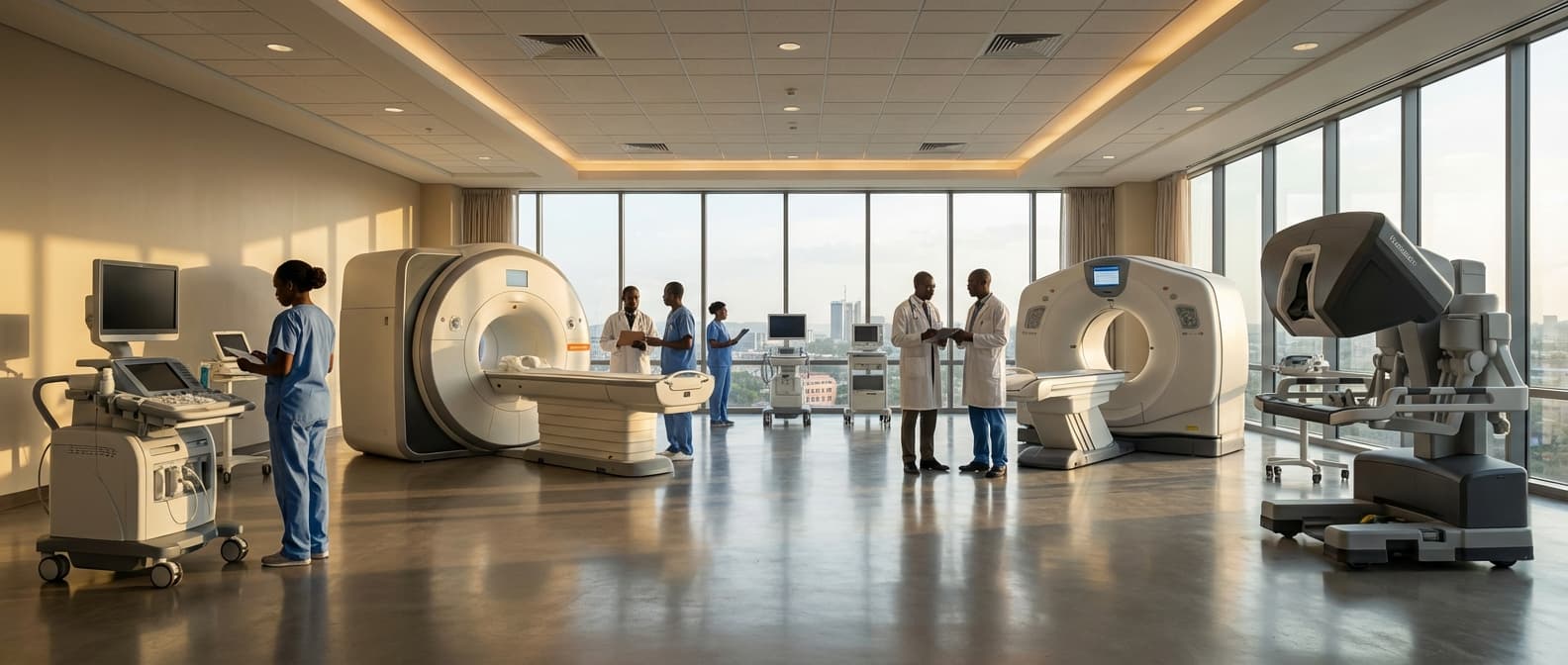
Renal Solutions in Uganda
Engineering Excellence & Technical Support
Complete dialysis systems and renal care equipment designed to deliver safe, effective, and patient-centered kidney treatment. High-standard technical execution following OEM protocols and local regulatory frameworks.
Expanding Hemodialysis Access
Renal Solutions is significantly increasing the availability of life-saving hemodialysis services across Uganda, establishing new centers and expanding existing ones to reach more patients in underserved regions. This includes investing in modern dialysis machines and trained personnel to provide high-quality care.
Capacity Building for Healthcare Professionals
Through comprehensive training programs, Renal Solutions empowers Ugandan healthcare professionals with specialized knowledge and skills in nephrology and dialysis management. This initiative aims to build a sustainable local workforce capable of delivering advanced renal care and improving patient outcomes nationwide.
Enhancing Early Detection and Diagnosis
Renal Solutions is deploying advanced diagnostic tools and technologies to facilitate earlier and more accurate identification of kidney diseases across Uganda. By improving diagnostic capabilities, the organization aims to intervene sooner, manage chronic conditions more effectively, and prevent the progression to end-stage renal disease.
What Is Renal Solutions In Uganda?
Renal Solutions in Uganda refers to a range of services and interventions aimed at diagnosing, managing, and treating kidney-related diseases (renal diseases) within the Ugandan healthcare landscape. This encompasses medical care, access to diagnostic facilities, therapeutic interventions, and supportive care for individuals suffering from acute or chronic kidney conditions. The objective is to mitigate the progression of renal dysfunction, improve patient outcomes, and enhance the quality of life for those affected. The scope of these solutions can vary from basic screening and preventative measures to advanced medical and surgical interventions, and importantly, includes strategies for improving accessibility and affordability of renal care in a resource-constrained environment.
| Need | Description | Typical Use Cases |
|---|---|---|
| Individuals with Chronic Kidney Disease (CKD) | Progressive loss of kidney function over months or years, often asymptomatic in early stages. | Management of hypertension and diabetes, monitoring of kidney function (eGFR, proteinuria), fluid and electrolyte balance, anemia correction, bone mineral disorder management, and preparation for RRT. |
| Individuals with Acute Kidney Injury (AKI) | Sudden or rapid loss of kidney function, often reversible. | Identification and treatment of underlying causes (e.g., dehydration, sepsis, nephrotoxic drugs), fluid management, electrolyte correction, and provision of temporary dialysis if indicated. |
| Patients with Hypertension | High blood pressure, a major risk factor for CKD and cardiovascular disease. | Regular blood pressure monitoring, lifestyle modifications, and pharmacological treatment to protect kidney function. |
| Patients with Diabetes Mellitus | High blood sugar levels, a leading cause of CKD. | Strict glycemic control, regular screening for diabetic nephropathy, and management of microvascular and macrovascular complications. |
| Individuals with Recurrent Urinary Tract Infections (UTIs) | Frequent infections that can ascend to the kidneys and cause damage. | Prompt diagnosis and treatment of UTIs, investigation for underlying anatomical or functional abnormalities, and prophylactic measures. |
| Patients with Nephrolithiasis (Kidney Stones) | Formation of solid masses in the kidneys. | Medical and surgical management for stone removal, metabolic evaluation to prevent recurrence, and hydration advice. |
| Individuals with Genetic Renal Diseases | Hereditary conditions affecting kidney structure and function (e.g., Polycystic Kidney Disease). | Symptomatic management, monitoring for complications (hypertension, cysts), and progression assessment. |
| Patients Requiring Renal Replacement Therapy (RRT) | End-stage renal disease (ESRD) where native kidney function is insufficient to sustain life. | Initiation and maintenance of hemodialysis or peritoneal dialysis, evaluation for kidney transplantation, and post-transplant care. |
| Vulnerable Populations | Individuals in rural areas, with limited financial resources, or with poor health literacy. | Mobile clinics, community outreach programs, subsidies for treatment, and simplified patient education materials. |
Key Components of Renal Solutions in Uganda
- Diagnostic Services: This includes laboratory tests (serum creatinine, urea, electrolytes, urinalysis, urine protein-to-creatinine ratio), imaging studies (renal ultrasound, CT scans), and kidney biopsy for accurate diagnosis of various renal pathologies.
- Medical Management: Pharmacological interventions for conditions such as hypertension, diabetes, anemia, hyperkalemia, and metabolic bone disease associated with chronic kidney disease (CKD).
- Renal Replacement Therapies (RRT):
- Hemodialysis (HD): Extracorporeal removal of waste products and excess fluid from the blood.
- Peritoneal Dialysis (PD): Utilizing the peritoneal membrane as a filter for waste removal.
- Kidney Transplantation: Surgical implantation of a donor kidney, a more definitive but often less accessible treatment option.
- Preventative and Screening Programs: Early detection of risk factors (hypertension, diabetes) and early-stage kidney disease through community-based screening initiatives and public health campaigns.
- Education and Support: Patient and caregiver education on disease management, lifestyle modifications, adherence to treatment regimens, and psychosocial support.
- Infrastructure Development: Establishing and equipping renal units in hospitals, ensuring availability of consumables, and maintaining dialysis machines.
- Human Resource Development: Training and capacity building for nephrologists, renal nurses, and technicians.
- Policy and Advocacy: Government and non-governmental organization efforts to integrate renal care into national health policies, improve funding, and address access barriers.
Who Needs Renal Solutions In Uganda?
In Uganda, a growing population, coupled with increasing rates of non-communicable diseases like diabetes and hypertension, has led to a rising demand for comprehensive renal care. "Renal Solutions" aims to address this critical need by providing specialized services, equipment, and support for individuals and institutions dealing with kidney-related conditions. Our target customers encompass a broad spectrum, from individual patients requiring dialysis and treatment to healthcare facilities seeking to enhance their nephrology departments. We understand that effective renal care requires a multi-faceted approach, involving both clinical expertise and access to advanced technology. Therefore, our solutions are designed to cater to the diverse needs of the Ugandan healthcare landscape.
| Target Customer Segment | Key Needs & Requirements | Relevant Renal Solutions Departments/Services |
|---|---|---|
| Patients with CKD/AKI | Access to affordable and high-quality dialysis (hemo & peritoneal), medications, regular check-ups, patient education, dietary guidance, psychosocial support. | Dialysis Centers, Nephrology Clinics, Pharmacy Services, Nutritional Counseling, Patient Support Programs |
| Public Hospitals (e.g., Mulago, regional referral hospitals) | Dialysis machines, consumables (dialyzers, tubing), water treatment systems, trained renal nurses and nephrologists, maintenance and repair services, capacity building for staff. | Dialysis Units, Nephrology Departments, Biomedical Engineering & Maintenance, Staff Training & Development |
| Private Hospitals & Clinics | State-of-the-art dialysis equipment, advanced diagnostic tools, specialized nephrology expertise, comfortable patient facilities, operational efficiency support. | Private Dialysis Units, Specialized Nephrology Centers, Diagnostic Services, Hospital Management Consulting |
| NGOs & Health Initiatives | Cost-effective renal care solutions, mobile dialysis units for remote areas, community outreach programs, screening and awareness campaigns, equipment donation/subsidy programs. | Community Health Programs, Outreach Services, Equipment Procurement & Distribution, Health Education |
| Medical Training Institutions | Renal simulation equipment, access to real-time patient data for training, curriculum development support, guest lectures from experts, opportunities for clinical attachments. | Medical Simulation Centers, Educational Material Development, Faculty Development, Clinical Training Partnerships |
Target Customers for Renal Solutions in Uganda:
- Individuals diagnosed with Chronic Kidney Disease (CKD)
- Patients requiring Hemodialysis
- Patients requiring Peritoneal Dialysis
- Kidney transplant recipients
- Individuals with Acute Kidney Injury (AKI)
- Patients with other kidney-related disorders (e.g., glomerulonephritis, polycystic kidney disease)
- Families and caregivers of renal patients
- Government and public hospitals
- Private hospitals and clinics
- Non-governmental organizations (NGOs) focused on healthcare
- Medical training institutions
Renal Solutions Process In Uganda
The Renal Solutions Process in Uganda outlines the comprehensive workflow for individuals seeking kidney-related medical services, from initial contact to the completion of treatment. This process is designed to be clear, efficient, and patient-centric, ensuring that individuals receive timely and appropriate care. The stages are structured to guide patients through assessment, diagnosis, treatment planning, and execution.
| Stage | Description | Key Activities | Responsible Party/Department | Outcome/Next Steps |
|---|---|---|---|---|
| Inquiry and Initial Contact | The first point of engagement where a potential patient or their representative seeks information about renal services. | Phone call, email, walk-in inquiry, referral from another healthcare provider. | Patient/Representative, Reception/Front Desk, Customer Care. | Information provided, appointment scheduled, or initial registration started. |
| Pre-Assessment and Information Gathering | Collecting essential patient details and preliminary medical history to understand their needs. | Completing registration forms, providing basic medical history, insurance details (if applicable). | Patient/Representative, Registration Staff. | Basic patient profile created, initial understanding of the patient's situation. |
| Medical Assessment and Diagnosis | A thorough evaluation by medical professionals to determine the patient's renal health status and diagnose any conditions. | Consultation with a nephrologist/urologist, physical examination, laboratory tests (blood, urine), imaging (ultrasound, CT scan), biopsy (if necessary). | Nephrologist/Urologist, Nurses, Laboratory Technicians, Radiologists. | Accurate diagnosis of renal condition, assessment of severity. |
| Treatment Planning and Consultation | Developing a personalized treatment strategy based on the diagnosis and discussing it with the patient. | Review of test results, discussion of treatment options (medication, dialysis, transplant, surgery), patient education, shared decision-making. | Nephrologist/Urologist, Patient/Representative. | Agreed-upon treatment plan, patient understanding of the plan and expectations. |
| Treatment Execution | Implementing the decided treatment plan. | Initiating medication, scheduling and conducting dialysis sessions, preparing for surgery or transplant, post-operative care. | Medical Team (Nurses, Doctors), Technicians. | Active treatment of the renal condition, progress towards recovery or management. |
| Follow-up and Monitoring | Regularly assessing the patient's progress and adjusting treatment as needed. | Scheduled appointments, ongoing lab tests, monitoring of vital signs and treatment effectiveness. | Nephrologist/Urologist, Nurses. | Tracking treatment efficacy, early detection of complications, adjustments to treatment plan. |
| Referral and Long-Term Management | Connecting patients with specialized care or ongoing management strategies for chronic conditions. | Referral to transplant centers, long-term care coordination, patient support groups, lifestyle advice. | Nephrologist/Urologist, Social Workers, Allied Health Professionals. | Ensured continuous care, improved quality of life, successful long-term management of renal health. |
Renal Solutions Process Stages
- Inquiry and Initial Contact
- Pre-Assessment and Information Gathering
- Medical Assessment and Diagnosis
- Treatment Planning and Consultation
- Treatment Execution
- Follow-up and Monitoring
- Referral and Long-Term Management
Renal Solutions Cost In Uganda
Access to quality renal solutions in Uganda, including dialysis and related treatments, is a significant concern for many individuals facing kidney disease. The cost of these services can vary considerably, influenced by several factors. Understanding these pricing dynamics is crucial for patients and their families to plan and manage their healthcare expenses effectively. This discussion outlines the primary pricing factors and provides an estimated range for renal solutions in Uganda, expressed in Ugandan Shillings (UGX).
| Renal Solution/Service | Estimated Cost Range (UGX per session/unit/procedure) | Notes |
|---|---|---|
| Hemodialysis (per session) | 150,000 - 400,000 | Includes standard consumables and basic monitoring. Can vary significantly between public and private facilities. |
| Peritoneal Dialysis (supplies per month) | 500,000 - 1,500,000 | Covers dialysis solution bags, tubing, and other disposables. Training for home dialysis is often separate. |
| Kidney Transplant Surgery (package) | 30,000,000 - 100,000,000+ | This is a complex procedure with high costs including surgery, donor workup, and initial post-operative care. Long-term immunosuppressants are an additional ongoing expense. |
| Nephrologist Consultation | 50,000 - 200,000 | Fees for specialist consultations. Repeat visits may incur similar charges. |
| Monthly Medication (e.g., EPO, Iron for dialysis patients) | 200,000 - 800,000+ | Highly dependent on dosage and specific medication. Immunosuppressants for transplant patients can be even more expensive. |
| Standard Blood Tests (package for renal monitoring) | 50,000 - 150,000 | Includes tests like urea, creatinine, electrolytes, and CBC. |
Key Pricing Factors for Renal Solutions in Uganda:
- Type of Treatment/Service: Different renal treatments have vastly different costs. Hemodialysis, peritoneal dialysis, kidney transplants, and related medications all fall under the umbrella of renal solutions but come with distinct price tags.
- Facility Type and Reputation: Private hospitals and specialized renal centers generally charge more than public hospitals. Factors like the quality of equipment, staff expertise, and overall patient experience contribute to these price differences.
- Location: While less of a primary driver than other factors, urban centers might have slightly higher costs due to overheads compared to more rural or less developed areas, though specialized renal care is predominantly found in major cities.
- Frequency and Duration of Treatment: For ongoing treatments like dialysis, the number of sessions per week and the duration of each session directly impact the overall cost. Chronic kidney disease patients often require regular, long-term treatment.
- Medications and Consumables: Beyond the procedural costs, essential medications (like erythropoietin, iron supplements, immunosuppressants for transplants) and consumables (dialysis filters, tubing, sterile solutions) form a substantial part of the expense.
- Doctor's Consultation and Specialist Fees: The fees charged by nephrologists and other specialists involved in a patient's care add to the total cost.
- Insurance Coverage: The extent of insurance coverage a patient has (national health insurance, private insurance) can significantly reduce out-of-pocket expenses. However, coverage for advanced renal treatments can be limited for many.
- Diagnostic Tests: Pre-treatment and ongoing diagnostic tests (blood tests, urine tests, imaging) are necessary and contribute to the overall financial burden.
Affordable Renal Solutions Options
Navigating renal care can be financially challenging. Fortunately, there are various affordable solutions and cost-saving strategies available to individuals managing kidney disease. This includes exploring value bundles offered by healthcare providers and insurers, which often combine multiple services at a reduced overall cost, and implementing proactive strategies to manage your health and minimize unexpected expenses. Understanding your insurance coverage, utilizing generic medications, and embracing preventative care are key to making renal treatment more manageable.
| Strategy/Solution | Description | Potential Cost Savings |
|---|---|---|
| Value Bundles (e.g., Comprehensive Kidney Care) | Packages that group related services (e.g., doctor visits, lab tests, dialysis, medications) for a predetermined price, aiming to improve coordinated care and outcomes. | Reduced overall cost compared to paying for individual services; predictable expenses. |
| Generic Medications | Using off-patent versions of brand-name drugs, which are chemically identical but significantly cheaper. | Significant savings on prescription costs, often 30-80% less than brand-name equivalents. |
| Preventative Care & Early Detection | Regular check-ups, screenings (e.g., for blood pressure, diabetes, kidney function), and adherence to treatment plans to prevent complications and disease progression. | Avoids costly emergency room visits, hospitalizations, and advanced treatments for unmanaged kidney disease. |
| Telehealth/Remote Monitoring | Virtual doctor's appointments and remote monitoring of vital signs (e.g., blood pressure, fluid balance) can reduce the need for in-person visits and hospital readmissions. | Lower co-pays for virtual visits; reduced travel costs and time off work; prevents costly complications. |
| Patient Assistance Programs (PAPs) | Programs offered by pharmaceutical companies and non-profit organizations to help eligible patients afford their medications. | Can significantly reduce or eliminate the cost of prescribed medications. |
| Health Insurance Optimization | Understanding your policy, choosing plans with good in-network coverage for renal specialists and facilities, and utilizing preventative services covered by insurance. | Lower out-of-pocket expenses, reduced deductibles and co-pays. |
| Lifestyle Modifications | Dietary changes (e.g., low sodium, controlled protein), regular exercise, and avoiding nephrotoxic substances (like certain NSAIDs and contrast dyes) to maintain kidney health. | Reduces the need for more intensive medical interventions and associated costs. |
| Negotiating Medical Bills | For out-of-pocket expenses, patients can often negotiate payment plans or discounts with healthcare providers. | Potential reduction in the total amount owed; manageable payment schedules. |
Key Affordable Renal Solutions Options
- Value-based care models
- Bundled payment options
- Generic medications
- Preventative care and early detection
- Telehealth and remote monitoring
- Patient assistance programs
- Health insurance optimization
- Lifestyle modifications for kidney health
Verified Providers In Uganda
In Uganda's evolving healthcare landscape, identifying reliable and high-quality healthcare providers is paramount. Franance Health stands out as a beacon of trust, offering a comprehensive network of verified medical professionals and facilities. This verification process ensures that patients receive care from practitioners who meet stringent standards of expertise, ethics, and patient safety. Choosing Franance Health means opting for a healthcare experience characterized by competence, compassion, and a commitment to your well-being. Their rigorous credentialing process, encompassing thorough background checks, license validation, and peer reviews, sets them apart, guaranteeing that every provider within their network is equipped to deliver exceptional medical services.
| Provider Type | Key Verification Criteria | Benefits of Choosing Franance Health |
|---|---|---|
| Doctors & Specialists | Valid medical license, board certification (where applicable), proven track record, peer reviews, ethical conduct. | Access to top-tier medical expertise, accurate diagnoses, effective treatment plans, and specialized care. |
| Hospitals & Clinics | Accreditation, adherence to safety protocols, quality of infrastructure and equipment, patient feedback, regulatory compliance. | Safe and well-equipped facilities, reliable medical procedures, positive patient experiences, and adherence to international standards. |
| Diagnostic Centers | Certified technicians, up-to-date equipment, adherence to quality control measures, accuracy of results, turnaround time. | Reliable and accurate diagnostic reports, timely results for informed medical decisions, and high-quality imaging and laboratory services. |
| Pharmacies | Valid operating license, availability of genuine medications, qualified pharmacists, proper storage of drugs. | Access to authentic and safe medications, expert advice on prescriptions, and reliable pharmaceutical services. |
Why Franance Health Represents the Best Choice for Verified Providers in Uganda:
- Rigorous Verification Process: Franance Health employs a multi-faceted approach to vetting providers, including license verification, background checks, and ongoing quality assessments.
- Expert Medical Professionals: Access a curated network of highly skilled and experienced doctors, specialists, nurses, and allied health professionals across various disciplines.
- Patient-Centric Approach: Prioritizing patient satisfaction and outcomes, Franance Health providers are dedicated to delivering compassionate and personalized care.
- Commitment to Ethics and Safety: All Franance Health providers adhere to the highest ethical standards and are committed to maintaining a safe and secure healthcare environment.
- Comprehensive Healthcare Solutions: From routine check-ups to specialized treatments, Franance Health offers access to a wide range of medical services to meet diverse healthcare needs.
- Streamlined Access to Care: Their platform simplifies the process of finding and booking appointments with trusted healthcare providers, saving you time and reducing stress.
Scope Of Work For Renal Solutions
This Scope of Work (SOW) outlines the technical deliverables and standard specifications for the Renal Solutions project. The objective is to develop and implement a comprehensive software solution designed to streamline patient care, data management, and operational efficiency within renal dialysis centers. This document details the key technical components, functional areas, and the quality standards expected for the successful delivery of the Renal Solutions platform.
| Component/Module | Key Features | Technical Specifications | Standard Compliance |
|---|---|---|---|
| Core Renal Solutions Platform | Centralized data repository, secure access, user interface (UI) and user experience (UX) design, modular architecture. | Web: Responsive design (HTML5, CSS3, JavaScript frameworks like React/Angular/Vue), RESTful APIs, Cloud-based deployment (AWS/Azure/GCP). Mobile: Native iOS/Android or cross-platform (React Native/Flutter). | WCAG 2.1 AA (Accessibility), OWASP Top 10 (Security), ISO 27001 (Information Security Management). |
| Patient Management Module | Patient registration, demographic data, medical history, contact information, insurance details, patient profiles. | Database: PostgreSQL/MySQL/SQL Server. Schema design optimized for relational data. Data validation rules implemented. | HIPAA (Health Insurance Portability and Accountability Act) compliance for Protected Health Information (PHI). |
| Treatment Scheduling Module | Appointment booking, dialysis slot management, resource allocation (staff, equipment), reminders, conflict resolution. | Backend: Java/Python/Node.js. Frontend: Calendar integration libraries. Real-time updates via WebSockets. | HIPAA compliance for PHI. |
| Medical Records Management System (MRMS) | Electronic health records (EHR), progress notes, medication management, vital signs tracking, historical treatment data, document management. | Secure storage for sensitive data, audit trails for all record modifications, integration with e-prescribing capabilities. | HIPAA compliance, HL7 FHIR (Fast Healthcare Interoperability Resources) for data exchange. |
| Laboratory Information System (LIS) Integration | Automated import of lab results, charting of lab trends, alerts for abnormal values, bidirectional data exchange. | Standard integration protocols: HL7 v2.x (ADT, ORU messages), FHIR APIs. Data mapping and transformation layers. | HL7 standards, HIPAA compliance. |
| Billing and Claims Processing Module | Service coding (CPT, ICD-10), insurance verification, claim generation (CMS-1500, UB-04), payment posting, denial management, reconciliation. | Integration with clearinghouses via EDI (Electronic Data Interchange) standards (e.g., X12 837, 835). Robust error handling for claims. | HIPAA compliance, EDI X12 standards. |
| Reporting and Analytics Dashboard | Patient outcome metrics, operational efficiency reports, financial summaries, customizable reports, data visualization (charts, graphs). | Data warehousing/data lake concepts. Business intelligence (BI) tools or custom reporting engine. SQL queries optimized for performance. | Data integrity and accuracy. |
| User and Role Management System | Authentication, authorization, granular permission control, audit logs for user activities. | Secure password management (hashing/salting), role-based access control (RBAC) model, OAuth 2.0/SAML for SSO. | OWASP Top 10, HIPAA compliance. |
| Data Migration Tools | Secure and efficient transfer of existing patient and operational data from legacy systems. | Custom scripts, ETL (Extract, Transform, Load) processes, data validation post-migration. Data anonymization/pseudonymization if required for testing. | Data integrity, security, and privacy. |
| API Documentation and Integration Kits | Comprehensive documentation for all APIs, SDKs for common programming languages, sandbox environment for testing integrations. | RESTful API design principles, OpenAPI (Swagger) specification. Clear and concise documentation. | API usability and maintainability. |
Technical Deliverables
- Core Renal Solutions Platform (Web Application & Mobile App)
- Patient Management Module
- Treatment Scheduling Module
- Medical Records Management System (MRMS)
- Laboratory Information System (LIS) Integration
- Billing and Claims Processing Module
- Reporting and Analytics Dashboard
- User and Role Management System
- Data Migration Tools
- API Documentation and Integration Kits
- Deployment Package and Installation Guide
- User Manuals and Training Materials
- Testing Reports (Unit, Integration, System, UAT)
- Security Audit Report
- Performance Monitoring Tools
Service Level Agreement For Renal Solutions
This Service Level Agreement (SLA) outlines the performance standards and guarantees provided by Renal Solutions for its cloud-based platform and associated services. This SLA aims to ensure the reliability, availability, and responsiveness of our services for all customers. Key metrics include response times for critical support issues and guaranteed system uptime.
| Service Component | Uptime Guarantee (Monthly) | Severity Level | Initial Response Time | Resolution Target |
|---|---|---|---|---|
| Renal Solutions Platform (Core Functionality) | 99.9% | Critical (System Outage) | 15 Minutes | 4 Hours |
| Renal Solutions Platform (Core Functionality) | 99.9% | High (Major Feature Impaired) | 1 Hour | 8 Business Hours |
| Renal Solutions Platform (Core Functionality) | 99.9% | Medium (Minor Feature Impaired) | 4 Business Hours | 2 Business Days |
| Renal Solutions Platform (Core Functionality) | 99.9% | Low (General Inquiry/Cosmetic Issue) | 8 Business Hours | 5 Business Days |
| Data Backup and Recovery | 100% (for scheduled backups) | N/A | N/A | N/A |
Key Service Level Objectives
- Uptime Guarantee: Renal Solutions commits to a minimum of 99.9% uptime for the core Renal Solutions platform, measured monthly.
- Support Response Times: Critical support issues will be addressed within defined timeframes to minimize disruption.
- Scheduled Maintenance: Renal Solutions will provide advance notice for any scheduled maintenance that may impact service availability.
Frequently Asked Questions

Ready when you are
Let's scope your Renal Solutions in Uganda project in Uganda.

Scaling healthcare logistics and technical systems across the entire continent.