
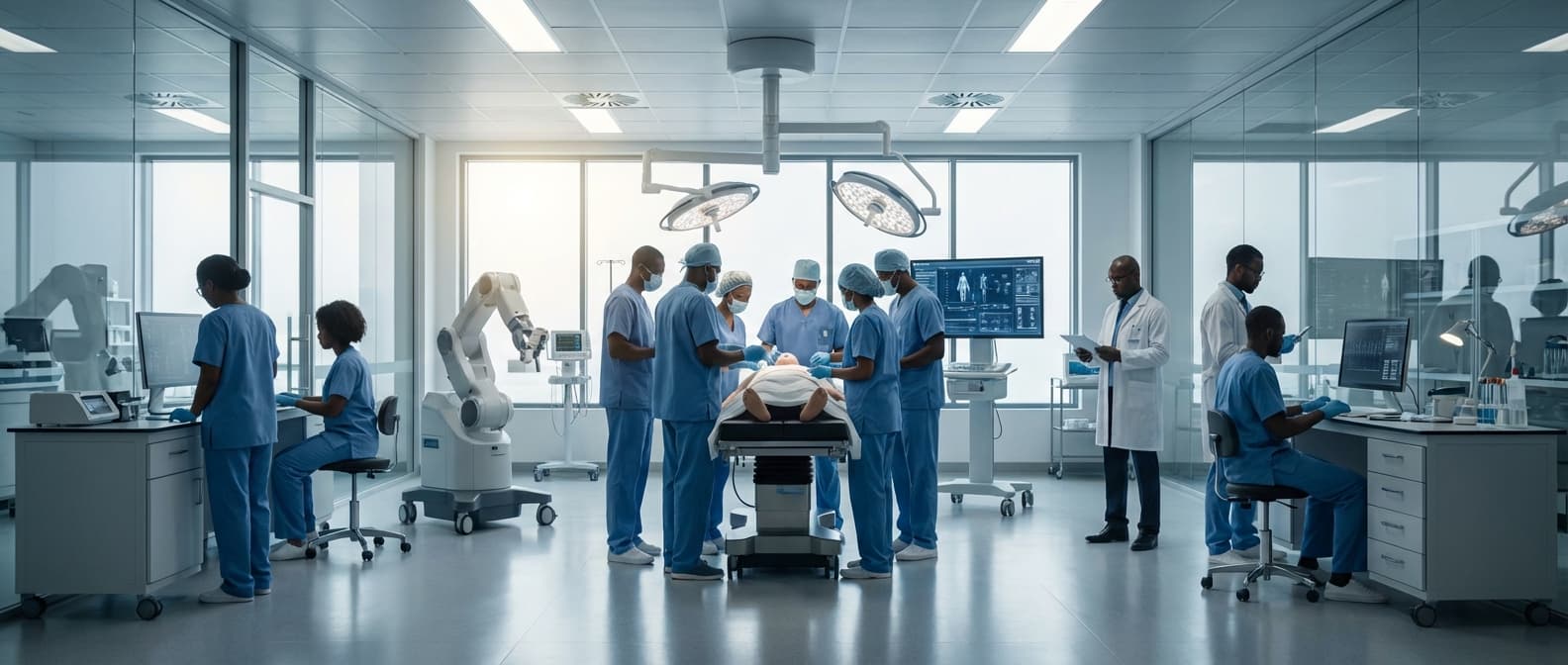
Managed Equipment Service (MES) in Uganda
Engineering Excellence & Technical Support
Long‑term equipment provision with uptime SLAs and lifecycle management. High-standard technical execution following OEM protocols and local regulatory frameworks.
Uninterrupted Operations with Robust Power Solutions
Our MES ensures a continuous power supply for critical medical equipment through advanced UPS systems and proactive generator maintenance. This minimizes downtime, safeguarding patient care and revenue streams in Ugandan healthcare facilities.
Expert Technicians Ensuring Peak Equipment Performance
We deploy highly skilled and certified Ugandan technicians for regular calibration, preventative maintenance, and swift repairs. This guarantees optimal performance and longevity of all managed medical devices, reducing costly breakdowns and ensuring accurate diagnostics.
Streamlined Inventory Management for Efficient Resource Allocation
Our MES features an integrated inventory management system that tracks equipment usage, maintenance schedules, and spare parts. This enables Ugandan healthcare providers to optimize resource allocation, forecast needs, and reduce waste, leading to significant cost savings.
What Is Managed Equipment Service (Mes) In Uganda?
Managed Equipment Service (MES) in Uganda refers to a comprehensive outsourcing model where a third-party provider assumes responsibility for the entire lifecycle management of critical healthcare equipment. This encompasses procurement, installation, operation, maintenance, repair, upgrades, and eventual disposal of medical devices. The service is typically contracted on a long-term basis, often through public-private partnerships (PPPs), and aims to improve access to and quality of healthcare services by ensuring reliable availability of functional medical technology.
| Who Needs MES in Uganda? | Typical Use Cases in Uganda | |||||||
|---|---|---|---|---|---|---|---|---|
| Public Healthcare Facilities: Government hospitals (national referral, regional, district), health centers, and clinics facing challenges with equipment procurement, maintenance, and staffing. | Diagnostic Imaging Departments: Providing and maintaining X-ray machines, CT scanners, MRI units, and ultrasound equipment to enhance diagnostic capabilities. This often includes ensuring uptime for critical imaging services. | Surgical & Operating Theaters: Supplying and servicing surgical equipment, anesthesia machines, ventilators, and sterilization units to ensure safe and effective surgical procedures. | Laboratory & Pathology Services: Managing and maintaining diagnostic laboratory equipment, including analyzers, microscopes, and sample processing systems, to support disease diagnosis and monitoring. | Intensive Care Units (ICUs) & Critical Care: Ensuring the continuous availability and functionality of life-support equipment such as ventilators, cardiac monitors, and infusion pumps. | Rehabilitation Centers: Providing and maintaining specialized equipment for physiotherapy, occupational therapy, and other rehabilitation services. | Private Healthcare Providers: Medium to large private hospitals and specialized clinics seeking to offload operational burdens and ensure access to advanced medical technology without significant upfront capital investment. | Specific Disease Programs: Implementing and managing equipment for targeted health programs (e.g., HIV/AIDS, malaria, NCDs) requiring specialized diagnostic or treatment devices. | Academic & Teaching Hospitals: Equipping training facilities with up-to-date technology and ensuring their operational readiness for medical education and research. |
Key Components of MES in Uganda
- Equipment Procurement & Acquisition: Sourcing and purchasing of appropriate medical equipment based on defined needs and specifications.
- Installation & Commissioning: Professional installation, testing, and validation of equipment to ensure it meets operational standards.
- Operation & Utilization: Training of healthcare personnel on the proper use and maintenance of equipment, and in some models, the direct operation of the equipment by the provider's staff.
- Preventive Maintenance: Scheduled and proactive maintenance activities to minimize downtime and prolong equipment lifespan.
- Corrective Maintenance & Repair: Swift and effective response to equipment malfunctions and breakdowns, including provision of spare parts.
- Technical Support & Training: Ongoing technical assistance and training for local healthcare staff on equipment operation, troubleshooting, and basic maintenance.
- Asset Management & Tracking: Comprehensive inventory management, lifecycle tracking, and performance monitoring of all managed assets.
- Technology Upgrades & Replacements: Planning and execution of upgrades or replacements to ensure equipment remains current and efficient.
- End-of-Life Disposal: Responsible and compliant disposal or recycling of obsolete equipment.
Who Needs Managed Equipment Service (Mes) In Uganda?
Managed Equipment Service (MES) is a crucial offering for organizations in Uganda seeking to optimize the use, maintenance, and overall lifecycle management of their critical equipment. MES providers take on the responsibility of procuring, installing, maintaining, upgrading, and even financing equipment, allowing clients to focus on their core operations. This approach can significantly reduce operational burdens, improve equipment uptime, and provide access to cutting-edge technology without substantial upfront capital investment. In Uganda, MES is particularly valuable for sectors with high equipment dependency, a need for specialized technical expertise, and a desire to enhance service delivery and operational efficiency.
| Target Customer/Department | Specific Needs Addressed by MES | Examples of Equipment Covered |
|---|---|---|
| Hospitals & Clinics (Public & Private) | Ensuring high uptime of critical medical devices, access to latest technology, reduced maintenance costs, training for staff, managing complex equipment lifecycles. | Diagnostic imaging (MRI, CT scanners, X-ray machines), laboratory equipment (analyzers), surgical equipment, patient monitoring systems, sterilization equipment. |
| Manufacturing Plants | Improving production efficiency, minimizing downtime, predictive maintenance, access to advanced machinery, energy efficiency improvements, safety compliance. | Production machinery, processing equipment, packaging lines, automated assembly systems, material handling equipment, heavy-duty industrial tools. |
| Telecommunication Companies | Ensuring network reliability, proactive maintenance of infrastructure, rapid deployment of new technologies, managed network equipment. | Base stations, transmission equipment, switching systems, data centers, fiber optic infrastructure, power backup systems. |
| Universities & Vocational Training Centers | Providing access to state-of-the-art training equipment, reducing capital expenditure on equipment, ensuring equipment is current for curriculum needs, maintenance and repair. | Laboratory equipment, workshop machinery, computer labs, specialized simulation equipment, audio-visual systems. |
| Government Ministries & Agencies (e.g., Ministry of Health, Ministry of Works & Transport, National Water & Sewerage Corporation) | Cost-effective acquisition and management of public infrastructure and service delivery equipment, ensuring operational continuity, long-term asset management, and specialized maintenance. | Water treatment machinery, road construction equipment, public transport vehicles, IT infrastructure for government services, laboratory equipment for regulatory bodies. |
| Large Agricultural Enterprises | Optimizing operational efficiency with specialized machinery, reducing downtime during peak seasons, access to modern farming equipment, maintenance and repair services. | Tractors, harvesters, irrigation systems, processing machinery for agricultural produce, specialized spraying equipment. |
| Financial Institutions (for specific functions) | Reliable operation of critical IT and transaction processing equipment, security upgrades, managed IT infrastructure. | ATM machines, data center equipment, specialized IT servers, secure document processing systems. |
Target Customers and Departments for MES in Uganda
- Healthcare Sector
- Manufacturing and Industrial Sector
- Telecommunications Sector
- Educational Institutions
- Government and Public Service Agencies
- Financial Institutions (for specialized equipment)
Managed Equipment Service (Mes) Process In Uganda
The Managed Equipment Service (MES) process in Uganda is a comprehensive workflow designed to ensure the effective procurement, installation, maintenance, and eventual replacement of specialized medical equipment for public healthcare facilities. This process is typically initiated by a government entity (e.g., Ministry of Health) or a designated implementing agency and involves a series of structured steps from the initial inquiry to the final execution and ongoing management of the equipment.
| Stage | Description | Key Activities | Responsible Parties | Outputs/Deliverables |
|---|---|---|---|---|
| Inquiry and Needs Assessment | The process begins with identifying the need for specific medical equipment in public health facilities. | Needs assessment surveys, facility audits, review of existing equipment, defining technical specifications. | Ministry of Health (MoH), District Health Offices, Facility Management Committees, Implementing Agency. | Needs assessment report, prioritized list of equipment, preliminary technical specifications. |
| Tendering and Supplier Selection | A transparent and competitive bidding process to select qualified suppliers or consortia. | Developing tender documents, advertising the tender, receiving and evaluating bids, due diligence on potential suppliers. | MoH, Public Procurement and Disposal of Public Assets Authority (PPDA), Implementing Agency. | Shortlisted suppliers, evaluation report, recommended supplier/consortium. |
| Contract Negotiation and Signing | Formalizing the agreement with the selected MES provider. | Negotiating contract terms, service level agreements (SLAs), payment schedules, warranties, and responsibilities. | MoH, Implementing Agency, Selected MES Provider. | Signed MES contract, detailed scope of work, performance indicators. |
| Equipment Specification and Procurement | Detailed definition and sourcing of the specific medical equipment. | Finalizing technical specifications with end-users, supplier procurement of equipment from manufacturers, quality control checks. | MES Provider, MoH (for approval), Manufacturers. | Approved equipment specifications, procured equipment. |
| Logistics and Customs Clearance | Ensuring the safe and timely delivery of equipment to Uganda and its intended facilities. | International shipping, insurance, customs clearance, import duties, transportation to designated health facilities. | MES Provider, Freight Forwarders, Uganda Revenue Authority (URA). | Cleared equipment at port of entry, delivered equipment to facilities. |
| Installation and Commissioning | Setting up and ensuring the proper functioning of the equipment at the health facilities. | Site preparation, equipment installation, calibration, testing, and initial operational checks. | MES Provider, Facility Staff (for support). | Installed and commissioned equipment, functional test reports. |
| Training and Capacity Building | Equipping healthcare professionals with the skills to operate and maintain the equipment. | Developing training modules, conducting hands-on training for doctors, nurses, and technicians, providing user manuals. | MES Provider, Ministry of Health (for curriculum endorsement), Facility Staff. | Trained personnel, training reports, user manuals. |
| Ongoing Maintenance and Support | Ensuring the continuous availability and optimal performance of the equipment through regular servicing. | Preventive maintenance, corrective maintenance (repairs), spare parts management, remote monitoring, technical support. | MES Provider, Facility Staff (for reporting issues). | Scheduled maintenance visits, timely repairs, updated maintenance logs. |
| Performance Monitoring and Reporting | Tracking the performance of the MES contract and the equipment against agreed-upon metrics. | Data collection on equipment uptime, breakdown frequency, response times, usage statistics, financial reporting. | MES Provider, MoH, Implementing Agency, Independent Auditors (sometimes). | Regular performance reports, uptime reports, financial statements. |
| Equipment Upgrades and Replacement | Planning for the eventual upgrade or replacement of equipment as per the contract and technological advancements. | Reviewing equipment lifecycle, assessing technology obsolescence, planning for phased replacement, disposal of old equipment. | MoH, MES Provider, Implementing Agency. | Equipment upgrade/replacement plan, decommissioned equipment. |
Managed Equipment Service (MES) Process Workflow in Uganda
- Inquiry and Needs Assessment
- Tendering and Supplier Selection
- Contract Negotiation and Signing
- Equipment Specification and Procurement
- Logistics and Customs Clearance
- Installation and Commissioning
- Training and Capacity Building
- Ongoing Maintenance and Support
- Performance Monitoring and Reporting
- Equipment Upgrades and Replacement
Managed Equipment Service (Mes) Cost In Uganda
Managed Equipment Service (MES) in Uganda offers a valuable solution for healthcare facilities seeking to acquire and maintain medical equipment without the burden of direct ownership and management. The cost of MES in Uganda is influenced by a multitude of factors, leading to a broad range of pricing. These factors generally include the type and sophistication of the medical equipment, the service level agreement (SLA) details, the duration of the contract, the provider's reputation and experience, and the geographical location of the healthcare facility within Uganda.
Key Pricing Factors for MES in Uganda:
- Equipment Type and Sophistication: High-end, complex equipment (e.g., MRI machines, CT scanners, advanced surgical robots) will naturally incur higher MES costs compared to simpler equipment (e.g., basic patient monitors, X-ray machines). The technological advancements, required software, and specialized training for operation and maintenance are significant cost drivers.
- Service Level Agreement (SLA): The terms of the SLA are paramount. This includes the scope of services (e.g., preventive maintenance, corrective maintenance, on-call support, guaranteed uptime, training, consumables management), response times for repairs, and the availability of spare parts. More comprehensive SLAs with faster response times and higher uptime guarantees will command higher prices.
- Contract Duration: Longer-term MES contracts often benefit from economies of scale and can lead to slightly lower per-unit costs compared to short-term agreements. This also provides more predictable budgeting for the healthcare facility.
- Provider's Reputation and Experience: Established MES providers with a proven track record of reliability, technical expertise, and strong customer support may charge a premium for their services. Newer or smaller providers might offer more competitive pricing to gain market share.
- Geographical Location: While less of a direct factor in the equipment itself, the location of the healthcare facility can influence logistical costs for maintenance and support. Remote areas might incur slightly higher costs due to travel and logistics.
- Consumables and Training: Some MES contracts may include the provision of essential consumables (e.g., reagents, disposables) and comprehensive training for medical staff. The extent to which these are bundled will affect the overall price.
- Technology Upgrades and Innovation: The MES provider's commitment to offering technology upgrades or incorporating innovative solutions within the contract period can also influence pricing. Some contracts might be structured to allow for periodic equipment refreshes.
Estimated Pricing Ranges in Ugandan Shillings (UGX):
It's important to note that these are estimated ranges and actual costs can vary significantly based on the specific factors outlined above. These figures are illustrative and should not be considered definitive quotes.
Table of Estimated MES Monthly Costs (UGX) by Equipment Category:
| Equipment Category | Estimated Monthly Cost Range (UGX) |
|---|---|
| Basic Diagnostic Equipment (e.g., ECG, Pulse Oximeter, Basic X-ray) | 2,000,000 - 7,000,000 |
| Intermediate Diagnostic & Therapeutic Equipment (e.g., Ultrasound, Ventilator, Anesthesia Machine) | 5,000,000 - 20,000,000 |
| Advanced Imaging Equipment (e.g., CT Scanner, MRI Scanner) | 25,000,000 - 100,000,000+ |
| Surgical Equipment (e.g., Endoscopy Systems, Electrosurgical Units) | 7,000,000 - 30,000,000 |
| Laboratory Equipment (e.g., Hematology Analyzers, Biochemistry Analyzers) | 4,000,000 - 25,000,000 |
| Comprehensive Hospital IT & Imaging Systems (PACS/RIS) | 15,000,000 - 60,000,000+ |
Key Factors Influencing MES Costs in Uganda
- Equipment Type and Sophistication
- Service Level Agreement (SLA) Scope
- Contract Duration
- Provider's Reputation and Experience
- Geographical Location of the Facility
- Inclusion of Consumables and Training
- Commitment to Technology Upgrades
Affordable Managed Equipment Service (Mes) Options
Managed Equipment Service (MES) can be a cost-effective solution for businesses needing reliable and up-to-date technology without the capital expenditure and ongoing maintenance burden. Exploring affordable MES options involves understanding value bundles and implementing strategic cost-saving measures. Value bundles often combine hardware, software, installation, maintenance, and support into a single, predictable monthly payment. This simplifies budgeting and reduces unforeseen expenses. Cost-saving strategies within MES include optimizing equipment lifecycles, leveraging preventative maintenance, negotiating favorable contract terms, and considering refurbished or lower-spec equipment where appropriate.
| Cost-Saving Strategy | Description | Potential Impact |
|---|---|---|
| Optimized Equipment Lifecycle Management | Aligning refresh cycles with actual business needs and technological advancements to avoid premature replacement or extended use of outdated, inefficient equipment. | Reduces capital expenditure, improves performance, minimizes downtime. |
| Preventative Maintenance Programs | Regular, scheduled maintenance to identify and fix potential issues before they cause failures, reducing costly emergency repairs and downtime. | Minimizes unexpected costs, extends equipment lifespan, ensures operational continuity. |
| Negotiated Service Level Agreements (SLAs) | Clearly defined performance metrics and response times, with potential for penalties for non-compliance, driving provider accountability. | Ensures service quality, provides leverage for cost adjustments based on performance. |
| Volume Purchasing and Tiered Pricing | Leveraging the provider's scale for better pricing, and negotiating based on the total volume of equipment managed. | Lower per-unit costs for hardware and services. |
| Exploring Refurbished Equipment Options | For non-critical applications or as backups, considering certified refurbished equipment from the MES provider can significantly reduce acquisition costs. | Substantial upfront cost savings on hardware. |
| Right-Sizing Equipment Specifications | Ensuring that equipment meets the actual performance requirements of the business, rather than over-specifying and paying for unused capacity. | Reduces hardware acquisition and potential ongoing power/licensing costs. |
Key Components of Affordable MES Value Bundles
- Hardware Procurement: Access to up-to-date devices without upfront purchase.
- Software Licensing: Integrated software and operating system licenses.
- Installation & Configuration: Professional setup and customization of equipment.
- Maintenance & Repairs: Proactive and reactive support for hardware issues.
- Technical Support: Helpdesk and on-site assistance for troubleshooting.
- Asset Management: Tracking and inventory of all managed equipment.
- End-of-Life Management: Secure disposal or refurbishment of old equipment.
Verified Providers In Uganda
In Uganda, the pursuit of reliable and trustworthy healthcare services is paramount. When it comes to your well-being, choosing a provider with verified credentials and a proven track record is essential. Franance Health stands out as a beacon of quality and integrity in the Ugandan healthcare landscape, offering a comprehensive range of services backed by a team of highly qualified professionals. Their commitment to patient care, ethical practices, and continuous improvement makes them the premier choice for individuals and families seeking exceptional healthcare solutions.
| Credential Type | Verification Standard | Franance Health's Assurance |
|---|---|---|
| Medical Licenses | Mandatory for all practicing physicians and nurses in Uganda, issued by the Uganda Medical and Dental Practitioners Council (UMDC) and Uganda Nurses and Midwives Council (UNMC). | All Franance Health medical practitioners hold valid, current licenses from the respective regulatory bodies. Verification is a continuous process. |
| Specialist Certifications | Postgraduate qualifications and board certifications in their respective fields of specialization. | Franance Health employs specialists who possess recognized certifications and accreditations, often from reputable international institutions. |
| Continuing Medical Education (CME) | Mandatory requirement by regulatory bodies to stay updated with the latest advancements in medical knowledge and practice. | Franance Health actively supports and requires its staff to participate in ongoing CME programs, ensuring they are at the forefront of medical innovation. |
| Institutional Accreditation | Recognition by national or international health organizations for meeting specific standards of quality, safety, and patient care. | While formal institutional accreditation processes are evolving in Uganda, Franance Health aligns its operations with best practices and is committed to achieving recognized standards. |
| Patient Testimonials and Reviews | Feedback from previous patients regarding their experience, treatment outcomes, and overall satisfaction. | Franance Health is proud of its positive patient feedback and actively encourages transparent reviews, which can be found on their platforms and independent review sites. |
Why Franance Health is the Best Choice:
- Unwavering Commitment to Quality: Franance Health adheres to stringent quality control measures, ensuring that all services meet international standards. This dedication translates into accurate diagnoses, effective treatments, and ultimately, better patient outcomes.
- Highly Qualified and Experienced Professionals: The medical team at Franance Health comprises specialists, doctors, nurses, and support staff who are not only extensively trained and experienced but also passionate about their work. Their expertise covers a broad spectrum of medical disciplines.
- Patient-Centric Approach: Franance Health prioritizes the individual needs and concerns of each patient. They foster an environment of trust and open communication, ensuring that patients are actively involved in their healthcare journey.
- Advanced Technology and Facilities: The clinic is equipped with modern medical equipment and facilities, enabling them to provide cutting-edge diagnostic and treatment options. This investment in technology allows for more precise and efficient healthcare delivery.
- Ethical Practices and Transparency: Franance Health operates with the highest ethical standards. They are transparent in their pricing, treatment plans, and medical recommendations, building a foundation of trust with their patients.
- Comprehensive Range of Services: From general consultations and specialized treatments to preventive care and wellness programs, Franance Health offers a holistic approach to healthcare, catering to a diverse range of medical needs.
Scope Of Work For Managed Equipment Service (Mes)
This document outlines the Scope of Work (SOW) for a Managed Equipment Service (MES). It details the technical deliverables expected from the service provider and the standard specifications that these deliverables must adhere to. The MES aims to ensure the optimal performance, availability, and lifecycle management of specified equipment within the client's organization. This includes proactive maintenance, reactive repairs, spare parts management, and performance monitoring, all aligned with agreed-upon service levels.
| Deliverable Category | Specific Deliverable | Standard Specification/Requirement | Measurement/Verification |
|---|---|---|---|
| Equipment Management | Equipment Inventory and Asset Register | Comprehensive list of all managed equipment, including make, model, serial number, location, acquisition date, and warranty status. Must be updated within 48 hours of any equipment change. | Initial inventory audit. Periodic reconciliation reports (monthly). Access to real-time digital register. |
| Maintenance | Preventive Maintenance (PM) Schedule | Detailed PM schedule for each equipment type, including tasks, frequency, and required parts/consumables. Aligned with manufacturer recommendations and best practices. | Review and approval of PM plan. Confirmation of PM completion rates (monthly). |
| Maintenance | PM Execution Reports | Record of all PM activities performed, including date, technician, tasks completed, parts used, and any anomalies identified. Must be submitted within 5 business days of PM completion. | Review of submitted reports. Validation against PM schedule. |
| Maintenance | Corrective Maintenance (CM) Response Time SLA | Guaranteed response times for different severity levels of equipment failure (e.g., Critical: 2 hours, Major: 4 hours, Minor: 8 hours). Service hours defined (e.g., 24/7, business hours). | Incident logs. Actual response time tracking and reporting (monthly). |
| Maintenance | CM Repair Time SLA | Guaranteed repair completion times based on severity levels and parts availability (e.g., Critical: 24 hours, Major: 72 hours). | Incident logs. Actual repair time tracking and reporting (monthly). |
| Spare Parts Management | Spare Parts Inventory Levels | Maintain minimum and maximum stock levels for critical and high-usage spare parts. Ensure availability of parts to meet repair SLAs. | Periodic inventory audits (quarterly). Part availability reports. |
| Spare Parts Management | Parts Procurement Process | Established and efficient process for procuring parts, including lead time management and quality assurance. | Documentation of procurement process. Supplier performance reviews. |
| Performance Monitoring | Equipment Uptime/Availability | Achieve and maintain agreed-upon uptime percentages for critical equipment (e.g., 98% for critical diagnostic equipment). | System-generated uptime reports (monthly). Analysis of downtime causes. |
| Performance Monitoring | Performance Monitoring Dashboards | Real-time or near real-time dashboards displaying key equipment performance indicators (KPIs) such as uptime, usage, error rates, and maintenance history. | Availability and accessibility of dashboard. User feedback on dashboard utility. |
| Lifecycle Management | Equipment Upgrade/Replacement Plan | Proactive identification of equipment nearing end-of-life or requiring upgrades based on performance, obsolescence, or technological advancements. Includes recommendations for new equipment. | Annual review and presentation of lifecycle plans. Alignment with client IT strategy. |
| Lifecycle Management | Decommissioning and Disposal Plan | Safe, compliant, and environmentally responsible procedures for decommissioning and disposing of obsolete equipment, including data sanitization. | Documentation of disposal procedures. Certificates of destruction/recycling. |
| Reporting & Governance | Monthly Performance Reports | Comprehensive reports summarizing all managed equipment performance, maintenance activities, KPIs, SLAs adherence, issues, and recommendations. Submitted within 10 business days of month-end. | Review and acceptance of monthly reports. |
| Reporting & Governance | Quarterly Business Reviews (QBRs) | Formal meetings to review overall MES performance, discuss strategic initiatives, address any escalated issues, and plan for future needs. Includes presentation of QBR deck. | Attendance and participation in QBRs. Action items tracking. |
Technical Deliverables
- Equipment Inventory and Asset Register
- Preventive Maintenance Schedule and Execution Reports
- Corrective Maintenance (Repair) Service Level Agreements (SLAs) and Response Times
- Spare Parts Management and Inventory Levels
- Performance Monitoring Reports and Dashboards
- Equipment Upgrade and Replacement Planning
- Decommissioning and Disposal Plans
- Training and Knowledge Transfer for Client Personnel
- Regular Performance Review Meetings and Reporting
- Compliance Documentation (e.g., safety, regulatory)
Service Level Agreement For Managed Equipment Service (Mes)
This Service Level Agreement (SLA) outlines the service levels and guarantees for the Managed Equipment Service (MES) provided by [Your Company Name] to [Client Company Name]. It defines the expected response times for issues and the guaranteed uptime for the managed equipment.
| Service Component | Severity Level | Response Time Guarantee | Uptime Guarantee | Notes/Escalation |
|---|---|---|---|---|
| Critical Equipment (e.g., core network switches, critical servers) | Severity 1 (System Failure/Major Outage) | 15 minutes | 99.9% | Immediate escalation to senior support engineers. Root cause analysis required within 24 hours. |
| Critical Equipment (e.g., core network switches, critical servers) | Severity 2 (Degraded Performance/Partial Outage) | 1 hour | 99.9% | Escalation to senior support engineers within 4 hours if not resolved. |
| Important Equipment (e.g., application servers, storage arrays) | Severity 1 (System Failure/Major Outage) | 1 hour | 99.5% | Root cause analysis required within 48 hours. |
| Important Equipment (e.g., application servers, storage arrays) | Severity 2 (Degraded Performance/Partial Outage) | 4 hours | 99.5% | Escalation within 8 hours if not resolved. |
| Standard Equipment (e.g., workstations, printers) | Severity 3 (Minor Issue affecting one user) | 4 business hours | 99.0% | Resolution target within 8 business hours. |
| Standard Equipment (e.g., workstations, printers) | Severity 4 (Information/How-to query) | 8 business hours | N/A | No direct uptime guarantee, focus on providing information. |
Key Definitions
- Managed Equipment Service (MES): The comprehensive service for the management, maintenance, and support of specified equipment as detailed in the Master Service Agreement.
- Downtime: Any period where the Managed Equipment is not operational and cannot perform its intended function due to a fault or failure attributed to the MES.
- Response Time: The maximum time allowed from the initiation of a support ticket by the Client to acknowledgement by [Your Company Name]'s support team.
- Resolution Time: The maximum time allowed for [Your Company Name] to resolve the issue and restore the Managed Equipment to its operational state. (Note: This can be complex and might be broken down by severity).
Frequently Asked Questions

Ready when you are
Let's scope your Managed Equipment Service (MES) in Uganda project in Uganda.

Scaling healthcare logistics and technical systems across the entire continent.