
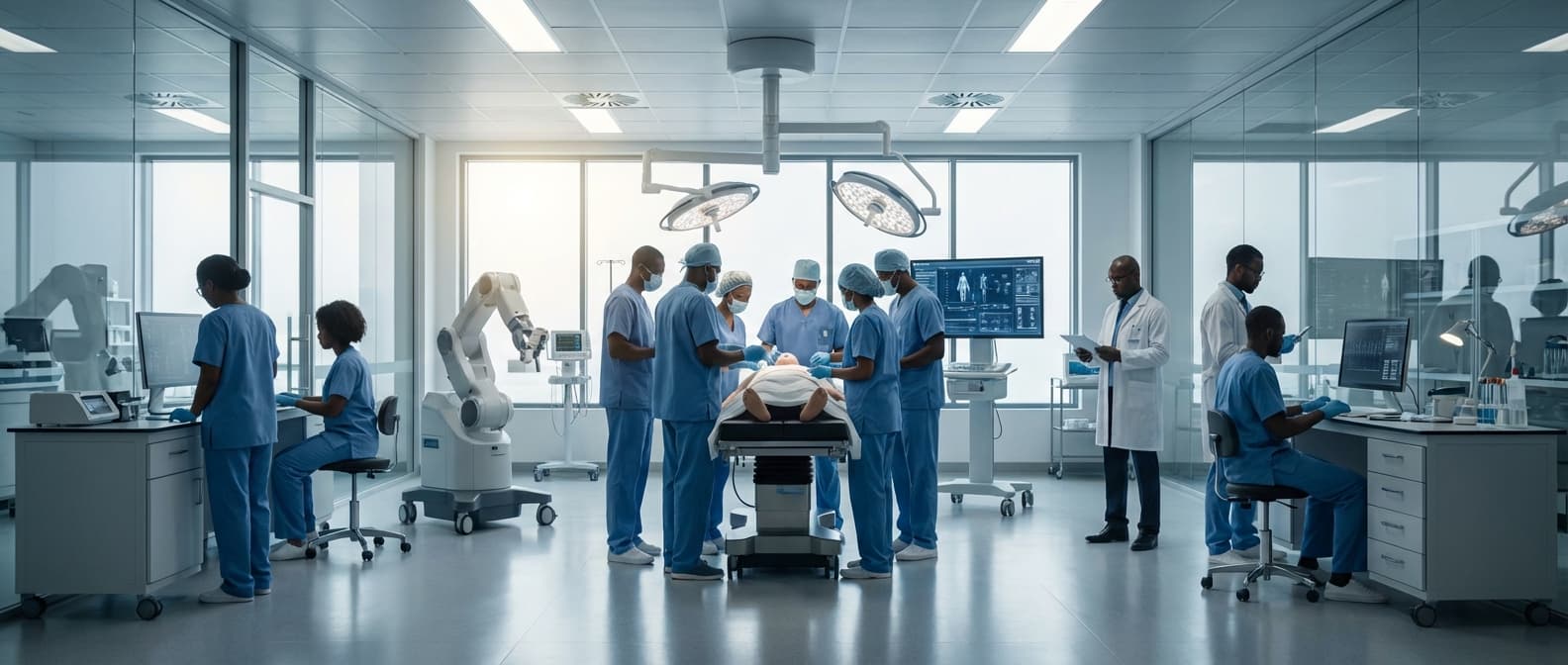
Biomedical Staffing Augmentation in Uganda
Engineering Excellence & Technical Support
Onsite biomedical engineers and PACS administrators High-standard technical execution following OEM protocols and local regulatory frameworks.
On-Demand Specialist Access
Augment your clinical teams with highly skilled Ugandan biomedical engineers, technicians, and support staff precisely when and where you need them. Our curated talent pool ensures rapid deployment of expertise for equipment installation, calibration, maintenance, and complex troubleshooting, minimizing downtime and maximizing patient care.
Remote & On-Site Support Integration
Leverage our augmented staff for a blended support model. Benefit from remote monitoring and diagnostics for faster issue resolution, combined with on-site presence for hands-on repairs and critical interventions. This flexibility ensures continuous operational efficiency for your medical facilities across Uganda, regardless of geographical challenges.
Certified Expertise & Compliance
Gain peace of mind with our rigorously vetted and certified biomedical professionals. All augmented staff possess the necessary qualifications, training, and adherence to Ugandan healthcare regulations and international standards. We ensure your equipment is maintained by experts committed to safety, quality, and compliance, safeguarding your investment and patient well-being.
What Is Biomedical Staffing Augmentation In Uganda?
Biomedical Staffing Augmentation in Uganda refers to the strategic and temporary deployment of qualified biomedical professionals to healthcare facilities and organizations facing personnel deficits or requiring specialized expertise. This service is designed to bridge gaps in the healthcare workforce, ensuring the continuous and effective operation of medical equipment, diagnostics, and patient care services. It involves the outsourcing of specific biomedical roles on a contract basis, providing access to skilled individuals who may be in short supply locally or whose expertise is needed for specific projects or periods. The primary objective is to enhance operational capacity, maintain equipment uptime, and support the delivery of quality healthcare services.
| Who Needs Biomedical Staffing Augmentation? | Typical Use Cases | ||||
|---|---|---|---|---|---|
| Public Hospitals and Healthcare Centers: Facing budget constraints, limited recruitment pools, and high equipment utilization rates. | Private Hospitals and Clinics: Seeking to expand services, upgrade technology, or cover specialized roles not readily available in-house. | Medical Research Institutions: Requiring specialized technical support for advanced diagnostic and analytical equipment. | Medical Equipment Manufacturers and Distributors: Needing qualified personnel for installation, commissioning, and after-sales service of their products. | Non-Governmental Organizations (NGOs) and International Health Organizations: Implementing health programs that require robust biomedical infrastructure and maintenance support. | |
| Equipment Maintenance and Repair: Addressing backlogs in preventive maintenance schedules and responding to urgent equipment breakdowns. | New Equipment Installation and Commissioning: Ensuring that new medical devices are properly installed, calibrated, and integrated into existing workflows. | Outbreak Response and Public Health Initiatives: Providing surge capacity for technical support during health emergencies or large-scale public health campaigns. | Specialized Project Support: Undertaking specific projects such as hospital renovations, equipment audits, or the implementation of new biomedical management systems. | Training and Capacity Building: Augmenting staff can include trainers who can upskill existing in-house personnel in the operation and maintenance of specific equipment. | Interim Management: Filling critical leadership or management roles within a biomedical department during transitions or vacancies. |
Key Aspects of Biomedical Staffing Augmentation in Uganda
- Talent Acquisition and Vetting: Sourcing, screening, and verifying the credentials of biomedical engineers, technicians, and other relevant specialists.
- Flexible Deployment Models: Offering various contract durations, from short-term project support to longer-term operational staffing.
- Specialized Skill Sets: Providing access to professionals with expertise in areas such as medical imaging equipment maintenance, laboratory diagnostics, hospital information systems, and biomedical equipment management.
- On-Demand Support: Addressing immediate staffing needs arising from unexpected staff departures, increased patient loads, or new equipment installations.
- Cost-Effective Solution: Reducing the overhead associated with permanent hires, including recruitment, training, and benefits.
- Quality Assurance and Compliance: Ensuring that augmented staff adhere to national and international healthcare standards and regulatory requirements.
Who Needs Biomedical Staffing Augmentation In Uganda?
Biomedical staffing augmentation in Uganda addresses critical gaps in healthcare infrastructure, offering specialized expertise and additional manpower to enhance the operational capacity and service delivery of healthcare facilities. This service is particularly vital in a country like Uganda, which faces challenges in retaining and recruiting highly skilled biomedical professionals, especially in remote or underserved areas. Augmentation provides a flexible and efficient solution to ensure that medical equipment is properly maintained, calibrated, and repaired, directly impacting patient care quality and safety.
| Department | Specific Needs Addressed by Augmentation | Examples of Equipment | Impact on Patient Care |
|---|---|---|---|
| Medical Engineering/Biomedical Department | Shortage of skilled technicians, specialized expertise in new technologies, on-demand repair services, preventive maintenance backlog. | MRI machines, CT scanners, X-ray units, anesthesia machines, ventilators, laboratory analysers. | Reduced equipment downtime, faster repair times, improved diagnostic accuracy, enhanced patient safety through calibrated equipment. |
| Clinical Departments (e.g., Surgery, ICU, Radiology, Laboratory) | Ensuring immediate availability of functional equipment for critical procedures and diagnostics, proactive maintenance to prevent disruptions. | Surgical microscopes, electrocautery units, patient monitors, incubators, endoscopes, blood gas analysers. | Uninterrupted surgical procedures, accurate patient monitoring, reliable diagnostic results, timely interventions for critically ill patients. |
| Procurement and Logistics | Expert advice on equipment maintenance requirements during the procurement phase, planning for spare parts and service contracts. | All types of medical equipment. | Informed purchasing decisions, better long-term operational efficiency, reduced unexpected maintenance costs. |
| Quality Assurance and Patient Safety | Ensuring regular calibration and servicing of equipment to meet national and international standards, risk mitigation. | Infusion pumps, defibrillators, sterilization equipment. | Reduced medical errors, consistent quality of care, compliance with regulatory standards. |
Target Customers and Departments for Biomedical Staffing Augmentation in Uganda
- {"title":"Public Hospitals","description":"These are the primary recipients of staffing augmentation, often facing budget constraints and a high volume of patients. They benefit from immediate access to specialized technicians and engineers to keep their essential medical equipment functional."}
- {"title":"Private Hospitals and Clinics","description":"While often better funded, private facilities also encounter shortages of specialized biomedical personnel, particularly for niche equipment. Augmentation allows them to maintain high standards of care without the long-term commitment of full-time hires."}
- {"title":"Non-Governmental Organization (NGO) Health Facilities","description":"NGOs operating in Uganda often run clinics and hospitals in challenging environments. Staffing augmentation helps them overcome logistical hurdles and ensures their medical equipment remains operational to serve vulnerable populations."}
- {"title":"Regional Referral Hospitals","description":"These larger facilities serve as hubs for multiple districts and manage a wide array of complex medical equipment. Augmentation is crucial for handling the maintenance demands of their advanced technology."}
- {"title":"District and Health Center IVs","description":"These facilities, often in rural areas, may lack dedicated biomedical staff. Augmentation provides them with essential support for critical equipment, preventing long downtimes that can severely impact local healthcare access."}
- {"title":"Specialized Medical Centers (e.g., Cancer Institutes, Cardiac Units)","description":"Facilities focusing on specific complex treatments require highly specialized biomedical engineers and technicians. Augmentation can fill these niche skill gaps, ensuring the optimal performance of sophisticated diagnostic and therapeutic equipment."}
- {"title":"Medical Training Institutions","description":"These institutions need access to experienced biomedical professionals for training future technicians and for the maintenance of their own training equipment."}
Biomedical Staffing Augmentation Process In Uganda
This document outlines the standard workflow for Biomedical Staffing Augmentation in Uganda, detailing the process from initial inquiry to successful execution. The process is designed to ensure efficient and effective placement of qualified biomedical professionals to meet the specific needs of healthcare facilities or projects.
| Phase | Key Activities | Responsible Parties | Key Deliverables/Outcomes | Typical Timeline |
|---|---|---|---|---|
| Receive initial inquiry from client (hospital, NGO, government agency). Clarify staffing requirements: specific roles, qualifications, experience, duration, location, budget. Conduct a thorough needs assessment through meetings, site visits (if applicable), and documentation review. Define the scope of augmentation services. | Client (requester), Staffing Agency (provider) | Detailed Job Description (JD) with requirements. Understanding of client's needs and objectives. Agreement on the scope of service. | 1-3 Business Days |
| Utilize internal database, professional networks, job boards, and targeted outreach to identify potential candidates. Screen resumes and applications against JD requirements. Conduct initial interviews (phone/video) to assess qualifications, experience, and soft skills. Perform reference checks and background verification. Conduct technical assessments or simulations (if required). Present a shortlist of qualified candidates to the client. | Staffing Agency (provider) | Curated shortlist of pre-vetted candidates. Detailed candidate profiles. Satisfied client with suitable candidates. | 3-10 Business Days (depending on role complexity) |
| Develop a comprehensive proposal outlining recommended candidates, service fees, terms, and conditions. Present proposal to the client for review and feedback. Negotiate contract terms, including rates, payment schedules, contract duration, and service level agreements (SLAs). Finalize and sign the service agreement/contract. | Client (requester), Staffing Agency (provider) | Approved proposal. Signed service agreement/contract. | 2-5 Business Days |
| Facilitate the onboarding process for the selected candidate(s). Coordinate with the client for necessary site-specific orientations, introductions, and access. Ensure all required documentation (e.g., permits, licenses, employment contracts) is in place. Deploy the augmented staff to the client's designated location. | Staffing Agency (provider), Client (requester), Candidate | Successfully onboarded and deployed biomedical staff. Smooth transition for the augmented staff. | 1-7 Business Days (depending on onboarding complexity) |
| Maintain regular communication with both the client and the augmented staff. Conduct periodic performance reviews (e.g., weekly check-ins, monthly formal reviews). Address any performance issues or concerns promptly. Gather feedback from the client on the augmented staff's contribution and performance. | Staffing Agency (provider), Client (requester), Candidate | Ensured quality of service delivery. Client satisfaction. Identification of areas for improvement. | Ongoing throughout the contract period |
| Manage the offboarding process upon contract completion or termination. Facilitate final administrative procedures (e.g., final payments, return of assets). Conduct exit interviews with the augmented staff to gather feedback on their experience. Solicit final feedback from the client on the overall staffing augmentation service. | Staffing Agency (provider), Client (requester), Candidate | Completed offboarding process. Valuable feedback for service improvement. Strengthened client relationship. | 1-3 Business Days |
Biomedical Staffing Augmentation Process: Uganda
- Inquiry and Needs Assessment
- Candidate Sourcing and Vetting
- Proposal and Contract Negotiation
- Onboarding and Deployment
- Performance Monitoring and Evaluation
- Offboarding and Feedback
Biomedical Staffing Augmentation Cost In Uganda
Biomedical staffing augmentation in Uganda involves bringing in specialized medical professionals, often on a temporary or project basis, to supplement existing healthcare teams. This can be crucial for public health initiatives, specialized medical procedures, research studies, or to cover staff shortages in facilities. The cost of such augmentation is influenced by a variety of factors, leading to a range of pricing in Ugandan Shillings (UGX).
| Staff Category (Example) | Estimated Daily Rate (UGX) | Estimated Monthly Rate (UGX) |
|---|---|---|
| General Practitioner/Medical Officer | 300,000 - 700,000 | 6,000,000 - 14,000,000 |
| Specialist Physician (e.g., Cardiologist, Neurologist) | 600,000 - 1,500,000 | 12,000,000 - 30,000,000 |
| Specialist Surgeon (e.g., General Surgeon, Orthopedic Surgeon) | 800,000 - 2,000,000 | 16,000,000 - 40,000,000 |
| Registered Nurse (Experienced/Specialized) | 200,000 - 400,000 | 4,000,000 - 8,000,000 |
| Biomedical Engineer (Mid-Level) | 350,000 - 700,000 | 7,000,000 - 14,000,000 |
| Laboratory Technologist (Specialized) | 250,000 - 500,000 | 5,000,000 - 10,000,000 |
| Pharmacist (Specialized) | 300,000 - 600,000 | 6,000,000 - 12,000,000 |
Key Pricing Factors for Biomedical Staffing Augmentation in Uganda
- Specialization and Skill Level: Highly specialized roles (e.g., neurosurgeons, pediatric oncologists, advanced biomedical engineers) command significantly higher rates than general practitioners or basic laboratory technicians. The experience and advanced certifications of the professional are also critical.
- Duration of Engagement: Short-term, intensive assignments or emergency deployments will generally have higher daily or hourly rates to compensate for the inconvenience and reduced flexibility for the professional. Longer-term contracts might offer slightly lower average rates.
- Location of Service: Providing services in remote or underserved areas of Uganda may incur additional costs for travel, accommodation, and hardship allowances for the augmented staff, which are passed on to the client.
- Provider Type (Agency vs. Direct Hire): Staffing agencies typically charge a markup on the professional's salary to cover recruitment, vetting, payroll, and administrative costs. Direct hiring by the facility might seem cheaper but involves significant internal resource investment.
- Scope of Work and Responsibilities: The complexity of the tasks, the level of autonomy required, and the potential impact of the role will influence the remuneration expectations.
- Travel and Accommodation: For professionals brought in from outside their usual working location, costs associated with flights, ground transportation, and suitable lodging are usually factored into the overall price.
- Visa and Work Permit Requirements: For foreign professionals, the process and cost of obtaining necessary work permits and visas in Uganda will be an additional expense.
- Insurances and Benefits: Comprehensive health insurance, liability insurance, and any other mandated or negotiated benefits for the augmented staff contribute to the total cost.
- Administrative and Recruitment Fees: Agencies charge fees for sourcing, screening, interviewing, and onboarding candidates, which are part of the overall service cost.
Affordable Biomedical Staffing Augmentation Options
Hospitals and healthcare facilities are increasingly looking for ways to optimize their operational efficiency and manage costs, especially within their biomedical departments. Affordable biomedical staffing augmentation offers a strategic solution to address skill gaps, manage fluctuating workloads, and control expenses without compromising the quality of care or the reliability of medical equipment. This approach focuses on providing specialized expertise and flexible staffing solutions to support in-house teams. Key to this strategy are 'value bundles,' which combine multiple services or resources at a reduced combined cost, and various 'cost-saving strategies' that leverage efficiency, technology, and flexible engagement models.
| Cost-Saving Strategy | Description | Key Benefit |
|---|---|---|
| Flexible Engagement Models | Utilizing project-based, temporary, or part-time staffing instead of full-time hires for specific needs. | Reduces overhead costs (benefits, training, recruitment) and allows scaling of the workforce with demand. |
| Cross-Training and Skill Augmentation | Partnering with staffing providers who offer technicians with multi-vendor or multi-modality expertise. | Maximizes the utility of each augmented staff member, reducing the need for multiple specialists. |
| Predictive Maintenance Optimization | Leveraging augmented staff to implement or enhance predictive maintenance programs, reducing unexpected breakdowns. | Minimizes costly emergency repairs and equipment downtime, extending equipment lifespan. |
| Remote Support and Tele-Maintenance | Employing augmented staff skilled in remote diagnostics and troubleshooting to resolve issues without on-site presence. | Significantly lowers travel costs and speeds up resolution times for certain equipment problems. |
| Negotiated Service Level Agreements (SLAs) | Establishing clear performance metrics and response times with staffing partners, often leading to volume discounts. | Ensures accountability and predictable service delivery, while potentially achieving better rates through committed volumes. |
| Outsourcing Non-Core Functions | Delegating tasks like inventory management, basic calibration, or specialized equipment setup to augmented staff. | Frees up in-house biomedical teams to focus on more critical or complex tasks. |
Value Bundles in Biomedical Staffing Augmentation
- On-Demand Technical Support Bundle: Includes a pre-defined block of hours for on-call or emergency repair services, remote troubleshooting, and expedited parts ordering, ensuring rapid response to critical equipment failures.
- Preventive Maintenance & Training Package: Combines routine maintenance services for a fleet of equipment with training sessions for in-house technicians on specific device types or new technologies, enhancing internal capabilities and reducing reliance on external specialists for common tasks.
- Specialized Project Staffing Solution: Offers a dedicated team of experienced biomedical engineers or technicians for a defined period to manage specific projects, such as equipment upgrades, new facility setup, or compliance audits, at a negotiated project rate.
- Integrated Service & Parts Management: A bundle that includes staffing for equipment lifecycle management, inventory control for spare parts, and predictive maintenance scheduling, aiming to minimize downtime and optimize replacement cycles.
- Remote Monitoring & Diagnostics Add-on: Integrates remote monitoring capabilities for critical equipment with a staffing component for analyzing alerts and performing initial diagnostics, reducing the need for on-site visits for non-critical issues.
Verified Providers In Uganda
Finding reliable and trustworthy healthcare providers is paramount for individuals and families in Uganda. 'Verified Providers in Uganda' focuses on the importance of credentialing and vetting healthcare services to ensure quality and patient safety. Among these, Franance Health stands out as a leading example of a healthcare provider that prioritizes transparency, professional standards, and patient-centered care. This document explores the credentials that underpin Franance Health's reputation and explains why they represent the best choice for healthcare needs in Uganda.
| Criterion | Franance Health's Commitment | Why it Matters for Patients |
|---|---|---|
| Professional Licensing | Ensures all practitioners hold valid, current licenses. | Guarantees that healthcare is provided by qualified and legally recognized professionals. |
| Facility Standards | Maintains facilities that comply with national health regulations and safety standards. | Provides a safe and hygienic environment conducive to effective treatment and recovery. |
| Evidence-Based Practice | Encourages staff to stay updated with current medical research and guidelines. | Ensures patients receive treatments that are proven effective and adhere to the latest medical knowledge. |
| Patient Rights | Upholds patient rights, including privacy, dignity, and access to information. | Empowers patients with control over their healthcare journey and ensures respectful treatment. |
| Quality Assurance | Implements internal quality control measures and seeks external validation. | Minimizes errors, optimizes treatment outcomes, and provides a consistently high standard of care. |
Key Credentials and Practices of Franance Health:
- Registered and Licensed Medical Professionals: All doctors, nurses, and allied health professionals at Franance Health are registered with and licensed by the relevant Ugandan professional bodies, such as the Uganda Medical and Dental Practitioners Council (UMDC) and the Uganda Nurses and Midwives Council (UNMC).
- Accredited Facilities and Equipment: Franance Health operates facilities that meet or exceed national health standards. Their equipment is regularly maintained, calibrated, and meets international quality benchmarks.
- Continuous Professional Development (CPD): The institution actively encourages and supports its staff in undertaking ongoing training and professional development to stay abreast of the latest medical advancements and best practices.
- Patient Safety Protocols: Robust patient safety protocols are embedded in all aspects of care, including infection control, medication management, and clear communication channels.
- Adherence to Ethical Standards: Franance Health is committed to upholding the highest ethical standards in medical practice, ensuring patient confidentiality, informed consent, and non-discriminatory care.
- Patient Feedback Mechanisms: The organization actively seeks and incorporates patient feedback to continuously improve its services and address any concerns.
- Partnerships with Reputable Organizations: Franance Health collaborates with reputable local and international health organizations, further validating its commitment to quality and accessibility.
- Transparent Pricing and Services: Patients can expect clear communication regarding treatment costs and available services, fostering trust and enabling informed decision-making.
Scope Of Work For Biomedical Staffing Augmentation
This Scope of Work (SOW) outlines the requirements for augmenting the existing biomedical staff with specialized personnel to support critical projects and ongoing operations. The primary objective is to ensure timely and efficient execution of biomedical services, research, and development activities, while maintaining high standards of quality and compliance.
| Category | Technical Deliverable | Standard Specifications / Requirements |
|---|---|---|
| Personnel Augmentation | Placement of qualified Biomedical Scientists/Technicians/Engineers | Minimum of X years of experience in a relevant biomedical field. Proficiency in specific techniques (e.g., PCR, Western Blot, cell culture, medical device maintenance, bioinformatics). Relevant certifications and/or advanced degrees (e.g., PhD, MSc, BSc in Biomedical Science, Biomedical Engineering). Demonstrated ability to work independently and collaboratively. Excellent problem-solving and analytical skills. Background checks and adherence to organizational security protocols. |
| Project Support | Contribution to specific research projects (e.g., experimental design, data collection, analysis) | Deliverables will be defined per project, including but not limited to: detailed experimental protocols, raw and analyzed data sets, progress reports, final project reports, peer-reviewed publications (as applicable). Adherence to Good Laboratory Practices (GLP) or Good Clinical Practices (GCP) as required. Timely delivery of milestones as outlined in project plans. |
| Operational Support | Maintenance and calibration of biomedical equipment | Scheduled preventative maintenance (PM) and calibration of all assigned equipment according to manufacturer specifications and internal SOPs. Troubleshooting and repair of faulty equipment, with documented service reports. Calibration records traceable to national/international standards. Minimizing equipment downtime. |
| Data Management & Analysis | Generation and interpretation of biomedical data | Accurate and organized data recording in designated systems (e.g., LIMS, ELN). Application of appropriate statistical methods for data analysis. Generation of clear and concise reports and visualizations. Compliance with data integrity and confidentiality policies. |
| Regulatory Compliance & Quality Assurance | Adherence to SOPs and regulatory guidelines | Strict adherence to all established Standard Operating Procedures (SOPs) for laboratory, clinical, or engineering activities. Compliance with relevant regulations (e.g., FDA, EMA, ISO 13485, HIPAA) as applicable to the role. Participation in internal and external audits. Reporting of any deviations or non-conformances. |
| Reporting & Communication | Regular progress updates and documentation | Submission of weekly/bi-weekly/monthly progress reports detailing activities, achievements, challenges, and planned activities. Effective communication with project managers, principal investigators, and other stakeholders. Presentation of findings at team meetings or scientific forums as requested. |
Key Objectives
- Provide specialized biomedical expertise to bridge skill gaps within the current team.
- Support the successful completion of identified research projects and initiatives.
- Enhance the capacity for routine biomedical operations and service delivery.
- Ensure adherence to all relevant regulatory, ethical, and safety guidelines.
- Facilitate knowledge transfer and skill development for existing staff where applicable.
Service Level Agreement For Biomedical Staffing Augmentation
This Service Level Agreement (SLA) outlines the guaranteed response times and uptime for biomedical staffing augmentation services provided by [Your Company Name] to [Client Company Name]. This agreement aims to ensure efficient and reliable support for critical biomedical equipment maintenance and operations.
| Service Level | Response Time Guarantee (for Critical Equipment) | Uptime Guarantee (for Critical Equipment) | Escalation Protocol |
|---|---|---|---|
| Standard Support | Within 4 business hours of receiving a Service Request. | 98% Uptime (excluding scheduled preventive maintenance) | If standard response is not met, client can escalate to Tier 1 Supervisor. If resolution is not achieved within 2 business days, client can escalate to Tier 2 Management. |
| Priority Support (for Scheduled Procedures/Emergencies) | Within 2 business hours of receiving a Service Request. | 99% Uptime (excluding scheduled preventive maintenance) | If priority response is not met, client can escalate directly to Tier 2 Management. If resolution is not achieved within 24 hours, client can escalate to Executive Management. |
| On-Call 24/7 Support (for pre-defined critical events) | Within 1 business hour of receiving a Service Request. | N/A (Focus on immediate response to prevent downtime) | Direct line to On-Call Manager. If immediate resolution is not possible, On-Call Manager is empowered to deploy additional resources or engage external specialists. |
Key Definitions
- On-Call Technician: A qualified biomedical technician readily available to respond to service requests within the agreed-upon timeframe.
- Critical Equipment: Biomedical equipment designated by the Client as essential for patient care and/or operational continuity.
- Service Request: A formal notification from the Client to [Your Company Name] requiring assistance with biomedical equipment.
- Uptime Guarantee: The percentage of time that critical biomedical equipment is operational and available for use, facilitated by the availability of augmented staffing.
- Downtime: The period during which critical biomedical equipment is not operational or available for use due to maintenance, repair, or staffing shortage.
Frequently Asked Questions

Ready when you are
Let's scope your Biomedical Staffing Augmentation in Uganda project in Uganda.

Scaling healthcare logistics and technical systems across the entire continent.