
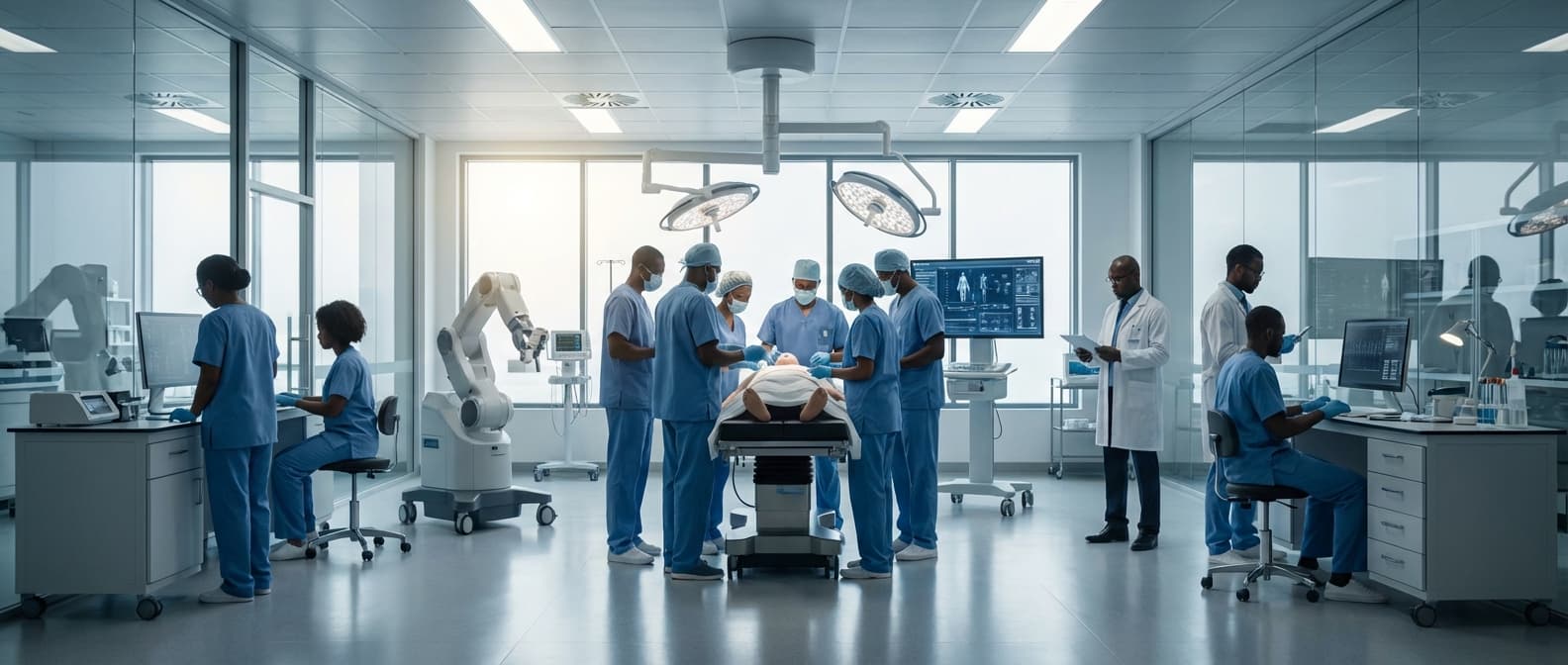
Biomedical Engineering Consulting in Uganda
Engineering Excellence & Technical Support
Equipment selection, procurement and implementation consulting High-standard technical execution following OEM protocols and local regulatory frameworks.
Advanced Medical Device Regulatory Compliance
Navigating the complex Ugandan medical device regulatory landscape to ensure your innovations meet all national and international standards, accelerating market entry and patient safety.
Optimizing Clinical Engineering & Healthcare Facility Design
Providing expert consultation on the strategic planning, procurement, and maintenance of biomedical equipment, alongside the design of efficient and safe healthcare facility infrastructure to enhance clinical workflows and patient outcomes.
Biotechnology & Pharmaceutical Process Development
Leveraging cutting-edge biomedical engineering principles to guide the development, scale-up, and validation of biotechnological and pharmaceutical manufacturing processes, fostering local production and innovation in Uganda.
What Is Biomedical Engineering Consulting In Uganda?
Biomedical Engineering Consulting in Uganda refers to the provision of specialized expertise and advice to individuals, organizations, and institutions involved in the design, development, implementation, maintenance, and ethical utilization of medical technologies and healthcare systems. This service bridges the gap between engineering principles and clinical practice, aiming to optimize healthcare delivery, enhance patient safety, and foster innovation within the Ugandan context. Consultants leverage their technical knowledge to address complex challenges related to medical equipment, infrastructure, regulatory compliance, and operational efficiency in healthcare settings.
| Who Needs Biomedical Engineering Consulting in Uganda? | Typical Use Cases |
|---|---|
| Government Ministry of Health and Regional Health Authorities: For policy development, national equipment procurement strategies, infrastructure planning, and regulatory oversight. | Developing national guidelines for medical equipment maintenance. Planning the distribution of essential medical technologies across public health facilities. Evaluating the feasibility of new healthcare technology adoption at a national level. |
| Public and Private Hospitals/Clinics: For optimizing medical equipment inventory, implementing robust maintenance programs, ensuring regulatory compliance, and upgrading facilities. | Establishing a preventive maintenance schedule for critical care equipment. Designing the layout of a new operating theater. Selecting and procuring imaging equipment. Implementing a system for tracking medical device performance. |
| Medical Device Manufacturers and Distributors: For navigating local regulatory pathways, understanding market needs, and providing after-sales technical support. | Obtaining local registration and certification for new medical devices. Developing training materials for local technicians. Advising on product design modifications based on feedback from Ugandan healthcare providers. |
| Non-Governmental Organizations (NGOs) and International Development Agencies: For implementing healthcare projects, supplying medical equipment, and ensuring its effective utilization and maintenance in underserved areas. | Assessing the equipment needs for a mobile health clinic. Developing a sustainable maintenance plan for donated medical equipment. Training local healthcare workers on the use of diagnostic tools. |
| Universities and Research Institutions: For guidance on setting up biomedical engineering laboratories, research infrastructure, and project development. | Advising on the specifications for advanced research equipment. Providing technical input for grant proposals involving medical technology. Ensuring compliance with laboratory safety standards. |
| Healthcare Entrepreneurs and Start-ups: For advice on product development, regulatory strategy, and market entry. | Guidance on the design and prototyping of innovative medical devices. Assistance with navigating the regulatory approval process for medical technology start-ups. Market feasibility studies for new healthcare solutions. |
Key Components of Biomedical Engineering Consulting in Uganda
- Needs Assessment and Strategic Planning: Identifying gaps in existing healthcare infrastructure and technology, and developing strategic roadmaps for improvement.
- Medical Equipment Management: Advising on procurement, installation, calibration, maintenance, repair, and decommissioning of medical devices, ensuring compliance with standards and lifecycle management.
- Healthcare Facility Design and Planning: Providing input on the architectural design, equipment layout, and utility requirements for new or renovated healthcare facilities, optimizing workflow and patient care.
- Regulatory Compliance and Standards Adherence: Guiding clients through local and international regulations, certifications, and quality management systems relevant to medical devices and healthcare operations.
- Technology Evaluation and Adoption: Assessing emerging biomedical technologies, recommending suitable solutions for specific clinical needs, and facilitating their integration into existing systems.
- Training and Capacity Building: Developing and delivering training programs for healthcare professionals on the operation, maintenance, and safe use of medical equipment.
- Risk Management and Patient Safety: Identifying potential risks associated with medical technologies and developing strategies for mitigation to enhance patient safety.
- Biomedical Engineering Department Setup and Optimization: Assisting in establishing or improving the structure, processes, and staffing of in-house biomedical engineering departments.
- Research and Development Support: Providing technical expertise for research projects involving biomedical devices and healthcare innovations.
- Procurement Support and Vendor Management: Assisting in the evaluation of suppliers, specification development, and contract negotiation for medical equipment.
Who Needs Biomedical Engineering Consulting In Uganda?
Biomedical Engineering (BME) consulting plays a crucial role in enhancing healthcare infrastructure and services in Uganda. It bridges the gap between advanced medical technology and effective patient care, ensuring optimal functionality, safety, and cost-efficiency. The need for BME consulting is driven by the country's commitment to improving public health, the increasing adoption of sophisticated medical equipment, and the necessity for skilled professionals to manage and maintain these vital assets.
| Target Customer | Relevant Departments/Areas of Need |
|---|---|
| Public Hospitals (e.g., Mulago National Referral Hospital, Regional Hospitals) | Clinical Engineering Department, Procurement Department, Quality Assurance, IT Department (for integrated systems), Biomedical Engineering Training Programs |
| Private Hospitals and Clinics (e.g., Kampala Hospital, International Medical Centre) | Operations Management, Procurement, Engineering/Maintenance Department, Clinical Departments (e.g., Radiology, Surgery, ICU) |
| Health Centre III and IVs (District Level Facilities) | District Health Management Teams, Facility In-charge, Maintenance Staff (often limited), Procurement Officers |
| Ministry of Health (MoH) & District Health Offices | Medical Equipment & Supplies Division, Health Infrastructure Department, Policy & Planning Department, Quality Assurance Department, Training and Human Resource Departments |
| Medical Device Manufacturers and Distributors | Technical Support, Regulatory Affairs, Sales and Marketing, Training and Development, Service Departments |
| Universities and Technical Colleges (offering BME or related programs) | Department of Biomedical Engineering, Curriculum Development Units, Research and Development Departments, Industry Linkages Offices |
| Non-Governmental Organizations (NGOs) and International Development Partners (e.g., WHO, USAID, Global Fund) | Project Management, Procurement and Logistics, Monitoring and Evaluation, Health Systems Strengthening Units |
| New Healthcare Ventures and Start-ups | Planning and Design, Equipment Sourcing and Integration, Operational Setup, Regulatory Compliance |
Who Needs Biomedical Engineering Consulting in Uganda?
- Healthcare facilities seeking to optimize their medical equipment lifecycle management, from procurement to disposal.
- Hospitals and clinics aiming to improve patient safety and reduce equipment-related incidents.
- Organizations involved in healthcare infrastructure development and expansion projects.
- Manufacturers and distributors of medical devices requiring expertise in regulatory compliance and market entry.
- Government health agencies focused on setting standards, policy development, and workforce training in biomedical engineering.
- Educational institutions developing BME programs and seeking to align curricula with industry needs.
- Non-governmental organizations (NGOs) and international aid agencies implementing health projects in Uganda.
Biomedical Engineering Consulting Process In Uganda
The biomedical engineering consulting process in Uganda, like in many other regions, follows a structured workflow to ensure efficient and effective project delivery. This process typically begins with an initial client inquiry and culminates in the successful execution and completion of the agreed-upon services. Understanding this workflow is crucial for both clients seeking expertise and consultants providing it.
| Stage | Key Activities | Typical Deliverables |
|---|---|---|
| Inquiry & Initial Consultation | Client states need, consultant assesses feasibility and scope. | Preliminary understanding of requirements, potential solution areas. |
| Proposal Development & Negotiation | Consultant creates proposal, client and consultant refine terms. | Detailed project proposal, mutually agreed scope and budget. |
| Contract Agreement & Kick-off | Formal contract signing, project launch meeting. | Signed contract, project charter, established communication plan. |
| Information Gathering & Needs Assessment | Site visits, interviews, document review, data analysis. | Needs assessment report, detailed understanding of current state. |
| Solution Design & Planning | Developing technical solutions, creating project plans. | Technical specifications, design blueprints, training modules, implementation plan. |
| Implementation & Execution | Procurement, installation, training delivery, process implementation. | Installed equipment, trained personnel, implemented procedures, constructed facilities. |
| Monitoring, Evaluation & Reporting | Tracking progress, assessing outcomes, providing regular updates. | Progress reports, evaluation reports, final project report. |
| Project Closure & Follow-up | Final handover, payment, post-project review, potential ongoing support. | Final deliverables, client sign-off, lessons learned documentation. |
Biomedical Engineering Consulting Process in Uganda: Workflow Stages
- {"title":"Stage 1: Inquiry and Initial Consultation","description":"This is the starting point where a potential client contacts a biomedical engineering consulting firm with a need or problem. This could involve equipment procurement, facility design, regulatory compliance, training, or troubleshooting. The initial consultation is a discovery phase where the consultant aims to understand the client's objectives, scope of work, budget, and timeline. During this stage, it's essential for the client to clearly articulate their requirements and for the consultant to assess feasibility and provide preliminary advice."}
- {"title":"Stage 2: Proposal Development and Negotiation","description":"Based on the initial consultation, the consulting firm develops a detailed proposal. This document outlines the proposed solution, scope of services, methodology, deliverables, timelines, team expertise, and cost breakdown. Negotiations follow, where the client and consultant discuss and refine the proposal, addressing any concerns, clarifying ambiguities, and agreeing on terms and conditions. This stage often involves multiple revisions to reach a mutually acceptable agreement."}
- {"title":"Stage 3: Contract Agreement and Project Kick-off","description":"Once the proposal is agreed upon, a formal contract is drafted and signed. This legally binding document solidifies the terms of engagement, including payment schedules, confidentiality clauses, intellectual property rights, and dispute resolution mechanisms. Following contract signing, a project kick-off meeting is scheduled. This meeting formally launches the project, introduces the project team, reconfirms objectives, and establishes communication protocols."}
- {"title":"Stage 4: Information Gathering and Needs Assessment","description":"This is a critical phase where the consulting team actively gathers all necessary information to thoroughly understand the client's existing situation. This might involve site visits, interviews with stakeholders, review of existing documentation (e.g., equipment inventories, facility layouts, operational procedures), and data analysis. A comprehensive needs assessment is performed to identify specific gaps, challenges, and opportunities."}
- {"title":"Stage 5: Solution Design and Planning","description":"With a clear understanding of the client's needs, the consultants begin to design and plan the specific solutions. This could involve developing technical specifications for equipment, creating architectural and engineering designs for facilities, devising training programs, or outlining regulatory compliance strategies. Detailed project plans, including task breakdown, resource allocation, and risk mitigation strategies, are formulated."}
- {"title":"Stage 6: Implementation and Execution","description":"This is the active phase where the designed solutions are put into practice. Depending on the project, this could involve procuring and installing equipment, supervising construction, delivering training sessions, or implementing new operational procedures. Continuous monitoring and quality control are essential throughout this stage to ensure adherence to the plan and to address any unforeseen issues promptly."}
- {"title":"Stage 7: Monitoring, Evaluation, and Reporting","description":"Throughout the execution phase and upon completion, the project's progress and outcomes are systematically monitored and evaluated. This involves tracking key performance indicators (KPIs), gathering feedback, and assessing whether the project objectives are being met. Regular reports are provided to the client, detailing progress, challenges encountered, and recommendations. A final project report summarizes the entire engagement, including results, lessons learned, and future recommendations."}
- {"title":"Stage 8: Project Closure and Follow-up","description":"The final stage involves the formal closure of the project. This includes final deliverables handover, final payments, and a post-project review meeting. Where applicable, consultants may offer follow-up support or maintenance services. Ensuring client satisfaction and building long-term relationships are key objectives of this stage."}
Biomedical Engineering Consulting Cost In Uganda
Biomedical Engineering consulting costs in Uganda can vary significantly depending on several factors. These include the complexity of the project, the experience and reputation of the consultant, the duration of the engagement, and the specific services required. Consultants may charge hourly rates, project-based fees, or retainer agreements. For smaller, straightforward tasks, clients might find hourly rates more economical, while larger, more intricate projects often benefit from a fixed project fee for budget predictability. Retainers are common for ongoing support and strategic advice.
Key pricing factors to consider when seeking biomedical engineering consulting in Uganda include:
- Scope of Work: The more extensive and complex the project (e.g., designing a new medical device, establishing a hospital's biomedical department, implementing a complex IT system), the higher the cost.
- Consultant's Expertise & Experience: Highly specialized consultants with a proven track record and extensive experience will command higher rates.
- Duration of Engagement: The longer the consultant is required, the greater the overall cost.
- Deliverables: The specific outcomes expected from the consultancy (e.g., reports, designs, training manuals, implemented systems) influence the pricing.
- Travel & Accommodation: If the consultant needs to travel within Uganda or internationally for the project, these costs will be factored in.
- Administrative & Overhead Costs: Larger consulting firms may have higher overheads that are reflected in their pricing.
- Urgency of the Project: Rush projects may incur premium charges.
Given these variables, it's challenging to provide a single definitive price range. However, based on general market understanding for professional services in Uganda, here are some estimated ranges in Ugandan Shillings (UGX). It is crucial to obtain detailed quotes from multiple consultants for an accurate assessment of your specific needs.
| Service Type/Engagement Model | Estimated Cost Range (UGX) |
|---|---|
| Hourly Rate (Entry-level/Junior Consultant) | 100,000 - 250,000 per hour |
| Hourly Rate (Mid-level/Senior Consultant) | 250,000 - 500,000 per hour |
| Hourly Rate (Specialized/Highly Experienced Consultant) | 500,000 - 1,000,000+ per hour |
| Project-Based Fee (Small projects, e.g., equipment assessment, basic training) | 1,500,000 - 10,000,000 |
| Project-Based Fee (Medium projects, e.g., departmental planning, specific system implementation) | 10,000,000 - 50,000,000 |
| Project-Based Fee (Large/Complex projects, e.g., hospital design input, full facility management strategy) | 50,000,000 - 250,000,000+ |
| Monthly Retainer (Ongoing support, strategic advice) | 2,000,000 - 15,000,000+ per month (depending on scope and hours allocated) |
Biomedical Engineering Consulting Pricing Factors in Uganda
- Scope of Work (Complexity and Scale)
- Consultant's Expertise, Experience, and Reputation
- Duration of the Engagement
- Specific Deliverables and Outcomes Required
- Travel and Accommodation Expenses
- Administrative and Overhead Costs
- Project Urgency and Timeline
Affordable Biomedical Engineering Consulting Options
Navigating the complexities of biomedical engineering projects can be daunting, especially for startups and smaller organizations with limited budgets. Fortunately, there are affordable consulting options available. Understanding value bundles and implementing cost-saving strategies can make expert guidance accessible and maximize your return on investment. This guide explores how to leverage these approaches for your biomedical engineering needs.
| Cost-Saving Strategy | Description | Example Application |
|---|---|---|
| Scope Definition & Prioritization | Clearly defining project goals and prioritizing essential deliverables helps avoid scope creep and unnecessary expenses. Focus on what truly matters for initial success. | Instead of demanding every feature in the first prototype, focus on core functionality that validates the primary hypothesis. |
| Leverage Off-the-Shelf Components | Whenever possible, utilize existing, well-validated components or technologies rather than developing everything from scratch. This reduces development time and cost. | Using standard medical-grade sensors instead of designing custom ones for a diagnostic device. |
| Phased Project Approach | Break down large projects into smaller, manageable phases. This allows for iterative development, feedback integration, and cost control at each stage. | Conducting initial user feedback on a basic functional prototype before investing in full-scale manufacturing design. |
| Remote & Virtual Consulting | Many consulting tasks can be effectively performed remotely, significantly reducing travel and on-site costs. Utilize video conferencing, shared documentation platforms, and collaborative tools. | Engaging a regulatory affairs consultant located in a different region for a virtual review of submission documents. |
| Targeted Expertise, Not Generalists | Hire consultants with highly specialized skills for specific tasks, rather than expensive generalists who may not possess the deep knowledge required. | Engaging a specific expert in biomaterials for material selection, rather than a broad product development consultant. |
| Consignment & Milestone Payments | Negotiate payment terms tied to project milestones. This ensures you only pay for tangible progress and provides a degree of financial security. | Paying a portion of the consulting fee upon completion of a successful design review, with the remainder upon validation of a working prototype. |
| Utilize Academic Partnerships | For certain research and development phases, partnering with university labs or research institutions can provide access to specialized equipment and expertise at a lower cost. | Collaborating with a university's biomechanics lab for testing the mechanical properties of a new implant. |
| Seek Consultants with Flexible Fee Structures | Explore consultants who offer hourly rates, fixed-fee projects, or even performance-based fees, aligning their compensation with project outcomes. | Choosing a consultant who offers a fixed fee for a specific regulatory submission strategy document. |
Understanding Value Bundles in Consulting
- {"title":"What are Value Bundles?","description":"Value bundles are pre-defined packages of consulting services designed to address specific project phases or common needs. Instead of hiring consultants for individual tasks, you purchase a comprehensive package, often at a discounted rate compared to a la carte services."}
- {"title":"Common Bundle Examples:","description":"These can range from early-stage feasibility studies and market research to detailed design, prototyping, regulatory pathway analysis, and even pre-clinical testing strategy."}
- {"title":"Benefits of Value Bundles:","description":"Bundles offer predictability in cost, streamlined project management, and ensure a holistic approach by integrating various expertise. They are often more cost-effective and efficient than procuring services piecemeal."}
Verified Providers In Uganda
In Uganda's evolving healthcare landscape, identifying and trusting verified providers is paramount for ensuring quality and effective medical care. Franance Health has emerged as a beacon of reliability, consistently demonstrating a commitment to excellence and patient well-being. This document outlines why Franance Health's credentials make them the premier choice for healthcare services in Uganda.
| Credential Type | Franance Health's Compliance | Benefit to Patients |
|---|---|---|
| Ministry of Health License | Fully compliant and regularly audited. | Guarantees legal operation and adherence to national health standards. |
| Professional Certifications of Staff | All medical staff hold recognized and current professional certifications. | Ensures competent and up-to-date medical expertise. |
| Quality Management Systems | Implements robust internal quality assurance protocols. | Promotes consistent delivery of high-quality care and minimizes errors. |
| Equipment Calibration and Maintenance | Regularly calibrated and maintained advanced medical equipment. | Ensures accuracy of diagnostic tests and effectiveness of treatments. |
| Data Security and Privacy | Strict adherence to patient data protection regulations. | Safeguards sensitive patient information. |
Franance Health's Credentials and Why They Stand Out
- Accreditation and Regulatory Compliance: Franance Health operates under strict adherence to all Ugandan Ministry of Health regulations and standards. They are recognized and licensed by all relevant national health bodies, ensuring their facilities and practices meet rigorous safety and quality benchmarks.
- Highly Qualified Medical Professionals: The team at Franance Health comprises experienced, board-certified physicians, specialists, nurses, and allied health professionals. Continuous professional development and training are a cornerstone of their practice, guaranteeing patients receive care from the most knowledgeable and skilled individuals.
- State-of-the-Art Facilities and Technology: Franance Health invests in modern medical equipment and diagnostic tools. This commitment to advanced technology enables accurate diagnoses and effective treatment plans, aligning with international best practices.
- Patient-Centric Approach: Beyond clinical expertise, Franance Health places a strong emphasis on patient experience. They are dedicated to providing compassionate care, clear communication, and personalized treatment strategies that address individual needs and preferences.
- Comprehensive Service Offerings: From primary care to specialized medical services, Franance Health offers a wide spectrum of healthcare solutions. This integrated approach ensures continuity of care and convenience for patients seeking diverse medical attention.
- Commitment to Ethical Practices: Integrity and transparency are core values at Franance Health. They uphold the highest ethical standards in all their dealings, fostering trust and confidence among their patient base and the wider community.
- Positive Patient Testimonials and Outcomes: The consistent positive feedback and successful health outcomes reported by patients serve as a testament to Franance Health's dedication to delivering superior healthcare.
Scope Of Work For Biomedical Engineering Consulting
This document outlines the Scope of Work (SOW) for Biomedical Engineering Consulting services. It details the objectives, tasks, deliverables, and standard specifications to ensure successful project execution and client satisfaction. The consulting services will focus on a defined biomedical engineering project, addressing specific technical challenges and providing actionable recommendations.
| Technical Deliverable | Description | Standard Specifications / Format |
|---|---|---|
| Project Management Plan | Detailed outline of project scope, objectives, timelines, resources, and risk management strategies. | Document (PDF/Word), presented in a structured format adhering to industry best practices. |
| Technical Requirements Document | Comprehensive documentation of functional, performance, and non-functional requirements for the biomedical system/device. | Document (PDF/Word) with clear, measurable, and verifiable requirements. |
| Design Specifications | Detailed engineering specifications for the proposed solutions, including schematics, component lists, and material specifications. | Documents (PDF/CAD files for schematics), clearly annotated and organized. |
| Feasibility Study Report | Analysis of the technical and economic viability of proposed solutions, including risk assessment. | Document (PDF/Word) with executive summary, methodology, findings, and recommendations. |
| Verification and Validation (V&V) Plan | Detailed protocols for testing the design and its performance against specified requirements. | Document (PDF/Word) outlining test objectives, procedures, acceptance criteria, and responsibilities. |
| V&V Test Reports | Documentation of executed V&V tests, including raw data, analysis, and conclusions. | Document (PDF/Word) with appendices containing test data. |
| Regulatory Strategy Document | Outline of the regulatory pathway, applicable standards, and submission requirements. | Document (PDF/Word) detailing regulatory landscape and proposed approach. |
| Final Technical Report | Comprehensive summary of the project, including methodology, findings, recommendations, and lessons learned. | Document (PDF/Word) with executive summary, detailed findings, and actionable recommendations. |
| Presentations and Briefings | Oral presentations of findings and recommendations to project stakeholders. | Slides (PPT/PDF) and verbal communication tailored to the audience. |
Key Project Stages and Activities
- Phase 1: Project Initiation and Planning
- Define project objectives, scope, and success criteria.
- Conduct initial stakeholder meetings and requirements gathering.
- Develop a detailed project plan, including timelines, resources, and risk assessment.
- Phase 2: Technical Assessment and Analysis
- Review existing documentation, designs, and performance data.
- Perform in-depth technical analysis of the biomedical device/system.
- Identify areas for improvement, innovation, or problem resolution.
- Phase 3: Solution Development and Design
- Develop conceptual and detailed technical solutions.
- Create preliminary designs, schematics, and prototypes (if applicable).
- Conduct feasibility studies and simulations.
- Phase 4: Verification, Validation, and Testing
- Develop test protocols and methodologies.
- Oversee or conduct verification and validation testing.
- Analyze test results and document findings.
- Phase 5: Regulatory Strategy and Compliance
- Assess regulatory requirements (e.g., FDA, CE).
- Develop a regulatory submission strategy.
- Ensure compliance with relevant standards and guidelines.
- Phase 6: Reporting and Knowledge Transfer
- Prepare comprehensive technical reports and documentation.
- Present findings and recommendations to stakeholders.
- Facilitate knowledge transfer to the client's team.
Service Level Agreement For Biomedical Engineering Consulting
This Service Level Agreement (SLA) outlines the response times and uptime guarantees provided by [Consulting Firm Name] for biomedical engineering consulting services. This SLA is an addendum to the main Consulting Agreement between [Consulting Firm Name] and [Client Name].
| Service Type | Response Time (Business Hours) | Uptime Guarantee (for remote access/monitoring services) |
|---|---|---|
| Critical Issues (e.g., major equipment failure impacting patient care, urgent regulatory deadlines) | 1 Business Hour | N/A |
| High Priority Issues (e.g., significant performance degradation, complex design challenges) | 4 Business Hours | 99.5% |
| Medium Priority Issues (e.g., standard equipment troubleshooting, minor design modifications) | 8 Business Hours | 99.0% |
| Low Priority Issues (e.g., general inquiries, non-urgent consultation requests) | 24 Business Hours | 98.0% |
Scope of Services Covered
- On-site technical support
- Remote technical support and troubleshooting
- Design and development consultation
- Regulatory compliance consultation
- Equipment maintenance and calibration advice
- Training services
Frequently Asked Questions

Ready when you are
Let's scope your Biomedical Engineering Consulting in Uganda project in Uganda.

Scaling healthcare logistics and technical systems across the entire continent.