
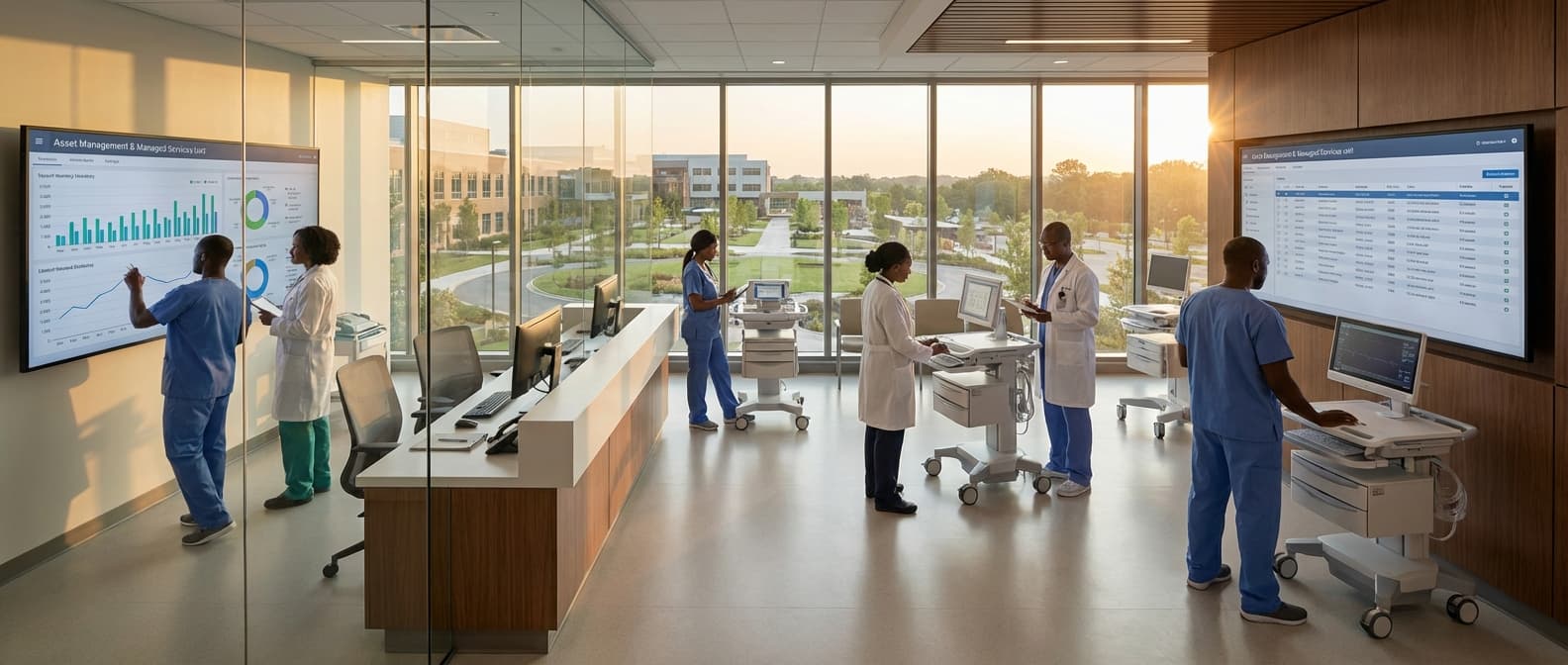
Warranty Management & Claims Processing Service in Uganda
Engineering Excellence & Technical Support
Warranty Management & Claims Processing Service High-standard technical execution following OEM protocols and local regulatory frameworks.
Real-time Asset Lifecycle Tracking
Leveraging IoT and blockchain, we provide Ugandan businesses with unparalleled visibility into their product's lifecycle, from manufacturing to end-of-life, enabling proactive warranty identification and reducing fraudulent claims through immutable record-keeping.
AI-Powered Fraud Detection & Accelerated Claims
Our advanced AI algorithms analyze claim patterns and data anomalies in real-time, significantly reducing the risk of fraudulent claims while expediting legitimate ones. This ensures faster payouts for customers and operational efficiency for Ugandan businesses.
Seamless Mobile-First Claims Submission & Status Updates
We empower Ugandan consumers with an intuitive mobile application for effortless warranty registration, claim submission, and real-time status tracking. This user-centric approach enhances customer satisfaction and streamlines the entire claims journey.
What Is Warranty Management & Claims Processing Service In Uganda?
Warranty Management and Claims Processing Services in Uganda refer to the outsourced or in-house administration of product warranties and the subsequent handling of claims filed by customers experiencing defects or malfunctions within the warranty period. This service encompasses a range of activities designed to ensure that manufacturers and service providers effectively fulfill their warranty obligations while also controlling costs and maintaining customer satisfaction. It involves the systematic tracking of warranty information, validation of claim eligibility against defined terms and conditions, authorization and scheduling of repairs or replacements, and the financial reconciliation of warranty expenditures. The objective is to streamline the often complex and resource-intensive warranty process, from initial customer contact to final resolution and cost recovery.
| Who Needs Warranty Management & Claims Processing Services? | Typical Use Cases | ||
|---|---|---|---|
| Manufacturers (OEMs) of Durable Goods: Particularly those with complex products or significant warranty exposure (e.g., electronics, appliances, automotive components, industrial machinery). | Managing extended warranties for consumer electronics (e.g., smartphones, televisions). | Processing claims for automotive parts failures under manufacturer warranty. | Coordinating repairs for industrial equipment sold to businesses. |
| Importers and Distributors: Entities that import and sell products under a manufacturer's warranty, requiring local support and claims handling. | Handling warranty claims for imported agricultural machinery. | Managing the return and repair process for imported fashion apparel with manufacturing defects. | Facilitating warranty service for imported medical devices. |
| Retailers offering Extended Warranties: Businesses that sell additional warranty coverage to customers at the point of sale. | Processing claims for appliances purchased with an extended in-store warranty. | Coordinating service for laptops or gaming consoles bought with a retailer-backed protection plan. | Managing repairs for furniture with an accidental damage warranty. |
| Service Providers & Repair Centers: Businesses that specialize in providing repair and maintenance services, often acting as an extension of the manufacturer's warranty. | Providing authorized repair services for mobile devices under warranty. | Executing warranty repairs for HVAC systems. | Offering field service for large-scale enterprise IT equipment. |
| Service Contract Providers: Companies that underwrite and manage warranty-like service contracts for various product categories. | Administering service contracts for home builders, covering structural defects. | Managing warranty claims for solar panel installations. | Processing claims for insurance policies covering product failure. |
Key Components of Warranty Management & Claims Processing Services:
- Warranty Registration & Tracking: Establishing and maintaining a centralized database of all sold products and their associated warranty terms, including purchase dates, serial numbers, and coverage details.
- Claim Intake & Validation: Receiving and documenting customer warranty claims, verifying product authenticity, and assessing eligibility based on warranty policy, usage, and cause of defect.
- Technical Assessment & Diagnosis: Facilitating or performing initial technical diagnostics to determine the nature and cause of the reported issue, often involving remote support or field technician engagement.
- Repair/Replacement Authorization & Coordination: Authorizing necessary repairs or replacements, sourcing parts, coordinating with authorized service centers or technicians, and managing the logistics of product return or repair dispatch.
- Service Provider Network Management: Identifying, vetting, and managing a network of authorized service partners to ensure quality and timely service delivery across various geographic locations.
- Cost Control & Fraud Prevention: Implementing mechanisms to monitor warranty costs, identify potential fraudulent claims, and optimize repair/replacement strategies to minimize expenditure.
- Data Analysis & Reporting: Generating reports on claim volumes, failure rates, repair costs, customer feedback, and warranty performance to inform product development and business strategy.
- Customer Communication & Support: Providing clear and timely communication to customers throughout the claims process, managing expectations, and ensuring a positive post-sales experience.
- Financial Reconciliation & Reimbursement: Processing invoices from service providers, reconciling expenses against warranty budgets, and managing reimbursement processes.
Who Needs Warranty Management & Claims Processing Service In Uganda?
Warranty management and claims processing services are crucial for businesses in Uganda to protect their assets, ensure customer satisfaction, and minimize financial losses. These services help companies efficiently handle the complexities of product warranties, from initial registration and tracking to processing claims and facilitating repairs or replacements. This, in turn, builds trust and loyalty with customers, reduces operational overhead, and provides valuable data for product improvement and risk assessment.
| Target Customer Segment | Specific Departments Involved | Reasons for Needing the Service |
|---|---|---|
| Electronics & Appliance Manufacturers/Retailers | Sales, Customer Service, After-Sales Support, Operations, Finance | High volume of products sold, customer expectations for reliable performance, managing repair/replacement logistics, minimizing warranty fraud. |
| Automotive Dealers & Service Centers | Service Department, Parts Department, Sales, Finance, Customer Relations | Complex warranty policies, tracking vehicle maintenance history, managing recalls, ensuring customer safety and satisfaction, supplier warranty claims. |
| IT Hardware & Software Providers | Technical Support, Customer Success, Operations, Product Management, Finance | Rapid technological advancements, managing software licenses and hardware support, ensuring uptime, efficient resolution of technical issues, data security. |
| Manufacturing Companies (Industrial Equipment, Machinery) | Engineering, Production, Quality Control, Service & Maintenance, Procurement, Finance | High-value assets, critical operational impact of failures, extended warranty periods, managing spare parts inventory, ensuring client business continuity. |
| Construction & Real Estate Developers | Project Management, Procurement, Facilities Management, Legal, Customer Relations | Warranties on building materials and systems, managing defects liability periods, ensuring client satisfaction and property value, compliance with building codes. |
| Telecommunications & Internet Service Providers | Technical Support, Network Operations, Customer Service, Field Operations, Billing | Warranties on modems, routers, and other equipment; managing device lifecycle, ensuring service continuity, efficient dispatch of technicians. |
| Medical Device Manufacturers & Healthcare Providers | Clinical Engineering, Biomedical Services, Regulatory Affairs, Sales, Service | Critical patient safety, stringent regulatory requirements, complex repair and calibration needs, ensuring device uptime in medical settings. |
Who Needs Warranty Management & Claims Processing Service in Uganda?
- Businesses that sell products with a warranty period.
- Companies aiming to improve customer post-purchase experience.
- Organizations seeking to streamline operational efficiency and reduce manual processing.
- Businesses looking to mitigate financial risks associated with product failures and warranty claims.
- Companies that want to gain insights into product performance and reliability.
- Sectors experiencing significant product returns or repair needs.
Warranty Management & Claims Processing Service Process In Uganda
This document outlines the typical workflow for Warranty Management & Claims Processing Services in Uganda, from initial inquiry to the final execution of a claim. This process ensures efficiency, transparency, and customer satisfaction for both the service provider and the end-user.
| Phase | Step | Description | Key Activities | Responsible Party | Outcome |
|---|---|---|---|---|---|
| 1: Inquiry & Initial Assessment | 1.1 Initial Contact | The customer initiates contact to report a potential warranty issue. | Customer contacts the service provider (e.g., via phone, email, website, in-person). | Customer, Service Provider (Customer Service/Support) | Acknowledgement of inquiry, initial understanding of the issue. |
| 1.2 Information Gathering | Basic information about the product, purchase, and the issue is collected. | Gathering product model, serial number, purchase date, proof of purchase, description of the fault. | Service Provider (Customer Service/Support) | Preliminary understanding of the claim's potential validity. | |
| 1.3 Eligibility Check (Initial) | A quick check to see if the product is likely within its warranty period and terms. | Comparing purchase date with warranty duration, identifying obvious exclusions (e.g., physical damage not covered). | Service Provider (Customer Service/Support) | Initial assessment of warranty eligibility. | |
| 2: Claim Registration & Documentation | 2.1 Claim Initiation | A formal claim is opened in the service provider's system. | Creating a unique claim reference number. | Service Provider (Claims Department) | Official record of the warranty claim. |
| 2.2 Detailed Information Collection | Comprehensive details of the issue and customer information are collected. | Customer contact details, detailed description of the fault, troubleshooting steps already taken, environment of use. | Service Provider (Claims Department) | Complete and accurate claim documentation. | |
| 2.3 Document Submission | Customer provides necessary supporting documents. | Proof of purchase (receipt, invoice), warranty card, photos/videos of the defect (if applicable). | Customer, Service Provider (Claims Department) | Verification of purchase and warranty, evidence of the fault. | |
| 3: Technical Assessment & Verification | 3.1 Fault Diagnosis | The reported issue is technically investigated. | Remote troubleshooting (if possible), inspection of the product, diagnostic tests. | Service Provider (Technical Team/Authorized Service Center) | Identification of the root cause of the fault. |
| 3.2 Warranty Validity Confirmation | Thorough verification of warranty terms and conditions against the fault. | Checking for manufacturing defects versus user-induced damage, wear and tear, unauthorized modifications, or misuse. | Service Provider (Technical Team/Claims Department) | Confirmation of whether the fault is covered under warranty. | |
| 3.3 Repair/Replacement Assessment | Determining the most appropriate resolution based on the fault and warranty policy. | Assessing if the item is repairable or needs replacement, identifying necessary parts or the exact replacement model. | Service Provider (Technical Team) | Recommendation for repair or replacement. | |
| 4: Approval & Decision Making | 4.1 Internal Review | The case is reviewed by the relevant departments for final approval. | Claims department, technical department, and potentially management (for high-value claims). | Service Provider (Relevant Departments) | Consolidated review of the claim's validity and proposed resolution. |
| 4.2 Decision on Resolution | A final decision is made on how to proceed with the claim. | Approving repair, replacement, or rejection of the claim (with justification). | Service Provider (Approving Authority) | Formal decision on the claim's outcome. | |
| 4.3 Customer Notification | The customer is informed of the decision and the next steps. | Communicating approval for repair/replacement, providing timelines, or explaining rejection reasons. | Service Provider (Claims Department) | Customer awareness of the claim's status and resolution path. | |
| 5: Execution of Resolution | 5.1 Repair Process | If approved for repair, the product is fixed. | Scheduling repair, sourcing parts, performing repair by qualified technicians. | Service Provider (Technical Team/Authorized Service Center) | Repaired product. |
| 5.2 Replacement Process | If approved for replacement, a new or equivalent product is provided. | Arranging for the delivery of the replacement product, collection of the faulty unit (if necessary). | Service Provider (Logistics/Sales) | Replacement product provided to the customer. | |
| 5.3 Return & Collection | Managing the logistics of returning the faulty product or delivering the repaired/replaced item. | Arranging courier services, customer pickup at service centers, delivery to customer's location. | Service Provider (Logistics/Service Center) | Faulty unit returned/disposed of, or repaired/replacement unit delivered. | |
| 6: Claim Closure & Feedback | 6.1 Final Confirmation | Ensuring the customer has received the repaired/replaced product and is satisfied. | Confirming successful delivery or pickup, verifying the issue is resolved. | Service Provider (Customer Service/Claims Department) | Confirmation of successful resolution. |
| 6.2 Claim Archival | The claim record is formally closed and archived. | Updating the claim status to 'Closed', storing all relevant documentation and communication. | Service Provider (Claims Department) | Completed and documented claim record. | |
| 6.3 Customer Feedback | Gathering feedback to improve the service. | Sending out satisfaction surveys, encouraging reviews. | Service Provider (Customer Service/Quality Assurance) | Insights for service improvement. |
Warranty Management & Claims Processing Service Process in Uganda
- Phase 1: Inquiry & Initial Assessment
- Phase 2: Claim Registration & Documentation
- Phase 3: Technical Assessment & Verification
- Phase 4: Approval & Decision Making
- Phase 5: Execution of Resolution
- Phase 6: Claim Closure & Feedback
Warranty Management & Claims Processing Service Cost In Uganda
Warranty management and claims processing services in Uganda are essential for businesses to ensure customer satisfaction, protect their brand reputation, and manage product lifecycle costs effectively. The cost of these services can vary significantly depending on several factors, making it crucial for businesses to understand these drivers when seeking providers. These services typically involve a range of activities from initial warranty registration and validation to the assessment and resolution of customer claims, including repair, replacement, or refund. The pricing structures often reflect the complexity and volume of these operations.
| Service Component/Tier | Estimated Range (UGX) | Description |
|---|---|---|
| Basic Claims Intake & Triage (Per Claim) | 15,000 - 40,000 | Includes initial receipt of claim, basic verification, and directing it to the appropriate channel. Suitable for low-complexity products. |
| Standard Claims Processing (Per Claim) | 40,000 - 120,000 | Encompasses claim assessment, initial diagnostics, communication with customer and technician, and processing of standard resolutions (repair/replacement). Applicable to most consumer electronics and common appliances. |
| Advanced/Technical Claims Processing (Per Claim) | 100,000 - 300,000+ | Involves in-depth technical assessment, specialized diagnostics, coordination of complex repairs, and management of high-value components. For industrial equipment, complex machinery, or high-end electronics. |
| Monthly Retainer (Small Business/Low Volume) | 500,000 - 2,000,000 | A fixed monthly fee covering a set number of claims or a defined scope of basic warranty management services. Ideal for businesses with predictable, lower claim volumes. |
| Monthly Retainer (Medium/Large Business/High Volume) | 2,000,000 - 10,000,000+ | A comprehensive monthly fee for managing a larger volume of claims, potentially including dedicated account management, advanced reporting, and proactive warranty analysis. Pricing is highly customizable. |
| Per-Unit Warranty Management Fee (Annual) | 1,000 - 5,000 (per unit) | A fee charged annually per unit under warranty, covering registration, basic support, and potential proactive communication. Often used by manufacturers for extended warranties. |
| Setup/Implementation Fee | 1,000,000 - 5,000,000+ | One-time cost for setting up the claims management system, integrating with existing software, and initial staff training. Varies based on complexity and customization. |
| Logistics & Spare Parts Management (Variable) | Dependent on actual costs + Service Fee (e.g., 10-20%) | Costs associated with shipping, warehousing, inventory management of spare parts, and return logistics. Often charged at cost plus a percentage service fee. |
Key Pricing Factors for Warranty Management & Claims Processing in Uganda
- Service Scope and Complexity: The breadth of services offered by the provider is a primary cost driver. This includes basic claims intake, technical assessment, spare parts management, logistics for returns and repairs, customer communication, and data analytics.
- Volume of Products/Services Covered: The total number of units or services under warranty directly impacts operational costs. Higher volumes generally lead to economies of scale, but can also necessitate more robust infrastructure and staffing.
- Type of Product/Service: High-value, complex, or technical products (e.g., electronics, machinery, automotive) often incur higher processing costs due to specialized knowledge, diagnostic tools, and potentially more expensive spare parts or repair procedures.
- Claims Frequency and Severity: A higher rate of claims, especially for complex or costly issues, will naturally increase the workload and expenditure for the service provider.
- Geographic Reach and Logistics: If the service needs to cover a wide geographic area within Uganda, or involve international shipping for parts or products, logistical costs (transportation, warehousing) will be added.
- Technology and Infrastructure: Providers investing in advanced claims management software, communication platforms, or dedicated repair facilities will likely charge more to recoup these investments and offer enhanced efficiency.
- Service Level Agreements (SLAs): The speed of claim resolution, communication responsiveness, and uptime guarantees stipulated in SLAs can influence pricing. More stringent SLAs often come with a premium.
- Reporting and Analytics Requirements: Businesses requiring detailed reports on warranty performance, common failure modes, and cost analysis will contribute to the overall service cost.
- Provider's Experience and Reputation: Established providers with a proven track record and strong customer satisfaction may command higher fees.
- Customization and Integration: The need for custom workflows or integration with existing business systems (e.g., CRM, ERP) can add to the setup and ongoing costs.
Affordable Warranty Management & Claims Processing Service Options
Managing warranties and processing claims can be a significant operational overhead for businesses of all sizes. Fortunately, numerous service providers offer affordable solutions. These services range from streamlined digital platforms to full-service outsourcing, each with varying value bundles and cost-saving strategies. Understanding these options can help businesses reduce expenses while maintaining efficient warranty management and customer satisfaction.
Value bundles typically include a combination of features like warranty registration, automated claim submission, status tracking, repair coordination, and analytics. Cost-saving strategies often involve tiered pricing based on volume, contract duration discounts, and integration with existing business systems to avoid redundant data entry.
| Value Bundle Type | Typical Features | Cost-Saving Strategies |
|---|---|---|
| Basic Platform Access | Online registration, basic claim submission portal, limited reporting. | Low per-transaction fees, scalable as volume grows, DIY implementation. |
| Standard Service Package | Automated registration and claim submission, status tracking, basic repair coordination, standard analytics. | Volume-based discounts, annual contract incentives, integration support. |
| Premium Outsourcing | End-to-end claim processing, dedicated account management, proactive repair network management, advanced analytics, customer support. | Long-term contract reductions, bundled pricing for multiple services, reduced internal staff costs. |
| Customizable Solutions | Tailored features based on specific business needs, integration with legacy systems. | Negotiated pricing based on unique requirements, phased implementation to manage costs. |
Key Components of Affordable Warranty Management Services
- Digital Warranty Registration: Simple online portals for customers to register products.
- Automated Claim Submission: Streamlined digital forms and workflows to expedite claim filing.
- Real-time Claim Tracking: Customers and businesses can monitor claim progress easily.
- Repair Network Management: Access to pre-vetted repair centers and service providers.
- Parts Procurement and Logistics: Assistance with sourcing and delivering replacement parts.
- Customer Support: Dedicated helplines or chat support for warranty inquiries.
- Reporting and Analytics: Insights into claim trends, product failures, and warranty costs.
- Integration Capabilities: Seamless connection with CRM, ERP, or e-commerce platforms.
Verified Providers In Uganda
In Uganda's evolving healthcare landscape, discerning patients seek reliable and credentialed medical professionals. Franance Health stands out as a beacon of trust, meticulously vetting its network of providers to ensure the highest standards of care. This commitment to quality assurance means that when you choose a Franance Health-affiliated provider, you are selecting a healthcare professional with verified expertise, ethical practice, and a dedication to patient well-being. Their rigorous credentialing process goes beyond basic licensing, encompassing peer reviews, continuous professional development, and adherence to stringent quality benchmarks. This thoroughness provides unparalleled peace of mind, allowing you to focus on your health with confidence.
| Credential Type | Franance Health Verification Standard | Benefit to Patient |
|---|---|---|
| Medical Licenses & Registrations | Mandatory & Checked Against Official Registries | Ensures legal and authorized practice |
| Specialist Qualifications | Verified through recognized bodies and institutional records | Confirms expertise in specific medical areas |
| Continuing Medical Education (CME) | Proof of active participation and completion reviewed | Guarantees up-to-date knowledge and skills |
| Peer Reviews & Performance Data | Collected from reputable sources and analyzed | Provides insights into clinical effectiveness and patient satisfaction |
| Background Checks | Standard ethical and professional conduct assessment | Upholds trust and safety within the network |
Why Franance Health Providers are the Superior Choice:
- Rigorous Vetting Process: Franance Health employs a multi-faceted approach to verify provider credentials, ensuring a high caliber of medical professionals.
- Verified Expertise: Beyond standard qualifications, providers undergo checks for specialized skills and proven experience in their respective fields.
- Commitment to Ethical Practice: All Franance Health providers adhere to strict ethical guidelines and professional conduct standards.
- Continuous Professional Development: The network prioritizes providers who are dedicated to ongoing learning and staying abreast of the latest medical advancements.
- Patient-Centric Approach: Franance Health selects providers known for their compassionate care and a genuine commitment to patient outcomes.
- Access to Quality Care: By choosing Franance Health, you gain access to a curated network of trusted healthcare professionals across Uganda.
Scope Of Work For Warranty Management & Claims Processing Service
This Scope of Work (SOW) outlines the services to be provided for Warranty Management & Claims Processing. The objective is to ensure efficient and effective handling of warranty claims, from initial submission to resolution, minimizing customer dissatisfaction and optimizing cost recovery for the client. This document details the services, technical deliverables, and standard specifications required for successful execution.
| Technical Deliverable | Description | Standard Specifications / Requirements |
|---|---|---|
| Warranty Management System (WMS) Integration | Seamless integration with the client's existing or provided WMS for real-time data exchange. | API compatibility, data security protocols (e.g., TLS 1.2+), data format adherence (e.g., JSON, XML), regular data synchronization. |
| Claim Submission Portal/Interface | User-friendly portal for customers/partners to submit warranty claims. | Intuitive design, mobile responsiveness, mandatory fields for essential information (product serial number, purchase date, issue description, photos/videos), secure user authentication. |
| Automated Claim Triage & Routing | Systematic categorization and routing of claims to appropriate teams based on product type, issue severity, and region. | Configurable rules engine, pre-defined workflows, automated notifications to assigned personnel. |
| Diagnostic Tools & Knowledge Base Access | Access to and utilization of diagnostic tools and a comprehensive knowledge base for efficient troubleshooting. | Remote diagnostic capabilities (if applicable), up-to-date product manuals, troubleshooting guides, historical repair data, AI-powered anomaly detection (optional). |
| Parts Ordering & Tracking System | System for ordering replacement parts and tracking their delivery. | Integration with approved vendor systems, real-time inventory checks, automated order generation, shipment tracking integration (e.g., FedEx, UPS APIs). |
| Repair Status Updates & Notifications | Regular and timely updates on the status of repairs to customers and relevant stakeholders. | Automated email/SMS notifications at key stages (e.g., claim received, diagnostic complete, part ordered, repair in progress, repair complete), configurable notification templates. |
| Root Cause Analysis (RCA) Reports | Detailed reports identifying the underlying causes of recurring product failures. | Structured RCA methodology (e.g., 5 Whys, Fishbone Diagram), data-driven analysis, identification of preventive actions, regular reporting cadence. |
| Financial Reconciliation & Reimbursement Reports | Accurate tracking and reporting of all warranty-related costs, including parts, labor, and shipping, for reimbursement purposes. | Itemized cost breakdown, reconciliation with vendor invoices, adherence to client's reimbursement policies, regular financial summaries. |
| Performance Dashboards & Analytics | Visual dashboards providing key performance indicators (KPIs) related to warranty claim processing. | Real-time data visualization, customizable dashboards, KPIs such as Average Claim Resolution Time (ACRT), First Contact Resolution (FCR), claim denial rate, cost per claim. |
| Security & Data Privacy Compliance | Adherence to all relevant data security and privacy regulations. | Compliance with GDPR, CCPA, ISO 27001 (if applicable), regular security audits, data encryption at rest and in transit. |
Key Service Areas
- Warranty Claim Intake & Validation
- Technical Assessment & Diagnosis
- Parts Procurement & Logistics Coordination
- Repair & Replacement Management
- Root Cause Analysis & Trend Reporting
- Financial Reconciliation & Reimbursement Processing
- Customer Communication & Support
Service Level Agreement For Warranty Management & Claims Processing Service
This Service Level Agreement (SLA) outlines the performance standards for the Warranty Management & Claims Processing Service provided by [Your Company Name] to [Client Company Name]. This SLA defines the expected response times for various incident severities and the guaranteed uptime for the service.
| Service Component | Response Time (Business Hours) | Resolution Time (Business Hours) | Uptime Guarantee |
|---|---|---|---|
| Warranty Registration & Verification | 1 Business Hour | 4 Business Hours (for standard requests) | 99.5% |
| Claims Submission & Tracking (initial acknowledgement) | 30 Minutes | N/A (Tracking is real-time) | 99.5% |
| Claims Processing (eligibility confirmation) | 2 Business Hours | 8 Business Hours (for straightforward claims) | 99.5% |
| Repair & Replacement Coordination | 4 Business Hours (initiation of process) | 24 Business Hours (for standard repairs/replacements) | 99.5% |
| Technical Support & System Access | 1 Business Hour (for critical issues) | 4 Business Hours (for critical issues) | 99.9% |
Key Service Components
- Warranty Registration & Verification
- Claims Submission & Tracking
- Repair & Replacement Coordination
- Parts Inventory Management (if applicable)
- Reporting & Analytics
Frequently Asked Questions

Ready when you are
Let's scope your Warranty Management & Claims Processing Service in Uganda project in Uganda.

Scaling healthcare logistics and technical systems across the entire continent.