
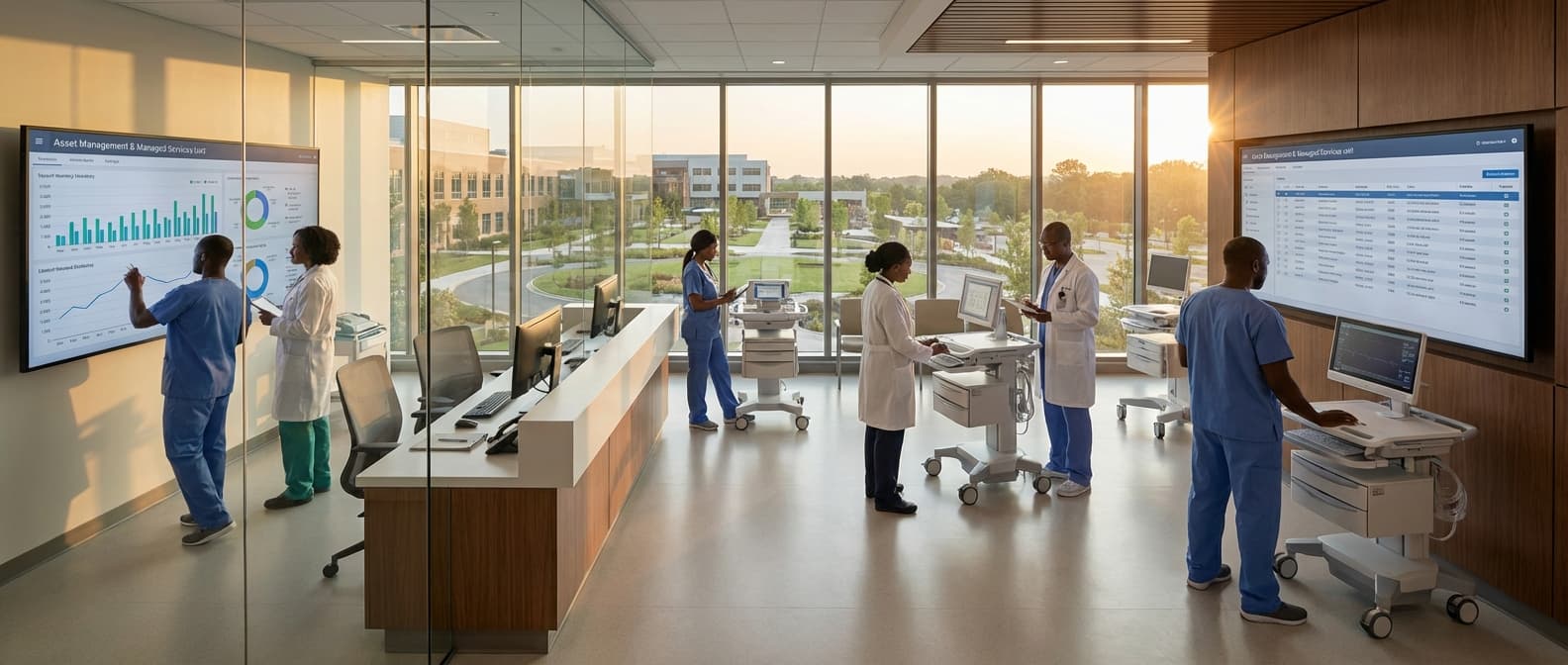
Maintenance KPI Reporting Service (Uptime/MTBF/MTTR) in Uganda
Engineering Excellence & Technical Support
Maintenance KPI Reporting Service (Uptime/MTBF/MTTR) High-standard technical execution following OEM protocols and local regulatory frameworks.
Maximize Uptime & Minimize Downtime
Our service leverages advanced analytics to predict potential equipment failures and schedule proactive maintenance, ensuring your critical assets in Uganda operate at peak performance, significantly boosting overall operational uptime and productivity.
Optimize Mean Time Between Failures (MTBF)
We provide granular insights into failure patterns across your Ugandan fleet. By identifying root causes and implementing targeted maintenance strategies, our reporting helps extend the operational life of your equipment and dramatically improve your MTBF figures.
Reduce Mean Time To Repair (MTTR)
Gain real-time visibility into maintenance operations across Uganda. Our KPI reports highlight bottlenecks in repair processes, enabling faster diagnosis, efficient resource allocation, and rapid deployment of skilled technicians to minimize repair times and restore functionality swiftly.
What Is Maintenance Kpi Reporting Service (Uptime/mtbf/mttr) In Uganda?
A Maintenance KPI Reporting Service focusing on Uptime, Mean Time Between Failures (MTBF), and Mean Time To Repair (MTTR) in Uganda is a specialized offering designed to systematically collect, analyze, and present data on the performance of physical assets and operational systems. This service quantifies the reliability and maintainability of equipment and processes through key performance indicators (KPIs). Uptime represents the percentage of time an asset or system is operational and available for its intended purpose. MTBF is a metric that measures the average time elapsed between a failure and the next failure of a repairable component or system. MTTR quantifies the average time required to repair a failed component or system, including diagnosis and restoration to operational status. The service typically involves data acquisition (manual or automated), data aggregation, statistical analysis, visualization, and the generation of actionable reports tailored to the client's operational context. This allows for proactive identification of trends, root cause analysis of failures, and optimization of maintenance strategies to minimize downtime and improve overall operational efficiency.
| Stakeholder/Industry | Needs Addressed | Typical Use Cases |
|---|---|---|
| Manufacturing Operations | Maximizing production output, minimizing unplanned downtime, ensuring product quality, optimizing maintenance budgets. | Monitoring critical production machinery (e.g., assembly lines, CNC machines, packaging equipment), identifying bottleneck equipment, prioritizing preventative maintenance schedules, evaluating contractor performance. |
| Energy and Utilities (Power Generation, Water Treatment) | Ensuring continuous service delivery, maintaining grid stability, complying with regulatory standards, managing aging infrastructure. | Tracking the performance of turbines, generators, pumps, distribution networks, treatment plants, identifying failure-prone components, optimizing outage planning for maintenance. |
| Telecommunications | Maintaining network availability, ensuring service continuity for subscribers, managing infrastructure resilience. | Monitoring cell towers, base stations, fiber optic networks, data centers, identifying network outages, optimizing repair response times, predicting equipment lifespan. |
| Mining and Heavy Industry | Ensuring operational continuity in harsh environments, maximizing equipment uptime for extraction and processing, managing safety. | Monitoring crushers, conveyors, haul trucks, excavators, processing plants, identifying equipment failures in remote locations, optimizing maintenance strategies for high-wear components. |
| Transportation and Logistics | Ensuring fleet availability, minimizing transit delays, optimizing vehicle maintenance schedules, reducing operational costs. | Tracking the performance of trucks, trains, aircraft, vessels, managing maintenance of fleets, identifying common mechanical issues, optimizing spare parts inventory for vehicles. |
| Facility Management (Commercial and Industrial Buildings) | Ensuring occupant comfort and safety, minimizing operational disruptions, managing energy consumption. | Monitoring HVAC systems, elevators, electrical distribution, plumbing, identifying equipment failures, optimizing maintenance schedules for building systems. |
Key Components of the Maintenance KPI Reporting Service:
- Data Acquisition & Integration: Establishing mechanisms for collecting raw operational and maintenance data from various sources (e.g., SCADA, CMMS, manual logs, sensor data).
- KPI Calculation & Normalization: Implementing standardized algorithms for calculating Uptime, MTBF, MTTR, and other relevant reliability and maintainability metrics. This includes handling different data formats and ensuring consistency.
- Data Analysis & Trend Identification: Employing statistical methods to analyze historical data, identify recurring failure patterns, predict potential issues, and assess the effectiveness of current maintenance practices.
- Reporting & Visualization: Generating clear, concise, and visually intuitive reports (dashboards, charts, tables) that highlight key performance trends, deviations from targets, and areas requiring attention.
- Root Cause Analysis (RCA) Support: Providing data-driven insights to facilitate the investigation of failure incidents, aiding in the identification of underlying causes.
- Benchmarking & Performance Comparison: Enabling comparison of asset performance against historical data, industry benchmarks, or other similar assets within the organization.
- Actionable Recommendations: Translating data insights into practical recommendations for maintenance planning, spare parts management, training, and process improvements.
- Technology Integration: Leveraging appropriate software platforms and tools for data management, analysis, and reporting, potentially including CMMS/EAM system integration or specialized analytics tools.
Who Needs Maintenance Kpi Reporting Service (Uptime/mtbf/mttr) In Uganda?
In Uganda's rapidly developing industrial and service sectors, the effective management of assets and operational efficiency are paramount for sustained growth and profitability. Maintenance KPI reporting services, focusing on critical metrics like Uptime, Mean Time Between Failures (MTBF), and Mean Time To Repair (MTTR), are essential for organizations seeking to optimize their asset performance, minimize costly downtime, and ensure reliable service delivery. These services provide the data-driven insights needed to make informed decisions about maintenance strategies, resource allocation, and capital investments. Without robust reporting, businesses risk facing unpredictable breakdowns, extended repair times, and ultimately, a negative impact on their bottom line and customer satisfaction.
| Target Customer Profile | Key Departments Benefiting |
|---|---|
Who Needs Maintenance KPI Reporting Service (Uptime/MTBF/MTTR) in Uganda?
- Manufacturing Plants
- Energy and Utilities Companies
- Telecommunications Providers
- Transportation and Logistics Firms
- Mining and Extractive Industries
- Large-scale Agricultural Operations
- Hospitality and Healthcare Facilities
- Construction and Infrastructure Projects
- Food and Beverage Processing
- Any organization with critical machinery or infrastructure that requires high availability.
Maintenance Kpi Reporting Service (Uptime/mtbf/mttr) Process In Uganda
This document outlines the Maintenance KPI Reporting Service workflow for Uptime, Mean Time Between Failures (MTBF), and Mean Time To Repair (MTTR) within Uganda. This service is designed to provide clients with actionable insights into their asset maintenance performance, enabling data-driven decision-making and continuous improvement. The process begins with an initial client inquiry and culminates in the delivery of comprehensive KPI reports.
| Phase | Activities | Key Deliverables/Outcomes | Responsible Parties | Timeframe (Typical) |
|---|---|---|---|---|
| Client expresses interest in maintenance KPI reporting. Initial discussions to understand client's needs, existing systems, and goals. Site visits or virtual meetings. | Initial understanding of client requirements, identification of potential challenges. | Client, Service Provider Sales/Consulting Team | 1-3 Business Days |
| Detailed discussion on specific KPIs to be tracked (Uptime, MTBF, MTTR), reporting frequency, data sources, desired report format, and service level agreements (SLAs). Formal proposal and contract negotiation. | Signed Service Agreement, clearly defined KPIs, reporting schedule, and costs. | Client, Service Provider Project Management/Legal Team | 3-7 Business Days |
| Identification and integration with client's existing data sources (e.g., CMMS, SCADA, ERP, manual logs). If necessary, recommendations or implementation of new data collection tools or sensors. Training for client personnel on data entry/system usage. | Established data feeds or manual data collection procedures, trained client personnel. | Service Provider Technical Team, Client IT/Maintenance Department | 1-4 Weeks (depending on complexity) |
| Continuous or scheduled monitoring of asset operational status, downtime events, repair times, and relevant maintenance activities. Real-time data streaming or scheduled data extraction. | Raw data on asset performance and maintenance events. | Service Provider Data Analysts, Client Maintenance Personnel | Ongoing |
| Verification of collected data for accuracy, completeness, and consistency. Cleaning and formatting data to ensure suitability for analysis. Identification and flagging of anomalies or missing information. | Cleaned and validated dataset ready for KPI calculation. | Service Provider Data Analysts | Daily/Weekly (depending on reporting frequency) |
| Calculation of Uptime (e.g., percentage of operational time), MTBF (average time between failures), and MTTR (average time to repair) based on validated data. Application of industry-standard formulas. | Calculated KPI values. | Service Provider Data Analysts | Concurrent with Data Validation & Processing |
| Creation of comprehensive reports incorporating calculated KPIs, trends, graphical representations, and comparative analysis (e.g., over time, across asset types). Customization of report content based on agreed scope. | Draft Maintenance KPI Report. | Service Provider Data Analysts/Report Designers | 2-5 Business Days (per reporting cycle) |
| Delivery of the KPI report to the client. Presentation of findings, insights, and key performance indicators. Discussion of trends, identification of problem areas, and clarification of any questions. | Client understanding of maintenance performance, identification of areas for improvement. | Service Provider Project Manager/Senior Analyst, Client Management/Maintenance Team | 1-2 Business Days (per reporting cycle) |
| Collaborative development of action plans based on report insights to address identified maintenance issues. Definition of corrective actions, preventive measures, and improvement initiatives. Setting of targets for future reporting periods. | Documented action plans, agreed-upon improvement initiatives. | Client Maintenance/Operations Team, Service Provider Consultants | Ongoing (post-report review) |
| Regularly reviewing the effectiveness of implemented action plans. Ongoing monitoring of KPIs to track progress and demonstrate the impact of improvements. Iterative refinement of the reporting process and data collection methods. | Demonstrated improvement in asset Uptime, reduction in MTBF/MTTR, optimized maintenance strategies. | Client Management, Service Provider Team | Ongoing |
Maintenance KPI Reporting Service Workflow (Uptime/MTBF/MTTR) in Uganda
- Inquiry & Consultation
- Scope Definition & Agreement
- Data Collection Setup
- Data Monitoring & Collection
- Data Validation & Processing
- KPI Calculation
- Report Generation
- Report Presentation & Review
- Action Planning & Follow-up
- Continuous Improvement
Maintenance Kpi Reporting Service (Uptime/mtbf/mttr) Cost In Uganda
Providing a robust Maintenance KPI Reporting Service, crucial for optimizing operations through metrics like Uptime, Mean Time Between Failures (MTBF), and Mean Time To Repair (MTTR), comes with a range of costs in Uganda. The pricing for such a service is not a fixed figure but is influenced by several key factors. These factors determine the complexity of the data collection, analysis, reporting platform, and the level of support offered. Understanding these elements is vital for businesses seeking to budget effectively for this essential service.
| Service Level/Complexity | Typical Monthly Cost Range (UGX) | Included Features (Examples) |
|---|---|---|
| Basic (Manual Data Entry, Standard Reports) | 200,000 - 700,000 | Monthly Uptime % calculation, basic MTBF/MTTR reporting, standard templates. |
| Intermediate (Some Automation, Customizable Reports) | 700,000 - 2,500,000 | Weekly/Monthly automated data import (limited sources), customizable dashboards, trend analysis, alerts for critical failures. |
| Advanced (Full Automation, Predictive Insights, Full Support) | 2,500,000 - 10,000,000+ | Real-time data integration (IoT, SCADA), advanced predictive analytics, root cause analysis support, dedicated account management, custom integrations, extensive training. |
Key Factors Influencing Maintenance KPI Reporting Service Costs in Uganda
- Scope of Services: This is the primary cost driver. A basic reporting service might only focus on generating pre-defined reports from manually entered data. More comprehensive services can include automated data collection (IoT sensors, SCADA integration), advanced analytics, predictive maintenance insights, customized dashboard creation, and real-time alerts. The more features and automation included, the higher the cost.
- Number of Assets/Locations: The volume of equipment or assets being monitored directly impacts the effort required for data collection, processing, and analysis. A service monitoring a single factory will be significantly cheaper than one managing multiple sites across different regions in Uganda.
- Data Collection Method: Manual data entry is the least expensive but most prone to errors and delays. Automated data collection via sensors, PLCs, or integration with existing CMMS (Computerized Maintenance Management System) or ERP systems incurs higher upfront costs for hardware and integration but offers greater accuracy and efficiency, potentially lowering ongoing reporting costs.
- Reporting Frequency and Complexity: Daily, weekly, monthly, or quarterly reports will have varying levels of effort. The complexity of the reports – the number of KPIs tracked, the depth of analysis, the use of advanced visualizations, and the need for custom calculations – will also affect pricing.
- Software Platform & Technology: The underlying software used for data aggregation, analysis, and visualization plays a significant role. Proprietary platforms or those requiring significant customization can be more expensive than off-the-shelf solutions. The hosting model (cloud-based vs. on-premise) also influences costs.
- Customization and Integration Needs: If the reporting service needs to integrate with existing business systems (e.g., ERP, financial software) or requires bespoke report formats and dashboards tailored to specific organizational needs, this will add to the cost.
- Level of Support and Training: The availability of dedicated customer support (technical assistance, account management), training sessions for staff, and ongoing consulting services will influence the overall price.
- Data Security and Compliance: Depending on the industry and the sensitivity of the data, enhanced security measures and compliance with local or international standards might be required, adding to the service cost.
- Provider Reputation and Expertise: Established providers with a proven track record, specialized expertise in industrial maintenance, and strong local presence in Uganda may command higher prices due to their reliability and quality of service.
Affordable Maintenance Kpi Reporting Service (Uptime/mtbf/mttr) Options
Our Affordable Maintenance KPI Reporting Service offers comprehensive solutions for tracking and improving your operational uptime, Mean Time Between Failures (MTBF), and Mean Time To Repair (MTTR). We understand that budget constraints are crucial, so we've designed flexible value bundles and cost-saving strategies to provide maximum ROI. Our service leverages data-driven insights to empower your maintenance teams, reduce downtime, and optimize resource allocation. We focus on delivering clear, actionable reports that highlight areas for improvement, enabling proactive maintenance and ultimately lowering your total cost of ownership.
| Cost-Saving Strategy | Description | Benefit |
|---|---|---|
| Data Automation Integration | We integrate with your existing CMMS/EAM systems to automate data collection, reducing manual effort and errors. | Significant time and labor savings, improved data accuracy. |
| Tiered Reporting Frequency | Choose reporting frequencies (weekly, monthly, quarterly) that align with your operational needs, avoiding unnecessary data processing. | Reduced analytical overhead and cost, focus on actionable insights. |
| Scalable Service Plans | Our plans are designed to scale with your business. Start with a basic package and upgrade as your needs and budget grow. | Flexibility and cost-effectiveness, pay only for what you need. |
| Preventative Maintenance Focus | Our reporting highlights potential failure points and trends, enabling a shift from reactive to proactive maintenance, which is inherently more cost-effective. | Reduced costly emergency repairs, extended equipment lifespan. |
| Benchmarking Capabilities | Optional feature to benchmark your KPIs against industry averages, identifying areas where you can significantly improve efficiency and reduce costs. | Identifies opportunities for substantial cost reduction and performance enhancement. |
Value Bundles
- {"title":"Essential Uptime Tracker","features":["Basic Uptime Percentage Reporting","Downtime Event Logging","Monthly Summary Report"],"description":"Focuses on core uptime reporting, identifying major downtime events and overall equipment availability. Ideal for businesses new to KPI tracking."}
- {"title":"Performance Optimizer","features":["Uptime Reporting","MTBF & MTTR Calculation","Trend Analysis Reports","Root Cause Analysis Support (Basic)"],"description":"Builds on the Essential Uptime Tracker by incorporating MTBF and MTTR analysis to identify reliability issues and repair inefficiencies. Suitable for proactive maintenance strategies."}
- {"title":"Total Reliability Suite","features":["All Performance Optimizer features","Predictive Maintenance Alerts (Rule-based)","Customizable Dashboard Access","Quarterly Strategic Review Session","On-demand custom reporting"],"description":"The most comprehensive package, offering deep dives into all key maintenance KPIs, predictive insights, and advanced reporting for strategic decision-making. For organizations committed to excellence in maintenance."}
Verified Providers In Uganda
In Uganda's rapidly evolving healthcare landscape, identifying truly verified and reputable providers is paramount. Franance Health stands out as a leading organization that not only meets but often exceeds industry standards, offering a compelling proposition for individuals and organizations seeking reliable healthcare solutions. This document details Franance Health's credentials and outlines why they represent the best choice for quality healthcare in Uganda.
| Service Area | Franance Health's Offering | Why It's the Best Choice |
|---|---|---|
| Primary Care | Comprehensive general health check-ups, diagnosis, and management of common illnesses. | Experienced general practitioners available for immediate and ongoing care, ensuring continuity. |
| Specialist Consultations | Access to a wide range of specialists including cardiologists, pediatricians, gynecologists, surgeons, etc. | Highly qualified specialists with advanced training, providing expert diagnosis and treatment for complex conditions. |
| Diagnostic Services | Advanced laboratory testing, radiology (X-ray, Ultrasound), and other diagnostic procedures. | Cutting-edge technology for accurate and timely diagnostic results, crucial for effective treatment planning. |
| Surgical Services | Routine and complex surgical procedures performed by skilled surgeons. | Modern operating theaters and post-operative care facilities ensuring patient safety and optimal recovery. |
| Emergency Care | 24/7 emergency services for critical medical situations. | Prompt and efficient emergency response with a dedicated team ready to handle life-threatening conditions. |
| Preventative Healthcare | Vaccinations, health screenings, and lifestyle counseling. | Proactive approach to health management, helping individuals prevent illnesses and maintain long-term well-being. |
Franance Health's Credentials and Why They Matter
- {"title":"Accreditation and Certifications","description":"Franance Health undergoes rigorous independent accreditation processes, adhering to national and international healthcare quality standards. These certifications are a testament to their commitment to patient safety, clinical excellence, and operational efficiency. This ensures that their facilities, equipment, and staff consistently meet established benchmarks for quality care."}
- {"title":"Qualified and Experienced Medical Professionals","description":"The cornerstone of any healthcare provider's strength lies in its human capital. Franance Health employs a team of highly qualified and experienced doctors, nurses, specialists, and allied health professionals. Many of their practitioners hold advanced degrees, specialized training, and possess extensive experience in their respective fields, ensuring patients receive expert care."}
- {"title":"State-of-the-Art Infrastructure and Technology","description":"Investing in modern medical infrastructure and technology is crucial for accurate diagnostics and effective treatment. Franance Health boasts well-equipped facilities featuring advanced diagnostic tools, modern operating theaters, and comfortable patient wards. This commitment to technology enables them to offer a comprehensive range of medical services and procedures."}
- {"title":"Patient-Centric Approach and Compassionate Care","description":"Beyond clinical expertise, Franance Health places a strong emphasis on a patient-centric approach. This means prioritizing patient comfort, dignity, and involvement in their treatment decisions. Their staff are trained to provide compassionate care, fostering a supportive and healing environment for all patients."}
- {"title":"Commitment to Ethical Practices and Transparency","description":"Integrity and ethical conduct are non-negotiable in healthcare. Franance Health operates with the highest ethical standards, ensuring transparency in their billing, treatment protocols, and patient information handling. This builds trust and confidence among their clientele."}
- {"title":"Community Engagement and Public Health Initiatives","description":"A truly reputable healthcare provider often demonstrates a commitment to the broader community. Franance Health actively participates in public health initiatives, health education programs, and outreach services. This demonstrates their dedication to improving the overall health and well-being of the Ugandan population."}
Scope Of Work For Maintenance Kpi Reporting Service (Uptime/mtbf/mttr)
This Scope of Work (SOW) outlines the requirements for a Maintenance KPI Reporting Service focused on Uptime, Mean Time Between Failures (MTBF), and Mean Time To Repair (MTTR). The service will provide regular, accurate, and actionable reports to enable performance monitoring, trend analysis, and continuous improvement of maintenance operations. This SOW details the technical deliverables and standard specifications required for successful implementation and ongoing service delivery.
| Deliverable | Description | Standard Specifications / Requirements | Frequency |
|---|---|---|---|
| Data Collection Mechanism | Methods and tools for capturing raw maintenance data (e.g., failure logs, repair times, operational status). | Secure, automated, or semi-automated data capture from existing CMMS/EAM systems, SCADA, IoT sensors, or manual input. Data validation and cleansing processes must be in place. API integration where feasible. | Continuous / Real-time (for data capture) |
| Data Processing & Calculation Engine | The system or process responsible for calculating the defined KPIs based on collected data. | Configurable rules for KPI calculation adhering to industry best practices. Support for historical data analysis and trend identification. Robust error handling and auditing capabilities. | On-demand / Scheduled (for calculation) |
| Monthly KPI Summary Report | A consolidated report detailing the calculated Uptime, MTBF, and MTTR for the reporting period. | Includes overall averages, departmental/equipment specific breakdowns, and graphical representations (e.g., trend lines, bar charts). Identification of outliers or significant deviations. Executive summary with key observations. | Monthly |
| Quarterly Performance Review Report | A more in-depth analysis of KPI performance over a quarter, including trend analysis and comparative insights. | Highlights progress against targets, identifies recurring issues, and provides recommendations for improvement. Benchmarking against industry standards or historical performance where applicable. Root cause analysis (RCA) summary for significant failures. | Quarterly |
| Ad-hoc Alerting System | Notification system for critical events or significant KPI deviations. | Configurable thresholds for alerts (e.g., sudden drop in uptime, increase in MTTR). Alerts delivered via email, SMS, or integration with collaboration tools. Clear description of the triggering event. | Event-driven / Real-time |
| Data Visualization Dashboard | An interactive dashboard for real-time or near real-time visualization of KPI data. | User-friendly interface with drill-down capabilities. Customizable views for different user roles. Secure access control. Visualizations should include trends, comparisons, and status indicators. | Continuous / On-demand access |
| Data Storage & Archiving | Secure storage and archival of all collected raw data and generated reports. | Compliance with relevant data retention policies and regulations. Scalable storage solutions. Secure backup and disaster recovery mechanisms. Defined data access and retrieval procedures. | Ongoing / As per retention policy |
| Reporting Template Standardization | Standardized templates for all report types. | Consistent branding, layout, and formatting. Clear labeling of all data points and metrics. Inclusion of metadata (e.g., report date, reporting period, data source). | Perpetual (unless updated) |
| Service Level Agreement (SLA) Compliance | Ensuring the service adheres to agreed-upon performance metrics. | Uptime of reporting service, data accuracy, report delivery timeliness, and resolution times for issues reported by the client. | Continuous |
Key Performance Indicators (KPIs)
- Uptime: Percentage of time equipment or systems are operational and available for use.
- Mean Time Between Failures (MTBF): The average time that a system or component operates between failures. A higher MTBF indicates greater reliability.
- Mean Time To Repair (MTTR): The average time required to repair a failed component or system. A lower MTTR indicates faster repair times.
Service Level Agreement For Maintenance Kpi Reporting Service (Uptime/mtbf/mttr)
This Service Level Agreement (SLA) outlines the terms and conditions for the Maintenance KPI Reporting Service, specifically focusing on Uptime, Mean Time Between Failures (MTBF), and Mean Time To Repair (MTTR). It defines response times, uptime guarantees, and remedies for non-compliance.
| Service Component | Uptime Guarantee | Response Time (Incident Acknowledgment) | Response Time (Issue Resolution - Critical) | Response Time (Issue Resolution - Major) | Response Time (Issue Resolution - Minor) |
|---|---|---|---|---|---|
| Maintenance KPI Reporting Service | 99.5% | 1 Business Hour | 4 Business Hours | 8 Business Hours | 2 Business Days |
Key Performance Indicators (KPIs) and Guarantees
- Uptime Guarantee: The service guarantees a minimum uptime percentage for the KPI reporting platform.
- MTBF (Mean Time Between Failures): This metric measures the average time the KPI reporting system operates without failing. A higher MTBF indicates greater reliability.
- MTTR (Mean Time To Repair): This metric measures the average time it takes to restore the KPI reporting system to full operational status after a failure. A lower MTTR indicates faster recovery.
- Response Times: Specific timeframes for acknowledging and beginning to resolve reported issues are defined.
- Remedies: Penalties or service credits will be applied if the agreed-upon performance levels are not met.
Frequently Asked Questions

Ready when you are
Let's scope your Maintenance KPI Reporting Service (Uptime/MTBF/MTTR) in Uganda project in Uganda.

Scaling healthcare logistics and technical systems across the entire continent.