
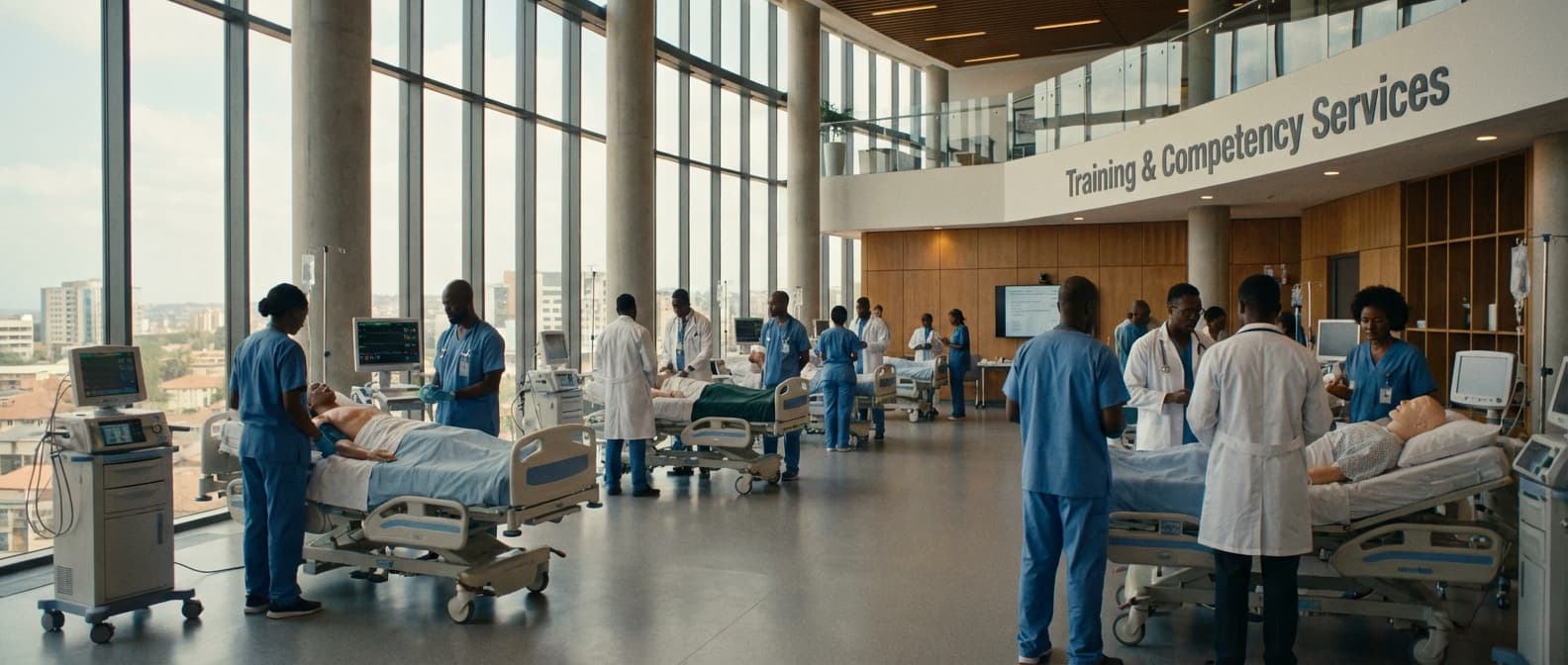
Ventilator User Training Service (Nurses) in Tunisia
Engineering Excellence & Technical Support
Ventilator User Training Service (Nurses) High-standard technical execution following OEM protocols and local regulatory frameworks.
Advanced Ventilation Modes Mastery
Gain in-depth understanding and practical skills in utilizing advanced ventilator modes (e.g., Pressure Support Ventilation (PSV), Synchronized Intermittent Mandatory Ventilation (SIMV), Volume Control (VC), Pressure Control (PC)) tailored to diverse patient respiratory conditions encountered in Tunisian healthcare settings.
Patient-Ventilator Synchrony Optimization
Master techniques for recognizing and resolving asynchrony issues, ensuring optimal patient-ventilator synchrony. This includes trigger sensitivity adjustments, flow waveform analysis, and patient monitoring strategies to minimize patient discomfort and improve ventilation efficacy, crucial for managing post-operative or critical care patients in Tunisia.
Emergency Ventilator Management & Troubleshooting
Develop expert troubleshooting skills for common ventilator alarms and critical scenarios (e.g., ventilator disconnect, pneumothorax, circuit leaks). This module emphasizes rapid assessment and intervention protocols relevant to high-pressure environments and resource considerations within Tunisian hospitals.
What Is Ventilator User Training Service (Nurses) In Tunisia?
Ventilator User Training Service (Nurses) in Tunisia refers to a specialized educational program designed to equip registered nurses with the knowledge and practical skills required for the safe and effective operation of mechanical ventilators. This service aims to enhance patient care outcomes by ensuring that nursing staff can accurately set up, manage, monitor, and troubleshoot ventilators in various clinical settings. The training is typically delivered through a combination of theoretical instruction, hands-on simulation, and case-based learning, adhering to international standards and local healthcare regulations within Tunisia.
| Who Needs This Service? | Typical Use Cases in Tunisia |
|---|---|
| Registered Nurses working in critical care units (ICU, CCU, NICU, PICU), emergency departments, operating rooms, and post-anesthesia care units. | Management of patients with acute respiratory failure (e.g., ARDS, pneumonia, COPD exacerbations, post-operative respiratory distress). |
| Nurses in intermediate care settings or general wards where patients may require non-invasive ventilation (NIV) or temporary mechanical ventilation. | Support for patients undergoing surgical procedures requiring ventilatory assistance. |
| Nurses involved in transport medicine (e.g., inter-hospital transfers) requiring the use of portable ventilators. | Facilitating ventilation for patients with neuromuscular disorders. |
| Nurses seeking specialized certification or professional development in respiratory care. | Providing ventilation for patients in home care settings under specific protocols. |
Key Components of Ventilator User Training for Nurses in Tunisia:
- Principles of Mechanical Ventilation: Understanding respiratory physiology, mechanics of breathing, and the pathophysiological basis for mechanical ventilation.
- Ventilator Modes and Settings: Comprehensive instruction on different ventilation modes (e.g., Assist-Control, Synchronized Intermittent Mandatory Ventilation, Pressure Support), their indications, contraindications, and appropriate parameter selection.
- Patient-Ventilator Interface: Proper selection and management of breathing circuits, endotracheal tubes, tracheostomy tubes, and mask interfaces.
- Monitoring and Assessment: Techniques for continuous monitoring of ventilatory parameters (e.g., tidal volume, respiratory rate, pressures, flow), physiological responses (e.g., SpO2, EtCO2, ABGs), and patient comfort.
- Troubleshooting and Alarm Management: Identifying common ventilator-associated complications and alarms, and implementing appropriate corrective actions.
- Weaning from Mechanical Ventilation: Principles and protocols for the gradual withdrawal of ventilatory support.
- Infection Control: Strict adherence to protocols for preventing ventilator-associated pneumonia (VAP) and other healthcare-associated infections.
- Emergency Procedures: Protocols for managing power failures, circuit disconnections, and other critical events.
- Documentation: Accurate and timely recording of ventilator settings, patient responses, and interventions.
Who Needs Ventilator User Training Service (Nurses) In Tunisia?
This document outlines the essential need for Ventilator User Training Services specifically for nurses in Tunisia. Effective and safe operation of ventilators is critical for patient care, and specialized training ensures nurses are proficient in their use, maintenance, and troubleshooting, ultimately leading to improved patient outcomes and reduced medical errors. This training is vital in healthcare facilities across Tunisia where ventilators are in use.
| Target Customer Group | Specific Departments/Units | Reason for Need |
|---|---|---|
| Nurses (General) | Intensive Care Units (ICUs), Critical Care Units (CCUs), Emergency Departments (EDs) | Direct patient care involving life-sustaining respiratory support; high frequency of ventilator use and critical decision-making. |
| Nurses (Specialized) | Operating Rooms (ORs), Post-Anesthesia Care Units (PACUs), Neonatal Intensive Care Units (NICUs), Pediatric Intensive Care Units (PICUs) | Perioperative and specialized pediatric/neonatal care requiring specific ventilator modes and settings for diverse patient populations. |
| Nurses (Supportive Care) | Respiratory Care Departments, General Medical-Surgical Wards | Assisting in the management of patients with respiratory distress, requiring knowledge of ventilator initiation and monitoring. |
| Nurses (Long-Term Care) | Rehabilitation Centers, Home Healthcare | Managing patients with chronic respiratory conditions requiring long-term ventilation and patient/family education. |
| Healthcare Facilities | Public Hospitals, Private Clinics, University Hospitals, Specialized Medical Centers | All facilities equipped with ventilators that employ nurses as primary caregivers for ventilated patients. |
Target Customers and Departments for Ventilator User Training Service (Nurses) in Tunisia:
- Nurses working in Intensive Care Units (ICUs) and Critical Care Units (CCUs).
- Nurses in Emergency Departments (EDs) responsible for initial respiratory support.
- Nurses in Operating Rooms (ORs) who may assist in ventilator management during surgery.
- Nurses in Post-Anesthesia Care Units (PACUs) caring for patients recovering from anesthesia.
- Nurses in Respiratory Care departments or units.
- Nurses in pediatric and neonatal intensive care units requiring specialized ventilator knowledge.
- Nurses in general medical-surgical wards that may admit patients requiring ventilatory support.
- Nurses in rehabilitation centers focused on respiratory conditions.
- Nurses in home healthcare settings providing support to patients with chronic respiratory failure.
Ventilator User Training Service (Nurses) Process In Tunisia
The Ventilator User Training Service for nurses in Tunisia is designed to equip healthcare professionals with the necessary knowledge and practical skills to operate and manage ventilators effectively. This service ensures patient safety and optimal treatment outcomes. The workflow typically begins with an inquiry from a healthcare facility or individual nurse, leading through a structured process of needs assessment, curriculum development, training delivery, and post-training support.
| Stage | Description | Key Activities | Responsible Parties |
|---|---|---|---|
| Inquiry & Initial Contact | The process begins when a healthcare facility (e.g., hospital, clinic) or an individual nurse expresses interest in the ventilator user training service. | Receiving inquiries via phone, email, or website form; providing initial information about the service; understanding the basic request. | Prospective Client (Facility/Nurse), Training Provider (Sales/Inquiry Team) |
| Needs Assessment & Customization | Understanding the specific training needs, existing knowledge base, and available equipment of the target audience. | Conducting needs assessment questionnaires or interviews; identifying specific ventilator models in use; determining the number of participants and their current skill levels; defining learning objectives. | Training Provider (Needs Assessment Specialist), Prospective Client (Head Nurse, Training Coordinator) |
| Curriculum Development & Planning | Tailoring the training content to meet the identified needs and incorporating relevant Tunisian healthcare regulations and standards. | Designing theoretical modules (e.g., principles of mechanical ventilation, ventilator modes, troubleshooting); developing practical simulation exercises; creating assessment tools; selecting appropriate training materials. | Training Provider (Curriculum Developers, Subject Matter Experts) |
| Logistics & Scheduling | Arranging all practical aspects for the training session, including venue, equipment, and instructor availability. | Booking training facilities (on-site or off-site); coordinating availability of ventilator models for hands-on practice; scheduling training dates and times; confirming instructor availability. | Training Provider (Logistics Coordinator), Prospective Client (Facility Management) |
| Training Delivery (Theory & Practical) | Conducting the training sessions, combining theoretical knowledge with hands-on practical experience. | Delivering lectures and presentations; conducting interactive discussions; facilitating hands-on practice with ventilators; simulating patient scenarios; demonstrating correct procedures for setup, operation, and troubleshooting. | Training Provider (Certified Instructors, Technical Assistants), Participants (Nurses) |
| Assessment & Evaluation | Measuring the participants' comprehension and practical skills acquired during the training. | Administering theoretical quizzes or exams; conducting practical skills assessments (e.g., operating specific ventilator functions, responding to alarms); observing participants' performance in simulated scenarios; collecting feedback on the training. | Training Provider (Instructors, Assessors), Participants (Nurses) |
| Certification & Documentation | Providing formal recognition of successful completion of the training and maintaining records. | Issuing certificates of completion to successful participants; maintaining training records (attendance, assessment results); providing reports to the requesting facility. | Training Provider (Administrative Staff, Certification Department), Participants (Nurses) |
| Post-Training Support & Follow-up | Offering ongoing support and resources to reinforce learning and address any emergent questions or challenges. | Providing access to supplementary learning materials or online resources; offering consultation services for complex cases; conducting refresher courses if needed; gathering feedback on long-term impact. | Training Provider (Support Team, Subject Matter Experts), Clients (Facilities/Nurses) |
Workflow Stages of Ventilator User Training Service (Nurses) in Tunisia
- Inquiry & Initial Contact
- Needs Assessment & Customization
- Curriculum Development & Planning
- Logistics & Scheduling
- Training Delivery (Theory & Practical)
- Assessment & Evaluation
- Certification & Documentation
- Post-Training Support & Follow-up
Ventilator User Training Service (Nurses) Cost In Tunisia
The cost of Ventilator User Training services for nurses in Tunisia can vary significantly based on several factors. These include the duration and depth of the training program, the qualifications and experience of the trainers, the location of the training (e.g., at a hospital facility or a dedicated training center), the number of participants, and whether the training is a standalone service or part of a larger equipment purchase. Specialized training on advanced ventilator features or specific patient populations may also command higher prices. Manufacturers often offer training as part of their equipment sales package, which can impact the perceived cost for healthcare institutions. For standalone training services, healthcare providers might engage specialized medical training companies or consultancies.
| Training Type/Duration | Estimated Cost Range (TND) | Notes |
|---|---|---|
| Basic Introduction (1-day) | 300 - 700 TND | Covers fundamental operation, settings, and safety precautions. |
| Intermediate (2-3 days) | 700 - 1,500 TND | Includes more in-depth settings, troubleshooting, patient interfaces, and basic modes. |
| Advanced/Specialized (3-5 days) | 1,500 - 3,000+ TND | Focuses on complex modes, specific patient populations (e.g., pediatrics, neonates), advanced ventilation strategies, and potentially simulation-based scenarios. |
| Manufacturer-Provided (often bundled) | Variable (can be included in equipment cost) | Pricing often integrated with the purchase of ventilator equipment. May be discounted or free for initial training. |
| On-demand/Customized Training | Priced per request | Tailored programs for specific hospital needs, subject to negotiation. |
Key Pricing Factors for Ventilator User Training (Nurses) in Tunisia:
- Training Duration and Intensity: Shorter, introductory sessions will be less expensive than comprehensive, multi-day courses.
- Trainer Expertise and Credentials: Highly experienced medical professionals or certified trainers may charge more.
- Training Modality: In-person, hands-on training is generally more expensive than online or blended learning approaches.
- Number of Participants: Group discounts may be available for larger cohorts, while individual or small-group training can be pricier per person.
- Location of Training: On-site training at a hospital might incur travel and accommodation costs for trainers, while off-site training at a dedicated center has its own facility fees.
- Training Content and Specialization: Basic ventilator operation will be cheaper than training on advanced modes, troubleshooting, or specific critical care scenarios.
- Equipment Availability: If the training requires dedicated simulator equipment or access to specific ventilators, this can influence the cost.
- Provider Type: Training offered directly by ventilator manufacturers might be bundled or have different pricing than independent training providers.
- Certification and Assessment: Inclusion of formal certification exams or practical assessments can add to the overall cost.
Affordable Ventilator User Training Service (Nurses) Options
This document outlines affordable ventilator user training service options specifically designed for nurses. We aim to provide high-quality, accessible training that empowers nurses to confidently and safely operate mechanical ventilators, ultimately improving patient care. We will explore value bundles that offer comprehensive training packages and detail cost-saving strategies to make this essential education accessible to healthcare institutions.
| Value Bundle | Description | Included Components | Estimated Cost Range (Per Nurse) | Cost-Saving Potential |
|---|---|---|---|---|
| Essentials Bundle | A foundational training package covering core principles and basic operation. | Core Ventilator Mechanics & Principles, Patient Assessment & Monitoring, Troubleshooting Common Issues (basic), Hands-on Simulation (limited). | $150 - $250 | Ideal for new graduates or nurses requiring a strong introductory understanding. |
| Comprehensive Bundle | A more in-depth training program for nurses who require advanced knowledge and practical skills. | Essentials Bundle + Ventilator Setup & Management, Ventilator Discontinuation & Weaning, Troubleshooting Common Issues (advanced), Extended Hands-on Simulation. | $250 - $400 | Provides a robust skill set for a wider range of critical care scenarios. |
| Advanced Skills & Simulation Bundle | Tailored for experienced nurses seeking to master complex ventilator management and critical incident response. | Comprehensive Bundle + Specialized Modes Training, Complex Case Scenarios, Advanced Troubleshooting & Crisis Management, In-depth Simulation. | $400 - $600 | Focuses on high-acuity patients and proactive problem-solving. |
| Annual Refresher Bundle | Designed for ongoing professional development and maintaining competency. | Selected modules from previous bundles based on current needs, focus on updates and new technologies, simulation review. | $100 - $200 | Ensures sustained expertise and compliance with evolving standards. |
Key Components of Affordable Ventilator User Training
- Core Ventilator Mechanics & Principles: Understanding the fundamental concepts of mechanical ventilation, including modes, settings, and physiological effects.
- Patient Assessment & Monitoring: Training on recognizing signs of respiratory distress, interpreting ventilator waveforms, and appropriate patient monitoring techniques.
- Troubleshooting Common Issues: Equipping nurses with the skills to identify and address common ventilator alarms and malfunctions.
- Ventilator Setup & Management: Practical guidance on setting up different ventilator types and managing patient interface.
- Ventilator Discontinuation & Weaning: Training on the process of safely weaning patients from mechanical ventilation.
- Infection Control & Safety: Emphasizing protocols for maintaining a sterile environment and ensuring patient safety during ventilation.
- Hands-on Simulation: Utilizing mannequins and simulated scenarios for practical skill development.
- Regular Updates & Refresher Courses: Offering ongoing training to keep nurses abreast of evolving technologies and best practices.
Verified Providers In Tunisia
When seeking medical treatment in Tunisia, particularly for complex procedures or specialized care, it is paramount to identify Verified Providers. These are healthcare facilities and individual practitioners who have undergone rigorous vetting processes to ensure they meet the highest international standards of quality, safety, and ethical practice. Choosing a verified provider significantly mitigates risks and offers peace of mind, knowing you are in competent and trustworthy hands.
| Credential/Standard | What it Signifies | Franance Health's Role | Benefit to Patients |
|---|---|---|---|
| International Accreditation (e.g., JCI) | Demonstrates adherence to global benchmarks for patient safety and quality of care. | Franance Health partners exclusively with facilities that hold or are actively pursuing recognized international accreditations. | Assurance of world-class medical practices and patient safety protocols. |
| Governmental Licensing & Regulatory Compliance | Confirms that the facility and practitioners meet all national legal and operational requirements. | Franance Health rigorously verifies all governmental licenses and compliance records for its network. | Ensures legal operation and adherence to Tunisian healthcare regulations. |
| Specialized Certifications (e.g., for specific departments or procedures) | Highlights excellence and advanced capabilities in particular medical fields. | Franance Health prioritizes providers with specialized certifications relevant to your treatment needs. | Access to leading-edge technology and expertise in your specific area of concern. |
| Peer Review & Reputation Monitoring | Indicates a strong track record and positive feedback from the medical community and previous patients. | Franance Health conducts ongoing reputation monitoring and facilitates peer reviews for its partner providers. | Confidence in the provider's established expertise and positive patient outcomes. |
| Franance Health's Internal Vetting Process | A proprietary, multi-stage evaluation encompassing clinical excellence, patient experience, ethical conduct, and infrastructure. | This is the cornerstone of Franance Health's commitment to providing only the best. Our internal process goes beyond basic certifications. | An independent guarantee of superior quality, safety, and a patient-centric approach tailored to international expectations. |
Why Verified Providers are Essential in Tunisia
- Quality Assurance: Verified providers adhere to strict protocols and guidelines, ensuring a high standard of medical care.
- Patient Safety: Comprehensive safety measures, including infection control and advanced equipment, are a hallmark of verified institutions.
- Ethical Practices: These providers are committed to transparency, informed consent, and patient well-being.
- International Standards: Verification often aligns with internationally recognized accreditation bodies, making Tunisian providers comparable to top global facilities.
- Reduced Risk: Minimizes the chances of medical errors, complications, or unsatisfactory outcomes.
- Access to Expertise: Verified providers often attract and retain highly skilled and experienced medical professionals.
Scope Of Work For Ventilator User Training Service (Nurses)
This Scope of Work (SOW) outlines the requirements for providing comprehensive ventilator user training services specifically for nurses. The training will equip nurses with the necessary knowledge and skills to safely and effectively operate and manage mechanical ventilators in various clinical settings. The objective is to enhance patient care through competent ventilator management and reduce the risk of associated complications. This SOW details the technical deliverables and standard specifications for the training program.
| Technical Deliverable | Description | Standard Specifications / Requirements |
|---|---|---|
| Training Curriculum | A detailed, modular curriculum covering all aspects of ventilator use for nurses. | Must include theoretical modules (e.g., physiology, modes of ventilation) and practical simulation modules. Curriculum should be aligned with current evidence-based guidelines and best practices. Minimum of 20 hours of content. |
| Training Materials | Comprehensive set of training materials for participants. | Includes participant manual (hard copy and/or digital), presentation slides, case studies, quick reference guides, and assessment tools. Materials should be clear, concise, and visually engaging. Available in English, with consideration for other languages if specified. |
| Simulators/Manikins | Realistic training simulators or manikins for hands-on practice. | High-fidelity simulators capable of mimicking various respiratory conditions and ventilator responses. Must allow for practice of intubation, ventilation initiation, alarm management, and troubleshooting. A minimum of 1 simulator per 6 participants is recommended. |
| Ventilator Equipment | Functional mechanical ventilators for hands-on training. | A minimum of 2 different models of commonly used ICU ventilators (e.g., Puritan Bennett, Hamilton Medical, Dräger) should be available. Equipment must be in good working order and configured for training purposes. |
| Qualified Instructors | Experienced and certified clinical educators or respiratory therapists. | Instructors must possess a minimum of 5 years of experience in critical care settings with extensive knowledge of mechanical ventilation. Certification in advanced life support (ACLS/BLS) is required. Instructor-to-participant ratio of 1:6 for practical sessions. |
| Training Environment | Dedicated training space conducive to learning. | Well-lit, climate-controlled room with adequate seating, audio-visual equipment (projector, screen, sound system), and space for simulation exercises. Simulation setup should mimic a typical ICU or ED environment. |
| Competency Assessment | Methods to evaluate participant learning and skill acquisition. | Includes pre- and post-training knowledge assessments (e.g., multiple-choice questions, short answer), practical skills checklists for simulator-based exercises, and a final practical evaluation. A minimum passing score of 80% on both written and practical assessments. |
| Training Certificate | Proof of successful completion of the training program. | Issued to each participant who successfully meets the competency assessment requirements. Certificate should include participant's name, training title, date of completion, and issuing organization's details. |
| Post-Training Support | Resources available to participants after the formal training. | Access to an online portal with FAQs, troubleshooting guides, and supplementary learning materials. Option for follow-up webinars or Q&A sessions (specify duration/frequency). |
| Reporting and Documentation | Summary of training activities and outcomes. | Detailed report including number of participants, attendance records, assessment results, and feedback from participants. Documentation of equipment used and instructor qualifications. |
Training Objectives
- Understand the principles of mechanical ventilation and its physiological effects.
- Identify different types of ventilators and their operational modes.
- Perform pre-use checks and setup of ventilators.
- Initiate and manage mechanical ventilation according to physician orders and clinical protocols.
- Monitor patient response to ventilation and recognize signs of distress or complications.
- Troubleshoot common ventilator alarms and settings.
- Perform ventilator weaning and discontinuation procedures.
- Understand infection control practices related to ventilator use.
- Document ventilator settings and patient data accurately.
- Communicate effectively with the healthcare team regarding patient ventilation status.
Service Level Agreement For Ventilator User Training Service (Nurses)
This Service Level Agreement (SLA) outlines the guaranteed response times and uptime for the Ventilator User Training Service specifically for nursing staff. This SLA ensures that nurses receive timely and reliable access to training resources and support necessary for proficient ventilator management.
| Service Component | Response Time (Target) | Uptime Guarantee (Minimum) | Notes |
|---|---|---|---|
| Urgent Technical Support (Critical System Outage Affecting Training Delivery) | Within 1 hour (24/7) | 99.5% | Applies to issues preventing immediate access to live training sessions or core online modules. Definition of 'Critical System Outage' to be mutually agreed upon. |
| General Technical Support (Non-critical issues, module access problems) | Within 4 business hours | 99.0% | Applies to issues like login problems, minor module display errors, or general connectivity concerns. |
| Training Content Inquiries (Questions about curriculum, module content) | Within 1 business day | N/A | Support representatives will provide accurate information or direct to appropriate subject matter experts. |
| Scheduled Live Training Sessions | N/A (Scheduled in advance) | 99.8% | Guarantees that scheduled live training sessions will commence as planned, barring unforeseen circumstances beyond the provider's control (e.g., widespread internet outages). Provider will communicate any unavoidable rescheduling promptly. |
| On-Demand Training Module Access | N/A (Available 24/7) | 99.5% | Ensures continuous availability of online training modules and resources. |
Key Service Metrics
- Response Times: Defined as the time from initial contact (e.g., email, support ticket submission) until a qualified support representative acknowledges the request and begins to address the issue.
- Uptime Guarantees: Refers to the percentage of scheduled training session availability and access to online training modules/resources within a given billing period.
Frequently Asked Questions

Ready when you are
Let's scope your Ventilator User Training Service (Nurses) in Tunisia project in Tunisia.

Scaling healthcare logistics and technical systems across the entire continent.