
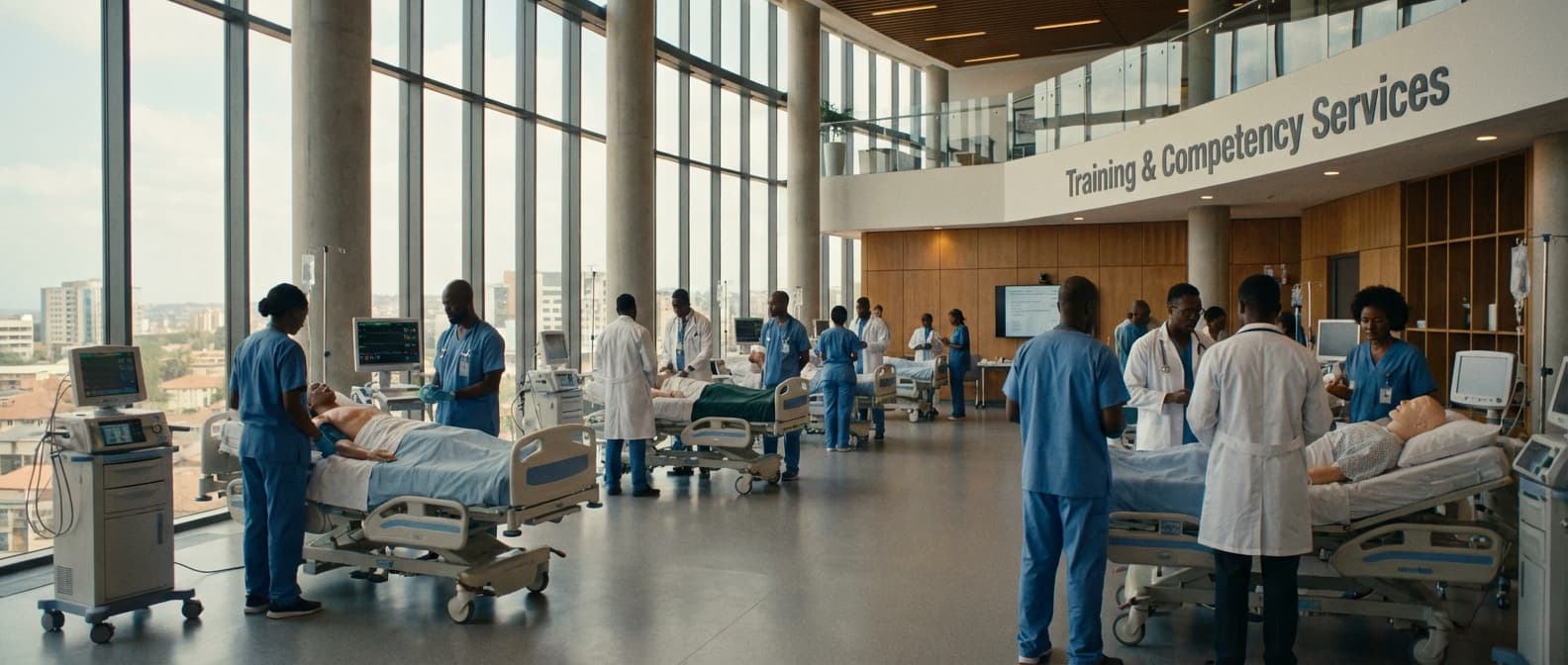
MRI Operator Training Service (Radiographers) in Tunisia
Engineering Excellence & Technical Support
MRI Operator Training Service (Radiographers) High-standard technical execution following OEM protocols and local regulatory frameworks.
Advanced MRI Physics & Sequence Mastery
Deep dive into MRI physics, pulse sequences, and artifact reduction techniques. Gain expertise in optimizing image quality for diverse pathologies in Tunisia's healthcare landscape.
Patient Safety & Contrast Protocols
Comprehensive training on MRI safety protocols, including screening, contraindications, and emergency management. Master advanced contrast agent administration and management tailored to Tunisian patient demographics.
AI-Enhanced MRI Workflow & Interpretation
Explore the integration of AI tools for image reconstruction, noise reduction, and preliminary lesion detection. Enhance diagnostic efficiency and accuracy for Tunisian radiographers in the evolving MRI field.
What Is Mri Operator Training Service (Radiographers) In Tunisia?
MRI Operator Training Service (Radiographers) in Tunisia refers to specialized educational programs designed to equip radiographers with the necessary knowledge and practical skills to safely and effectively operate Magnetic Resonance Imaging (MRI) scanners. This service is crucial for ensuring high-quality diagnostic imaging, patient safety, and adherence to established protocols within Tunisian healthcare facilities. The training encompasses theoretical understanding of MRI physics, image acquisition techniques, patient preparation and management, contraindication assessment, artifact recognition and mitigation, and advanced imaging sequences. Practical components involve hands-on experience with MRI equipment under the supervision of experienced MRI technologists and radiologists.
| Who Needs MRI Operator Training (Radiographers) in Tunisia? | Typical Use Cases |
|---|---|
| Newly graduated radiographers seeking to specialize in MRI. | Routine diagnostic imaging of the brain, spine, musculoskeletal system, abdomen, and pelvis. |
| Existing radiographers transitioning to MRI from other imaging modalities (e.g., X-ray, CT). | Advanced neuroimaging for stroke, epilepsy, and tumors. |
| Radiographers in hospitals, clinics, and imaging centers with new MRI installations or upgrades. | Musculoskeletal imaging for sports injuries, arthritis, and degenerative conditions. |
| Radiographers seeking to enhance their skills and career prospects in a high-demand specialization. | Abdominal and pelvic imaging for organ evaluation, cancer staging, and inflammatory diseases. |
| Radiographers responsible for patient safety and protocol adherence in MRI suites. | Cardiovascular imaging (cardiac MRI) for assessment of heart function and abnormalities. |
| Radiographers working in academic or research institutions requiring specialized MRI techniques. | Oncology imaging for tumor detection, characterization, and treatment monitoring. |
| Healthcare professionals involved in quality assurance and performance improvement in radiology departments. | Fetal MRI for prenatal diagnosis and evaluation. |
Key Components of MRI Operator Training:
- MRI Physics and Principles: Fundamental understanding of magnetic fields, radiofrequency pulses, signal generation, and image reconstruction.
- Anatomy and Physiology: Comprehensive knowledge of human anatomy relevant to MRI imaging to optimize scan protocols and interpret findings.
- MRI Safety: In-depth training on MRI safety protocols, including screening for ferromagnetic materials, managing quench events, and ensuring patient and staff well-being.
- Patient Care and Management: Protocols for patient preparation, communication, positioning, sedation (if applicable), and post-scan care.
- Image Acquisition Techniques: Proficiency in selecting appropriate pulse sequences, optimizing parameters (TR, TE, flip angle), and acquiring high-quality images across various anatomical regions.
- Contrast Agents: Understanding of MRI contrast agents, indications, administration, and management of adverse reactions.
- Artifact Identification and Correction: Recognition of common MRI artifacts and implementation of strategies to minimize or eliminate them.
- Quality Assurance and Control: Familiarity with QA/QC procedures to ensure optimal scanner performance and image integrity.
- Advanced Imaging Modalities: Introduction to specialized MRI techniques such as fMRI, diffusion-weighted imaging (DWI), perfusion imaging, and MR angiography (MRA).
- Image Archiving and Reporting: Understanding of Picture Archiving and Communication Systems (PACS) and basic principles of image reporting.
Who Needs Mri Operator Training Service (Radiographers) In Tunisia?
MRI Operator Training Service (Radiographers) in Tunisia is crucial for ensuring the safe, efficient, and accurate utilization of Magnetic Resonance Imaging (MRI) technology. This specialized training is essential for healthcare professionals who operate MRI scanners, aiming to enhance their technical skills, understanding of MRI physics, patient safety protocols, and image interpretation capabilities. The service caters to a diverse range of healthcare facilities and professionals across Tunisia.
| Target Customer Segment | Primary Departments Involved | Specific Needs Addressed |
|---|---|---|
| Large Public Hospitals | Radiology, Medical Imaging | Ensuring a sufficient pool of skilled operators, standardized protocols, advanced imaging techniques, radiation safety, patient comfort and safety for diverse patient populations. |
| Private Healthcare Groups | Radiology, Diagnostic Services, Quality Assurance | Maximizing equipment utilization, ensuring high-quality diagnostic output, competitive service offerings, staff upskilling for advanced MRI applications. |
| Independent Diagnostic Centers | Radiology, Operations | Acquiring and maintaining specialized MRI skills, efficient workflow management, meeting regulatory compliance, providing comprehensive imaging services. |
| Academic Medical Centers | Radiology, Medical Education, Research | Training future radiographers, supporting research protocols requiring specific MRI sequences, interdisciplinary collaboration, continuous professional development. |
| Specialty Clinics (e.g., Neurology) | Radiology, Clinical Department (Neurology) | Acquiring specialized knowledge in neuroimaging protocols, understanding patient positioning for specific neurological conditions, troubleshooting for optimal brain/spine imaging. |
| New MRI Facility Setups | Radiology, Administration, IT | Establishing foundational operator skills, developing departmental protocols, ensuring compliance with safety standards from inception. |
Target Customers & Departments for MRI Operator Training Service in Tunisia
- Hospitals (Public and Private): Facilities equipped with MRI scanners require trained radiographers to perform diagnostic imaging procedures.
- Diagnostic Imaging Centers: Independent centers specializing in radiology and imaging services are major consumers of such training.
- University Hospitals and Medical Schools: Institutions involved in both patient care and the education of future medical professionals.
- Specialized Clinics (e.g., Neurology, Oncology, Orthopedics): Clinics that frequently utilize MRI for diagnosis and treatment planning in their specific fields.
- Radiology Departments: The primary department responsible for operating and managing MRI equipment.
- Medical Imaging Technicians and Technologists: Professionals seeking to specialize or upgrade their skills in MRI operation.
- Radiologists (for refresher or advanced training): While primarily interpreters, some radiologists may benefit from advanced operator training to deepen their understanding of image acquisition parameters.
- Biomedical Engineering Departments: Staff responsible for the maintenance and technical support of MRI equipment may require basic operator training for troubleshooting.
Mri Operator Training Service (Radiographers) Process In Tunisia
The MRI Operator Training Service for Radiographers in Tunisia is a structured process designed to equip radiographers with the necessary skills and knowledge to operate MRI scanners effectively and safely. This workflow outlines the typical journey from initial inquiry to the successful completion of the training program.
| Phase | Description | Key Activities | Responsible Parties | Output |
|---|---|---|---|---|
| Inquiry & Needs Assessment | Initial contact from a healthcare facility or individual radiographer expressing interest in MRI operator training. | Receive inquiry, discuss training needs (e.g., specific MRI modalities, duration, desired outcomes), understand existing radiographer skill levels, and determine facility infrastructure. | Prospective Client (Hospital/Clinic/Radiographer), Training Provider Representative | Understanding of training requirements, preliminary scope of service. |
| Proposal & Quotation | Development and presentation of a tailored training plan and associated costs. | Design a comprehensive training program based on assessed needs. Prepare a detailed proposal outlining curriculum, learning objectives, methodology, trainers, schedule, and a transparent quotation including all associated costs. | Training Provider | Formal training proposal and financial quotation. |
| Agreement & Contract | Formalization of the training engagement. | Review and negotiation of the proposal. Sign a service agreement or contract outlining terms, conditions, payment schedules, responsibilities, and confidentiality clauses. | Prospective Client, Training Provider | Signed service agreement/contract. |
| Participant Selection & Registration | Identification and enrollment of eligible radiographers. | Client identifies and nominates radiographers for the training. Training provider provides registration forms and collects necessary participant information (e.g., qualifications, contact details). | Client, Training Provider | List of registered participants, participant profiles. |
| Training Material Preparation | Development and customization of educational resources. | Create or adapt training manuals, presentations, case studies, practical exercises, and assessment tools. Ensure materials are relevant to Tunisian context and MRI equipment used. | Training Provider | Curriculum, training modules, handouts, assessment forms. |
| On-site/Online Training Delivery | The core educational phase of the program. | Conduct theoretical lectures, interactive sessions, and demonstrations covering MRI physics, anatomy, safety protocols, image acquisition techniques, contrast agents, and common pathologies. Delivery can be on-site at the client's facility or online. | Certified MRI Trainer(s), Participants | Knowledge acquisition, understanding of theoretical concepts. |
| Practical Sessions & Supervised Practice | Hands-on application of learned skills. | Participants operate MRI scanners under the direct supervision of experienced trainers. This includes patient positioning, protocol selection, image optimization, and troubleshooting. May involve simulated scenarios or actual patient scans (with appropriate protocols and consent). | Certified MRI Trainer(s), Participants | Development of practical skills, confidence in scanner operation. |
| Assessment & Evaluation | Measuring participant competency and program effectiveness. | Administer theoretical exams (quizzes, written tests) and practical assessments (observational checklists, scenario-based evaluations). Gather feedback from participants on the training delivery and content. | Training Provider, Participants | Participant competency scores, feedback on training effectiveness. |
| Certification & Post-Training Support | Recognition of successful completion and ongoing assistance. | Issue certificates of completion to participants who meet the required competency standards. Offer post-training support such as refresher sessions, access to online resources, or consultation for specific cases. | Training Provider, Participants | Certificates of completion, ongoing professional development. |
MRI Operator Training Service Workflow for Radiographers in Tunisia
- Inquiry & Needs Assessment
- Proposal & Quotation
- Agreement & Contract
- Participant Selection & Registration
- Training Material Preparation
- On-site/Online Training Delivery
- Practical Sessions & Supervised Practice
- Assessment & Evaluation
- Certification & Post-Training Support
Mri Operator Training Service (Radiographers) Cost In Tunisia
The cost of MRI operator training services for radiographers in Tunisia can vary significantly based on several factors. These include the duration and intensity of the training program, the level of specialization (e.g., basic MRI physics vs. advanced MRI protocols for specific pathologies), the reputation and accreditation of the training provider, the inclusion of practical, hands-on experience with MRI equipment, and the geographical location within Tunisia where the training is conducted. Furthermore, whether the training is offered as a standalone course, part of a larger continuing education program, or as in-house training by a manufacturer or service provider will influence the pricing. The current economic climate and demand for such specialized skills also play a role.
| Training Component/Type | Estimated Cost Range (TND) | Notes |
|---|---|---|
| Basic MRI Physics & Principles (Short Course) | 800 - 2,500 | Focuses on fundamental concepts. May be online or in-person. |
| Comprehensive MRI Operator Training (Intermediate Level) | 2,000 - 5,000 | Includes practical sessions, protocol basics, and safety. Typically several days to a week. |
| Advanced/Specialized MRI Protocols (e.g., Neuro, MSK, Cardiac) | 3,000 - 7,000+ | Highly specialized, requiring prior foundational knowledge. Can involve extended hands-on training. |
| Manufacturer-Specific Equipment Training | Varies greatly (can be bundled with equipment purchase or billed separately) | Often highly customized, provided by the MRI vendor. |
| Continuing Professional Development (CPD) Workshops | 300 - 1,500 per workshop | Shorter, focused sessions on specific topics. |
| On-site/In-house Training (per day/per group) | 1,500 - 4,000+ | Cost is for the training team and materials, may be more economical for larger groups. |
Key Pricing Factors for MRI Operator Training in Tunisia:
- Training Program Duration and Intensity
- Level of Specialization (Basic Physics, Advanced Protocols, Specific Modalities)
- Accreditation and Reputation of the Training Provider
- Inclusion of Practical/Hands-on Training with MRI Equipment
- Geographical Location of Training (e.g., Tunis vs. other cities)
- Training Format (Standalone course, Continuing Education, In-house)
- Inclusion of Study Materials and Assessments
- Instructor Expertise and Qualifications
- Group Size and Discounts (if applicable)
Affordable Mri Operator Training Service (Radiographers) Options
Acquiring skilled MRI operators is crucial for diagnostic imaging centers. This service focuses on providing accessible and cost-effective training solutions for radiographers seeking to specialize in Magnetic Resonance Imaging. We understand the financial constraints many facilities face, so our offerings are designed to maximize value and minimize expenditure without compromising the quality of education.
| Value Bundle | Included Components | Target Audience | Cost-Saving Strategy | Estimated Price Range (USD) |
|---|---|---|---|---|
| Basic Operator Certification | Core MRI Physics & Safety Modules, Basic Protocol Training, Simulated Scans. | Radiographers new to MRI, seeking foundational knowledge and certification. | Group discounts, online-only modules, self-paced learning. | $1,500 - $3,000 |
| Advanced Protocol Specialist | Basic Certification + Specialized Protocols (e.g., Neuro, MSK, Cardiac), Advanced Image Optimization, Case Study Analysis. | Certified MRI operators looking to expand their skill set to specific modalities. | Bundled advanced modules, early bird registration discounts. | $2,500 - $4,500 |
| Facility-Wide Training Package | Customizable curriculum for multiple staff, on-site training options, ongoing support, compliance training. | Imaging centers, hospitals, and clinics needing to train a team of operators. | Bulk discounts, train-the-trainer programs, flexible payment plans. | Varies based on number of staff and customization (Inquire for Quote) |
| Refresher & Update Course | Latest advancements in MRI technology, updated safety guidelines, review of common challenges. | Experienced MRI operators needing to stay current with industry standards. | Modular design allowing selection of specific update topics, shorter course durations. | $500 - $1,200 |
Key Features and Benefits
- Comprehensive curriculum covering MRI physics, safety, protocols, and patient care.
- Flexible training formats to accommodate busy schedules.
- Experienced instructors with extensive practical MRI experience.
- Focus on hands-on learning and real-world application.
- Certification pathways to enhance career prospects.
- Dedicated support and mentorship throughout the training program.
Verified Providers In Tunisia
In Tunisia's burgeoning healthcare sector, discerning the most reliable and competent healthcare providers is paramount for patients seeking quality care. Franance Health has established itself as a leading platform connecting individuals with verified medical professionals and institutions. This verification process is not merely a formality; it's a rigorous assessment designed to ensure the highest standards of medical expertise, ethical practice, and patient safety. By choosing Franance Health-verified providers, patients gain access to a network of healthcare professionals who have undergone thorough scrutiny, offering peace of mind and confidence in their treatment journey. This commitment to quality assurance makes Franance Health credentials the benchmark for excellence in Tunisian healthcare.
| Criterion | Franance Health Verification | Benefit to Patient |
|---|---|---|
| Medical Licenses & Certifications | Thoroughly checked and validated | Ensures providers are legally qualified and trained |
| Specialist Qualifications | Confirmed through accredited institutions | Guarantees access to genuine expertise |
| Professional Experience | Verified through references and past practice | Indicates a proven track record in healthcare |
| Ethical Standards & Practice | Assessed based on established codes of conduct | Promotes patient-centered and responsible care |
| Patient Feedback & Reviews | Monitored for consistent quality and satisfaction | Offers insight into patient experiences |
Why Franance Health Credentials Represent the Best Choice:
- Rigorous Verification Process: Franance Health employs a multi-faceted verification system that scrutinizes credentials, qualifications, specializations, and professional history of each provider.
- Commitment to Patient Safety: Verification ensures that providers adhere to strict ethical guidelines and maintain a high level of patient care, minimizing risks and promoting positive outcomes.
- Access to Expertise: The platform showcases a diverse range of specialists and facilities, allowing patients to find the most suitable care for their specific needs.
- Enhanced Trust and Transparency: Franance Health's verified status builds a foundation of trust, providing patients with clear and reliable information about the healthcare professionals they are engaging with.
- Streamlined Healthcare Journey: By pre-vetting providers, Franance Health simplifies the process of finding and accessing quality healthcare in Tunisia, saving patients time and effort.
- Continuous Monitoring and Evaluation: Franance Health is committed to ongoing assessment, ensuring that verified providers consistently meet the platform's high standards.
Scope Of Work For Mri Operator Training Service (Radiographers)
This Scope of Work (SOW) outlines the requirements for providing comprehensive MRI Operator Training Services specifically tailored for Radiographers. The objective is to equip radiographers with the necessary theoretical knowledge and practical skills to safely and effectively operate MRI scanners, ensuring high-quality image acquisition and patient care. The training will cover fundamental MRI physics, safety protocols, imaging sequences, image optimization, troubleshooting, and post-processing techniques relevant to routine diagnostic MRI procedures.
| Component | Standard Specification | Description | Measurement/Verification |
|---|---|---|---|
| Training Curriculum | Comprehensive and Role-Specific | Covers MRI physics, safety, patient preparation, scan protocols, image acquisition, artifact identification, and basic troubleshooting. Aligned with current ACR guidelines and best practices. | Document Review and Approval by Client |
| Duration of Training | Minimum 40 hours (split between theory and practical) | Includes classroom instruction, hands-on scanner operation, simulation, and case study analysis. Duration may be adjusted based on client needs and trainee experience. | Schedule Review and Sign-off |
| Instructor Qualifications | Certified MRI Technologist or Radiologist with >5 years of MRI experience | Instructors must possess demonstrated expertise in MRI operation, teaching, and a thorough understanding of relevant safety standards. | Instructor CV/Resume Review |
| Training Methodology | Blended Learning Approach | Combines lectures, interactive discussions, case studies, simulator training, and supervised hands-on scanner operation on actual equipment. Emphasis on practical application. | Observation of Training Sessions, Trainee Feedback |
| Equipment Access | Access to functional MRI scanner(s) of specified manufacturer/model | Client to provide access to MRI scanner(s) in a clinical setting during scheduled training hours. Scanner(s) must be in good working order. | On-site Verification of Equipment Availability and Functionality |
| Safety Protocols Training | Mandatory and Comprehensive | Detailed coverage of MRI safety principles, including static magnetic fields, RF energy, gradient magnetic fields, SAR, screening procedures, emergency procedures, and handling of implants/devices. | Assessment of knowledge through quizzes and practical scenarios |
| Image Optimization | Practical and Theory-Based | Techniques for optimizing image quality, including parameter selection, pulse sequence adjustments, and artifact reduction strategies for various anatomical regions. | Evaluation of trainee's ability to adjust parameters and produce diagnostic images |
| Competency Assessment | Multi-faceted | Includes written exams on theoretical concepts and practical assessments demonstrating proficiency in patient positioning, protocol selection, scanning, and image analysis. Minimum passing score of 80%. | Review of assessment results and pass/fail status |
| Reporting and Documentation | Clear and Concise | Provider will submit a comprehensive training report including attendance records, assessment results, feedback summary, and recommendations for further development. | Report Review and Acceptance by Client |
Technical Deliverables
- Training Curriculum Document
- Training Materials (Presentations, Handouts, Guides)
- Practical Training Sessions Schedule
- Competency Assessment Tools (Quizzes, Practical Exams)
- Attendance and Performance Records
- Training Feedback Forms and Summaries
- Certificate of Completion (per participant)
- Post-Training Support Plan (optional, if agreed upon)
Service Level Agreement For Mri Operator Training Service (Radiographers)
This Service Level Agreement (SLA) outlines the performance standards for the MRI Operator Training Service provided to certified radiographers. It defines the responsibilities of both the Service Provider and the Client, and establishes measurable metrics for service delivery, focusing on response times and uptime guarantees.
| Service Metric | Target | Measurement Period | Service Level Objective (SLO) | Remedy for Failure |
|---|---|---|---|---|
| Training Platform Uptime | 99.5% | Monthly | The training platform shall be accessible and functional for at least 99.5% of the scheduled training hours within a given calendar month. | If monthly uptime falls below 99.5% but is above 99%, a service credit of 5% of the monthly training fee will be issued. If uptime falls below 99%, a service credit of 10% of the monthly training fee will be issued. |
| Technical Support Response Time (Critical Issues) | 2 Business Hours | Per Incident | Critical issues impacting training access or progress will receive an initial response and acknowledgement within 2 business hours of being reported. | No direct remedy. However, a pattern of consistently missed response times may be grounds for contract review. |
| Technical Support Response Time (Non-Critical Issues) | 8 Business Hours | Per Incident | Non-critical issues or general inquiries will receive an initial response and acknowledgement within 8 business hours of being reported. | No direct remedy. However, a pattern of consistently missed response times may be grounds for contract review. |
| Issue Resolution Time (Critical Issues) | 24 Business Hours | Per Incident | Critical issues will be resolved or a clear workaround provided within 24 business hours of initial acknowledgement. | If resolution exceeds 24 business hours, a service credit of 1% of the monthly training fee will be issued for every additional 12 business hours of delay, capped at 10% of the monthly fee. |
| Issue Resolution Time (Non-Critical Issues) | 72 Business Hours | Per Incident | Non-critical issues will be resolved within 72 business hours of initial acknowledgement. | No direct remedy. However, a pattern of consistently missed resolution times may be grounds for contract review. |
Key Service Components
- Training Program Delivery: Ensuring the availability and accessibility of high-quality MRI operator training modules.
- Technical Support: Providing timely assistance for any technical issues encountered during the training.
- Platform Uptime: Guaranteeing the continuous availability of the training platform.
- Response Times: Defining the maximum allowed time for the Service Provider to acknowledge and begin addressing reported issues.
Frequently Asked Questions

Ready when you are
Let's scope your MRI Operator Training Service (Radiographers) in Tunisia project in Tunisia.

Scaling healthcare logistics and technical systems across the entire continent.