
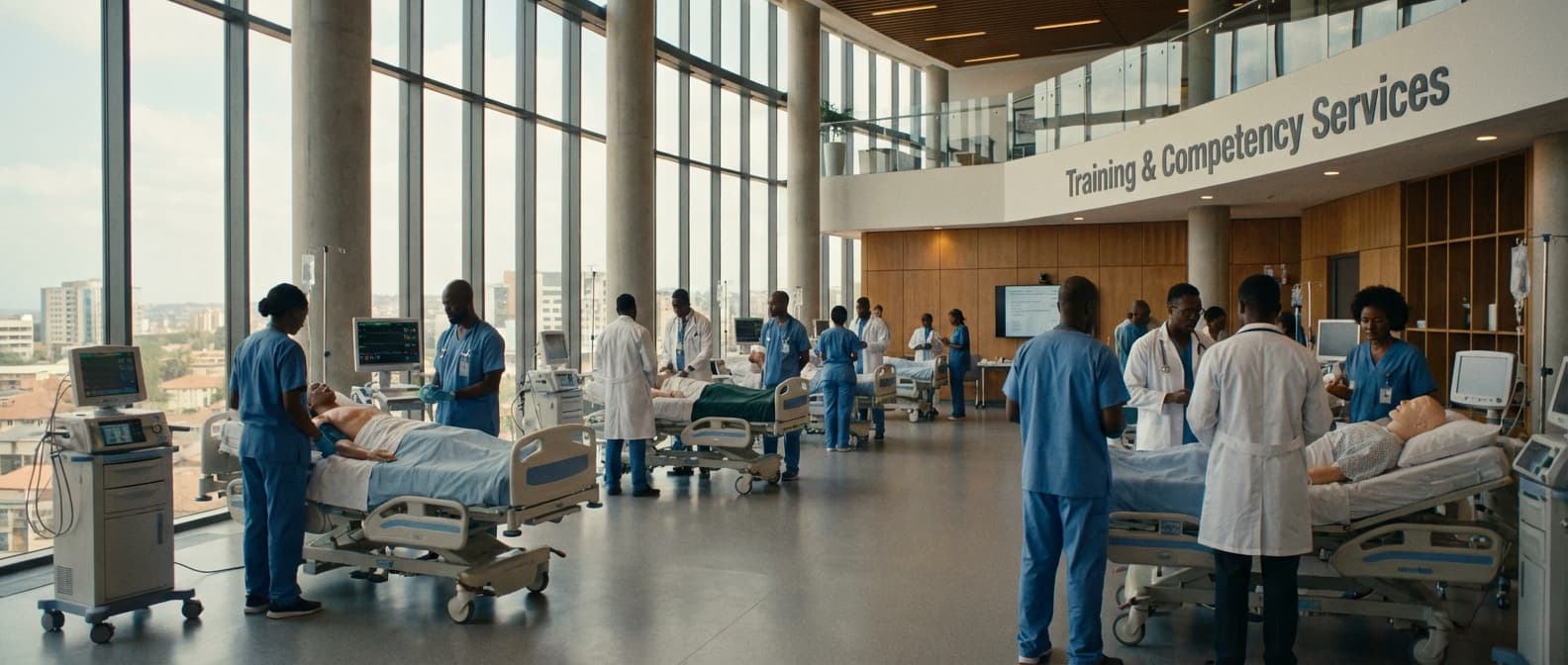
CT Operator Training Service (Radiographers) in Tunisia
Engineering Excellence & Technical Support
CT Operator Training Service (Radiographers) High-standard technical execution following OEM protocols and local regulatory frameworks.
Advanced CT Image Acquisition Techniques
Master cutting-edge CT acquisition protocols, including helical scanning, multi-detector CT (MDCT) imaging, and specialized protocols for various anatomies (e.g., neuro, cardiac, abdominal). Learn to optimize parameters for reduced radiation dose while maintaining diagnostic image quality.
Precise CT Image Reconstruction and Post-Processing
Gain expertise in advanced image reconstruction algorithms (e.g., iterative reconstruction) and post-processing techniques. Learn to generate multiplanar reformations (MPR), 3D reconstructions (volume rendering, MIP), and perform image segmentation for enhanced diagnostic interpretation.
Radiation Dose Optimization and Patient Safety
Implement best practices for minimizing radiation exposure to patients and staff. Understand dose monitoring tools, ALARA principles, and regulatory requirements specific to Tunisia. Ensure safe and effective CT examinations while upholding ethical standards.
What Is Ct Operator Training Service (Radiographers) In Tunisia?
CT Operator Training Service (Radiographers) in Tunisia refers to specialized educational programs designed to equip diagnostic imaging technologists, specifically radiographers, with the necessary knowledge and practical skills to operate Computed Tomography (CT) scanners safely and effectively. This service aims to ensure proficiency in patient positioning, scan parameter selection, image acquisition protocols, quality control, radiation safety management, and basic troubleshooting of CT equipment within the Tunisian healthcare context. The training is crucial for maintaining high diagnostic image quality, minimizing patient radiation dose, and adhering to national regulatory standards for medical imaging.
| Target Audience | Need for Service | Typical Use Cases |
|---|---|---|
| Newly qualified radiographers entering CT practice in Tunisia. | To meet professional competency requirements and ensure safe operation of CT scanners. | Routine diagnostic CT examinations (e.g., head, chest, abdomen, pelvis). |
| Existing radiographers seeking to specialize or upgrade their skills in CT. | To gain proficiency in advanced CT techniques and newer technologies. | Advanced CT imaging (e.g., CT angiography, dual-energy CT, interventional CT). |
| Radiographers working in facilities acquiring new CT equipment. | To become proficient with specific manufacturer models and their integrated software. | Implementation of new imaging protocols or upgrades to existing CT hardware/software. |
| Radiographers employed in public and private healthcare institutions in Tunisia. | To ensure compliance with national healthcare regulations and accreditation standards. | All CT imaging procedures performed within accredited medical facilities. |
Key Components of CT Operator Training Service
- Theoretical Instruction: Covers principles of CT physics, cross-sectional anatomy, contrast media administration, and radiation biology.
- Practical Application: Hands-on training with CT scanners, focusing on patient preparation, scan acquisition, and image manipulation.
- Protocol Optimization: Training on selecting and modifying imaging protocols based on clinical indications and patient characteristics.
- Image Quality Assessment: Instruction on evaluating image artifacts, noise reduction techniques, and ensuring diagnostic acceptability.
- Radiation Protection & Safety: Emphasis on ALARA (As Low As Reasonably Achievable) principles, shielding, and dose monitoring.
- Quality Assurance & Control: Training on routine checks and maintenance to ensure equipment performance.
- Emergency Procedures: Education on handling adverse reactions to contrast media and equipment malfunctions.
- Legal & Ethical Considerations: Awareness of patient consent, data privacy, and professional conduct.
Who Needs Ct Operator Training Service (Radiographers) In Tunisia?
CT Operator Training Service for Radiographers in Tunisia is crucial for healthcare facilities seeking to enhance their diagnostic imaging capabilities, improve patient care, and ensure compliance with evolving technological standards. This specialized training is designed to equip radiographers with the advanced knowledge and practical skills required to operate CT scanners effectively and safely, leading to more accurate diagnoses and better patient outcomes.
| Target Customer Type | Specific Departments/Roles | Training Needs/Benefits |
|---|---|---|
| Hospitals (Public) | Radiology Department, Emergency Department, Oncology Department, Neurology Department | Upskilling existing radiographers to handle new CT technologies, improving diagnostic accuracy for complex cases, reducing radiation exposure through optimized protocols, ensuring staff competency for national health initiatives. |
| Hospitals (Private) | Radiology Department, Specialized Clinics (e.g., Cardiology, Gastroenterology) | Maintaining a competitive edge with advanced CT imaging, attracting and retaining skilled radiographers, meeting the demand for high-quality, rapid diagnostic services, implementing specialized CT protocols (e.g., cardiac CT, dual-energy CT). |
| Diagnostic Imaging Centers | Radiology Department, Technical Staff | Maximizing the utilization and efficiency of CT scanners, ensuring consistent image quality across all examinations, offering a wider range of advanced CT services, meeting the needs of referring physicians. |
| Medical Clinics with CT Facilities | Radiography Technicians, Radiologists | Basic and advanced CT operation training, protocol optimization for specific clinical indications, understanding of artifact reduction techniques, patient preparation and safety protocols. |
| University Hospitals and Medical Schools | Radiology Department Faculty, Trainee Radiographers, Medical Students (radiology rotations) | Training future radiographers and radiologists, integrating theoretical knowledge with practical CT operation, developing research capabilities in CT imaging, establishing centers of excellence for CT education. |
| Government Health Ministries and Agencies | Healthcare Policy Makers, Public Health Officials, Training Coordinators | Setting national standards for CT operator competency, developing training curricula for public health facilities, ensuring equitable access to quality diagnostic imaging services across the country, evaluating and procuring new CT technologies. |
Target Customers and Departments
- Hospitals (Public and Private)
- Diagnostic Imaging Centers
- Radiology Departments
- Medical Clinics with CT facilities
- University Hospitals and Medical Schools
- Government Health Ministries and Agencies
Ct Operator Training Service (Radiographers) Process In Tunisia
This document outlines the standard workflow for CT Operator Training Services for Radiographers in Tunisia, covering the entire process from initial inquiry to successful execution of the training program. The service aims to enhance the skills and knowledge of radiographers in operating CT scanners, adhering to Tunisian healthcare standards and best practices.
| Stage | Description | Key Activities | Responsible Parties | Deliverables |
|---|---|---|---|---|
| Inquiry and Needs Assessment | The initial contact from a healthcare institution or individual radiographer requesting CT operator training. | Initial contact (phone, email, website form). Discussion of training needs, current skill levels, specific CT scanner models, and desired outcomes. Understanding of institutional policies and regulatory requirements. | Client (Healthcare Institution/Radiographer), Training Provider (Company/Organization) | Clarified training needs, identified target audience, preliminary understanding of scope. |
| Proposal Development and Negotiation | The training provider prepares and submits a comprehensive proposal outlining the training program. | Developing a detailed proposal including:
| Training Provider, Client | Formal training proposal, negotiated terms and scope of work. |
| Contracting and Agreement | Formalizing the training agreement between the client and the training provider. | Drafting and signing a formal contract or service agreement. Including all agreed-upon terms, deliverables, responsibilities, and legal clauses. | Training Provider, Client | Signed contract/service agreement. |
| Training Program Design and Customization | Tailoring the training content and methodology to the specific needs identified. | Developing or adapting training modules. Selecting appropriate teaching materials (presentations, manuals, case studies). Ensuring alignment with specific CT scanner models and Tunisian medical imaging standards. | Training Provider (Instructional Designers, Subject Matter Experts) | Customized training curriculum, training materials, and session plans. |
| Logistics and Scheduling | Arranging all practical aspects for the training delivery. | Confirming training dates and times. Booking training venue and equipment (CT scanner for hands-on). Arranging trainer travel and accommodation (if applicable). Communicating schedule and requirements to participants. | Training Provider, Client | Confirmed training schedule, logistics plan. |
| Training Delivery | The execution of the training program. | Conducting theoretical sessions (lectures, discussions). Providing hands-on practical training on CT scanners. Utilizing simulation tools (if available). Facilitating case study analysis and problem-solving. | Training Provider (Trainers) | Delivered training sessions, participant engagement. |
| Assessment and Evaluation | Measuring the participants' learning and the effectiveness of the training. | Administering theoretical assessments (quizzes, exams). Conducting practical skill assessments. Gathering feedback from participants on the training quality. Evaluating overall training program effectiveness. | Training Provider, Client | Assessment results, participant feedback reports, training effectiveness evaluation. |
| Certification and Follow-up | Issuing certificates upon successful completion and providing ongoing support. | Issuing certificates of completion to qualified participants. Providing post-training support (e.g., Q&A sessions, access to resources). Potential for advanced training or refresher courses. | Training Provider | Certificates of completion, post-training support. |
Key Stages of CT Operator Training Service Workflow
- Inquiry and Needs Assessment
- Proposal Development and Negotiation
- Contracting and Agreement
- Training Program Design and Customization
- Logistics and Scheduling
- Training Delivery
- Assessment and Evaluation
- Certification and Follow-up
Ct Operator Training Service (Radiographers) Cost In Tunisia
The cost of CT Operator Training services for Radiographers in Tunisia can vary significantly based on several factors. These factors include the reputation and accreditation of the training institution, the duration and intensity of the program, the specific CT modalities covered, and whether the training is conducted on-site at a healthcare facility or at a dedicated training center. Furthermore, the inclusion of practical, hands-on experience with state-of-the-art CT equipment will generally increase the overall cost.
Pricing is typically presented in Tunisian Dinars (TND). Factors influencing the price ranges are: Program Duration: Shorter refresher courses will be less expensive than comprehensive initial training programs. Level of Expertise: Training focused on advanced CT techniques or specific applications (e.g., cardiac CT, interventional CT) will command higher fees. Training Provider: Established institutions with a strong track record and certified instructors often charge more. Location: Training conducted in major cities like Tunis might have slightly higher costs due to overhead. Inclusions: Whether the fee includes training materials, examinations, certifications, and accommodation (if applicable) will affect the price.
| Training Type/Duration | Estimated Cost Range (TND) |
|---|---|
| Basic CT Operator Refresher Course (1-2 days) | 300 - 700 TND |
| Intermediate CT Operator Training (3-5 days) | 700 - 1500 TND |
| Comprehensive CT Operator Certification Program (1-2 weeks) | 1500 - 3000+ TND |
| Advanced/Specialized CT Modality Training (e.g., Cardiac CT) | 2000 - 4000+ TND |
| On-site Custom Training (per day, per group) | 500 - 1200+ TND |
Key Pricing Factors for CT Operator Training (Radiographers) in Tunisia
- Accreditation and Reputation of the Training Provider
- Duration and Depth of the Training Program
- Specific CT Modalities and Techniques Covered
- Inclusion of Hands-on Practical Training with Equipment
- On-site vs. Off-site Training Location
- Level of Instructor Expertise and Certification
- Included Training Materials and Resources
- Examination and Certification Fees
- Accommodation and Travel Expenses (if applicable)
Affordable Ct Operator Training Service (Radiographers) Options
Providing accessible and cost-effective CT operator training is crucial for radiographers seeking to advance their careers and for imaging facilities to maintain a skilled workforce. This document outlines affordable training options, explains the value of training bundles, and presents various cost-saving strategies.
| Value Bundle | Components | Benefits | Cost-Saving Strategy |
|---|---|---|---|
| Foundational CT Bundle | Online CT Physics, Patient Positioning, Safety Protocols | Establishes core knowledge base, foundational for further learning | Often priced as a package for a discount compared to individual modules. |
| Advanced Protocol & Applications Bundle | Online modules on specific CT applications (e.g., Neuro, Abdomen/Pelvis, Cardiac), Advanced Reconstruction Techniques | Enhances skill set for specialized imaging, increases versatility | Bundling advanced topics can reduce the per-module cost and provides a structured learning path. |
| Comprehensive CT Mastery Bundle | Foundational Bundle + Advanced Bundle + Simulated Practice Sessions or Short Clinical Rotations | Provides theoretical knowledge, practical application, and confidence building | Offers the greatest value by covering all aspects of CT operation. Seek programs offering tiered pricing or early bird discounts. |
| Facility-Wide Training Package | Customized on-site training for multiple radiographers, protocol standardization, quality assurance | Ensures consistent practice across a department, improves overall department efficiency | Significant per-person cost savings for training groups. Negotiate volume discounts. |
Affordable CT Operator Training Service Options for Radiographers
- {"title":"Online/E-Learning Courses","description":"Flexible and self-paced learning modules covering foundational CT principles, protocols, image acquisition, and patient safety. Often the most budget-friendly option."}
- {"title":"Blended Learning Programs","description":"Combines online learning with hands-on simulation or limited in-person clinical observation. Offers a balance of flexibility and practical experience at a moderate cost."}
- {"title":"On-site Training (Group Rates)","description":"Institutions or facilities can arrange for trainers to come to them, offering tailored training for multiple staff members. Can be cost-effective when training a cohort."}
- {"title":"Manufacturer-Provided Training","description":"CT scanner manufacturers often offer training programs, sometimes included with equipment purchase or available at a discounted rate for existing customers."}
- {"title":"Continuing Education (CE) Credits","description":"Courses designed to fulfill CE requirements often include CT-specific modules. Look for bundled CE packages that incorporate CT training."}
- {"title":"Community College/Vocational School Programs","description":"Some local institutions offer certificate or diploma programs that include CT training, often at lower tuition rates than specialized private institutions."}
Verified Providers In Tunisia
In the rapidly evolving landscape of healthcare, identifying trusted and verified providers is paramount for ensuring quality and safety. In Tunisia, this process is made more accessible through organizations that rigorously vet healthcare professionals and facilities. Among these, Franance Health stands out as a leading credentialing body, whose stringent standards offer unparalleled assurance to patients seeking the best possible care. This document outlines why Franance Health credentials signify a superior level of expertise and ethical practice, making them the optimal choice for healthcare consumers in Tunisia.
| Credentialing Aspect | Franance Health Standard | Benefit to Patients |
|---|---|---|
| Educational Verification | Thorough review of diplomas, degrees, and certifications from accredited institutions. | Ensures providers possess foundational medical knowledge and training. |
| Licensure and Registration | Confirmation of active and valid medical licenses and registrations with relevant authorities. | Guarantees providers are legally permitted to practice medicine. |
| Professional Experience | Detailed examination of past work history, including performance reviews and references. | Confirms practical application of skills and experience in various medical settings. |
| Continuing Professional Development (CPD) | Mandatory participation in ongoing training, workshops, and seminars to stay updated with medical advancements. | Ensures providers are current with the latest treatments and technologies. |
| Ethical Conduct and Disciplinary Records | Screening for any history of malpractice, ethical violations, or disciplinary actions. | Protects patients from potentially harmful or unethical practitioners. |
| Specialty Competency | Verification of specific training and experience for specialized medical fields. | Assures patients are treated by experts in their particular medical needs. |
Why Franance Health Credentials Matter
- Rigorous Vetting Process: Franance Health employs a comprehensive evaluation system that goes beyond basic qualifications. This includes verification of educational background, professional licenses, work experience, and adherence to ethical guidelines.
- Commitment to Excellence: The credentialing process focuses on identifying providers who demonstrate a consistent commitment to clinical excellence, patient safety, and continuous professional development.
- Patient Trust and Safety: Holding a Franance Health credential signals a provider's dedication to upholding the highest standards of care, offering patients peace of mind and confidence in their treatment decisions.
- Access to Quality Care: By identifying verified providers, Franance Health simplifies the process of finding skilled and trustworthy healthcare professionals, ultimately improving access to quality medical services in Tunisia.
- International Recognition: Franance Health's standards are often aligned with international best practices, making Tunisian healthcare providers with these credentials attractive for both local and international patients.
Scope Of Work For Ct Operator Training Service (Radiographers)
This document outlines the Scope of Work for a CT Operator Training Service specifically tailored for Radiographers. It details the technical deliverables expected from the training provider and establishes standard specifications to ensure the quality and effectiveness of the training program. The training aims to equip radiographers with the necessary knowledge and skills to operate CT scanners efficiently, safely, and in accordance with best practices and regulatory requirements.
| Deliverable | Description | Standard Specification / Requirement | Acceptance Criteria |
|---|---|---|---|
| Training Curriculum Document | A comprehensive document detailing the learning objectives, modules, content, duration, and assessment methods for the CT operator training. | Curriculum must cover all key training areas listed above. Must be structured logically and progressively. Must be aligned with current industry standards and best practices (e.g., ACR, IAEA guidelines). | Approved by the client after review. Clearly outlines learning outcomes for each module. Includes a detailed syllabus. |
| Training Materials (Participant) | All materials provided to participants, including presentations, handouts, workbooks, case studies, and reference guides. | Materials must be clear, concise, and up-to-date. High-quality visuals and diagrams. Accessible in digital and/or print format. Must be in the agreed-upon language (e.g., English). | Content accuracy verified. Easy to understand. Relevant to the target audience. No copyright infringements. |
| Training Materials (Instructor) | Materials for the instructor, including lesson plans, instructor guides, answer keys for assessments, and presentation slides. | Comprehensive and detailed. Facilitates effective delivery of the curriculum. Includes guidance on interactive elements and Q&A. | Supports instructors in delivering consistent and high-quality training. Facilitates efficient session management. |
| Hands-on Training Sessions | Practical, supervised sessions utilizing actual CT scanners or high-fidelity simulators. | Minimum of X hours of supervised hands-on practice per participant (specific hours to be negotiated). Training must cover protocol selection, patient positioning, scan initiation, and basic troubleshooting. | Participants demonstrate proficiency in core operational tasks. Instructor provides real-time feedback and evaluation. Sessions conducted on equipment representative of the client's fleet. |
| Assessment and Evaluation Tools | Methods for assessing participant learning, including pre- and post-training quizzes, practical skill assessments, and case study analysis. | Assessments must be objective and measure the attainment of learning objectives. Minimum passing score of X% for theoretical and practical assessments. Formative and summative assessments included. | Consistent grading methodology applied. Results accurately reflect participant competency. Feedback provided to participants on their performance. |
| Certificate of Completion | Official document awarded to participants who successfully complete the training program and achieve the required passing scores. | Must clearly state the participant's name, training course title, date of completion, and the issuing organization's details. May include credit hours or CE credits if applicable. | Issued promptly upon successful completion. Legible and professional presentation. Verified against attendance and assessment records. |
| Post-Training Support | Provision of support to participants and/or the client's technical team after the formal training period. | Includes access to an online forum, periodic Q&A sessions, or a dedicated contact person for technical queries for a defined period (e.g., 3 months). | Timely and helpful responses to queries. Contributes to continued skill development and knowledge retention. |
| Training Report | A comprehensive report summarizing the training conducted, including participant attendance, assessment results, feedback, and any recommendations. | Report submitted within X days of training completion. Includes aggregate performance data. Highlights areas of success and areas for improvement. | Clear, concise, and informative. Provides valuable insights for future training or operational improvements. |
Key Training Areas
- CT Physics and Principles
- CT Scanner Hardware and Components
- Image Acquisition Protocols and Parameters
- Image Reconstruction and Processing
- Radiation Safety and Dose Management
- Quality Assurance and Quality Control (QA/QC)
- Artifact Recognition and Mitigation
- Advanced Imaging Techniques (e.g., Dual-Energy CT, Low-Dose CT)
- Patient Care and Communication during CT Procedures
- Data Management and PACS Integration
- Troubleshooting and Basic Maintenance
Service Level Agreement For Ct Operator Training Service (Radiographers)
This Service Level Agreement (SLA) outlines the guaranteed response times and uptime for the CT Operator Training Service (Radiographers) provided by [Your Company Name]. This SLA is an integral part of the Master Services Agreement between [Your Company Name] and [Client Company Name].
| Service Component | Uptime Guarantee | Response Time (Critical Incident) | Response Time (Non-Critical Incident) | Resolution Time Target (Critical Incident) | Resolution Time Target (Non-Critical Incident) |
|---|---|---|---|---|---|
| CT Training Platform Availability | 99.5% (Monthly) | N/A | N/A | N/A | N/A |
| CT Training Content Access | 99.5% (Monthly) | N/A | N/A | N/A | N/A |
| Technical Support for Platform Issues | N/A | 1 Hour | 4 Business Hours | 4 Business Hours | 2 Business Days |
| Support for Content-Related Queries (e.g., clarification of CT protocols) | N/A | 4 Business Hours | 8 Business Hours | 8 Business Hours | 3 Business Days |
| Support for Scheduling & Logistics (e.g., session booking, trainer availability) | N/A | 4 Business Hours | 8 Business Hours | 8 Business Hours | 3 Business Days |
Key Service Objectives
- To ensure timely and effective support for CT Operator Training.
- To maintain high availability of the training platform and associated resources.
- To clearly define responsibilities and performance expectations.
Frequently Asked Questions

Ready when you are
Let's scope your CT Operator Training Service (Radiographers) in Tunisia project in Tunisia.

Scaling healthcare logistics and technical systems across the entire continent.