
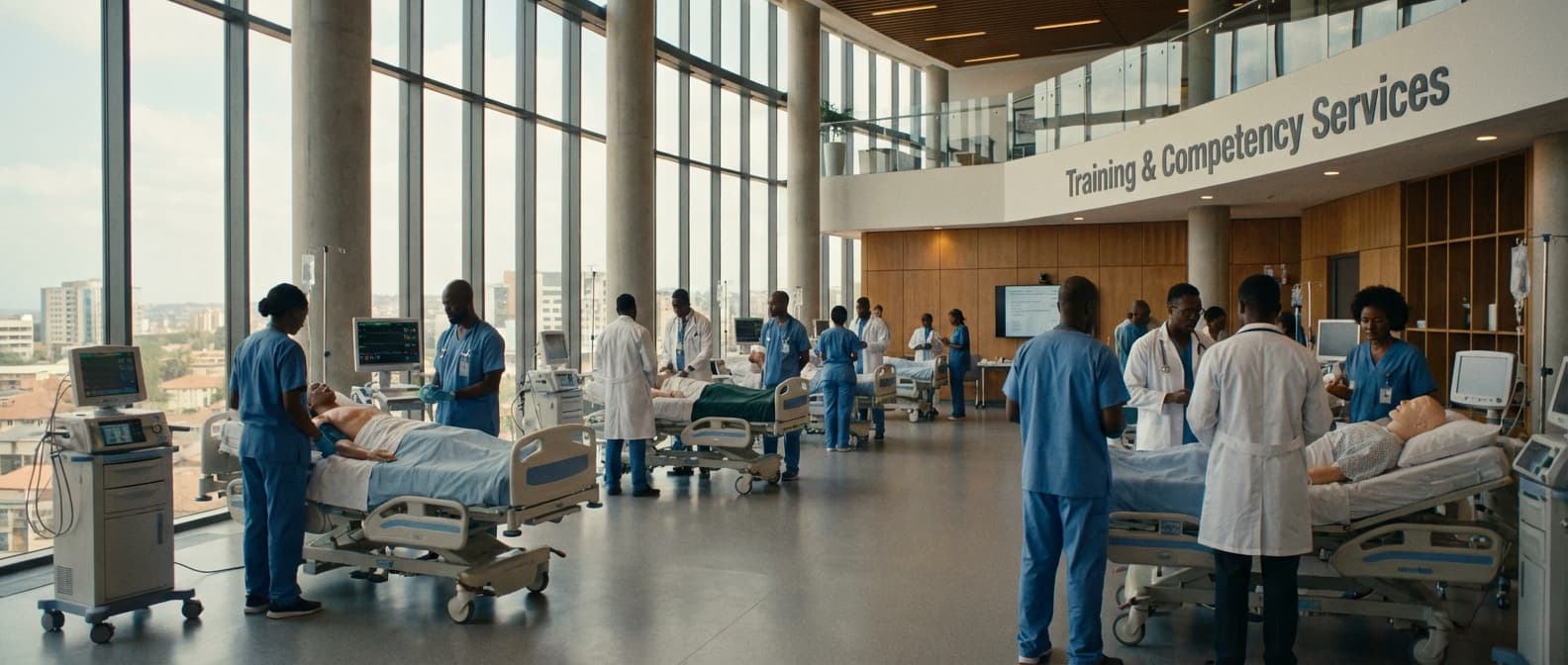
Biomedical Engineering First-Line Support Training Service in Tunisia
Engineering Excellence & Technical Support
Biomedical Engineering First-Line Support Training Service High-standard technical execution following OEM protocols and local regulatory frameworks.
Hands-On Biomedical Equipment Maintenance & Repair
Master practical skills in diagnosing, troubleshooting, and repairing common biomedical devices. Our training focuses on real-world scenarios, ensuring proficiency in preventative maintenance and corrective actions for critical medical equipment found in Tunisian healthcare facilities.
Navigating Tunisian Healthcare & Device Regulations
Gain in-depth understanding of the regulatory landscape governing medical devices in Tunisia. Our curriculum covers essential compliance requirements, documentation standards, and best practices for safe and legal operation of biomedical equipment within the local healthcare system.
Prioritizing Patient Safety Through Proactive Support
Develop a robust understanding of how first-line support directly impacts patient outcomes. Learn to identify potential safety risks, implement risk mitigation strategies, and ensure the continuous availability and reliability of biomedical technology to safeguard patient well-being in Tunisian hospitals and clinics.
What Is Biomedical Engineering First-line Support Training Service In Tunisia?
Biomedical Engineering First-Line Support Training Service in Tunisia refers to the provision of foundational, practical, and technically oriented training for individuals who will be the initial point of contact for technical issues within healthcare facilities concerning medical equipment. This service is designed to equip personnel with the fundamental knowledge and skills to diagnose, troubleshoot, and resolve common problems with biomedical devices, or to effectively escalate complex issues to higher-tier support. The curriculum typically focuses on safe operation, basic preventative maintenance, initial diagnostics, and understanding device functionality at a user and basic technician level. This training is crucial for ensuring the operational continuity of medical technologies, minimizing downtime, and upholding patient safety standards within the Tunisian healthcare ecosystem.
| Target Audience | Rationale for Need | Typical Use Cases |
|---|---|---|
| Entry-level Biomedical Technicians | To provide a foundational skill set for immediate deployment in hospital settings, enabling them to handle routine technical tasks and reduce reliance on senior engineers for common issues. | Performing daily checks on patient monitoring systems, replacing disposable components on diagnostic equipment, responding to user-reported minor malfunctions of infusion pumps, documenting routine maintenance activities. |
| Clinical Staff with Technical Aptitude (Nurses, Radiographers) | To empower frontline users to address minor equipment issues, perform basic troubleshooting, and ensure efficient utilization of medical devices, thereby improving patient care workflow. | Rebooting malfunctioning medical devices, ensuring correct connectivity of patient sensors, performing basic cleaning and disinfection procedures as per manufacturer guidelines, identifying and reporting visible damage to equipment. |
| Biomedical Engineering Department Support Staff | To enhance the overall efficiency of the biomedical engineering department by enabling support personnel to manage initial troubleshooting, inventory management of spare parts, and basic equipment setup. | Receiving and logging incoming repair requests, performing initial diagnostics on returned equipment, managing the inventory of frequently used consumables, assisting senior engineers with equipment installations. |
| Personnel in Smaller Healthcare Facilities or Remote Areas | To provide essential technical support capabilities in environments where dedicated, specialized biomedical engineering staff may be limited or inaccessible. | Performing basic troubleshooting on essential medical equipment like defibrillators or sterilization units, conducting simple calibration checks on weighing scales, ensuring the safe operation of patient beds and associated accessories. |
Key Components of Biomedical Engineering First-Line Support Training in Tunisia
- Introduction to Biomedical Equipment Fundamentals: Principles of operation for common medical devices (e.g., patient monitors, infusion pumps, ECG machines, basic diagnostic imaging).
- Basic Troubleshooting Methodologies: Systematic approaches to identify and isolate technical malfunctions.
- Preventative Maintenance (PM) Procedures: Understanding and executing routine checks and calibrations to prevent failures.
- Safe Operation and Handling of Medical Devices: Adherence to safety protocols and regulations.
- Documentation and Reporting: Proper logging of incidents, repairs, and maintenance activities.
- Introduction to Test Equipment: Familiarization with basic tools used for diagnostics (e.g., multimeters, oscilloscopes).
- Understanding of Biomedical Regulations and Standards in Tunisia: Awareness of relevant local and international guidelines.
- Escalation Procedures: Knowing when and how to involve specialized biomedical engineers or external service providers.
Who Needs Biomedical Engineering First-line Support Training Service In Tunisia?
This document outlines the target audience for first-line support training services in biomedical engineering within Tunisia. Understanding who requires this training is crucial for developing effective and relevant educational programs to enhance the operational efficiency and safety of medical equipment in Tunisian healthcare facilities.
| Target Customer Group | Specific Departments/Roles | Rationale for Training Need | ||||||
|---|---|---|---|---|---|---|---|---|
| Healthcare Institutions (Public and Private) | Biomedical Engineering Departments | In-house technicians responsible for routine maintenance, minor repairs, and troubleshooting of medical devices. Ensures timely resolution of issues, reducing downtime and improving patient care. | IT Departments (for networked medical equipment) | Technicians needing to understand the integration and basic troubleshooting of medical devices with hospital IT infrastructure. | Clinical Staff (Nurses, Doctors, Technologists) | Users of medical equipment requiring basic operational understanding, error recognition, and immediate troubleshooting steps to ensure safe and effective use. | Procurement/Materials Management | Staff involved in selecting and managing medical equipment who benefit from understanding basic maintenance and support requirements for informed purchasing decisions. |
| Medical Equipment Manufacturers and Distributors | Field Service Engineers/Technicians | Employees directly responsible for installation, commissioning, preventative maintenance, and repair of their manufactured or distributed equipment. Ensures adherence to manufacturer specifications and warranty compliance. | Technical Support Representatives | Personnel providing remote assistance and guidance to end-users, requiring knowledge of common issues and basic troubleshooting procedures. | ||||
| Third-Party Service Providers | Biomedical Service Technicians | Independent technicians offering maintenance and repair services to various healthcare facilities. Training is essential for versatility and competency across different equipment types. | Service Managers | Supervisors overseeing service operations, requiring an understanding of technical capabilities and training needs of their teams. | ||||
| Educational and Research Institutions | University Biomedical Engineering Departments (Faculty and Students) | Future biomedical engineers and current students need hands-on training to supplement theoretical knowledge, preparing them for real-world application in healthcare settings. | Research Assistants/Technicians | Personnel operating and maintaining specialized medical research equipment, often requiring specific first-line support knowledge. |
Target Customers for Biomedical Engineering First-Line Support Training in Tunisia
- Healthcare Institutions (Public and Private)
- Medical Equipment Manufacturers and Distributors
- Third-Party Service Providers
- Educational and Research Institutions
Biomedical Engineering First-line Support Training Service Process In Tunisia
This document outlines the typical workflow for a Biomedical Engineering First-Line Support Training Service in Tunisia. It details the steps involved from the initial inquiry by a client to the successful execution of the training program. The process is designed to ensure clarity, efficiency, and responsiveness to client needs.
| Step | Description | Key Activities | Responsible Party | Deliverables/Outcomes |
|---|---|---|---|---|
| The client initiates contact to request training services for biomedical engineering first-line support. | Initial contact (email, phone, website form), understanding client's current infrastructure, specific equipment requiring support, existing skill levels, desired outcomes, and any regulatory compliance needs. | Client, Training Service Provider (TSP) Sales/Business Development | Clear understanding of client requirements, preliminary scope of training. |
| Based on the needs assessment, the TSP prepares a comprehensive training proposal. | Defining training modules, learning objectives, duration, methodology (theoretical, practical, simulated), trainer profiles, venue requirements, required equipment, cost breakdown, and schedule. | Training Service Provider (TSP) Technical/Training Department | Formal Training Proposal document. |
| The client reviews the proposal, and negotiations take place to finalize terms and conditions. | Discussion of proposal details, pricing, payment terms, confidentiality, intellectual property, liability, cancellation policy, and signing of a formal service agreement or contract. | Client, TSP Legal/Management | Signed Service Agreement/Contract. |
| Detailed planning and customization of the training content and logistics. | Refining curriculum based on client feedback, preparing training materials (presentations, manuals, exercises), scheduling trainers and participants, arranging logistics (venue, equipment, catering if applicable). | TSP Training Department, Designated Trainers | Detailed Training Plan, Customized Training Materials. |
| Ensuring all necessary resources are available and ready for the training. | Booking training facilities, procuring/renting necessary equipment (simulators, test tools, actual devices), confirming trainer availability, and pre-training participant communication. | TSP Operations/Logistics, Trainers | Prepared Training Environment, Confirmed Resources. |
| The actual execution of the training program. | Conducting theoretical sessions, practical hands-on exercises, case studies, simulations, and Q&A sessions. Adhering to the planned schedule and objectives. | Designated Trainers | Delivered Training Sessions, Participant Engagement. |
| Following the completion of the training, providing ongoing support and gathering feedback. | Distributing certificates, providing access to post-training resources, answering follow-up questions, conducting participant satisfaction surveys, and gathering feedback on trainer performance and content relevance. | TSP Training Department, Trainers | Certificates of Completion, Training Evaluation Reports, Participant Feedback. |
| The TSP issues an invoice for the training services rendered. | Submitting the invoice according to the contract terms, and the client processing the payment. | TSP Finance Department, Client Finance Department | Paid Invoice. |
| Maintaining the relationship with the client and exploring future opportunities. | Checking in with the client for any further needs, discussing potential future training requirements, and nurturing the professional relationship. | TSP Sales/Business Development, Account Managers | Sustained Client Relationship, Potential for Future Business. |
Biomedical Engineering First-Line Support Training Service Workflow in Tunisia
- Inquiry and Needs Assessment
- Proposal Development and Submission
- Contract Negotiation and Signing
- Training Program Planning and Customization
- Resource Allocation and Preparation
- Training Delivery
- Post-Training Support and Evaluation
- Invoicing and Payment
- Follow-up and Relationship Management
Biomedical Engineering First-line Support Training Service Cost In Tunisia
The cost of Biomedical Engineering First-Line Support Training services in Tunisia can vary significantly based on several factors, making it challenging to provide a single definitive price. These factors influence the overall investment required for individuals or institutions seeking to acquire essential skills in biomedical equipment maintenance and troubleshooting. The training often encompasses theoretical knowledge of medical devices, practical hands-on sessions, safety protocols, and basic diagnostic procedures. Tunisian educational institutions, private training centers, and even some specialized companies offer such programs, each with its own pricing structure.
| Training Scope | Estimated Price Range (TND) | Typical Features |
|---|---|---|
| Basic First-Line Support Workshop (1-3 days) | 300 - 800 TND | Introduction to common medical devices, basic troubleshooting, safety awareness, theoretical overview. |
| Intermediate First-Line Support Course (1-2 weeks) | 800 - 2,500 TND | Deeper dive into specific device categories, hands-on practice with essential tools, diagnostic techniques, preventive maintenance fundamentals. |
| Advanced/Specialized First-Line Support Training (2-4 weeks or longer) | 2,000 - 5,000+ TND | Focus on complex equipment (e.g., imaging, ventilators), in-depth troubleshooting, calibration procedures, regulatory compliance, practical simulations, potential certification. |
| Customized Corporate Training (per program) | Varies widely based on scope and participants | Tailored curriculum to specific organizational needs, on-site training options, group discounts. |
Key Pricing Factors for Biomedical Engineering First-Line Support Training in Tunisia
- Duration and Intensity of the Training: Longer and more intensive programs with a greater number of contact hours will generally be more expensive. This can range from short workshops (1-3 days) to comprehensive courses (several weeks or months).
- Training Provider Reputation and Accreditation: Established institutions with a strong reputation, experienced instructors, and recognized accreditations often command higher fees due to the perceived quality and value of their training.
- Curriculum Depth and Specialization: General first-line support training will typically be less expensive than specialized courses focusing on specific medical equipment categories (e.g., imaging equipment, patient monitoring systems, surgical instruments).
- Inclusion of Practical Components and Equipment Access: Training that offers extensive hands-on practice with real biomedical equipment, simulators, or access to a well-equipped laboratory will often incur higher costs.
- Instructor Expertise and Qualifications: The experience, certifications, and educational background of the trainers can influence pricing. Highly qualified and experienced instructors may lead to premium pricing.
- Training Location and Facilities: The cost of renting training facilities, the quality of equipment provided, and the overall learning environment can impact the final price. Training conducted in major cities might be slightly more expensive.
- Certification and Assessment: Programs that include official certifications upon successful completion, especially those recognized by industry bodies, may have an additional cost associated with the examination and certification process.
- Group vs. Individual Enrollment: Discounts are often available for group enrollments from hospitals, clinics, or educational institutions, whereas individual registration might be at a standard rate.
- Training Materials and Resources: The provision of comprehensive training manuals, digital resources, and supplementary learning materials can contribute to the overall cost.
Affordable Biomedical Engineering First-line Support Training Service Options
This document outlines affordable first-line biomedical engineering support training service options, focusing on value bundles and cost-saving strategies. First-line support is crucial for the initial troubleshooting and maintenance of medical devices, ensuring patient safety and operational efficiency. By investing in targeted training, healthcare facilities can reduce reliance on external vendors, minimize device downtime, and empower their in-house technical teams. We present tiered service options designed to meet varying organizational needs and budgets, emphasizing practical skills development and sustainable cost reduction.
| Training Tier | Description | Key Skill Focus | Value Bundle Inclusions | Estimated Cost Savings (Annual) | Ideal For |
|---|---|---|---|---|---|
| Bronze Essentials | Foundational training for basic device identification, preventive maintenance, and common troubleshooting. | Basic electrical safety, PM procedures, troubleshooting common alarms and error codes. | Online modules, on-demand video library, basic troubleshooting guides. | $5,000 - $15,000 | Small clinics, departments with limited device complexity, new support staff. |
| Silver Proficiency | Intermediate training building on essentials, including hands-on practice with core functionalities and more complex diagnostics. | Component-level troubleshooting, basic repair of common failures, calibration procedures, documentation best practices. | Bronze inclusions + virtual instructor-led sessions, hands-on simulation exercises, access to a limited device-specific training library. | $15,000 - $35,000 | Medium-sized hospitals, facilities with a moderate range of medical devices. |
| Gold Comprehensive | Advanced training for handling a wider range of devices, complex repairs, and system-level integration troubleshooting. | Advanced diagnostic techniques, software troubleshooting, network connectivity issues, basic imaging system troubleshooting, regulatory updates. | Silver inclusions + in-person workshops, customized training modules, dedicated technical support hotline, access to comprehensive device-specific training, train-the-trainer program. | $35,000 - $70,000+ | Large hospitals, specialized medical centers, organizations aiming for in-house expertise across most device categories. |
Key Benefits of Affordable Biomedical Engineering First-Line Support Training
- Reduced dependence on expensive external service contracts.
- Faster resolution of common device issues, minimizing patient care disruptions.
- Increased lifespan and optimal performance of medical equipment.
- Enhanced skills and confidence of in-house technical staff.
- Improved compliance with regulatory and safety standards.
- Better asset management and inventory control of spare parts.
Verified Providers In Tunisia
In Tunisia's rapidly evolving healthcare landscape, discerning genuine quality and reliability is paramount for both local residents and international patients seeking medical services. Franance Health has emerged as a leading entity, meticulously vetting and endorsing healthcare providers across the nation. Their rigorous credentialing process ensures that only the most competent, ethical, and technologically advanced institutions and practitioners earn their seal of approval. This commitment to excellence positions Franance Health verified providers as the premier choice for a safe, effective, and positive healthcare experience in Tunisia.
| Healthcare Provider Type | Franance Health Verification Criteria | Benefits for Patients |
|---|---|---|
| Hospitals | Accreditation by national and international bodies, advanced diagnostic and surgical facilities, highly qualified medical teams, robust emergency services, adherence to hygiene and safety standards. | Access to comprehensive care, complex procedures, advanced technology, and multidisciplinary teams. Assurance of safety and quality in a hospital setting. |
| Specialized Clinics (e.g., Cardiology, Oncology, Fertility) | Demonstrated expertise in their specific field, cutting-edge treatment protocols, highly specialized physicians and surgeons, advanced diagnostic equipment specific to the specialty. | Receiving treatment from leading specialists in their field, benefiting from the latest treatment advancements and tailored care plans. |
| Medical Tourism Agencies | Proven track record in patient facilitation, strong relationships with verified healthcare providers, transparent pricing and package offerings, comprehensive pre- and post-procedure support, ethical patient advocacy. | Seamless coordination of medical travel, including appointments, accommodation, and translation services. Assurance of trusted provider selection and transparent costs. |
| Individual Practitioners (Doctors, Surgeons) | Board certification, extensive experience, positive patient outcomes, continuous professional development, adherence to ethical medical practices, participation in Franance Health's quality assurance programs. | Confidence in receiving care from highly skilled and experienced medical professionals. Trust in their expertise and ethical commitment. |
Why Franance Health Credentials Matter:
- Unwavering Commitment to Quality: Franance Health implements a multi-faceted evaluation, scrutinizing clinical expertise, patient care protocols, and adherence to international standards.
- Focus on Patient Safety: Rigorous checks on sterilization practices, infection control, and the qualifications of medical staff are non-negotiable.
- Technological Advancement: Verified providers are recognized for utilizing state-of-the-art medical equipment and embracing innovative treatment methodologies.
- Ethical Practices and Transparency: Franance Health ensures that its accredited partners uphold the highest ethical standards in patient interaction, pricing, and information dissemination.
- International Recognition: Their credentialing often aligns with international healthcare benchmarks, making Tunisian providers a trusted choice for medical tourism.
- Comprehensive Service Offering: From specialized surgeries to general wellness, verified providers cater to a wide spectrum of medical needs.
Scope Of Work For Biomedical Engineering First-line Support Training Service
This Scope of Work (SOW) outlines the requirements for a Biomedical Engineering First-Line Support Training Service. The primary objective is to equip incoming first-line support personnel with the fundamental knowledge, skills, and procedures necessary to effectively troubleshoot and resolve common issues with biomedical equipment, escalate complex problems appropriately, and maintain a high standard of service. This training will cover a range of equipment types and diagnostic methodologies relevant to a typical hospital or healthcare facility environment.
| Deliverable Name | Description | Standard Specification | Format | Acceptance Criteria |
|---|---|---|---|---|
| Training Curriculum Document | Comprehensive document outlining all modules, learning objectives, topics covered, and assessment methods. | Must align with the Key Training Modules & Objectives listed above. Include detailed lesson plans and learning activities. | Curriculum covers all specified modules and objectives. Content is accurate and relevant to first-line biomedical support. | |
| Training Materials (Participant Guides) | Written or digital materials provided to trainees for each module, including key concepts, diagrams, and exercises. | Clear, concise language. High-quality visuals. Accessible for review post-training. | PDF, Digital (e.g., EPUB, interactive web module) | Materials are comprehensive, well-organized, and directly support the curriculum. Easy to read and understand. |
| Training Facilitator Guide | Detailed guide for instructors, including presentation notes, activity instructions, timing, and assessment guidance. | Provides step-by-step instructions for delivering each module effectively. | Guide is complete, logical, and enables consistent delivery of training across different facilitators. | |
| Practical Training Scenarios & Simulations | Realistic scenarios and hands-on exercises designed to test troubleshooting and problem-solving skills. | Scenarios should mimic common issues encountered in a healthcare environment. Include clear instructions and expected outcomes. | Simulated hardware, virtual lab environment, or detailed case studies. | Scenarios are relevant, challenging, and allow trainees to apply learned skills. Successful resolution of 80% of common scenarios is required. |
| Knowledge Assessment (Quizzes/Tests) | Evaluations to measure the trainees' understanding of theoretical concepts covered in the training. | Multiple-choice, short answer, or practical application questions. Validated for accuracy and relevance. | Online assessment platform or printable test papers. | Average score of 85% or higher across all assessments. Questions accurately reflect training content. |
| Skills Assessment (Practical/Simulation) | Evaluation of trainees' ability to perform troubleshooting tasks and apply procedures in a practical setting. | Observed performance during practical exercises or simulations. Assessed against predefined performance standards. | Direct observation during practical sessions, simulation performance logs. | Demonstrates proficiency in performing key first-line support tasks as defined in the practical training section. |
| Training Completion Certificates | Certificates awarded to trainees who successfully complete the training program. | Include trainee name, training title, date of completion, and issuing organization's name and logo. | PDF or physical certificate | Certificates are issued upon successful completion of all assessments and meeting acceptance criteria. |
| Post-Training Support Plan (Optional) | Outline for ongoing support and reinforcement of learned skills after formal training. | May include access to online resources, refresher sessions, or mentorship programs. | Document (PDF) | Plan is clearly defined and addresses mechanisms for continued learning and skill development. |
Key Training Modules & Objectives
- Module 1: Introduction to Biomedical Equipment & Healthcare Environment * Understand the role and responsibilities of biomedical engineering in a healthcare setting. * Identify common categories of biomedical equipment and their basic functions (e.g., patient monitoring, diagnostic imaging, therapeutic devices). * Familiarize with hospital safety protocols, regulatory compliance (e.g., FDA, HIPAA), and infection control related to medical devices.
- Module 2: Basic Electrical & Mechanical Principles for Biomedical Devices * Review fundamental electrical concepts (voltage, current, resistance, Ohm's Law) and their application in medical devices. * Understand basic mechanical principles relevant to device operation and maintenance (e.g., motors, pumps, gears). * Introduction to common power sources, grounding, and electrical safety standards (e.g., IEC 60601 series).
- Module 3: First-Line Troubleshooting Methodologies * Develop systematic problem-solving approaches (e.g., identify, isolate, test, verify). * Learn to interpret error codes, alarms, and diagnostic messages. * Master the use of basic diagnostic tools (multimeters, oscilloscopes - if applicable to first-line).
- Module 4: Common Equipment-Specific Issue Resolution * Focus on troubleshooting and resolving frequently encountered problems for a defined set of core biomedical equipment. * Standard procedures for restarting, recalibrating, and performing basic maintenance on selected devices. * Hands-on practice with simulated scenarios.
- Module 5: Documentation, Escalation & Communication * Learn proper documentation practices for service requests, troubleshooting steps, and resolutions. * Understand escalation pathways and criteria for referring complex issues to higher-level support or specialized technicians. * Develop effective communication skills for interacting with clinical staff, patients (where appropriate), and other stakeholders.
- Module 6: Safety & Compliance Refresher * Reinforce critical safety procedures when working with biomedical equipment. * Review regulatory requirements and their impact on support operations. * Emphasis on patient safety and risk mitigation.
Service Level Agreement For Biomedical Engineering First-line Support Training Service
This Service Level Agreement (SLA) outlines the response times and uptime guarantees for the Biomedical Engineering First-Line Support Training Service. It defines the expected performance levels and the remedies available to the client in the event of service degradation.
| Service Component | Response Time Target | Uptime Guarantee | Definition of Availability |
|---|---|---|---|
| Training Material Access (Digital) | Immediate upon enrollment confirmation | 99.5% | Access to the training portal and materials is available 99.5% of the time, excluding scheduled maintenance. |
| Trainer Availability (Scheduled Sessions) | 15 minutes prior to scheduled session start | N/A (Scheduled events are not subject to uptime guarantees but cancellation policies apply) | Trainers will be present and ready to commence scheduled training sessions on time. |
| Post-Training Support (Email/Portal) | Within 4 business hours for standard queries, 1 business hour for critical queries | 99.0% | The support portal and email channels are monitored and responded to within the defined timeframes 99.0% of the time during business hours. |
| Knowledge Base Access | Immediate | 99.7% | The online knowledge base is accessible 99.7% of the time, excluding scheduled maintenance. |
Service Scope
- Provision of comprehensive training materials for biomedical engineering first-line support staff.
- Delivery of training sessions (virtual or in-person) as per agreed schedule.
- Access to qualified trainers with expertise in biomedical equipment maintenance and troubleshooting.
- Post-training support for trainees, including Q&A sessions and access to knowledge base.
- Regular updates to training content to reflect new technologies and safety standards.
Frequently Asked Questions

Ready when you are
Let's scope your Biomedical Engineering First-Line Support Training Service in Tunisia project in Tunisia.

Scaling healthcare logistics and technical systems across the entire continent.