
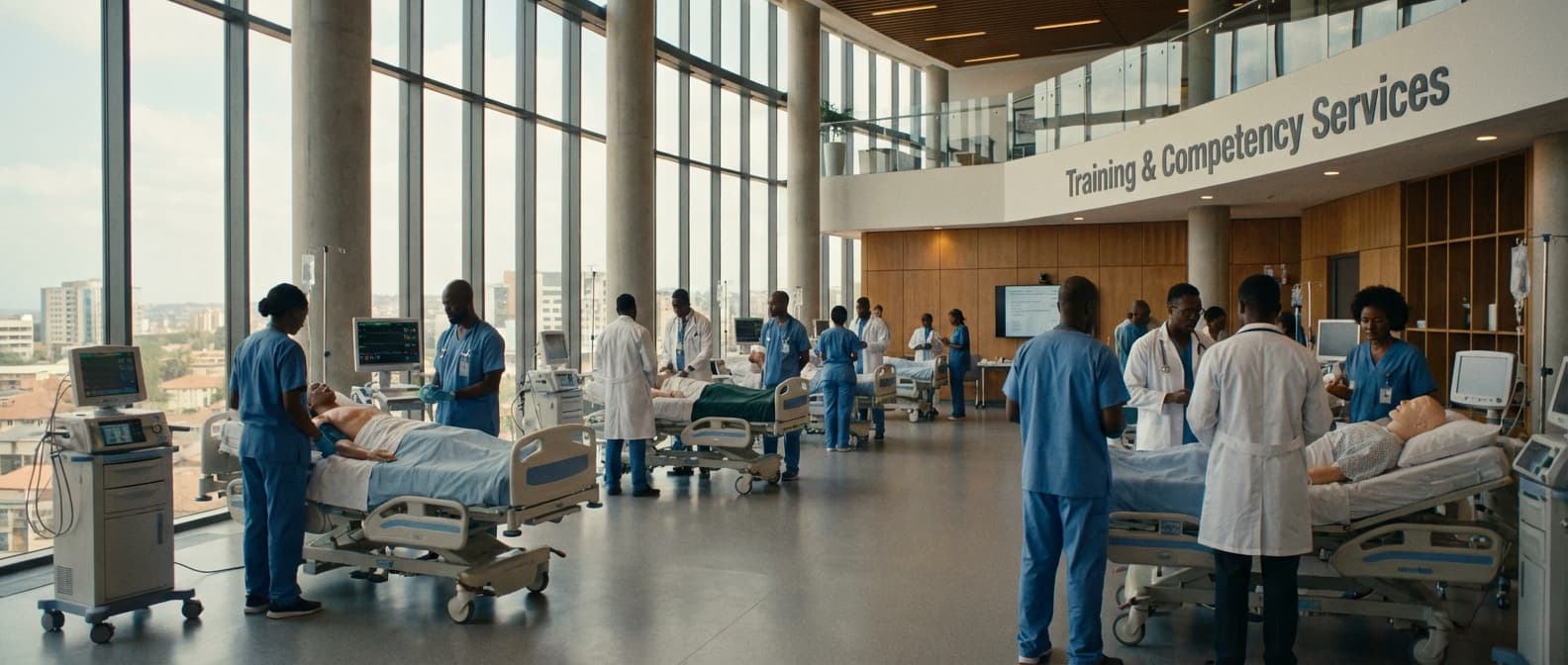
Anesthesia Workstation User Training Service in Tunisia
Engineering Excellence & Technical Support
Anesthesia Workstation User Training Service High-standard technical execution following OEM protocols and local regulatory frameworks.
Expert-Led Training Sessions
Receive hands-on training from certified anesthesiologists and biomedical engineers on the latest anesthesia workstations. Our experts will guide you through advanced functionalities, troubleshooting, and best practices to maximize patient safety and procedural efficiency.
Simulation-Based Learning
Practice critical scenarios and gain confidence in a risk-free environment. Our training utilizes high-fidelity simulators to replicate real-world patient conditions, allowing you to hone your skills in managing complex anesthetic cases and emergency situations.
Customized Training Pathways
Tailor your learning experience to your specific needs and existing expertise. We offer modular training programs covering basic operation, advanced modes, ventilation strategies, and patient monitoring, ensuring you gain the precise knowledge required for your clinical practice in Tunisia.
What Is Anesthesia Workstation User Training Service In Tunisia?
Anesthesia Workstation User Training Service in Tunisia refers to specialized educational programs designed to equip healthcare professionals with the knowledge and practical skills necessary for the safe and effective operation of modern anesthesia workstations. These services are critical for ensuring optimal patient care, minimizing the risk of adverse events, and maximizing the functionality of sophisticated medical equipment within the Tunisian healthcare system. The training focuses on understanding the hardware, software, monitoring capabilities, and safety features inherent in these devices, thereby enhancing the competency of anesthesiologists, nurse anesthetists, and other relevant medical personnel.
| Who Needs It? | Typical Use Cases |
|---|---|
| Anesthesiologists: Medical doctors specializing in administering anesthesia and managing patient care during surgical and diagnostic procedures. | Operating Rooms (ORs): Routine use during a wide spectrum of surgical interventions, from minor procedures to complex cardiothoracic or neurosurgeries. The workstation is central to delivering inhaled anesthetics and ventilatory support. Intensive Care Units (ICUs): Employed for prolonged mechanical ventilation and sedation in critically ill patients requiring advanced respiratory support beyond standard ICU ventilators. Recovery Rooms (PACU): Used for post-anesthesia monitoring and initial ventilatory management as patients recover from anesthesia. Emergency Departments (ED): For initial airway management and ventilation in trauma patients or those with acute respiratory failure requiring immediate intubation and support. Ambulatory Surgery Centers: For same-day surgical procedures requiring anesthesia and post-operative monitoring. Training Institutions: Medical schools, nursing schools, and simulation centers for educating future healthcare professionals on anesthesia delivery principles and technology. |
| Nurse Anesthetists/Certified Registered Nurse Anesthetists (CRNAs): Advanced practice registered nurses who administer anesthesia under the supervision of an anesthesiologist or independently in some jurisdictions. | |
| Anesthesia Technicians: Allied health professionals responsible for setting up, maintaining, and troubleshooting anesthesia equipment. | |
| Healthcare Facilities: Hospitals, surgical centers, and clinics in Tunisia that utilize modern anesthesia workstations. | |
| Medical Device Manufacturers/Distributors: Companies providing and servicing anesthesia workstations may offer or subcontract training services. |
Key Components of Anesthesia Workstation User Training Service:
- Device Familiarization: Comprehensive understanding of the physical components, user interface, and navigation of specific anesthesia workstation models (e.g., Draeger, GE Healthcare, Philips).
- Ventilator Management: In-depth training on various ventilation modes (e.g., volume control, pressure control, SIMV, PSV Pro), parameter adjustments, and troubleshooting ventilation-related issues.
- Gas Delivery and Monitoring: Proficiency in managing volatile anesthetic agents, fresh gas flow, and the accurate interpretation of integrated gas monitoring data (e.g., O2, CO2, N2O, anesthetic agents).
- Patient Monitoring Integration: Training on utilizing and interpreting data from integrated patient monitors, including ECG, SpO2, NIBP, IBP, temperature, and capnography, in conjunction with the anesthesia workstation.
- Alarm Management and Troubleshooting: Education on recognizing, interpreting, and responding to a wide range of alarms, as well as basic troubleshooting procedures for common technical malfunctions.
- Safety Features and Risk Mitigation: Understanding built-in safety mechanisms, checklists, and best practices to prevent errors and ensure patient safety during anesthesia delivery.
- System Updates and Maintenance: Awareness of software updates, calibration procedures, and basic preventive maintenance protocols.
- Practical Simulation: Hands-on exercises using simulation scenarios to practice critical decision-making and procedural skills in a controlled environment.
Who Needs Anesthesia Workstation User Training Service In Tunisia?
This service is crucial for healthcare facilities in Tunisia that operate or plan to operate anesthesia workstations. It ensures that medical professionals are proficient in the safe, effective, and efficient use of these complex devices, ultimately contributing to improved patient care and operational excellence.
| Department | Key Personnel Requiring Training | Specific Training Needs |
|---|---|---|
| Anesthesiology | Anesthesiologists, Certified Registered Nurse Anesthetists (CRNAs) (where applicable), Anesthesia Technicians | Setup, operation, calibration, ventilation modes, drug delivery systems, patient monitoring integration, emergency procedures, troubleshooting, maintenance checks. |
| Surgery | Surgeons (for understanding workstation capabilities and patient status) | Understanding the physiological impact of ventilation modes, recognizing potential issues, communication with the anesthesia team. |
| Intensive Care Unit (ICU) | Intensivists, ICU Nurses, Respiratory Therapists | Advanced ventilation strategies, weaning protocols, management of critically ill patients, integration with other life-support equipment. |
| Operating Room (OR) Management | OR Nurse Managers, Biomedical Engineers, Equipment Procurement Officers | Understanding equipment capabilities for procurement decisions, ensuring adequate training for staff, planning for maintenance and service, infection control protocols related to workstation use. |
| Biomedical Engineering / Technical Services | Biomedical Engineers, Anesthesia Equipment Technicians | Preventive maintenance, troubleshooting and repair of anesthesia workstations, understanding internal components and electrical/gas systems, calibration procedures, safety testing. |
| Nursing Education / Professional Development | Clinical Nurse Educators | Developing and delivering in-house training programs, assessing competency, ensuring adherence to hospital protocols for workstation use. |
Target Customers and Departments in Tunisia
- Public Hospitals
- Private Clinics and Hospitals
- University Teaching Hospitals
- Military Hospitals
- Specialized Surgical Centers
Anesthesia Workstation User Training Service Process In Tunisia
This document outlines the Anesthesia Workstation User Training Service Process for clients in Tunisia, from initial inquiry to successful execution and follow-up. The process is designed to be efficient, transparent, and tailored to the specific needs of healthcare facilities and their medical professionals.
| Phase | Stage | Description | Key Activities | Responsible Party(ies) | Deliverables/Outcomes |
|---|---|---|---|---|---|
| Phase 1: Inquiry & Needs Assessment | Initial Inquiry | The client expresses interest in anesthesia workstation user training. | Client contacts training provider via phone, email, or website form. Initial discussion to understand basic needs. | Client, Training Provider Sales/Inquiry Team | Acknowledgement of inquiry, initial contact established. |
| Detailed Needs Assessment | Comprehensive understanding of the client's specific training requirements. | On-site or remote meeting to discuss: number of trainees, existing knowledge, specific workstation models, desired learning outcomes, preferred training dates/times, language requirements, budget constraints. | Client (Medical staff, Procurement), Training Provider (Trainer, Sales) | Detailed training needs document, confirmation of workstation models, trainee profile. | |
| Phase 2: Proposal & Agreement | Proposal Development | Creation of a customized training proposal based on the needs assessment. | Development of a detailed proposal including: training objectives, curriculum outline, duration, schedule, trainer profiles, venue requirements (if applicable), equipment requirements, pricing, payment terms, terms & conditions. | Training Provider (Sales, Training Department) | Formal Training Proposal document. |
| Proposal Review & Negotiation | Client reviews the proposal and provides feedback. | Client reviews proposal, asks clarifying questions, and negotiates terms if necessary. | Client, Training Provider (Sales) | Agreed-upon proposal with any amendments. | |
| Contract Signing | Formalization of the training agreement. | Both parties sign the training contract/agreement, outlining all agreed-upon terms and responsibilities. | Client (Legal/Procurement), Training Provider (Management, Legal) | Signed Training Agreement. | |
| Phase 3: Pre-Training Preparation | Training Material Finalization | Preparation of all necessary training resources. | Development/customization of training manuals, presentations, handouts, case studies, and assessment tools. Translation of materials if required. | Training Provider (Training Department, Trainers) | Finalized training materials. |
| Logistics & Scheduling Confirmation | Arranging all practical aspects of the training. | Confirmation of training dates, times, venue (on-site at client's facility or designated training center), and equipment availability (workstations, simulators, projectors). Travel and accommodation arrangements for trainers if needed. | Training Provider (Training Coordinator), Client (Facility Management) | Confirmed training schedule and logistics plan. | |
| Trainee Pre-Assessment (Optional) | Gauging the prior knowledge of trainees. | Distributing pre-training questionnaires or conducting brief online assessments to tailor the training delivery. | Training Provider (Trainers) | Trainee knowledge baseline. | |
| Phase 4: Training Execution | On-site/Remote Training Delivery | The actual training session takes place. | Interactive lectures, demonstrations, hands-on practice with workstations, simulation exercises, Q&A sessions, and group discussions. | Training Provider (Certified Trainers) | Delivered training sessions. |
| In-training Assessment & Feedback | Monitoring trainee progress and gathering immediate feedback. | Quizzes, practical skill checks, and opportunities for trainees to provide feedback on the training content and delivery. | Training Provider (Trainers) | Trainee progress assessment, real-time feedback. | |
| Phase 5: Post-Training & Support | Post-Training Assessment | Evaluating the effectiveness of the training. | Final written or practical assessment to gauge knowledge and skill acquisition. Issuance of certificates upon successful completion. | Training Provider (Trainers) | Trainee assessment results, Certificates of Completion. |
| Post-Training Feedback & Evaluation | Gathering comprehensive feedback from the client and trainees. | Distribution of post-training evaluation forms to trainees and a follow-up meeting with the client to discuss overall satisfaction and any areas for improvement. | Training Provider (Training Coordinator, Sales) | Completed evaluation forms, client feedback report. | |
| Reporting & Documentation | Providing a summary of the training conducted. | Submission of a training report to the client, including attendance records, assessment results, and feedback summary. | Training Provider (Training Coordinator) | Formal Training Report. | |
| Ongoing Support & Refresher Training | Providing continued assistance and opportunities for skill enhancement. | Access to technical support for workstation-related queries, provision of ongoing learning resources, and offering optional refresher training courses as needed. | Training Provider (Support Team, Training Department), Client | Resolved queries, access to resources, potential for future training engagements. |
Anesthesia Workstation User Training Service Process in Tunisia: Workflow
- Phase 1: Inquiry & Needs Assessment
- Phase 2: Proposal & Agreement
- Phase 3: Pre-Training Preparation
- Phase 4: Training Execution
- Phase 5: Post-Training & Support
Anesthesia Workstation User Training Service Cost In Tunisia
Training services for anesthesia workstations in Tunisia are essential for healthcare professionals to ensure safe and efficient patient care. The cost of these services is influenced by several key factors, leading to a range of pricing. Understanding these components is crucial for hospitals and clinics when budgeting for staff development. Factors such as the complexity of the workstation, the duration and depth of the training, the number of participants, the qualifications and experience of the trainers, and the location of the training within Tunisia all play a significant role in determining the final price. Specialized training on advanced features or for specific anesthesia models will generally command higher fees than introductory courses. Furthermore, whether the training is conducted on-site at the facility or requires participants to travel to a training center can impact costs due to logistical considerations.
| Service Type | Typical Duration | Estimated Cost Range (TND) | Notes |
|---|---|---|---|
| Basic User Training (Introduction to core functions) | 1-2 Days | 600 - 1,500 | Covers essential operation, safety checks, and basic modes. |
| Advanced User Training (In-depth features, troubleshooting) | 2-3 Days | 1,200 - 2,500 | Includes advanced ventilation modes, monitoring, and common issue resolution. |
| Specialized/Customized Training (Specific models, new features) | Variable (1-5 Days) | 1,500 - 4,000+ | Price depends heavily on the complexity and bespoke nature of the training. |
| Train-the-Trainer Programs | 3-5 Days | 2,500 - 5,000+ | Aims to equip internal staff to train others, often includes comprehensive materials. |
Factors Influencing Anesthesia Workstation User Training Costs in Tunisia:
- Workstation Complexity: Training on basic models versus advanced, multi-functional anesthesia machines.
- Training Duration and Depth: Hours of instruction, theoretical vs. practical components, and scope of topics covered.
- Number of Participants: Group discounts are often available for larger training sessions.
- Trainer Qualifications and Experience: Certified instructors with specialized knowledge may charge higher rates.
- Training Location: On-site training at the client's facility versus off-site training at a provider's location.
- Customization: Tailoring the training curriculum to specific institutional needs or protocols.
- Material and Resources: Provision of manuals, handouts, and access to simulation equipment.
- Post-Training Support: Inclusion of follow-up sessions or ongoing technical assistance.
Affordable Anesthesia Workstation User Training Service Options
Providing comprehensive and affordable user training for anesthesia workstations is crucial for ensuring patient safety, operational efficiency, and maximizing the return on investment for healthcare facilities. This service focuses on equipping anesthesia providers with the necessary knowledge and skills to operate various anesthesia machines effectively and safely. We offer flexible training solutions designed to meet diverse budgets and needs.
| Value Bundle Name | Description | Key Features | Cost-Saving Strategies Integrated | Target Audience |
|---|---|---|---|---|
| Essential Foundation Bundle | Provides comprehensive training on the core functionalities of standard anesthesia workstations. | Includes core functionality training, basic troubleshooting, and on-site hands-on sessions for a small group. | Group discounts, standardized curriculum reduces development costs, efficient on-site delivery. | New hires, teams transitioning to a new workstation model, facilities with basic needs. |
| Operational Excellence Bundle | Expands on the foundational training with advanced features and in-depth troubleshooting. | Includes all 'Essential Foundation' features plus advanced feature training, waveform analysis, and remote support for troubleshooting. | Bundled pricing offers a discount over individual modules, extended remote support reduces travel costs, on-demand resources. | Experienced anesthesia teams, facilities aiming to optimize workstation utilization, departments facing complex cases. |
| Continuous Improvement Bundle | Offers ongoing support and updates to ensure sustained proficiency and adaptation to new technologies. | Includes annual refresher training, access to updated online modules, priority scheduling for new feature training, and dedicated support channels. | Subscription-based model spreads costs, proactive training minimizes downtime and errors, reduced need for emergency support. | Large hospitals, teaching institutions, facilities with a high turnover rate, those committed to staying at the forefront of anesthesia technology. |
| Custom Solution Package | Fully tailored training program designed to meet the unique requirements and budget of any facility. | Content, duration, delivery method, and assessment are all customized. | Flexible package pricing, focus on only necessary modules, integration with existing training infrastructure. | Facilities with specialized equipment, unique workflows, or specific budget constraints. |
Key Training Service Components
- Core Functionality Training: Covers essential features, patient monitoring integration, ventilation modes, and drug delivery systems.
- Advanced Feature Training: Delves into specialized modes, waveform analysis, data management, and troubleshooting.
- Refresher and Update Training: Keeps staff current with new software versions, hardware upgrades, and evolving best practices.
- On-site and Remote Training: Offers flexibility for different logistical requirements.
- Customizable Curricula: Tailors training content to specific workstation models and institutional protocols.
- Certification and Competency Assessment: Verifies user proficiency and adherence to standards.
Verified Providers In Tunisia
In Tunisia's rapidly developing healthcare sector, identifying trustworthy and high-quality medical services is paramount. Franance Health has emerged as a leading platform, meticulously vetting and verifying healthcare providers to ensure patients receive the best possible care. Their rigorous credentialing process instills confidence, making them the go-to resource for those seeking verified medical professionals and facilities in Tunisia.
| Provider Type | Key Verification Aspects | Franance Health Assurance |
|---|---|---|
| Doctors & Specialists | Medical licenses, board certifications, surgical affiliations, years of experience, patient reviews | Ensures qualified and experienced medical professionals with a proven track record. |
| Hospitals & Clinics | Accreditation status, facility hygiene and safety standards, equipment capabilities, emergency response protocols | Confirms that healthcare facilities meet high standards for patient care and safety. |
| Diagnostic Centers & Labs | Equipment calibration and maintenance, quality control procedures, staff qualifications, turnaround times | Guarantees accurate and reliable diagnostic results from well-equipped facilities. |
| Rehabilitation Centers | Therapist certifications, treatment methodologies, patient progress tracking, facility accessibility | Provides access to effective and personalized rehabilitation programs. |
Why Franance Health Credentials Matter:
- Expertise and Qualification Verification: Franance Health rigorously checks medical licenses, certifications, and educational backgrounds of all listed providers.
- Patient Safety Standards: Providers must demonstrate adherence to stringent safety protocols and quality management systems.
- Reputation and Patient Feedback: Franance Health considers patient reviews and testimonials to gauge provider satisfaction and reliability.
- Specialty and Sub-specialty Recognition: The platform highlights providers with specific expertise, allowing patients to find the most suitable specialist for their needs.
- Transparency and Accessibility: Verified profiles offer clear information about a provider's experience, services, and contact details.
Scope Of Work For Anesthesia Workstation User Training Service
This Scope of Work (SOW) outlines the requirements for providing user training services for an Anesthesia Workstation. The training will cover the operation, maintenance, and troubleshooting of the workstation, ensuring users are proficient and safe in its application. This document also details the technical deliverables and standard specifications for the training program.
| Deliverable | Description | Standard Specification/Requirement | Format | Responsible Party |
|---|---|---|---|---|
| Training Curriculum Development | Creation of a comprehensive and modular training program tailored to the Anesthesia Workstation. | Must cover all core functionalities, safety features, and clinical applications. Curriculum should be adaptable for different user groups (e.g., anesthesiologists, nurse anesthetists, biomedical engineers). | Document (PDF/Word) | Service Provider |
| Training Materials | Development of all necessary training materials, including presentations, user manuals, quick reference guides, and case studies. | Materials must be clear, concise, visually engaging, and accurate. Must include detailed diagrams and illustrations. Content to be aligned with manufacturer's guidelines. | Digital (PPT, PDF) and Printed (optional, upon request) | Service Provider |
| Hands-on Training Sessions | Delivery of practical, instructor-led training sessions using actual Anesthesia Workstations. | Sessions must be conducted by certified trainers with extensive experience. Recommended trainer-to-trainee ratio of 1:6 for optimal engagement. Minimum session duration of 4 hours per module. | In-person (on-site) or Virtual (live webinar with simulation capabilities) | Service Provider |
| Competency Assessment | Development and administration of a competency assessment to evaluate user understanding and practical skills. | Assessment to include theoretical questions and practical simulation scenarios. Passing score of 85% required for certification. Assessment method to be clearly defined in the curriculum. | Written test and practical demonstration | Service Provider |
| Training Certification | Issuance of a certificate of completion to users who successfully pass the competency assessment. | Certificates must include trainee's name, training date, workstation model, and issuing organization. Valid for a specified period (e.g., 2 years). | Digital (PDF) and Printed | Service Provider |
| Post-Training Support | Provision of limited post-training support for a defined period. | Support to cover clarification of training content and basic operational queries. Response time within 24 business hours. Duration: 30 days post-training. | Email and Phone support | Service Provider |
| Training Report | A comprehensive report detailing the training conducted, attendance, assessment results, and feedback. | Report to include number of sessions, participants, average scores, and any recommendations for future training. To be submitted within 7 days of training completion. | Document (PDF) | Service Provider |
| Trainer Qualifications | Ensuring trainers possess the necessary technical expertise and pedagogical skills. | Trainers must have at least 3 years of experience with the specific Anesthesia Workstation model and relevant certifications. Evidence of qualifications to be provided upon request. | CVs and Certifications | Service Provider |
Key Training Objectives
- Familiarize users with the Anesthesia Workstation's hardware components and their functions.
- Instruct users on the correct setup, calibration, and pre-use checks of the workstation.
- Train users on the various modes of ventilation, anesthetic gas delivery, and monitoring capabilities.
- Provide hands-on experience with common clinical scenarios and emergency procedures.
- Educate users on routine cleaning, disinfection, and basic preventive maintenance.
- Equip users with the knowledge to identify and troubleshoot common operational issues.
- Ensure understanding of safety features and alarm management protocols.
- Provide an overview of software updates and their implications.
Service Level Agreement For Anesthesia Workstation User Training Service
This Service Level Agreement (SLA) outlines the performance standards for the Anesthesia Workstation User Training Service. It defines response times for support requests and uptime guarantees for the training platform. This SLA is effective as of [Start Date] and remains in effect until [End Date].
| Service Component | Metric | Target | Measurement Period |
|---|---|---|---|
| Anesthesia Workstation User Training Service | Support Request Response Time (Critical - System Outage/Inability to Access Training) | 2 Business Hours | Per Incident |
| Anesthesia Workstation User Training Service | Support Request Response Time (High - Major Functionality Impaired) | 4 Business Hours | Per Incident |
| Anesthesia Workstation User Training Service | Support Request Response Time (Medium - Minor Functionality Issue/Content Query) | 8 Business Hours | Per Incident |
| Anesthesia Workstation User Training Service | Support Request Response Time (Low - General Inquiry/Feedback) | 24 Business Hours | Per Incident |
| Training Platform | Uptime Guarantee (Excluding Scheduled Downtime) | 99.5% | Monthly |
Definitions
- Anesthesia Workstation User Training Service: Refers to the provision of online and/or in-person training modules, resources, and support for users of specific anesthesia workstation models.
- Training Platform: The online environment or system used to deliver and manage the training content and user progress.
- Support Request: An inquiry submitted by an authorized user regarding technical issues, content clarification, or access problems related to the Anesthesia Workstation User Training Service.
- Business Hours: Monday to Friday, 9:00 AM to 5:00 PM [Time Zone], excluding national holidays.
- Downtime: Any period during which the Training Platform is unavailable to authorized users and is not performing its intended functions.
- Scheduled Downtime: Planned interruptions to the Training Platform for maintenance, upgrades, or other necessary work, which will be communicated to users in advance.
- Unscheduled Downtime: Any Downtime not classified as Scheduled Downtime.
Frequently Asked Questions

Ready when you are
Let's scope your Anesthesia Workstation User Training Service in Tunisia project in Tunisia.

Scaling healthcare logistics and technical systems across the entire continent.