
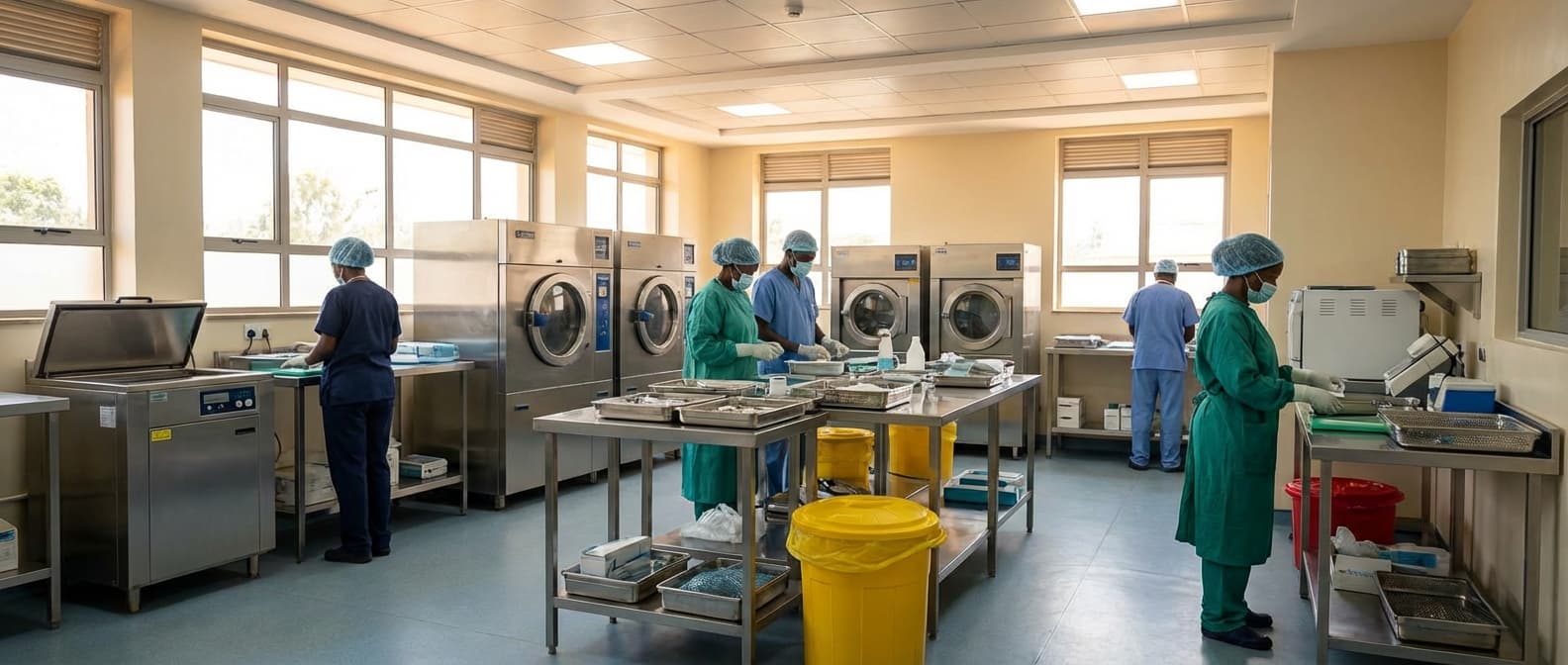
Infection-Control Readiness Support Service for Reusable Equipment in Tunisia
Engineering Excellence & Technical Support
Infection-Control Readiness Support Service for Reusable Equipment High-standard technical execution following OEM protocols and local regulatory frameworks.
Centralized Sterilization Tracking
Implementing a cloud-based platform for real-time monitoring and auditing of sterilization cycles for all reusable medical equipment across Tunisian healthcare facilities. This ensures compliance with international standards and provides a robust chain of custody for infection prevention.
Advanced Decontamination Validation
Deploying state-of-the-art chemical and biological indicators alongside automated validation software to rigorously test the efficacy of decontamination processes for critical and semi-critical reusable devices, minimizing the risk of cross-contamination.
Optimized Logistics & Supply Chain
Developing and implementing a streamlined logistics framework for the collection, transport, cleaning, sterilization, and redistribution of reusable equipment. This includes specialized containment solutions and temperature-controlled transport to maintain sterility and prevent environmental contamination.
What Is Infection-control Readiness Support Service For Reusable Equipment In Tunisia?
Infection-Control Readiness Support Service for Reusable Equipment in Tunisia refers to a specialized consultancy and operational assistance framework designed to ensure healthcare facilities maintain optimal preparedness for the safe and effective reprocessing of reusable medical devices. This service aims to mitigate the risk of healthcare-associated infections (HAIs) by addressing critical elements of the sterilization and disinfection lifecycle for reusable instruments and equipment. It encompasses a multi-faceted approach, integrating policy development, infrastructure assessment, workflow optimization, personnel training, and quality assurance mechanisms specific to the Tunisian healthcare regulatory and operational landscape.
| Service Aspect | Description | Impact on Readiness |
|---|---|---|
| Policy Development | Establishment of facility-specific reprocessing protocols aligned with national and international standards. | Ensures standardized, evidence-based practices are followed, reducing variability and risk. |
| Infrastructure Assessment | Evaluation of physical space, utilities, and equipment for optimal reprocessing functionality. | Identifies bottlenecks and ensures equipment is adequate, calibrated, and maintained, crucial for effective sterilization. |
| Workflow Optimization | Streamlining the sequence of operations from decontamination to sterile storage. | Minimizes the risk of recontamination, improves efficiency, and reduces staff exposure to hazardous materials. |
| Personnel Training | Comprehensive education and competency validation for all reprocessing staff. | Ensures staff possess the knowledge and skills to perform tasks correctly, directly impacting the efficacy of sterilization and disinfection. |
| Quality Assurance | Implementation of monitoring systems (chemical, biological, mechanical indicators) and documentation. | Provides objective evidence that sterilization and disinfection processes are effective, enabling early detection of failures. |
Typical Use Cases:
- New Facility Establishment: Providing end-to-end support for designing and equipping a new CSSD, ensuring it meets all infection control and regulatory requirements from inception.
- Existing Facility Audit and Upgrade: Conducting comprehensive assessments of current reprocessing practices and infrastructure to identify deficiencies and recommend targeted improvements, including technology upgrades or workflow redesign.
- Response to Outbreaks or Identified HAIs: Investigating potential breaches in reprocessing protocols as a root cause for HAIs and implementing corrective measures to prevent recurrence.
- Implementation of New Reprocessing Technologies: Guiding facilities in the selection, validation, and operational integration of advanced sterilization or disinfection technologies.
- Preparation for Regulatory Inspections: Ensuring facilities are audit-ready and have robust documentation and validated processes in place to demonstrate compliance.
- Capacity Building and Skill Enhancement: Developing and delivering tailored training programs for healthcare professionals to address specific knowledge gaps or improve competencies in reusable equipment reprocessing.
- Standardization of Reprocessing Practices: Facilitating the adoption of consistent and evidence-based reprocessing protocols across different departments or facilities within a healthcare network.
- Post-Pandemic Readiness Enhancement: Reviewing and strengthening reprocessing protocols in light of evolving infectious disease threats and increased sterilization demands.
Who Needs Infection-control Readiness Support Service For Reusable Equipment In Tunisia?
This service is designed to bolster the infection prevention and control (IPC) capabilities for reusable medical equipment within healthcare facilities in Tunisia. It addresses the critical need for ensuring that instruments and devices that are intended for repeated use are properly cleaned, disinfected, and sterilized to prevent healthcare-associated infections (HAIs). The support service will focus on enhancing existing protocols, providing training, and ensuring compliance with national and international standards.
| Target Customer Segment | Specific Departments/Units Benefiting | Key Needs Addressed |
|---|---|---|
| Public Hospitals | Operating Theatres, ICUs, Emergency Depts, Sterilization Units, Wards (Surgical, Medical, Maternity) | Standardization of protocols, staff training on reprocessing, equipment maintenance, regulatory compliance, outbreak prevention. |
| Private Clinics and Hospitals | Surgical Suites, Procedure Rooms, Sterilization Areas, Diagnostic Labs | Enhancing existing IPC practices, training on new technologies, ensuring patient safety, meeting accreditation requirements. |
| Specialized Medical Centers | Dental Clinics (instrument reprocessing), Ophthalmology Clinics (surgical instruments), Dialysis Centers (dialyzers, accessories) | Specific reprocessing techniques for specialized equipment, single-use vs. reusable decision-making support, compliance with specialized guidelines. |
| Diagnostic Laboratories | Microbiology Labs, Pathology Labs (reusable glassware, instruments) | Proper sterilization/disinfection of lab equipment, preventing cross-contamination, safe handling of biohazardous materials. |
| IPC Committees/Departments | All clinical and support departments involved in equipment use and reprocessing | Developing and implementing robust IPC programs, risk assessment and mitigation, monitoring and evaluation of reprocessing effectiveness, training material development. |
| Healthcare Facility Management & Administration | Procurement, Engineering, Quality Assurance, Finance | Cost-effectiveness of reprocessing, equipment lifecycle management, budget allocation for IPC resources, regulatory oversight, strategic planning for IPC infrastructure. |
Target Customers & Departments
- Public Hospitals (All Tiers)
- Private Clinics and Hospitals
- Specialized Medical Centers (e.g., Dental, Ophthalmology, Dialysis)
- Diagnostic Laboratories
- Operating Theatres/Surgical Departments
- Intensive Care Units (ICUs)
- Emergency Departments
- Sterilization Units/Central Sterile Supply Departments (CSSDs)
- Outpatient Clinics and Polyclinics
- Maternity Wards
- Infection Prevention and Control (IPC) Committees/Departments
- Healthcare Facility Management and Administration
Infection-control Readiness Support Service For Reusable Equipment Process In Tunisia
This document outlines the workflow for the Infection-Control Readiness Support Service for Reusable Equipment Processes in Tunisia, detailing the steps from initial inquiry to successful execution. This service aims to strengthen the capacity of healthcare facilities in Tunisia to safely manage and process reusable medical equipment, thereby preventing healthcare-associated infections.
| Stage | Description | Key Activities | Expected Outcome | Responsible Parties |
|---|---|---|---|---|
| Inquiry and Needs Assessment | Initial contact from a Tunisian healthcare facility expressing interest in improving their reusable equipment processing. This stage involves understanding their current situation and specific challenges. | Facility contacts the support service provider. Initial consultations to understand needs. Preliminary information gathering on existing protocols and resources. | Clear understanding of the facility's infection control challenges related to reusable equipment. Identification of potential areas for improvement. | Healthcare Facility, Support Service Provider |
| Service Proposal and Agreement | Based on the initial assessment, a tailored service proposal is developed and presented to the facility. Upon agreement, a formal contract is established. | Development of a detailed service proposal outlining scope, activities, timelines, and costs. Negotiation and finalization of service agreement/contract. | Formal commitment from both parties. Clear deliverables and expectations established. | Support Service Provider, Healthcare Facility |
| Diagnostic Assessment and Gap Analysis | A comprehensive evaluation of the facility's current reusable equipment processing workflow, infrastructure, and personnel. This identifies specific gaps in infection prevention and control. | On-site assessment of sterilization, disinfection, and cleaning processes. Review of existing Standard Operating Procedures (SOPs). Assessment of equipment availability, functionality, and maintenance. Interviews with staff involved in the process. | Detailed report on the current state of reusable equipment processing. Identification of critical gaps and areas requiring immediate intervention. | Support Service Provider, Healthcare Facility Staff |
| Capacity Building and Training | Empowering healthcare personnel with the knowledge and skills necessary to implement best practices in reusable equipment processing. | Development and delivery of tailored training modules on sterilization, disinfection, cleaning, packaging, storage, and waste management. Practical demonstrations and hands-on exercises. Competency assessments. | Enhanced knowledge and practical skills of healthcare staff. Improved understanding of infection control principles and their application. | Support Service Provider, Healthcare Facility Staff |
| Equipment and Process Review | Focusing on the physical infrastructure and the flow of reusable equipment within the facility. | Review of equipment maintenance logs. Recommendations for equipment upgrades or repairs. Optimization of workflow to minimize risks of cross-contamination. Guidance on selection and procurement of appropriate equipment and consumables. | Optimized equipment functionality and workflow. Improved efficiency and safety in processing reusable equipment. | Support Service Provider, Biomedical Engineering Department, Facility Management |
| Implementation Support | Assisting the facility in putting the recommendations into practice. | On-site support during the implementation of new SOPs. Troubleshooting issues encountered during the transition. Mentoring and coaching of staff. Assistance in establishing quality control mechanisms. | Successful integration of improved practices and procedures. Reduced risk of operational errors. | Support Service Provider, Healthcare Facility Staff |
| Monitoring and Evaluation | Regularly assessing the effectiveness of the implemented changes and identifying areas for further improvement. | Periodic on-site visits for monitoring. Data collection on key performance indicators (e.g., infection rates, compliance with SOPs, equipment downtime). Feedback mechanisms for staff. | Evidence-based understanding of the impact of the support. Identification of areas for continuous improvement and reinforcement. | Support Service Provider, Healthcare Facility Management |
| Sustainability Planning | Ensuring that the improvements are maintained in the long term. | Developing internal capacity for ongoing training and quality assurance. Establishing robust internal audit systems. Facilitating regular review meetings. Providing guidance on resource allocation for infection control. | Self-sufficient and sustainable infection control practices for reusable equipment processing. Reduced reliance on external support. | Healthcare Facility Management, Support Service Provider |
Workflow Stages
- Inquiry and Needs Assessment
- Service Proposal and Agreement
- Diagnostic Assessment and Gap Analysis
- Capacity Building and Training
- Equipment and Process Review
- Implementation Support
- Monitoring and Evaluation
- Sustainability Planning
Infection-control Readiness Support Service For Reusable Equipment Cost In Tunisia
This document outlines the pricing factors and estimated cost ranges for an infection-control readiness support service specifically for reusable equipment in Tunisia. This service aims to ensure that healthcare facilities maintain the highest standards of sterilization and disinfection for all reusable medical devices, thereby minimizing the risk of healthcare-associated infections (HAIs). The pricing is influenced by several key factors, reflecting the complexity of the service and the specific needs of each facility.
| Service Component | Estimated Cost Range (TND - Tunisian Dinar) | Notes |
|---|---|---|
| Initial Readiness Assessment & Audit (per facility) | 1,500 - 4,000 | Covers initial evaluation of protocols, equipment, and staff training. Varies by facility size. |
| Development/Update of Infection Control Protocols (per facility) | 1,000 - 3,000 | Tailoring protocols to specific equipment and regulatory requirements. |
| Staff Training & Education (per session/group) | 500 - 1,500 | Covers hands-on training, theoretical sessions, and competency assessments. Price per group or per day. |
| Equipment Validation & Performance Testing (per device type) | 200 - 800 | For key sterilization and disinfection equipment (e.g., autoclaves). May involve external certification fees. |
| Periodic Monitoring & Audits (monthly/quarterly, per facility) | 800 - 2,500 | Ongoing checks to ensure sustained compliance. Frequency impacts cost. |
| Managed Service & Ongoing Consultation (monthly, per facility) | 2,000 - 7,000+ | Comprehensive support including regular visits, reporting, and continuous improvement. Highly dependent on scope. |
| Equipment Calibration & Maintenance Facilitation (hourly/per device) | 100 - 300 | Cost for assessment and coordination of necessary maintenance. Actual repair costs are separate. |
Key Pricing Factors:
- Scope of Reusable Equipment: The total number and variety of reusable medical devices requiring assessment, cleaning, disinfection, and sterilization protocols. This includes instruments, endoscopes, ventilators, surgical tools, and more.
- Frequency of Service: Whether the support is a one-time audit, periodic assessments (monthly, quarterly, annually), or an ongoing managed service.
- Level of Support: The extent of involvement, from basic consulting and training to hands-on auditing, protocol development, equipment validation, and ongoing monitoring.
- Facility Size and Complexity: The number of departments and operating rooms, the volume of procedures performed, and the overall size of the healthcare institution.
- Existing Infrastructure and Equipment: The current state of sterilization and disinfection equipment, the availability of trained staff, and the existing infection control protocols.
- Need for Equipment Calibration and Maintenance: Whether the service includes assessing the need for, or facilitating, calibration and maintenance of existing sterilization equipment (e.g., autoclaves, washer-disinfectors).
- Training and Education Needs: The extent of training required for hospital staff on best practices in reprocessing, handling, and storage of reusable equipment.
- Reporting and Documentation Requirements: The level of detail and frequency of reports provided to the facility regarding their infection control readiness.
- Geographic Location within Tunisia: While less significant than other factors, travel costs for auditors might slightly vary based on proximity to major urban centers.
- Customization of Protocols: The extent to which new or updated infection control protocols need to be developed or tailored to the specific facility's needs and equipment.
Affordable Infection-control Readiness Support Service For Reusable Equipment Options
Our Affordable Infection-Control Readiness Support Service for Reusable Equipment Options offers a comprehensive solution to ensure the safety and compliance of your reusable medical devices. We understand that maintaining robust infection control protocols can be a significant operational challenge, especially for organizations with budget constraints. This service is designed to empower you with the knowledge, tools, and ongoing support needed to manage reusable equipment effectively and affordably, minimizing risks of healthcare-associated infections (HAIs) and avoiding costly non-compliance penalties.
| Value Bundle | Description | Key Inclusions | Target Audience | Estimated Savings Potential (Annualized) |
|---|---|---|---|---|
| Essential Readiness | Our foundational bundle provides core support for basic infection control needs for reusable equipment. | On-site assessment of current reprocessing practices, basic protocol development guidance, essential staff training modules (digital), and a quarterly review of compliance documentation. | Small clinics, dental offices, outpatient facilities with limited reusable equipment. | 15-20% (reduced staff time for protocol development, lower risk of minor non-compliance issues). |
| Advanced Compliance | This bundle offers more in-depth support, focusing on comprehensive protocol development and enhanced training. | Detailed risk assessment, tailored reprocessing protocol development (including specific equipment types), in-person staff training sessions, a monthly compliance checklist, and access to our expert helpline for urgent queries. | Medium-sized clinics, surgery centers, hospitals with moderate reusable equipment volume. | 20-30% (significant reduction in risk of major non-compliance, improved staff competency leading to fewer reprocessing errors, potential reduction in supply costs due to optimized usage). |
| Premium Assurance | Our most comprehensive package, designed for organizations requiring the highest level of support and continuous monitoring. | Full facility-wide infection control assessment, bespoke reprocessing validation and testing support, advanced staff training including train-the-trainer programs, bi-annual on-site audits, dedicated account manager, and proactive alerts on regulatory changes. | Large hospitals, specialized medical centers, organizations with high-risk reusable equipment. | 25-35% (minimizes risk of costly outbreaks and litigation, optimizes staff resources by offloading complex tasks, ensures maximum operational efficiency and regulatory adherence). |
Key Value Propositions
- Proactive Risk Mitigation: Identify and address potential infection control gaps before they lead to outbreaks.
- Enhanced Patient Safety: Significantly reduce the risk of HAIs stemming from inadequately processed reusable equipment.
- Regulatory Compliance Assurance: Stay ahead of evolving infection control standards and avoid fines.
- Operational Efficiency: Streamline your reprocessing workflows for greater productivity and reduced waste.
- Expert Guidance & Training: Access specialized knowledge and empower your staff with best practices.
- Cost Predictability: Benefit from transparent pricing and predictable expenditure on infection control support.
Verified Providers In Tunisia
Finding verified healthcare providers in Tunisia is crucial for ensuring quality and trustworthy medical services. Franance Health stands out as a premier platform for identifying these professionals. Their rigorous credentialing process and commitment to patient well-being make them the best choice for anyone seeking reliable healthcare in Tunisia.
| Criteria | Franance Health's Approach | Benefit to Patients |
|---|---|---|
| Credential Verification | Thorough checks of licenses, education, and certifications. | Ensures providers are legally qualified and competent. |
| Quality of Care Assessment | Considers patient feedback, ethical standards, and international best practices. | Connects patients with providers dedicated to excellent patient outcomes. |
| Provider Specializations | Covers a broad spectrum of medical fields and services. | Facilitates finding the right specialist for any health need. |
| Accessibility | Intuitive search functions and online booking options. | Simplifies appointment scheduling and reduces waiting times. |
| Transparency | Detailed provider profiles and verified information. | Empowers patients with the knowledge to choose wisely. |
| Trust Building | Commitment to accuracy and reliability in provider listings. | Fosters confidence in the healthcare system and providers. |
Why Franance Health is the Top Choice for Verified Providers in Tunisia:
- Rigorous Verification Process: Franance Health employs a multi-faceted approach to verify the credentials of every healthcare provider listed on their platform. This includes checking medical licenses, educational qualifications, professional certifications, and disciplinary records. This ensures that only legitimate and qualified professionals are accessible to patients.
- Emphasis on Patient Safety and Quality Care: Beyond basic credentials, Franance Health prioritizes providers who demonstrate a commitment to patient safety, ethical practices, and high-quality care. They may consider patient reviews, hospital affiliations, and adherence to international medical standards.
- Comprehensive Provider Directory: Franance Health offers a wide range of medical specialties and healthcare services. Whether you need a general practitioner, a specialist, a dentist, or a therapist, their platform makes it easy to find verified providers in your area.
- User-Friendly Search and Booking: The platform is designed for ease of use, allowing patients to search for providers based on specialty, location, and availability. Many listings also offer online booking options, simplifying the process of scheduling appointments.
- Transparency and Trust: By providing verified information and highlighting provider qualifications, Franance Health fosters transparency and builds trust between patients and healthcare professionals. This empowers patients to make informed decisions about their health.
- Continuity of Care and Support: Franance Health aims to facilitate a seamless healthcare experience. They often provide information about a provider's experience, areas of expertise, and patient testimonials, helping to build confidence and support continuity of care.
Scope Of Work For Infection-control Readiness Support Service For Reusable Equipment
This Scope of Work (SOW) outlines the services to be provided by a qualified vendor to support the infection-control readiness of reusable medical equipment within [Healthcare Facility Name]. The service aims to ensure that all reusable equipment is processed, disinfected, and sterilized according to established best practices and regulatory standards, thereby minimizing the risk of healthcare-associated infections (HAIs).
| Category | Technical Deliverable | Standard Specifications/Requirements | Timeline/Frequency |
|---|---|---|---|
| Assessment & Gap Analysis | Current State Assessment Report | Detailed report of existing processes, equipment inventory, staff training levels, and compliance with relevant guidelines (e.g., CDC, AAMI, ISO). Identification of specific risks and areas for improvement. | Within 2 weeks of contract initiation |
| Protocol Development | Standard Operating Procedures (SOPs) for Reusable Equipment Reprocessing | Comprehensive SOPs covering: receiving, cleaning (manual and automated), disinfection (high-level and intermediate-level), sterilization (steam, EtO, H2O2), packaging, storage, and transport. Protocols must align with manufacturer's instructions for use (IFUs) and current regulatory standards. | Within 4 weeks of assessment completion |
| Training & Competency | Training Materials and Curriculum | Development of training modules, presentations, and hands-on demonstration materials for all reprocessing personnel. Content to cover SOPs, equipment operation, safety protocols, and infection prevention principles. | To be developed concurrently with SOPs |
| Training & Competency | Competency Assessment Tools and Reports | Validated tools (e.g., quizzes, practical skill evaluations) to assess staff understanding and proficiency. Documentation of individual staff competency assessments and remediation plans if necessary. | Ongoing, with initial assessments within 2 weeks of training completion |
| Technology & Equipment Support | Recommendations for Reprocessing Equipment and Technologies | Vendor to provide unbiased recommendations for cleaning, disinfection, and sterilization equipment based on facility needs, volume, and budget. Includes justification for choices and potential ROI. | As needed, following assessment |
| Monitoring & Auditing | Audit Plan and Checklists | Development of a systematic audit plan for monitoring adherence to reprocessing SOPs. Includes detailed checklists for on-site observations and record reviews. | Within 2 weeks of SOP finalization |
| Monitoring & Auditing | Audit Reports and Corrective Action Plans | Regular reports summarizing audit findings, non-compliance issues, and recommendations for corrective actions. Tracking of implemented corrective actions and their effectiveness. | Quarterly, with ad-hoc audits as required |
| Documentation & Compliance | Quality Control Monitoring Records Template | Templates for documenting critical parameters for sterilization cycles (e.g., temperature, pressure, time), biological indicator results, and chemical indicator monitoring. | To be provided within 4 weeks of SOP finalization |
| Documentation & Compliance | Process Validation Documentation Support | Assistance in gathering documentation and information required for process validation (e.g., for new equipment or significant process changes). | As requested by the facility |
Key Objectives
- Assess current infection-control practices for reusable equipment.
- Identify gaps and areas for improvement in processing workflows, personnel training, and equipment maintenance.
- Develop and implement standardized protocols for cleaning, disinfection, and sterilization.
- Provide training and competency assessment for staff involved in reusable equipment reprocessing.
- Assist in the selection and implementation of appropriate reprocessing technologies and equipment.
- Establish monitoring and auditing mechanisms to ensure ongoing compliance and effectiveness.
Service Level Agreement For Infection-control Readiness Support Service For Reusable Equipment
This Service Level Agreement (SLA) outlines the response times and uptime guarantees for the Infection-Control Readiness Support Service for Reusable Equipment. The service aims to ensure that reusable equipment meets stringent infection control standards, minimizing the risk of healthcare-associated infections.
| Service Level | Response Time | Uptime Guarantee |
|---|---|---|
| Critical Support (e.g., equipment failure impacting patient care due to infection control breach) | 15 minutes for initial acknowledgement, 1 hour for on-site technician dispatch (if required) | 99.9% uptime for critical infection control monitoring systems |
| High Priority Support (e.g., urgent queries on reprocessing protocols, potential contamination identified) | 1 hour for initial acknowledgement, 4 business hours for resolution | 99.5% uptime for infection control documentation platform |
| Standard Support (e.g., routine inquiries, audit scheduling, general guidance) | 4 business hours for initial acknowledgement, 2 business days for resolution | N/A (Standard support is reactive and does not have a direct uptime guarantee, but relies on the uptime of underlying systems) |
Key Service Components
- Proactive readiness checks and audits of reusable equipment.
- On-demand support for infection control protocol adherence.
- Troubleshooting and resolution for infection control-related equipment issues.
- Training and guidance on best practices for reusable equipment processing.
- Documentation and reporting on infection control compliance.
Frequently Asked Questions

Ready when you are
Let's scope your Infection-Control Readiness Support Service for Reusable Equipment in Tunisia project in Tunisia.

Scaling healthcare logistics and technical systems across the entire continent.