
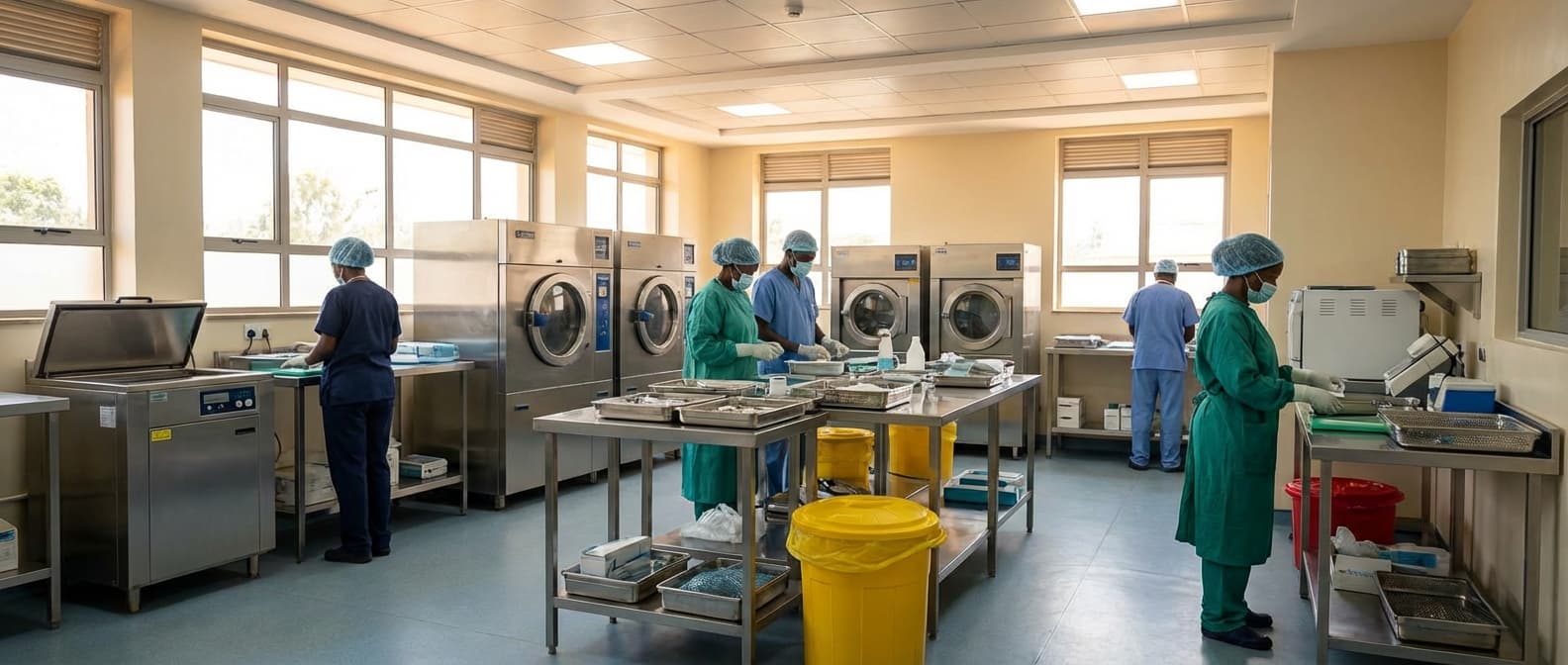
Endoscope Reprocessing Equipment Support Service in Tunisia
Engineering Excellence & Technical Support
Endoscope Reprocessing Equipment Support Service High-standard technical execution following OEM protocols and local regulatory frameworks.
Expedited Spare Parts Delivery & On-Site Replacement
Minimize downtime with our rapid spare parts logistics and certified technicians, ensuring critical components for your endoscope reprocessing equipment are delivered and installed quickly across Tunisia, often within 24-48 hours for common parts.
Remote Diagnostics & Predictive Maintenance
Leverage our advanced remote monitoring capabilities for real-time performance analysis. Our system proactively identifies potential issues, allowing for preventative maintenance interventions before equipment failure impacts your reprocessing workflow.
Specialized Technician Training & Certification Programs
Empower your in-house technical staff with our comprehensive training modules. We offer hands-on workshops and certifications for the latest endoscope reprocessing equipment, ensuring your team can perform routine maintenance and troubleshoot effectively.
What Is Endoscope Reprocessing Equipment Support Service In Tunisia?
Endoscope Reprocessing Equipment Support Service in Tunisia refers to the provision of specialized maintenance, repair, validation, and calibration services for automated and semi-automated equipment used in the cleaning, disinfection, and sterilization of flexible and rigid endoscopes. This service is critical for ensuring patient safety, preventing cross-contamination, and maintaining the operational efficacy of these high-value medical devices. The objective is to guarantee that reprocessing equipment functions within manufacturer specifications and regulatory compliance, thereby upholding stringent infection control protocols within healthcare facilities.
| Who Needs It? | Typical Use Cases | ||||||
|---|---|---|---|---|---|---|---|
| Hospitals (Public and Private) | Routine maintenance of automated endoscope reprocessors (AERs) in endoscopy suites. | Preventive maintenance of washer-disinfectors used for surgical instruments, including endoscopes. | Validation of new AER installations after relocation or upgrade. | Troubleshooting and repair of disinfection cycle failures in AERs. | Calibration of temperature and flow sensors in cleaning systems. | Ensuring compliance with infection control standards for gastrointestinal, bronchoscopic, and urological endoscopes. | Post-repair verification of disinfection efficacy. |
| Clinics and Ambulatory Surgery Centers | Scheduled servicing of compact AERs. | Calibration checks to ensure consistent disinfection between procedures. | Emergency repairs to minimize downtime during peak patient loads. | ||||
| Medical Equipment Service Providers (Third-Party Maintainers) | Access to specialized technical expertise and proprietary diagnostic tools. | Partnerships for providing comprehensive support contracts to healthcare facilities. | |||||
| Endoscope Manufacturers and Distributors | Subcontracting specialized support services in regions where they may not have direct technical staff. | Ensuring consistent quality of service delivery across their product lines. |
Key Components of Endoscope Reprocessing Equipment Support Service:
- Preventive Maintenance (PM): Scheduled inspections, lubrication, filter replacement, and functional checks to preempt potential failures and extend equipment lifespan.
- Corrective Maintenance (CM): On-demand troubleshooting and repair of equipment malfunctions or breakdowns, including component replacement.
- Validation and Qualification (IQ/OQ/PQ): Installation Qualification (IQ), Operational Qualification (OQ), and Performance Qualification (PQ) to verify that the equipment is installed correctly, operates according to specifications, and consistently achieves the desired reprocessing outcomes.
- Calibration Services: Regular calibration of critical parameters such as temperature, pressure, flow rates, and cycle times to ensure accuracy and reproducibility.
- Software Updates and Support: Management of firmware and software updates to optimize performance, introduce new features, or address security vulnerabilities.
- Training and Technical Consultation: Providing training to in-house biomedical engineering or sterile processing departments on the proper operation, maintenance, and troubleshooting of the equipment.
- Spare Parts Management: Ensuring the availability of genuine and compatible spare parts for timely repairs.
- Regulatory Compliance Assistance: Support in adhering to local and international standards and guidelines pertaining to endoscope reprocessing (e.g., ISO 15883 series, national Tunisian healthcare regulations).
Who Needs Endoscope Reprocessing Equipment Support Service In Tunisia?
The demand for Endoscope Reprocessing Equipment Support Service in Tunisia is driven by the critical need for safe and effective sterilization of endoscopic instruments. This service ensures that hospitals and clinics can maintain high standards of patient care, prevent cross-contamination, and comply with stringent healthcare regulations. As the prevalence of endoscopic procedures continues to grow, so does the importance of reliable and efficient reprocessing equipment.
| Target Customer Type | Primary Departments Requiring Support | Key Needs & Concerns |
|---|---|---|
| Public Hospitals | Gastroenterology, Pulmonology, Urology, Gynecology, Surgery, ENT, Intensive Care Units (ICU) | Budget constraints, high patient volume, need for reliable and cost-effective maintenance, training for staff on equipment operation and troubleshooting. |
| Private Hospitals & Clinics | Gastroenterology, Pulmonology, Urology, Gynecology, Surgery, ENT, Outpatient Surgery Centers | Emphasis on patient safety and quality of care, need for advanced and efficient reprocessing solutions, rapid response to equipment failures, compliance with international standards. |
| Diagnostic Centers | Endoscopy Units, Gastroenterology Departments | Consistent uptime for diagnostic procedures, efficient turnaround time for instruments, preventative maintenance to avoid disruptions, specialized cleaning and disinfection protocols. |
| Research Institutions | Research Labs, Clinical Trial Departments | Validation of reprocessing protocols, maintenance of specialized equipment for research purposes, calibration and accuracy of reprocessing cycles. |
Target Customers & Departments in Tunisia Requiring Endoscope Reprocessing Equipment Support Service
- Hospitals (Public and Private): All hospitals performing endoscopic procedures are primary consumers.
- Specialized Clinics: Clinics focusing on gastroenterology, pulmonology, urology, gynecology, and ENT.
- Diagnostic Centers: Facilities offering diagnostic endoscopy services.
- Research Institutions: Those conducting studies involving endoscopic interventions.
Endoscope Reprocessing Equipment Support Service Process In Tunisia
This document outlines the end-to-end workflow for Endoscope Reprocessing Equipment Support Services in Tunisia, from initial customer inquiry to the successful execution of the service. The process is designed to be efficient, transparent, and to ensure minimal disruption to healthcare facilities. It encompasses several key stages, including initial contact, technical assessment, service scheduling, execution, and post-service follow-up. The primary goal is to maintain the optimal functionality and compliance of vital endoscope reprocessing equipment, ensuring patient safety and operational continuity. This service supports a range of equipment including automated endoscope reprocessors (AERs), washer-disinfectors, and associated accessories.
| Stage | Description | Key Activities | Responsible Party | Output/Deliverable |
|---|---|---|---|---|
| The customer initiates contact to request support for endoscope reprocessing equipment. | Customer contacts service provider via phone, email, or website form. Initial request for service is made. | Customer, Service Provider (Sales/Support Team) | Acknowledgement of inquiry, initial contact details recorded. |
| Detailed information about the equipment and the required service is collected. | Customer provides equipment make/model, serial number, nature of the issue (e.g., malfunction, preventive maintenance), urgency. Service provider gathers customer contact details and location. | Customer, Service Provider (Support Team) | Completed service request form, preliminary understanding of the service need. |
| A preliminary assessment is made, and a cost estimate is provided. | Service provider may ask further technical questions or request diagnostic information. Based on the information, a preliminary diagnosis and estimated cost (parts, labor, travel) is generated. | Service Provider (Technical Support/Sales) | Preliminary quotation/estimate for service. |
| Once the quotation is accepted, a formal agreement is made, and the service is scheduled. | Customer accepts the quotation. Service Provider issues a formal service order or contract. Agreed upon service date and time are confirmed, considering customer availability and technician schedule. | Customer, Service Provider (Sales/Operations) | Signed service agreement/order, confirmed service schedule. |
| A qualified technician travels to the customer's location to perform the service. | Technician arrives at the facility. Performs diagnostics, repairs, preventive maintenance, or calibration as per the service order. Uses genuine parts and follows manufacturer guidelines. | Service Provider (Field Technician) | Service performed on the equipment. |
| The repaired or maintained equipment is thoroughly tested to ensure proper functioning and compliance. | Functional tests, performance checks, calibration verification. If applicable, validation of the reprocessing cycle according to relevant standards (e.g., ISO 13485, national guidelines). | Service Provider (Field Technician) | Successful test results, validated equipment performance. |
| All service activities and results are documented, and the equipment is formally handed over to the customer. | Completion of service report detailing work performed, parts used, test results, and recommendations. Technician explains the work done to the customer. Customer signs off on the service report. | Service Provider (Field Technician), Customer | Signed service report, updated equipment maintenance log. |
| The customer is billed for the services rendered, and payment is processed. | Service Provider issues an invoice based on the agreed-upon quotation. Customer processes payment according to agreed terms. | Service Provider (Finance), Customer | Paid invoice. |
| Ensuring customer satisfaction and providing ongoing support. | Service provider may follow up with the customer to ensure satisfaction. Provide contact information for future support needs or warranty claims. | Service Provider (Customer Service/Support) | Customer satisfaction, continued relationship. |
Endoscope Reprocessing Equipment Support Service Process Workflow
- Inquiry & Initial Contact
- Service Request & Information Gathering
- Technical Assessment & Quotation
- Service Agreement & Scheduling
- On-site Service Execution
- Testing & Validation
- Documentation & Handover
- Invoicing & Payment
- Post-Service Follow-up & Support
Endoscope Reprocessing Equipment Support Service Cost In Tunisia
The cost of endoscope reprocessing equipment support services in Tunisia is influenced by several key factors. These include the type and complexity of the endoscope, the specific reprocessing equipment involved (e.g., automated endoscope reprocessors - AERs, washer-disinfectors, drying and storage cabinets), the service provider's reputation and expertise, the scope of the service (e.g., preventative maintenance, on-demand repairs, software updates, calibration, or full service contracts), and the geographic location within Tunisia. Service agreements often vary in duration and coverage, impacting overall cost. Furthermore, the availability of spare parts, technician travel time, and any required consumables can contribute to the final price. While precise figures are proprietary and subject to negotiation, general pricing ranges can be estimated based on these influencing elements. It's important for healthcare facilities to obtain detailed quotes from multiple reputable service providers to ensure competitive pricing and optimal service levels.
| Service Type/Agreement | Estimated Annual Cost (TND) | Notes |
|---|---|---|
| Basic Preventative Maintenance (per unit) | 1,500 - 3,500 | Typically includes 1-2 scheduled visits per year for cleaning, calibration, and basic checks. Varies significantly by equipment type. |
| Comprehensive Service Contract (per unit) | 4,000 - 10,000+ | Covers scheduled preventative maintenance, unlimited on-demand repairs, spare parts (sometimes excluded), and software updates. Highly dependent on equipment age and complexity. |
| On-Demand Repair Service (per incident) | 500 - 2,500+ | Cost per service call, including diagnosis, labor, and parts. Can be very unpredictable and costly if frequent repairs are needed. |
| AER Specific Maintenance/Calibration | 2,000 - 5,000 | Focuses on the intricate components and validation of automated systems. May be bundled into broader contracts. |
| Drying and Storage Cabinet Support | 1,000 - 3,000 | Generally less complex than AERs, but still requires periodic checks for airflow, filters, and functional integrity. |
Factors Influencing Endoscope Reprocessing Equipment Support Service Costs in Tunisia:
- Type and complexity of endoscope
- Specific reprocessing equipment model and brand
- Service provider's experience and certifications
- Scope of service (preventative maintenance, repair, calibration, etc.)
- Service agreement duration and coverage
- Geographic location of the healthcare facility
- Availability and cost of spare parts
- Technician travel time and associated expenses
- Inclusion of consumables and software updates
Affordable Endoscope Reprocessing Equipment Support Service Options
Providing reliable and affordable support for endoscope reprocessing equipment is crucial for healthcare facilities to maintain patient safety and operational efficiency. This service aims to offer comprehensive solutions that address maintenance, repair, and calibration needs without incurring prohibitive costs. Understanding value bundles and implementing smart cost-saving strategies are key to achieving this.
| Value Bundle | Description | Cost-Saving Strategy | Key Benefits |
|---|---|---|---|
| Preventative Maintenance Package | Includes scheduled inspections, cleaning, lubrication, and replacement of wear-and-tear parts for a set period (e.g., annually or semi-annually). | Bundling multiple service visits into one contract can offer a discounted rate compared to individual service calls. Optimizing service schedules based on equipment usage and manufacturer recommendations. | Reduces unexpected downtime, extends equipment lifespan, maintains optimal performance, and avoids costly emergency repairs. |
| Comprehensive Service Contract | Covers all routine maintenance, unlimited on-demand repairs, and replacement parts (excluding consumables). | Negotiating a multi-year contract can secure lower annual pricing. Prioritizing repairs based on urgency to minimize disruption. | Provides peace of mind with predictable costs, minimizes operational disruptions, and ensures regulatory compliance. |
| Parts & Labor Bundle | Focuses on discounted rates for parts and labor for repairs, with an option for a limited number of preventative maintenance visits. | Bulk purchasing of common replacement parts by the service provider. Offering tiered service levels based on criticality of equipment. | More flexible for facilities with strong in-house technical teams for routine maintenance but requiring expert repair support. |
| Managed Service with Remote Monitoring | Includes regular preventative maintenance, on-demand repairs, and utilizes remote monitoring technology to predict potential issues before they occur. | Reduces the need for frequent on-site visits for diagnostics. Proactive intervention prevents minor issues from escalating into major, expensive repairs. | Maximizes equipment uptime, optimizes technician deployment, and provides real-time performance data. |
| Training & Support Package | Combines equipment support with specialized training for in-house biomed technicians on common maintenance tasks and basic troubleshooting. | Empowering in-house staff to handle minor issues reduces reliance on external technicians for routine tasks. Training on proper equipment usage can prevent premature wear. | Reduces overall service costs by offloading simple tasks. Enhances internal technical capabilities and fosters a culture of preventative care. |
Key Components of Affordable Endoscope Reprocessing Equipment Support
- Proactive Maintenance Plans: Regular servicing to prevent breakdowns.
- On-Demand Repair Services: Swift response to unexpected equipment failures.
- Calibration and Validation: Ensuring equipment accuracy and compliance.
- Parts and Consumables Management: Strategic sourcing and inventory control.
- Training and Education: Empowering in-house staff for basic troubleshooting.
- Remote Diagnostics and Support: Leveraging technology to minimize on-site visits.
Verified Providers In Tunisia
In Tunisia's burgeoning healthcare landscape, discerning the most reliable and trustworthy healthcare providers is paramount. Franance Health stands out as a beacon of excellence, offering a credentialing system that rigorously vets and verifies medical professionals and facilities. This commitment to quality assurance provides patients with peace of mind and ensures they receive the highest standard of care. Understanding Franance Health credentials and why they represent the best choice is crucial for anyone seeking healthcare services in Tunisia.
| Credential Type | Verification Focus | Benefit to Patient |
|---|---|---|
| Medical License Verification | Confirms active and valid medical licensing with the relevant Tunisian authorities. | Ensures the provider is legally permitted to practice medicine. |
| Educational Qualification Audit | Authenticates medical degrees, specialized training, and certifications from recognized institutions. | Guarantees the provider possesses the necessary academic foundation and expertise. |
| Professional Experience Review | Assesses the duration and nature of previous clinical experience, including areas of specialization. | Indicates a provider's practical skills and depth of knowledge in their chosen field. |
| Ethical Conduct Assessment | Includes checks for any disciplinary actions or complaints filed against the provider. | Upholds the highest standards of professional integrity and patient well-being. |
| Facility Accreditation (for clinics/hospitals) | Verifies compliance with safety regulations, quality management systems, and infection control protocols. | Ensures a safe and well-equipped environment for medical procedures. |
Why Franance Health Credentials Matter
- Rigorous Vetting Process: Franance Health employs a multi-faceted verification process that scrutinizes medical licenses, educational qualifications, professional experience, and adherence to ethical standards.
- Commitment to Patient Safety: The credentialing process prioritizes patient safety by identifying providers with proven track records and robust safety protocols.
- Enhanced Trust and Transparency: By clearly displaying Franance Health credentials, providers demonstrate a commitment to transparency and build greater trust with their patients.
- Access to Quality Care: Patients can confidently choose Franance Health-certified providers, knowing they are selecting from a pool of highly competent and ethical healthcare professionals.
- International Standards: Franance Health aligns its credentialing with international best practices in healthcare quality and safety, further solidifying its credibility.
Scope Of Work For Endoscope Reprocessing Equipment Support Service
This Scope of Work (SOW) outlines the technical support services required for endoscope reprocessing equipment. The services aim to ensure the optimal performance, reliability, and longevity of the installed base of endoscope reprocessing equipment through scheduled maintenance, corrective maintenance, calibration, and technical consultation. The objective is to minimize downtime, maintain compliance with regulatory standards, and ensure patient safety by guaranteeing the effective and safe reprocessing of flexible endoscopes.
| Service Type | Description | Frequency/Response Time | Key Performance Indicators (KPIs) | |||
|---|---|---|---|---|---|---|
| Preventive Maintenance (PM) | Comprehensive inspection, cleaning, lubrication, adjustment, and replacement of worn parts as per manufacturer recommendations and established best practices. Includes functional testing and verification of all operating parameters. | As per manufacturer's recommended schedule (e.g., quarterly, semi-annually, annually) or based on usage hours. | PM completion rate (e.g., 98% of scheduled PMs completed on time). | Number of critical component failures during PM (target: < 1 per quarter). | Equipment uptime post-PM (target: > 99%). | |
| Corrective Maintenance (CM) | Diagnosis and repair of equipment malfunctions or breakdowns. Includes parts replacement, system diagnostics, and functional testing to restore full operational capacity. | Emergency response: within 4 business hours of notification. | Routine response: within 24 business hours of notification. | Mean Time to Repair (MTTR) (target: < 8 business hours for emergency calls). | First-time fix rate (target: > 85%). | Equipment uptime post-CM (target: > 98%). |
| Calibration Services | Verification and adjustment of critical equipment parameters (e.g., temperature, pressure, flow rates, chemical concentration) to ensure accuracy and compliance with regulatory standards (e.g., AAMI, AHE). | Annually, or as recommended by the manufacturer or regulatory bodies. | Calibration accuracy within specified tolerances. | Documentation of calibration results. | Pass rate for calibration verification (target: 100%). | |
| Technical Consultation & Troubleshooting | On-demand support for operational issues, performance inquiries, or integration challenges. Includes remote troubleshooting and guidance. | Available during standard business hours, with escalation for critical issues. | Response time to initial query (target: < 2 business hours). | Resolution rate of remotely solvable issues (target: > 70%). | ||
| Performance Verification & Validation | Post-maintenance or post-repair testing to confirm that the equipment meets all specified performance criteria and processing standards. | Following any significant repair or PM. | Successful completion of all performance tests. | Confirmation of compliance with cleaning efficacy standards. | ||
| Root Cause Analysis (RCA) | Investigative process to identify the underlying causes of recurring equipment failures or significant performance deviations. Includes reporting on findings and recommendations for preventative actions. | Triggered by repeat CM calls or critical failures. | Timely completion of RCA reports (within 5 business days of issue identification). | Implementation rate of recommended preventative actions. | ||
| Documentation & Reporting | Provision of detailed service reports for all PM, CM, and calibration activities. Reports to include date of service, technician name, work performed, parts replaced, test results, and recommendations. Technical documentation updates as required. | Within 7 business days of service completion. | Completeness and accuracy of service reports. | Timeliness of report submission. |
Technical Deliverables
- Scheduled Preventive Maintenance (PM) for all designated endoscope reprocessing equipment.
- Unscheduled Corrective Maintenance (CM) to address equipment malfunctions and failures.
- Calibration services for critical components and parameters of the reprocessing equipment.
- Technical consultation and troubleshooting support.
- Performance verification and validation testing.
- Root Cause Analysis (RCA) for recurring or critical equipment issues.
- Provision of updated technical documentation and service reports.
- Training on basic equipment operation and user-level maintenance for facility staff (as specified).
Service Level Agreement For Endoscope Reprocessing Equipment Support Service
This Service Level Agreement (SLA) outlines the terms and conditions for support services provided for Endoscope Reprocessing Equipment. It defines the expected response times, resolution targets, and uptime guarantees to ensure optimal performance and availability of the equipment. This SLA applies to all covered endoscope reprocessing units under the scope of the support contract.
| Service Level | Response Time | Resolution Target | Uptime Guarantee |
|---|---|---|---|
Scope of Service
- Preventive maintenance as per manufacturer recommendations.
- Corrective maintenance and repair for equipment malfunctions.
- Remote diagnostics and troubleshooting.
- On-site technical support.
- Replacement parts and consumables (as specified in the contract).
- Software updates and patches for the equipment control systems.
Frequently Asked Questions

Ready when you are
Let's scope your Endoscope Reprocessing Equipment Support Service in Tunisia project in Tunisia.

Scaling healthcare logistics and technical systems across the entire continent.