
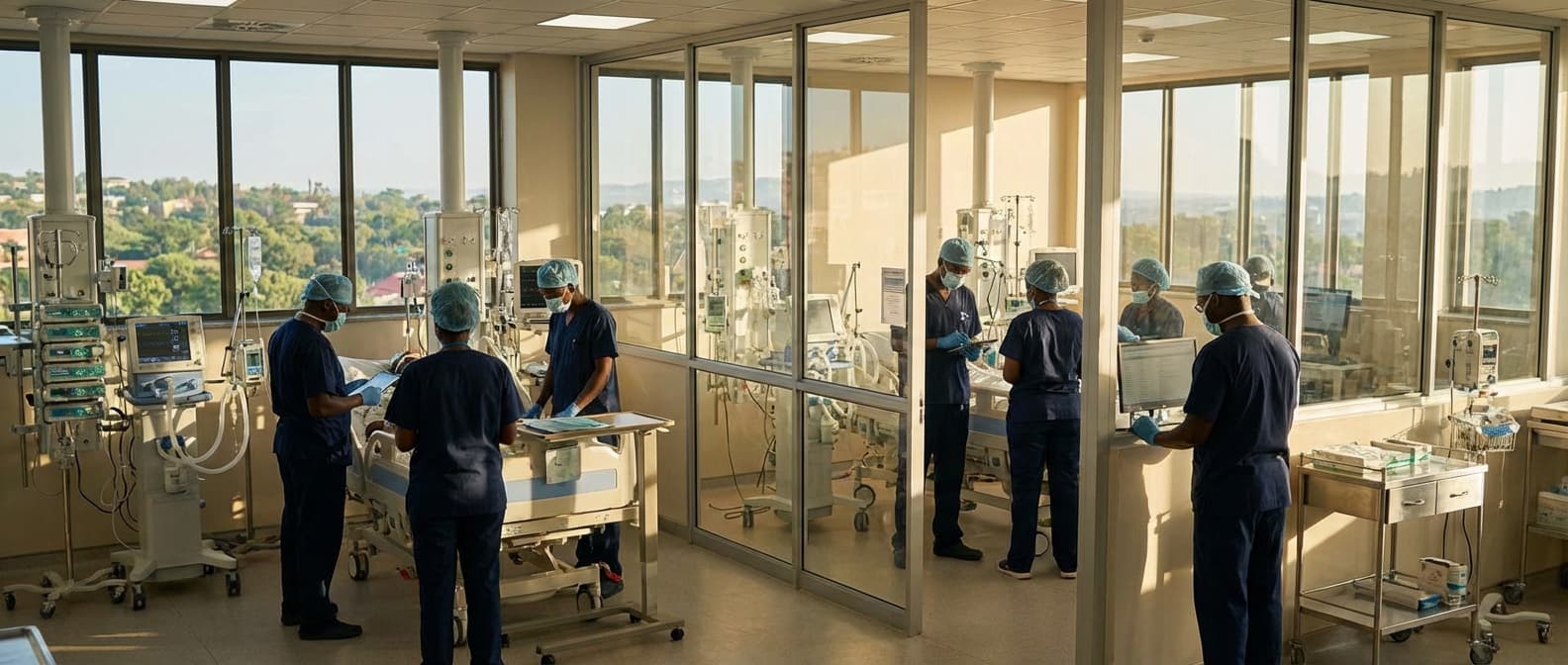
Ventilator Fleet Management & PM in Tunisia
Engineering Excellence & Technical Support
Preventive maintenance and fleet management for ICU ventilators High-standard technical execution following OEM protocols and local regulatory frameworks.
Centralized Cloud-Based Fleet Tracking
Implement a cloud-based platform for real-time monitoring of ventilator locations, operational status, and utilization metrics across all Tunisian healthcare facilities. This enables immediate identification of available units, optimal resource allocation during emergencies, and proactive maintenance scheduling.
Predictive Maintenance & IoT Integration
Leverage IoT sensors on ventilators to collect operational data (e.g., pressure, flow, battery levels). Utilize predictive analytics to anticipate potential failures and schedule preventative maintenance before critical incidents occur, minimizing downtime and ensuring patient safety.
Automated PM Scheduling & Compliance
Develop an automated system for scheduling, tracking, and documenting all preventive maintenance activities based on manufacturer recommendations and usage data. This ensures consistent adherence to PM schedules, reduces administrative burden, and maintains regulatory compliance.
What Is Ventilator Fleet Management & Pm In Tunisia?
Ventilator Fleet Management & Preventive Maintenance (PM) in Tunisia refers to the comprehensive system for overseeing, maintaining, and optimizing the performance of all mechanical ventilators within a healthcare institution's operational purview. This service encompasses a lifecycle approach, from procurement and deployment to routine servicing, repair, and eventual decommissioning of ventilator assets. The objective is to ensure consistent availability, optimal functionality, and extended operational lifespan of these critical medical devices, thereby safeguarding patient care and managing healthcare resource expenditure effectively. This management framework is crucial in an environment where resource allocation and operational efficiency are paramount, especially considering the high dependency on these devices for respiratory support in various clinical settings.
| Stakeholder/Entity | Need for Ventilator Fleet Management & PM | Typical Use Cases |
|---|---|---|
| Public Hospitals & University Hospitals (e.g., CHU Tunis, CHU Sfax) | High volume of critical care patients requiring mechanical ventilation. Need for standardized, reliable equipment across multiple departments (ICU, ER, OR). Budgetary constraints necessitate efficient resource utilization and extended equipment lifespan. | ICU Patient Management: Continuous support for patients with severe respiratory failure, sepsis, or post-operative complications. Emergency Department (ED) Stabilization: Rapid deployment and maintenance of ventilators for immediate respiratory support during critical events. Operating Room (OR) Anesthesia Support: Ensuring uninterrupted ventilation during surgical procedures. Transport Ventilation: Maintaining functional ventilators for intra-hospital and inter-facility patient transfers. |
| Private Clinics & Specialized Medical Centers (e.g., Cardiac Centers, Oncology Centers) | Specialized patient populations with unique ventilatory needs. Requirement for high-reliability equipment to support complex procedures. Emphasis on patient safety and operational continuity to maintain reputation and patient satisfaction. | Post-Surgical Recovery: Ventilator support for patients recovering from major surgeries requiring extended mechanical ventilation. Chronic Respiratory Disease Management: Long-term ventilation support for patients with conditions like COPD or neuromuscular disorders. Advanced Respiratory Therapies: Utilizing ventilators for specialized modes of ventilation (e.g., NIV, HFOV) required for specific pathologies. |
| National Health Agencies & Ministry of Health | Oversight of national healthcare infrastructure. Need for data on equipment availability and condition for strategic planning, resource allocation, and emergency preparedness (e.g., pandemic response). | National Resource Stockpiling & Allocation: Identifying available and functional ventilators for regional distribution during health crises. Epidemiological Preparedness: Assessing the national capacity for mechanical ventilation support during outbreaks. Standardization Initiatives: Developing and enforcing guidelines for ventilator procurement and maintenance across the country. |
| Biomedical Engineering Departments | Direct responsibility for the technical upkeep and operational readiness of medical equipment. Need for systematic processes to manage a diverse fleet, minimize downtime, and ensure patient safety. | Routine PM & Calibration: Executing scheduled maintenance tasks as per manufacturer recommendations. Troubleshooting & Repair: Diagnosing and rectifying malfunctions to minimize equipment unavailability. Inventory Management: Tracking asset location, service history, and consumables. New Equipment Integration: Overseeing the installation, testing, and commissioning of new ventilators. |
Key Components of Ventilator Fleet Management & PM in Tunisia
- Asset Inventory & Tracking: Establishing and maintaining a precise digital inventory of all ventilators, including make, model, serial number, acquisition date, location, and current status.
- Preventive Maintenance (PM) Scheduling: Developing and adhering to a rigorous schedule of routine inspections, calibration, cleaning, and component replacements as per manufacturer specifications and clinical protocols.
- Corrective Maintenance & Repair: Rapid response to equipment malfunctions, encompassing diagnostics, parts procurement, and skilled technical intervention to restore functionality.
- Performance Monitoring & Optimization: Analyzing usage patterns, maintenance history, and performance data to identify potential issues, optimize deployment, and forecast future needs.
- Regulatory Compliance & Documentation: Ensuring all maintenance activities and device records comply with national healthcare regulations, accreditation standards, and internal policies. Meticulous record-keeping is a cornerstone.
- Training & Competency: Providing training to clinical staff on proper ventilator operation and basic troubleshooting, and ensuring biomedical technicians possess the necessary certifications and skills.
- Budgeting & Cost Management: Developing and managing budgets for procurement, maintenance, consumables, and specialized repairs.
- Decommissioning & Disposal: Implementing safe and environmentally responsible procedures for the retirement and disposal of end-of-life ventilators.
Who Needs Ventilator Fleet Management & Pm In Tunisia?
In Tunisia, the efficient management and preventive maintenance (PM) of ventilator fleets are critical for ensuring continuous patient care and optimizing resource utilization. This service is not a luxury but a necessity for a range of healthcare providers and governmental bodies tasked with public health and medical equipment oversight.
| Customer Type | Key Departments/Stakeholders | Specific Needs/Benefits |
|---|---|---|
| Hospitals (Public & Private) | Biomedical Engineering Department, Critical Care Units (ICU, CCU), Anesthesiology Department, Respiratory Therapy Department, Procurement Department, Hospital Administration | Ensuring equipment readiness for emergencies, reducing downtime, extending equipment lifespan, compliance with safety standards, cost-effective maintenance, proactive identification of potential failures, optimized inventory management, better budget forecasting for equipment replacement. |
| Clinics and Specialized Medical Centers | Clinical Directors, Lead Physicians, Technical Support Staff, Administration | Maintaining specialized respiratory care capabilities, ensuring patient safety, minimizing disruption to outpatient services, efficient use of limited resources. |
| Emergency Medical Services (EMS) / Ambulance Services | Operations Managers, Fleet Managers, Lead Paramedics, Technical Maintenance Personnel | Guaranteed functionality of life-saving equipment during transport, rapid response readiness, adherence to strict operational protocols, safe patient transfers, equipment reliability in diverse environments. |
| Ministry of Health (Tunisia) | Directorate of Health Infrastructure, Directorate of Pharmaceutical and Medical Equipment, Regional Health Directorates, National Health Security Units | National healthcare system resilience, strategic resource allocation, public health emergency preparedness, ensuring quality of care nationwide, data for policy-making and investment, standardization of maintenance practices, oversight of public health facilities. |
| Military and National Guard Medical Services | Medical Logistics Command, Field Medical Units, Hospital Commands | Operational readiness for deployed forces, maintenance of high-performance equipment in challenging conditions, self-sufficiency in medical support, adherence to military standards and protocols. |
| Research and Teaching Hospitals | Research Department Heads, Clinical Training Coordinators, Biomedical Engineering | Reliable equipment for research studies, ensuring uninterrupted training for medical professionals, access to up-to-date technology, data integrity for research outcomes. |
| Rental and Leasing Companies of Medical Equipment | Operations Managers, Maintenance Supervisors, Sales and Customer Service | Maximizing asset utilization, minimizing repair costs, ensuring client satisfaction and contract compliance, maintaining a reliable rental fleet, efficient scheduling of maintenance and repairs, brand reputation. |
Target Customers & Departments for Ventilator Fleet Management & PM in Tunisia
- Hospitals (Public and Private)
- Clinics and Specialized Medical Centers
- Emergency Medical Services (EMS) / Ambulance Services
- Ministry of Health (and its regional directorates)
- Military and National Guard Medical Services
- Research and Teaching Hospitals
- Rental and Leasing Companies of Medical Equipment
Ventilator Fleet Management & Pm Process In Tunisia
This document outlines the typical workflow for ventilator fleet management and preventative maintenance (PM) processes in Tunisia, from the initial inquiry or identification of a need to the successful execution of the maintenance. This process aims to ensure the optimal functioning and longevity of critical medical equipment, thereby supporting patient care.
| Stage | Description | Key Activities | Responsible Parties | Documentation/Tools |
|---|---|---|---|---|
| Initiation of a request for PM or a need for a specific ventilator's service, often triggered by scheduled PM cycles, reported malfunctions, or new equipment acquisition. | Receiving service requests, identifying maintenance needs (scheduled vs. unscheduled), assessing urgency. | Healthcare facility staff (nurses, biomedical engineers), Hospital administration, Ministry of Health (for national fleets). | Service request forms, Email, Phone calls, Hospital Information System (HIS). |
| Clearly identifying the specific ventilator(s) requiring attention and prioritizing them based on urgency, patient impact, and fleet criticality. | Verifying equipment serial numbers and model, assessing the impact of equipment downtime, prioritizing based on clinical need and availability of backup units. | Biomedical Engineering department, Clinical department heads. | Equipment inventory database, Asset tags, Maintenance logs. |
| Formalizing the maintenance request into a work order that details the required tasks, parts, and personnel. | Creating a detailed work order, specifying the type of maintenance (PM, repair), description of issues, required parts, estimated labor hours. | Biomedical Engineering department, Maintenance team lead. | Work Order Management System (WOMS), CMMS (Computerized Maintenance Management System), Manual work order forms. |
| Planning the execution of the work order by assigning personnel and scheduling the maintenance to minimize disruption to clinical operations. | Reviewing technician availability, scheduling the maintenance appointment (considering operating hours, patient schedules), ordering necessary parts and consumables. | Biomedical Engineering department, Scheduling coordinator, Procurement department. | WOMS/CMMS, Calendar, Parts inventory system, Procurement orders. |
| Performing the scheduled maintenance tasks on the ventilator according to manufacturer guidelines and established protocols. | Conducting pre-maintenance checks, performing cleaning and lubrication, testing all functions and alarms, replacing worn parts and filters, calibrating the device. | Trained biomedical technicians, Service engineers (if applicable). | Manufacturer's service manual, PM checklists, Diagnostic tools, Calibration equipment, PPE. |
| Ensuring the ventilator is functioning correctly post-maintenance and meticulously documenting all performed activities and findings. | Performing post-maintenance functional tests, documenting all tasks completed, parts replaced, test results, and any recommendations. Updating equipment history. | Biomedical technicians, Quality assurance personnel. | PM checklists, Test reports, Service tags, WOMS/CMMS update, Equipment service history log. |
| Generating reports on PM activities, equipment performance, and costs to inform decision-making and identify trends. | Compiling data on completed PMs, equipment downtime, repair costs, parts usage. Analyzing trends to identify recurring issues or areas for improvement. | Biomedical Engineering department management, Hospital administration. | WOMS/CMMS reports, Financial reports, Performance dashboards. |
| Utilizing insights from reporting and analysis to optimize PM procedures, improve equipment reliability, and reduce operational costs. | Reviewing PM effectiveness, updating procedures based on lessons learned, providing feedback to manufacturers, implementing training for technicians. | Biomedical Engineering department leadership, Quality improvement teams. | Process improvement frameworks, Training materials, Feedback mechanisms. |
Key Stages of Ventilator Fleet Management & PM Workflow
- Inquiry & Needs Assessment
- Equipment Identification & Prioritization
- Work Order Generation
- Scheduling & Resource Allocation
- Preventative Maintenance Execution
- Post-Maintenance Verification & Documentation
- Reporting & Analysis
- Continuous Improvement
Ventilator Fleet Management & Pm Cost In Tunisia
Managing a ventilator fleet in Tunisia involves various costs, primarily driven by acquisition, maintenance, and operational expenses. Effective fleet management ensures optimal utilization, timely servicing, and cost-efficiency. Preventive maintenance (PM) is crucial for extending the lifespan of these critical medical devices and minimizing unexpected breakdowns, which can have severe consequences in a healthcare setting. Understanding the pricing factors and ranges in Tunisian Dinars (TND) is essential for budgeting and strategic planning.
| Cost Category | Description & Key Influences | Estimated Price Range (TND) |
|---|---|---|
| Ventilator Acquisition (New) | Depends on type (ICU, transport), brand, features (e.g., advanced monitoring). Prices can vary significantly. | 50,000 - 300,000+ TND per unit |
| Ventilator Acquisition (Refurbished) | Lower initial cost, but depends on condition, warranty, and supplier reliability. A cost-effective option for expanding fleet size. | 20,000 - 100,000 TND per unit |
| Annual PM Contract (OEM) | Comprehensive service by the original manufacturer. Typically includes scheduled maintenance, labor, and some parts. Premium pricing. | 5,000 - 15,000 TND per unit/year |
| Annual PM Contract (Third-Party) | Often more competitive pricing than OEM. Quality and scope of service can vary. Requires careful vetting of providers. | 3,000 - 10,000 TND per unit/year |
| Ad-hoc PM Service | Cost per service visit, including labor and parts. Higher risk of unexpected costs if frequent repairs are needed. | 500 - 2,000 TND per visit (excluding major parts) |
| Spare Parts | Cost varies greatly by component (sensors, batteries, tubing, boards). Availability can impact repair time and cost. | 100 - 10,000+ TND per part |
| Technician Labor (Internal) | Salary and benefits for in-house biomedical engineers. Requires investment in training and tools. | 2,000 - 5,000 TND per month (salary) |
| Technician Labor (External) | Hourly or daily rates for external service technicians. Can be more flexible for smaller fleets or specialized repairs. | 200 - 800 TND per day |
| Calibration & Certification | Ensuring the ventilator meets performance standards. May be part of a PM contract or a separate fee. | 150 - 500 TND per calibration |
| Software Updates/Licensing | Some advanced ventilators may require ongoing software licenses or fees for updates. | 500 - 2,000 TND per year (if applicable) |
Key Pricing Factors for Ventilator Fleet Management & PM in Tunisia
- Ventilator Acquisition Costs (New vs. Refurbished)
- Service and Maintenance Contracts (OEM vs. Third-Party)
- Spare Parts Availability and Cost
- Labor Costs for Technicians (Internal vs. External)
- Calibration and Certification Fees
- Software Updates and Licensing
- Transportation and Logistics for Servicing
- Training for Biomedical Engineers and Technicians
- Inventory Management Systems
- Insurance and Liability
Affordable Ventilator Fleet Management & Pm Options
Managing a ventilator fleet effectively and ensuring optimal performance through preventative maintenance (PM) are crucial for healthcare facilities. Beyond basic service, exploring value bundles and implementing smart cost-saving strategies can significantly reduce overall expenditure while enhancing patient care and operational efficiency. This approach moves beyond reactive repairs to a proactive and strategic management of critical respiratory equipment.
| Value Bundle Type | Description | Cost-Saving Strategies Involved | Key Benefits |
|---|---|---|---|
| Preventative Maintenance (PM) Only Bundle | Scheduled, routine inspections, calibration, and servicing of ventilators to prevent breakdowns and ensure optimal function. | Bulk purchasing of PM services, standardized service protocols, early detection of potential issues. | Reduced unexpected failures, extended equipment lifespan, improved patient safety, predictable maintenance costs. |
| PM + Minor Repair Bundle | Combines scheduled PM with coverage for common, minor repairs within a defined timeframe or service level agreement. | Reduced labor costs for routine repairs, streamlined service calls, potential for bundled parts discounts. | Faster resolution of minor issues, less downtime, optimized technician utilization. |
| Comprehensive Service Contract Bundle | All-inclusive package covering scheduled PM, unlimited (or capped) minor and major repairs, parts, labor, and sometimes loaner equipment. | Predictable annual costs, significant discounts on parts and labor compared to ad-hoc services, risk transfer to the provider. | Maximum uptime, complete peace of mind, budget certainty, reduced administrative burden. |
| Fleet Management & Optimization Bundle | Includes PM, repair services, alongside data analytics for fleet utilization, inventory management, and performance tracking. | Identifying underutilized or overutilized equipment, optimizing deployment, proactive replacement planning, data-driven decision making. | Improved resource allocation, reduced capital expenditure through smarter purchasing, enhanced operational efficiency. |
| Extended Warranty & PM Bundle | Combines manufacturer's extended warranty with ongoing PM services to cover equipment beyond the initial warranty period. | Secures long-term coverage at a potentially lower rate than purchasing separately, reduces risk of costly post-warranty repairs. | Longer equipment lifespan with financial protection, predictable costs for older equipment. |
Key Components of Affordable Ventilator Fleet Management & PM
- Proactive Preventative Maintenance (PM) Schedules
- Comprehensive Service Contracts
- Bundled PM and Repair Services
- Extended Warranty Options
- Fleet Utilization & Optimization Analysis
- Staff Training and Competency Development
- Strategic Parts Management
- Third-Party Service Provider Evaluation
- Technology Integration for Monitoring and Reporting
- End-of-Life Planning and Replacement Strategies
Verified Providers In Tunisia
In the burgeoning landscape of healthcare in Tunisia, identifying truly 'Verified Providers' is paramount for ensuring quality, safety, and trust. Franance Health stands out as a beacon of this verification process, offering a robust credentialing system that instills confidence in patients seeking medical services. This JSON output details what constitutes a verified provider and why Franance Health's approach is the superior choice for both patients and healthcare professionals.
| Franance Health Verification | Benefit to Patients | Benefit to Providers | Why It's the Best Choice |
|---|---|---|---|
| Comprehensive Credentialing Process | Access to demonstrably qualified and ethical medical professionals, reducing the risk of misdiagnosis or substandard treatment. | Enhanced reputation and visibility among a discerning patient base; streamlined process for showcasing expertise and trustworthiness. | Offers a clear, transparent benchmark for quality, empowering patients to make informed decisions and providing a competitive edge for providers committed to excellence. |
| Focus on Patient Safety and Ethics | Ensures providers prioritize patient well-being and adhere to the highest ethical standards, fostering a safe and trustworthy healthcare experience. | Attracts patients who value ethical practice and patient-centric care, leading to more positive and fulfilling professional relationships. | Moves beyond simple licensing to encompass a holistic approach to patient care, setting a new standard for trust and accountability in Tunisian healthcare. |
| Continuous Monitoring and Re-verification | Provides ongoing assurance that providers maintain their high standards over time, adapting to new medical advancements and patient expectations. | Encourages continuous professional development and reinforces a commitment to excellence, fostering long-term career growth and patient loyalty. | Guarantees that the 'verified' status remains meaningful and up-to-date, unlike one-time credentialing, offering enduring peace of mind to patients. |
| Integration of Patient Feedback | Allows patients to contribute to the verification process, providing real-world insights into provider performance and patient satisfaction. | Offers valuable feedback for professional growth and improvement, helping providers to refine their services and build stronger patient relationships. | Creates a dynamic and responsive system that prioritizes the patient experience, ensuring that verified providers are not only medically competent but also excellent communicators and caregivers. |
What Makes a Healthcare Provider 'Verified' by Franance Health?
- Rigorous background checks on all medical professionals.
- Verification of medical licenses and certifications from accredited institutions.
- Confirmation of specialized training and continuing education.
- Patient feedback and satisfaction review integration.
- Adherence to ethical medical practices and patient care standards.
- Proof of professional liability insurance.
- Regular re-credentialing to ensure ongoing compliance.
Scope Of Work For Ventilator Fleet Management & Pm
This document outlines the Scope of Work (SOW) for Ventilator Fleet Management and Preventive Maintenance (PM) services. It details the technical deliverables and standard specifications required to ensure the optimal performance, reliability, and longevity of the organization's ventilator fleet. The objective is to establish a comprehensive program for the proactive maintenance, repair, and inventory management of all medical ventilators.
| Technical Deliverable | Description | Standard Specification / Requirement | Frequency / Timeline |
|---|---|---|---|
| Ventilator Fleet Inventory Report | Detailed list of all ventilators, including asset tags, model, serial number, location, and service history. | Must include all active and retired ventilators within the fleet. Data accuracy and completeness are paramount. | Quarterly |
| Preventive Maintenance (PM) Schedule | Master schedule outlining all PM tasks for each ventilator model. | Based on manufacturer recommendations, regulatory requirements, and clinical usage. Include specific tests and acceptance criteria. | Annually reviewed and updated |
| PM Completion Reports | Documentation of all completed PM tasks for each ventilator. | Must include date of service, technician performing service, parts replaced, calibration results, and functional test outcomes. Sign-off by qualified personnel. | Upon completion of each PM cycle |
| Repair Work Orders | Record of all unscheduled maintenance and repairs performed on ventilators. | Must include description of fault, troubleshooting steps, parts used, time spent, and resolution. Evidence of successful post-repair testing. | Upon completion of each repair |
| Spare Parts Inventory Report | List of all spare parts for ventilators, including quantity on hand, reorder points, and lead times. | Critical parts must be identified and maintained at appropriate stock levels to minimize downtime. Include part numbers and manufacturer. | Monthly |
| Equipment Downtime Analysis Report | Analysis of equipment downtime, identifying common failure modes and root causes. | Includes total downtime hours, average downtime per incident, and impact on clinical operations. Recommendations for improvement. | Quarterly |
| Compliance Audit Report | Report confirming adherence to all regulatory and internal PM requirements. | Includes evidence of documentation, calibration records, and training. Any non-compliance issues and corrective actions. | Annually |
| Service Manuals and Technical Documentation | Access to up-to-date service manuals, schematics, and troubleshooting guides for all ventilator models. | Must be readily available to technicians. Digital or hard copy format as specified. | On-demand / maintained |
| Manufacturer Recall Notification and Action Plan | Process for tracking and responding to manufacturer recalls. | Includes documented plan for identifying affected units, implementing corrective actions, and reporting completion. | As needed |
| Training Records (if applicable) | Documentation of training provided to in-house staff on specific ventilator models and PM procedures. | Includes attendee list, training content, and date of training. | As needed |
Key Activities and Responsibilities
- Comprehensive inventory management of the entire ventilator fleet, including serial numbers, model numbers, acquisition dates, and current location.
- Development and implementation of a robust Preventive Maintenance (PM) program tailored to manufacturer recommendations and regulatory requirements.
- Performance of scheduled PM tasks, including cleaning, calibration, functional testing, and replacement of worn or expired parts.
- Prompt and efficient response to unscheduled maintenance requests and repairs to minimize downtime.
- Troubleshooting and diagnosis of equipment malfunctions.
- Management of spare parts inventory for ventilators, ensuring availability of critical components.
- Documentation of all maintenance activities, including dates, actions taken, parts used, and technician involved.
- Compliance with all relevant regulatory standards and accreditation requirements (e.g., FDA, Joint Commission).
- Regular reporting on fleet status, PM compliance, repair trends, and budget utilization.
- Training of in-house biomedical engineering staff on specific ventilator models and PM procedures (if applicable).
- Risk assessment and management related to equipment failure and operational readiness.
- End-of-life assessment and recommendations for replacement or decommissioning.
- Coordination with manufacturers for technical support, firmware updates, and recalls.
- Quality assurance and control for all maintenance and repair activities.
Service Level Agreement For Ventilator Fleet Management & Pm
This Service Level Agreement (SLA) outlines the performance expectations and guarantees for Ventilator Fleet Management and Preventative Maintenance (PM) services provided by [Provider Name] to [Client Name]. It defines critical response times for service requests and uptime guarantees for the managed ventilator fleet.
| Service Category | Response Time Target | Resolution Time Target (Initial) | Uptime Guarantee |
|---|---|---|---|
| Critical System Failure (Corrective Maintenance) | 1 hour (from notification) | 4 hours (to commence diagnosis and repair) | 98.5% of scheduled operating hours |
| High Priority Issue (Corrective Maintenance) | 2 business hours (from notification) | 8 business hours (to commence diagnosis and repair) | 98.5% of scheduled operating hours |
| Standard Maintenance Request (Preventative Maintenance) | Scheduled per agreed-upon plan | N/A (scheduled) | N/A (scheduled) |
| Preventative Maintenance (PM) Completion | N/A (scheduled) | N/A (scheduled) | Contributes to overall fleet reliability |
Key Definitions
- Ventilator Fleet: All ventilators owned or leased by [Client Name] and managed under this SLA.
- Preventative Maintenance (PM): Scheduled, routine maintenance performed on ventilators according to manufacturer specifications and industry best practices.
- Corrective Maintenance: Unscheduled maintenance required to address a malfunction or failure of a ventilator.
- Service Request: A formal request for maintenance or support related to the ventilator fleet.
- Critical System Failure: A complete malfunction of a ventilator rendering it unusable for patient care.
- High Priority Issue: A partial malfunction or performance degradation of a ventilator that requires immediate attention but does not render it completely unusable.
- Standard Maintenance Request: A request for scheduled PM or non-urgent repairs.
Frequently Asked Questions

Ready when you are
Let's scope your Ventilator Fleet Management & PM in Tunisia project in Tunisia.

Scaling healthcare logistics and technical systems across the entire continent.