
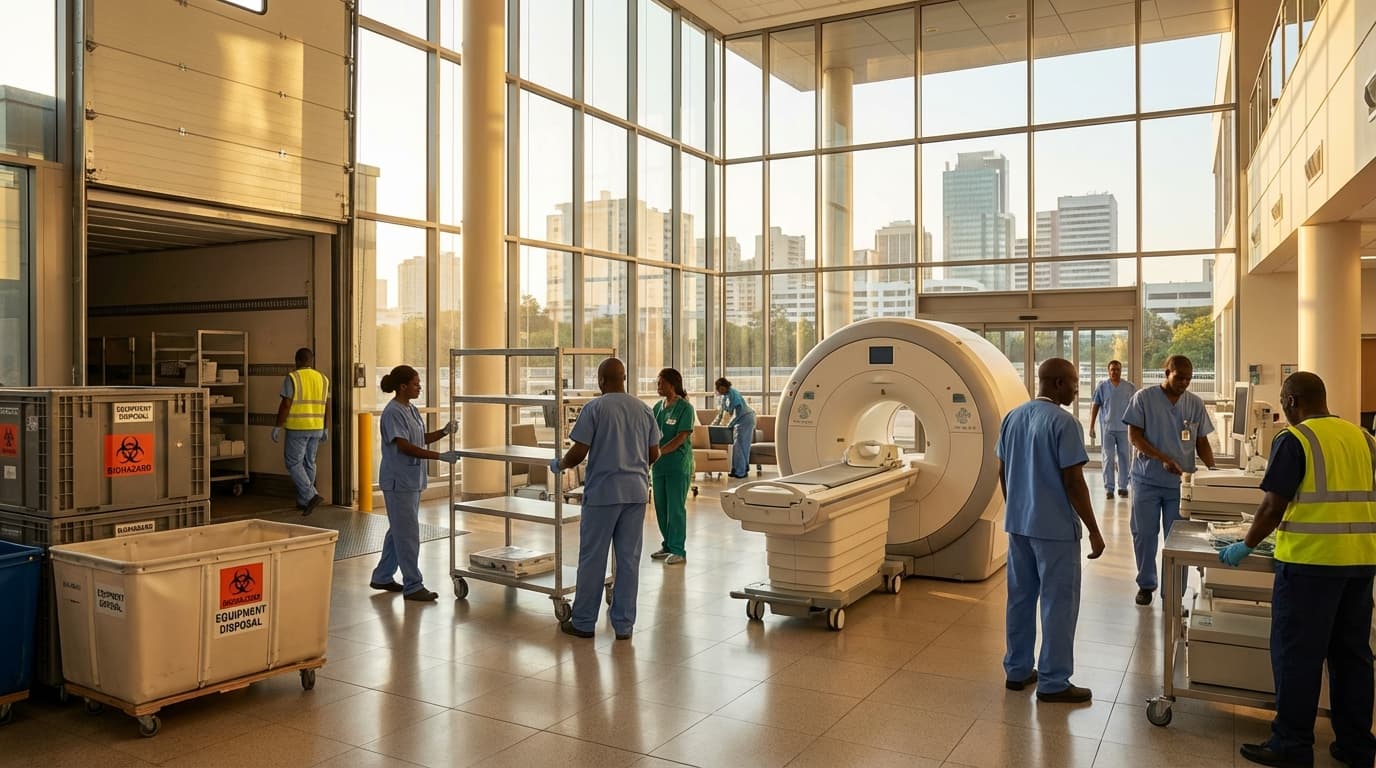
Decommissioning Service for Medical Devices in Tunisia
Engineering Excellence & Technical Support
Decommissioning Service for Medical Devices High-standard technical execution following OEM protocols and local regulatory frameworks.
Regulatory Compliance Assurance
Ensuring strict adherence to Tunisian Ministry of Health (Ministère de la Santé) and international decommissioning regulations, including data sanitization and environmental disposal protocols for medical devices, mitigating legal and operational risks for healthcare facilities.
Secure Data Destruction & Privacy Protection
Implementing certified data sanitization methods (e.g., DoD 5220.22-M, NIST 800-88) to irrevocably erase all patient and operational data from medical equipment, safeguarding sensitive information and complying with Tunisian data privacy laws (e.g., Law No. 2008-1 for Personal Data Protection).
Environmentally Responsible Disposal & Recycling
Facilitating the responsible disposal of medical devices in accordance with Tunisian environmental regulations, prioritizing component recycling and proper hazardous material management to minimize ecological impact and promote sustainability within the healthcare sector.
What Is Decommissioning Service For Medical Devices In Tunisia?
Decommissioning service for medical devices in Tunisia refers to the formal process of taking a medical device out of service. This involves a structured set of procedures to ensure the device is safely and responsibly retired, preventing its reuse in an unsafe condition, safeguarding patient and staff data, and complying with environmental regulations for disposal. The service is critical for maintaining patient safety, data integrity, regulatory compliance, and ethical environmental stewardship within Tunisia's healthcare ecosystem.
| Who Needs Decommissioning Service? | Typical Use Cases |
|---|---|
| Hospitals and Clinics (Public and Private) | End-of-life replacement of imaging equipment (MRI, CT scanners, X-ray machines). |
| Diagnostic Laboratories | Obsolescence or failure of analytical instruments (spectrophotometers, centrifuges). |
| Research Institutions | Upgrade or retirement of specialized research apparatus. |
| Medical Device Manufacturers/Distributors (in Tunisia) | Return of recalled or damaged units; management of demonstration or prototype devices. |
| Government Health Agencies | Phasing out of outdated public health infrastructure; consolidation of medical assets. |
| Specialized Healthcare Facilities (e.g., Dialysis Centers, Surgical Centers) | Replacement of critical patient monitoring or treatment devices (dialysis machines, anesthesia workstations). |
| Companies involved in Medical Device Refurbishment or Recycling | Ensuring devices are properly retired before refurbishment or certified for material recovery. |
| Any entity possessing regulated medical devices that are no longer in use or are being replaced. | Cybersecurity risk mitigation by securely erasing data from network-connected devices. |
Key Stages of Medical Device Decommissioning in Tunisia
- Secure Data Erasure/Destruction: Implementing validated methods to permanently remove or destroy sensitive patient data stored on the device, adhering to Tunisian data privacy laws.
- Functional Verification of Non-Functionality: Confirming the device is no longer operational or repairable to prevent inadvertent reactivation or unauthorized use.
- Cleaning and Decontamination: Thoroughly cleaning and decontaminating the device to eliminate biohazards and prevent the spread of infections.
- Asset Retirement Documentation: Creating comprehensive records of the decommissioning process, including device identification, reasons for decommissioning, dates, personnel involved, and disposal methods.
- Environmental Disposal: Managing the disposal of the device and its components in accordance with Tunisian environmental regulations, including hazardous waste management protocols.
- Certificate of Decommissioning: Issuing formal documentation confirming the device has been officially retired from service.
Who Needs Decommissioning Service For Medical Devices In Tunisia?
In Tunisia, the need for professional medical device decommissioning services is driven by a variety of healthcare facilities and entities facing regulatory compliance, space optimization, and responsible disposal requirements. This specialized service ensures that outdated, malfunctioning, or end-of-life medical equipment is safely and environmentally soundly retired from service, preventing potential data breaches, biohazards, and regulatory penalties.
Target customers for these services range from large public hospitals and private clinics to smaller specialized medical practices, research institutions, and even government health agencies.
| Customer Segment | Typical Departments Involved | Primary Needs/Drivers |
|---|---|---|
| Hospitals (Public & Private) | Biomedical Engineering/Department, IT Department, Procurement, Facilities Management, Clinical Departments (e.g., Radiology, Surgery, ICU) | Regulatory compliance (e.g., data privacy, environmental standards), space optimization, cost reduction from maintaining obsolete equipment, risk mitigation (e.g., patient safety, data security), asset management |
| Clinics & Medical Centers | Clinic Management, Technical Staff (if any), IT (if applicable) | Space optimization, compliance with local regulations, responsible disposal, upgrading to new technology |
| Specialized Medical Practices | Practice Owner/Manager, Lead Physician, Administrative Staff | Similar to clinics, with a focus on specialized equipment retirement and compliance with specific medical field regulations |
| Diagnostic Laboratories | Laboratory Director, Technical Manager, Quality Assurance Department | Secure disposal of diagnostic equipment, compliance with lab accreditation standards, managing inventory of specialized instruments |
| Research & Development Facilities | Research Leads, Lab Managers, IT Security, Facilities Management | Secure data destruction from research equipment, responsible disposal of experimental apparatus, compliance with R&D regulations |
| Government Health Agencies | Asset Management Departments, Public Health Infrastructure Divisions, Regulatory Compliance Officers | Oversight of public health equipment lifecycle, ensuring compliance across public health facilities, large-scale decommissioning projects |
| Medical Equipment Leasing Companies | Asset Recovery Department, Operations Management, Legal Department | Managing the end-of-lease lifecycle of medical devices, ensuring compliant return or disposal of leased assets, data security for returned equipment |
Target Customers and Departments for Medical Device Decommissioning in Tunisia
- Hospitals (Public & Private)
- Clinics & Medical Centers
- Specialized Medical Practices (e.g., Cardiology, Radiology, Oncology)
- Diagnostic Laboratories
- Research & Development Facilities
- Government Health Agencies
- Medical Equipment Leasing Companies
Decommissioning Service For Medical Devices Process In Tunisia
The decommissioning of medical devices in Tunisia involves a structured process to ensure safe, compliant, and environmentally responsible removal from service. This workflow outlines the key stages, from initial inquiry to the final execution of the decommissioning service.
| Stage | Key Activities | Responsible Party | Tunisian Regulatory Focus |
|---|---|---|---|
| Needs identification, initial discussion, scope definition. | Healthcare Facility, Decommissioning Provider | Understanding of facility's needs and basic regulatory awareness. |
| Device cataloging, location identification, hazard assessment. | Decommissioning Provider | Identification of devices potentially subject to specific handling regulations. |
| Detailed plan, methodology, timelines, cost estimation. | Decommissioning Provider | Alignment with Tunisian standards for medical device management and waste. |
| Formal agreement, terms, responsibilities, liability. | Healthcare Facility, Decommissioning Provider | Legal framework for compliant service delivery. |
| Execution plan, scheduling, resource allocation, permit acquisition. | Decommissioning Provider | Compliance with Ministry of Health and environmental permits for specific devices/waste. |
| Secure erasure or physical destruction of sensitive data. | Decommissioning Provider | Adherence to patient data privacy laws (e.g., potentially influenced by GDPR principles if applicable). |
| Safe removal, disconnection, disassembly, hazard mitigation. | Decommissioning Provider | Safe handling practices, environmental protection during removal. |
| Secure loading and transport to disposal/recycling sites. | Decommissioning Provider | Regulations for transport of medical devices and potentially hazardous materials. |
| Processing at approved facilities, recycling, hazardous waste disposal. | Decommissioning Provider | Tunisian Ministry of Environment and Ministry of Health regulations on waste disposal, licensed facilities. |
| Issuance of decommissioning certificate, record keeping. | Decommissioning Provider | Proof of compliant removal and disposal for the facility's records. |
| Summary report, waste manifests, final confirmation. | Decommissioning Provider | Confirmation of full regulatory compliance for the entire process. |
Decommissioning Service for Medical Devices Process in Tunisia: Workflow
- {"title":"1. Inquiry and Initial Consultation","description":"The process begins when a healthcare facility (hospital, clinic, laboratory) or a medical device owner identifies the need to decommission one or more medical devices. This could be due to obsolescence, malfunction, upgrade, or regulatory changes. The facility contacts a specialized decommissioning service provider. The initial consultation involves understanding the scope of the decommissioning, the types and quantities of devices, the facility's specific requirements, and any relevant regulatory considerations in Tunisia."}
- {"title":"2. Site Assessment and Device Inventory","description":"A representative from the decommissioning service provider conducts a site visit. This assessment involves: cataloging each device to be decommissioned (model, serial number, condition), identifying its location within the facility, assessing any safety hazards associated with the device (e.g., radioactive components, hazardous materials), and evaluating access for removal. A detailed inventory is created."}
- {"title":"3. Proposal and Quotation","description":"Based on the site assessment and inventory, the decommissioning service provider prepares a comprehensive proposal. This document outlines the proposed decommissioning plan, including: the methodology for safe disassembly or removal, transportation logistics, waste management and disposal strategies, data destruction procedures (if applicable to the device), compliance with Tunisian regulations (e.g., Ministry of Health guidelines, environmental protection agencies), estimated timelines, and a detailed cost quotation."}
- {"title":"4. Contract and Agreement","description":"Upon acceptance of the proposal and quotation, a formal contract is established between the healthcare facility and the decommissioning service provider. This agreement legally binds both parties and clearly defines responsibilities, service deliverables, payment terms, liability, and insurance coverage."}
- {"title":"5. Planning and Permitting","description":"The decommissioning service provider develops a detailed execution plan. This includes scheduling, resource allocation (personnel, equipment), safety protocols, and coordination with the facility's staff. If specific permits are required by Tunisian authorities for the removal or disposal of certain types of devices (e.g., those containing hazardous substances), these are identified and applied for at this stage."}
- {"title":"6. Data Destruction (if applicable)","description":"For devices containing sensitive patient data or network connectivity, a critical step is secure data destruction. This is performed according to industry best practices and regulatory requirements to ensure patient privacy and data integrity. Methods may include physical destruction, overwriting, or degaussing, depending on the device and data type."}
- {"title":"7. Safe Decommissioning and Disassembly","description":"On the scheduled date, the decommissioning team arrives at the facility. They execute the decommissioning plan, prioritizing safety. This may involve powering down devices, disconnecting utilities, safely draining fluids, removing hazardous components (which are handled separately), and disassembling the devices as necessary for safe transport and disposal. Environmental considerations are paramount."}
- {"title":"8. Transportation","description":"Once disassembled or prepared for transport, the medical devices and their components are carefully loaded onto specialized vehicles. Transportation is managed by the decommissioning provider, ensuring compliance with any Tunisian regulations for the transport of medical waste or potentially hazardous materials."}
- {"title":"9. Waste Management and Disposal/Recycling","description":"The collected devices and their components are transported to approved facilities for proper waste management. This can involve: recycling of salvageable materials, environmentally sound disposal of non-recyclable or hazardous components at licensed facilities, or transfer to specialized treatment centers. The goal is to minimize environmental impact and comply with Tunisian waste disposal laws."}
- {"title":"10. Documentation and Certification","description":"The decommissioning service provider issues a Certificate of Decommissioning to the healthcare facility. This document serves as proof that the devices have been safely and compliantly removed from service. It typically includes details of the devices decommissioned, the date of service, and confirmation of adherence to disposal procedures. Records of the entire process are maintained by the provider."}
- {"title":"11. Final Reporting and Closure","description":"A final report may be provided to the healthcare facility summarizing the decommissioning process, including waste disposal manifests, relevant certifications, and confirmation of compliance with all applicable Tunisian regulations. This marks the closure of the decommissioning service engagement."}
Decommissioning Service For Medical Devices Cost In Tunisia
Decommissioning medical devices in Tunisia involves a range of costs influenced by several key factors. These factors determine the overall price, which can vary significantly. The process typically includes secure data destruction, proper disposal of hazardous materials, and compliance with local environmental and health regulations. The specific type of medical device, its complexity, and its hazardous material content are primary drivers of cost. Larger and more complex devices, or those containing radioactive or biohazardous components, will naturally incur higher decommissioning fees due to specialized handling and disposal requirements. The chosen decommissioning method (e.g., on-site versus off-site dismantling, specific sterilization techniques) also impacts pricing. Furthermore, the vendor's reputation, their adherence to international standards, and the comprehensiveness of their service offering (including documentation and certificates of destruction) will influence their pricing structure. The Tunisian regulatory framework for medical device disposal is also a significant consideration, with potential fees associated with permits or waste management.
| Device Category | Estimated Cost Range (TND) | Notes |
|---|---|---|
| Small Laboratory Equipment (e.g., centrifuges, microscopes) | 200 - 700 TND | Generally straightforward; minimal hazardous materials. |
| Imaging Equipment (e.g., X-ray machines, ultrasound devices) | 800 - 3,500 TND | May contain regulated components (e.g., lead shielding, cooling fluids); data sanitization crucial. |
| Sterilization Equipment (e.g., autoclaves) | 500 - 2,000 TND | Requires safe handling of pressurized systems and potentially residual chemicals. |
| Large Diagnostic/Therapeutic Equipment (e.g., CT scanners, MRI machines) | 2,500 - 10,000+ TND | Complex systems with significant hazardous materials, requiring specialized dismantling and disposal; potential for valuable component recovery impacting net cost. |
| Anesthesia Machines & Ventilators | 400 - 1,500 TND | Involves handling gas cylinders, hoses, and potentially biohazard residues. |
| General Hospital Furniture & Non-Powered Equipment | 50 - 300 TND | Lower cost; primarily focused on general waste disposal if not categorized as hazardous. |
Key Pricing Factors for Medical Device Decommissioning in Tunisia
- Device Type and Complexity: Larger, more intricate, or specialized medical equipment often requires more labor and expertise for decommissioning.
- Hazardous Material Content: Devices containing radioactive isotopes, biohazardous materials, heavy metals, or refrigerants will incur higher disposal costs due to specialized handling and treatment requirements.
- Decommissioning Method: On-site dismantling versus off-site processing, including any necessary sterilization or decontamination steps.
- Vendor Expertise and Reputation: Established companies with proven track records and specialized certifications may command higher fees but offer greater assurance.
- Scope of Service: Whether the service includes transportation, documentation, data destruction, and waste certificates.
- Regulatory Compliance: Adherence to Tunisian environmental, health, and safety regulations, which may involve permit fees or specific disposal protocols.
- Volume of Devices: For bulk decommissioning, some providers might offer tiered pricing or discounts.
- Urgency of Service: Expedited decommissioning services may incur additional charges.
Affordable Decommissioning Service For Medical Devices Options
Decommissioning medical devices is a critical but often overlooked aspect of healthcare facility management. It involves the secure and compliant removal of equipment from service, ensuring data privacy, environmental responsibility, and cost-effectiveness. Finding affordable options is paramount, especially for smaller clinics or facilities with budget constraints. This service encompasses a range of activities, from data sanitization and physical destruction to responsible disposal and recycling. Partnering with specialized providers can offer significant value through carefully constructed 'value bundles' and strategic cost-saving approaches.
| Value Bundle Component | Description | Cost-Saving Strategy |
|---|---|---|
| Comprehensive Data Security Package | Includes multiple methods of data sanitization (software wiping, physical destruction) with certification. | Bundling data sanitization with physical decommissioning often yields bulk discounts. Prioritizing certified data destruction reduces risk of costly breaches and fines. |
| Environmentally Conscious Disposal & Recycling | Partnership with certified e-waste recyclers, maximizing material recovery and minimizing landfill waste. | Negotiate tiered pricing based on volume. Negotiate rebates for devices or components with resale value. Focusing on recyclers with strong environmental certifications can also qualify for potential tax incentives or grants. |
| Flexible Service Tiers (Basic, Standard, Premium) | Offers options based on the complexity and security requirements of the devices. | Allows facilities to pay only for the services they need, avoiding overspending on unnecessary features. Higher tiers may include expedited services or more extensive reporting. |
| Scheduled Decommissioning Campaigns | Consolidating multiple device decommissioning projects into a single service agreement. | Reduces logistical costs and allows for better negotiation power with providers due to predictable volume. This can also minimize operational disruption. |
| Asset Management Integration | Services that seamlessly integrate with existing asset tracking software or provide new solutions. | Streamlines the process, reduces manual data entry errors, and provides clear visibility, preventing unnecessary equipment replacement costs. Automated tracking can also identify devices eligible for resale or donation. |
| Long-Term Maintenance & Support Contracts | Offering bundled decommissioning services with ongoing equipment maintenance contracts. | Providers may offer discounted decommissioning rates to secure long-term business. This fosters a partnership approach to equipment lifecycle management. |
Key Components of Medical Device Decommissioning:
- Data Sanitization/Destruction: Ensuring all sensitive patient data is irrevocably removed or destroyed.
- Physical Decommissioning: Safe and efficient removal of the device from its location.
- Environmental Disposal: Adhering to regulations for e-waste, hazardous materials, and general waste.
- Asset Tracking & Reporting: Documenting the entire process for compliance and inventory management.
- Recycling & Resale: Exploring options for components or devices that can be refurbished or recycled.
Verified Providers In Tunisia
In Tunisia's burgeoning healthcare sector, identifying trustworthy and high-quality providers is paramount for individuals seeking medical services. Franance Health has emerged as a leading force in this landscape, meticulously vetting and credentialing healthcare professionals and facilities across the nation. This rigorous process ensures that only the most competent and ethical providers are recognized, offering patients unparalleled peace of mind and confidence in their healthcare decisions. Their commitment to excellence, patient-centric approach, and adherence to international standards make Franance Health credentials a definitive mark of quality and reliability.
| Provider Type | Franance Health Verification Means | Patient Benefit |
|---|---|---|
| Hospitals & Clinics | Accreditation based on infrastructure, equipment, safety protocols, and quality management systems. | Access to state-of-the-art facilities, safe treatment environments, and standardized care delivery. |
| Specialist Doctors | Verification of board certifications, postgraduate training, clinical experience, and peer reviews. | Consultation with highly qualified specialists in their respective fields, ensuring expert diagnosis and treatment. |
| General Practitioners | Assessment of medical school credentials, licensing, and ongoing professional development in primary care. | Reliable and accessible primary care services, focusing on preventive health and early intervention. |
| Diagnostic Centers | Evaluation of equipment calibration, staff qualifications, and accuracy of reporting. | Trustworthy and precise diagnostic results, crucial for accurate treatment planning. |
Why Franance Health Credentials Represent the Best Choice:
- Unwavering Commitment to Quality: Franance Health employs a multi-faceted vetting process that goes beyond basic licensing. It includes in-depth reviews of clinical expertise, patient feedback, adherence to best practices, and ethical conduct.
- Patient-Centric Focus: The credentialing process prioritizes providers who demonstrate a strong commitment to patient well-being, clear communication, and a compassionate approach to care.
- Access to Excellence: By identifying and promoting Franance Health verified providers, patients gain direct access to some of the most skilled and reputable healthcare professionals and facilities in Tunisia.
- Transparency and Trust: The credentialing system fosters transparency, allowing patients to make informed choices based on verified qualifications and a proven track record.
- Continuous Improvement: Franance Health's commitment extends beyond initial credentialing, often involving ongoing monitoring and a dedication to supporting providers in their continuous professional development.
Scope Of Work For Decommissioning Service For Medical Devices
This Scope of Work (SOW) outlines the requirements for the decommissioning of medical devices. It details the technical deliverables and standard specifications necessary to ensure safe, compliant, and environmentally responsible removal of these devices from service. The primary objective is to achieve a state where the device is no longer operational and its data is securely handled, following all relevant regulatory guidelines and organizational policies.
| Activity | Description | Technical Deliverables | Standard Specifications / Considerations |
|---|---|---|---|
| Site Assessment and Planning | Initial evaluation of the site where devices are located, including access, power, and environmental considerations. Development of a detailed decommissioning plan. | Site survey report, detailed decommissioning plan, risk assessment report. | Adherence to facility access protocols, understanding of building infrastructure, identification of potential hazards (electrical, biological, chemical), compliance with safety regulations (e.g., OSHA). |
| Device Identification and Inventory | Accurate identification and cataloging of all medical devices scheduled for decommissioning. Verification of serial numbers, model numbers, and asset tags. | Comprehensive device inventory list, asset tag reconciliation report. | Use of standardized inventory forms or software, cross-referencing with existing asset management systems, confirmation of device status (operational/non-operational). |
| Data Security and Erasure | Secure erasure or destruction of all sensitive patient and operational data stored on the device. Compliance with data privacy regulations (e.g., HIPAA, GDPR). | Data erasure certificate, chain of custody documentation for data destruction, report on data sanitization methods used. | Use of NIST 800-88 compliant data erasure methods (e.g., secure wipe, degaussing, physical destruction), verification of erasure effectiveness through testing, secure handling of removable storage media. |
| Physical Decommissioning and Removal | Safe and efficient disconnection, disassembly (if required), and removal of the medical devices from the premises. | Decommissioning completion report, photographic evidence of device removal, records of any encountered issues. | Qualified and trained personnel, appropriate tools and equipment, adherence to lockout/tagout procedures, proper lifting and transport techniques, containment of any hazardous materials (e.g., refrigerants, batteries). |
| Environmental Disposal and Certification | Responsible disposal of decommissioned devices and their components in accordance with environmental regulations. Handling of hazardous waste. | Waste manifest, recycling certificates, hazardous waste disposal certificates, landfill receipts. | Compliance with local, state, and federal environmental regulations (e.g., EPA, RCRA), partnering with certified waste disposal and recycling facilities, proper classification and segregation of waste streams. |
| Documentation and Reporting | Provision of all necessary documentation to the client, including certificates of destruction, disposal records, and final reports. | Final decommissioning report summarizing all activities, all certificates and manifests, audit trail of all actions. | Clear, concise, and auditable documentation, adherence to client-specific reporting requirements, retention of records for the agreed-upon period. |
Key Stages of Decommissioning Service
- Site Assessment and Planning
- Device Identification and Inventory
- Data Security and Erasure
- Physical Decommissioning and Removal
- Environmental Disposal and Certification
- Documentation and Reporting
Service Level Agreement For Decommissioning Service For Medical Devices
This Service Level Agreement (SLA) outlines the guaranteed response times and uptime for the Decommissioning Service for Medical Devices provided by [Your Company Name] to [Client Name]. This SLA is an integral part of the overarching service contract.
| Service Component | Response Time Guarantee | Uptime Guarantee |
|---|---|---|
| Initial Service Request Acknowledgment | Within 4 business hours of receiving a valid service request. | N/A (Service is request-driven) |
| On-Site Technician Arrival (for scheduled decommissioning) | Within 2 business days of scheduled appointment confirmation. | N/A (Service is request-driven) |
| Data Sanitization and Destruction Process Completion | Within 24 hours of commencement of the process on-site. | N/A (Process dependent) |
| Provision of Decommissioning Certificate | Within 5 business days of successful device decommissioning. | N/A (Deliverable) |
| Provision of Data Destruction Certificate | Within 5 business days of successful data sanitization/destruction. | N/A (Deliverable) |
| Availability of Support for Urgent Issues (e.g., process interruption) | Within 2 business hours for critical issues, 8 business hours for non-critical issues. | N/A (Support is reactive) |
Scope of Service
- Decommissioning of specified medical devices.
- Secure data sanitization and destruction of stored data.
- Physical removal and disposal/recycling of devices.
- Provision of certificates of decommissioning and data destruction.
Frequently Asked Questions

Ready when you are
Let's scope your Decommissioning Service for Medical Devices in Tunisia project in Tunisia.

Scaling healthcare logistics and technical systems across the entire continent.