
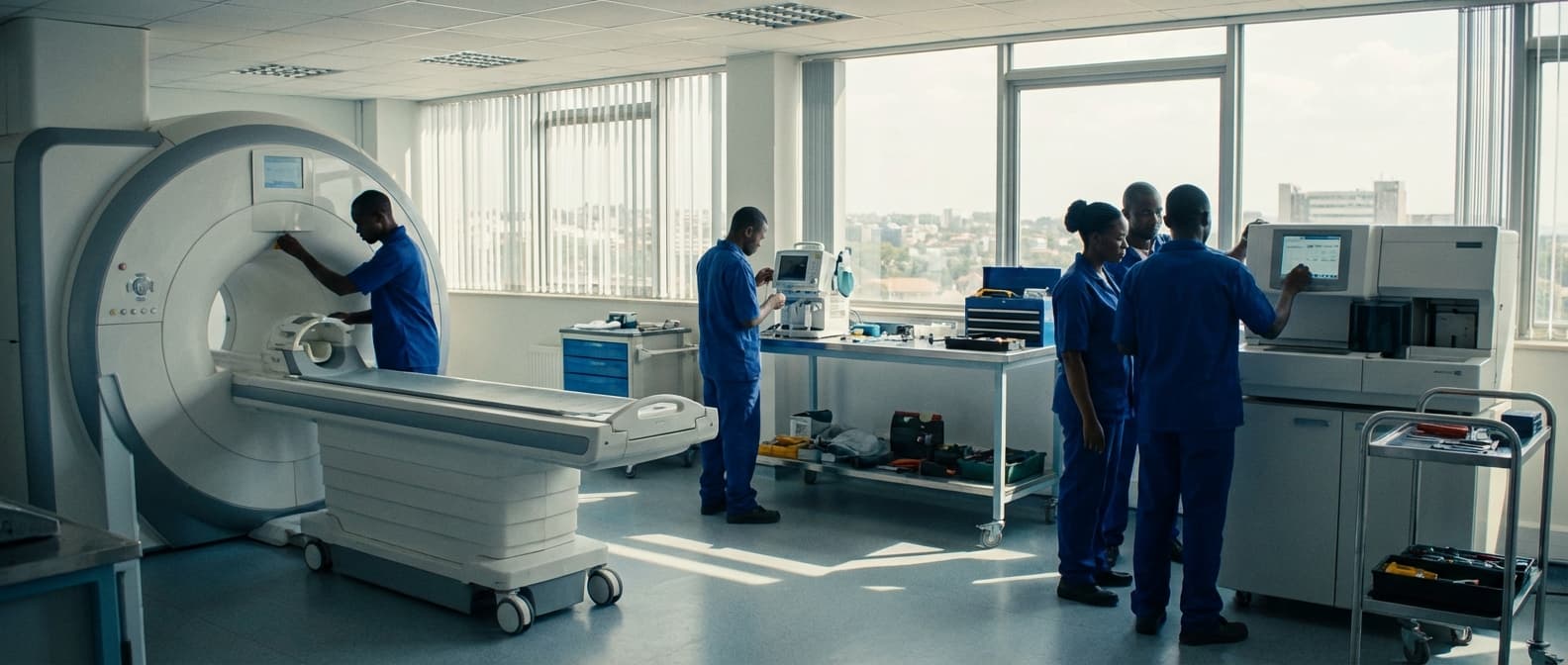
Uptime, Downtime & Root-Cause Analysis Reporting Service in Tunisia
Engineering Excellence & Technical Support
Uptime, Downtime & Root-Cause Analysis Reporting Service High-standard technical execution following OEM protocols and local regulatory frameworks.
Proactive Uptime Assurance
Leverage our advanced monitoring infrastructure across Tunisia to detect and resolve potential downtime before it impacts your services. Real-time alerts and granular performance metrics ensure continuous availability.
Rapid Downtime Response
Minimize service interruptions with our swift downtime detection and automated remediation workflows. Our experts provide immediate support to restore operations and reduce Mean Time To Repair (MTTR).
In-depth Root Cause Analysis
Gain actionable insights into service disruptions through our comprehensive Root Cause Analysis (RCA) reports. We identify the underlying issues, providing detailed technical explanations and strategic recommendations to prevent recurrence.
What Is Uptime, Downtime & Root-cause Analysis Reporting Service In Tunisia?
Uptime, Downtime & Root-Cause Analysis Reporting Service in Tunisia refers to a specialized offering that provides comprehensive monitoring, reporting, and in-depth investigation of system and service availability. This service is critical for organizations seeking to minimize operational disruptions and understand the underlying causes of failures. It involves the continuous tracking of system performance metrics to identify periods of availability (uptime) and unavailability (downtime). Furthermore, it encompasses a structured process to diagnose, analyze, and document the fundamental reasons behind any identified downtime incidents. The objective is to prevent recurrence and enhance overall system resilience.
| Who Needs This Service? | Typical Use Cases | ||||||||
|---|---|---|---|---|---|---|---|---|---|
| Businesses reliant on IT infrastructure: Any organization whose operations are dependent on the continuous availability of their IT systems, applications, and network infrastructure. | E-commerce platforms: Ensuring website and transaction processing availability during peak shopping seasons and beyond. | Financial institutions: Maintaining uninterrupted access to banking services, trading platforms, and payment gateways. | Telecommunication providers: Guaranteeing reliable network connectivity and communication services for subscribers. | Healthcare providers: Ensuring patient record systems, diagnostic equipment, and communication tools are always accessible. | Cloud service providers: Demonstrating and maintaining high levels of availability for their hosted services. | Managed Service Providers (MSPs): Offering proactive monitoring and incident management services to their clients. | Government agencies: Maintaining public service availability, critical infrastructure, and data integrity. | Manufacturing and Industrial Control Systems (ICS): Preventing costly production halts due to IT system failures impacting operational technology. | Businesses with remote workforces: Ensuring employees have consistent access to necessary applications and data. |
Key Components and Activities:
- Real-time Monitoring: Continuous, automated observation of critical IT infrastructure (servers, networks, applications, cloud services) for availability and performance indicators.
- Downtime Detection & Alerting: Immediate notification upon detection of service interruptions or performance degradation exceeding predefined thresholds.
- Uptime Reporting: Generation of historical and real-time reports detailing periods of system availability, often expressed as a percentage (e.g., 99.99% uptime).
- Downtime Incident Logging: Detailed recording of every downtime event, including timestamps, affected systems, duration, and impact.
- Root-Cause Analysis (RCA): A systematic investigation process to identify the fundamental cause(s) of a downtime incident, moving beyond symptoms to address underlying issues. This often involves techniques like the '5 Whys' or Ishikawa (fishbone) diagrams.
- Corrective and Preventive Actions (CAPA): Development and implementation of strategies to resolve the identified root cause and implement measures to prevent similar incidents in the future.
- Post-Incident Review: Documentation of the RCA process, findings, and implemented CAPAs, providing a historical record for continuous improvement.
- Service Level Agreement (SLA) Compliance Monitoring: Ensuring that the actual uptime and downtime metrics align with contractual obligations.
Who Needs Uptime, Downtime & Root-cause Analysis Reporting Service In Tunisia?
In today's competitive digital landscape, businesses in Tunisia cannot afford unexpected disruptions. Uptime, Downtime, and Root-Cause Analysis (RCA) Reporting Services are crucial for maintaining operational efficiency, customer satisfaction, and ultimately, profitability. These services provide vital insights into system performance, identifying the exact causes of failures and offering solutions to prevent future occurrences. This proactive approach minimizes revenue loss, protects brand reputation, and ensures a seamless user experience.
| Industry Sector | Target Customers | Key Departments Involved |
|---|---|---|
| E-commerce & Retail | Online retailers, marketplaces, B2C service providers | IT Operations, Customer Support, Marketing, Sales, E-commerce Management |
| Telecommunications | Mobile operators, internet service providers, VoIP providers | Network Operations Center (NOC), IT Infrastructure, Customer Service, Service Assurance |
| Banking & Financial Services | Banks, investment firms, payment processors, fintech companies | IT Operations, Risk Management, Compliance, Fraud Detection, Core Banking Systems |
| Healthcare | Hospitals, clinics, diagnostic labs, health tech companies | IT Department, Clinical Operations, Patient Services, Medical Records Management |
| Media & Entertainment | Online publishers, streaming services, gaming companies, advertising platforms | Platform Engineering, Content Delivery Network (CDN) Management, IT Operations, Product Development |
| Manufacturing & Logistics | Industrial automation, supply chain management, transportation companies | Operations Technology (OT) Support, IT Infrastructure, Supply Chain Management, Production Planning |
| SaaS Providers | Software as a Service companies, cloud-based solution providers | Engineering, Operations, Customer Success, Product Management |
| Government & Public Sector | Ministries, public administrations, digital service agencies | IT Department, Public Services Management, Cybersecurity, Citizen Engagement Platforms |
| Tourism & Hospitality | Online travel agencies, hotel booking platforms, service providers | IT Operations, Customer Experience, Booking Systems Management |
| Education Technology (EdTech) | Online learning platforms, educational institutions with digital offerings | IT Infrastructure, Platform Administration, Academic Support, Student Services |
Target Customers & Departments for Uptime, Downtime & Root-Cause Analysis Reporting Service in Tunisia:
- Businesses reliant on digital infrastructure: Any company whose operations, customer service, or revenue generation depend heavily on IT systems, websites, applications, or online platforms.
- Organizations experiencing performance issues: Companies that frequently face slowdowns, errors, or outages and need to understand the underlying causes.
- Companies with high-availability requirements: Sectors where continuous operation is critical for safety, financial transactions, or essential services.
- Growing tech-focused enterprises: Startups and established businesses in Tunisia expanding their digital footprint and requiring robust performance monitoring.
- Government agencies and public services: Ensuring the reliability of citizen-facing platforms and internal administrative systems.
Uptime, Downtime & Root-cause Analysis Reporting Service Process In Tunisia
This document outlines the workflow for the Uptime, Downtime & Root-Cause Analysis Reporting Service process in Tunisia. It details the steps involved from the initial client inquiry to the final execution and delivery of the report, ensuring a structured and efficient approach to identifying and resolving system disruptions.
| Phase | Stage | Key Activities | Responsible Parties | Deliverables | Timeline (Indicative) |
|---|---|---|---|---|---|
| Initiation | Client Inquiry & Service Request | Client contacts the service provider with a need for uptime monitoring and/or downtime incident analysis. Inquiry may come via email, phone, or online form. | Client, Service Provider Sales/Inquiry Team | Initial Request Documentation, Understanding of Client Needs | 1-2 Business Days |
| Initiation | Service Scoping & Quotation | Detailed discussion of client's infrastructure, monitoring requirements, reporting needs, and scope of analysis. Provider develops a tailored service proposal and quotation. | Service Provider Technical Team, Sales Team, Client | Service Proposal, Quotation, Statement of Work (SOW) | 3-5 Business Days |
| Initiation | Service Agreement & Contract | Negotiation and signing of the service agreement, including SLAs, pricing, terms, and conditions. Official contract execution. | Client Legal/Procurement, Service Provider Legal/Management | Signed Service Agreement/Contract | 5-10 Business Days |
| Execution | Data Collection & Monitoring Setup | Deployment of monitoring tools (if applicable), configuration of data collection parameters, and establishment of secure access to client systems/logs. | Service Provider Technical Team, Client IT | Monitoring Agents/Configuration, Data Access Credentials | 5-15 Business Days (depending on complexity) |
| Execution | Incident Detection & Alerting | Continuous monitoring of client systems. Automatic detection of deviations from expected uptime and triggering of alerts based on predefined thresholds. | Service Provider Monitoring System, Client Infrastructure | Real-time Uptime Status, Incident Alerts | Ongoing |
| Execution | Initial Incident Triage & Categorization | Upon alert, immediate assessment of the incident's severity, impact, and potential cause. Categorization of the incident for appropriate response. | Service Provider Operations Team, Client IT (on-call) | Incident Ticket, Initial Incident Assessment Report | Immediate (within minutes/hours of alert) |
| Execution | Root-Cause Analysis (RCA) Commencement | Formal initiation of the RCA process for significant downtime incidents. Assignment of an RCA lead. | Service Provider RCA Lead, Client Incident Manager | RCA Task Initiation, RCA Lead Assignment | Within 1-2 hours of confirmed significant downtime |
| Execution | Data Gathering & Evidence Collection for RCA | Collection of all relevant data: system logs, error messages, network traffic, configuration changes, performance metrics, and user reports. | Service Provider RCA Team, Client IT/DevOps | Raw Incident Data, Log Files, System Snapshots | Ongoing during incident resolution and post-incident |
| Execution | RCA Workshop/Interviews (if applicable) | Facilitated sessions with relevant stakeholders (client and provider personnel) to discuss incident timeline, contributing factors, and potential causes. May involve technical deep dives. | Service Provider RCA Lead, Client Subject Matter Experts, Service Provider Technical Experts | Meeting Minutes, Interview Notes, Collaborative Findings | 1-3 Business Days (post data collection) |
| Execution | RCA Report Drafting | Compilation of findings into a comprehensive RCA report. Includes incident timeline, impact assessment, identified root cause(s), contributing factors, and preliminary recommendations. | Service Provider RCA Team | Draft RCA Report | 3-7 Business Days (post workshop/interviews) |
| Closure | Client Review & Feedback | Submission of the draft RCA report to the client for review. Incorporation of client feedback and clarifications. | Service Provider RCA Team, Client Stakeholders | Revised Draft Report | 2-5 Business Days |
| Closure | Final RCA Report Generation | Finalization of the RCA report, including agreed-upon recommendations for preventive measures and corrective actions. | Service Provider RCA Team | Final RCA Report (including Executive Summary, Technical Details, and Recommendations) | 1-2 Business Days |
| Closure | Service Delivery & Presentation | Delivery of the final RCA report to the client. May include a presentation to key stakeholders to discuss findings and recommendations. | Service Provider Project Manager, RCA Lead, Client Management | Final RCA Report, Presentation Materials | 1-3 Business Days (post finalization) |
| Closure | Post-Service Follow-up & Feedback | Follow-up with the client to ensure recommendations are understood and to gather feedback on the service provided. May involve tracking of implemented recommendations. | Service Provider Account Manager, Client Stakeholders | Service Feedback, Action Item Tracking (optional) | Ongoing (as per contract) |
Uptime, Downtime & Root-Cause Analysis Reporting Service Workflow
- Client Inquiry & Service Request
- Service Scoping & Quotation
- Service Agreement & Contract
- Data Collection & Monitoring Setup
- Incident Detection & Alerting
- Initial Incident Triage & Categorization
- Root-Cause Analysis (RCA) Commencement
- Data Gathering & Evidence Collection for RCA
- RCA Workshop/Interviews (if applicable)
- RCA Report Drafting
- Client Review & Feedback
- Final RCA Report Generation
- Service Delivery & Presentation
- Post-Service Follow-up & Feedback
Uptime, Downtime & Root-cause Analysis Reporting Service Cost In Tunisia
Providing comprehensive Uptime, Downtime, and Root-Cause Analysis (RCA) reporting services in Tunisia involves a nuanced pricing structure influenced by several key factors. These services are critical for businesses aiming to maintain operational efficiency, minimize disruptions, and understand the underlying causes of system failures. The cost in Tunisian Dinar (TND) will vary based on the complexity of the IT infrastructure, the scope of the reporting, the level of detail required, and the expertise of the service provider. Local market dynamics and the specific service level agreements (SLAs) negotiated also play a significant role.
| Service Scope | Typical TND Range (Monthly) | Notes |
|---|---|---|
| Basic Uptime/Downtime Monitoring & Standard Reporting | 800 - 2,500 TND | Covers essential monitoring of key systems and generation of standard performance reports. Suitable for small to medium businesses with straightforward infrastructure. |
| Comprehensive Uptime/Downtime Monitoring & Detailed RCA | 2,000 - 7,000 TND | Includes in-depth analysis of downtime events, root cause identification, and detailed incident reports. Often involves more complex infrastructure and critical applications. |
| Proactive Performance Monitoring & Advanced RCA with Recommendations | 5,000 - 15,000+ TND | This tier involves continuous proactive monitoring, predictive analytics, and in-depth root cause analysis with actionable recommendations for system optimization and prevention. Ideal for large enterprises with mission-critical operations. |
| Ad-hoc RCA Investigation (Per Incident) | 300 - 1,500 TND (per incident) | For businesses that only require RCA for specific, isolated incidents without ongoing monitoring services. The cost can vary significantly based on the complexity of the incident. |
Key Pricing Factors for Uptime, Downtime & RCA Reporting Services in Tunisia
- Infrastructure Complexity: The size and complexity of your IT infrastructure (servers, networks, applications, cloud services) directly impact the effort required for monitoring and analysis.
- Data Volume & Granularity: The amount of data generated by your systems and the desired level of detail in the reports will affect processing and storage costs.
- Reporting Frequency & Customization: The frequency of reports (daily, weekly, monthly) and the need for custom dashboards or specific metrics will influence pricing.
- Service Provider Expertise & Reputation: Highly experienced and reputable service providers often command higher fees due to their proven track record and specialized knowledge.
- Scope of Analysis: Whether the service includes proactive monitoring, reactive incident response, in-depth RCA investigations, or remediation recommendations.
- Service Level Agreements (SLAs): Guaranteed uptime percentages, response times for critical issues, and the severity of incidents will be factored into the cost.
- Tools & Technologies Used: The cost of specialized monitoring and analytics tools employed by the service provider can be passed on.
- On-site vs. Remote Services: While most services are remote, any on-site requirements for initial setup or complex investigations will increase costs.
- Contract Duration: Longer-term contracts may offer discounted rates compared to ad-hoc or short-term engagements.
Affordable Uptime, Downtime & Root-cause Analysis Reporting Service Options
This document outlines various affordable service options for Uptime, Downtime, and Root-Cause Analysis (RCA) reporting. We explore value bundles that offer comprehensive solutions and cost-saving strategies to maximize your investment in proactive system monitoring and issue resolution.
| Service Level | Key Features | Target Audience | Estimated Monthly Cost (USD) |
|---|---|---|---|
| Basic Uptime | Real-time uptime checks, email/SMS alerts | Small businesses, critical service monitoring | $20 - $50 |
| Standard Downtime Reporting | Uptime checks, automatic downtime alerts, incident logs, duration tracking | Growing businesses, teams needing basic incident overview | $75 - $150 |
| Advanced RCA | Standard features + automated log analysis, error correlation, RCA suggestions | Tech-savvy teams, SaaS providers, businesses with complex infrastructure | $200 - $500 |
| Observability Bundle | All advanced features + performance metrics, APM, UX monitoring | Enterprise-level operations, mission-critical applications, DevOps teams | $750 - $2500+ |
| Customizable Reporting | Build your own package based on specific needs | Unique business requirements, budget-conscious organizations | Variable (based on selected modules) |
Service Options & Value Bundles
- Basic Uptime Monitoring: Real-time alerts for service availability. Ideal for businesses prioritizing continuous operation but with limited RCA needs.
- Standard Downtime & Incident Reporting: Includes uptime monitoring, automatic downtime detection, and basic incident reports with timestamps and duration. Offers a good balance of cost and essential information.
- Advanced RCA Package: Combines uptime/downtime monitoring with automated log analysis, error correlation, and preliminary root-cause suggestions. Crucial for rapid problem identification and resolution.
- Comprehensive Observability Bundle: The most robust offering. Integrates uptime, downtime, detailed RCA, performance metrics, application traces, and user experience monitoring. Designed for complex environments requiring deep insights.
- Customizable Reporting Suite: Allows you to tailor reporting features and alert thresholds to your specific business requirements, ensuring you only pay for what you need.
- SaaS Subscription Plans: Offered in tiered monthly or annual subscriptions, providing predictable costs and scalability.
Verified Providers In Tunisia
In Tunisia's burgeoning healthcare sector, identifying reliable and high-quality medical providers is paramount for both local residents and medical tourists. Franance Health stands out as a leader in this regard, offering a meticulously curated network of verified healthcare professionals and institutions. Their rigorous credentialing process ensures that all associated providers meet the highest international standards of medical expertise, patient care, and ethical practice. Choosing Franance Health means entrusting your well-being to a system built on transparency, excellence, and proven competence.
| Provider Type | Franance Health Verification Points | Why it Represents the Best Choice |
|---|---|---|
| Hospitals & Clinics | Accreditation by national and international bodies (e.g., ISO, JCI if applicable), state-of-the-art equipment, advanced diagnostic and treatment capabilities, adherence to stringent hygiene and safety standards. | Ensures access to modern facilities, advanced medical technology, and a safe, controlled environment for treatment, minimizing risks and maximizing recovery. |
| Specialist Doctors | Board certification in their respective fields, extensive clinical experience, a history of successful patient outcomes, ongoing professional development and training. | Guarantees highly skilled and experienced physicians with proven expertise in specific medical areas, leading to more accurate diagnoses and effective treatment plans. |
| Surgeons | Specialized surgical training and certifications, a significant number of successful procedures performed, adherence to advanced surgical techniques and protocols, excellent post-operative care management. | Provides confidence in the surgeon's ability to perform complex procedures with precision and safety, leading to better surgical results and faster recovery. |
| Diagnostic Centers | Accreditation for laboratory and imaging services, utilization of the latest diagnostic technologies, highly trained technicians and radiologists, strict quality control measures. | Ensures the accuracy and reliability of diagnostic tests, which are fundamental for correct diagnosis and effective treatment planning. |
| Rehabilitation Centers | Qualified and licensed therapists (physical, occupational, etc.), evidence-based rehabilitation programs, personalized treatment plans, modern therapeutic equipment. | Offers comprehensive and tailored recovery programs designed to restore function, improve mobility, and enhance the quality of life post-treatment or injury. |
Key Credentials Verified by Franance Health:
- Medical Licensure and Certification
- Professional Qualifications and Specializations
- Hospital and Clinic Accreditation
- Patient Safety Protocols
- Ethical Practice Standards
- Experience and Track Record
Scope Of Work For Uptime, Downtime & Root-cause Analysis Reporting Service
This Scope of Work (SOW) outlines the services to be provided for Uptime, Downtime, and Root-Cause Analysis (RCA) Reporting. The objective is to deliver comprehensive and actionable insights into system availability and performance, facilitating proactive issue resolution and continuous improvement. This document details the technical deliverables and standard specifications for these reporting services.
| Deliverable | Description | Standard Specifications / Format | Frequency / Trigger |
|---|---|---|---|
| Uptime Report | Detailed report on the percentage of time services/systems were operational and accessible. | Monthly, Quarterly, Annually. Percentages (e.g., 99.99%), aggregated availability by service/system. Format: PDF, CSV. | Monthly, Quarterly, Annually |
| Downtime Incident Log | Comprehensive record of all identified downtime events, including start/end times, duration, impacted services, and initial impact assessment. | Real-time updates, consolidated weekly/monthly. Fields: Incident ID, Timestamp (Start/End), Duration, Impacted Service(s), Severity Level, Initial Assessment. Format: CSV, JSON, Database Log. | Upon detection of downtime event / Weekly consolidation |
| Root-Cause Analysis (RCA) Report | In-depth analysis of critical downtime incidents to identify the underlying cause, contributing factors, and recommended preventative actions. | For incidents exceeding a defined threshold (e.g., > 30 minutes downtime, critical impact). Includes: Incident Summary, Timeline of Events, Identified Root Cause(s), Contributing Factors, Impact Assessment, Corrective Actions, Preventative Measures, Lessons Learned. Format: PDF, Word Document. | Per critical incident |
| Executive Summary Report | High-level overview of system availability, major incidents, and trends for management. | Monthly. Key uptime percentages, summary of major downtime events, key RCA findings, overall trend analysis. Format: PDF, Presentation Slides. | Monthly |
| Real-time Monitoring Dashboard | Interactive dashboard providing live visibility into system health and availability. | Web-based. Displays current uptime status, active alerts, recent incidents, key performance indicators (KPIs). Accessible via secure URL. Data refresh rate: every 1-5 minutes. | Continuous |
| Performance Metrics Report | Analysis of key performance indicators (KPIs) that can impact uptime and user experience. | Monthly. Includes metrics like response times, error rates, resource utilization (CPU, memory, network). Comparison against baseline/thresholds. Format: PDF, CSV, Interactive Dashboard. | Monthly |
| Trend Analysis Report | Identification of patterns and recurring issues in uptime and downtime data. | Quarterly. Analysis of incident frequency, duration, types of root causes, and impact over time. Recommendations for strategic improvements. Format: PDF, Presentation Slides. | Quarterly |
Key Service Components
- Uptime Monitoring & Reporting
- Downtime Incident Tracking & Analysis
- Root-Cause Analysis (RCA)
- Reporting & Dashboards
- Performance Metrics Tracking
Service Level Agreement For Uptime, Downtime & Root-cause Analysis Reporting Service
This Service Level Agreement (SLA) outlines the guaranteed uptime, acceptable downtime, and root-cause analysis (RCA) reporting procedures for the Uptime, Downtime & Root-Cause Analysis Reporting Service (hereinafter referred to as 'the Service').
| Service Component | Uptime Guarantee (Monthly) | Maximum Permitted Unscheduled Downtime (Monthly) | Response Time for Critical Incidents | RCA Report Delivery Time (Post-Incident Resolution) |
|---|---|---|---|---|
| Core Service Availability | 99.9% | 43.8 minutes | 15 minutes | 24 hours |
| Data Reporting & Analytics Module | 99.5% | 2.6 hours | 30 minutes | 48 hours |
| Notification System | 99.7% | 1.3 hours | 20 minutes | 36 hours |
Definitions
- Scheduled Downtime: Planned maintenance or upgrades to the Service, communicated in advance to the Customer.
- Unscheduled Downtime: Unexpected interruptions to the Service not caused by Scheduled Downtime.
- Uptime: The percentage of time the Service is operational and accessible to the Customer during a given measurement period.
- Downtime: The percentage of time the Service is unavailable or inaccessible to the Customer during a given measurement period.
- Root-Cause Analysis (RCA): A structured process to identify the fundamental cause of an incident or problem.
- Incident: Any event that causes or may cause an interruption to or a reduction in the quality of the Service.
- Severity Levels: Classification of incidents based on their impact on the Service and Customer operations.
Frequently Asked Questions

Ready when you are
Let's scope your Uptime, Downtime & Root-Cause Analysis Reporting Service in Tunisia project in Tunisia.

Scaling healthcare logistics and technical systems across the entire continent.