
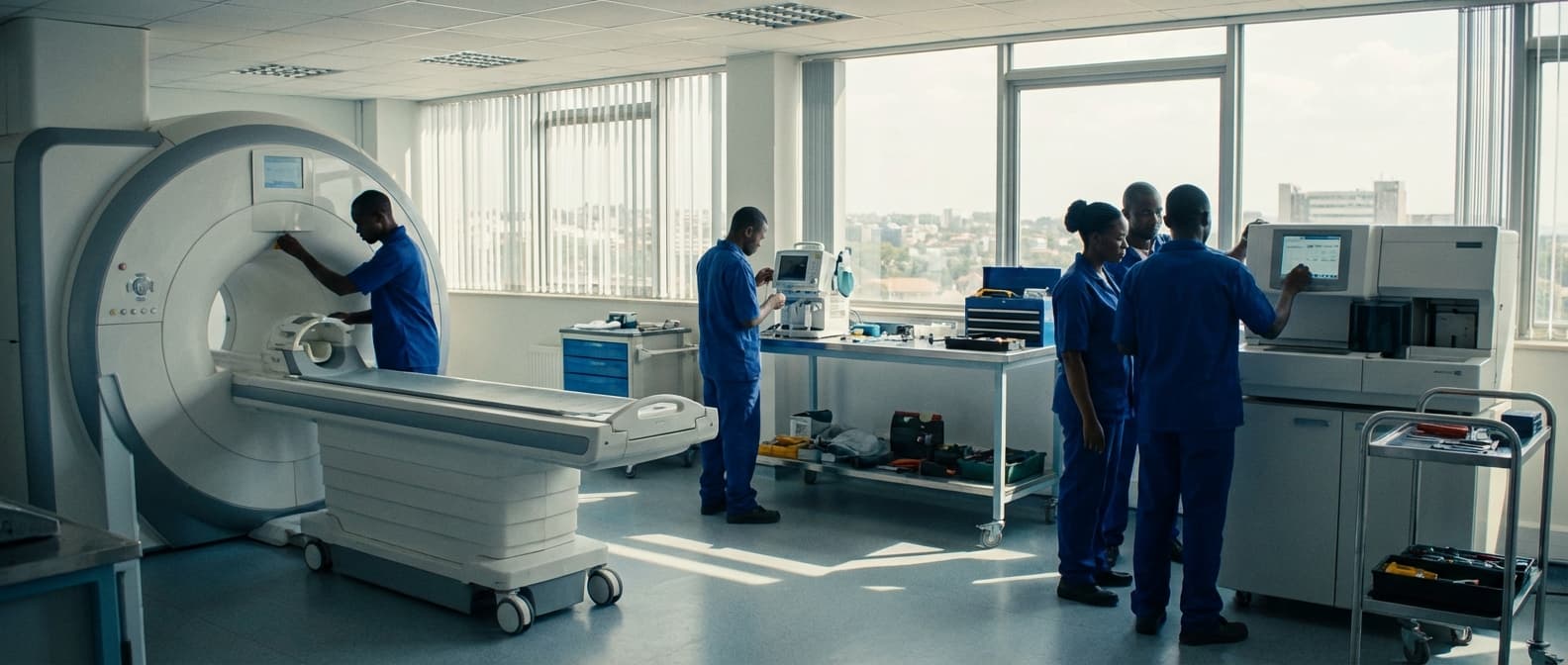
Planned Shutdown Coordination Service for Critical Equipment in Tunisia
Engineering Excellence & Technical Support
Planned Shutdown Coordination Service for Critical Equipment High-standard technical execution following OEM protocols and local regulatory frameworks.
Proactive Maintenance Scheduling
Our service leverages advanced predictive analytics to identify optimal shutdown windows for critical equipment, minimizing operational disruptions and maximizing asset lifespan. We integrate with your existing SCADA and CMMS systems to ensure precise timing, avoiding conflicts with peak production periods and seasonal demands specific to Tunisia's industrial landscape.
Optimized Resource Allocation & Logistics
We meticulously plan and coordinate the mobilization of specialized technical teams, spare parts, and necessary equipment across Tunisia. Our expertise in local logistics ensures timely delivery and access to remote sites, reducing transit times and associated costs, while adhering to all national safety and regulatory compliance standards for industrial operations.
Risk Mitigation & Performance Enhancement
Through comprehensive risk assessments and detailed contingency planning, we minimize potential hazards during planned shutdowns. Our service focuses on efficient execution, reduced downtime, and post-maintenance performance verification, ultimately enhancing the reliability and overall efficiency of your critical equipment in Tunisia's demanding industrial environment.
What Is Planned Shutdown Coordination Service For Critical Equipment In Tunisia?
Planned Shutdown Coordination Service for Critical Equipment in Tunisia refers to a specialized offering designed to manage and execute the systematic de-energization and maintenance of high-priority industrial assets. This service is essential for industries reliant on continuous operation of sophisticated machinery, where unplanned downtime incurs substantial economic losses and operational disruptions. The core objective is to minimize the duration and impact of scheduled maintenance activities through meticulous planning, resource allocation, and execution oversight. This involves coordinating all aspects of the shutdown, from initial risk assessment and scope definition to the final recommissioning and return to service of the equipment. It encompasses detailed work sequencing, permit-to-work systems, safety protocols, and stakeholder communication to ensure a safe, efficient, and timely completion of maintenance tasks.
| Who Needs It | Typical Use Cases |
|---|---|
| Industrial facilities in Tunisia operating critical, high-value equipment, including but not limited to: Oil and Gas (refineries, production platforms), Petrochemicals, Power Generation (thermal, nuclear), Manufacturing (automotive, heavy industry), Mining and Extractive Industries, Water Treatment and Distribution, and large-scale Food and Beverage processing. | Routine major overhauls of turbines, compressors, pumps, and reactors. Scheduled inspection and replacement of critical electrical components (transformers, switchgear). Preventive maintenance on complex process control systems. Infrastructure upgrades and modernization projects requiring temporary de-energization of production lines. Compliance-driven mandatory inspections and certifications for safety-critical equipment. Turnarounds for entire plant units to address accumulated maintenance backlogs and performance optimization. |
Key Components of Planned Shutdown Coordination Service:
- Scope Definition and Work Package Development
- Detailed Scheduling and Sequencing of Maintenance Activities
- Resource Planning and Allocation (Personnel, Materials, Equipment)
- Risk Assessment and HAZOP Studies
- Development and Implementation of Permit-to-Work Systems
- Safety Management and Supervision
- Quality Assurance and Control
- Logistics and Supply Chain Management
- Stakeholder Communication and Reporting
- Post-Shutdown Performance Monitoring and Decommissioning
Who Needs Planned Shutdown Coordination Service For Critical Equipment In Tunisia?
Planned shutdown coordination services are crucial for organizations in Tunisia that rely heavily on critical equipment for their operations. These services ensure that essential maintenance, repairs, or upgrades are performed efficiently and with minimal disruption to production, safety, and regulatory compliance. This proactive approach helps to prevent unexpected breakdowns, extend equipment lifespan, and optimize operational uptime.
| Target Customer Industry | Key Departments Involved | Reason for Need |
|---|---|---|
| Oil & Gas (Upstream, Midstream, Downstream) | Operations, Maintenance, Engineering, HSE (Health, Safety, Environment), Production Planning | High safety risks, environmental impact, significant financial losses due to downtime, complex interconnected facilities. |
| Petrochemicals & Chemicals | Production, Maintenance, Process Engineering, Safety Management, Quality Control | Hazardous materials handling, strict process control requirements, continuous production cycles, regulatory compliance. |
| Power Generation (Thermal, Renewable, Hydro) | Operations, Engineering, Maintenance, Grid Management, Environmental Compliance | Critical infrastructure, demand-driven operations, complex machinery, safety of personnel and public. |
| Water & Wastewater Treatment | Operations, Engineering, Maintenance, Environmental Protection, Public Health | Essential public service, continuous operation required, regulatory adherence, potential health impacts of failure. |
| Manufacturing (Automotive, Food & Beverage, Pharmaceuticals, Textiles) | Production Management, Engineering, Maintenance, Quality Assurance, Supply Chain | Interdependent production lines, product quality consistency, meeting market demand, high equipment utilization. |
| Mining & Minerals Processing | Operations, Engineering, Maintenance, Safety, Environmental Management | Large-scale machinery, remote locations, safety of workers, environmental impact, continuous extraction and processing. |
| Telecommunications & Data Centers | Network Operations, IT Infrastructure, Facility Management, Security | High availability requirements, data integrity, continuous service delivery, cybersecurity. |
| Heavy Industry (Cement, Steel, Fertilizers) | Plant Operations, Mechanical & Electrical Maintenance, Process Engineering, HSE | Large and complex machinery, high energy consumption, hazardous processes, continuous production. |
Who Needs Planned Shutdown Coordination Service for Critical Equipment in Tunisia?
- Organizations with continuous or high-volume operations that cannot afford significant downtime.
- Sectors with stringent safety and environmental regulations.
- Companies operating complex and interconnected industrial systems.
- Businesses aiming to improve operational efficiency and reduce costs associated with emergency repairs.
- Facilities undergoing major upgrades or modernization projects.
Planned Shutdown Coordination Service For Critical Equipment Process In Tunisia
This service facilitates the seamless planning and execution of planned shutdowns for critical equipment in Tunisia. It aims to minimize downtime, optimize resource allocation, and ensure safety through a structured, collaborative workflow. The process begins with an initial inquiry from the client and culminates in the successful completion and review of the shutdown.
| Stage | Description | Key Activities | Deliverables | Responsible Parties |
|---|---|---|---|---|
| Inquiry & Scope Definition | The initial contact from the client requesting the service. This stage defines the client's needs and the preliminary scope of the shutdown. | Client submits inquiry, initial needs assessment, high-level scope discussion. | Initial service request, preliminary scope document. | Client, Service Provider (Coordination Team) |
| Assessment & Planning | A detailed evaluation of the critical equipment, existing infrastructure, and operational requirements to develop a comprehensive shutdown plan. | On-site assessment, risk analysis, safety plan development, detailed scope finalization, identification of interdependencies, definition of shutdown objectives. | Detailed shutdown plan, risk assessment report, safety management plan, preliminary schedule. | Service Provider (Coordination Team), Client (Technical Teams, Operations) |
| Resource Mobilization & Scheduling | Securing all necessary human resources, materials, specialized tools, and external services, and creating a detailed timeline for the shutdown. | Identifying and contracting specialized technicians, procurement of spare parts and materials, booking external services (e.g., lifting, specialized testing), detailed work breakdown structure (WBS), development of a Gantt chart, communication of schedule to all stakeholders. | Resource allocation matrix, confirmed vendor contracts, detailed shutdown schedule (Gantt chart), communication plan. | Service Provider (Coordination Team), Client (Procurement, Maintenance Teams), Vendors |
| Pre-Shutdown Preparations | Ensuring all pre-requisite tasks are completed and all parties are ready for the commencement of the shutdown. | Toolbox talks, pre-work safety briefings, site setup and access control, verification of all procured materials and equipment, final walk-through of the work area, confirmation of isolation procedures. | Pre-shutdown checklist completion, final safety briefing notes, site readiness confirmation. | Service Provider (Coordination Team), Client (Operations, Safety Officers), Execution Teams |
| Shutdown Execution | The actual period during which the critical equipment is shut down and the planned maintenance or replacement activities are performed. | Monitoring of scheduled tasks, real-time coordination of activities, immediate problem-solving and decision-making, adherence to safety protocols, daily progress reporting. | Daily progress reports, incident logs (if any), photographic/video evidence of work performed. | Service Provider (Coordination Team), Client (Supervisors, Technical Staff), Execution Teams, Vendors |
| Post-Shutdown Activities & Review | The activities following the completion of the shutdown work, including re-commissioning, testing, and a comprehensive review of the entire process. | Equipment re-commissioning and testing, performance verification, final documentation compilation, post-shutdown review meeting, lessons learned session, final reporting. | Re-commissioning reports, performance test results, final shutdown report, lessons learned document. | Service Provider (Coordination Team), Client (Operations, Maintenance, Quality Assurance) |
Workflow Stages for Planned Shutdown Coordination Service
- Inquiry & Scope Definition
- Assessment & Planning
- Resource Mobilization & Scheduling
- Pre-Shutdown Preparations
- Shutdown Execution
- Post-Shutdown Activities & Review
Planned Shutdown Coordination Service For Critical Equipment Cost In Tunisia
Coordinating planned shutdowns for critical equipment in Tunisia involves a range of services designed to minimize downtime and ensure operational continuity. The cost of these services is influenced by several key factors, including the complexity of the equipment, the duration of the shutdown, the level of specialized expertise required, the geographical location within Tunisia, and the vendor's reputation and experience. These services typically encompass planning, scheduling, resource allocation, risk assessment, safety management, execution oversight, and post-shutdown analysis. The pricing will vary based on the extent of these activities and the specific needs of the client. For a comprehensive planned shutdown coordination service for critical equipment in Tunisia, pricing can range significantly, reflecting the bespoke nature of such operations.
| Service Type/Complexity | Estimated Price Range (TND - Tunisian Dinar) | Typical Scope |
|---|---|---|
| Basic Coordination (Small to Medium Scale Equipment) | 5,000 - 15,000 TND | Initial planning, scheduling, basic resource allocation, communication facilitation. |
| Standard Coordination (Medium to Large Scale Equipment) | 15,000 - 40,000 TND | Comprehensive planning, risk assessment, detailed scheduling, resource management, on-site support for key phases, safety oversight. |
| Advanced/Full-Service Coordination (Highly Critical/Complex Equipment) | 40,000 - 100,000+ TND | End-to-end project management, detailed engineering review, specialized risk mitigation, extensive safety program management, multi-vendor coordination, detailed reporting and analysis, potential for 24/7 oversight. |
| Daily On-Site Supervision (Specialized Personnel) | 800 - 3,000 TND per day | Provided by experienced engineers or project managers for critical phases or as a dedicated support resource. |
| Emergency/Unplanned Shutdown Coordination (Premium) | Add 20-50% to standard rates | Requires immediate mobilization and expedited planning, often with higher risk and less preparation time. |
Key Pricing Factors for Planned Shutdown Coordination Services in Tunisia
- Complexity and Type of Critical Equipment: More intricate and specialized machinery (e.g., heavy industrial, advanced manufacturing, large-scale power generation) will command higher coordination fees due to the need for specialized knowledge and potentially more rigorous safety protocols.
- Duration of the Planned Shutdown: Longer shutdown periods require more extensive planning, ongoing coordination, and management of resources, directly impacting the overall cost.
- Scope of Services Required: The depth of services provided, from initial risk assessment and detailed scheduling to on-site supervision and post-shutdown reporting, will influence the final price. Basic coordination will be less expensive than a fully managed solution.
- Level of Expertise and Specialization: Services requiring highly specialized engineers, technicians, or project managers with specific industry experience will be priced at a premium.
- Geographical Location within Tunisia: Remote or challenging-to-access locations might incur additional logistical costs for personnel and equipment, which can be reflected in the service price.
- Vendor's Experience and Reputation: Established and reputable service providers with a proven track record of successful shutdowns often charge more due to their reliability, efficiency, and expertise.
- Regulatory Compliance and Safety Standards: Adherence to stringent Tunisian safety regulations and industry-specific compliance requirements can add to the complexity and cost of coordination.
- Resource Management and Subcontractor Coordination: The extent to which the provider manages external contractors, specialized labor, and equipment rentals will affect the overall service fee.
Affordable Planned Shutdown Coordination Service For Critical Equipment Options
This service offers meticulously planned and executed shutdown coordination for critical equipment, minimizing downtime and maximizing operational efficiency. We understand the significant financial implications of unexpected outages and the complexities of scheduled maintenance. Our service provides a proactive, cost-effective approach to ensure your critical assets are maintained with minimal disruption. We offer flexible value bundles tailored to your specific needs and a range of cost-saving strategies to optimize your shutdown budget.
| Cost-Saving Strategy | Description | Impact |
|---|---|---|
| Early & Detailed Planning | Initiating shutdown planning well in advance allows for thorough assessment of requirements, identification of potential bottlenecks, and proactive procurement of parts and services. | Reduces expedited shipping costs, secures better vendor rates, minimizes last-minute changes and associated rework. |
| Optimized Resource Allocation | Ensuring the right personnel and equipment are available at the right time, avoiding idle time and overstaffing. | Lowers labor costs, maximizes equipment utilization, prevents delays due to resource unavailability. |
| Vendor Negotiation & Consolidation | Leveraging our established relationships and volume to negotiate favorable rates with specialized vendors. Consolidating multiple service providers where feasible. | Secures discounted pricing, reduces administrative overhead, and simplifies contract management. |
| Predictive & Preventive Maintenance Integration | Aligning shutdown activities with existing predictive and preventive maintenance schedules to address multiple issues concurrently. | Reduces the frequency of separate shutdowns, maximizes the value of each planned outage, minimizes overall downtime. |
| Technology-Enhanced Coordination | Utilizing digital tools for real-time progress tracking, communication, and documentation. Employing simulation or modeling where appropriate. | Improves transparency, facilitates rapid decision-making, reduces paper-based inefficiencies, and allows for scenario planning. |
| Contingency Planning & Risk Mitigation | Proactively identifying potential risks and developing robust contingency plans to address them swiftly. | Prevents minor issues from escalating into major delays, minimizes costly emergency responses. |
Value Bundles for Planned Shutdown Coordination
- Basic Coordination: Includes initial planning meetings, creation of a high-level shutdown schedule, and essential communication protocols. Ideal for routine maintenance with minimal complexity.
- Standard Coordination: Encompasses detailed shutdown planning, resource allocation, vendor management, on-site supervision for critical phases, and comprehensive post-shutdown reporting. Suitable for moderately complex shutdowns.
- Premium Coordination: Offers end-to-end project management, advanced risk assessment and mitigation, integrated maintenance planning with production schedules, specialized equipment sourcing, and proactive problem-solving throughout the entire shutdown lifecycle. Designed for complex, high-stakes equipment overhauls or upgrades.
- Customizable Bundles: We can create bespoke packages by combining elements from our standard offerings to precisely match your unique requirements and budget constraints.
Verified Providers In Tunisia
In the pursuit of quality healthcare, identifying reliable and accredited medical facilities is paramount. For those seeking verified healthcare providers in Tunisia, particularly those with a strong international reputation, Franance Health stands out. Their rigorous credentialing process ensures that partner clinics and hospitals meet the highest standards of medical excellence, patient safety, and ethical practice. This commitment to verification makes Franance Health a trusted gateway to exceptional medical services.
| Franance Health Credential | Benefits for Patients | Key Indicators |
|---|---|---|
| Accreditation in Medical Excellence | Assurance of high-quality medical procedures and outcomes. | Experienced specialists, advanced technology, successful treatment rates. |
| Patient Safety Protocols | Minimizes risks and ensures a secure treatment environment. | Infection control measures, staff training, emergency response plans. |
| Ethical Practice Standards | Guarantees fair treatment, privacy, and informed consent. | Patient rights charter, transparent billing, professional conduct. |
| Facility Infrastructure | Ensures modern and well-equipped medical facilities. | State-of-the-art equipment, comfortable patient accommodations, hygienic environment. |
Why Franance Health Credentials Matter:
- International Accreditation Standards: Franance Health aligns with internationally recognized benchmarks for healthcare quality, going beyond local requirements.
- Rigorous Vetting Process: Each provider undergoes a thorough evaluation of their medical expertise, facility infrastructure, and patient care protocols.
- Focus on Patient Safety: Accreditation emphasizes adherence to strict safety measures, infection control, and emergency preparedness.
- Transparency and Trust: Verified providers offer a higher degree of confidence and transparency for patients seeking treatment.
- Access to Specialized Care: Franance Health facilitates access to centers of excellence with advanced technology and specialized medical professionals.
Scope Of Work For Planned Shutdown Coordination Service For Critical Equipment
This Scope of Work (SOW) outlines the requirements for a Planned Shutdown Coordination Service for Critical Equipment. The service provider will be responsible for the comprehensive planning, coordination, execution, and close-out of planned shutdown activities for designated critical equipment. This includes ensuring minimal downtime, adherence to safety protocols, and efficient resource allocation. Technical deliverables will be documented and adhere to industry-standard specifications where applicable.
| Technical Deliverable | Description | Standard Specification / Format | Responsibility |
|---|---|---|---|
| Detailed Shutdown Plan | Comprehensive document outlining scope, schedule, resource requirements, risk assessment, communication plan, and contingency measures. | Project Management Best Practices (e.g., PMI standards); Client-specific template if provided. | Service Provider |
| Pre-Shutdown Risk Assessment Report | Identifies potential hazards, safety risks, environmental impacts, and proposed mitigation strategies. | OSHA / HSE guidelines; Client-specific safety standards. | Service Provider |
| Shutdown Schedule (Gantt Chart) | Visual representation of all activities, dependencies, milestones, and critical path. | Microsoft Project, Primavera P6, or similar scheduling software. | Service Provider |
| Resource Allocation Matrix | Details personnel, equipment, and material assignments for each shutdown activity. | Excel or dedicated resource management tool. | Service Provider |
| Daily/Weekly Progress Reports | Summarizes completed activities, deviations from the plan, challenges encountered, and upcoming tasks. | Client-specified format or standard reporting template. | Service Provider |
| Vendor Performance Evaluation | Assessment of vendor's adherence to scope, schedule, quality, and safety requirements. | Client-specified performance metrics and reporting format. | Service Provider |
| As-Built Documentation Updates | Revisions to existing equipment documentation reflecting any modifications made during the shutdown. | Client-specific CAD standards; ISO 19001 documentation requirements. | Service Provider (coordination with client's engineering) |
| Post-Shutdown Test Reports | Results of functional, performance, and safety tests conducted after equipment recommissioning. | Manufacturer specifications; Industry testing standards (e.g., API, ASTM). | Service Provider (coordination with client's operations/engineering) |
| Shutdown Close-Out Report & Lessons Learned | Final report summarizing shutdown performance, financial reconciliation, and actionable insights for future shutdowns. | Client-specified format or standard project close-out template. | Service Provider |
Key Responsibilities and Activities
- Develop and maintain a detailed shutdown plan, including scope, schedule, resource allocation, and contingency plans.
- Conduct pre-shutdown site surveys and risk assessments to identify potential hazards and mitigation strategies.
- Coordinate with internal and external stakeholders (e.g., operations, maintenance, vendors, safety personnel).
- Manage procurement and logistics for necessary parts, materials, and specialized services.
- Oversee the execution of shutdown activities, ensuring adherence to the approved plan and schedule.
- Implement and enforce strict safety procedures and permit-to-work systems.
- Facilitate communication and provide regular progress updates to management and relevant teams.
- Manage vendor performance and ensure compliance with contractual obligations.
- Oversee post-shutdown testing, commissioning, and handover of equipment.
- Conduct post-shutdown reviews and lessons learned sessions.
- Prepare and submit all required technical documentation and reports.
Service Level Agreement For Planned Shutdown Coordination Service For Critical Equipment
This Service Level Agreement (SLA) outlines the terms and conditions governing the Planned Shutdown Coordination Service for Critical Equipment. This service ensures timely and efficient planning and execution of scheduled downtime for critical infrastructure, minimizing disruption to operations. The SLA defines response times and uptime guarantees associated with this service.
| Service Component | Response Time (Standard Request) | Response Time (Urgent Request) | Uptime Guarantee (Excluding Planned Shutdowns) |
|---|---|---|---|
| Planned Shutdown Request Acknowledgement | 4 business hours | 1 business hour | N/A |
| Initial Impact Assessment & Scheduling Proposal | 8 business hours | 4 business hours | N/A |
| Stakeholder Notification & Communication Management | 24 business hours prior to scheduled shutdown | 12 business hours prior to scheduled shutdown | N/A |
| On-Call Support during Planned Shutdown Window | Immediate acknowledgement of critical issues | Immediate acknowledgement of critical issues | N/A |
| Overall Critical Equipment Availability | N/A | N/A | 99.9% (excluding pre-approved planned shutdown windows) |
Key Definitions
- Planned Shutdown: A scheduled interruption of service for critical equipment, conducted during a pre-approved maintenance window.
- Critical Equipment: Any piece of infrastructure, system, or component deemed essential for core business operations, whose unplanned downtime would result in significant financial loss, operational disruption, or safety risks.
- Coordination Service: The service provided to facilitate the planning, communication, and execution of planned shutdowns, including but not limited to scheduling, impact assessment, stakeholder notification, and rollback planning.
- Response Time: The maximum allowable time for the Service Provider to acknowledge and initiate action on a request related to the Planned Shutdown Coordination Service.
- Uptime Guarantee: The percentage of time that critical equipment is expected to be available and operational, excluding scheduled planned shutdowns and acceptable maintenance windows.
- Service Provider: The entity responsible for delivering the Planned Shutdown Coordination Service.
- Client: The entity utilizing the Planned Shutdown Coordination Service.
Frequently Asked Questions

Ready when you are
Let's scope your Planned Shutdown Coordination Service for Critical Equipment in Tunisia project in Tunisia.

Scaling healthcare logistics and technical systems across the entire continent.