
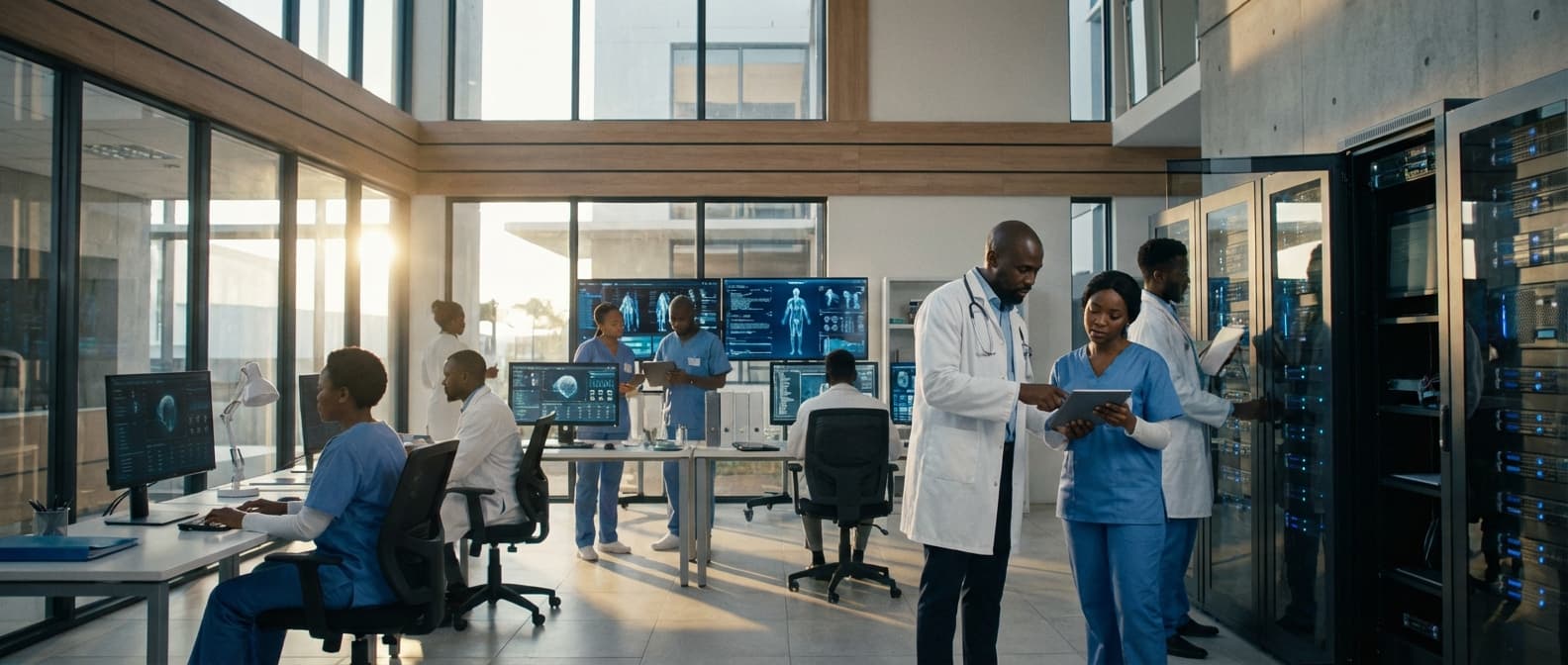
Tele-Radiology in Tunisia
Engineering Excellence & Technical Support
24/7 access to certified radiologists providing rapid, accurate remote interpretation of diagnostic imaging studies. High-standard technical execution following OEM protocols and local regulatory frameworks.
Nationwide Diagnostic Access
Leveraging advanced tele-radiology platforms, we extend expert diagnostic capabilities to the furthest corners of Tunisia, bridging geographical barriers and ensuring equitable access to critical imaging interpretation for all patients, regardless of their location.
AI-Powered Diagnostic Augmentation
Integrating cutting-edge Artificial Intelligence algorithms to enhance radiologist efficiency and accuracy. Our systems flag potential abnormalities and provide quantitative analysis, accelerating diagnosis and improving detection rates for complex cases across various modalities.
Secure & Compliant Data Sharing
Implementing robust, encrypted, and HIPAA-compliant (or equivalent Tunisian privacy standards) data transmission protocols. We ensure the secure and seamless sharing of medical images and reports between referring physicians, radiologists, and healthcare facilities across Tunisia, prioritizing patient data integrity.
What Is Tele-radiology In Tunisia?
Tele-radiology in Tunisia refers to the practice of transmitting radiological images (such as X-rays, CT scans, MRI scans, and ultrasounds) from one geographic location to another for interpretation by a radiologist. This service facilitates remote diagnostic reporting and consultation, bridging gaps in specialist availability and improving access to radiological expertise across the country.
| Who Needs Tele-Radiology in Tunisia? | Typical Use Cases | |||||
|---|---|---|---|---|---|---|
| Rural and Remote Healthcare Facilities: Hospitals and clinics lacking on-site radiologists can access specialist interpretation for their patients. | Emergency Departments (EDs): Providing rapid interpretation of critical scans (e.g., head CT for stroke, chest X-ray for pulmonary embolism) to expedite treatment decisions, especially during off-hours. | Subspecialty Referrals: Accessing expertise in highly specialized areas (e.g., neuroradiology, musculoskeletal radiology, pediatric radiology) when local expertise is unavailable. | Overburdened Radiology Departments: Alleviating workload in high-volume centers by outsourcing routine or complex case interpretations. | Medical Tourism: Facilitating prompt diagnostic reporting for international patients undergoing imaging procedures in Tunisia. | Training and Education: Providing learning opportunities for radiology residents and technologists through exposure to diverse case studies and expert interpretations. | Disaster and Pandemic Scenarios: Maintaining continuity of radiological services when on-site personnel are affected or access is restricted. |
Key Aspects of Tele-Radiology in Tunisia:
- Image Transmission: Secure and efficient transfer of DICOM (Digital Imaging and Communications in Medicine) compliant images and associated patient data.
- Remote Interpretation: Radiologists, located elsewhere in Tunisia or potentially internationally, review images and generate diagnostic reports.
- Consultation and Collaboration: Enabling seamless communication and collaboration between referring physicians and interpreting radiologists.
- Quality Assurance: Implementation of robust protocols for image quality control and report accuracy.
- Regulatory Compliance: Adherence to Tunisian healthcare regulations and data privacy laws (e.g., GDPR principles where applicable for data handling).
Who Needs Tele-radiology In Tunisia?
Tele-radiology offers a vital solution for improving access to expert radiological interpretation and enhancing healthcare services across Tunisia. Its benefits extend to various healthcare settings, addressing challenges such as geographical disparities in specialist availability, workload management for existing radiologists, and the need for subspecialty expertise. By leveraging remote interpretation, Tunisia can ensure timely and accurate diagnoses, particularly in underserved regions and for complex cases.
| Customer Segment | Key Departments/Needs | Benefits of Tele-Radiology |
|---|---|---|
| Public Hospitals (Rural/Remote) | Radiology, Emergency, Internal Medicine, Surgery | Improved access to expert interpretation, reduced patient travel, enhanced diagnostic accuracy, equitable healthcare. |
| Private Clinics | Radiology, various clinical specialties | Expanded service portfolio, faster report turnaround, cost-efficiency (vs. full-time hires), access to subspecialties. |
| University Hospitals | Radiology, various clinical departments, medical education | Workload balancing, subspecialty coverage, training opportunities, research collaboration. |
| Emergency Departments | Emergency Medicine, Radiology | Rapid interpretation of acute imaging, improved patient outcomes, efficient resource utilization. |
| ICUs | Critical Care, Radiology | Continuous or on-demand interpretation of critical imaging, timely clinical management. |
| Specialized Medical Centers | Oncology, Neurology, Cardiology, etc. (Radiology support) | Access to highly specialized subspecialty interpretations for complex cases, enhanced diagnostic precision. |
Target Customers & Departments for Tele-Radiology in Tunisia:
- Public Hospitals & Healthcare Centers: Especially those in rural or remote areas with limited access to on-site radiologists or subspecialists.
- Private Clinics & Diagnostic Centers: Seeking to expand their service offerings, improve turnaround times, and access subspecialty interpretations without the need for full-time hires.
- University Hospitals & Teaching Institutions: For supplementing existing radiology departments, providing subspecialty coverage, and facilitating remote learning and consultation for trainees.
- Emergency Departments: Requiring rapid interpretation of urgent imaging studies (e.g., CT scans for trauma, stroke imaging) to facilitate timely decision-making.
- Intensive Care Units (ICUs): Needing continuous or on-demand interpretation of portable X-rays and other critical care imaging.
- Outpatient Imaging Centers: Aiming to increase efficiency, reduce radiologist burnout, and ensure a wider range of diagnostic capabilities.
- Specialized Medical Centers: Focusing on specific areas like oncology, neurology, or cardiology, which often require highly specialized radiological expertise.
- Small to Medium-Sized Radiology Practices: Looking to outsource overflow work, access niche subspecialties, or provide 24/7 coverage.
Tele-radiology Process In Tunisia
Tele-radiology in Tunisia is a growing field that leverages technology to overcome geographical barriers and improve access to specialized radiological interpretation. The process typically begins with an inquiry from a referring physician or healthcare facility, often located in a remote area or lacking on-site radiological expertise. This inquiry triggers a series of steps involving the secure transmission of medical imaging data, interpretation by a remote radiologist, and the timely delivery of a diagnostic report back to the referring physician.
| Stage | Description | Key Actors | Technology Involved | Potential Challenges |
|---|---|---|---|---|
| Inquiry and Request Generation | A healthcare provider (e.g., clinic, rural hospital) identifies a need for radiological interpretation for a patient. A formal request is generated, including patient demographics, clinical history, and the specific imaging modality required. | Referring Physician/Technologist, Hospital Administrator | Electronic Health Record (EHR) system, PACS (Picture Archiving and Communication System) client, Secure Messaging Platform | Lack of standardized request forms, delays in referral processing, insufficient clinical information. |
| Image Acquisition and Preparation | Medical images (X-ray, CT, MRI, Ultrasound) are acquired by a technologist at the referring facility. Images are anonymized and prepared for secure transfer, often in DICOM (Digital Imaging and Communications in Medicine) format. | Radiology Technologist, IT Support | Imaging Modalities (X-ray, CT, MRI, Ultrasound), DICOM viewers, Image compression software | Inadequate image quality, incorrect patient identification, technical issues with imaging equipment. |
| Secure Data Transmission | The DICOM images and associated report requests are securely transmitted from the referring facility to the tele-radiology service provider's PACS or dedicated tele-radiology platform. | IT Department, Tele-radiology Platform Administrator | Secure VPN (Virtual Private Network), Encrypted data transfer protocols (e.g., SFTP, HL7 over VPN), Cloud-based PACS | Internet connectivity issues, bandwidth limitations, cybersecurity threats, data transfer failures. |
| Image Archiving and Retrieval | Received images are stored in a secure, centralized PACS or tele-radiology archive, accessible to authorized radiologists. | PACS Administrator, Tele-radiology Platform | PACS, Cloud Storage, Archiving solutions | Storage capacity limitations, data integrity issues, inefficient retrieval processes. |
| Radiologist Assignment and Interpretation | A qualified radiologist, licensed and available within the tele-radiology network, is assigned the case based on subspecialty and workload. The radiologist reviews the images and clinical information, performing the interpretation. | Remote Radiologist, Teleradiology Coordinator/Manager | Advanced PACS workstations with high-resolution monitors, dictation software, secure communication tools | Radiologist workload, availability of subspecialists, potential for misinterpretation due to lack of direct patient interaction. |
| Report Generation and Validation | The radiologist dictates or writes a comprehensive diagnostic report. The report is then reviewed and validated by another radiologist or a senior physician, ensuring accuracy and completeness. | Remote Radiologist, Peer Review Radiologist/Senior Physician, Medical Transcriptionist | Speech recognition software, structured reporting templates, e-signature tools | Typographical errors, delays in report generation, inconsistency in report formatting. |
| Report Delivery and Communication | The finalized diagnostic report is securely transmitted back to the referring physician and integrated into the patient's EHR. Urgent findings may be communicated directly via phone or secure messaging. | Tele-radiology Platform, Referring Physician, EHR System | Secure email, EHR integration, secure messaging applications | Delayed delivery of reports, miscommunication of critical findings, lack of integration with referring physician's workflow. |
| Billing and Follow-up | The tele-radiology service provider bills the referring facility or patient according to established agreements. Follow-up consultations or additional imaging requests are handled as needed. | Billing Department, Referring Physician, Patient | Billing software, Insurance portals | Complex billing structures, payment delays, administrative overhead. |
Tele-Radiology Workflow in Tunisia
- Inquiry and Request Generation
- Image Acquisition and Preparation
- Secure Data Transmission
- Image Archiving and Retrieval
- Radiologist Assignment and Interpretation
- Report Generation and Validation
- Report Delivery and Communication
- Billing and Follow-up
Tele-radiology Cost In Tunisia
Tele-radiology services in Tunisia offer a promising solution for improving access to diagnostic imaging, particularly in remote areas or for facilities facing radiologist shortages. The cost of these services is influenced by several key factors, leading to a range of pricing. Understanding these factors is crucial for healthcare providers and institutions when budgeting for or procuring tele-radiology solutions. The pricing is generally presented in Tunisian Dinars (TND).
| Imaging Modality | Estimated Price Range (TND) |
|---|---|
| X-ray Interpretation | 50 - 150 TND |
| Ultrasound Interpretation | 80 - 200 TND |
| CT Scan Interpretation | 150 - 400 TND |
| MRI Scan Interpretation | 200 - 500 TND |
| Mammography Interpretation | 70 - 180 TND |
| Complex/Subspecialty Interpretation (e.g., Neuro CT/MRI, Interventional Angiography) | 250 - 700+ TND |
Key Pricing Factors for Tele-Radiology in Tunisia
- Type of Imaging Modality: Different imaging techniques have varying costs associated with them. For example, a CT scan interpretation will generally be more expensive than an X-ray interpretation due to the complexity and time involved.
- Complexity and Duration of the Study: The amount of detail and the time a radiologist spends analyzing an image significantly impact the cost. Complex cases requiring extensive measurement, comparison with prior studies, or detailed reporting will command higher fees.
- Urgency of the Report: While not always explicitly priced separately, rush requests or STAT interpretations might incur a premium, reflecting the expedited service required.
- Subspecialty Expertise: Interpretations requiring highly specialized radiologists (e.g., neuro-radiology, interventional radiology, pediatric radiology) may come at a higher price point due to the limited availability of such experts.
- Volume of Studies: Larger healthcare institutions or radiology groups that commit to a significant volume of studies might be able to negotiate volume-based discounts.
- Technology Platform and Integration: The cost might also encompass the tele-radiology platform itself, including software, IT infrastructure, and integration with existing Picture Archiving and Communication Systems (PACS). Some providers might offer this as part of a bundled service.
- Radiologist's Experience and Credentials: Experienced and highly credentialed radiologists may charge more for their services.
- Provider's Business Model: Pricing can vary depending on whether the tele-radiology service is offered by a dedicated tele-radiology company, a hospital group, or individual radiologists. Some may operate on a per-study fee, while others might have a subscription or per-hour model.
- Geographic Location of the Provider: While less of a factor within Tunisia itself, the origin of the radiologist (if an international service is being considered, though the focus here is local) could theoretically influence pricing, though this is generally standardized within the Tunisian market for local services.
Affordable Tele-radiology Options
Tele-radiology, the remote interpretation of medical images, offers significant advantages in terms of accessibility and efficiency. For healthcare providers seeking to optimize their radiology services without breaking the bank, understanding affordable options, value bundles, and cost-saving strategies is crucial. These approaches allow for high-quality diagnostic services while managing expenses effectively, especially in areas with radiologist shortages or for facilities with fluctuating caseloads.
| Value Bundle Component | Description | Cost-Saving Benefit |
|---|---|---|
| Core Reading Services | Standard interpretation of common imaging modalities (X-ray, CT, MRI). | Provides essential diagnostic capabilities at a predictable base rate. |
| STAT/Emergent Reads | Prioritized interpretation of urgent cases with rapid turnaround times. | Ensures timely patient care, potentially avoiding complications and associated costs. |
| Subspecialty Consultations | Access to expert radiologists in specific areas like neuroradiology, musculoskeletal, or pediatric radiology. | Avoids the need for in-house specialists, reducing overhead and recruitment costs. Ensures expert diagnosis for complex cases. |
| Quality Assurance & Peer Review | Regular review of interpretations to ensure accuracy and adherence to standards. | Minimizes the risk of misdiagnosis and associated litigation or repeat procedures. |
| Technology Support & Integration | Assistance with PACS integration, data security, and system uptime. | Reduces IT burden and ensures smooth workflow, preventing operational disruptions. |
| Reporting & Dictation Tools | Integrated or compatible reporting software for efficient report generation. | Streamlines the reporting process, saving radiologist and staff time. |
Key Affordable Tele-Radiology Options & Strategies
- Tiered Service Models: Providers often offer different service levels based on urgency and complexity (e.g., routine, STAT, subspecialty reads), allowing clients to choose based on their specific needs and budget.
- "Off-Peak" or "Overnight" Reading: Utilizing radiologists in different time zones for non-urgent reads during off-peak hours can significantly reduce costs.
- Flexible Contract Terms: Opting for month-to-month or project-based contracts instead of long-term commitments provides agility and cost control.
- Volume-Based Discounts: Negotiating pricing based on the anticipated volume of studies can lead to substantial savings.
- Technology Integration Support: Choosing providers who offer seamless integration with existing PACS and EHR systems can minimize IT overhead and implementation costs.
- Training and Quality Assurance: Invest in providers with robust training and QA protocols to ensure accurate and reliable interpretations, reducing the risk of costly errors or repeat imaging.
- Subspecialty Pooling: Accessing a wider network of subspecialists on demand, rather than maintaining expensive in-house subspecialty coverage, is a key cost-saver.
Verified Providers In Tunisia
In Tunisia's burgeoning healthcare sector, identifying reliable and qualified medical providers is paramount for both local residents and international patients seeking specialized treatments. Franance Health stands out as a leading platform that meticulously vets and verifies healthcare professionals, offering a trusted gateway to high-quality medical services. This rigorous verification process ensures that all listed providers meet stringent international standards for expertise, ethical practice, and patient care. By choosing Franance Health, patients gain access to a network of doctors, clinics, and hospitals renowned for their advanced medical technologies, experienced specialists, and a commitment to patient well-being. Their credentials represent a seal of quality, guaranteeing that you are entrusting your health to the best in the field.
| Provider Type | Franance Health Verification Criteria |
|---|---|
| Doctors & Specialists | Medical degree from accredited institutions, board certifications, extensive clinical experience, peer endorsements, adherence to ethical codes. |
| Hospitals & Clinics | Accreditation from recognized national or international bodies (e.g., JCI, ISO), state-of-the-art equipment, qualified medical staff, robust patient care protocols, strong safety records. |
| Surgical Centers | Specialized surgical accreditation, highly experienced surgical teams, advanced anesthesia and post-operative care facilities, adherence to infection control standards. |
| Diagnostic Laboratories | Accreditation by relevant health authorities, use of advanced diagnostic equipment, certified laboratory technicians, stringent quality control processes. |
Why Franance Health Credentials Signal the Best Choice:
- Rigorous Qualification Checks: Franance Health goes beyond basic licensing, scrutinizing educational backgrounds, specialized training, and professional experience of all providers.
- International Standards Alignment: All verified providers adhere to globally recognized medical practices and ethical guidelines, ensuring a high level of care.
- Patient Safety Focus: Verification includes a thorough assessment of patient safety protocols, infection control measures, and adherence to medical ethics.
- Expertise in Specialized Fields: Franance Health focuses on connecting patients with specialists who possess proven expertise and a track record of successful outcomes in their respective fields.
- Transparent Patient Reviews: While not solely reliant on reviews, Franance Health complements its verification with a transparent system for patient feedback, offering additional assurance.
Scope Of Work For Tele-radiology
This Scope of Work (SOW) outlines the requirements for a Tele-Radiology service. It details the technical deliverables and standard specifications necessary for the successful implementation and operation of the tele-radiology solution, ensuring high-quality, secure, and efficient diagnostic imaging interpretation remotely.
| Specification Category | Details | Standard/Protocol |
|---|---|---|
| Image Format | Digital Imaging and Communications in Medicine (DICOM) compliant images. | DICOM Part 10 |
| Image Transmission Security | Encrypted transmission of all image and report data. | TLS 1.2+, AES-256 encryption |
| Data Storage Security | Encrypted storage of all patient data, including images and reports. | AES-256 encryption at rest |
| User Authentication | Secure login procedures with strong password policies and multi-factor authentication where applicable. | Industry best practices, potentially SAML/OAuth for SSO |
| Network Protocol | Secure communication channels between originating sites and the tele-radiology platform. | HTTPS, SFTP, or secure VPN (IPsec) |
| Reporting Standards | Structured reporting formats and adherence to radiological reporting guidelines. | ACR standards, relevant reporting templates |
| Integration Standard | Interoperability with EMR/EHR and PACS systems. | HL7 v2.x, FHIR APIs, DICOM integration profiles |
| Data Retention | Compliance with legal and regulatory requirements for medical record retention. | HIPAA, GDPR, or local regulations |
| Platform Availability | Guaranteed uptime for the tele-radiology platform. | SLA-defined uptime (e.g., 99.9%) |
| Image Load Time | Maximum time for images to load for interpretation. | SLA-defined time (e.g., < 5 seconds for typical study) |
| Turnaround Time (TAT) | Maximum time for report delivery after study receipt. | SLA-defined TAT based on urgency (e.g., STAT < 30 mins, Routine < 24 hours) |
Key Technical Deliverables and Standard Specifications
- 1. Tele-Radiology Platform: A robust and secure web-based platform capable of receiving, storing, retrieving, and displaying medical images (DICOM format).
- 2. Image Acquisition and Transmission: Standardized protocols for image acquisition at the originating site and secure transmission to the tele-radiology provider's platform. This includes compliance with DICOM standards and robust encryption.
- 3. Image Viewing and Interpretation Software: High-performance, zero-footprint or installable PACS viewer with advanced manipulation tools (zoom, pan, window/level, measurements, MPR, 3D rendering).
- 4. Reporting System: A secure and integrated reporting module allowing radiologists to generate structured, templated, or free-text reports. Integration with EMR/EHR systems is highly desirable.
- 5. Connectivity and Network Requirements: Defined bandwidth and latency requirements for image transmission to ensure timely reporting. Secure VPN or equivalent encryption protocols for data transfer.
- 6. Data Storage and Archiving: Secure, HIPAA-compliant (or equivalent regional regulation) storage for images and reports, with defined retention periods and backup strategies.
- 7. User Management and Access Control: Role-based access control mechanisms to ensure only authorized personnel can access patient data and functionalities.
- 8. Audit Trails and Logging: Comprehensive logging of all system activities, user actions, and data access for security and compliance purposes.
- 9. Integration Capabilities: APIs or HL7 interfaces for seamless integration with existing Picture Archiving and Communication Systems (PACS), Electronic Medical Records (EMR), and Electronic Health Records (EHR) systems.
- 10. Security and Compliance: Adherence to relevant healthcare data privacy and security regulations (e.g., HIPAA, GDPR). Implementation of robust cybersecurity measures including encryption at rest and in transit, regular security audits, and vulnerability assessments.
- 11. Performance and Availability: Service Level Agreements (SLAs) for platform uptime, image retrieval times, and report turnaround times. Disaster recovery and business continuity plans.
- 12. Training and Support: Comprehensive training for end-users (clinicians, technologists) and technical support for the tele-radiology platform.
- 13. Quality Assurance: Mechanisms for peer review, quality control of interpretations, and continuous improvement of the tele-radiology service.
- 14. Modality Compatibility: Compatibility with a wide range of imaging modalities (X-ray, CT, MRI, Ultrasound, Mammography, etc.) and their respective DICOM output.
Service Level Agreement For Tele-radiology
This Service Level Agreement (SLA) defines the performance standards and guarantees for tele-radiology services provided by [Provider Name] to [Client Name]. It outlines the agreed-upon response times for critical tasks and the minimum uptime guarantee for the tele-radiology platform.
| Service Component | Service Level Objective (SLO) | Measurement Period | Service Credit |
|---|---|---|---|
Key Definitions
- {"term":"Report Turnaround Time (RTT)","definition":"The maximum time allowed from the receipt of a complete study by the tele-radiology service to the delivery of a final diagnostic report."}
- {"term":"Critical Study","definition":"A study designated as time-sensitive, requiring immediate interpretation due to its potential impact on patient care (e.g., suspected stroke, trauma, acute abdomen)."}
- {"term":"Routine Study","definition":"A study that does not require immediate interpretation and can be reported within standard RTT."}
- {"term":"Platform Uptime","definition":"The percentage of time the tele-radiology platform is fully operational and accessible to authorized users."}
- {"term":"Scheduled Maintenance","definition":"Pre-planned periods of downtime for system updates, upgrades, or preventative maintenance, communicated to the client in advance."}
- {"term":"Unscheduled Downtime","definition":"Any unplanned interruption to the tele-radiology platform's availability."}
Frequently Asked Questions

Ready when you are
Let's scope your Tele-Radiology in Tunisia project in Tunisia.

Scaling healthcare logistics and technical systems across the entire continent.