
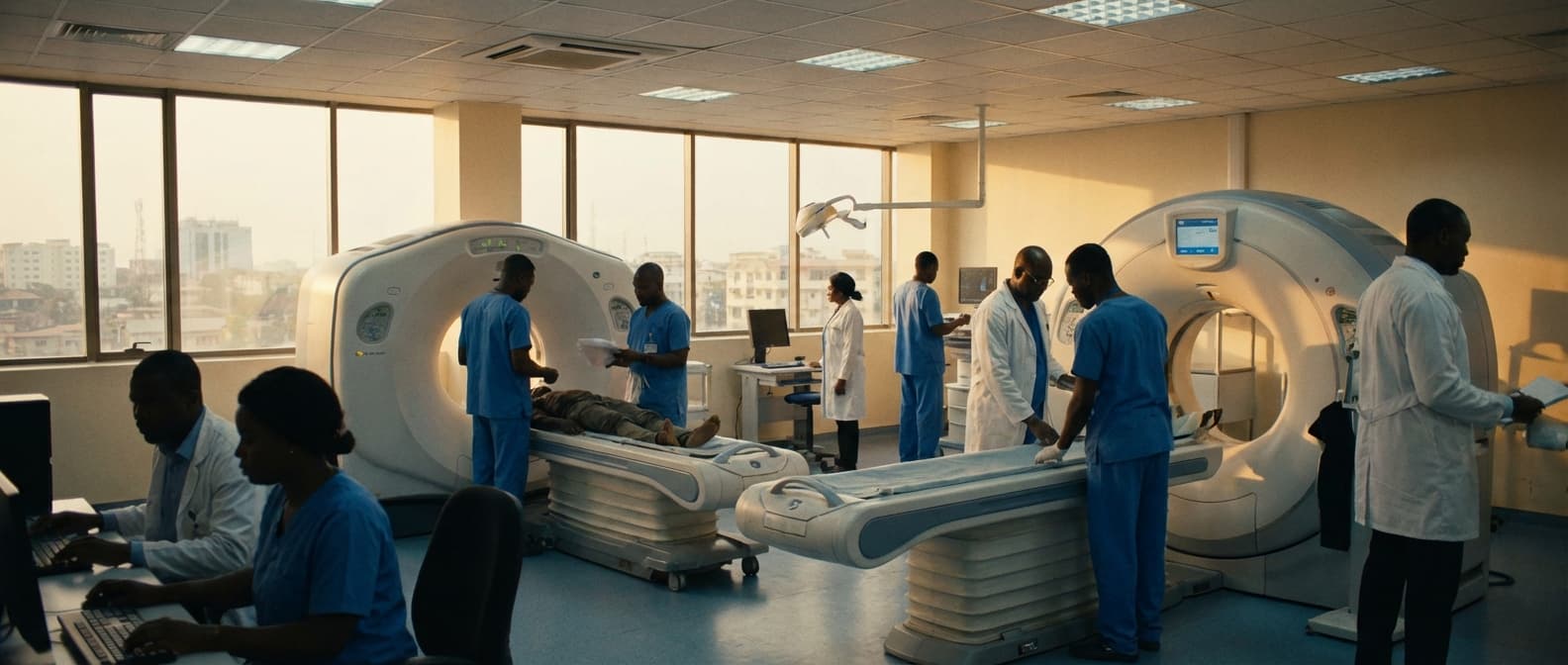
Radiology Room Design & Shielding Calculation in Tunisia
Engineering Excellence & Technical Support
Turnkey room planning, shielding drawings and approvals for imaging suites. High-standard technical execution following OEM protocols and local regulatory frameworks.
Comprehensive Radiation Shielding Design (Tunisia)
We provide meticulous radiation shielding calculations and design for radiology rooms in Tunisia, adhering to international safety standards (e.g., ICRP, NCRP) and local Tunisian regulations. Our expertise covers primary and secondary barriers for X-ray, CT, MRI, and nuclear medicine facilities, ensuring optimal patient and staff safety while minimizing material costs.
Optimized Radiology Room Layouts
Our technical team designs efficient and ergonomic radiology room layouts tailored to the specific needs and space constraints of healthcare facilities in Tunisia. We focus on workflow optimization, patient comfort, and staff accessibility, integrating advanced shielding solutions seamlessly into the architectural design for modern diagnostic imaging centers.
Advanced Dose Assessment & Compliance
Leveraging sophisticated simulation software, we perform detailed dose assessments for radiology departments across Tunisia. Our services ensure full compliance with radiation protection regulations, providing clear documentation and reports for regulatory bodies and hospital accreditation, safeguarding against overexposure and promoting best practices in diagnostic imaging.
What Is Radiology Room Design & Shielding Calculation In Tunisia?
Radiology Room Design & Shielding Calculation in Tunisia is a specialized engineering service focused on the planning, architectural design, and radiation protection of medical imaging facilities. It encompasses the meticulous assessment of radiation sources, their energy spectra, and operational parameters to determine the necessary shielding materials and thicknesses for walls, floors, ceilings, and doors. The objective is to ensure that radiation exposure levels for patients, staff, and the general public remain below legally mandated dose limits, adhering to international and national radiation safety standards. This service is crucial for any facility utilizing ionizing radiation for diagnostic or therapeutic purposes, guaranteeing operational safety and regulatory compliance within Tunisia's healthcare landscape.
| Service | Who Needs It | Typical Use Cases | Regulatory Basis (Tunisia) |
|---|---|---|---|
| Radiology Room Design & Shielding Calculation | Hospitals, private clinics, diagnostic imaging centers, radiotherapy centers, dental practices (with X-ray facilities), research institutions utilizing radiation-generating equipment. | Installation of new X-ray rooms (e.g., general radiography, CT scanners, mammography, fluoroscopy), upgrade or relocation of existing radiology suites, establishment of radiotherapy bunkers, construction of nuclear medicine departments. | Decrees and regulations concerning radiation protection, licensing of medical facilities using ionizing radiation, established by the Tunisian Ministry of Health and relevant national bodies. |
Key Components of Radiology Room Design & Shielding Calculation
- Facility Layout & Workflow Analysis: Optimizing room placement, patient and staff flow, and equipment integration to enhance efficiency and safety.
- Radiation Source Characterization: Identifying all sources of ionizing radiation (X-ray tubes, linear accelerators, radionuclide sources) and their associated energy and intensity profiles.
- Shielding Material Selection: Specifying appropriate materials (e.g., lead, concrete, baryte concrete) based on radiation type, energy, and desired attenuation.
- Shielding Thickness Calculation: Employing established physics principles and attenuation formulas (e.g., exponential attenuation, buildup factors) to determine precise shielding thicknesses for all structural elements.
- Door & Window Design: Specifying shielded doors and windows with appropriate lead equivalency and interlock systems.
- Ventilation & HVAC Integration: Designing airflow to manage potential airborne contaminants and maintain a controlled environment.
- Electrical & Plumbing Considerations: Integrating power, data, and medical gas systems while respecting shielding requirements.
- Regulatory Compliance Review: Ensuring adherence to Tunisian radiation protection regulations (e.g., decrees issued by the Ministry of Health) and relevant international guidelines (e.g., IAEA Safety Standards).
- Quality Assurance & Verification: Conducting post-construction radiation surveys and dose measurements to validate shielding effectiveness.
Who Needs Radiology Room Design & Shielding Calculation In Tunisia?
In Tunisia, the meticulous design and precise shielding calculations for radiology rooms are crucial for a range of healthcare facilities. These services are not just a matter of compliance but a fundamental requirement for patient safety, staff protection, and the efficient operation of diagnostic imaging services. Ensuring appropriate radiation protection is paramount in all medical settings where X-ray, CT, MRI, or other radiation-emitting equipment is used.
| Department/Facility Type | Specific Imaging Modalities Requiring Design & Shielding | Key Considerations for Design & Shielding |
|---|---|---|
| Radiology Departments (Hospitals/Imaging Centers) | X-ray (General Radiography, Fluoroscopy), CT Scans, MRI, Mammography, Interventional Radiology (Angiography) | Optimizing workflow, minimizing radiation exposure to staff and patients, ensuring adequate shielding for adjacent occupied areas, compliance with national radiation safety regulations, acoustic considerations for MRI. |
| Emergency Departments (Hospitals) | X-ray (Trauma, Portable), CT Scans (Head, Body) | Rapid patient throughput, robust shielding for high-volume use, ease of cleaning and maintenance, accessibility for mobile imaging units. |
| Oncology Centers/Departments | CT Scans (Simulation, Treatment Planning), X-ray (Orthovoltage) | Precise positioning requirements, protection from scattered radiation, integration with treatment planning systems, patient comfort. |
| Surgical Departments (Operating Rooms with Intraoperative Imaging) | C-Arms (Fluoroscopy) | Shielding for surgeons and staff during procedures, integration with surgical equipment, minimal obstruction to surgical field, mobile shielding solutions. |
| Orthopedic Departments/Clinics | X-ray (Weight-bearing, Post-operative), CT Scans (Joint Imaging) | Specialized equipment for orthopedic imaging, patient comfort for specific positions, protection from scattered radiation during long exposures. |
| Cardiology Departments/Interventional Suites | Fluoroscopy (Angiography, Angioplasty) | High radiation dose procedures, advanced shielding for staff, optimized workflow for complex interventions, radiation monitoring. |
| Pediatric Departments/Clinics | X-ray (Child-friendly positioning), CT Scans (Low-dose protocols) | Patient immobilization techniques, minimizing radiation dose to growing children, child-friendly room aesthetics, specialized equipment. |
| Veterinary Hospitals (with advanced imaging) | X-ray, CT Scans | Shielding for veterinarians and staff, consideration for animal positioning and restraint, equipment size and placement within clinic layout. |
Target Customers and Departments in Tunisia Requiring Radiology Room Design & Shielding Calculation:
- Hospitals (Public and Private): The primary consumers, encompassing various departments that utilize diagnostic imaging for patient care and diagnosis.
- Medical Imaging Centers/Clinics: Standalone facilities specializing in radiology services.
- Specialty Clinics: Clinics focusing on specific medical fields that require in-house imaging capabilities (e.g., orthopedic centers, oncology centers).
- Research Institutions: Facilities conducting medical research that involves the use of imaging technologies.
- Veterinary Clinics (with advanced imaging): Larger veterinary practices that invest in advanced diagnostic imaging equipment.
Radiology Room Design & Shielding Calculation Process In Tunisia
The process of designing a radiology room and calculating radiation shielding in Tunisia, from the initial inquiry to final execution, involves a structured workflow to ensure compliance with national regulations, patient safety, and optimal equipment performance. This process is typically managed by specialized engineering firms, medical physicists, or authorized radiation safety consultants. The workflow is designed to be comprehensive, addressing architectural, structural, electrical, and radiation protection aspects.
| Stage | Key Activities | Responsible Parties | Deliverables/Outcomes | Tunisian Regulatory Context |
|---|---|---|---|---|
| 1. Inquiry & Initial Consultation | Receive client request. Understand project scope (type of imaging modality, room size, location, budget). Initial site visit and data collection. | Client (Hospital/Clinic), Design Consultant/Engineer, Medical Physicist. | Project brief, preliminary scope of work, initial quote/proposal. | No specific formal documentation at this stage, but adherence to general construction and healthcare project initiation norms. |
| 2. Needs Assessment & Conceptual Design | Detailed discussion of imaging modality requirements (X-ray, CT, MRI, etc.). Define room layout, workflow, patient/staff traffic. Develop preliminary architectural plans. Estimate shielding needs based on modality and workload. | Client, Design Consultant/Engineer, Radiologist/Clinical Staff, Equipment Vendor (for technical specs). | Schematic design drawings, room layout, preliminary equipment placement, initial shielding material estimations. | Consideration of standards like those from the Tunisian Ministry of Health regarding healthcare facility design. |
| 3. Detailed Design & Shielding Calculations | Finalize architectural, structural, and MEP (Mechanical, Electrical, Plumbing) designs. Conduct precise radiation shielding calculations using international standards (e.g., NCRP, ICRP) adapted to Tunisian regulations. Determine lead/concrete thickness for walls, doors, windows, and floors. Specify shielded viewing windows and door interlocks. | Design Consultant/Engineer, Medical Physicist, Radiation Protection Officer (if applicable). | Detailed architectural drawings, structural plans, MEP drawings, comprehensive radiation shielding report with material specifications. | Adherence to principles outlined by the National Agency for Nuclear Regulation (ANRN) or its equivalent for radiation protection and safe use of X-ray equipment. Compliance with Ministry of Health directives. |
| 4. Regulatory Approval & Permitting | Submit design plans and shielding calculations to relevant authorities (e.g., Ministry of Health, local urban planning departments). Obtain necessary construction permits and radiation safety approvals. | Design Consultant/Engineer, Client, Local/National Regulatory Bodies. | Approved construction permits, radiation safety clearance. | Formal submission and approval process dictated by ANRN and the Ministry of Health. This is a critical gatekeeping step. |
| 5. Construction & Implementation | Execute construction based on approved designs. Install shielding materials (lead lining, concrete). Install specialized radiology room components (lead-lined doors, shielded windows). Complete MEP installations. | General Contractor, Specialized Subcontractors (e.g., for lead lining), Design Consultant/Engineer (for supervision). | Completed physical room according to design specifications, with installed shielding. | Construction standards in Tunisia, adherence to approved plans by authorities. Inspections may occur during construction. |
| 6. Shielding Verification & Commissioning | Conduct post-construction radiation measurements to verify shielding effectiveness. Perform equipment commissioning and calibration. Ensure interlocks and safety features are functional. Obtain final radiation safety certificate. | Medical Physicist, Radiation Protection Officer, Equipment Vendor, Regulatory Inspectors. | Shielding verification report, commissioning report, final radiation safety certificate, operational radiology room. | Mandatory verification by accredited medical physicists. Issuance of the final operational license by ANRN is contingent on successful verification. |
| 7. Post-Installation & Ongoing Compliance | Regular maintenance of equipment and shielding. Periodic radiation safety audits and recalibrations. Ongoing training for staff. Compliance with any new regulations or updates from authorities. | Client, Medical Physicist, Radiation Protection Officer, Equipment Service Providers, Regulatory Bodies. | Regular maintenance logs, updated safety certificates, ongoing operational compliance. | Continuous monitoring and compliance requirements stipulated by ANRN and the Ministry of Health for all medical radiation facilities. |
Radiology Room Design & Shielding Calculation Process in Tunisia: Workflow
- Phase 1: Inquiry & Initial Consultation
- Phase 2: Needs Assessment & Conceptual Design
- Phase 3: Detailed Design & Shielding Calculations
- Phase 4: Regulatory Approval & Permitting
- Phase 5: Construction & Implementation
- Phase 6: Shielding Verification & Commissioning
- Phase 7: Post-Installation & Ongoing Compliance
Radiology Room Design & Shielding Calculation Cost In Tunisia
Designing a radiology room and calculating the necessary shielding involves a complex interplay of factors, with costs in Tunisia influenced by the size of the facility, the type and number of imaging equipment, the expertise of the designers and physicists, and the specific materials used for shielding. It's crucial to engage qualified professionals to ensure compliance with radiation safety regulations. Costs are typically presented as a package encompassing design services, radiation shielding calculations, and potentially even the cost of the shielding materials themselves or their installation oversight.
| Service Component | Estimated Cost Range (TND) | Notes |
|---|---|---|
| Radiation Shielding Calculation (Per Room/Modality) | 1,500 - 5,000 TND | This typically covers the physics calculations for determining required shielding thickness based on equipment specifications and room occupancy. Varies by complexity of equipment (e.g., simple X-ray vs. high-energy CT). |
| Radiology Room Design (Architectural & Layout) | 2,000 - 7,000 TND | Includes space planning, workflow optimization, and integration of shielding requirements into the architectural design. Can be higher for specialized rooms or complex layouts. |
| Comprehensive Design & Shielding Package (Small Clinic/Single Room) | 4,000 - 12,000 TND | A bundled service often including initial consultation, shielding calculations, architectural layout, and basic material recommendations for a standard X-ray or ultrasound room. |
| Comprehensive Design & Shielding Package (Medium Facility/Multiple Rooms) | 10,000 - 30,000+ TND | For facilities with CT scanners, multiple X-ray rooms, or more complex imaging suites. Costs escalate significantly with more modalities and larger footprints. |
| Shielding Material Costs (e.g., Lead Lining, Concrete) | Variable (Highly Dependent on Quantity & Thickness) | This is a separate cost from design and calculation. Lead sheeting can range from 80-250 TND per square meter depending on thickness and market fluctuations. High-density concrete also incurs material and labor costs. |
| **Installation Oversight & Quality Assurance | 1,000 - 5,000 TND | Ensuring the shielding is installed correctly according to the calculations. May be included in larger packages or billed separately. |
Key Pricing Factors for Radiology Room Design & Shielding in Tunisia:
- Scope of Work: This is the primary driver. Does the project involve a new build, renovation of an existing space, or simply an upgrade of shielding for existing equipment?
- Imaging Modalities: Different equipment (X-ray, CT, MRI, PET, etc.) requires varying levels of shielding. The number of rooms and the specific modalities within each significantly impact costs.
- Room Size and Layout: Larger rooms or complex layouts requiring more extensive design work will naturally be more expensive.
- Shielding Material Selection: Common materials include lead, concrete, and specialized baryte plaster. The thickness and quantity required, along with the cost and availability of these materials in Tunisia, will affect the budget.
- Physicist and Designer Expertise: Experienced and certified radiation physicists and architectural/design firms specializing in medical facilities will command higher fees.
- Regulatory Compliance: Ensuring adherence to Tunisian radiation protection standards and obtaining necessary permits often involves additional consultation and documentation, contributing to the overall cost.
- Project Complexity & Timeline: Urgent projects or those with unforeseen complexities can incur higher costs due to expedited services or additional problem-solving.
- Geographic Location within Tunisia: While less significant than other factors, transportation and logistical costs for personnel and materials might see minor variations across regions.
Affordable Radiology Room Design & Shielding Calculation Options
Designing and outfitting a radiology room involves significant investment, but strategic planning and a focus on value bundles can lead to substantial cost savings without compromising safety or functionality. This guide explores affordable design options and shielding calculation strategies, highlighting the benefits of bundled services and actionable cost-saving measures. Understanding your specific needs, regulatory requirements, and the available technologies is key to achieving an optimal balance between cost and performance.
| Value Bundle Components | Cost-Saving Strategies | Benefits | |
|---|---|---|---|
| Design & Shielding Consultation Package: Includes initial room layout, radiation safety assessment, and preliminary shielding calculations. | Bundled Services Discount: Vendors offering integrated design and installation often provide discounts compared to separate procurement. | Streamlined Process: One point of contact for design and safety requirements. | Early Identification of Cost Drivers: Proactive identification of shielding needs prevents costly retrofits. |
| Pre-fabricated Shielding Panels: Ready-to-install panels with integrated lead or alternative shielding materials. | Reduced On-site Labor: Pre-fabrication minimizes on-site cutting, fitting, and installation time. | Faster Construction Timeline: Accelerates project completion. | Consistent Quality: Factory-controlled manufacturing ensures precise shielding thickness and integrity. |
| Turnkey Room Solutions: Comprehensive package including room construction, shielding, door installation, and basic finishes. | Negotiated Bulk Pricing: Vendors can leverage their relationships with suppliers for better material costs. | Simplified Project Management: One vendor manages multiple aspects of the room build. | Reduced Coordination Efforts: Minimizes the need to manage multiple subcontractors. |
| Standardized Room Designs: Pre-defined, compliant room layouts for common modalities (e.g., X-ray, CT). | Economies of Scale: Using standardized components and designs reduces custom engineering costs. | Faster Quoting and Procurement: Streamlines the decision-making process. | Proven Compliance: Designs are often pre-approved or based on established regulatory standards. |
| Shielding Optimization Services: Expert analysis to determine the minimum required shielding, avoiding over-installation. | Material Efficiency: Precise calculations lead to using the optimal amount of shielding material, especially lead. | Reduced Material Waste: Minimizes expensive lead offcuts. | Cost Avoidance: Prevents unnecessary expenditure on excessive shielding. |
Key Considerations for Affordable Radiology Room Design & Shielding
- Needs Assessment: Accurately define the imaging modalities to be housed, patient volume, and workflow requirements. This prevents over-engineering and unnecessary expenses.
- Regulatory Compliance: Thoroughly research and understand local, state, and federal radiation safety regulations. Compliance is non-negotiable and often dictates shielding requirements.
- Modular Design: Explore modular construction for walls and support structures. These can be pre-fabricated, reducing on-site labor and construction time.
- Material Selection: Investigate cost-effective yet effective shielding materials. While lead is standard, alternatives or optimized lead thicknesses can be considered based on radiation levels.
- Shielding Calculation Services: Leverage experienced radiation physicists for accurate shielding calculations. Over-shielding is a common and costly mistake.
- Equipment Placement Optimization: Strategic placement of imaging equipment and patient positioning areas can minimize the overall shielding required.
- Integrated Design Packages: Look for vendors offering comprehensive design and installation packages that include shielding, room construction, and potentially even equipment integration.
- Value Engineering: Proactively review design elements to identify opportunities for cost reduction without sacrificing performance or safety.
Verified Providers In Tunisia
In Tunisia's burgeoning healthcare landscape, identifying reliable and high-quality medical providers is paramount for patients seeking specialized care. Franance Health has emerged as a leading platform dedicated to vetting and showcasing these verified providers, ensuring patients can make informed decisions. Their rigorous credentialing process goes beyond surface-level checks, focusing on a comprehensive evaluation of medical expertise, professional ethics, and patient care standards. This commitment to thorough verification is what sets Franance Health apart and positions their listed providers as the premier choice for healthcare in Tunisia.
| Provider Type | Franance Health Verification Focus | Benefits for Patients |
|---|---|---|
| Specialist Doctors | Board certifications, years of practice in specialty, hospital affiliations, patient testimonials, ongoing professional development. | Access to highly skilled and experienced specialists, reduced risk of misdiagnosis, personalized treatment plans. |
| Surgical Centers | Accreditation status (e.g., JCI, ISO), surgical team qualifications, infection control protocols, post-operative care standards. | Safe and effective surgical procedures, reduced risk of complications, comprehensive recovery support. |
| Diagnostic Laboratories | Accreditation of lab facilities, quality control measures, proficiency testing, turnaround times for results. | Accurate and reliable diagnostic results, timely information for treatment decisions, advanced diagnostic capabilities. |
| Dental Clinics | Dentist's qualifications and specialties, use of modern dental technology, sterilization procedures, patient comfort measures. | High-quality dental treatments, pain management, improved oral health outcomes. |
| Cosmetic Surgery Clinics | Surgeon's specialized training in cosmetic procedures, pre-operative consultations, post-operative follow-up, patient safety records. | Safe and aesthetically pleasing cosmetic results, thorough pre- and post-operative care, realistic outcome expectations. |
Why Franance Health Credentials Matter:
- Rigorous Vetting Process: Franance Health employs a multi-stage verification process that includes checking medical licenses, specialized certifications, educational backgrounds, and peer reviews.
- Focus on Patient Experience: Beyond clinical skills, their evaluation considers patient feedback, communication styles, and the overall quality of the healthcare experience.
- Commitment to Transparency: Franance Health provides detailed profiles of their verified providers, allowing patients to understand their qualifications and specialties.
- Ensuring Ethical Practice: Providers are screened for adherence to ethical medical guidelines and professional conduct.
- Access to Leading Specialists: The platform connects patients with highly qualified doctors and medical facilities across various specialties.
- Building Trust and Confidence: For both local and international patients, Franance Health's verification offers a vital layer of trust in selecting medical services.
Scope Of Work For Radiology Room Design & Shielding Calculation
This Scope of Work (SOW) outlines the requirements for the design and shielding calculations of a radiology room. The objective is to create a safe and functional environment for diagnostic imaging procedures while adhering to all relevant regulatory standards and best practices for radiation protection. The project encompasses architectural design, structural considerations, and detailed radiation shielding calculations to ensure compliance with safety regulations and minimize radiation exposure to staff, patients, and the public.
| Standard | Description | Applicability |
|---|---|---|
| National Council on Radiation Protection and Measurements (NCRP) Reports | Provides recommendations and guidelines for radiation protection and measurements, including shielding design principles. | All aspects of shielding calculations and safety protocols. |
| International Electrotechnical Commission (IEC) Standards | Covers standards for medical electrical equipment, including safety and performance requirements for X-ray equipment. | Equipment integration and safety considerations. |
| Local Building Codes and Regulations | Adherence to local fire, structural, and accessibility codes. | Architectural and structural design. |
| Occupational Safety and Health Administration (OSHA) Standards | Ensures a safe and healthy working environment for personnel. | General safety and design considerations. |
| Radiological Society of North America (RSNA) Guidelines | Best practices and recommendations for radiology departments and imaging facilities. | Room layout, workflow, and operational efficiency. |
| American Society of Heating, Refrigerating and Air-Conditioning Engineers (ASHRAE) Standards | Governs ventilation and HVAC system design to ensure proper air quality and temperature control. | Mechanical systems design. |
Technical Deliverables
- Architectural Drawings: Detailed floor plans, elevations, and sections of the radiology room, including room dimensions, equipment placement, door and window locations, and control booth design.
- Structural Drawings: Detailing any necessary structural modifications or reinforcements required to support equipment or accommodate shielding materials.
- Radiation Shielding Design Report: Comprehensive report detailing the methodology, assumptions, and calculations for the radiation shielding requirements. This includes: - Identification of all radiation sources (e.g., X-ray tube, linear accelerator). - Specification of workload (e.g., mA-minutes/week). - Determination of occupancy factors for adjacent areas. - Calculation of dose limits for controlled and uncontrolled areas. - Specification of required shielding materials (e.g., lead, concrete) and their thicknesses for walls, floor, ceiling, doors, and windows.
- Equipment Layout Drawings: Precise placement of imaging equipment, including patient support, X-ray tube housing, and any associated accessories.
- Electrical and Mechanical Plans: Integration of electrical power, ventilation, and HVAC systems required for the radiology room and its equipment.
- Final Construction Documents: A complete set of drawings and specifications ready for bidding and construction.
- 3D Renderings (Optional): Visual representations of the designed radiology room.
Service Level Agreement For Radiology Room Design & Shielding Calculation
This Service Level Agreement (SLA) outlines the performance standards and guarantees for the design and shielding calculations of radiology rooms. It defines response times for requests and uptime guarantees for the ongoing support and maintenance of the design and calculation services.
| Service Component | Response Time Target | Uptime Guarantee |
|---|---|---|
| Initial Consultation & Requirements Gathering | Within 2 business days | N/A (Service-initiated) |
| Preliminary Design Proposal | Within 5 business days of receiving all necessary information | N/A (Project-based) |
| Final Design & Shielding Calculation Report | Within 10 business days of approval of preliminary design | N/A (Project-based) |
| Technical Support for Design Interpretation | Within 4 business hours during standard business hours (9 AM - 5 PM local time, Mon-Fri) | 99.5% availability of support personnel/portal |
| Corrections/Revisions due to errors in calculation or design by provider | Within 2 business days | N/A (Remedial) |
| Access to Design Documentation Portal/Platform | N/A | 99.9% uptime |
Key Service Components
- Radiology Room Design Services: Includes architectural layout, workflow optimization, and equipment placement.
- Radiation Shielding Calculations: Based on latest regulatory standards and specific equipment requirements.
- Documentation and Deliverables: Detailed reports, blueprints, and calculation summaries.
- Technical Support: Assistance with design interpretation and shielding validation.
Frequently Asked Questions

Ready when you are
Let's scope your Radiology Room Design & Shielding Calculation in Tunisia project in Tunisia.

Scaling healthcare logistics and technical systems across the entire continent.