
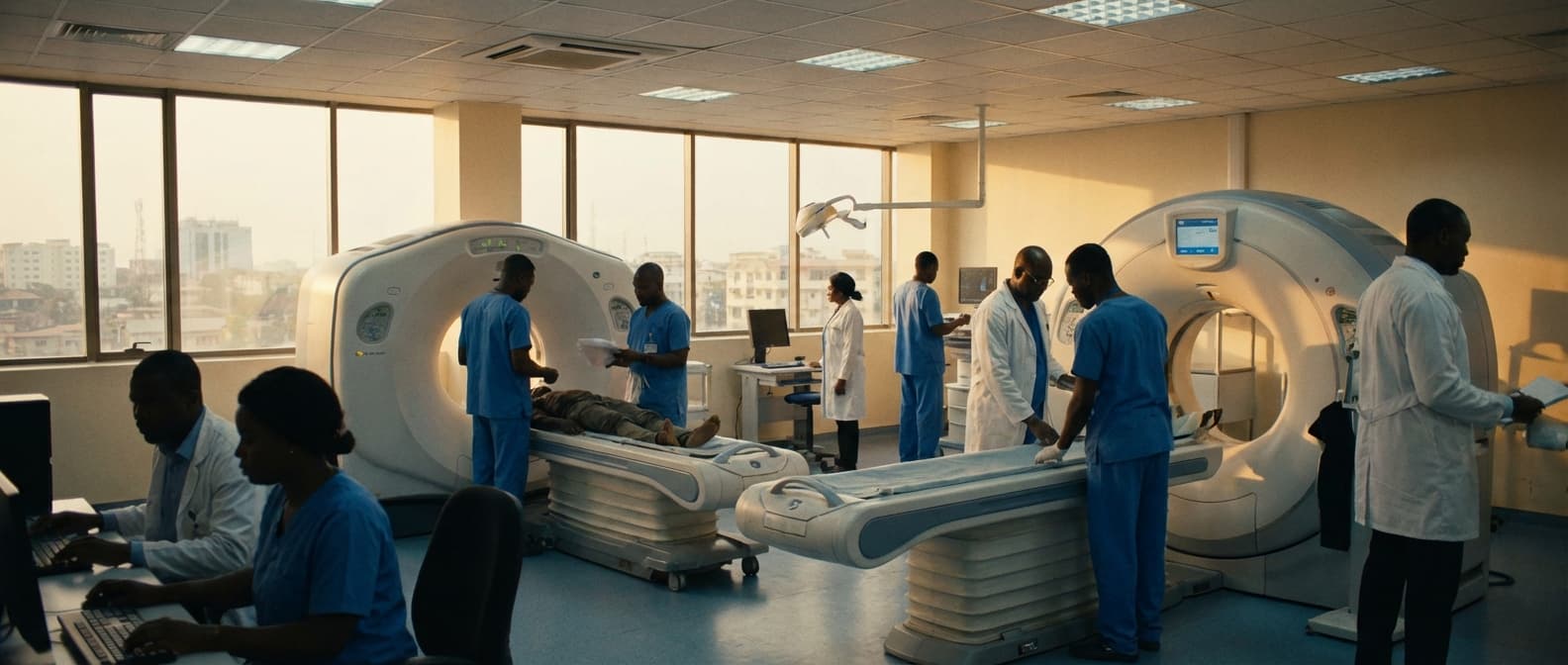
Imaging Acceptance Testing & QA in Tunisia
Engineering Excellence & Technical Support
Commissioning and periodic QA for CT/MRI/X‑ray/US/Mammo. High-standard technical execution following OEM protocols and local regulatory frameworks.
Advanced Imaging Hardware Validation
Rigorous testing of medical imaging equipment (CT, MRI, X-ray) against international standards (DICOM, NEMA) and manufacturer specifications. Focus on image quality metrics like resolution, contrast, signal-to-noise ratio, and artifact reduction through automated protocols and expert review.
PACS & RIS Integration & Performance
Ensuring seamless integration and optimal performance of Picture Archiving and Communication Systems (PACS) and Radiology Information Systems (RIS). Testing image retrieval times, workflow efficiency, data integrity, and compliance with Tunisian healthcare regulations for secure image storage and access.
Quality Assurance for AI-Powered Imaging
Validating the accuracy and reliability of Artificial Intelligence (AI) algorithms used in medical image analysis. This includes rigorous testing of detection, segmentation, and classification performance, bias assessment, and ensuring compliance with evolving regulatory frameworks for AI in healthcare.
What Is Imaging Acceptance Testing & Qa In Tunisia?
Imaging Acceptance Testing & Quality Assurance (QA) in Tunisia refers to the systematic process of verifying that medical imaging systems and their associated software components meet predefined technical specifications, performance benchmarks, and regulatory compliance standards before deployment and ongoing operation. This service ensures the integrity, accuracy, and reliability of diagnostic images and the underlying infrastructure, crucial for effective patient care and clinical decision-making. It encompasses a range of validation activities designed to identify and mitigate potential defects or deviations from intended functionality. The scope typically includes hardware validation (e.g., X-ray machines, CT scanners, MRI units, ultrasound devices), software validation (e.g., Picture Archiving and Communication Systems (PACS), Radiology Information Systems (RIS), image processing algorithms), and workflow validation. Tunisia, like many nations, is increasingly reliant on advanced medical imaging technologies, making rigorous acceptance testing and QA paramount for maintaining healthcare quality and adhering to international standards.
| Who Needs Imaging Acceptance Testing & QA? | Typical Use Cases & Scenarios | |||||||
|---|---|---|---|---|---|---|---|---|
| Hospitals and Clinics: Public and private healthcare facilities acquiring new imaging equipment or upgrading existing systems (e.g., CT scanners, MRI machines, digital radiography units). | Radiology Departments: Ensuring the reliable operation of their imaging modalities, PACS, and RIS for efficient diagnostic workflows. | Medical Imaging Equipment Manufacturers & Vendors: As part of their product development lifecycle and to ensure deployed systems meet client specifications and regulatory requirements in Tunisia. | Third-Party Service Providers: Companies offering maintenance, calibration, and remote monitoring of medical imaging equipment. | Regulatory Bodies & Accrediting Agencies: To verify that healthcare providers are utilizing safe and effective medical imaging technologies. | Research Institutions: When implementing new imaging technologies for research purposes, ensuring data quality and reproducibility. | New Healthcare Facility Construction/Expansion: Comprehensive QA is vital during the procurement and installation phases of all imaging infrastructure. | ||
| New Modality Installation: Validating a newly installed CT scanner, MRI, X-ray, or ultrasound system before it is used for patient diagnosis. | PACS/RIS Implementation or Upgrade: Testing the integration and functionality of Picture Archiving and Communication Systems and Radiology Information Systems to ensure efficient image management and reporting. | Software Updates and Patches: Verifying that software updates for imaging devices or PACS/RIS do not introduce new defects or compromise existing functionality. | Workflow Optimization Projects: Assessing the impact of process changes or new imaging protocols on system performance and user experience. | Vendor-Specific QA Processes: Manufacturers performing rigorous internal testing before shipping equipment to Tunisian clients. | Routine Quality Control (QC): Scheduled testing of imaging equipment to ensure ongoing performance and image quality meets diagnostic standards. | Troubleshooting and Root Cause Analysis: Investigating and validating fixes for performance issues or image artifacts reported by users. | Site Acceptance Testing (SAT): Client-side verification of system performance and functionality after installation at their facility in Tunisia. | Validation of AI-Powered Imaging Tools: Testing the accuracy and reliability of artificial intelligence algorithms integrated into imaging workflows. |
Key Components of Imaging Acceptance Testing & QA in Tunisia
- Systematic Validation: A structured approach to testing, covering all aspects of the imaging system lifecycle.
- Performance Benchmarking: Assessing image quality, acquisition speed, reconstruction times, and system throughput against defined metrics.
- Functional Testing: Verifying that all system features and functionalities operate as intended, including image acquisition, processing, display, storage, and retrieval.
- Integration Testing: Ensuring seamless interoperability between different components of the imaging ecosystem, such as modality, PACS, and RIS.
- Compliance Verification: Confirming adherence to relevant national (e.g., Ministry of Health regulations) and international standards (e.g., DICOM, HIPAA equivalents, ISO standards for medical devices).
- Usability Testing: Evaluating the ease of use and intuitiveness of the system for healthcare professionals.
- Security Testing: Assessing data protection, access control, and vulnerability management to safeguard patient information.
- Data Integrity Checks: Ensuring the accuracy and completeness of image data and associated metadata throughout its lifecycle.
- Post-Implementation Monitoring: Ongoing QA activities to maintain system performance and identify issues post-deployment.
Who Needs Imaging Acceptance Testing & Qa In Tunisia?
Ensuring the quality and reliability of medical imaging systems is paramount for accurate diagnosis and effective patient care. In Tunisia, as in any nation with a growing healthcare sector, robust Imaging Acceptance Testing & Quality Assurance (QA) is crucial. This process validates that new imaging equipment performs to specifications before it's integrated into clinical workflows and that existing systems maintain their performance over time. This service is essential for a wide range of healthcare providers and regulatory bodies.
| Department/Area | Key Imaging Modalities | Specific QA Needs |
|---|---|---|
| Radiology Department | X-ray (Plain, Fluoroscopy), CT, MRI, Mammography, Ultrasound, PET-CT | Image quality, radiation dose monitoring, geometric accuracy, contrast resolution, temporal resolution (for dynamic imaging), artifact reduction, system calibration. |
| Cardiology Department (Interventional) | Angiography, Cardiac CT, Cardiac MRI | Spatial resolution, temporal resolution, contrast-to-noise ratio, system stability for long procedures, dose management. |
| Oncology Department | CT, MRI, PET-CT, Mammography | Accurate tumor staging, treatment planning accuracy, longitudinal monitoring for treatment response, consistency across scans. |
| Neurology Department | MRI, CT | High-resolution imaging for subtle lesions, diffusion-weighted imaging (DWI), functional MRI (fMRI) QA, stroke imaging protocols. |
| Emergency Department | CT, X-ray, Ultrasound | Rapid acquisition protocols, artifact reduction for trauma patients, accurate dose management in time-critical scenarios. |
| Medical Physics Department (or equivalent) | All Imaging Modalities | Establishment and enforcement of QA protocols, radiation safety compliance, equipment calibration and performance verification, acceptance testing oversight. |
Target Customers & Departments in Tunisia for Imaging Acceptance Testing & QA
- {"customer":"Public Hospitals","description":"Large public hospitals across Tunisia, managed by the Ministry of Health, are primary recipients. They often operate multiple imaging modalities and require rigorous testing for new installations and regular QA to ensure patient safety and diagnostic accuracy for a broad patient population."}
- {"customer":"Private Clinics & Hospitals","description":"The burgeoning private healthcare sector in Tunisia, encompassing specialized clinics and multi-disciplinary private hospitals, relies heavily on advanced imaging. These facilities prioritize patient satisfaction and rapid diagnostic turnaround, making reliable imaging systems a key competitive advantage."}
- {"customer":"Diagnostic Imaging Centers","description":"Dedicated diagnostic imaging centers, which may operate independently or as part of larger healthcare groups, are significant users. They invest in the latest imaging technologies and require validation to justify their investments and provide high-quality services to referring physicians and patients."}
- {"customer":"Research & Academic Institutions","description":"Universities and medical research centers in Tunisia that utilize imaging for research purposes need to ensure the integrity and consistency of their data. Acceptance testing validates that equipment meets the stringent requirements for scientific research."}
- {"customer":"Government Regulatory Bodies","description":"While not direct users of imaging services, regulatory bodies responsible for healthcare facility accreditation and medical device oversight in Tunisia would benefit from standardized acceptance testing protocols to ensure compliance and patient safety across the nation."}
- {"customer":"Medical Equipment Manufacturers & Distributors","description":"Companies that manufacture, import, or distribute medical imaging equipment in Tunisia can leverage acceptance testing services to demonstrate the performance of their products to their clients and ensure a smooth transition into clinical use."}
Imaging Acceptance Testing & Qa Process In Tunisia
This document outlines the typical Imaging Acceptance Testing (AT) and Quality Assurance (QA) process in Tunisia, detailing the workflow from the initial inquiry to the final execution and sign-off. The process is designed to ensure that imaging systems and solutions meet specified requirements, perform as expected, and are fit for purpose before deployment or final handover.
| Stage | Description | Key Activities | Deliverables | Tunisian Context/Considerations |
|---|---|---|---|---|
| Inquiry & Requirement Gathering | Initial request or need for imaging AT/QA, followed by detailed understanding of functional and non-functional requirements. | Receive inquiry, conduct meetings with stakeholders (clients, vendors, IT), review existing documentation, define scope and objectives. | Requirement Specification Document (RSD), Scope Document, Initial Project Plan. | Clear communication is vital, especially with potential language nuances. Understanding local regulations related to data privacy (e.g., CNIL regulations) is crucial for any imaging solution. |
| Test Planning & Strategy Development | Defining the overall approach to testing, including methodologies, tools, resources, and timelines. | Develop Test Strategy, define AT/QA objectives, identify testing types (functional, performance, security, etc.), resource allocation, risk assessment, tool selection. | Test Strategy Document, Test Plan, Resource Plan, Risk Management Plan. | Local IT infrastructure capabilities and availability of skilled QA personnel influence the test strategy. Collaboration with local IT support teams is essential. |
| Test Case Design & Development | Creating detailed step-by-step instructions to verify specific functionalities and requirements. | Design test cases based on RSD, create test scripts, develop test data, define entry and exit criteria for each test case. | Test Cases, Test Scripts, Test Data Sets. | Test cases should be clearly documented, often in French or Arabic, to ensure understanding by local testers. Consider common local use cases and scenarios. |
| Test Environment Setup | Configuring the necessary hardware, software, and network infrastructure to conduct testing. | Procure/provision hardware, install imaging software/hardware, configure network settings, load test data, ensure all dependencies are met. | Configured Test Environment, Accessible Test Data. | Availability and reliability of internet connectivity can be a factor. Local vendor support for hardware/software setup is often leveraged. |
| Test Execution | Carrying out the designed test cases to identify defects and verify functionality. | Execute test cases, record actual results, compare actual results with expected results, document any deviations. | Test Execution Logs, Actual Test Results. | On-site testing might be preferred by some clients for initial phases. Remote testing requires robust communication channels. Local holidays and working hours need to be considered. |
| Defect Reporting & Tracking | Documenting, prioritizing, and managing identified issues (defects) throughout the testing lifecycle. | Log defects with detailed steps to reproduce, severity, and priority. Track defect status (open, fixed, retested, closed). | Defect Reports, Defect Log/Database. | Clear and concise defect descriptions are crucial. A common language for defect reporting (often English or French) is usually agreed upon. Regular defect review meetings with the development/vendor team. |
| Regression Testing | Re-testing previously tested functionalities after defect fixes or code changes to ensure no new issues have been introduced. | Execute relevant test cases, focusing on areas affected by fixes. Verify that resolved defects are indeed fixed. | Regression Test Results. | Prioritizing regression tests based on the impact of the changes is essential to manage time and resources effectively. |
| User Acceptance Testing (UAT) | End-users validate the imaging system against their business needs and confirm it meets their expectations. | End-users execute predefined UAT scenarios, provide feedback on usability and functionality, sign off on the system. | UAT Test Results, User Feedback Forms, UAT Sign-off Document. | Involving end-users early in the process is important. Their feedback is invaluable for ensuring the system's real-world applicability. UAT may be conducted in a local language. |
| Sign-off & Closure | Formal acceptance and closure of the AT/QA process based on successful completion of all testing phases and resolution of critical defects. | Final review of test reports and defect status. Obtain formal sign-off from stakeholders. Archive test documentation. | Final Test Report, AT/QA Closure Document, Project Completion Report. | Sign-off ceremonies or meetings are often part of the process. Ensuring all contractual obligations related to AT/QA are met. |
Key Stages of Imaging AT & QA Process
- Inquiry & Requirement Gathering
- Test Planning & Strategy Development
- Test Case Design & Development
- Test Environment Setup
- Test Execution
- Defect Reporting & Tracking
- Regression Testing
- User Acceptance Testing (UAT)
- Sign-off & Closure
Imaging Acceptance Testing & Qa Cost In Tunisia
Imaging Acceptance Testing & Quality Assurance (QA) costs in Tunisia are influenced by several factors, leading to a range of pricing. These costs are typically denominated in Tunisian Dinars (TND). Key pricing factors include the complexity and scope of the imaging project, the level of detail and rigor required in the testing protocols, the expertise and experience of the QA team, the time allocated for testing, and any specialized equipment or software needed. Smaller, less complex projects with basic imaging requirements will naturally cost less than large-scale, high-resolution imaging projects demanding advanced validation. The turnaround time is also a significant factor; expedited testing will usually command a premium. Furthermore, the reputation and track record of the testing service provider in Tunisia can impact their pricing.
| Service Description | Typical Price Range (TND) | Notes |
|---|---|---|
| Basic Imaging Acceptance Testing (e.g., visual inspection, functional checks) | 500 - 2,500 TND | Suitable for simple imaging devices or pre-production checks. |
| Standard Imaging Acceptance Testing (e.g., resolution, color accuracy, noise evaluation) | 2,500 - 7,000 TND | Covers common image quality metrics for a range of applications. |
| Advanced Imaging Acceptance Testing (e.g., quantitative imaging, metrology, complex data analysis) | 7,000 - 25,000+ TND | For high-precision, scientific, or critical imaging systems requiring in-depth validation. |
| Per-Image/Per-Dataset QA (for large volumes of existing image data) | 0.50 - 5 TND per image/dataset | Often tiered pricing based on volume; may involve automated checks. |
| Consultation and Test Plan Development | 300 - 1,500 TND | Cost for defining testing strategies and protocols. |
| Expedited Testing Surcharge | 20% - 50% of base cost | For faster turnaround times. |
| Specific Imaging Modality Testing (e.g., medical imaging, satellite imagery, industrial inspection) | Varies widely (e.g., 3,000 - 15,000+ TND) | Costs are highly dependent on the modality's complexity and specific standards. |
Key Pricing Factors for Imaging Acceptance Testing & QA in Tunisia
- Project Complexity and Scope: The size and intricacy of the imaging system or data set.
- Testing Protocol Rigor: The depth, breadth, and specificity of the acceptance criteria and test cases.
- QA Team Expertise: The skill level, certifications, and experience of the testing personnel.
- Testing Duration: The total time required to complete the acceptance testing and QA process.
- Specialized Equipment/Software: The need for unique tools or licenses for testing.
- Turnaround Time: The urgency of the testing delivery (standard vs. expedited).
- Service Provider Reputation: The established credibility and market standing of the QA company.
- Data Volume and Resolution: For image data testing, the sheer quantity and pixel density matter.
Affordable Imaging Acceptance Testing & Qa Options
For healthcare organizations looking to ensure the reliability and accuracy of their imaging equipment without breaking the bank, affordable Imaging Acceptance Testing (AT) and Quality Assurance (QA) options are crucial. These services verify that new or repaired equipment meets all performance standards and regulatory requirements before it's used on patients, and then continuously monitor its performance. Value bundles and strategic cost-saving approaches can significantly reduce the overall expenditure while maintaining high-quality patient care and compliance.
| Service Component | Typical Cost Range (Estimate) | Potential Cost-Saving Tactic |
|---|---|---|
| Initial Acceptance Testing (per modality) | $500 - $5,000+ | Bundle with ongoing QA, negotiate multi-modal discounts. |
| Annual QA Testing (per modality) | $300 - $2,000+ | Remote monitoring, integrate with PM, volume discounts. |
| Remote Data Monitoring Software/Platform | $1,000 - $10,000+ annually | Included in bundled services, negotiate based on number of devices. |
| Compliance Documentation Support | $200 - $1,000+ per event | Bundle with AT/QA, leverage in-house resources for basic documentation. |
| Travel and On-Site Labor | $100 - $300+ per hour | Prioritize remote services, schedule strategically, consider local providers. |
Key Value Bundles and Cost-Saving Strategies
- {"items":["Integrated AT/QA Programs: Combine initial acceptance testing with ongoing quality assurance into a single contract. This often provides a lower per-service cost and simplifies vendor management.","Multi-Modal Bundles: Negotiate pricing for testing across several imaging modalities (e.g., X-ray, CT, MRI, Ultrasound) from a single provider. Volume discounts are typically applied.","Remote Monitoring & Reporting Bundles: Leverage technology for remote data acquisition and analysis. This reduces on-site visits and associated travel costs, especially for facilities with multiple locations.","Preventive Maintenance (PM) Integration: Bundle AT/QA with scheduled preventive maintenance. This proactive approach can identify potential issues early, preventing costly downtime and emergency repairs.","Data Management & Analytics Packages: Include services for organizing, storing, and analyzing imaging performance data. This can lead to better trend identification, predictive maintenance, and optimized equipment utilization.","Compliance & Accreditation Support Bundles: Combine technical testing with documentation assistance for regulatory bodies (e.g., FDA, Joint Commission) and accreditation organizations."],"title":"Value Bundles"}
- {"items":["Leverage Technology for Remote Services: Utilize software solutions for remote data collection, analysis, and reporting. This minimizes on-site technician time and travel expenses.","Standardize Equipment Where Possible: When purchasing new equipment, consider standardizing on specific manufacturers or models. This can lead to bulk purchasing discounts and simplified training and maintenance.","Negotiate Long-Term Contracts: Commit to multi-year agreements for AT/QA services. This often results in preferential pricing and locked-in rates, protecting against inflation.","Consider Third-Party Providers: While OEM (Original Equipment Manufacturer) services are often thorough, reputable third-party service providers can offer comparable quality at a significantly lower cost.","In-House QA Programs (with caution): For some basic QA tasks, well-trained in-house staff can perform routine checks. However, this requires significant investment in training, equipment, and ongoing competency validation, and complex AT should still be outsourced.","Performance-Based Contracts: Structure contracts where vendor payment is tied to specific performance metrics and uptime guarantees. This incentivizes efficient and effective service delivery.","Strategic Scheduling: Coordinate AT/QA testing with planned downtime for other equipment maintenance or upgrades to minimize disruption and optimize technician availability.","Data-Driven Decision Making: Analyze historical testing data to identify trends, anticipate potential failures, and adjust QA protocols for maximum efficiency and cost-effectiveness."],"title":"Cost-Saving Strategies"}
Verified Providers In Tunisia
In the realm of healthcare, trust and reliability are paramount. When seeking medical services, particularly abroad, identifying verified providers is crucial. Tunisia, a nation increasingly recognized for its burgeoning medical tourism sector, offers a diverse range of healthcare facilities and specialists. Among these, Franance Health stands out as a premier organization, distinguished by its rigorous credentialing process and unwavering commitment to patient well-being. This document outlines why Franance Health credentials signify the best choice for your healthcare needs in Tunisia.
| Franance Health Credentials: What They Mean for You | Key Aspects | Benefits for Patients |
|---|---|---|
| Rigorous Medical Professional Vetting | Franance Health scrutinizes the qualifications, experience, and licensing of all affiliated doctors and surgeons. This includes verification of educational background, specialized training, and board certifications. | Assurance of receiving care from highly trained and competent medical experts. |
| Facility Accreditation and Standards | Partnering hospitals and clinics are evaluated for their adherence to international quality and safety standards. This covers aspects like infection control, patient care protocols, and the availability of advanced medical technology. | Confidence in receiving treatment within safe, well-equipped, and professionally managed healthcare environments. |
| Ethical Practice and Patient Rights | Franance Health emphasizes ethical conduct, transparency, and the protection of patient rights. This includes ensuring informed consent, confidentiality, and respectful treatment. | Peace of mind knowing your well-being and rights are prioritized throughout your medical journey. |
| Specialized Expertise Alignment | Franance Health carefully matches patients with providers who possess the specific expertise required for their medical condition. This often involves a review of case histories and treatment plans. | Access to specialists best suited to address your unique health concerns, leading to more effective and personalized care. |
| Ongoing Quality Monitoring | The credentialing process is not a one-time event. Franance Health engages in continuous monitoring and evaluation of its affiliated providers to ensure sustained quality of care. | Consistent delivery of high-standard healthcare services, even for longer treatment durations or follow-up care. |
Understanding Verified Providers in Tunisia
- The Importance of Verification: In any healthcare landscape, distinguishing legitimate and high-quality providers from others is essential. Verification ensures that practitioners and facilities meet established standards for expertise, safety, ethics, and operational excellence.
- Tunisia's Healthcare Advancement: Tunisia has invested significantly in its healthcare infrastructure, attracting international patients with its competitive pricing, modern facilities, and skilled medical professionals.
- The Role of Credentialing Bodies: Organizations like Franance Health act as vital gatekeepers, meticulously vetting healthcare providers to assure patients of their qualifications and adherence to best practices.
Scope Of Work For Imaging Acceptance Testing & Qa
This Scope of Work (SOW) outlines the activities, technical deliverables, and standard specifications for Imaging Acceptance Testing and Quality Assurance (QA). The objective is to ensure that the imaging system meets all functional, performance, and regulatory requirements before being deployed into production. This includes validating the image acquisition, processing, storage, retrieval, and display capabilities, as well as adherence to industry standards and best practices.
| Activity Area | Testing Scope | Technical Deliverables | Standard Specifications |
|---|---|---|---|
| Image Acquisition & Protocoling | Testing of all imaging modalities (CT, MRI, X-ray, Ultrasound, etc.) and their associated protocols. Verification of correct parameter selection, image formatting, and metadata generation. | Acquisition test images (real or simulated) from each modality. Protocol validation reports. Metadata analysis reports. | DICOM Part 3 (Information Object Definitions), DICOM Part 4 (Service Class Specifications), Modality-specific DICOM Conformance Statements. Vendor-specific protocol documentation. |
| Image Processing & Enhancement | Validation of image processing functions (e.g., filtering, windowing, level adjustment, annotation). Testing of image reconstruction and post-processing algorithms. | Processed image sets demonstrating various enhancements. Performance metrics for processing times. Algorithm validation reports. | DICOM Part 14 (Grayscale Standard Display Function), relevant image processing standards (e.g., for noise reduction, artifact removal). Clinical image quality assessment guidelines. |
| Image Storage & Retrieval (PACS/VNA) | Testing of image archival, retrieval, query, and management functionalities. Verification of data integrity and security during storage and retrieval. | Test cases for query/retrieve operations. Storage capacity and performance reports. Data integrity verification logs. Audit trail review. | DICOM Part 8 (Network Communication), DICOM Part 10 (Media Storage and File Format), DICOM Part 11 (Media Storage Management). HL7 standards for information exchange. Data retention policies. |
| Workstation & Viewer Functionality | Testing of user interface, image display, manipulation tools (zoom, pan, measure), multi-planar reconstruction (MPR), and 3D rendering capabilities. | User acceptance testing (UAT) scripts and results. Performance benchmarks for viewer responsiveness. Usability feedback reports. | DICOM Part 10 (for viewer interaction with DICOM objects), IHE profiles for display (e.g., View Compatibility). Human-Computer Interaction (HCI) principles. |
| Interoperability & Integration | Testing of integration points with RIS, EMR, and other departmental systems. Verification of data exchange and workflow continuity. | Interface test logs. HL7 message validation reports. Workflow simulation results. End-to-end testing reports. | HL7 v2.x/v3 standards (e.g., ORM, ORU messages). IHE profiles for integration (e.g., Patient Reconciliation, Scheduled Workflow). FHIR APIs where applicable. |
| Performance & Scalability | Assessment of system response times, image loading speeds, query performance, and ability to handle expected user and data loads. | Load testing reports. Performance tuning recommendations. Scalability assessment. Stress test results. | Industry best practices for PACS/VNA performance. Network latency and throughput specifications. Server hardware and software configuration standards. |
| Security & Compliance | Verification of access controls, audit trails, data encryption, and compliance with HIPAA, GDPR, and other relevant regulations. | Security audit reports. Access control matrix validation. Compliance checklist. Penetration testing results (if applicable). | HIPAA Security Rule. GDPR articles related to data protection. DICOM Part 15 (Security). NIST cybersecurity frameworks. |
| Documentation & Training | Review of user manuals, technical documentation, and training materials. Assessment of training effectiveness for end-users and IT support. | Documentation review feedback. Training material assessment. Training effectiveness reports. | Industry standards for technical writing. Best practices for adult learning and training delivery. |
Key Objectives and Scope of Work
- Validate the accurate and consistent capture of medical images across all modalities.
- Verify the integrity and quality of image processing algorithms and parameters.
- Confirm the reliable storage, retrieval, and management of imaging data within the PACS/VNA.
- Ensure seamless integration with other healthcare IT systems (e.g., RIS, EMR).
- Assess system performance, including image loading times, query speeds, and throughput.
- Confirm compliance with relevant regulatory standards (e.g., DICOM, HIPAA, FDA).
- Evaluate the usability and effectiveness of the imaging workstation and viewer software.
- Identify and document any defects, deviations from requirements, or areas for improvement.
Service Level Agreement For Imaging Acceptance Testing & Qa
This Service Level Agreement (SLA) outlines the commitment for Imaging Acceptance Testing and Quality Assurance (QA) services provided by [Your Company Name] to [Client Company Name]. It defines the expected response times for critical issues and the guaranteed uptime of the imaging acceptance testing platform and related QA tools.
| Service Component | Uptime Guarantee | Response Time (Critical Issues) | Response Time (Non-Critical Issues) |
|---|---|---|---|
| Imaging Acceptance Testing Platform (Web Portal/Application) | 99.5% | 1 Business Hour | 4 Business Hours |
| Dedicated QA Support Team Availability | N/A (Service Hours Apply) | 30 Minutes (during business hours) | 2 Business Hours (during business hours) |
| QA Tooling & Infrastructure (e.g., test servers, databases) | 99.0% | 2 Business Hours | 8 Business Hours |
Scope of Services
- Imaging Acceptance Testing Management: Oversight and execution of acceptance testing for all new imaging equipment and software installations.
- Quality Assurance Reviews: Conduct of regular QA reviews on existing imaging systems to ensure optimal performance and adherence to standards.
- Defect Tracking & Resolution: Identification, documentation, and tracking of defects encountered during testing and QA processes, with defined resolution timelines.
- Reporting: Generation of comprehensive reports on testing progress, QA findings, and defect status.
Frequently Asked Questions

Ready when you are
Let's scope your Imaging Acceptance Testing & QA in Tunisia project in Tunisia.

Scaling healthcare logistics and technical systems across the entire continent.