
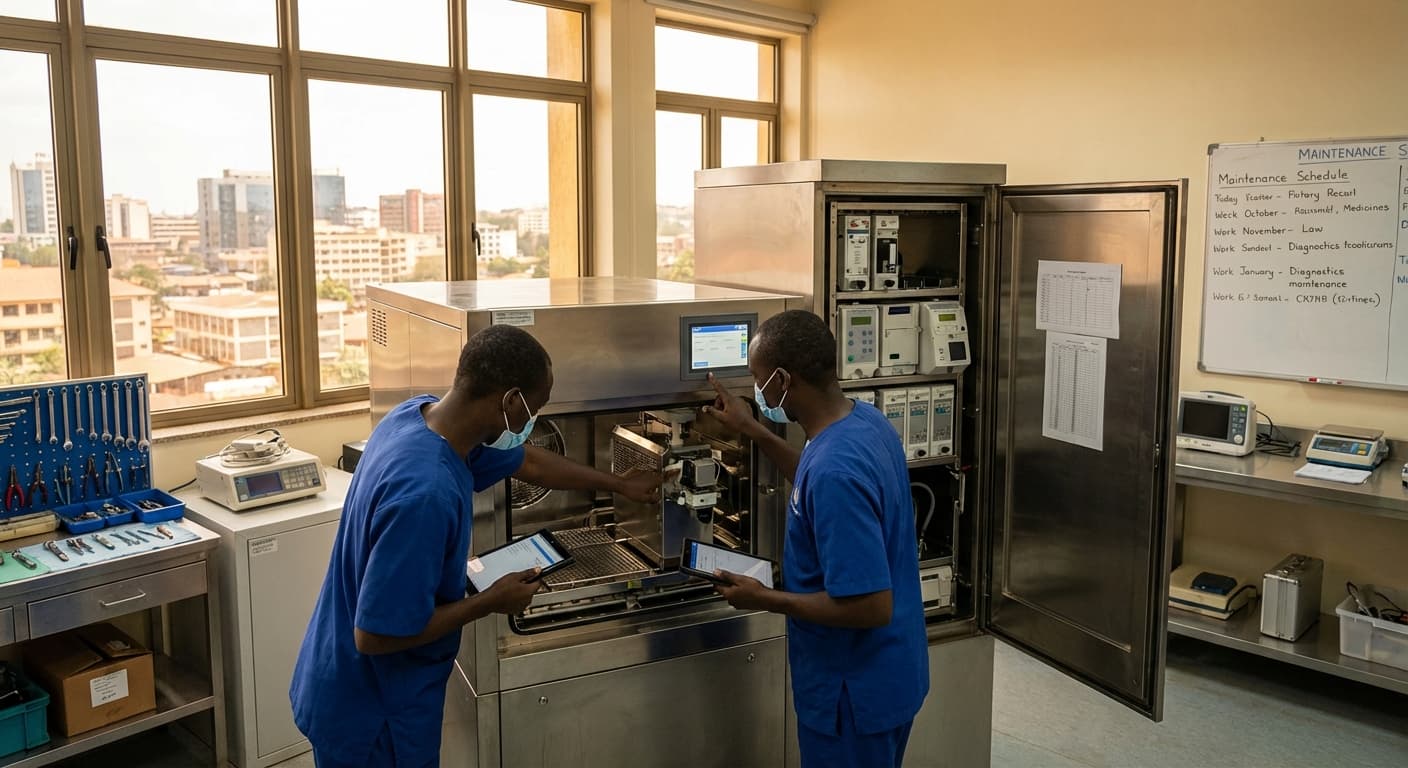
Total Cost of Ownership (TCO) & Lifecycle Budgeting Service in Tunisia
Engineering Excellence & Technical Support
Total Cost of Ownership (TCO) & Lifecycle Budgeting Service High-standard technical execution following OEM protocols and local regulatory frameworks.
Optimized Investment Decisions
Our TCO & Lifecycle Budgeting services in Tunisia provide granular cost breakdowns for every stage of an asset's life, from acquisition and operation to maintenance and disposal. This empowers businesses to make data-driven investment decisions, minimizing unexpected expenditures and maximizing long-term profitability.
Predictive Cost Forecasting
Leveraging advanced analytics and Tunisian market data, we deliver accurate predictive cost models. This allows your organization to proactively budget for future maintenance, upgrades, and operational expenses, mitigating financial risks and ensuring budget adherence throughout the asset's lifecycle within the Tunisian economic landscape.
Enhanced Operational Efficiency
By identifying cost drivers and inefficiencies across the entire lifecycle, our TCO & Lifecycle Budgeting services enable Tunisian businesses to streamline operations. This leads to reduced waste, optimized resource allocation, and ultimately, significant improvements in overall operational efficiency and competitive advantage.
What Is Total Cost Of Ownership (Tco) & Lifecycle Budgeting Service In Tunisia?
Total Cost of Ownership (TCO) and Lifecycle Budgeting (LCB) services in Tunisia represent a strategic financial management discipline focused on quantifying the complete economic impact of an asset or system throughout its entire lifespan. TCO encompasses all direct and indirect costs, from initial acquisition and implementation to operation, maintenance, and eventual disposal. Lifecycle Budgeting extends this by projecting these costs over the asset's projected operational period, enabling informed decision-making, risk mitigation, and optimized resource allocation within Tunisian businesses and governmental entities.
| Who Needs TCO & LCB Services in Tunisia? | Typical Use Cases in Tunisia | |||
|---|---|---|---|---|
| Businesses (SMEs & Large Enterprises): Across sectors like manufacturing, IT, telecommunications, logistics, and retail seeking to optimize capital expenditure and operational efficiency. | Government & Public Sector Entities: For procurement of public infrastructure, IT systems, vehicles, and operational services, ensuring long-term fiscal responsibility. | Real Estate Developers & Property Managers: To assess the full cost implications of building construction, facility management, and long-term asset upkeep. | IT Departments: For evaluating the true cost of hardware, software, cloud services, and IT infrastructure over their lifecycle. | Procurement & Finance Departments: To support strategic sourcing, budget forecasting, and investment appraisal. |
| IT Infrastructure Planning: Evaluating the TCO of on-premise servers vs. cloud solutions, or comparing different enterprise resource planning (ERP) systems. | Vehicle Fleet Management: Determining the most cost-effective vehicle acquisition, operation, and maintenance strategy over several years for logistics companies or government agencies. | Building & Facility Management: Calculating the lifecycle costs of HVAC systems, energy-efficient lighting, and building maintenance for commercial properties or public institutions. | Software Development & Acquisition: Assessing the total cost of developing custom software versus purchasing off-the-shelf solutions, including ongoing support and updates. | Energy Infrastructure Projects: Evaluating the long-term economic viability and operational costs of renewable energy installations or traditional power generation facilities. |
Key Components of TCO & LCB Services
- Acquisition Costs: Includes purchase price, licensing, initial installation, configuration, and integration expenses.
- Operating Costs: Encompasses energy consumption, consumables, software subscriptions, and routine maintenance.
- Maintenance & Support Costs: Covers scheduled preventative maintenance, unscheduled repairs, spare parts, and technical support contracts.
- Upgrade & Enhancement Costs: Addresses planned or necessary upgrades, expansions, and feature enhancements.
- Downtime & Productivity Loss: Quantifies the economic impact of system unavailability, including lost revenue and reduced operational efficiency.
- Training & Personnel Costs: Includes initial and ongoing training for staff, as well as the cost of personnel dedicated to managing and operating the asset.
- Disposal & Decommissioning Costs: Encompasses costs associated with removal, data sanitization, environmental compliance, and residual asset value recovery.
- Financing Costs: If applicable, includes interest payments, depreciation, and other capital-related expenses.
Who Needs Total Cost Of Ownership (Tco) & Lifecycle Budgeting Service In Tunisia?
In Tunisia's dynamic and evolving business landscape, understanding the true long-term expense of assets and projects is crucial for strategic decision-making and financial sustainability. A Total Cost of Ownership (TCO) & Lifecycle Budgeting service provides this in-depth financial insight, going beyond the initial purchase price to encompass all costs associated with an asset or project from acquisition to disposal. This comprehensive approach allows businesses to identify hidden costs, optimize spending, and improve return on investment. Without TCO and lifecycle budgeting, organizations in Tunisia risk underestimating expenses, leading to budget overruns, inefficient resource allocation, and ultimately, a diminished competitive edge.
| Target Customer/Industry | Relevant Departments | Key Benefits of TCO/Lifecycle Budgeting |
|---|---|---|
| Large Enterprises (e.g., Telecommunications, Banking, Manufacturing) | Finance Department, Procurement, IT Department, Operations Management, Strategic Planning | Accurate long-term financial forecasting, optimized capital allocation, improved vendor negotiation power, identification of cost-saving opportunities across asset lifecycle. |
| Small and Medium-sized Enterprises (SMEs) | General Management, Finance, Operations | Better decision-making on equipment purchases, improved cash flow management, avoidance of costly maintenance surprises, enhanced project profitability. |
| Government Ministries & Public Sector Agencies (e.g., Infrastructure, Health, Education) | Budgeting & Finance Units, Procurement Offices, Project Management Offices, Asset Management | Justification of public spending, efficient management of taxpayer money, informed infrastructure planning, long-term service delivery cost optimization, compliance with financial regulations. |
| Real Estate Developers & Property Management Companies | Development Team, Finance, Operations & Maintenance | Accurate project cost estimation, optimization of building lifecycle costs (energy, maintenance, repairs), informed decisions on materials and technologies, improved property profitability. |
| Tourism & Hospitality Sector (e.g., Hotels, Airlines) | Finance, Operations, Procurement, Asset Management | Optimizing costs for hotel equipment, transportation fleets, and operational systems; ensuring long-term profitability and service quality. |
Who Needs TCO & Lifecycle Budgeting Service in Tunisia?
- Businesses seeking to maximize their return on investment for significant capital expenditures.
- Organizations aiming to improve financial predictability and avoid unexpected costs.
- Companies undergoing digital transformation or technology upgrades.
- Public sector entities managing large-scale infrastructure projects and public services.
- Manufacturing and industrial firms with extensive machinery and equipment portfolios.
- Service providers looking to optimize operational costs for fleet management, IT infrastructure, or facilities.
- Any entity in Tunisia that makes decisions involving assets with a lifespan of more than one year.
Total Cost Of Ownership (Tco) & Lifecycle Budgeting Service Process In Tunisia
The Total Cost of Ownership (TCO) & Lifecycle Budgeting service process in Tunisia, as provided by a specialized firm, involves a structured workflow designed to deliver comprehensive cost analysis and financial planning for assets and projects. This process ensures that clients have a clear understanding of all costs associated with an asset or project from its inception to its disposal, enabling informed decision-making and optimal resource allocation.
| Stage | Description | Key Activities | Deliverables | ||||
|---|---|---|---|---|---|---|---|
| The client expresses interest in TCO & Lifecycle Budgeting services. This stage focuses on understanding the client's needs and initial requirements. | Receive client inquiry, schedule initial meeting, understand project/asset context, discuss high-level objectives. | Confirmation of client's interest, preliminary understanding of service needs. | ||||
| Formalizing the project scope and collecting all necessary data for accurate analysis. This is a crucial stage for the success of the TCO model. | Define specific asset(s) or project(s) to be analyzed, identify key stakeholders, gather historical data (purchase costs, operational expenses, maintenance records, disposal costs), collect future projections (inflation rates, technology advancements, regulatory changes). | Signed Service Agreement/Proposal, detailed project scope document, comprehensive data collection checklist. | ||||
| Developing the financial model that accounts for all costs over the entire lifecycle of the asset or project. | Identify all cost categories (acquisition, operation, maintenance, repair, upgrade, disposal), assign cost drivers and methodologies, apply relevant discount rates and inflation factors, forecast costs over the defined lifecycle period. | Developed TCO and Lifecycle Cost Model (e.g., spreadsheet, specialized software). This is an iterative process often involving client feedback. |
| Interpreting the data from the model and generating insights for the client. | Run sensitivity analyses, perform scenario planning, identify key cost drivers and risk areas, quantify potential savings, develop comprehensive reports summarizing findings and recommendations. | Detailed TCO & Lifecycle Budgeting Report, including executive summary, methodology, detailed cost breakdowns, risk assessments, and preliminary recommendations. |
| Communicating the findings and proposed strategies to the client's decision-makers. | Present the TCO report, explain the findings and their implications, discuss recommended strategies for cost optimization, risk mitigation, and strategic financial planning. | Presentation slides, Q&A session with client stakeholders, documented agreed-upon next steps. | ||||
| Assisting the client in putting the recommendations into practice. | Develop implementation plans, assist in vendor selection for cost-saving initiatives, support the procurement process, provide training to internal teams. | Implementation plans, vendor evaluation reports, procurement support documentation, training materials. | ||||
| Ensuring the long-term effectiveness of the TCO and lifecycle budgeting strategy. | Schedule periodic reviews of the implemented strategies, update the TCO model with new data, refine cost assumptions based on actual performance, provide ongoing advisory services. | Updated TCO reports, performance review summaries, revised cost-saving strategies. |
TCO & Lifecycle Budgeting Service Process Workflow
- Inquiry & Initial Consultation
- Scope Definition & Data Gathering
- TCO & Lifecycle Cost Modeling
- Analysis & Reporting
- Presentation & Recommendations
- Implementation Support (Optional)
- Review & Refinement
Total Cost Of Ownership (Tco) & Lifecycle Budgeting Service Cost In Tunisia
Assessing the Total Cost of Ownership (TCO) and implementing lifecycle budgeting for IT services in Tunisia involves a nuanced approach to pricing, influenced by a combination of local economic factors, service complexity, and provider expertise. TCO encompasses all direct and indirect costs associated with an IT asset or service throughout its entire lifecycle, from acquisition and implementation to operation, maintenance, and eventual disposal. Lifecycle budgeting, in turn, allocates resources for these costs over the projected lifespan of the service.
Several factors significantly impact the pricing of TCO and lifecycle budgeting services in Tunisia. These include:
- Scope and Complexity of the Service: The breadth of services covered (e.g., software, hardware, cloud, networking) and the complexity of the IT infrastructure being analyzed will directly affect the time and expertise required from the consulting firm.
- Data Availability and Quality: The ease with which a provider can access and analyze relevant data (e.g., purchase records, maintenance logs, usage statistics) will influence the efficiency and cost of the assessment.
- Provider Expertise and Reputation: Established consulting firms with a proven track record and specialized knowledge in TCO and lifecycle budgeting often command higher rates due to their demonstrable value and reduced risk for clients.
- Project Duration and Deliverables: The length of the engagement and the specific outputs required (e.g., detailed reports, strategic recommendations, ongoing monitoring tools) will be factored into the pricing.
- Market Demand and Competition: The current demand for TCO and lifecycle budgeting services in Tunisia and the number of available providers can influence pricing dynamics.
- Economic Conditions and Currency Fluctuations: The overall economic stability in Tunisia and any fluctuations in the Tunisian Dinar (TND) can indirectly impact the cost of services, especially for international consulting firms or those importing specialized tools.
- Client Size and Industry: Larger enterprises or those in highly regulated industries might require more extensive and tailored TCO analyses, potentially leading to higher costs.
Given these factors, pricing for TCO and lifecycle budgeting services in Tunisia can vary considerably. While precise figures are difficult to ascertain without specific project details, a general range can be estimated.
Pricing Ranges in Tunisian Dinar (TND):
It's important to note that these are indicative ranges and actual costs will depend on a detailed project scope. Pricing is often structured on a project basis or as an hourly/daily rate for consultants.
| Service Component/Engagement Type | Estimated Price Range (TND) | Notes |
|---|---|---|
| Initial TCO Assessment (Small to Medium Business - Basic Scope) | 3,000 - 8,000 TND | Covers essential hardware, software, and direct operational costs. |
| Comprehensive TCO Analysis (Medium to Large Enterprise - Complex Infrastructure) | 10,000 - 30,000+ TND | Includes indirect costs, cloud services, security, and detailed lifecycle stages. |
| Lifecycle Budgeting Strategy Development (per engagement) | 5,000 - 15,000 TND | Focuses on planning and allocating budgets over the service lifespan. |
| Consultant Hourly Rate (Senior Specialist) | 150 - 400 TND per hour | Varies based on experience and specialization. |
| Consultant Daily Rate (Senior Specialist) | 1,000 - 2,500 TND per day | Typically for longer-term engagements or on-site work. |
| Development of TCO/Lifecycle Models (custom) | 7,000 - 20,000+ TND | Includes building bespoke tools and templates for ongoing use. |
| Ongoing TCO Monitoring & Optimization (retainer) | 2,000 - 10,000+ TND per month | Based on the complexity and frequency of reviews. |
Key Pricing Factors for TCO & Lifecycle Budgeting Services in Tunisia
- Scope and Complexity of the IT Service
- Data Availability and Quality for Analysis
- Consulting Firm's Expertise and Reputation
- Project Duration and Required Deliverables
- Market Demand and Competitive Landscape
- Tunisian Economic Conditions and Currency Stability
- Client Size and Industry Specifics
Affordable Total Cost Of Ownership (Tco) & Lifecycle Budgeting Service Options
Our Affordable Total Cost of Ownership (TCO) & Lifecycle Budgeting service offers comprehensive solutions designed to minimize your long-term expenses and maximize your return on investment. We understand that the initial purchase price is only a fraction of the true cost. Our services focus on evaluating and managing all expenditures associated with an asset or project throughout its entire lifecycle, from acquisition and operation to maintenance, upgrades, and eventual disposal. We achieve this through intelligent value bundles and strategic cost-saving initiatives.
| Cost-Saving Strategy | Description | Impact on TCO |
|---|---|---|
| Preventative Maintenance Programs | Implementing scheduled maintenance to avoid costly breakdowns and extend asset lifespan. | Significantly reduces unexpected repair costs and operational downtime. |
| Energy Efficiency Upgrades | Investing in energy-efficient technologies and practices to lower utility consumption. | Directly reduces operational expenditure, a major component of TCO. |
| Strategic Sourcing & Procurement | Negotiating favorable terms with suppliers and choosing durable, low-maintenance equipment. | Lowers initial acquisition costs and reduces long-term replacement and repair expenses. |
| Extended Warranties & Service Agreements | Leveraging service agreements to lock in predictable maintenance costs and access expert support. | Minimizes unpredictable repair bills and ensures optimal asset performance. |
| Standardization & Modularity | Adopting standardized components and modular designs to simplify maintenance and reduce part inventory. | Streamlines maintenance, reduces training needs, and lowers inventory holding costs. |
| Lifecycle Cost Modeling Software | Utilizing advanced software to accurately predict and track TCO throughout the lifecycle. | Provides data-driven insights for more effective cost control and decision-making. |
| Employee Training & Skill Development | Investing in staff training to ensure proper operation, maintenance, and troubleshooting. | Reduces errors, improves efficiency, and minimizes the need for external technical support. |
Key Service Components & Value Bundles:
- Core TCO Analysis: In-depth assessment of all direct and indirect costs associated with your assets or projects. This forms the foundation of informed decision-making.
- Lifecycle Budgeting & Forecasting: Development of robust budgets that account for all anticipated costs across the entire lifespan, enabling proactive financial planning.
- Risk Assessment & Mitigation: Identification of potential cost overruns and development of strategies to minimize financial risks.
- Performance Benchmarking: Comparison of your TCO against industry standards and best practices to identify areas for improvement.
- Optimization Strategies: Implementation of tailored recommendations to reduce operational, maintenance, and energy costs.
- Disposal & Decommissioning Planning: Proactive planning for asset retirement to minimize disposal costs and maximize residual value.
- Customizable Bundles: We offer flexible packages combining these core components based on your specific needs and project scale. For example, a 'Lean Start-up' bundle might focus on initial TCO analysis and basic lifecycle budgeting, while a 'Comprehensive Enterprise' bundle could include advanced risk mitigation, ongoing performance monitoring, and strategic asset retirement planning.
Verified Providers In Tunisia
In Tunisia's burgeoning healthcare landscape, identifying trustworthy and high-quality healthcare providers is paramount. Franance Health has emerged as a leading accreditation and certification body, setting a high bar for medical facilities and professionals. Their rigorous verification process ensures that accredited providers adhere to stringent international standards for patient care, safety, and operational excellence. Choosing a Franance Health-verified provider in Tunisia offers peace of mind, guaranteeing access to skilled medical teams, modern facilities, and ethical treatment protocols. This commitment to quality makes Franance Health credentials synonymous with reliability and superior healthcare outcomes.
| Franance Health Verified Provider Feature | Benefit for Patients |
|---|---|
| Rigorous Accreditation Process | Assurance of adherence to global best practices in healthcare. |
| Focus on Patient-Centric Care | Ensures a supportive and respectful environment during treatment. |
| Commitment to Continuous Improvement | Guarantees that providers are always striving to enhance their services. |
| International Recognition | Provides confidence for both local and international patients seeking quality care. |
| Transparency in Practices | Promotes open communication and trust between patients and providers. |
Why Franance Health Credentials Matter in Tunisia:
- Uncompromising Quality Standards: Franance Health enforces adherence to internationally recognized benchmarks for medical practice.
- Enhanced Patient Safety: Verification includes thorough assessments of safety protocols and infection control measures.
- Skilled and Competent Professionals: Accredited facilities are committed to employing highly qualified and experienced medical staff.
- State-of-the-Art Facilities and Technology: Franance Health ensures that accredited institutions utilize modern equipment and infrastructure.
- Ethical Treatment and Transparency: Providers are held to high ethical standards, promoting patient rights and clear communication.
- Improved Patient Outcomes: The rigorous standards contribute to better diagnostic accuracy, effective treatment, and faster recovery.
Scope Of Work For Total Cost Of Ownership (Tco) & Lifecycle Budgeting Service
This document outlines the Scope of Work (SOW) for the Total Cost of Ownership (TCO) & Lifecycle Budgeting service. This service aims to provide a comprehensive understanding of all costs associated with an asset, system, or project throughout its entire lifespan, from acquisition to disposal. The objective is to enable informed decision-making, optimize resource allocation, and identify potential cost savings by considering both direct and indirect expenses.
| Phase/Activity | Description | Key Deliverables | Standard Specifications/Methodology |
|---|---|---|---|
| Project Initiation & Planning | Define the scope of the TCO/lifecycle budgeting engagement, including the asset(s) or system(s) under review, the lifecycle stages to be considered, and the key stakeholders. | Project Charter, Stakeholder Register, Initial Scope Document | Adherence to project management best practices (e.g., PMBOK). Clear definition of boundaries and assumptions. |
| Data Collection & Validation | Gather all relevant cost data across the lifecycle, including historical data, vendor quotes, market research, and expert input. Validate data accuracy and completeness. | Data Collection Plan, Raw Data Repository, Data Validation Report | Utilize standardized data collection templates. Employ data verification techniques (e.g., cross-referencing, outlier analysis). |
| Cost Element Identification & Categorization | Identify and categorize all direct and indirect costs across the defined lifecycle stages. This includes capital expenditure (CAPEX), operational expenditure (OPEX), and potential disposal costs. | Cost Breakdown Structure (CBS), Categorized Cost Register | Follow industry-standard cost accounting principles (e.g., GAAP, IFRS). Employ a hierarchical classification of costs. |
| Lifecycle Cost Modeling | Develop a comprehensive model to forecast costs over the defined lifecycle. This may involve different scenarios and sensitivity analyses. | TCO Model (e.g., spreadsheet, dedicated software), Scenario Analysis Reports | Utilize discounted cash flow (DCF) analysis for present value calculations. Employ appropriate discount rates. Sensitivity and scenario analysis techniques are standard. |
| Budget Development & Forecasting | Translate the TCO model into a detailed lifecycle budget, providing forecasts for each budget period. | Lifecycle Budget Report, Annual/Periodic Budget Forecasts | Align with organizational financial reporting cycles. Include contingency planning. |
| Risk Assessment & Mitigation | Identify potential cost-related risks throughout the lifecycle and propose mitigation strategies. | Risk Register, Mitigation Strategy Recommendations | Utilize qualitative and quantitative risk assessment methods. Prioritize risks based on probability and impact. |
| Reporting & Recommendations | Present findings, insights, and recommendations to stakeholders. This includes presenting the TCO analysis, lifecycle budget, and identified cost-saving opportunities. | Final TCO & Lifecycle Budgeting Report, Executive Summary, Presentation Deck | Reports should be clear, concise, and actionable. Recommendations should be supported by data and analysis. |
| Post-Implementation Review (Optional) | Review the accuracy of the TCO/lifecycle budget against actual expenditures at predetermined intervals. | Performance Review Report, Update to TCO Model (if necessary) | Establish key performance indicators (KPIs) for cost performance. |
Service Objectives
- Establish a robust framework for TCO and lifecycle budgeting analysis.
- Identify and quantify all relevant cost elements across the asset/system lifecycle.
- Develop accurate and defensible lifecycle budget forecasts.
- Provide actionable insights for cost optimization and risk mitigation.
- Enhance financial planning and strategic asset management.
- Support informed procurement and investment decisions.
Service Level Agreement For Total Cost Of Ownership (Tco) & Lifecycle Budgeting Service
This Service Level Agreement (SLA) outlines the response times and uptime guarantees for the Total Cost of Ownership (TCO) and Lifecycle Budgeting Service. It is designed to ensure the reliability and accessibility of the TCO and Lifecycle Budgeting tools and support provided by [Your Company Name].
| Incident Severity | Description | Target Response Time | Target Resolution Time |
|---|---|---|---|
| Severity 1 (Critical): Service Unavailable | The TCO & Lifecycle Budgeting Service is completely inaccessible, preventing all users from performing core functions. Significant business impact. | 15 Minutes | 2 Hours |
| Severity 2 (High): Major Functionality Impaired | A core feature of the TCO & Lifecycle Budgeting Service is significantly degraded or unavailable for a substantial number of users, impacting productivity. Moderate to significant business impact. | 1 Hour | 4 Business Hours |
| Severity 3 (Medium): Minor Functionality Impaired | A non-core feature or a minor functionality of the TCO & Lifecycle Budgeting Service is degraded, affecting a limited number of users or operations. Minimal business impact. | 4 Business Hours | 1 Business Day |
| Severity 4 (Low): General Inquiry or Request | A question, request for information, or a minor issue that does not impact the functionality of the TCO & Lifecycle Budgeting Service. No business impact. | 8 Business Hours | 3 Business Days |
Service Level Objectives (SLOs)
- Uptime Guarantee: The TCO & Lifecycle Budgeting Service will be available 99.5% of the time, measured on a monthly basis.
- Response Times for Support Incidents: Incident severity levels and corresponding response times are defined below. Response time refers to the time taken to acknowledge the issue and initiate investigation, not necessarily to resolve the issue.
- Data Integrity: We guarantee that the TCO & Lifecycle Budgeting Service will maintain the integrity of your data. Data loss due to service failure will be addressed as per the incident response procedures.
- Scheduled Maintenance: Scheduled maintenance will be communicated at least 48 hours in advance and will be performed during off-peak hours whenever possible. Unscheduled maintenance will be communicated as soon as practicable.
Frequently Asked Questions

Ready when you are
Let's scope your Total Cost of Ownership (TCO) & Lifecycle Budgeting Service in Tunisia project in Tunisia.

Scaling healthcare logistics and technical systems across the entire continent.