
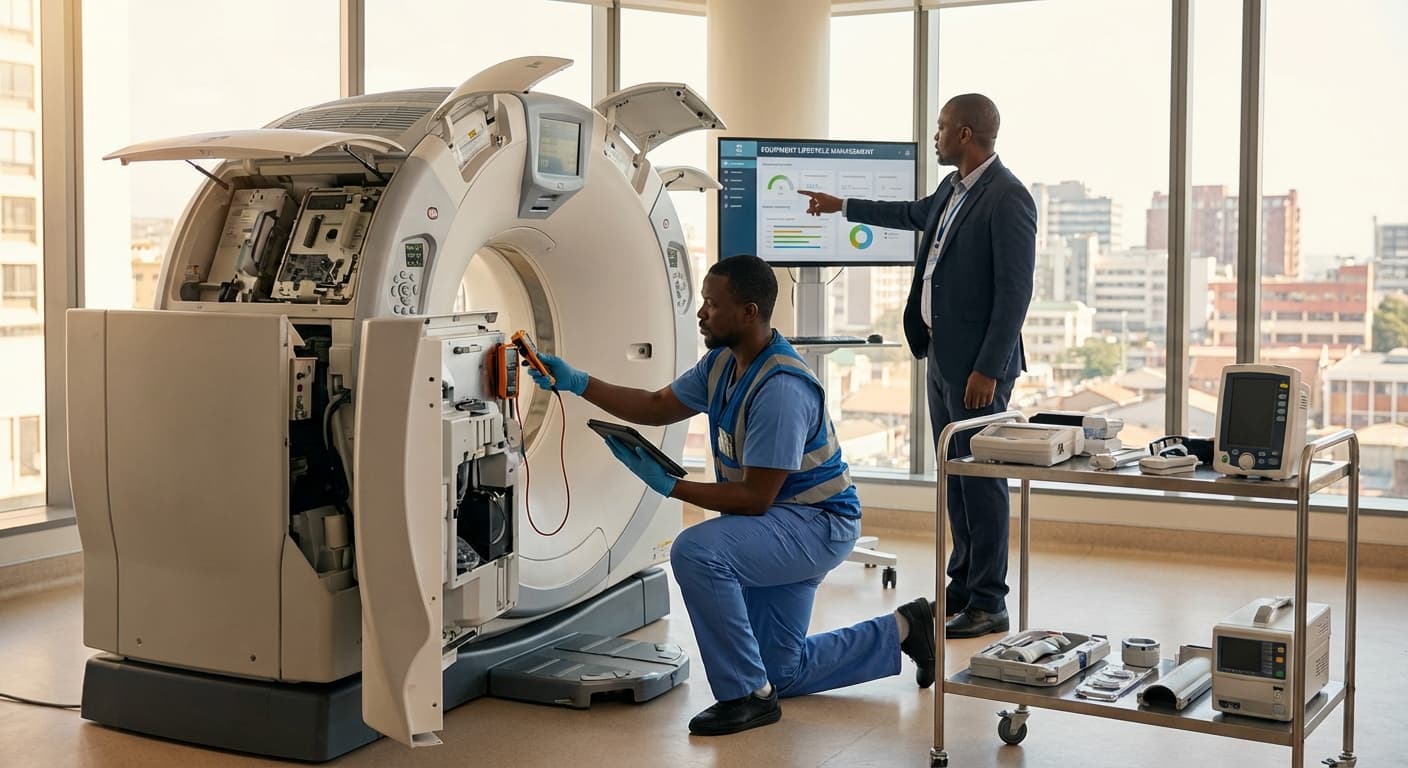
Equipment Replacement Planning & Obsolescence Strategy Service in Tunisia
Engineering Excellence & Technical Support
Equipment Replacement Planning & Obsolescence Strategy Service High-standard technical execution following OEM protocols and local regulatory frameworks.
Proactive Obsolescence Mitigation
Leveraging advanced predictive analytics and global market intelligence, our service identifies critical equipment at risk of obsolescence, enabling Tunisian businesses to plan phased replacements and secure necessary parts well in advance, minimizing operational disruptions and costly emergency procurements.
Optimized Capital Expenditure
We provide Tunisian industries with data-driven insights to optimize capital expenditure for equipment replacement. Our strategic approach ensures investments align with operational needs and lifecycle costs, delivering maximum ROI and sustainable asset management across the Tunisian industrial landscape.
Supply Chain Resilience & Sourcing
Our service strengthens Tunisian supply chain resilience by developing robust obsolescence management strategies and identifying reliable alternative sourcing channels. We help navigate global supply challenges, ensuring access to critical components and minimizing the impact of geopolitical or market shifts on your operations.
What Is Equipment Replacement Planning & Obsolescence Strategy Service In Tunisia?
Equipment Replacement Planning (ERP) & Obsolescence Strategy Service in Tunisia is a specialized consultancy offering designed to assist organizations in proactively managing the lifecycle of their critical assets, with a particular focus on identifying and mitigating the risks associated with technological obsolescence. This service aims to optimize capital expenditure, minimize operational disruptions, and ensure continued technological relevance and compliance within the Tunisian industrial and commercial landscape.
The service involves a comprehensive assessment of an organization's existing equipment inventory, including its age, condition, performance metrics, maintenance history, and current operational criticality. It then integrates this data with market intelligence on emerging technologies, vendor roadmaps, support availability, and regulatory requirements specific to Tunisia. The output is a strategic roadmap detailing optimal replacement cycles, phased upgrade plans, and strategies for managing end-of-life (EOL) equipment. This includes assessing the Total Cost of Ownership (TCO) for both maintaining existing assets and acquiring new ones, considering factors like depreciation, maintenance costs, energy efficiency, and potential resale value. Furthermore, the service addresses the strategic implications of obsolescence, such as the potential for security vulnerabilities, lack of spare parts, reduced performance, and non-compliance with evolving standards.
| Who Needs the Service? | Typical Use Cases | ||||||||||
|---|---|---|---|---|---|---|---|---|---|---|---|
| Manufacturing companies (automotive, textiles, food processing, pharmaceuticals, etc.) with aging production lines and machinery. | Developing a phased replacement plan for a fleet of critical CNC machines to maintain production efficiency and quality. | Companies in the Oil & Gas sector facing challenges with legacy exploration and production equipment and the availability of specialized parts and expertise. | Implementing an obsolescence management program for SCADA and control systems in industrial plants to prevent operational failures. | IT departments and data centers managing servers, networking equipment, and software licenses nearing end-of-support. | Planning the lifecycle of IT infrastructure to align with data security regulations and business continuity objectives. | Telecommunications providers with extensive infrastructure that requires regular upgrades to support new technologies and services. | Forecasting the replacement of aging network switches, routers, and base stations to ensure service reliability. | Utilities (power, water) managing critical operational technology (OT) assets, such as turbines, transformers, and distribution control systems. | Developing a long-term strategy for replacing grid infrastructure to improve resilience and energy efficiency. | Any organization with significant investment in physical or digital assets facing the challenges of technological advancement and the declining availability of support for older equipment. | Evaluating the economic viability of upgrading laboratory analytical equipment to adopt more advanced testing methodologies. |
Key Components of the Service
- Asset Inventory & Condition Assessment
- Performance & Reliability Analysis
- Obsolescence Risk Identification (Technical, Vendor, Regulatory)
- Total Cost of Ownership (TCO) Analysis
- Strategic Replacement & Upgrade Roadmapping
- End-of-Life (EOL) Management Strategies
- Technology Trend Analysis & Future-Proofing Recommendations
- Budgetary Planning & Capital Expenditure Optimization
- Risk Mitigation Strategies (e.g., extended support, alternative sourcing)
- Implementation Support & Project Management
Who Needs Equipment Replacement Planning & Obsolescence Strategy Service In Tunisia?
In today's rapidly evolving industrial landscape, proactive equipment replacement planning and obsolescence strategy are paramount for businesses in Tunisia to maintain competitiveness, ensure operational efficiency, and mitigate risks. This service is crucial for organizations that rely heavily on specialized machinery, technology-driven processes, or have assets with a significant lifespan and potential for becoming outdated or unsupported.
| Customer Type | Why They Need the Service | Key Departments Involved |
|---|---|---|
| Manufacturing Companies | To optimize production uptime, reduce costs associated with breakdowns, leverage new technologies for increased efficiency, and avoid production disruptions due to obsolete machinery. | Operations, Maintenance, Procurement, Finance |
| Energy & Utilities | To ensure reliable service delivery, comply with evolving environmental regulations, manage aging infrastructure, and plan for the integration of renewable energy technologies. | Operations, Engineering, Maintenance, Risk Management |
| Telecommunications Providers | To stay ahead of rapid technological advancements (e.g., 5G), ensure network reliability, and manage the lifecycle of complex network infrastructure. | IT, Operations, Engineering, Strategic Planning |
| Transportation & Logistics | To maintain fleet readiness, ensure safety standards are met, reduce fuel consumption through updated technology, and manage the long-term costs of specialized assets. | Operations, Maintenance, Procurement, Finance |
| Healthcare Institutions | To ensure patient safety, access to advanced diagnostic and treatment capabilities, and manage the high costs and complex maintenance of medical equipment. | Operations, Biomedical Engineering, IT, Finance |
| Government Agencies | To ensure national security, maintain critical infrastructure, manage taxpayer money effectively, and plan for long-term strategic asset management. | Procurement, Operations, Engineering, Strategic Planning |
Target Customers & Departments
- {"items":["Manufacturing Companies (Automotive, Textiles, Food & Beverage, Pharmaceuticals, Chemicals, Electronics)","Energy & Utilities (Power Generation, Oil & Gas, Water Treatment)","Telecommunications Providers","Transportation & Logistics Companies (Aviation, Shipping, Rail)","Mining & Extractive Industries","Healthcare Institutions (Hospitals, Clinics with specialized equipment)","Large-scale Agricultural Operations","Research & Development Facilities","Government Agencies (e.g., defense, infrastructure management)"],"title":"Target Customers"}
- {"items":["Operations/Production","Maintenance & Engineering","Procurement & Supply Chain","Finance & Accounting","IT/Information Technology","Risk Management","Strategic Planning","Quality Assurance","Research & Development"],"title":"Key Departments Benefiting from the Service"}
Equipment Replacement Planning & Obsolescence Strategy Service Process In Tunisia
This document outlines the Equipment Replacement Planning & Obsolescence Strategy Service Process, detailing the workflow from initial inquiry to final execution within the Tunisian context. This service aims to help organizations proactively manage their asset lifecycle, minimize operational disruptions, and optimize capital expenditures by identifying and addressing equipment obsolescence and planning for timely replacements.
| Stage | Description | Key Activities | Deliverables | Tunisian Context Considerations |
|---|---|---|---|---|
| Inquiry & Initial Consultation | The client expresses interest in the service and seeks to understand its benefits and scope. | Receive and acknowledge client inquiry, schedule initial meeting, understand client's general needs and objectives. | Meeting minutes, initial understanding of client's challenges. | Awareness of Tunisian industrial sectors, common equipment types, and regulatory frameworks (e.g., environmental standards for disposal). |
| Assessment & Data Collection | Gathering detailed information about the client's existing equipment inventory and operational environment. | Site visits, interviews with operational and maintenance staff, review of maintenance logs, asset registers, procurement history, production data, and performance metrics. | Comprehensive equipment inventory, current operational status reports, maintenance history analysis. | Access to facilities may require specific Tunisian permits or security clearances. Language considerations (Arabic, French) are crucial for clear communication. |
| Analysis & Strategy Development | Analyzing the collected data to identify obsolescence risks, predict future needs, and evaluate replacement options. | Conducting obsolescence analysis (technical, functional, economic), forecasting equipment lifespan, assessing performance degradation, identifying single points of failure, researching available technologies and suppliers in Tunisia and internationally. | Obsolescence risk assessment report, equipment lifecycle analysis, preliminary technology scouting report. | Understanding the availability of spare parts and technical support from local Tunisian suppliers. Assessing the impact of import duties and local regulations on new equipment procurement. |
| Recommendation & Proposal | Presenting tailored recommendations and a detailed plan for equipment replacement and obsolescence management. | Developing prioritized replacement strategies, defining business cases for recommended replacements (ROI, TCO), outlining phased implementation plans, estimating budgets and timelines, presenting alternative solutions. | Detailed Equipment Replacement & Obsolescence Strategy proposal, budget estimates, implementation roadmap. | Aligning proposals with Tunisian government incentives for industrial modernization or technology adoption, if applicable. Considering local currency fluctuations and their impact on foreign currency denominated equipment costs. |
| Execution & Implementation | Carrying out the approved strategy, including procurement, installation, and decommissioning. | Managing procurement processes (tenders, negotiations with Tunisian suppliers/distributors), overseeing installation and commissioning, coordinating the decommissioning and disposal of old equipment according to Tunisian environmental regulations. | Procured and installed equipment, operational new assets, documented decommissioning and disposal records. | Navigating Tunisian customs procedures for imported equipment. Ensuring compliance with local labor laws during installation and decommissioning phases. Partnering with certified Tunisian service providers for specialized tasks. |
| Monitoring & Review | Continuously evaluating the effectiveness of the implemented strategy and making adjustments as needed. | Tracking equipment performance, monitoring maintenance costs, reviewing budget adherence, conducting periodic reviews of the obsolescence strategy, providing ongoing advice and support. | Performance monitoring reports, updated obsolescence strategy, ongoing consultation. | Adapting to evolving Tunisian economic conditions and regulatory changes that might affect equipment operation or future planning. |
Service Workflow Stages
- Inquiry & Initial Consultation
- Assessment & Data Collection
- Analysis & Strategy Development
- Recommendation & Proposal
- Execution & Implementation
- Monitoring & Review
Equipment Replacement Planning & Obsolescence Strategy Service Cost In Tunisia
Planning for equipment replacement and developing effective obsolescence strategies are crucial for businesses in Tunisia to maintain operational efficiency, mitigate risks, and optimize capital expenditure. The cost of such a specialized service can vary significantly, influenced by a combination of factors. Understanding these drivers is essential for Tunisian companies seeking to budget accurately for these planning initiatives.
Key pricing factors include the scope and complexity of the asset inventory. A larger and more diverse range of equipment will naturally require more in-depth analysis. The level of detail required in the obsolescence assessment also plays a role; for instance, whether the focus is on pure technical obsolescence or also encompasses market availability of spare parts, vendor support, and regulatory compliance. Furthermore, the experience and reputation of the consulting firm will impact pricing, with established experts often commanding higher fees. The duration and intensity of the engagement, including the number of consultants involved and the project timeline, are direct cost drivers. Finally, the specific methodologies and software tools employed by the service provider can also influence the overall cost.
In Tunisia, the cost of Equipment Replacement Planning & Obsolescence Strategy services typically ranges from MAD 5,000 to MAD 30,000+ per project, depending on the aforementioned factors. For smaller, less complex projects or for initial consultations, costs might be at the lower end. Larger, comprehensive assessments involving extensive data analysis, multiple facilities, and advanced forecasting models will fall into the higher range. It's important to note that these are indicative ranges, and obtaining detailed proposals from multiple service providers is recommended for precise budgeting.
| Service Component | Typical Cost Range (TND) |
|---|---|
| Initial Consultation & Scoping | 1,500 - 5,000 |
| Basic Equipment Inventory & Assessment (per asset category) | 2,000 - 8,000 |
| Comprehensive Obsolescence Strategy Development (including risk assessment & mitigation) | 8,000 - 25,000 |
| Long-Term Replacement Planning & Budgeting (multi-year) | 10,000 - 30,000+ |
| Specialized Technical Assessments (e.g., for critical machinery) | 4,000 - 12,000 (per assessment) |
Key Pricing Factors for Equipment Replacement Planning & Obsolescence Strategy Services in Tunisia:
- Scope and Complexity of Asset Inventory
- Depth of Obsolescence Assessment (Technical, Market, Regulatory)
- Consulting Firm's Experience and Reputation
- Engagement Duration and Intensity
- Methodologies and Software Tools Employed
Affordable Equipment Replacement Planning & Obsolescence Strategy Service Options
Our Affordable Equipment Replacement Planning & Obsolescence Strategy service helps organizations proactively manage their capital assets, minimizing unexpected costs and operational disruptions. We offer flexible value bundles designed to meet diverse needs and budgets, along with proven cost-saving strategies to maximize your return on investment. Our goal is to transform a potential financial burden into a strategic advantage.
| Cost-Saving Strategy | Description | Impact on Budget |
|---|---|---|
| Phased Replacement Scheduling | Spreading capital expenditures over multiple budget cycles to avoid large, sudden outlays and optimize cash flow. | Moderate to High Savings (smoothes budget) |
| Extended Asset Lifecycles | Implementing proactive maintenance and repair programs to delay replacement of still-viable equipment. | High Savings (reduces capital needs) |
| Leveraging Bulk Purchasing | Consolidating replacement orders across departments or over time to negotiate better pricing and volume discounts. | Moderate Savings (improves unit cost) |
| Standardization of Equipment | Reducing the variety of equipment models to simplify maintenance, spare parts inventory, and training, leading to lower support costs. | Moderate Savings (reduces operational costs) |
| Exploiting Technology Advancement Cycles | Strategic upgrades to capture the most significant performance gains and cost efficiencies at opportune moments in technology evolution, rather than reacting to obsolescence. | High Savings (optimizes long-term value) |
| Third-Party Maintenance Optimization | Evaluating and negotiating service contracts with third-party providers for extended warranties or specialized maintenance, often at a lower cost than OEM contracts. | Moderate Savings (reduces service costs) |
Our Value Bundles
- {"title":"Essentials Bundle","description":"Ideal for smaller organizations or those just starting with asset management. Includes core analysis and basic replacement planning."}
- {"title":"Proactive Bundle","description":"A comprehensive solution for organizations seeking robust obsolescence management and strategic replacement roadmaps. Includes advanced risk assessment and forecasting."}
- {"title":"Enterprise Bundle","description":"Our most inclusive offering, tailored for large enterprises with complex asset portfolios. Features custom integrations, ongoing support, and predictive maintenance planning."}
Verified Providers In Tunisia
When seeking healthcare in a foreign country, the assurance of verified providers is paramount. In Tunisia, Franance Health stands out as a leading platform that not only connects patients with medical professionals but rigorously vets them to ensure the highest standards of care. Their commitment to credential verification provides a critical layer of trust and security for international patients.
| Credential Type | Verification Process | Patient Benefit |
|---|---|---|
| Medical Licenses | Official registration with Tunisian Ministry of Health, ensuring legal practice. | Confirms provider is legally authorized to practice medicine. |
| Educational Qualifications | Verification of degrees and diplomas from accredited institutions (Tunisian and international). | Ensures a strong foundation of medical knowledge and training. |
| Specialty Certifications | Validation of advanced training and board certifications in specific medical fields. | Guarantees access to highly specialized and expert care. |
| Professional Experience | Review of past work history, hospital affiliations, and peer recommendations. | Indicates practical application of skills and established track record. |
| Continuous Professional Development (CPD) | Confirmation of ongoing training and participation in medical conferences/workshops. | Demonstrates commitment to staying current with the latest medical advancements. |
Why Franance Health Credentials Matter in Tunisia:
- Unwavering Quality Assurance: Franance Health employs a stringent verification process that goes beyond basic licensing. This includes scrutinizing educational background, professional experience, and specialized certifications. This meticulous approach guarantees that patients are connected with highly qualified and competent healthcare providers.
- Enhanced Patient Safety: By verifying credentials, Franance Health significantly reduces the risk of encountering unqualified or fraudulent medical practitioners. This directly contributes to a safer and more reliable healthcare experience for all users.
- Access to Specialized Expertise: The verification process allows Franance Health to identify and highlight specialists in various medical fields. This means patients can confidently find the right expert for their specific needs, from complex surgical procedures to niche medical conditions.
- Transparency and Trust: Franance Health's commitment to transparency in their verification process builds essential trust between patients and providers. Knowing that a provider has been thoroughly vetted provides peace of mind, allowing patients to focus on their recovery.
- International Standards Alignment: The verification protocols at Franance Health are designed to align with international healthcare standards, ensuring that Tunisian providers meet global benchmarks for quality and professionalism.
- Streamlined Healthcare Journey: By partnering with verified providers, Franance Health simplifies the often-complex process of seeking healthcare abroad. Patients can navigate their treatment options with greater confidence and less uncertainty.
Scope Of Work For Equipment Replacement Planning & Obsolescence Strategy Service
This Scope of Work (SOW) outlines the services for developing an Equipment Replacement Planning and Obsolescence Strategy. The objective is to create a comprehensive framework and actionable plan to proactively manage the lifecycle of critical equipment, mitigate obsolescence risks, and optimize replacement investments. The service will involve a detailed assessment of current equipment, identification of obsolescence drivers, development of a strategic roadmap, and establishment of robust processes for future management.
| Deliverable Name | Description | Standard Specification / Format |
|---|---|---|
| Current Equipment Inventory Report | A detailed inventory of all relevant equipment, including make, model, serial number, installation date, warranty status, maintenance history, and criticality assessment. | Excel spreadsheet or CSV file with defined columns and data types. |
| Obsolescence Risk Assessment Report | Analysis of identified obsolescence risks, categorized by equipment type, impact, and likelihood. Includes identification of key obsolescence drivers (e.g., component availability, software support, safety regulations). | PDF document with executive summary, detailed analysis, and visual aids (charts, graphs). |
| Equipment Replacement Strategy Document | Defines the strategic approach to equipment replacement, including criteria for replacement (e.g., cost, performance, reliability, obsolescence), financial modeling, and risk mitigation strategies. | PDF document outlining strategic options, cost-benefit analysis, and recommended approach. |
| Obsolescence Management Process Manual | A documented process for ongoing identification, assessment, and management of equipment obsolescence. Includes roles, responsibilities, triggers for action, and communication protocols. | Word document or PDF, structured with clear sections, flowcharts, and action steps. |
| Equipment Replacement Planning Framework | A template and guidelines for future equipment replacement planning, enabling consistent and effective decision-making. Includes tools for prioritization and budgeting. | Excel templates with integrated formulas, and accompanying user guide (PDF). |
| Implementation Roadmap | A phased plan for implementing the developed strategies and processes, including timelines, resource requirements, and key milestones. | Gantt chart (MS Project or similar) and accompanying executive summary (PDF). |
| Final Presentation and Knowledge Transfer Session | A comprehensive presentation of findings, recommendations, and the developed strategy. Includes a dedicated session for knowledge transfer to relevant stakeholders. | PowerPoint presentation (PPTX) and recorded video session (if applicable). |
Key Activities and Deliverables
- Phase 1: Assessment and Data Gathering
- Phase 2: Obsolescence Risk Analysis
- Phase 3: Replacement Strategy Development
- Phase 4: Implementation Roadmap and Process Design
- Phase 5: Finalization and Knowledge Transfer
Service Level Agreement For Equipment Replacement Planning & Obsolescence Strategy Service
This Service Level Agreement (SLA) outlines the terms and conditions for the Equipment Replacement Planning & Obsolescence Strategy Service. It defines the expected response times for critical events and the uptime guarantees for the associated support platform.
| Service Component | Response Time | Uptime Guarantee |
|---|---|---|
| Critical Support Request (e.g., urgent obsolescence threat identified) | 2 Business Hours | 99.5% |
| Standard Support Request (e.g., general planning query) | 8 Business Hours | 99.5% |
| Support Portal Availability | N/A | 99.9% |
| Scheduled Maintenance (with prior notification) | N/A | N/A (Planned downtime, typically outside business hours) |
Scope of Service
- Proactive identification of equipment nearing end-of-life or obsolescence.
- Development of strategic replacement plans, including cost-benefit analysis and ROI projections.
- Recommendations for alternative technologies and solutions.
- Guidance on disposal and recycling of outdated equipment.
- Ongoing monitoring of industry trends and technological advancements relevant to the client's equipment portfolio.
- Access to a dedicated support portal for service requests and information.
Frequently Asked Questions

Ready when you are
Let's scope your Equipment Replacement Planning & Obsolescence Strategy Service in Tunisia project in Tunisia.

Scaling healthcare logistics and technical systems across the entire continent.