
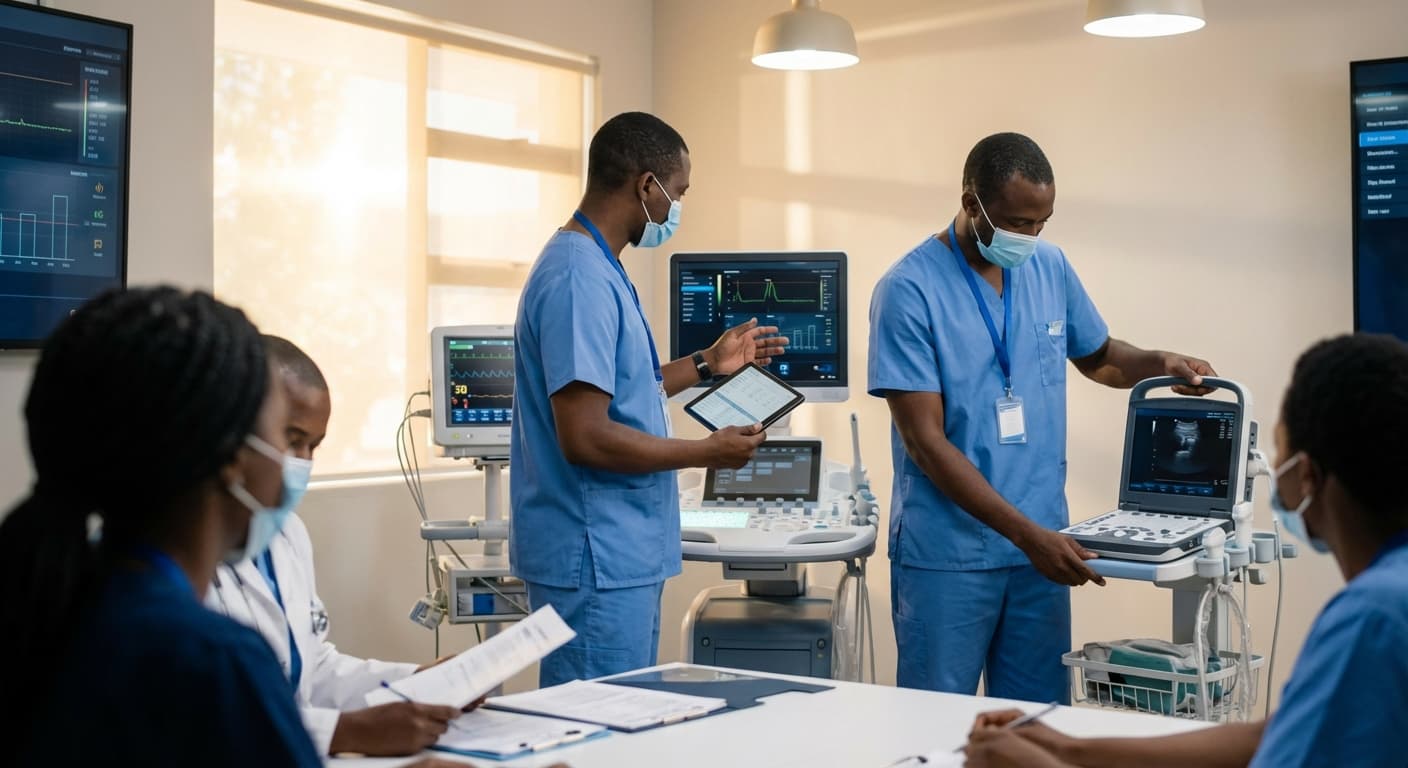
Clinical Needs Assessment for Medical Equipment in Tunisia
Engineering Excellence & Technical Support
Clinical Needs Assessment for Medical Equipment High-standard technical execution following OEM protocols and local regulatory frameworks.
Data-Driven Needs Prioritization
Leveraging comprehensive data analytics, we identify and prioritize critical medical equipment needs across Tunisian healthcare facilities, ensuring resource allocation aligns with the highest impact areas and patient care demands.
Geospatial Vulnerability Mapping
Utilizing geospatial technology, we map equipment gaps against population density and geographical accessibility in Tunisia, highlighting underserved regions and informing targeted interventions for equitable healthcare access.
Predictive Equipment Lifecycle Management
Implementing predictive modeling for equipment lifespan and maintenance needs, we forecast future requirements and optimize procurement and replacement cycles, enhancing operational efficiency and reducing downtime in Tunisian hospitals.
What Is Clinical Needs Assessment For Medical Equipment In Tunisia?
A Clinical Needs Assessment for Medical Equipment in Tunisia is a systematic process to identify, quantify, and prioritize the medical equipment requirements of healthcare facilities, departments, or healthcare systems within the Tunisian context. This service is crucial for ensuring optimal resource allocation, technological advancement, and improved patient care outcomes. It involves a detailed analysis of current and future healthcare demands, existing infrastructure, clinical workflows, and budgetary constraints to determine the appropriate types, quantities, and specifications of medical equipment necessary to meet established healthcare objectives. This assessment adheres to Tunisian regulatory frameworks and international best practices.
| Stakeholder/Entity | Reasons for Needing Assessment | Typical Use Cases |
|---|---|---|
| Public Hospitals (Tunisian Ministry of Health) | Upgrading outdated infrastructure, expanding service offerings, addressing chronic equipment shortages, optimizing national healthcare delivery, compliance with national health strategies. | Planning for new hospital wings, equipping specialized diagnostic and treatment centers (e.g., oncology, cardiology), national equipment procurement tenders, disaster preparedness planning. |
| Private Healthcare Providers (Clinics, Polyclinics, Diagnostic Centers) | Enhancing competitive advantage, adopting advanced medical technologies, meeting patient expectations, improving diagnostic accuracy and treatment efficacy, expanding service portfolios. | Establishing new specialized clinics, acquiring advanced imaging equipment (MRI, CT scanners), upgrading operating theaters, investing in minimally invasive surgical instruments. |
| Tertiary and University Hospitals | Supporting advanced research, training medical professionals, offering cutting-edge patient care, maintaining accreditation, advancing sub-specialty services. | Acquiring research-grade laboratory equipment, equipping advanced simulation centers, investing in novel therapeutic devices, establishing national reference centers. |
| Governmental Health Agencies and Planning Bodies | Strategic resource allocation, national health infrastructure development, disease control program support, epidemiological surveillance enhancement. | Developing national medical equipment procurement policies, forecasting equipment needs for public health initiatives, allocating budgets for regional healthcare development. |
| International Development Organizations and Funding Agencies | Ensuring effective and targeted investment in healthcare infrastructure, verifying needs for grant applications, facilitating sustainable development. | Assessing equipment needs for projects funded by the World Bank, WHO, or other international bodies, providing evidence-based justifications for funding requests. |
Key Components of a Clinical Needs Assessment for Medical Equipment in Tunisia
- Needs Identification: Cataloging current equipment inventory, identifying gaps based on service offerings, patient demographics, and projected disease burden.
- Technological Evaluation: Assessing the suitability and compatibility of existing and proposed equipment with current and future medical technologies and IT infrastructure.
- Clinical Workflow Analysis: Understanding how equipment integrates into patient care pathways and operational efficiency.
- Infrastructure Assessment: Evaluating facility readiness in terms of space, power, ventilation, and networking requirements for proposed equipment.
- Budgetary Planning: Developing cost estimates for acquisition, installation, training, maintenance, and consumables, aligned with available financial resources.
- Regulatory Compliance Review: Ensuring proposed equipment meets Tunisian Ministry of Health (MOH) standards, certifications, and import regulations.
- Risk Management: Identifying potential operational, clinical, and financial risks associated with equipment procurement and implementation.
- Stakeholder Consultation: Engaging clinicians, administrators, biomedical engineers, and procurement officers to gather comprehensive input.
Who Needs Clinical Needs Assessment For Medical Equipment In Tunisia?
Clinical Needs Assessment for Medical Equipment in Tunisia is crucial for a wide range of healthcare providers and institutions. This process ensures that investments in medical technology are aligned with patient care requirements, clinical workflows, and budgetary constraints. By understanding the specific needs of different departments and the overall healthcare landscape, organizations can make informed purchasing decisions, optimize resource allocation, and ultimately improve the quality of healthcare services delivered.
| Department | Key Needs Assessment Focus | Examples of Medical Equipment | Importance of Needs Assessment |
|---|---|---|---|
| Cardiology | Diagnostic capabilities, interventional procedures, patient monitoring. | ECG machines, echocardiography devices, cardiac catheterization labs, Holter monitors, defibrillators. | Ensures accurate diagnosis and effective treatment of cardiovascular diseases, impacting patient outcomes and survival rates. |
| Oncology | Diagnostic imaging, treatment delivery, supportive care, patient monitoring. | CT scanners, MRI machines, linear accelerators, chemotherapy infusion pumps, radiation therapy equipment, palliative care devices. | Crucial for early detection, precise treatment planning, and managing the complex needs of cancer patients, directly affecting treatment efficacy and quality of life. |
| Radiology/Imaging | Diagnostic accuracy, image quality, radiation dose optimization, workflow efficiency. | X-ray machines, ultrasound devices, CT scanners, MRI scanners, mammography units, PACS systems. | Underpins diagnosis across all medical specialties, requiring advanced technology for accurate interpretation and timely reporting. |
| Surgery | Surgical precision, patient safety, minimally invasive techniques, post-operative care. | Surgical lights, operating tables, anesthesia machines, surgical instruments, endoscopes, minimally invasive surgical systems, patient monitors. | Essential for successful surgical interventions, minimizing complications, and ensuring efficient recovery. |
| Intensive Care Unit (ICU) | Continuous patient monitoring, life support, critical care interventions. | Mechanical ventilators, advanced patient monitors (ECG, SpO2, NIBP), infusion pumps, dialysis machines, defibrillators, ECMO machines. | Vital for managing critically ill patients, where immediate and accurate data is life-saving. |
| Emergency Department (ED) | Rapid diagnosis, immediate life support, trauma care, patient stabilization. | Portable X-ray units, ultrasound devices, defibrillators, ventilators, advanced cardiac life support equipment, trauma kits. | Requires versatile and readily available equipment to handle diverse and often life-threatening conditions under pressure. |
| Pediatrics | Age-appropriate equipment, specialized monitoring, child-friendly technology. | Pediatric ventilators, infant incubators, specialized diagnostic tools, developmental assessment equipment, pain management devices. | Ensures the unique physiological needs of children are met, promoting growth and development while ensuring safety. |
| Laboratory Medicine | Diagnostic testing accuracy, throughput, automation, quality control. | Automated hematology analyzers, chemistry analyzers, immunoassay systems, PCR machines, microscopes, centrifuges. | Foundation for diagnosis and treatment decisions, demanding reliable and efficient analytical instruments. |
| Rehabilitation Services | Patient recovery, functional restoration, mobility assistance. | Physical therapy equipment (treadmills, exercise bikes, resistance bands), occupational therapy tools, prosthetics, orthotics, electrotherapy devices. | Supports patients in regaining physical function and independence after illness or injury. |
Target Customers and Departments for Clinical Needs Assessment
- Public Hospitals
- Private Hospitals
- University Hospitals
- Specialty Clinics
- Primary Healthcare Centers
- Diagnostic Laboratories
- Rehabilitation Centers
- Medical Training Institutions
- Government Health Agencies
Clinical Needs Assessment For Medical Equipment Process In Tunisia
This document outlines the comprehensive workflow for a Clinical Needs Assessment for Medical Equipment (CNA-ME) process in Tunisia. This process is crucial for ensuring that healthcare facilities acquire appropriate, effective, and sustainable medical technologies to meet patient care demands. The workflow begins with an initial inquiry and culminates in the successful execution and integration of the assessed medical equipment.
| Stage | Description | Key Activities | Responsible Parties | Deliverables | Timeline (Indicative) |
|---|---|---|---|---|---|
| The formal initiation of the CNA-ME process, triggered by a recognized need within a healthcare facility or by the Ministry of Health. | Submission of a formal request detailing the perceived need for new or upgraded medical equipment. Initial consultation to understand the scope of the request. | Healthcare Facility Management, Department Heads, Ministry of Health Officials | Formal Request Document, Initial Scope Definition | 1-2 Weeks |
| A systematic process to define the specific clinical needs and prioritize them based on impact, urgency, and strategic alignment. | Conducting workshops and interviews with clinical staff. Reviewing patient demographics, disease prevalence, existing equipment performance, and strategic goals. Prioritizing needs based on established criteria. | Clinical Teams, Biomedical Engineering Department, Hospital Management, Ministry of Health Representatives | Prioritized List of Clinical Needs, Needs Assessment Report (Draft) | 2-4 Weeks |
| Gathering comprehensive data related to patient care, current infrastructure, and operational capacity to inform equipment requirements. | Analyzing patient flow, service utilization statistics, current equipment inventory and performance data, existing infrastructure capacity (space, power, IT). Benchmarking against national and international standards. | Biomedical Engineering Department, Clinical Staff, Health Information Management, Ministry of Health Data Analysts | Comprehensive Data Analysis Report, Gap Analysis | 3-6 Weeks |
| Translating identified clinical needs into detailed technical and functional specifications for medical equipment. | Defining technical requirements (performance, safety, compatibility), functional requirements (intended use, user interface), maintenance needs, and training requirements. Consulting with manufacturers and independent experts. | Biomedical Engineering Department, Clinical Specialists, Procurement Department, Ministry of Health Technical Experts | Detailed Equipment Specifications (Technical & Functional), Performance Requirements | 4-8 Weeks |
| Estimating the total cost of acquisition, installation, training, and ongoing maintenance, and securing the necessary funding. | Developing a detailed cost breakdown (purchase price, shipping, installation, training, consumables, maintenance contracts). Identifying potential funding sources (government budget, donor grants, public-private partnerships). | Finance Department, Procurement Department, Hospital Management, Ministry of Health Finance Division, Donor Agencies | Cost Estimates, Funding Proposal, Approved Budget | 3-6 Weeks |
| Developing a strategic plan for acquiring the selected medical equipment. | Defining procurement method (tenders, direct purchase). Developing procurement documents (RFP/RFQ). Establishing evaluation criteria. Planning for logistics and timelines. | Procurement Department, Legal Department, Ministry of Health Procurement Unit | Procurement Plan, Tender Documents (RFP/RFQ) | 2-4 Weeks |
| The process of selecting vendors and acquiring the medical equipment based on defined specifications and procurement procedures. | Issuing tenders, evaluating bids, vendor presentations, site visits (if applicable), contract negotiation, and final purchase order issuance. | Procurement Committee, Technical Evaluation Committee, Legal Department, Ministry of Health Procurement Unit | Selected Vendors, Signed Contracts, Purchase Orders | 8-16 Weeks (dependent on procurement method) |
| Ensuring the correct and safe installation and operational readiness of the acquired medical equipment. | Supervising equipment delivery, installation by vendors or certified technicians, calibration, testing, and verification of performance against specifications. | Biomedical Engineering Department, Vendor Technicians, Clinical End-Users, Ministry of Health Quality Assurance Team | Installation Reports, Commissioning Certificates, Performance Verification Reports | 2-6 Weeks per equipment item |
| Providing adequate training to healthcare professionals and technical staff for the effective and safe operation and maintenance of new equipment. | Developing training programs, conducting user training sessions, providing maintenance training, and developing user manuals. | Clinical Staff, Biomedical Engineering Department, Vendor Trainers, Ministry of Health Training Department | Training Materials, Training Attendance Records, Competency Assessments | Ongoing, concurrent with installation |
| Integrating the new equipment into existing clinical workflows and monitoring its utilization and impact. | Ensuring seamless integration with existing systems (e.g., HIS, PACS). Tracking equipment usage, patient outcomes, and efficiency gains. Identifying any operational challenges. | Clinical Departments, Biomedical Engineering Department, Health Information Management, Hospital Management | Utilization Reports, Integration Plans, Initial Performance Metrics | Ongoing, starting after commissioning |
| Assessing the overall success of the CNA-ME process and the effectiveness of the acquired equipment, and providing feedback for future improvements. | Conducting post-implementation reviews, gathering feedback from users, assessing achievement of objectives, and documenting lessons learned. Making recommendations for future needs assessments and equipment management. | Hospital Management, Ministry of Health Oversight Committee, Clinical Users, Biomedical Engineering Department | Post-Implementation Review Report, Lessons Learned Document, Recommendations for Future Planning | 3-6 Months post-implementation |
Clinical Needs Assessment for Medical Equipment Process Workflow in Tunisia
- Inquiry & Initial Request
- Needs Identification & Prioritization
- Data Collection & Analysis
- Equipment Specification Development
- Budgeting & Funding Identification
- Procurement Planning
- Equipment Selection & Acquisition
- Installation & Commissioning
- Training & Capacity Building
- Integration & Utilization Monitoring
- Evaluation & Feedback
Clinical Needs Assessment For Medical Equipment Cost In Tunisia
This document presents a clinical needs assessment for medical equipment costs in Tunisia. It aims to provide an overview of common medical equipment, identify key pricing factors influencing their cost within the Tunisian market, and offer estimated price ranges in Tunisian Dinars (TND). Accurate and affordable medical equipment is crucial for effective healthcare delivery, and understanding these costs is vital for budget planning, procurement strategies, and ensuring access to quality patient care across Tunisia's diverse healthcare facilities.
| Equipment Category | Specific Equipment Example | Estimated Price Range (TND) | Notes on Price Variation |
|---|---|---|---|
| Diagnostic Imaging | X-ray Machine (Basic) | 50,000 - 150,000 TND | Depends on brand, digital vs. analog, fixed vs. portable. |
| Diagnostic Imaging | Ultrasound Machine (Portable, Basic) | 30,000 - 100,000 TND | Number of probes, image quality, portability. |
| Diagnostic Imaging | CT Scanner (Mid-range) | 500,000 - 2,000,000 TND+ | Number of slices, brand, advanced features (e.g., dual-energy). |
| Patient Monitoring | Vital Signs Monitor (Basic) | 5,000 - 20,000 TND | Number of parameters (ECG, SpO2, BP), display size, portability. |
| Patient Monitoring | ECG Machine (12-lead) | 8,000 - 30,000 TND | Brand, interpretation capabilities, printing options. |
| Anesthesia and Respiratory | Anesthesia Machine (Basic) | 60,000 - 250,000 TND | Ventilator integration, vaporizers, gas monitoring. |
| Anesthesia and Respiratory | Ventilator (ICU, Adult/Pediatric) | 80,000 - 400,000 TND+ | Modes of ventilation, monitoring capabilities, brand. |
| Surgical Equipment | Electrosurgical Unit (Diathermy) | 15,000 - 60,000 TND | Number of channels, power output, accessories. |
| Surgical Equipment | Operating Room Light (Single Dome) | 10,000 - 40,000 TND | LED vs. Halogen, intensity, maneuverability. |
| Laboratory Equipment | Hematology Analyzer (3-part diff) | 20,000 - 80,000 TND | Throughput, brand, automation level. |
| Laboratory Equipment | Biochemistry Analyzer (Semi-auto) | 10,000 - 50,000 TND | Number of tests, incubation options, brand. |
| Sterilization Equipment | Autoclave (Medium size) | 15,000 - 70,000 TND | Chamber volume, pressure, cycle types, brand. |
| Consumables & General | Infusion Pump | 3,000 - 15,000 TND | Brand, features (e.g., drug library, wireless connectivity). |
| Consumables & General | Hospital Bed (Manual) | 1,500 - 5,000 TND | Number of adjustments, material, brand. |
Key Pricing Factors for Medical Equipment in Tunisia
- Brand and Manufacturer Reputation: Established international brands often command higher prices due to perceived quality, reliability, and after-sales support. Local or less-known brands may offer more competitive pricing.
- Technology and Features: Advanced features, sophisticated diagnostic capabilities, and cutting-edge technology (e.g., AI integration, advanced imaging) significantly increase equipment costs.
- New vs. Refurbished/Used: New equipment is generally more expensive than refurbished or used units. Refurbished equipment can offer a cost-effective solution, but thorough inspection and warranty are essential.
- Supplier and Distributor Markup: Prices are influenced by the profit margins of importers, distributors, and local suppliers. Direct purchasing or working with authorized distributors can impact final cost.
- Import Duties and Taxes: Tunisia imposes import duties, VAT, and other taxes on medical equipment, which directly contribute to the final price for end-users.
- After-Sales Service and Warranty: The availability and duration of warranty, as well as the cost and accessibility of maintenance and repair services, are factored into the initial purchase price.
- Volume of Purchase: Bulk orders can sometimes lead to discounted pricing from suppliers, especially for larger healthcare institutions or government tenders.
- Customization and Accessories: Specific configurations, additional modules, or specialized accessories required for particular clinical applications will increase the overall cost.
- Geographical Location of Purchase: While less impactful than other factors, minor variations might exist based on distribution networks and logistics within different regions of Tunisia.
- Currency Exchange Rates: Fluctuations in the Tunisian Dinar (TND) against major currencies (USD, EUR) can affect the cost of imported equipment.
Affordable Clinical Needs Assessment For Medical Equipment Options
This document outlines affordable strategies for conducting clinical needs assessments for medical equipment, focusing on identifying the most cost-effective solutions without compromising patient care. We'll explore the concept of 'value bundles' and provide actionable cost-saving tactics.
| Strategy/Concept | Description | Cost-Saving Benefit |
|---|---|---|
| Value Bundles | Purchasing medical equipment as part of a package deal that often includes installation, training, initial maintenance, and consumables. Vendors may offer discounts for bundled purchases. | Reduces individual item costs, simplifies procurement, and secures integrated support services. |
| Leasing vs. Purchasing | Evaluating whether leasing equipment with flexible upgrade options is more cost-effective than outright purchase, especially for rapidly evolving technologies. | Lower upfront capital expenditure, predictable operating costs, and easier technology refresh cycles. |
| Refurbished/Pre-owned Equipment | Acquiring certified, refurbished medical equipment from reputable suppliers, often at a significant discount compared to new. | Substantial reduction in acquisition cost while still meeting performance standards. |
| Strategic Partnerships/Group Purchasing | Collaborating with other healthcare facilities or joining group purchasing organizations (GPOs) to leverage collective buying power for better pricing and terms. | Access to volume discounts and favorable contract negotiations. |
| Phased Implementation | Rolling out new equipment in stages rather than a single large investment, allowing for budget management and testing. | Spreads capital expenditure over time and allows for learning from initial deployments. |
| Open-Source or Cloud-Based Software | Exploring software solutions that are open-source or cloud-hosted, which can reduce licensing fees and IT infrastructure costs. | Minimizes recurring software and hardware maintenance expenses. |
| Focus on Lifecycle Cost | Considering not just the initial purchase price but also the total cost of ownership, including maintenance, consumables, training, and eventual disposal. | Prevents unexpected long-term expenses and ensures sustainable operation. |
Key Components of an Affordable Clinical Needs Assessment
- Define Clear Clinical Objectives: Precisely what are the diagnostic, therapeutic, or monitoring needs? Avoid over-specification.
- Engage End-Users Early: Clinicians and technicians have invaluable insights into workflow and actual equipment requirements.
- Inventory Existing Equipment: Identify redundant or underutilized assets that might be repurposed or upgraded.
- Research Market Trends and Alternatives: Explore innovative, lower-cost technologies or refurbished options.
- Quantify Usage and Throughput: Understand the volume of procedures or patient encounters to justify equipment scale.
- Assess Infrastructure Requirements: Factor in space, power, networking, and maintenance needs.
Verified Providers In Tunisia
When seeking healthcare services in Tunisia, identifying verified providers is paramount for ensuring quality, safety, and peace of mind. Franance Health stands out as a leading platform dedicated to connecting patients with credible healthcare professionals and institutions. Their rigorous credentialing process and commitment to patient well-being make them the best choice for your healthcare needs in Tunisia.
| Credential Aspect | Franance Health Verification |
|---|---|
| Medical Licenses & Permits | Confirmed and up-to-date with Tunisian Ministry of Health regulations. |
| Professional Qualifications | Verified degrees, specializations, and board certifications from recognized institutions. |
| Clinical Experience | Thorough review of practice history and areas of expertise. |
| Ethical Standards | Adherence to professional codes of conduct and patient rights. |
| Facility Accreditation | For institutions, confirmation of relevant accreditations and quality management systems. |
| Patient Reviews & Feedback | Integrated systems to monitor and ensure positive patient experiences. |
Why Franance Health Credentials Matter
- Rigorous Vetting Process: Franance Health employs a stringent verification system that goes beyond basic licensing. They thoroughly examine medical qualifications, professional experience, certifications, and adherence to ethical standards.
- Transparency and Trust: By providing verified credentials, Franance Health builds trust and transparency. Patients can be confident they are engaging with legitimate and competent healthcare professionals.
- Focus on Quality of Care: The platform prioritizes providers who demonstrate a commitment to high standards of patient care, continuous professional development, and the latest medical advancements.
- Accessibility to Expertise: Franance Health offers access to a wide range of specialists and facilities, ensuring you can find the right provider for your specific medical needs, all pre-vetted for your assurance.
- Enhanced Patient Safety: The verification process directly contributes to patient safety by minimizing the risk of encountering unqualified practitioners or substandard facilities.
Scope Of Work For Clinical Needs Assessment For Medical Equipment
This Scope of Work (SOW) outlines the requirements for a comprehensive clinical needs assessment for medical equipment. The primary objective is to identify and prioritize the medical equipment required to meet the current and future clinical needs of the facility. This assessment will inform procurement decisions, ensure optimal utilization of resources, and improve patient care outcomes. The assessment will involve a detailed review of existing equipment, analysis of current clinical practices, consultation with healthcare professionals, and projection of future service demands. The technical deliverables will ensure the acquired equipment aligns with established standards and best practices.
| Category | Standard Specification | Description | Compliance Requirements |
|---|---|---|---|
| Medical Imaging Equipment | IEC 60601 Series | Electrical safety, electromagnetic compatibility (EMC), and performance standards for medical electrical equipment. | CE Marking, FDA Clearance (as applicable) |
| Diagnostic Equipment | ISO 13485 | Quality management systems for medical device manufacturers. | Manufacturer Certification, Performance Verification |
| Therapeutic Equipment | Relevant ASTM Standards (e.g., for infusion pumps, ventilators) | Specific performance and safety standards tailored to the function of the equipment. | Product Certification, Biocompatibility Testing |
| Patient Monitoring Systems | HIPAA/GDPR Compliance | Data privacy and security standards for patient information. | Secure Data Transmission Protocols, Access Control Mechanisms |
| Surgical Instruments | ISO 17665 Series | Sterilization of health care products – Moist heat. | Sterilization Validation Reports, Material Traceability |
| Laboratory Equipment | CLIA Standards (US) / Equivalent International Standards | Standards for laboratory quality and performance. | Accreditation, Calibration Certificates |
Technical Deliverables
- Detailed Report of Clinical Needs Assessment: A comprehensive document outlining identified needs, prioritization, and justification for each equipment category.
- Equipment Specifications Matrix: A structured compilation of technical specifications for each identified piece of medical equipment, including performance requirements, safety standards, and compatibility considerations.
- Gap Analysis Report: An evaluation of existing equipment versus identified needs, highlighting deficiencies and areas for improvement.
- Prioritization Framework: A clear methodology for ranking equipment based on clinical impact, urgency, and budget constraints.
- User Requirements Document (URD): A detailed description of functional and non-functional requirements from end-users for each prioritized equipment item.
- Recommendations for Training and Maintenance: Guidelines for essential training programs for clinical staff and recommended maintenance schedules and protocols.
Service Level Agreement For Clinical Needs Assessment For Medical Equipment
This Service Level Agreement (SLA) outlines the performance standards for the Clinical Needs Assessment service provided for medical equipment. It defines response times for critical issues and guarantees a minimum uptime for the assessment platform and associated reporting tools. This ensures timely and effective planning for medical equipment procurement and maintenance, ultimately supporting optimal patient care.
| Service Component | KPI | Target/Guarantee | Measurement Period |
|---|---|---|---|
| Clinical Needs Assessment Platform | Uptime | 99.5% | Monthly |
| Reporting Tools (Report Generation & Access) | Uptime | 99.8% | Monthly |
| Urgent Issues (System Failure, Data Loss) | Response Time | 2 Business Hours | From time of report |
| High Priority Issues (Significant functional degradation) | Response Time | 4 Business Hours | From time of report |
| Medium Priority Issues (Minor functional impact, non-critical) | Response Time | 8 Business Hours | From time of report |
| Low Priority Issues (Information requests, enhancements) | Response Time | 2 Business Days | From time of report |
| Urgent Issues | Target Resolution Time | 8 Business Hours | From time of report |
| High Priority Issues | Target Resolution Time | 2 Business Days | From time of report |
| Medium Priority Issues | Target Resolution Time | 5 Business Days | From time of report |
Key Performance Indicators (KPIs)
- Response Time: The time taken for a qualified technical or clinical support representative to acknowledge and begin working on a reported issue.
- Uptime Guarantee: The percentage of time the clinical needs assessment platform and reporting tools are available and operational.
- Resolution Time: The target time for resolving reported issues, categorized by severity.
- Reporting Availability: The guaranteed availability of generated clinical needs assessment reports.
Frequently Asked Questions

Ready when you are
Let's scope your Clinical Needs Assessment for Medical Equipment in Tunisia project in Tunisia.

Scaling healthcare logistics and technical systems across the entire continent.