
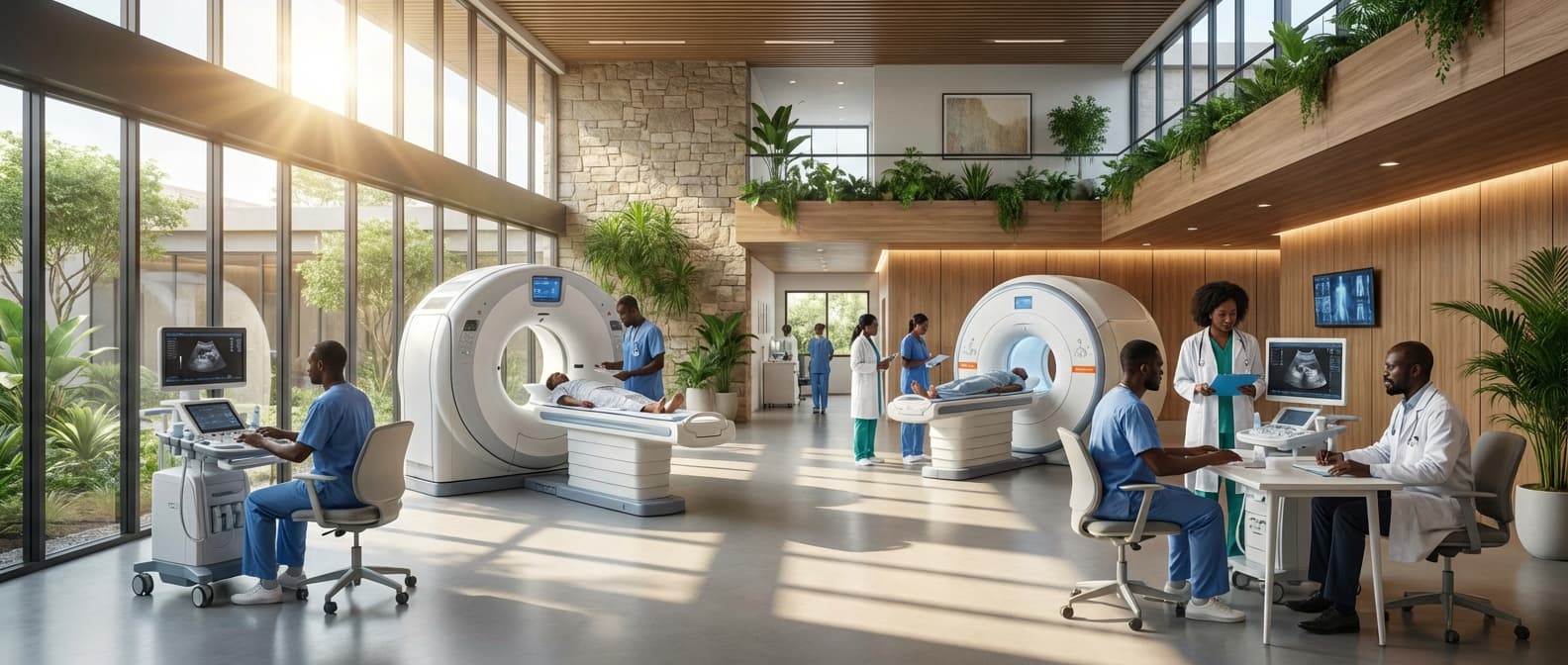
Diagnostic Imaging in Tunisia
Engineering Excellence & Technical Support
High-resolution imaging systems including CT scanners, MRI, X-ray, and ultrasound technology for accurate clinical diagnosis. High-standard technical execution following OEM protocols and local regulatory frameworks.
AI-Powered Diagnostic Accuracy
Leveraging cutting-edge Artificial Intelligence algorithms to enhance the precision and speed of diagnostic imaging interpretation, enabling earlier and more accurate disease detection across various specialties in Tunisian healthcare facilities.
Advanced PACS Integration
Implementing robust Picture Archiving and Communication Systems (PACS) that streamline image management, facilitate seamless teleradiology, and ensure secure, remote access to diagnostic imaging studies for specialists throughout Tunisia, improving collaboration and patient care.
High-Definition Imaging Modalities
Deploying state-of-the-art high-definition imaging equipment, including advanced MRI, CT scanners, and ultrasound machines, providing Tunisian clinicians with unparalleled image clarity and detail for comprehensive patient evaluations and interventions.
What Is Diagnostic Imaging In Tunisia?
Diagnostic Imaging in Tunisia encompasses a suite of medical procedures that utilize various forms of energy (such as X-rays, radio waves, ultrasound, and radioactive isotopes) to create visual representations of the internal structures of the human body. These images are then interpreted by specialized radiologists to aid in the detection, diagnosis, staging, and monitoring of diseases and injuries. The service is crucial for a comprehensive understanding of a patient's condition, often providing information unobtainable through physical examination or laboratory tests alone. The integration of advanced imaging modalities and experienced medical professionals ensures the delivery of accurate and timely diagnostic insights within the Tunisian healthcare system. The application spans a wide spectrum of medical specialties, including but not limited to, radiology, oncology, cardiology, neurology, orthopedics, and emergency medicine.
| Imaging Modality | Principle of Operation | Primary Applications | Common Equipment in Tunisia |
|---|---|---|---|
| X-ray Radiography | Uses electromagnetic radiation to create images based on differential absorption by tissues. | Fracture detection, pneumonia screening, assessment of bones and lungs, mammography. | X-ray machines (digital and conventional), Fluoroscopy units, Mammography units. |
| Computed Tomography (CT) | Combines multiple X-ray images taken from different angles to create cross-sectional views. | Trauma assessment, stroke diagnosis, cancer staging, abdominal and thoracic imaging, vascular imaging. | Multi-detector CT (MDCT) scanners, Cone-beam CT (CBCT) (dental/maxillofacial). |
| Magnetic Resonance Imaging (MRI) | Utilizes strong magnetic fields and radio waves to produce detailed images of soft tissues. | Neurological disorders (e.g., tumors, multiple sclerosis), musculoskeletal injuries, cardiac imaging, abdominal and pelvic imaging. | High-field (1.5T, 3T) and low-field MRI scanners. |
| Ultrasound (Sonography) | Employs high-frequency sound waves to generate real-time images of organs and blood flow. | Obstetrics and gynecology, abdominal organ assessment, vascular studies (Doppler ultrasound), echocardiography, thyroid imaging. | Portable and stationary ultrasound machines, Doppler ultrasound systems. |
| Nuclear Medicine (e.g., PET-CT, SPECT) | Involves administering small amounts of radioactive tracers to visualize organ function and metabolic activity. | Cancer detection and staging, cardiac perfusion imaging, neurological disorder assessment (e.g., Alzheimer's). | PET-CT scanners, SPECT scanners, Gamma cameras. |
Key Aspects of Diagnostic Imaging in Tunisia
- Image Acquisition: Utilizing specialized equipment like X-ray machines, CT scanners, MRI scanners, ultrasound devices, and PET scanners to capture internal body images.
- Image Processing and Reconstruction: Employing sophisticated software to enhance image quality, reduce noise, and generate 2D, 3D, or even 4D (time-varying) visualizations.
- Radiological Interpretation: Expert analysis of acquired images by board-certified radiologists to identify abnormalities, pathologies, or physiological changes.
- Report Generation: Detailed written reports summarizing findings, diagnostic conclusions, and recommendations for further management or treatment.
- Integration with Clinical Data: Correlating imaging findings with patient history, physical examination results, and other laboratory data for a holistic diagnostic approach.
Who Needs Diagnostic Imaging In Tunisia?
Diagnostic imaging plays a crucial role in modern healthcare, offering non-invasive methods to visualize internal body structures for diagnosis, treatment planning, and monitoring. In Tunisia, the demand for these services spans a wide spectrum of patients and medical specialties, reflecting the country's evolving healthcare landscape and commitment to advanced medical care. Identifying the key beneficiaries and departments involved is essential for understanding the scope and impact of diagnostic imaging services.
| Patient Type/Demographic | Common Imaging Modalities Used | Key Medical Specialties Involved |
|---|---|---|
| Pediatric Patients | X-ray, Ultrasound, MRI, CT Scan | Pediatrics, Orthopedics, Neurology, Gastroenterology |
| Geriatric Patients | X-ray, Ultrasound, MRI, CT Scan, Mammography (women) | Cardiology, Oncology, Orthopedics, Neurology, Pulmonology |
| Patients with Chronic Diseases (e.g., Diabetes, Heart Disease) | Ultrasound, CT Angiography, MRI, Echocardiography | Cardiology, Endocrinology, Nephrology |
| Trauma Patients | X-ray, CT Scan, Ultrasound | Emergency Medicine, Orthopedics, Neurosurgery, General Surgery |
| Pregnant Women | Ultrasound (Obstetric) | Obstetrics and Gynecology |
| Oncology Patients | CT Scan, MRI, PET Scan, Ultrasound, X-ray | Oncology, Radiology, Surgery |
| Neurology Patients | MRI, CT Scan, X-ray (for skull fractures) | Neurology, Neurosurgery |
| Orthopedic Patients | X-ray, CT Scan, MRI | Orthopedics, Sports Medicine, Rheumatology |
Target Customers and Departments Requiring Diagnostic Imaging in Tunisia
- {"items":["General Population: Individuals experiencing symptoms requiring diagnosis, from common ailments to complex conditions.","Pediatric Patients: Children requiring imaging for congenital abnormalities, injuries, infections, and growth-related issues.","Geriatric Patients: Elderly individuals with age-related diseases, chronic conditions, and increased susceptibility to various illnesses.","Patients with Chronic Diseases: Individuals managing conditions like diabetes, cardiovascular disease, respiratory illnesses, and cancer who require regular monitoring and assessment.","Trauma Patients: Individuals who have sustained injuries due to accidents or violence, necessitating rapid imaging for assessment and treatment.","Pregnant Women: Expectant mothers requiring prenatal ultrasounds for fetal monitoring and assessment.","Patients Undergoing Surgical Procedures: Individuals requiring pre-operative imaging for planning and post-operative assessment to monitor recovery.","Patients Referred by Specialists: Individuals who have been evaluated by specialists and require imaging to confirm diagnoses or guide further management."],"title":"Target Customers (Patient Demographics)"}
- {"items":["Radiology Department: The central hub for all diagnostic imaging, overseeing the acquisition, interpretation, and reporting of images.","Emergency Department (ER): Critical for rapid diagnosis of trauma, acute conditions, and life-threatening emergencies (e.g., stroke, appendicitis, fractures).","Oncology Department: Essential for cancer diagnosis, staging, treatment planning (radiation therapy), and monitoring treatment response.","Cardiology Department: Utilizes imaging for diagnosing and managing heart conditions, including coronary artery disease, valve disorders, and congenital heart defects (e.g., echocardiography, CT angiography).","Neurology Department: Crucial for diagnosing and managing neurological disorders such as stroke, brain tumors, epilepsy, and degenerative diseases (e.g., MRI, CT scans of the brain).","Orthopedic Department: Used for diagnosing fractures, dislocations, arthritis, sports injuries, and planning surgical interventions (e.g., X-rays, CT scans, MRI).","Gastroenterology Department: Aids in diagnosing and monitoring digestive system disorders, including inflammatory bowel disease, ulcers, and tumors (e.g., ultrasound, CT scans, endoscopy with imaging).","Pulmonology Department: Essential for diagnosing and managing respiratory conditions like pneumonia, lung cancer, tuberculosis, and interstitial lung diseases (e.g., chest X-rays, CT scans of the lungs).","Urology Department: Used for diagnosing and managing kidney stones, urinary tract infections, prostate issues, and bladder conditions (e.g., ultrasound, CT scans).","Gynecology and Obstetrics Department: Crucial for prenatal care, diagnosing gynecological conditions, and monitoring reproductive health (e.g., ultrasound).","Pediatrics Department: For imaging needs of infants, children, and adolescents across various medical specialties.","Intensive Care Unit (ICU): For critically ill patients requiring immediate imaging for monitoring and diagnosis (e.g., portable X-rays, ultrasounds).","Neurosurgery Department: For pre-operative planning and post-operative assessment of brain and spinal cord conditions."],"title":"Departments Utilizing Diagnostic Imaging"}
Diagnostic Imaging Process In Tunisia
The diagnostic imaging process in Tunisia, like in many countries, involves a structured workflow to ensure accurate and timely medical examinations. This process typically begins with a patient's inquiry or a referral from a physician, leading through several stages of scheduling, preparation, the imaging procedure itself, and finally, the interpretation and reporting of results.
| Stage | Description | Key Personnel Involved | Typical Duration |
|---|---|---|---|
| Inquiry/Referral | Patient symptoms or physician's clinical suspicion. | Patient, Referring Physician | Immediate |
| Physician's Order | Formal request for a specific imaging study. | Referring Physician | Minutes to Hours |
| Scheduling | Booking the appointment based on availability and urgency. | Patient, Reception/Scheduling Staff | Minutes to Days |
| Patient Preparation | Following instructions for the specific imaging modality. | Patient, Referring Physician/Imaging Center Staff | Hours to Days (depending on preparation) |
| Arrival & Registration | Check-in at the imaging facility. | Patient, Reception/Administrative Staff | Minutes |
| Technologist Interaction & Positioning | Explanation of procedure and patient setup. | Radiologic Technologist | Minutes |
| Image Acquisition | Performing the diagnostic imaging scan. | Radiologic Technologist | Minutes to Hours (depending on modality and complexity) |
| Radiologist Interpretation | Analysis of images and formulation of diagnostic report. | Radiologist | Hours to Days |
| Reporting & Communication | Delivery of the final report to the referring physician. | Radiologist, Administrative Staff | Hours to Days |
| Follow-up & Treatment | Physician reviews report and plans patient management. | Referring Physician, Patient | Days to Weeks |
Diagnostic Imaging Workflow in Tunisia
- Inquiry and Referral: The process starts with a patient experiencing symptoms or a physician suspecting a condition requiring imaging.
- Physician's Order: The referring physician issues a formal order for a specific imaging modality (e.g., X-ray, CT scan, MRI, ultrasound). This order includes the patient's details, clinical history, and the diagnostic question.
- Scheduling the Appointment: The patient or referring clinic contacts an imaging center or hospital department to schedule the examination. Factors like urgency, equipment availability, and patient preference are considered.
- Patient Preparation: Depending on the type of scan, specific preparations may be required. This can include fasting, dietary restrictions, avoiding certain medications, or wearing specific clothing.
- Arrival and Registration: The patient arrives at the imaging facility and completes the registration process, providing necessary personal and insurance information.
- Technologist Interaction: A radiologic technologist explains the procedure, answers any questions, and ensures the patient is comfortable and correctly positioned.
- Image Acquisition: The technologist operates the imaging equipment to capture the required diagnostic images according to established protocols.
- Radiologist Interpretation: A qualified radiologist reviews the acquired images, analyzes them in conjunction with the patient's clinical information, and formulates a diagnostic report.
- Reporting and Communication: The radiologist's report is generated and sent to the referring physician. In urgent cases, findings may be communicated verbally first.
- Follow-up: The referring physician uses the imaging report to guide further diagnosis, treatment, or management plans for the patient.
Diagnostic Imaging Cost In Tunisia
Diagnostic imaging plays a crucial role in modern healthcare, aiding in the diagnosis, monitoring, and treatment of various medical conditions. In Tunisia, the cost of these essential services is influenced by a combination of factors, leading to a range of prices for different imaging modalities. Understanding these factors is vital for both patients and healthcare providers to make informed decisions. The primary determinants of diagnostic imaging costs in Tunisia include the type of imaging technology used, the complexity of the procedure, the reputation and location of the facility (public versus private, urban versus rural), the expertise of the radiologist, and whether the service is covered by national health insurance or private insurance. Prices can vary significantly, and while official price lists are not always publicly available, general estimates can be made based on common procedures and market observations. It's important to note that these are approximate figures and can fluctuate.
| Imaging Modality | Estimated Price Range (TND) | Notes |
|---|---|---|
| X-ray (e.g., Chest X-ray, Limb X-ray) | 30 - 100 | Basic diagnostic imaging, generally the most affordable. |
| Ultrasound (e.g., Abdominal, Pelvic, Thyroid) | 50 - 150 | Widely used for soft tissues, relatively accessible. |
| CT Scan (e.g., Head, Chest, Abdomen) | 150 - 500 | More detailed imaging, cost varies with body part and slices. |
| MRI (e.g., Brain, Spine, Joints) | 300 - 800+ | Highly detailed imaging, generally the most expensive due to technology and complexity. Prices can exceed 800 TND for specialized scans or with contrast. |
| Mammography | 70 - 150 | Specific imaging for breast health. |
| Densitometry (Bone Density Scan) | 60 - 120 | Used to assess bone health. |
Key Pricing Factors for Diagnostic Imaging in Tunisia
- Type of Imaging Modality (e.g., X-ray, Ultrasound, CT Scan, MRI)
- Complexity and Duration of the Scan
- Facility Type (Public hospital vs. Private clinic)
- Geographic Location (Urban centers vs. Rural areas)
- Radiologist's Expertise and Reputation
- Use of Contrast Agents
- Insurance Coverage (National health insurance, private insurance, out-of-pocket)
Affordable Diagnostic Imaging Options
Accessing affordable diagnostic imaging is crucial for timely and accurate medical diagnoses. Fortunately, various strategies and innovative approaches can significantly reduce the out-of-pocket costs associated with these essential services. This guide explores the benefits of value bundles and outlines effective cost-saving measures.
| Cost-Saving Strategy | Description | Impact on Affordability |
|---|---|---|
| Seek Imaging Centers with Cash Pricing | Many independent imaging centers and some hospital-affiliated facilities offer discounted prices for patients paying out-of-pocket, bypassing insurance. This can be significantly cheaper than using insurance, especially for high-deductible plans. | Directly reduces out-of-pocket expenses through transparent, often lower, cash rates. |
| Compare Prices Across Providers | Do not assume all imaging facilities charge the same. Call around, check online price transparency tools, or ask your doctor for recommendations of facilities known for competitive pricing. | Identifies the most cost-effective provider for the same service. |
| Inquire About Package Deals or Discounts | Even if not formally a 'value bundle,' ask if the facility offers any discounts for multiple imaging studies or for paying upfront. | Can lead to reduced overall costs for related or multiple procedures. |
| Utilize Health Savings Accounts (HSAs) or Flexible Spending Accounts (FSAs) | These pre-tax accounts can be used to pay for eligible medical expenses, including diagnostic imaging, reducing your taxable income. | Lowers the net cost of imaging by using tax-advantaged funds. |
| Negotiate with the Provider | If facing a high bill, especially for self-pay patients, don't hesitate to ask if there's room for negotiation on the total cost. | Potentially lowers the final bill through direct negotiation. |
| Consider Out-of-Network Providers (with caution) | In some cases, an out-of-network provider might have lower self-pay rates. However, carefully assess the difference in cost versus the potential burden of filing your own claims. | May offer lower upfront costs, but requires careful consideration of administrative effort. |
| Discuss Necessity with Your Doctor | Ensure the imaging study is truly necessary. Sometimes, alternative diagnostic methods or a 'watch and wait' approach might be appropriate, saving you the cost of an imaging exam. | Prevents unnecessary spending by confirming the medical need for the procedure. |
| Look for Quality and Affordability | While cost is important, don't sacrifice quality. Research the reputation and accreditation of imaging centers to ensure you receive accurate results from experienced professionals. | Ensures a balance between reduced cost and the essential need for reliable diagnostic information. |
Understanding Value Bundles
- {"title":"What are Value Bundles?","description":"Value bundles, also known as bundled payments or package pricing, are a healthcare pricing model where a single, predetermined price is set for a group of related services. Instead of paying for each individual component of an imaging procedure (e.g., the radiologist's interpretation, the technician's fee, the use of the machine), patients or payers receive a comprehensive package deal."}
- {"title":"Benefits of Value Bundles","description":"Value bundles offer several advantages for patients seeking affordable diagnostic imaging: \n- Predictable Costs: You know the total cost upfront, making budgeting easier and avoiding surprise bills. \n- Reduced Overall Expense: By consolidating services, providers often offer a lower combined price than if services were billed individually. \n- Improved Care Coordination: Bundles can encourage better communication and coordination among the different healthcare professionals involved in your care. \n- Focus on Value: These bundles are designed to provide comprehensive care at a set price, emphasizing the overall value rather than just the individual service."}
- {"title":"Common Imaging Bundles","description":"Examples of imaging services that are increasingly being offered in value bundles include:\n- MRI of a specific body part (e.g., knee, shoulder, brain)\n- CT scan of a specific area (e.g., chest, abdomen, head)\n- X-rays for common conditions (e.g., fracture, pneumonia)\n- Ultrasound for obstetric or gynecological purposes\n- Comprehensive diagnostic packages for specific symptoms or conditions."}
Verified Providers In Tunisia
Finding reliable and reputable healthcare providers is paramount when seeking medical treatment, especially in a foreign country. In Tunisia, a growing number of healthcare facilities and individual practitioners are gaining recognition for their high standards and patient-centric approaches. Franance Health, in particular, has emerged as a leading name, synonymous with trust and excellence in the Tunisian healthcare landscape. This recognition stems from their stringent credentialing processes, commitment to international standards, and a dedication to providing a seamless and high-quality patient experience. Choosing verified providers, such as those associated with Franance Health, offers significant advantages, including assured quality of care, enhanced patient safety, transparent pricing, and access to specialized expertise. Their accreditation signifies adherence to rigorous protocols, ensuring that patients receive care that is both effective and ethically delivered. When considering medical tourism or seeking specialized treatment in Tunisia, prioritizing providers with verified credentials like those championed by Franance Health is a crucial step towards a successful and reassuring healthcare journey.
| Criteria for Verification (Franance Health Focus) | What it Means for Patients |
|---|---|
| Clinical Competence & Experience: Rigorous vetting of medical professionals' qualifications, training, and track record. | Patients receive treatment from highly skilled and experienced doctors and surgeons. |
| Adherence to International Standards: Compliance with globally recognized medical protocols, safety guidelines, and ethical practices. | Ensures a high standard of care comparable to leading international healthcare facilities. |
| Facility Quality & Infrastructure: Assessment of medical facilities, equipment, hygiene, and technological advancements. | Access to modern, well-equipped, and safe healthcare environments. |
| Patient Care & Communication: Evaluation of patient support services, communication protocols, and patient satisfaction metrics. | A focus on patient comfort, clear information, and responsive support throughout their medical journey. |
| Regulatory Compliance: Verification of adherence to all relevant Tunisian healthcare regulations and licensing requirements. | Guarantees that providers operate legally and ethically within the Tunisian medical system. |
Key Benefits of Choosing Verified Providers in Tunisia (Franance Health Credentialed)
- Assurance of Quality Care: Verified providers adhere to strict medical protocols and international standards, ensuring a high level of clinical expertise and treatment effectiveness.
- Enhanced Patient Safety: Rigorous credentialing processes minimize risks by ensuring providers are qualified, experienced, and follow best practices in patient care and hygiene.
- Transparency and Trust: Verified providers typically offer clear information regarding their qualifications, treatment plans, and associated costs, fostering trust and reducing uncertainty.
- Access to Specialized Expertise: Many verified facilities and practitioners in Tunisia have cultivated specialized knowledge and offer advanced medical procedures.
- Improved Patient Experience: A focus on patient well-being, comfort, and effective communication is a hallmark of verified healthcare services, leading to a more positive overall experience.
- International Recognition: Credentials recognized by organizations like Franance Health often align with global healthcare benchmarks, providing international patients with confidence.
Scope Of Work For Diagnostic Imaging
This Scope of Work (SOW) outlines the requirements for the provision of diagnostic imaging services and technical deliverables. It specifies the standard specifications and quality benchmarks that the selected vendor must adhere to. The scope encompasses the full lifecycle of diagnostic imaging, from equipment acquisition and maintenance to service delivery and reporting, ensuring high-quality patient care and operational efficiency.
| Category | Technical Deliverables | Standard Specifications / Performance Metrics | Acceptance Criteria |
|---|---|---|---|
| Equipment Procurement | New diagnostic imaging equipment (e.g., MRI, CT, X-ray, Ultrasound, PET/CT) | Latest generation technology, energy efficiency, FDA/CE approved, specific resolution and speed requirements per modality. | Successful installation, functional testing, and demonstration of all specified features meeting resolution and speed requirements. |
| Installation and Integration | Fully integrated and operational imaging systems connected to PACS and RIS | Seamless integration with existing hospital IT infrastructure, adherence to DICOM standards for image transfer and metadata. | Successful image transfer to PACS, patient data integration with RIS, and system diagnostics report. |
| Maintenance and Calibration | Preventive maintenance reports, corrective maintenance response times, calibration certificates | Scheduled PMs (e.g., quarterly/annually), 24/7 emergency support, response within 4 hours for critical failures, calibration to manufacturer's specifications. | Completion of all scheduled PMs, documented resolution of all reported issues within agreed SLAs, and valid calibration certificates. |
| Imaging Modality Operations | High-quality diagnostic images, optimal patient positioning and dose management | Image quality meeting clinical diagnostic standards (e.g., SNR, CNR, spatial resolution), ALARA principles for radiation dose reduction, patient comfort and safety protocols. | Review of sample images by clinical stakeholders, successful audits for dose management, and positive patient feedback on experience. |
| PACS/VNA Management | Secure, accessible, and efficient image archive and retrieval system | 100% uptime for PACS/VNA, sub-5-second image retrieval, robust data redundancy and backup, adherence to HIPAA/GDPR for data security. | Successful data integrity checks, performance testing for retrieval times, and documented security protocols. |
| Reporting and Interpretation | Timely and accurate diagnostic reports by qualified radiologists | Standardized report templates, turnaround times (e.g., STAT within 1 hour, routine within 24 hours), peer review process for quality assurance. | Adherence to TAT SLAs for report delivery, successful completion of QA reviews, and feedback from referring physicians. |
| Quality Assurance | Regular QA assessments, performance monitoring reports, incident reports | Monthly QA checks for equipment and processes, continuous monitoring of key performance indicators (KPIs) such as image quality, TAT, and patient satisfaction. | Submission of monthly QA reports, demonstration of continuous improvement in identified KPIs. |
| Staff Training | Competent and proficient imaging technologists and support staff | Initial and ongoing training on new equipment and protocols, certification requirements for technologists, adherence to safety training standards. | Training completion records, demonstration of competency by staff, and successful certification where applicable. |
Key Areas Covered by the Scope of Work
- Equipment Procurement and Installation
- Maintenance and Calibration
- Imaging Modality Operations
- Image Archiving and Retrieval (PACS)
- Reporting and Interpretation Services
- Quality Assurance and Performance Monitoring
- Training and Staff Development
- Compliance and Regulatory Adherence
- Information Security and Data Privacy
Service Level Agreement For Diagnostic Imaging
This Service Level Agreement (SLA) outlines the performance standards and commitments for the provision of Diagnostic Imaging services by [Provider Name] to [Client Name]. It defines the expected response times for critical services and the guaranteed uptime for the imaging systems and related infrastructure.
| Service Component | Guaranteed Uptime | Response Time (Critical Incidents) | Response Time (Urgent Incidents) | Response Time (Routine Incidents) |
|---|---|---|---|---|
| Imaging Modalities (CT, MRI, X-ray, Ultrasound, Nuclear Medicine) | 99.9% | 15 minutes | 1 hour | 4 business hours |
| Picture Archiving and Communication System (PACS) | 99.9% | 15 minutes | 1 hour | 4 business hours |
| Radiology Information System (RIS) | 99.9% | 15 minutes | 1 hour | 4 business hours |
| Workstations and Viewing Software | 99.5% | 30 minutes | 2 hours | 8 business hours |
| Network Connectivity (Internal) | 99.9% | 15 minutes | 1 hour | 4 business hours |
Key Definitions
- Diagnostic Imaging Services: Includes but is not limited to X-ray, CT scans, MRI, Ultrasound, and Nuclear Medicine procedures.
- System Uptime: The percentage of time that the diagnostic imaging systems and their associated IT infrastructure are operational and accessible for use.
- Response Time: The maximum time allowed for a defined event or request to be addressed by the service provider, measured from the time of notification.
- Critical Incident: An event that renders a diagnostic imaging system completely inoperable, significantly impacting patient care or safety.
- Urgent Incident: An event that degrades the performance of a diagnostic imaging system to an unacceptable level, potentially impacting patient care.
- Routine Incident: An event that causes minor disruption or requires scheduled maintenance, with minimal impact on patient care.
Frequently Asked Questions

Ready when you are
Let's scope your Diagnostic Imaging in Tunisia project in Tunisia.

Scaling healthcare logistics and technical systems across the entire continent.