
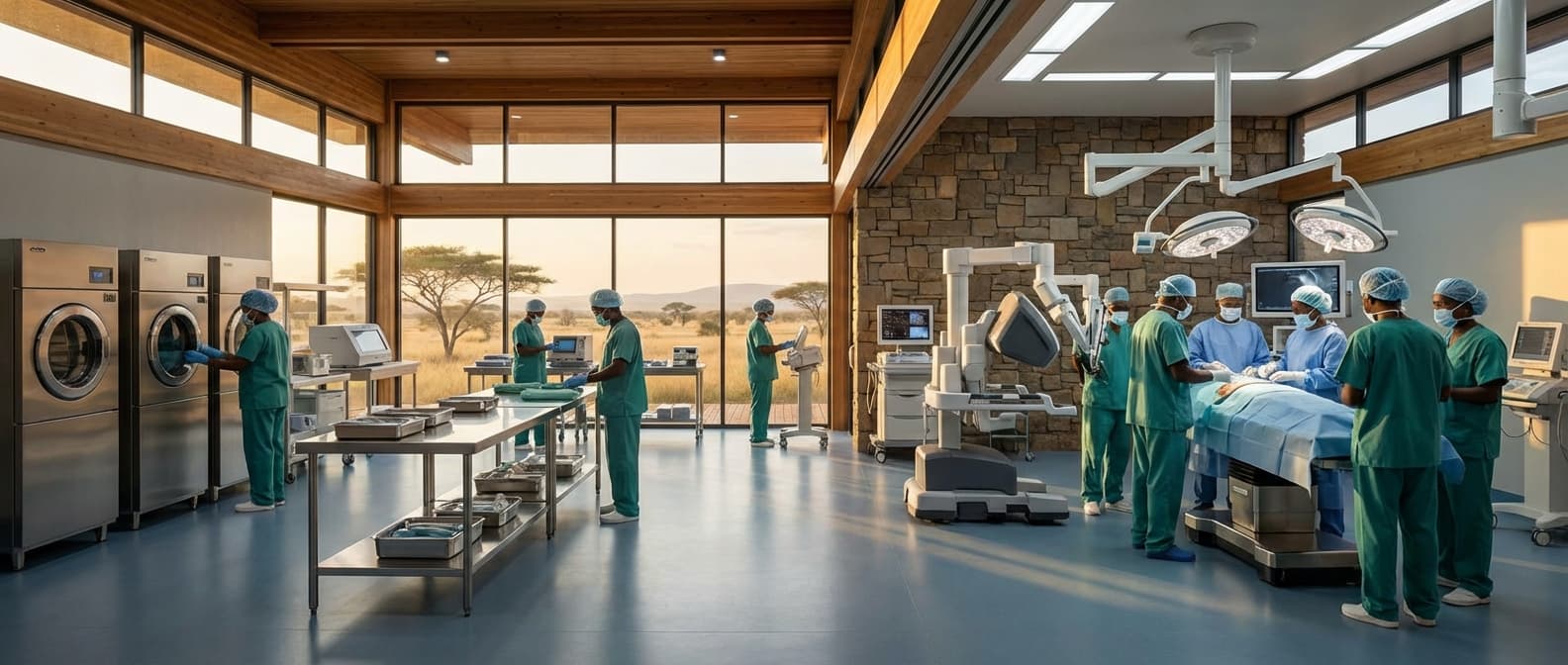
Operating Theatre Turnkey Build in Tunisia
Engineering Excellence & Technical Support
Complete OR design, equipment integration and commissioning High-standard technical execution following OEM protocols and local regulatory frameworks.
Advanced Aseptic Design & Construction
Our turnkey solutions in Tunisia meticulously integrate advanced aseptic design principles, from air handling systems with HEPA filtration and pressure differentials to seamless, non-porous finishes and integrated surgical lighting. We ensure compliance with international standards (e.g., ISO 14644-1) for optimal infection control and patient safety.
Seamless Integration of State-of-the-Art Medical Technology
We deliver fully equipped operating theatres in Tunisia, expertly integrating cutting-edge medical equipment, including digital imaging systems, robotic surgery platforms, advanced anesthesia machines, and centralized gas supply networks. Our turnkey approach ensures plug-and-play readiness and optimal workflow for surgical teams.
End-to-End Project Management & Regulatory Compliance
Leveraging our expertise in Tunisia, we provide comprehensive turnkey services, managing every phase from initial design and procurement to construction, installation, and commissioning. We navigate local regulations and licensing requirements, ensuring a streamlined and compliant build process for your healthcare facility.
What Is Operating Theatre Turnkey Build In Tunisia?
An Operating Theatre Turnkey Build in Tunisia refers to a comprehensive service that encompasses the complete design, construction, equipping, and commissioning of a state-of-the-art operating theatre facility, delivered as a ready-to-use entity. This integrated approach aims to provide healthcare institutions with a fully functional surgical suite with minimal involvement in the procurement and integration process. The service typically covers all phases from initial concept and architectural design, through structural construction, specialized HVAC and environmental control systems, medical gas installations, electrical and IT infrastructure, sterile finishes, to the procurement and installation of advanced surgical equipment, lighting, and ancillary systems. The "turnkey" aspect signifies that the provider delivers a complete, operational package, allowing the client to commence surgical procedures upon handover. This service is particularly relevant in contexts where healthcare providers seek to rapidly establish or upgrade surgical capacity, adhere to stringent international standards, and ensure seamless integration of technology and infrastructure.
| Who Needs This Service? | Typical Use Cases | ||
|---|---|---|---|
| New Healthcare Facilities: Greenfield hospital projects or the establishment of new surgical centers requiring immediate operational capacity. | Establishing a new, state-of-the-art surgical department from scratch. | Developing specialized surgical units (e.g., cardiac, neurosurgery, orthopedic) requiring specific infrastructure and equipment. | |
| Existing Healthcare Institutions: Hospitals or clinics seeking to upgrade or expand their surgical capabilities to meet increased demand or to comply with evolving standards. | Replacing outdated operating theatres with modern, technologically advanced facilities. | Expanding surgical capacity to accommodate a growing patient volume or introduce new surgical specialties. | Retrofitting existing spaces to meet stringent infection control and safety regulations. |
| Government & Public Health Projects: Initiatives to improve healthcare infrastructure and access to advanced surgical services within a region. | Implementing national or regional healthcare development programs. | Building or renovating surgical facilities in underserved areas to enhance public health outcomes. | |
| Private Healthcare Providers & Investors: Entities focused on delivering high-quality, specialized surgical care with a competitive edge. | Establishing boutique surgical clinics or centers of excellence. | Investing in facilities that attract leading surgeons and cater to a discerning patient base. |
Key Components of an Operating Theatre Turnkey Build Service:
- Architectural & Design Phase: Conceptualization, detailed architectural drawings, and engineering specifications adhering to international healthcare facility guidelines (e.g., HTM, FGI) and Tunisian building codes.
- Civil & Structural Works: Construction of the theatre shell, including reinforced structures, wall and floor finishes (antimicrobial, seamless, impact-resistant), and ceiling systems.
- HVAC & Environmental Control: Design and installation of specialized, high-efficiency, positive-pressure ventilation systems with HEPA filtration, maintaining precise temperature, humidity, and air change rates to ensure laminar flow and infection control.
- Medical Gas Systems: Installation of piped medical gases (oxygen, medical air, vacuum, nitrous oxide) compliant with relevant standards, including alarm systems and distribution networks.
- Electrical & IT Infrastructure: Robust power supply with UPS and generator backup, specialized lighting (surgical luminaires, ambient lighting), data network cabling, and audiovisual integration for surgical imaging and recording.
- Sterile & Hygienic Finishes: Application of seamless, non-porous, and easily cleanable materials for all surfaces to minimize microbial contamination and facilitate terminal cleaning.
- Equipment Procurement & Installation: Sourcing and integration of major surgical equipment such as operating tables, surgical lights, anesthesia machines, electrosurgical units, imaging equipment (e.g., C-arms), and instrument sterilization equipment.
- Commissioning & Validation: Rigorous testing and validation of all systems (HVAC, medical gases, electrical, equipment) to ensure optimal performance, safety, and compliance with regulatory requirements. Training of operational staff is often included.
Who Needs Operating Theatre Turnkey Build In Tunisia?
Operating Theatre Turnkey Builds in Tunisia are essential for a range of healthcare facilities aiming to establish or upgrade their surgical capabilities with modern, fully equipped, and compliant operating environments. These comprehensive solutions offer a streamlined approach to creating state-of-the-art surgical suites, encompassing design, construction, equipment installation, and commissioning.
| Healthcare Facility Type | Key Need for Turnkey Build | Relevant Departments |
|---|---|---|
| Public Hospitals | Expansion of services, modernization, compliance with national standards, cost-effectiveness through integrated solutions. | All major surgical departments, emergency services. |
| Private Hospitals & Clinics | Attracting specialized surgeons, offering advanced procedures, ensuring patient safety and satisfaction, competitive advantage, branding. | Specialized surgical departments (e.g., cardiology, orthopedics, neurosurgery), general surgery, gynecology. |
| International Healthcare Groups | Standardized facility design and equipment, rapid deployment, compliance with international healthcare standards (e.g., JCI, ISO), predictable project timelines and budgets. | All departments depending on the group's specialization. |
| Military Hospitals | High-durability and robust systems, specialized trauma and emergency care capabilities, rapid deployment for field hospitals. | General surgery, trauma surgery, orthopedic surgery, specialized military medical procedures. |
| Research & Teaching Hospitals | Cutting-edge technology for complex procedures, facilities for training surgeons, integration with research labs, sterile environments for sensitive experiments. | All departments, with a focus on advanced and experimental surgical techniques. |
Target Customers and Departments for Operating Theatre Turnkey Builds in Tunisia
- {"items":["Public Hospitals: Government-funded hospitals seeking to expand or modernize their surgical capacity to serve a larger patient population and improve healthcare standards. This includes national, regional, and local public health institutions.","Private Hospitals and Clinics: Privately owned healthcare providers that aim to offer advanced surgical services, attract a premium patient base, and compete in the healthcare market. This also includes specialized surgical centers.","International Healthcare Groups: Foreign companies or organizations investing in healthcare infrastructure in Tunisia, requiring standardized and high-quality surgical facilities.","Military Hospitals: Facilities serving the armed forces, often requiring specialized and robust operating theatre solutions.","Research and Teaching Hospitals: Institutions focused on medical education and research, needing advanced facilities for complex procedures and training."],"title":"Target Customers"}
- {"items":["General Surgery: The core department requiring versatile operating theatres for a wide array of procedures.","Orthopedic Surgery: Needs specialized theatres equipped for complex bone and joint surgeries, often requiring advanced imaging and instrumentation.","Cardiovascular Surgery: Demands highly specialized theatres with advanced life support systems, imaging, and surgical tools for heart and blood vessel operations.","Neurosurgery: Requires precise and sterile environments with advanced imaging capabilities and specialized instrumentation for brain and spine surgeries.","Gynecology and Obstetrics: Needs theatres for routine and complex gynecological procedures, as well as for emergency Cesarean sections.","Urology: Facilities for a range of urinary tract and kidney surgeries.","Ophthalmology: Surgical suites focused on eye procedures, often requiring specific lighting and magnification equipment.","ENT (Ear, Nose, and Throat) Surgery: Theatres equipped for procedures related to the head and neck.","Plastic and Reconstructive Surgery: Surgical environments catering to cosmetic and reconstructive procedures, demanding meticulous attention to detail and sterile conditions.","Emergency Surgery/Trauma Units: Dedicated operating theatres designed for rapid response to trauma cases, often requiring robust and adaptable setups."],"title":"Target Departments"}
Operating Theatre Turnkey Build Process In Tunisia
This document outlines the typical workflow for a turnkey operating theatre (OT) build process in Tunisia, covering the entire journey from initial client inquiry to the final handover and commissioning of a fully functional surgical space. A turnkey solution implies that the contractor takes full responsibility for all aspects of the project, delivering a ready-to-use facility.
| Stage | Description | Key Activities | Tunisian Specifics/Considerations |
|---|---|---|---|
| Inquiry and Initial Consultation | The client (hospital, clinic, or government entity) expresses interest and provides initial requirements for the operating theatre. | Discussing client needs, budget, timeline, scope of work, and project objectives. Site visit might be initiated. | Understanding local healthcare regulations and standards for OT construction. Identifying key stakeholders (Ministry of Health, hospital administration). |
| Feasibility Study and Site Assessment | Evaluating the viability of the project and assessing the chosen location. | Analyzing site conditions (structural integrity, access, utilities), regulatory compliance, and preliminary budget assessment. | Availability of essential utilities (water, power, sewage) and their reliability. Local zoning laws and environmental impact assessments. |
| Conceptual Design and Planning | Developing the initial layout, workflow, and aesthetic of the operating theatre. | Creating preliminary drawings, space allocation, flow diagrams (patient, staff, sterile supplies), and defining functional zones. | Adherence to Tunisian healthcare design guidelines, infection control principles, and accessibility standards. |
| Detailed Design and Engineering | Translating the conceptual design into comprehensive technical drawings and specifications. | Architectural plans, structural engineering, MEP (Mechanical, Electrical, Plumbing) systems design, medical gas systems, HVAC, lighting, and acoustics. | Ensuring compliance with national building codes, safety standards (e.g., fire safety), and specific Tunisian electrical and plumbing regulations. Sourcing locally available materials where possible. |
| Tendering and Contractor Selection | If not a direct appointment, this involves seeking bids from qualified contractors. | Preparing tender documents, pre-qualifying contractors, evaluating bids, and awarding the contract. | Identifying reputable contractors with experience in medical facility construction in Tunisia. Understanding local labor laws and contractor licensing requirements. |
| Permitting and Approvals | Obtaining all necessary legal permissions and certifications for construction. | Submitting design plans to relevant authorities (municipality, Ministry of Health, environmental agencies) for approval. | Navigating the Tunisian bureaucratic process for construction permits. Understanding the specific requirements for healthcare facilities. |
| Procurement of Materials and Equipment | Sourcing and acquiring all building materials and specialized operating theatre equipment. | Ordering raw materials, finishes, medical gases, HVAC components, surgical lights, anesthesia machines, sterilization equipment, etc. | Establishing relationships with reliable local and international suppliers. Managing import duties and logistics for specialized equipment. Potential for local sourcing of certain construction materials. |
| Construction and Civil Works | The physical building of the operating theatre structure. | Site preparation, foundation work, structural framing, wall construction, flooring, and ceiling installation. | Ensuring quality control and adherence to approved designs. Managing site safety regulations. |
| MEP Installation | Installing the critical mechanical, electrical, and plumbing systems. | Wiring for power, data, and lighting; installing ventilation and air conditioning (HVAC) systems; plumbing for water supply and drainage; and medical gas pipelines. | Compliance with Tunisian electrical safety standards and specific requirements for medical gas purity and flow rates. Redundancy for critical systems is essential. |
| Specialized OT Equipment Installation and Integration | Installing and integrating advanced surgical equipment. | Mounting surgical lights, anesthesia machines, patient monitors, imaging equipment, robotic surgical systems, and integrating them with the building's MEP systems. | Ensuring compatibility with existing hospital IT infrastructure. Training on usage and maintenance of specific equipment. |
| Finishing and Interior Fit-out | Completing the interior aesthetics and functional elements. | Applying specialized finishes (e.g., anti-microbial paints, seamless flooring), installing cabinetry, doors, windows, and ensuring proper sealing and hygiene standards. | Using materials that are easy to clean and maintain, meeting stringent infection control requirements as per Tunisian health standards. |
| Testing, Commissioning, and Validation | Thoroughly testing all systems and equipment to ensure they function as intended. | Performance testing of HVAC, electrical, medical gas, lighting, and all surgical equipment. Validation of sterility and air quality. | Working with accredited testing agencies. Ensuring all documentation for regulatory bodies is complete. Potentially requiring local certification for certain systems. |
| Training and Handover | Educating hospital staff on the operation and maintenance of the new facility and its equipment. | Providing hands-on training for surgeons, nurses, technicians, and maintenance staff. Handing over all project documentation, manuals, and warranties. | Tailoring training to the specific needs and skill sets of the local healthcare workforce. |
| Post-Completion Support and Maintenance | Providing ongoing support and maintenance services after the handover. | Warranty support, scheduled maintenance, emergency repairs, and spare parts management. | Establishing clear service level agreements (SLAs) for maintenance and response times. Identifying local service providers for ongoing support. |
Key Stages of the Turnkey Operating Theatre Build Process in Tunisia
- Inquiry and Initial Consultation
- Feasibility Study and Site Assessment
- Conceptual Design and Planning
- Detailed Design and Engineering
- Tendering and Contractor Selection (if not pre-selected)
- Permitting and Approvals
- Procurement of Materials and Equipment
- Construction and Civil Works
- MEP (Mechanical, Electrical, Plumbing) Installation
- Specialized OT Equipment Installation and Integration
- Finishing and Interior Fit-out
- Testing, Commissioning, and Validation
- Training and Handover
- Post-Completion Support and Maintenance
Operating Theatre Turnkey Build Cost In Tunisia
Building a fully equipped operating theatre (OT) in Tunisia is a complex project with costs that can vary significantly. The final price is influenced by a multitude of factors, ranging from the chosen location and the size of the facility to the sophistication of the medical equipment and the finishes selected. A 'turnkey' solution implies a complete, ready-to-use facility, encompassing all aspects from structural construction to the installation of specialized medical gas systems, ventilation, lighting, and advanced surgical equipment. Understanding these pricing determinants is crucial for accurate budgeting and project planning in the Tunisian market.
| Category | Estimated Cost Range (TND) | Notes |
|---|---|---|
| Basic Fit-Out & Civil Works (per sqm) | 1,500 - 3,000 | Excludes specialized medical systems and equipment. Varies greatly by location and quality of finishes. |
| Advanced HVAC & Air Filtration Systems | 50,000 - 150,000+ | Depends on the number of OTs, size, and level of air purity required. |
| Medical Gas Systems Installation | 30,000 - 80,000+ | Per OT. Includes piping, outlets, and central supply connections. |
| Surgical Lighting & Booms | 15,000 - 50,000+ per OT | Quality and features of lighting systems are key. |
| General Medical Equipment (per OT) | 100,000 - 300,000+ | Includes surgical table, anesthesia, monitoring, etc. Highly variable based on brand and specifications. |
| Specialized Surgical Equipment (e.g., Laparoscopy, Orthopedics) | 50,000 - 200,000+ per specialty | Adds significantly to the cost depending on the surgical disciplines offered. |
| Architectural & Engineering Fees | 5% - 10% of total project cost | Covers design, supervision, and project management. |
| Total Turnkey Build Cost (per OT, fully equipped) | 300,000 - 1,000,000+ TND | This is a broad estimate. A basic, smaller OT might be at the lower end, while a state-of-the-art, larger facility will be significantly higher. Costs are in Tunisian Dinars (TND). |
Key Pricing Factors for Operating Theatre Turnkey Builds in Tunisia
- Size and Square Footage: Larger operating theatres, including pre-operative areas, recovery rooms, sterile corridors, and support spaces, naturally incur higher construction and fit-out costs.
- Location: Real estate prices, local labor rates, and the availability of specialized subcontractors can differ substantially between major cities (like Tunis, Sfax, or Sousse) and more rural areas.
- Structural Construction: The cost of raw materials (concrete, steel, bricks), excavation, foundation work, and the overall building structure forms a significant portion of the budget. Renovations of existing structures will have different cost implications compared to new builds.
- Specialized HVAC and Air Filtration: Operating theatres require stringent air quality control. This involves advanced HVAC systems with HEPA filtration, positive pressure differentials, and precise temperature and humidity control, which are costly to install and maintain.
- Medical Gas Systems: The installation of piped medical gases (oxygen, medical air, vacuum, nitrous oxide) and their associated infrastructure, including central supply, distribution lines, and outlets, is a specialized and expensive component.
- Surgical Lighting and Booms: High-quality, adjustable surgical lighting systems, often integrated into overhead booms, are essential for optimal surgical visibility and add to the overall cost.
- Sterile Supplies and Storage: The design and construction of sterile storage areas, including specialized shelving and environmental controls, contribute to the budget.
- Electrical and Data Infrastructure: Robust electrical systems, backup power generators, Uninterruptible Power Supplies (UPS), and integrated data/communication networks are vital for OT functionality.
- Finishes and Materials: The choice of flooring (e.g., seamless, anti-bacterial vinyl or epoxy), wall coverings (e.g., anti-bacterial panels, epoxy paint), ceilings, and doors (e.g., lead-lined for radiology suites if applicable) significantly impacts the budget.
- Medical Equipment: This is often the largest single cost component and includes surgical tables, anesthesia machines, patient monitors, electrosurgical units, endoscopes, autoclaves, and other specialized surgical instruments.
- Plumbing and Drainage: Specialized plumbing for surgical sinks, waste disposal, and emergency drainage systems are necessary.
- Waste Management Systems: Efficient and safe disposal of biohazardous waste requires specific infrastructure and compliance with regulations.
- Architectural and Engineering Fees: Professional services for design, planning, project management, and site supervision are essential.
- Permits and Regulatory Compliance: Obtaining necessary building permits and ensuring compliance with Tunisian healthcare regulations adds to the project's administrative costs.
- Contingency: It is prudent to include a contingency fund (typically 10-20%) to cover unforeseen expenses and scope changes.
Affordable Operating Theatre Turnkey Build Options
Investing in a new operating theatre is a significant undertaking, but with careful planning and strategic choices, it's possible to achieve a high-quality, functional facility through affordable turnkey build options. These options often involve pre-designed modules, standardized components, and efficient project management to streamline the construction process and reduce overall costs. This approach focuses on delivering essential functionality and compliance without unnecessary customization, making advanced surgical capabilities accessible to a wider range of healthcare providers. Value bundles are key to managing costs, offering a comprehensive package of services and equipment at a pre-determined price, eliminating unexpected expenses and simplifying procurement.
| Cost-Saving Strategy | Description | Impact on Affordability |
|---|---|---|
| Standardized Design & Modular Construction | Utilizing pre-designed layouts and pre-fabricated components reduces custom engineering and on-site labor. | Lower material waste, faster construction times, predictable costs. |
| Bulk Purchasing of Equipment | Procuring multiple essential equipment items from a single supplier or through package deals. | Volume discounts, reduced administrative overhead for procurement. |
| Phased Development | Building out the operating theatre in stages, prioritizing essential functions first and adding advanced features later as budget allows. | Spreads capital expenditure over time, allows for immediate operational use. |
| Focus on Essential Features | Prioritizing core functionalities and avoiding expensive, non-essential add-ons in the initial build. | Reduced upfront investment, allowing for future upgrades. |
| Energy-Efficient Systems | Integrating LED lighting, efficient HVAC systems, and smart power management. | Lower long-term operational costs (electricity, maintenance). |
| Simplified Finishes | Opting for durable, easy-to-clean, but cost-effective flooring, wall coatings, and ceiling materials. | Reduced material and installation costs without compromising hygiene standards. |
| Off-the-Shelf Equipment (where appropriate) | Selecting widely available and proven equipment models rather than highly specialized or custom-made units. | Lower acquisition costs and easier maintenance/replacement. |
Value Bundles for Affordable Operating Theatre Turnkey Builds
- {"title":"Basic Functional Theatre Bundle","description":"Includes essential infrastructure (walls, flooring, ceiling), basic lighting, and a standard surgical table. Ideal for general surgical procedures and facilities with budget constraints."}
- {"title":"Standard Procedure Theatre Bundle","description":"Builds on the basic bundle with enhanced lighting, a more versatile surgical table, integrated medical gas outlets, and basic AV systems for recording or remote consultation."}
- {"title":"Advanced Procedure Theatre Bundle","description":"Features sophisticated lighting, an advanced multi-articulating surgical table, comprehensive medical gas systems, high-definition imaging integration (e.g., C-arm compatibility), and advanced AV/IT infrastructure."}
- {"title":"Modular Theatre Fit-Out Bundle","description":"Focuses on pre-fabricated modules for faster installation and reduced on-site disruption. This can include wall panels, ceiling grids, and integrated service columns."}
- {"title":"Equipment & Furniture Only Bundle","description":"For facilities with existing building infrastructure, this bundle focuses on supplying and installing the necessary operating theatre equipment and furniture."}
Verified Providers In Tunisia
When seeking healthcare services in Tunisia, particularly those involving specialized treatments or international standards, the concept of 'Verified Providers' becomes crucial. Franance Health stands out as a leader in this domain, meticulously vetting and credentialing healthcare facilities and professionals. This commitment to verification ensures that patients receive safe, effective, and high-quality care, aligning with international best practices. Franance Health's rigorous accreditation process examines everything from the clinical expertise of medical staff to the technological capabilities of facilities, patient safety protocols, and ethical business practices. Choosing a Franance Health-verified provider means opting for transparency, reliability, and peace of mind.
| Verification Aspect | Franance Health Focus | Patient Benefit |
|---|---|---|
| Clinical Competence | Assessment of medical staff qualifications, experience, and specialization. | Access to skilled and experienced medical professionals for optimal treatment outcomes. |
| Facility Infrastructure | Evaluation of equipment, technology, and the overall physical environment. | Modern, well-equipped facilities that support advanced medical procedures and patient comfort. |
| Patient Safety & Protocols | Review of hygiene, infection control, emergency preparedness, and patient rights. | Minimized risk of complications and a secure, well-managed healthcare experience. |
| Service Excellence | Assessment of patient care pathways, communication, and administrative efficiency. | Smooth, well-coordinated, and supportive healthcare journey from consultation to recovery. |
| Ethical Conduct | Adherence to medical ethics, transparent pricing, and patient privacy. | Trustworthy interactions, fair billing, and safeguarding of personal health information. |
Why Franance Health Credentials Matter:
- Ensured Quality of Care: Rigorous standards guarantee that providers meet high clinical and operational benchmarks.
- Patient Safety First: Verification includes adherence to stringent safety protocols and infection control measures.
- Access to Expertise: Franance Health identifies and endorses professionals with proven track records and specialized skills.
- International Standards: Providers are assessed against globally recognized healthcare accreditations.
- Transparency and Trust: The verification process builds confidence for patients, especially those traveling for medical needs.
- Ethical Practice Assurance: Franance Health scrutinizes providers for fair pricing and ethical treatment of patients.
Scope Of Work For Operating Theatre Turnkey Build
This Scope of Work (SOW) outlines the requirements for the turnkey build of a state-of-the-art operating theatre. It encompasses all aspects from design and construction to commissioning and final handover. The project aims to deliver a fully functional, compliant, and technologically advanced operating theatre environment meeting stringent healthcare standards.
| Category | Technical Deliverables | Standard Specifications |
|---|---|---|
| Design and Architectural Services | Detailed architectural drawings, structural plans, MEP schematics, lighting design, infection control layout, equipment placement plans. | Compliance with local building codes, healthcare facility guidelines (e.g., JCI, WHO, local Ministry of Health standards), ergonomic design principles, accessibility standards. |
| Civil Works and Construction | Foundation, structural framing, walls, flooring, ceiling construction, external works. | Durable, non-porous, and easily cleanable materials. Seamless finishes. Appropriate structural integrity to support equipment. Sound insulation as per requirements. |
| MEP Systems | Power distribution, emergency power (UPS/generator), general lighting, ventilation, water supply, drainage, hot and cold water systems. | Redundant power supply for critical equipment. Energy-efficient lighting. Adequate ventilation rates. Compliance with electrical safety standards (e.g., IEC, BS) and plumbing codes. |
| Specialized Medical Gas Systems | Medical oxygen, medical air, vacuum, nitrous oxide, anesthetic waste gas disposal (AWGD) systems, alarm systems. | ISO 7396 series compliance for medical gas pipeline systems. Purity and pressure regulations as per international standards. Color-coding as per international standards. Fail-safe alarm systems. |
| Cleanroom and Air Filtration Systems (HVAC) | HEPA filtration, positive pressure relative to adjacent areas, air changes per hour (ACH), temperature and humidity control, laminar flow. | ISO 14644-1 Class 7 or 8 cleanroom standards for operating theatres. Minimum ACH as per healthcare guidelines (e.g., 20-25 ACH). Precise temperature (20-24°C) and humidity (40-60%) control. Laminar flow canopies where specified. |
| Operating Theatre Equipment and Integration | Surgical lights, operating tables, anesthesia machines, patient monitors, C-arms, electrosurgical units, imaging systems, sterilizers, communication systems. | Latest generation, integrated, and interoperable equipment. FDA/CE marked or equivalent. Ergonomically designed and easily operable. Seamless integration with IT infrastructure and building management systems. |
| Lighting Systems | Surgical lighting (LED, high intensity, adjustable), ambient lighting, task lighting, emergency lighting. | High color rendering index (CRI > 90), adjustable intensity and color temperature for surgical lights. Flicker-free operation. Adequate illumination levels as per standards (e.g., 100,000 lux for surgical lights). |
| Infection Control Measures | Antimicrobial surfaces, sealed joints, splash protection, ease of cleaning, waste management systems. | Non-porous, non-absorbent, chemical-resistant, and impact-resistant materials for surfaces. Seamless wall-to-floor and wall-to-ceiling junctions. Designated waste disposal points with appropriate containment. |
| Safety and Fire Protection Systems | Fire detection and alarm systems, fire suppression systems, emergency exits, spill containment. | Compliance with local fire codes and building safety regulations. Appropriate fire-rated materials. Accessible emergency exits. Containment measures for potential spills of hazardous materials. |
| Data Cabling and IT Infrastructure | Network cabling (Cat 6A or higher), Wi-Fi access points, audiovisual integration, PACS integration. | High-speed, reliable data transmission. Sufficient port density. Secure network infrastructure. Compatibility with existing hospital IT systems. |
| Finishes and Fit-out | Flooring, wall cladding, ceiling tiles, doors, windows, cabinetry, sterile services unit (if applicable). | Durable, seamless, and easy-to-clean materials. Antimicrobial properties where appropriate. Appropriate fire ratings for doors and windows. Custom-designed cabinetry for efficient workflow and storage. |
| Testing, Commissioning, and Validation | Performance testing of all systems (MEP, HVAC, medical gases, equipment), air quality testing, infection control validation, FAT/SAT (Factory/Site Acceptance Tests). | Comprehensive documented testing procedures. Validation by qualified third-party agencies. Verification of compliance with all specifications and regulatory requirements. |
| Training and Handover | Training for clinical staff on equipment operation, system maintenance guidelines, as-built drawings, O&M manuals. | Thorough and practical training sessions. Comprehensive and user-friendly documentation. Smooth transition and handover process with clear responsibilities. |
Key Components of the Operating Theatre Turnkey Build
- Design and Architectural Services
- Civil Works and Construction
- MEP (Mechanical, Electrical, and Plumbing) Systems
- Specialized Medical Gas Systems
- Cleanroom and Air Filtration Systems (HVAC)
- Operating Theatre Equipment and Integration
- Lighting Systems (Surgical and Ambient)
- Infection Control Measures
- Safety and Fire Protection Systems
- Data Cabling and IT Infrastructure
- Finishes and Fit-out
- Testing, Commissioning, and Validation
- Training and Handover
Service Level Agreement For Operating Theatre Turnkey Build
This Service Level Agreement (SLA) outlines the response times and uptime guarantees for the Operating Theatre Turnkey Build project. This agreement is between [Client Name] and [Provider Name], effective from the project commencement date.
| Category | Definition | Response Time Target | Resolution Time Target (Best Effort) | Uptime Guarantee |
|---|---|---|---|---|
| Critical Issues (e.g., HVAC failure, power outage impacting theatre) | Issues that completely prevent the use of the operating theatre or pose an immediate safety hazard. | 1 Hour | 4 Hours | 99.9% (Excluding scheduled maintenance) |
| Major Issues (e.g., lighting failure, medical gas system malfunction) | Issues that significantly impair the functionality of the operating theatre, requiring workarounds. | 2 Hours | 8 Hours | 99.5% (Excluding scheduled maintenance) |
| Minor Issues (e.g., minor cosmetic defects, non-critical equipment malfunction) | Issues that do not affect core functionality and have minimal impact on operations. | 24 Business Hours | 5 Business Days | N/A (Focus on resolution, not uptime guarantee for minor issues) |
Key Service Level Objectives
- Response Time: Refers to the maximum time allowed for the provider to acknowledge and begin addressing a reported issue.
- Uptime Guarantee: Refers to the guaranteed percentage of time the operating theatre facilities and critical systems will be operational and available for use, excluding scheduled maintenance.
- Critical Issues: Issues that render the operating theatre completely unusable or pose an immediate safety risk.
- Major Issues: Issues that significantly impact the functionality of the operating theatre, but do not render it completely unusable.
- Minor Issues: Issues that are cosmetic, do not affect core functionality, or have workarounds.
- Scheduled Maintenance: Planned downtime for essential upkeep and upgrades, communicated in advance to the client.
Frequently Asked Questions

Ready when you are
Let's scope your Operating Theatre Turnkey Build in Tunisia project in Tunisia.

Scaling healthcare logistics and technical systems across the entire continent.