
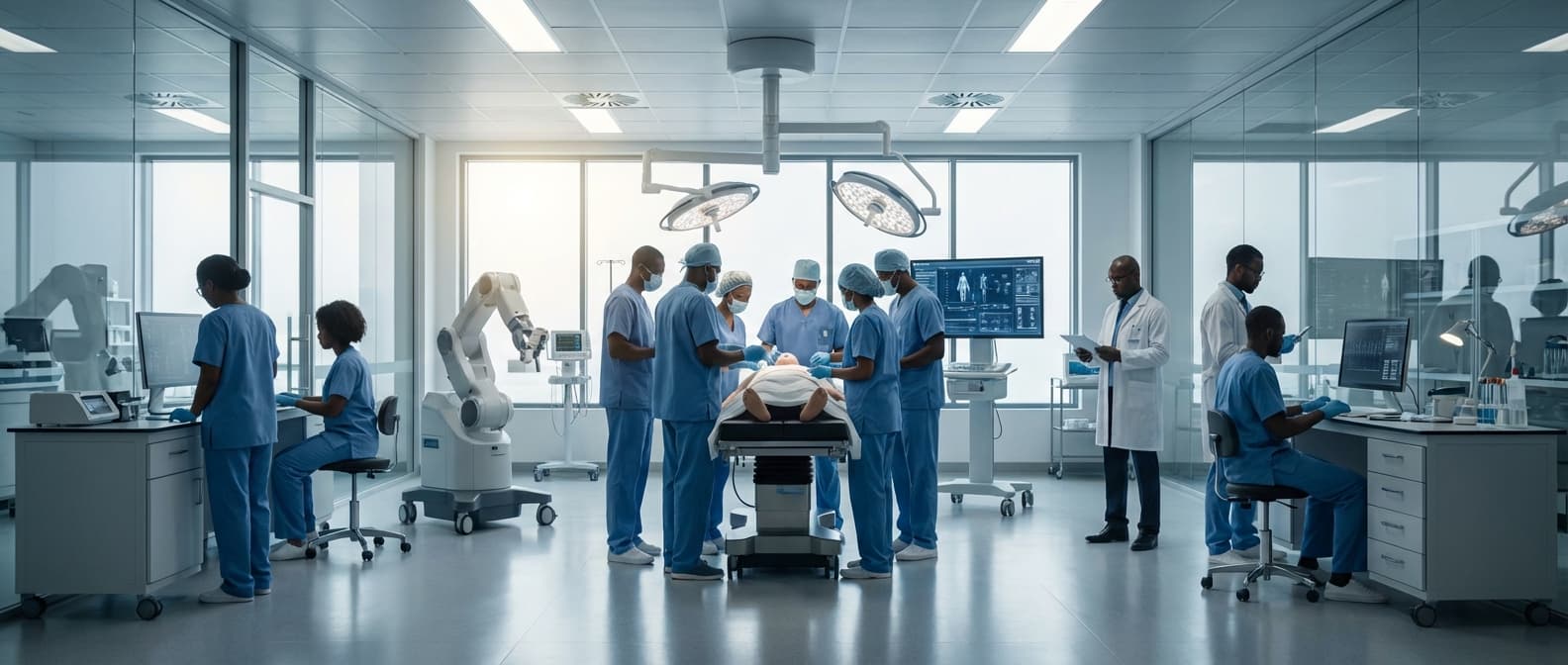
Managed Equipment Service (MES) in Tunisia
Engineering Excellence & Technical Support
Long‑term equipment provision with uptime SLAs and lifecycle management. High-standard technical execution following OEM protocols and local regulatory frameworks.
Optimized Equipment Uptime
Our MES solutions in Tunisia leverage predictive maintenance and real-time monitoring to significantly reduce unplanned downtime, ensuring your critical machinery operates at peak performance. This translates to higher production output and lower operational costs.
Streamlined Procurement & Inventory
We provide end-to-end management of your equipment lifecycle, from strategic sourcing and procurement to inventory optimization. This integrated approach minimizes unnecessary expenditures, reduces lead times for critical parts, and frees up capital for your core business in Tunisia.
Proactive Safety & Compliance
Our MES in Tunisia prioritizes adherence to international safety standards and local regulations. Through rigorous inspections, preventative maintenance, and expert oversight, we mitigate operational risks and ensure a secure working environment for your personnel.
What Is Managed Equipment Service (Mes) In Tunisia?
Managed Equipment Service (MES) in Tunisia refers to a comprehensive outsourcing model wherein a specialized third-party provider assumes responsibility for the procurement, installation, operation, maintenance, and eventual disposal of an organization's critical equipment. This service is designed to optimize asset lifecycle management, reduce operational overhead, and enhance the efficiency and reliability of essential machinery and technology. MES providers in Tunisia leverage their expertise, technology, and economies of scale to deliver predictable operational costs and improved equipment performance for their clients.
| Who Needs MES in Tunisia? | Typical Use Cases | |||||
|---|---|---|---|---|---|---|
| Healthcare Sector: Hospitals, clinics, and diagnostic centers requiring a wide array of sophisticated medical devices (e.g., MRI scanners, CT scanners, X-ray machines, laboratory equipment). MES ensures high uptime and compliance with stringent medical standards. | Industrial Manufacturing: Factories and production facilities reliant on specialized machinery (e.g., CNC machines, robotics, assembly lines, power generation equipment). MES optimizes production uptime and reduces maintenance costs. | Telecommunications: Companies managing vast networks of base stations, data centers, and transmission equipment. MES ensures continuous network availability and efficient infrastructure management. | Energy & Utilities: Power plants, water treatment facilities, and renewable energy installations requiring robust and reliable operational equipment. MES guarantees operational continuity and cost predictability. | Transportation & Logistics: Airports, ports, and large distribution centers utilizing heavy machinery, material handling equipment, and IT infrastructure. MES improves operational efficiency and reduces logistics disruptions. | Research & Development Institutions: Laboratories and research facilities with high-value, specialized scientific instruments. MES ensures instrument availability and cutting-edge capabilities. | Large Commercial Enterprises: Organizations with significant IT infrastructure, printing/copying fleets, or specialized operational equipment that they wish to outsource. |
| Medical Imaging Departments: Outsourcing the management of MRI, CT, and X-ray machines to ensure patient throughput and regulatory compliance. | Automated Production Lines: Contracting for the complete management of robotic arms, conveyor systems, and quality control equipment in manufacturing plants. | Data Center Infrastructure: Managing servers, networking equipment, and cooling systems within a company's data center. | Laboratory Analysis Equipment: Offloading the maintenance and calibration of complex analytical instruments in pharmaceutical or chemical labs. | Fleet Management of Commercial Vehicles or Heavy Equipment: For companies that require specialized vehicles or machinery for operations but do not want the burden of direct management. | Printing and Imaging Solutions: Providing and managing a fleet of copiers, printers, and scanners for an organization, including toner and maintenance. | Specialized IT Hardware: Managing and maintaining servers, storage arrays, and network switches for a specific project or operational need. |
Key Components of Managed Equipment Service (MES) in Tunisia
- Equipment Sourcing & Procurement: Identification, selection, and acquisition of suitable equipment based on client needs and industry standards.
- Installation & Commissioning: Professional installation, setup, and testing of all acquired equipment to ensure optimal functionality.
- Operations & Monitoring: Real-time performance monitoring, utilization tracking, and operational management of the equipment.
- Preventive & Corrective Maintenance: Proactive scheduled maintenance to prevent failures and timely reactive repairs to address breakdowns.
- Spare Parts Management: Inventory control and management of essential spare parts to minimize downtime.
- Technical Support & Expertise: Provision of skilled technicians and subject matter experts for troubleshooting and ongoing support.
- Technology Upgrades & Obsolescence Management: Planning and execution of equipment upgrades and managing the lifecycle to avoid outdated technology.
- Reporting & Analytics: Providing detailed reports on equipment performance, uptime, maintenance history, and cost analysis.
- Compliance & Safety Management: Ensuring equipment adheres to all relevant safety regulations and industry standards.
- End-of-Life Management: Responsible decommissioning, removal, and environmentally sound disposal or recycling of equipment.
Who Needs Managed Equipment Service (Mes) In Tunisia?
Managed Equipment Service (MES) in Tunisia offers significant advantages for organizations aiming to optimize their operational efficiency, reduce costs, and ensure the reliability and performance of their critical equipment. MES is particularly beneficial for entities that rely heavily on specialized machinery, complex technological infrastructure, or face challenges in managing in-house maintenance and technological obsolescence. It transforms equipment management from a cost center into a strategic asset, allowing businesses to focus on their core competencies. The service encompasses a comprehensive approach including procurement, installation, maintenance, upgrades, and eventual decommissioning of equipment, often with performance guarantees and predictable budgeting. This frees up internal resources, minimizes downtime, and ensures access to the latest technology without significant capital outlay.
| Target Customer Sector | Specific Organizations/Departments | Why MES is Beneficial |
|---|---|---|
| Healthcare | Hospitals and Clinics (Radiology, Pathology, Surgical Departments) | Ensures high availability of critical medical imaging, diagnostic, and life-support equipment, reducing patient wait times and improving diagnostic accuracy. Facilitates access to advanced medical technologies without large upfront investments. |
| Manufacturing & Industrial | Automotive Plants, Food Processing Units, Textile Mills, Petrochemical Facilities (Production, Quality Control, Maintenance Departments) | Maximizes production uptime, minimizes defects, and ensures consistent product quality through proactive maintenance of machinery. Reduces operational risks and costs associated with equipment failure. |
| Telecommunications | Mobile Network Operators, Internet Service Providers (Network Operations, Infrastructure Management Departments) | Guarantees the performance and reliability of network infrastructure equipment, ensuring continuous service delivery. Allows for rapid adoption of new telecommunications technologies and upgrades. |
| Energy & Utilities | Power Generation Plants, Water Treatment Facilities (Operations, Technical Services Departments) | Ensures the operational integrity and efficiency of critical power generation, transmission, and distribution equipment. Minimizes downtime and ensures compliance with environmental and safety standards. |
| Public Sector & Government | Government Agencies, Research Institutions, Public Hospitals (IT, Facilities Management, Research & Development Departments) | Provides access to advanced equipment for public services and research without burdening budgets. Ensures reliable infrastructure for critical government operations and public well-being. |
| Logistics & Transportation | Major Warehousing Facilities, Freight Companies (Operations, Fleet Management Departments) | Optimizes the performance and reduces downtime of material handling equipment, conveyor systems, and other critical logistics machinery. Improves operational efficiency and reduces shipping delays. |
| Research & Development | Universities, Private R&D Labs (Laboratory Management, Research Teams) | Provides access to state-of-the-art scientific instruments and laboratory equipment, facilitating innovation and research. Eliminates the need for in-house maintenance expertise for highly specialized tools. |
Who Needs Managed Equipment Service (MES) in Tunisia? Target Customers and Departments
- Organizations experiencing high equipment downtime and associated productivity losses.
- Businesses seeking to reduce capital expenditure and move towards operational expenditure models for equipment.
- Companies lacking specialized in-house technical expertise for complex equipment maintenance and repair.
- Entities aiming to improve the lifespan and performance of their existing equipment fleet.
- Organizations that need predictable budgeting for equipment lifecycle management.
- Businesses looking to access and leverage cutting-edge technology without the burden of rapid obsolescence.
- Companies operating in sectors with stringent regulatory compliance requirements related to equipment performance and safety.
Managed Equipment Service (Mes) Process In Tunisia
The Managed Equipment Service (MES) process in Tunisia is a comprehensive framework designed to manage and maintain specialized medical equipment for healthcare facilities. It typically involves a series of well-defined stages, ensuring efficient procurement, deployment, operation, and servicing of the equipment throughout its lifecycle. This process aims to optimize equipment utilization, reduce operational costs, and guarantee high standards of patient care by ensuring equipment reliability and availability. The workflow starts from an initial inquiry or need identification and culminates in the successful execution and ongoing management of the service contract.
| Stage | Key Activities | Key Stakeholders | Deliverables/Outcomes |
|---|---|---|---|
| Healthcare facility identifies a need for new or upgraded medical equipment, or a desire to outsource equipment management. Detailed requirements, including specifications, quantities, and desired service levels, are defined. | Healthcare Facility (Clinical Staff, Administration, Procurement) | Detailed Equipment Requirements Document, Feasibility Study (if applicable) |
| A formal tender or Request for Proposal (RFP) document is prepared, outlining the scope of work, technical specifications, service level agreements (SLAs), evaluation criteria, and contract terms. This is typically issued by the healthcare facility or a designated procurement authority. | Healthcare Facility (Procurement Department, Legal Team), Ministry of Health (potentially) | Tender/RFP Document |
| Potential MES providers submit their proposals responding to the tender/RFP. Proposals are evaluated based on technical capabilities, financial offers, experience, and adherence to SLAs. This may involve site visits and presentations. | MES Providers, Healthcare Facility Evaluation Committee | Shortlisted Bidders, Evaluation Report |
| Discussions are held with the preferred bidder(s) to finalize terms, conditions, pricing, and SLAs. A formal contract is negotiated and signed, officially awarding the MES. | Healthcare Facility, MES Provider, Legal Experts | Signed MES Contract |
| The awarded MES provider procures the specified equipment from manufacturers, ensuring compliance with international standards. Equipment is delivered to the healthcare facility. | MES Provider, Equipment Manufacturers, Logistics Companies | Delivered Equipment |
| The MES provider installs and commissions the equipment, ensuring it is fully functional and integrated into the facility's existing infrastructure. This includes calibration and initial testing. | MES Provider (Biomedical Engineers), Healthcare Facility (IT, Estates) | Installed and Commissioned Equipment, Installation Report |
| Clinical and technical staff at the healthcare facility receive comprehensive training on the operation, basic maintenance, and safety procedures for the new equipment. Formal handover of the equipment and associated documentation occurs. | MES Provider (Trainers), Healthcare Facility (Clinical Staff, Biomedical Technicians) | Trained Staff, Training Manuals, User Guides, Asset Register Update |
| The MES provider is responsible for scheduled preventive maintenance, corrective maintenance (repairs), spare parts management, and ensuring the operational readiness of the equipment throughout the contract period. This includes remote monitoring and rapid response to breakdowns. | MES Provider (Field Engineers, Service Technicians, Helpdesk), Healthcare Facility (Clinical Staff reporting issues) | Maintained Equipment, Service Logs, Response to Malfunctions |
| Regular performance reports are generated, detailing equipment uptime, maintenance activities, costs, and adherence to SLAs. These reports are shared with the healthcare facility for review and performance management. | MES Provider, Healthcare Facility (Administration, Quality Assurance) | Performance Reports, SLA Compliance Metrics |
| Towards the end of the contract term, a comprehensive review is conducted. This involves assessing overall satisfaction, equipment lifecycle, and future needs. Decisions are made regarding contract renewal, renegotiation, or termination, potentially leading to a new tender process. | MES Provider, Healthcare Facility | Contract Renewal Agreement, New Tender Decision, Termination Notice |
Managed Equipment Service (MES) Workflow in Tunisia
- Inquiry & Needs Assessment
- Tender/RFP Preparation & Issuance
- Bid Submission & Evaluation
- Contract Negotiation & Award
- Equipment Procurement & Delivery
- Installation & Commissioning
- Training & Handover
- Ongoing Operation & Maintenance
- Performance Monitoring & Reporting
- Contract Review & Renewal/Termination
Managed Equipment Service (Mes) Cost In Tunisia
Managed Equipment Service (MES) in Tunisia involves outsourcing the management and maintenance of medical equipment to specialized third-party providers. This service aims to optimize equipment utilization, reduce operational costs, and ensure compliance with regulatory standards. The cost of MES in Tunisia is influenced by a variety of factors, leading to a wide range of pricing. These factors include the type and quantity of equipment, the level of service required, the duration of the contract, and the provider's expertise and reputation. Smaller clinics with a limited number of basic devices will naturally incur lower costs compared to large hospitals with sophisticated imaging and diagnostic machinery requiring extensive technical support and specialized maintenance. Service level agreements (SLAs) play a crucial role; comprehensive packages covering preventive maintenance, corrective repairs, calibration, training, and even full replacement of obsolete equipment will be priced higher than basic maintenance contracts. Contractual terms, such as the length of the agreement, can also impact the overall cost, with longer-term contracts often offering discounted rates. The Tunisian market for MES is dynamic, with both local and international providers vying for contracts. This competition can influence pricing, but the overall cost remains significantly influenced by the inherent complexities of managing a diverse fleet of medical technology.
| Equipment Category | Typical MES Pricing Range (TND per month) | Notes |
|---|---|---|
| Basic Diagnostic Equipment (e.g., ECG machines, simple ultrasound) | 500 - 2,000 | Covers routine maintenance and minor repairs. Lower end for fewer devices. |
| Laboratory Analyzers (e.g., hematology, biochemistry) | 1,000 - 4,000 | Includes calibration, reagent management (sometimes), and software updates. |
| Imaging Equipment (e.g., X-ray, basic CT scanners) | 3,000 - 10,000+ | Higher complexity, specialized technicians, potential for parts replacement. |
| Advanced Imaging (e.g., MRI, high-end CT scanners) | 8,000 - 25,000+ | Very specialized, high cost of parts and expert service, long-term contracts often required. |
| Surgical Equipment (e.g., basic surgical instruments, anesthesia machines) | 700 - 3,000 | Focus on sterilization compatibility, calibration, and safety checks. |
| Patient Monitoring Systems (e.g., vital signs monitors) | 400 - 1,500 | Includes software updates, sensor calibration, and battery replacement. |
| Comprehensive Hospital MES (mix of various equipment) | Negotiated based on total portfolio, potentially tens of thousands to hundreds of thousands per month |
Key Factors Influencing MES Cost in Tunisia
- Type and Quantity of Medical Equipment
- Scope of Services (Preventive Maintenance, Corrective Repairs, Calibration, Training, Replacement)
- Service Level Agreements (SLAs) and Response Times
- Contract Duration and Commitment Length
- Technology Sophistication and Age of Equipment
- Provider's Experience, Reputation, and Overhead Costs
- Geographical Location within Tunisia (potential impact on travel and logistics)
- Regulatory Compliance Requirements
- Included Software Updates and Licensing
Affordable Managed Equipment Service (Mes) Options
Securing reliable and cost-effective Managed Equipment Service (MES) is crucial for organizations looking to optimize their IT infrastructure. MES providers offer a comprehensive solution for managing, maintaining, and supporting an organization's technology assets, allowing businesses to focus on their core operations. This section explores affordable MES options, highlighting the value delivered through intelligent value bundles and practical cost-saving strategies.
| Value Bundle | Description | Cost-Saving Benefit |
|---|---|---|
| Basic Monitoring & Support | Includes remote monitoring, incident response, and basic technical support for critical hardware. | Reduces emergency repair costs, minimizes downtime through early detection. |
| Standard Lifecycle Management | Builds on basic with proactive maintenance, regular patching, and basic inventory tracking. | Extends equipment lifespan, prevents costly failures, improves asset utilization. |
| Comprehensive Performance Optimization | Includes all standard features plus performance tuning, capacity planning, and advanced security monitoring. | Maximizes equipment efficiency, avoids overspending on unnecessary upgrades, strengthens security posture. |
| All-Inclusive Enterprise Solution | A fully managed service covering all aspects of IT equipment, including strategic planning and procurement assistance. | Significant reduction in IT overhead, allows focus on strategic business initiatives, potential for bulk purchasing discounts. |
Key Components of Affordable MES
- Proactive Maintenance: Regular checks and preventative measures to avoid costly downtime and emergency repairs.
- Remote Monitoring & Management: 24/7 oversight of equipment performance, enabling swift issue identification and resolution.
- On-Demand Technical Support: Access to skilled technicians for troubleshooting and problem-solving.
- Inventory Management: Efficient tracking and management of all IT assets.
- Security Patching & Updates: Ensuring all equipment is up-to-date with the latest security measures.
- End-of-Life Planning: Strategizing for equipment upgrades and replacements to avoid obsolescence.
Verified Providers In Tunisia
In Tunisia's burgeoning healthcare landscape, identifying trustworthy and skilled medical practitioners is paramount for both local residents and international patients. Verified Providers in Tunisia, particularly those accredited by organizations like Franance Health, offer a crucial layer of assurance. This accreditation signifies a rigorous evaluation process, ensuring that providers meet stringent international standards for quality, safety, and ethical practice. Choosing Franance Health-credentialed providers means opting for a healthcare experience characterized by expertise, advanced medical technology, and a patient-centric approach, making them the optimal choice for your medical needs in Tunisia.
| Credentialing Body | Key Benefits for Patients | Examples of Expertise |
|---|---|---|
| Franance Health | Ensures adherence to international quality and safety standards, access to highly qualified medical professionals, and a commitment to patient satisfaction. | Specialties often include advanced surgical procedures, fertility treatments, dental care, and specialized medical diagnostics. |
| Other Reputable Certifications (if applicable, e.g., JCI, ISO) | Indicates compliance with global best practices in healthcare delivery and patient care. | Varies widely depending on the specific certification but generally covers areas like infection control, patient rights, and organizational management. |
Why Franance Health Credentials Matter in Tunisia
- Rigorous Quality Assurance: Franance Health's accreditation process involves thorough vetting of facilities, equipment, and medical staff qualifications.
- International Standards Alignment: Providers meet globally recognized benchmarks for healthcare excellence and patient safety.
- Expert Medical Professionals: Accreditation confirms that practitioners possess the necessary skills, experience, and ongoing training.
- Enhanced Patient Confidence: The credential acts as a trusted mark, assuring patients of reliable and high-quality medical care.
- Focus on Patient Well-being: Franance Health emphasizes ethical practices and a commitment to optimal patient outcomes.
Scope Of Work For Managed Equipment Service (Mes)
This document outlines the Scope of Work (SOW) for a Managed Equipment Service (MES). It details the technical deliverables and standard specifications required for the successful implementation and ongoing management of the equipment.
| Deliverable Category | Specific Technical Deliverable | Standard Specifications/Requirements | Key Performance Indicators (KPIs) |
|---|---|---|---|
| Equipment Procurement and Installation | Procurement of specified medical equipment | Compliance with relevant medical device regulations (e.g., FDA, CE marking), manufacturer specifications, and client's technical requirements. Installation to be performed by certified technicians. | On-time delivery rate (%), Installation success rate (%) |
| Equipment Procurement and Installation | Site preparation and infrastructure assessment | Verification of power, network, and environmental requirements (temperature, humidity) as per manufacturer guidelines. Report on any necessary infrastructure upgrades. | Infrastructure readiness confirmation |
| Equipment Commissioning and Calibration | Initial setup and configuration | Configuration of equipment settings, network connectivity, and integration with existing hospital systems (e.g., EMR/HIS) as per agreed-upon parameters. | Successful system integration (Y/N) |
| Equipment Commissioning and Calibration | Performance testing and calibration | Conducting all required performance tests and calibrations according to manufacturer protocols and regulatory standards. Documentation of test results and calibration certificates. | Calibration accuracy within tolerance (%) |
| Preventive Maintenance Program | Scheduled preventive maintenance (PM) | Execution of PM activities (cleaning, lubrication, inspection, part replacement) according to manufacturer-recommended schedules and service manuals. Documentation of all PM activities. | PM completion rate (%) within scheduled window |
| Preventive Maintenance Program | Proactive part replacement | Identification and replacement of parts nearing end-of-life or identified as critical to prevent failures, based on usage data and manufacturer recommendations. | Reduction in unplanned downtime (%) |
| Corrective Maintenance and Repair | Emergency repair response | 24/7 availability for emergency repairs. Response time defined (e.g., within 4 hours for critical equipment). Resolution of equipment failures to restore full functionality. | Mean Time To Repair (MTTR) (hours), First-time fix rate (%) |
| Corrective Maintenance and Repair | On-site technical support | Provision of qualified and certified biomedical engineers/technicians for on-site troubleshooting and repair. | Technician availability and competence |
| Spare Parts Management | Inventory management of critical spare parts | Maintenance of an adequate stock of essential spare parts to minimize downtime. Utilizing a robust inventory management system. | Spare part availability rate (%) for critical components |
| Spare Parts Management | Logistics and delivery of spare parts | Efficient procurement and delivery of non-stocked or specialized spare parts within agreed-upon timelines. | Spare part delivery lead time (days) |
| Performance Monitoring and Reporting | Real-time equipment performance monitoring | Continuous monitoring of equipment operational status, usage patterns, and key performance metrics using remote monitoring tools where applicable. | Uptime percentage (%) |
| Performance Monitoring and Reporting | Regular performance reports | Provision of monthly/quarterly reports detailing equipment status, maintenance activities performed, repair history, utilization data, and recommended improvements. | Report accuracy and timeliness |
| Equipment Decommissioning and Disposal | Safe and compliant decommissioning | Safe removal of equipment from service, including data sanitization and environmental compliance, adhering to all relevant regulations. | Decommissioning completion within schedule |
| Equipment Decommissioning and Disposal | Environmentally responsible disposal | Disposal of equipment and associated materials in an environmentally sound and compliant manner, including e-waste recycling. | Compliance with environmental regulations |
| Training and Skill Transfer | Operator training | Training clinical staff on the proper use, basic troubleshooting, and maintenance of the equipment. | Operator competency assessment |
| Training and Skill Transfer | Technical training for hospital staff (optional) | Providing advanced technical training to internal biomedical staff on specific equipment for knowledge transfer and collaboration. | Knowledge transfer metrics |
Technical Deliverables
- Equipment Procurement and Installation
- Equipment Commissioning and Calibration
- Preventive Maintenance Program
- Corrective Maintenance and Repair
- Spare Parts Management
- Performance Monitoring and Reporting
- Equipment Decommissioning and Disposal
- Training and Skill Transfer
Service Level Agreement For Managed Equipment Service (Mes)
This Service Level Agreement (SLA) outlines the agreed-upon service levels for the Managed Equipment Service (MES) provided by [Your Company Name] to [Client Company Name]. It defines the critical metrics of response times for incidents and uptime guarantees for the managed equipment.
| Incident Severity | Response Time Guarantee | Resolution Time Guarantee | Uptime Guarantee (per month) |
|---|---|---|---|
| Critical Incident | 15 minutes | 4 hours | 99.9% |
| Major Incident | 30 minutes | 8 business hours | 99.5% |
| Minor Incident | 4 business hours | 2 business days | N/A (covered by overall uptime) |
Key Definitions
- MES: Managed Equipment Service, encompassing the provision, maintenance, and support of specified equipment.
- Critical Incident: An event that renders one or more pieces of managed equipment inoperable, significantly impacting the client's core business operations. Examples include complete system failure, data loss, or inability to perform essential functions.
- Major Incident: An event that degrades the performance or functionality of managed equipment, causing significant inconvenience but not a complete operational halt. Examples include intermittent service interruptions, reduced performance, or partial feature unavailability.
- Minor Incident: An event that causes minor inconvenience or affects non-critical functionalities of the managed equipment. Examples include cosmetic issues, performance degradation not impacting core operations, or requests for information.
- Response Time: The maximum time allowed for [Your Company Name] to acknowledge a reported incident and initiate investigation/resolution activities.
- Resolution Time: The maximum time allowed for [Your Company Name] to fully resolve an incident and restore the affected equipment to its agreed-upon operational state.
- Uptime Guarantee: The percentage of time the managed equipment is guaranteed to be operational and available for use.
- Downtime: The period during which the managed equipment is not operational or available for use, excluding scheduled maintenance.
Frequently Asked Questions

Ready when you are
Let's scope your Managed Equipment Service (MES) in Tunisia project in Tunisia.

Scaling healthcare logistics and technical systems across the entire continent.