
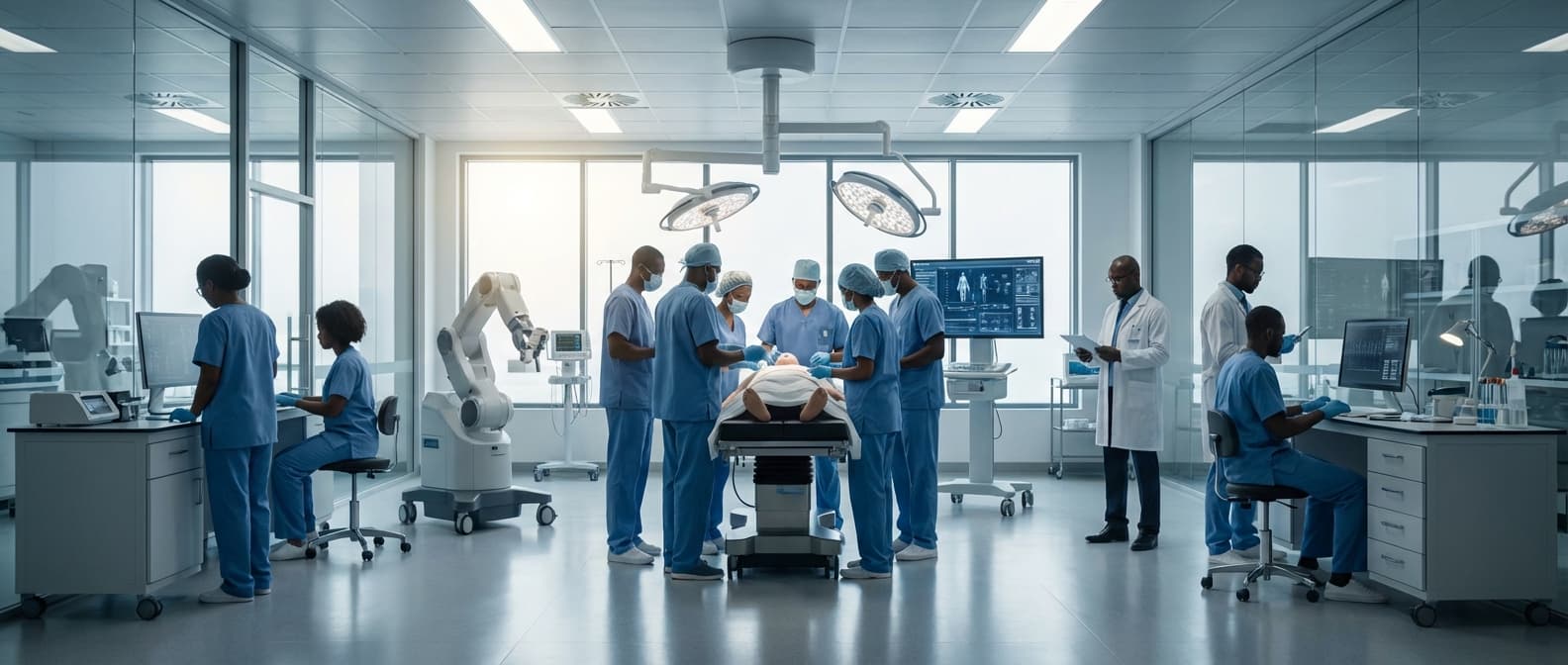
Calibration & Electrical Safety Testing in Tunisia
Engineering Excellence & Technical Support
Equipment calibration and IEC safety testing High-standard technical execution following OEM protocols and local regulatory frameworks.
Advanced Calibration Services for Optimal Equipment Performance
We offer precise and traceable calibration of all electrical measurement and testing equipment, ensuring accuracy and compliance with international standards. Our state-of-the-art laboratory in Tunisia guarantees your instruments perform at their peak efficiency, minimizing downtime and maximizing productivity.
Comprehensive Electrical Safety Testing for Enhanced Workplace Protection
Prioritize safety with our thorough electrical safety testing services. We conduct rigorous inspections and testing of electrical installations, portable appliances, and machinery to identify potential hazards and ensure compliance with Tunisian safety regulations, safeguarding your personnel and assets.
Expert Verification & Validation for Critical Electrical Systems
Our specialized team provides expert verification and validation services for critical electrical systems, from industrial automation to renewable energy infrastructure. Leveraging advanced diagnostic tools and a deep understanding of Tunisian electrical codes, we ensure the integrity, reliability, and safety of your most important electrical assets.
What Is Calibration & Electrical Safety Testing In Tunisia?
Calibration and electrical safety testing are critical metrology and compliance services essential for ensuring the accuracy, reliability, and safe operation of electrical and electronic equipment. In Tunisia, as globally, these services are governed by national standards and regulations aimed at protecting personnel, preventing equipment damage, and maintaining product quality and market access. Calibration involves comparing a measuring instrument or device to a known, traceable standard to determine and document its accuracy. Electrical safety testing, conversely, is a series of tests designed to verify that electrical equipment meets established safety standards, mitigating risks such as electric shock, fire hazards, and electromagnetic interference (EMI).
| Who Needs It? | Typical Use Cases | |||||||||||||||||||
|---|---|---|---|---|---|---|---|---|---|---|---|---|---|---|---|---|---|---|---|---|
| Manufacturing Companies (Electronics, Automotive, Medical Devices, Industrial Equipment): |
|
|
|
| Service & Maintenance Providers (HVAC, Telecommunications, IT, Biomedical): |
|
|
| Laboratories & Research Institutions: |
|
| Healthcare Facilities (Hospitals, Clinics): |
|
| Educational Institutions: |
|
| Regulatory Bodies & Inspection Agencies: |
|
|
Key Components of Calibration & Electrical Safety Testing in Tunisia
- Calibration:
- Traceable Standards: Utilizing measurement standards with an unbroken chain of comparisons back to national or international primary standards (e.g., from the Institut National de Métrologie, INM, in Tunisia or equivalent international bodies).
- Verification & Adjustment: Comparing the device under test (DUT) against calibrated reference standards. If deviations are found, adjustments are made to bring the DUT within specified tolerances.
- Calibration Certificate: Issuance of a formal document detailing the calibration results, uncertainties, environmental conditions, standards used, and the date of calibration. This certificate serves as proof of accuracy.
- Types of Calibration: In-situ (on-site) and ex-situ (laboratory) calibration, depending on the equipment and its operational environment.
- Electrical Safety Testing:
- Product Safety Standards: Adherence to relevant Tunisian technical regulations (e.g., those issued by the Institut National de Normalisation et de Propriété Industrielle, INNORPI) and international harmonized standards (e.g., IEC, ISO).
- Test Categories:
* **Electrical Strength/Dielectric Withstand (Hi-Pot) Testing:** Applying a high voltage between conductive parts and ground or other isolated parts to detect insulation breakdown.* **Insulation Resistance Testing:** Measuring the resistance of the insulation to ensure it can prevent current leakage.* **Grounding/Bonding Continuity Testing:** Verifying that protective earth conductors provide a low-resistance path for fault currents.* **Leakage Current Testing:** Measuring the unintended current flowing from live parts to accessible surfaces or protective earth.* **Temperature Rise Testing:** Assessing the temperature increase of components under normal operating conditions to prevent overheating.* **Mechanical Tests:** Evaluating the robustness of enclosures and connections to prevent ingress of foreign objects or accidental contact with live parts.- Test Reports: Documentation of test procedures, parameters, results, and compliance status, often required for market access and regulatory approval.
Who Needs Calibration & Electrical Safety Testing In Tunisia?
Calibration and electrical safety testing are critical for ensuring the accuracy, reliability, and safety of equipment across various sectors in Tunisia. These services are not just a regulatory requirement but a fundamental aspect of operational excellence, risk mitigation, and maintaining high standards of quality and patient care.
| Target Customer | Key Departments Involved | Primary Needs Addressed |
|---|---|---|
| Medical Facilities (Hospitals, Clinics) | Biomedical Engineering, Quality Assurance, Clinical Departments, Operating Rooms, Laboratories | Patient Safety, Diagnostic Accuracy, Regulatory Compliance (e.g., for medical devices), Operational Reliability |
| Industrial Manufacturing (Automotive, Electronics, Food & Bev, Pharma) | Quality Control, Production, Maintenance, R&D, Engineering | Product Quality, Process Efficiency, Adherence to Standards (ISO), Safety in Hazardous Environments, Preventative Maintenance |
| Research & Development Laboratories | R&D Teams, Quality Assurance, Laboratory Management | Experimental Accuracy, Data Integrity, Reproducibility of Results, Equipment Reliability |
| Environmental Monitoring Agencies | Field Operations, Laboratory Analysis, Regulatory Compliance | Accurate Environmental Data, Enforcement of Regulations, Public Health and Safety |
| Telecommunications Companies | Network Operations, Field Maintenance, Quality Assurance | Network Performance, Signal Integrity, Equipment Reliability, Infrastructure Safety |
| Energy Sector (Power Plants, Utilities) | Operations, Maintenance, Safety & Compliance, Engineering | Operational Efficiency, Grid Stability, Accident Prevention, Equipment Longevity |
| Automotive Workshops | Service Technicians, Diagnostic Specialists, Workshop Management | Accurate Vehicle Diagnostics, Repair Quality, Customer Satisfaction, Workshop Safety |
| Pharmaceutical & Chemical Industries | Quality Control, Production, R&D, Regulatory Affairs, Safety | Product Efficacy & Safety, Batch Consistency, Regulatory Compliance (e.g., GMP), Process Control |
| Educational Institutions (Universities, Technical Schools) | Science & Engineering Departments, Medical Schools, Technical Workshops, Facilities Management | Accuracy in Teaching & Research, Student Safety, Equipment Longevity, Conducive Learning Environment |
Who Needs Calibration & Electrical Safety Testing in Tunisia?
- Medical Facilities: Hospitals, clinics, diagnostic centers, and dental practices rely heavily on accurate and safe medical devices. Calibration ensures diagnostic equipment provides precise readings, while electrical safety testing prevents harm to patients and staff from faulty equipment.
- Industrial Manufacturing: Production facilities, especially those involved in food and beverage, automotive, pharmaceuticals, and electronics, require calibrated instruments for quality control, process monitoring, and adherence to international standards. Electrical safety testing is crucial in environments with heavy machinery and potential electrical hazards.
- Research & Development Laboratories: Academic institutions, private R&D labs, and quality assurance departments need precise measurements for experiments and product development. Calibrated equipment is essential for the validity of research findings and the integrity of new product designs.
- Environmental Monitoring Agencies: Organizations responsible for air and water quality testing, as well as industrial emissions monitoring, depend on calibrated sensors and analytical instruments to provide accurate environmental data and enforce regulations.
- Telecommunications Companies: Ensuring the reliable performance of communication networks requires calibrated signal generators, spectrum analyzers, and other testing equipment. Electrical safety of their infrastructure is also paramount.
- Energy Sector: Power generation plants, distribution networks, and renewable energy facilities utilize a vast array of electrical equipment. Calibration of measuring devices and regular electrical safety checks are vital for operational efficiency and preventing accidents.
- Automotive Workshops and Service Centers: For accurate diagnostics, repair, and maintenance, workshops need calibrated tools and equipment, including emission analyzers, brake testers, and electrical diagnostic systems. Ensuring the electrical safety of their testing equipment is also important.
- Food and Beverage Production: Maintaining product quality, safety, and consistency in the food and beverage industry necessitates calibrated temperature sensors, pH meters, scales, and other measuring instruments. Electrical safety testing is important in environments where hygiene and water are present.
- Pharmaceutical and Chemical Industries: Strict adherence to quality standards and regulatory compliance in these industries mandates the use of highly accurate and calibrated analytical and process control equipment. Electrical safety is non-negotiable due to the nature of the materials handled.
- Educational Institutions: Universities and technical schools with laboratories for science, engineering, and medicine require calibrated equipment for teaching and research purposes, fostering a safe learning environment.
Calibration & Electrical Safety Testing Process In Tunisia
This document outlines the typical workflow for calibration and electrical safety testing services in Tunisia, from the initial client inquiry to the final execution of the services. This process ensures that equipment is accurately calibrated and meets all relevant electrical safety standards, providing clients with reliable and safe equipment.
| Step | Description | Key Activities | Responsible Party | Key Deliverables |
|---|---|---|---|---|
| The process begins when a potential client contacts the service provider with a need for calibration and/or electrical safety testing. | Client expresses need, provides equipment details, specifies standards (e.g., IEC 60601, ISO 17025), desired turnaround time. Service provider clarifies scope, identifies applicable tests. | Client, Service Provider | Clear understanding of service requirements, equipment list, applicable standards. |
| Based on the gathered information, the service provider prepares a detailed quotation and agreement. | Service provider generates a quote (including costs, testing scope, turnaround time), client reviews and approves, formal agreement/PO is issued. | Service Provider, Client | Approved quotation, signed contract/purchase order. |
| The equipment requiring testing is either collected by the service provider or delivered by the client to their facility. | Logistics are arranged for collection or client schedules drop-off. Equipment is received, logged, and a preliminary inspection for damage is performed. | Service Provider, Client | Secure handover of equipment, initial inventory record. |
| The core of the service where the actual calibration and electrical safety tests are performed by qualified technicians. | Equipment is subjected to predefined calibration procedures and electrical safety tests (e.g., insulation resistance, earth bond resistance, dielectric strength). Readings are recorded meticulously. | Service Provider (Technicians) | Accurate test data, raw measurement results. |
| The results of the tests are compiled into a comprehensive report and, if successful, a calibration certificate is issued. | Data is analyzed, results are compared against standards, a detailed test report is generated. Calibration certificates are issued for equipment that meets specifications. | Service Provider (Technical Department) | Comprehensive test report, calibration certificate (for compliant equipment). |
| The tested equipment is returned to the client, and the final invoice is issued. | Equipment is securely packaged and returned (via collection or shipping). Service provider issues the final invoice based on the agreed-upon quotation. | Service Provider, Client | Returned equipment, final invoice. |
| The service provider may follow up to ensure client satisfaction and discuss future needs. | Client satisfaction survey, discussion of re-calibration schedules, addressing any client queries. | Service Provider | Client feedback, potential for repeat business. |
Calibration & Electrical Safety Testing Process Workflow in Tunisia
- Inquiry & Requirement Gathering
- Quotation & Agreement
- Sample/Equipment Collection/Drop-off
- Testing & Calibration Execution
- Reporting & Certification
- Return of Equipment & Invoicing
- Post-Service Follow-up
Calibration & Electrical Safety Testing Cost In Tunisia
Calibration and electrical safety testing are crucial for ensuring the accuracy, reliability, and safety of electrical equipment in Tunisia. These services are essential for various industries, including manufacturing, healthcare, research, and education. The cost of these services can vary significantly based on several factors, making it important for businesses to understand these influences when budgeting. The local currency in Tunisia is the Tunisian Dinar (TND).
| Service Type | Estimated Cost Range (TND) | Notes |
|---|---|---|
| Basic Electrical Safety Test (e.g., ground continuity, insulation resistance for single device) | 50 - 150 TND | Covers standard safety checks as per local regulations. Price per device. |
| Comprehensive Electrical Safety Testing (e.g., multiple tests for a medical device) | 150 - 400 TND | More thorough testing, often required for medical equipment. Price per device, may vary by complexity. |
| Calibration of Standard Measuring Instruments (e.g., multimeter, power supply) | 80 - 250 TND | Calibration to manufacturer specifications or common standards. Price per instrument. |
| Calibration of Precision Measuring Instruments (e.g., oscilloscope, spectrum analyzer) | 200 - 800 TND+ | Requires specialized equipment and expertise. Price per instrument, can be significantly higher for very complex devices. |
| Calibration of Industrial Weighing Scales | 100 - 300 TND | Depends on the capacity and accuracy class of the scale. Price per scale. |
| On-site Service Call Fee (additional to testing/calibration) | 70 - 200 TND | Covers travel and setup for a technician. May be waived or reduced for large service contracts. |
| Bulk Discount (per device, for >10 items) | 5% - 20% reduction | Variable discount based on quantity and service provider. |
Key Pricing Factors for Calibration & Electrical Safety Testing in Tunisia
- {"item":"Type and Complexity of Equipment:","description":"More sophisticated and specialized equipment (e.g., medical imaging devices, high-precision measurement tools) generally incurs higher calibration and testing costs due to the expertise and specialized equipment required."}
- {"item":"Number of Instruments:","description":"Discounts are often available for bulk testing. The more instruments you need calibrated or tested, the lower the per-unit cost might be."}
- {"item":"Scope of Calibration/Testing:","description":"A full calibration involving adjustments to bring the instrument within specifications will be more expensive than a simple verification or safety check."}
- {"item":"Turnaround Time (TAT):","description":"Expedited services for urgent needs will typically come with a premium price."}
- {"item":"Location of Service:","description":"On-site testing may incur additional travel and logistical charges compared to bringing the equipment to the service provider's laboratory."}
- {"item":"Accreditation of Service Provider:","description":"Service providers with recognized accreditations (e.g., ISO 17025) may charge more for their services, reflecting the rigor of their quality management systems and the assurance of traceable results."}
- {"item":"Frequency of Service:","description":"Long-term service agreements or regular contracts might offer preferential pricing."}
- {"item":"Specific Standards and Regulations:","description":"Adherence to specific industry or international standards (e.g., IEC 60601 for medical devices) can influence the testing protocols and thus the cost."}
Affordable Calibration & Electrical Safety Testing Options
Ensuring the accuracy and safety of your electrical equipment is paramount. Regular calibration and electrical safety testing are not just regulatory requirements, but essential for maintaining operational efficiency, preventing costly downtime, and protecting personnel. This guide outlines affordable calibration and electrical safety testing options, focusing on value bundles and cost-saving strategies to help you meet your compliance needs without breaking the bank.
| Cost-Saving Strategy | Description | Benefits |
|---|---|---|
| Value Bundling | Combining multiple calibration and testing services into a single package. This often includes a discount compared to individual service pricing. For example, a bundle might cover calibration of all test equipment and a batch of portable appliance testing (PAT). | Reduced overall cost, streamlined scheduling, simplified billing, and can lead to volume discounts. |
| Preventative Maintenance Programs | Subscribing to ongoing calibration and testing schedules. Providers often offer lower rates for contracted services over a longer term, ensuring your equipment is always up-to-date. | Predictable budgeting, proactive issue identification, reduced risk of unexpected failures and associated emergency repair costs. |
| On-Site vs. Lab-Based Services | Evaluating whether your needs are best met by on-site services (convenient but potentially higher per-item cost) or by sending equipment to an accredited lab (can be more cost-effective for large volumes, but involves shipping and downtime). | On-site: Minimizes downtime and logistics. Lab-based: Can offer economies of scale and access to specialized equipment. |
| Tiered Service Levels | Choosing a service package that matches your specific needs. Basic compliance testing might be sufficient for some equipment, while high-precision instruments may require premium calibration services. | Pay only for what you need, avoiding unnecessary expenses on less critical equipment. |
| Accreditation & Recognition | Prioritizing services from ISO 17025 accredited laboratories or technicians certified by recognized bodies. While seemingly more expensive, this ensures quality and can prevent the need for re-testing due to non-compliance. | Guaranteed quality and compliance, reducing the risk of costly rework or failed audits. |
| In-House Training & Basic Checks | Training internal staff to perform basic visual inspections and simple electrical safety checks (where permitted and appropriate). This can identify obvious issues before they require a full professional service. | Early detection of minor issues, reduced reliance on external services for simple checks, increased internal awareness of equipment status. |
| Bulk Discounts & Group Purchasing | Negotiating discounts for testing a large quantity of equipment at once. Companies with multiple sites can also explore group purchasing options. | Lower per-unit costs for larger volumes. |
Why Calibration and Electrical Safety Testing Matter
- Accuracy: Calibrated equipment provides reliable measurements, preventing production errors and ensuring product quality.
- Safety: Electrical safety testing identifies potential hazards, reducing the risk of electric shock, fires, and equipment damage.
- Compliance: Meeting industry standards and regulatory requirements avoids fines and legal liabilities.
- Longevity: Regular maintenance and testing extend the lifespan of your equipment, reducing replacement costs.
- Efficiency: Properly functioning equipment operates at peak performance, optimizing energy consumption and throughput.
Verified Providers In Tunisia
In Tunisia's rapidly evolving healthcare landscape, identifying trusted and competent medical providers is paramount for both local citizens and international patients seeking quality care. Franance Health has emerged as a leading entity in this domain, meticulously vetting and credentialing healthcare professionals and institutions. Their rigorous verification process ensures that all listed providers meet stringent international standards for medical expertise, ethical practice, and patient safety. This commitment to excellence positions Franance Health credentialed providers as the premier choice for anyone prioritizing reliable and high-quality healthcare services in Tunisia.
| Credential Aspect | Franance Health Verification Focus | Patient Benefit |
|---|---|---|
| Medical Qualifications | Verification of degrees, diplomas, and specialization certifications from accredited institutions. | Ensures practitioners possess the foundational knowledge and expertise required for effective treatment. |
| Professional Licenses | Confirmation of valid and current medical licenses to practice in Tunisia. | Guarantees that providers are legally authorized and recognized to offer medical services. |
| Clinical Experience | Assessment of years of practical experience and surgical case logs (where applicable). | Indicates a proven track record and practical proficiency in managing diverse medical conditions. |
| Continuing Medical Education (CME) | Requirement for providers to demonstrate ongoing engagement in professional development and learning. | Ensures practitioners stay updated with the latest medical advancements, technologies, and treatment protocols. |
| Reputation and Patient Feedback | Consideration of professional reputation and structured collection of anonymized patient feedback. | Offers insights into a provider's bedside manner, communication skills, and overall patient satisfaction. |
| Facility Standards (for institutions) | Evaluation of infrastructure, equipment, hygiene, and safety protocols. | Ensures a safe, well-equipped, and sterile environment for medical procedures and patient care. |
Why Franance Health Credentials Make Providers the Best Choice:
- Rigorous Vetting Process: Franance Health employs a multi-faceted verification system that scrutinizes a provider's medical qualifications, board certifications, licenses, and educational background.
- Commitment to Ethical Standards: Beyond technical skills, providers are assessed for their adherence to ethical medical practices and patient rights, ensuring a compassionate and respectful healthcare experience.
- Patient Safety Focus: Franance Health prioritizes providers who demonstrate a strong commitment to patient safety through adherence to established protocols, infection control measures, and continuous quality improvement.
- International Standards Alignment: The credentialing process is benchmarked against recognized international healthcare standards, offering a level of assurance that resonates with global expectations.
- Transparency and Trust: Franance Health provides a transparent platform where patients can confidently access information about verified providers, fostering trust and informed decision-making.
- Access to Specialized Care: The network includes a wide array of specialists, ensuring patients can find the right expertise for their specific medical needs.
- Enhanced Patient Experience: Verified providers are often characterized by their dedication to patient comfort, clear communication, and personalized care plans, leading to a more positive healthcare journey.
Scope Of Work For Calibration & Electrical Safety Testing
This Scope of Work (SOW) outlines the requirements for comprehensive calibration and electrical safety testing services. The objective is to ensure the accurate performance and safe operation of specified electrical and electronic equipment. This SOW details the technical deliverables, methodologies, and standard specifications to be adhered to throughout the project.
| Item | Description | Standard Specification/Reference | Deliverable |
|---|---|---|---|
| 1.0 | Calibration of Measuring Instruments (e.g., multimeters, oscilloscopes, signal generators, power supplies, etc.) | Manufacturer's specifications, ANSI/NCSL Z540-1, ISO/IEC 17025 | Calibrated instruments with valid calibration certificates and stickers, traceable to national/international standards. As-found and as-left data. |
| 2.0 | Electrical Safety Testing of Medical Devices (e.g., patient monitors, defibrillators, ECG machines, etc.) | IEC 60601-1, AAMI ES60601-1 | Electrical safety test reports detailing leakage current (chassis, patient, enclosure), ground resistance, insulation resistance, and dielectric strength. Pass/Fail status with recommended actions. |
| 3.0 | Electrical Safety Testing of General Electronic Equipment (e.g., laboratory equipment, IT equipment, industrial controls) | IEC 61010-1, UL 61010, NFPA 70E (for arc flash risk assessment if applicable) | Electrical safety test reports including ground continuity, insulation resistance, and dielectric withstand tests where applicable. Pass/Fail status. |
| 4.0 | Calibration of Environmental Chambers/Ovens | ASTM E288, ISO/IEC 17025 | Calibrated chamber with certificate detailing temperature uniformity, stability, and accuracy at specified points. As-found and as-left data. |
| 5.0 | Calibration of Weighing Scales/Balances | OIML R 76, NIST Handbook 44, ISO/IEC 17025 | Calibrated scale with certificate indicating accuracy, linearity, and repeatability. Traceable weights used. |
| 6.0 | Documentation and Reporting | ISO/IEC 17025, Customer-specific requirements | Comprehensive reports for each tested or calibrated item, including test procedures, results, uncertainties, calibration dates, and technician signatures. Master log of all serviced equipment. |
| 7.0 | Traceability | ISO/IEC 17025 | All calibration activities traceable to national or international standards (e.g., NIST, NPL). |
| 8.0 | Uncertainty of Measurement | GUM (Guide to the Expression of Uncertainty in Measurements) | Statement of measurement uncertainty for all calibrated parameters in the calibration certificates. |
Key Stages and Activities
- Pre-engagement assessment and planning
- On-site or off-site calibration execution
- Electrical safety testing procedures
- Data analysis and reporting
- Post-service review and documentation
Service Level Agreement For Calibration & Electrical Safety Testing
This Service Level Agreement (SLA) outlines the terms and conditions regarding the calibration and electrical safety testing services provided by [Your Company Name] to [Client Company Name]. It specifically details response times for service requests and uptime guarantees for critical testing equipment, where applicable. This SLA is incorporated by reference into the Master Service Agreement (MSA) between both parties.
| Service Level | Definition | Target Metric | Measurement | Remedy for Failure |
|---|---|---|---|---|
| Calibration Service Response Time | Time from acknowledged service request to initiation of calibration. | 90% of requests responded to within 4 business hours; 100% within 8 business hours. | Provider's internal ticketing system and technician logs. | A discount of 5% on the next calibration service for each incident of exceeding the 8-hour response time. |
| Electrical Safety Testing Response Time | Time from acknowledged service request to initiation of electrical safety testing. | 95% of requests responded to within 2 business days; 100% within 3 business days. | Provider's internal ticketing system and technician logs. | A credit of 10% of the testing fee for each incident of exceeding the 3-day response time. |
| Critical Equipment Uptime (if applicable) | Percentage of time critical testing equipment is available and operational. | 99.5% uptime per calendar month. | Provider's monitoring logs and maintenance records. | A credit of 0.5% of the monthly service fee for every 0.1% downtime below the guaranteed uptime. |
Key Service Commitments
- Scope: This SLA covers the calibration and electrical safety testing of [Specify equipment or types of equipment covered].
- Service Request: A service request is defined as a formal notification from the Client to the Provider requesting calibration or electrical safety testing services.
- Response Time: The time taken from the acknowledgment of a valid service request by the Provider to the initiation of service by the Provider.
- Uptime Guarantee: The percentage of time during which critical testing equipment maintained by the Provider is available and operational for scheduled testing activities.
- Exclusions: This SLA does not cover [List any exclusions, e.g., force majeure events, client-caused damage, third-party equipment].
- Remedies: In the event of failure to meet the defined service levels, the Client may be entitled to remedies as outlined in the MSA or specifically in this SLA.
Frequently Asked Questions

Ready when you are
Let's scope your Calibration & Electrical Safety Testing in Tunisia project in Tunisia.

Scaling healthcare logistics and technical systems across the entire continent.