
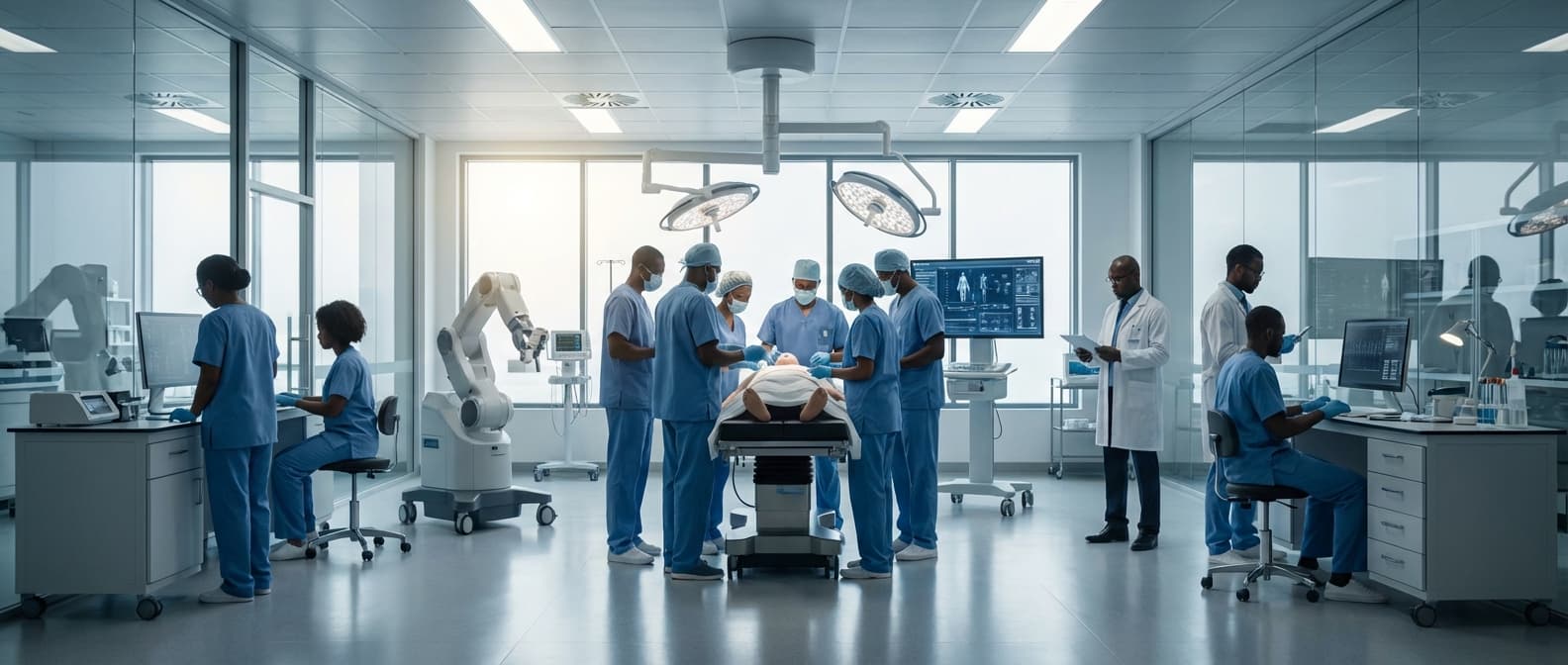
Biomedical Staffing Augmentation in Tunisia
Engineering Excellence & Technical Support
Onsite biomedical engineers and PACS administrators High-standard technical execution following OEM protocols and local regulatory frameworks.
Rapid Access to Specialized Medical Talent
Leverage our extensive network of pre-vetted Tunisian biomedical professionals, from diagnostic technicians and laboratory specialists to surgical assistants and R&D scientists, ensuring immediate access to the precise skills needed to bridge critical staffing gaps and accelerate research and clinical operations.
Seamless Integration & Compliance
Our augmentation services are designed for frictionless integration. We handle all administrative burdens, including local labor laws, payroll, and compliance, allowing your existing teams to focus on core competencies while benefiting from a skilled and compliant augmented workforce.
Boost Research & Development Through Expertise
Enhance your R&D initiatives with Tunisian biomedical experts who possess cutting-edge knowledge in areas like genomics, medical device development, and pharmaceutical research. Our augmented staff bring fresh perspectives and specialized skills to drive innovation and achieve project milestones efficiently.
What Is Biomedical Staffing Augmentation In Tunisia?
Biomedical Staffing Augmentation in Tunisia refers to the strategic outsourcing of specialized healthcare and laboratory personnel to augment existing human resource capacities within Tunisian healthcare institutions, research facilities, and diagnostic laboratories. This service involves the temporary or project-based deployment of qualified professionals possessing expertise in areas such as medical imaging, laboratory analysis, biomedical engineering, clinical research coordination, and specialized nursing care. The primary objective is to address temporary deficits in skilled personnel, accommodate fluctuating workloads, introduce novel technical proficiencies, or support specific project timelines without the burden of permanent recruitment and training. The service encompasses a rigorous selection process to ensure the procured staff possess the requisite technical competencies, certifications, and adherence to local regulatory standards. It facilitates operational continuity, enhances service delivery, and allows in-house teams to focus on core competencies.
| Stakeholder Group | Rationale for Need | Typical Use Cases |
|---|---|---|
| Hospitals and Clinics (Public & Private) | Addressing staff shortages due to high patient volume, unexpected leave, or specialized procedure demands. Enhancing diagnostic and therapeutic capabilities. | Temporary radiographer coverage during maternity leave. Augmenting laboratory technicians for increased testing throughput. Providing specialized nurses for new intensive care units. Supporting the introduction of new medical technologies requiring specific operator skills. |
| Diagnostic Laboratories (Clinical & Research) | Managing peak workloads, implementing new assay methodologies, or covering for staff undergoing specialized training. Ensuring timely and accurate test results. | Scaling up molecular diagnostics capacity during public health emergencies. Providing skilled bioanalysts for complex genetic testing. Augmenting histology technicians for increased biopsy processing. Covering for senior lab personnel on sabbatical. |
| Biomedical Research Institutions and Universities | Supporting specific research projects requiring niche expertise, managing experimental protocols, or facilitating data collection and analysis. | Deploying research assistants with experience in specific experimental techniques (e.g., cell culture, protein purification). Providing bioinformaticians for complex genomic data analysis. Augmenting clinical research coordinators for trial management. Supporting the setup and validation of novel research equipment. |
| Medical Device Manufacturers and Distributors | Providing technical support, installation, and training for complex medical equipment in healthcare facilities. | On-site technical specialists for the installation and calibration of advanced imaging systems. Field service engineers for urgent equipment maintenance and repair. Clinical application specialists to train healthcare professionals on new device utilization. |
Key Components of Biomedical Staffing Augmentation
- Talent Sourcing and Vetting: Identifying and screening qualified professionals with specialized biomedical skills.
- Onboarding and Integration: Facilitating the smooth integration of augmented staff into existing operational workflows and institutional culture.
- Regulatory Compliance: Ensuring all augmented personnel meet Tunisian licensing and certification requirements.
- Performance Management: Monitoring and evaluating the performance of augmented staff to ensure quality and efficiency.
- Flexible Deployment Models: Offering options for short-term, long-term, or project-specific staffing needs.
- Knowledge Transfer and Upskilling: Potential for knowledge sharing and upskilling of existing in-house personnel through collaboration with augmented staff.
Who Needs Biomedical Staffing Augmentation In Tunisia?
Biomedical staffing augmentation in Tunisia is a critical solution for healthcare organizations facing specific challenges. This service provides flexible, on-demand access to skilled biomedical professionals, allowing institutions to bridge skill gaps, manage fluctuating workloads, and enhance their overall operational efficiency. It's about ensuring that the right expertise is available when and where it's needed most, without the long-term commitment and overhead of permanent hires.
| Target Customer Segment | Key Departments Requiring Augmentation | Specific Needs/Challenges |
|---|---|---|
| Large Public Hospitals | Medical Equipment Maintenance & Repair, Imaging Departments (Radiology, MRI, CT), Intensive Care Units (ICUs), Operating Rooms (ORs), Biomedical Engineering Departments | High patient volume leading to increased equipment usage and demand for maintenance; need for specialized technicians for complex diagnostic and life-support equipment; staff shortages due to retirement or specialized skill gaps. |
| Private Healthcare Networks | All departments as above, plus specialized clinics (e.g., Fertility, Dental), Outpatient Centers | Maintaining high service standards and minimizing downtime for advanced medical technologies; rapid deployment of staff for new facility openings or service expansions; cost-effective management of specialized equipment expertise. |
| Diagnostic Laboratories | Clinical Chemistry, Hematology, Microbiology, Molecular Diagnostics, Pathology | Need for highly skilled biomedical scientists and technicians for complex analytical instruments; managing peak workloads during outbreaks or specific testing periods; ensuring compliance with quality control standards. |
| Medical Device Manufacturers & Distributors | Field Service & Technical Support, Installation & Commissioning Teams, Training Departments | Rapid response to service calls for installations, repairs, and preventative maintenance; scaling up support during new product launches; providing specialized training to end-users. |
| Research & Development Institutions | Laboratory Operations, Experimental Equipment Management, Data Analysis Support | Access to specialists for operating and maintaining cutting-edge research equipment; temporary support for specific research projects; filling gaps in technical expertise for novel methodologies. |
| Government Health Agencies | Public Health Laboratories, National Medical Device Registries, Public Hospital Network Management | Ensuring consistent quality and maintenance of medical equipment across public health facilities; supporting national health initiatives and disease surveillance programs; managing large-scale procurement and deployment of medical technology. |
Target Customers & Departments for Biomedical Staffing Augmentation in Tunisia
- Hospitals and Clinics (Public & Private)
- Diagnostic Laboratories
- Medical Device Manufacturers & Distributors
- Research & Development Institutions
- Government Health Agencies
- Specialized Treatment Centers (e.g., Oncology, Cardiology)
Biomedical Staffing Augmentation Process In Tunisia
The Biomedical Staffing Augmentation Process in Tunisia is designed to efficiently address the need for specialized biomedical personnel within healthcare institutions. This workflow outlines the journey from an initial inquiry to the successful placement and onboarding of augmented staff, ensuring seamless integration and operational continuity. The process emphasizes clear communication, rigorous selection, and prompt deployment.
| Stage | Description | Key Activities | Responsible Parties |
|---|---|---|---|
| The client institution identifies a need for augmented biomedical staffing. | Client submits staffing request detailing required roles, qualifications, experience, and duration. Staffing agency conducts a detailed needs assessment to fully understand the scope and technical requirements. Discussion on budget, timeline, and specific operational context. | Client Institution, Staffing Agency |
| Identifying potential candidates who meet the specified criteria. | Proactive sourcing through internal databases, professional networks, online job boards, and specialized biomedical communities in Tunisia. Targeted outreach to passive candidates with relevant expertise. | Staffing Agency |
| Thorough evaluation of shortlisted candidates. | Initial resume screening against technical and experience requirements. Behavioral and technical interviews. Verification of professional licenses, certifications, and educational background. Reference checks. Potential for specialized skills assessments (e.g., equipment operation, diagnostic procedures). | Staffing Agency |
| Presenting qualified candidates to the client for final selection. | Presenting a curated list of top candidates with detailed profiles, interview summaries, and assessment results to the client. Facilitating client interviews (in-person or virtual) with selected candidates. Client provides feedback and makes final selection decisions. | Staffing Agency, Client Institution |
| Formalizing the employment agreement. | Extending a formal job offer to the selected candidate, outlining terms of employment, salary, benefits, and start date. Negotiation of contract details between the candidate and the staffing agency/client. Finalization of the employment contract. | Staffing Agency, Client Institution, Candidate |
| Integrating the augmented staff into the client's environment. | Facilitating pre-deployment administrative tasks (e.g., background checks, medical clearance). Providing an orientation to the client institution's policies, procedures, and culture. Introduction to the biomedical department and team. Assignment of initial tasks and responsibilities. | Staffing Agency, Client Institution |
| Ensuring smooth integration and optimal performance. | Regular check-ins and performance evaluations by the client institution. Soliciting feedback from both the augmented staff and the client. Addressing any issues or challenges promptly to ensure successful integration and client satisfaction. Contract management and potential for contract extension or termination discussions. | Client Institution, Staffing Agency |
Biomedical Staffing Augmentation Workflow in Tunisia
- Inquiry & Needs Assessment
- Sourcing & Candidate Identification
- Screening & Vetting
- Client Review & Selection
- Offer & Contract Negotiation
- Onboarding & Deployment
- Performance Monitoring & Feedback
Biomedical Staffing Augmentation Cost In Tunisia
Biomedical staffing augmentation in Tunisia involves bringing in specialized professionals to supplement existing healthcare teams. This can include a range of roles from biomedical engineers and technicians to specialized medical equipment maintenance personnel. The cost of these services is influenced by several key factors, making it essential to understand these before budgeting.
Key Pricing Factors:
- Skill Specialization and Experience: Highly specialized roles or those requiring extensive experience will command higher rates. For example, a biomedical engineer with expertise in advanced imaging equipment will be more expensive than a general biomedical technician. The number of years of experience, specific certifications, and a proven track record are significant drivers of cost.
- Duration and Intensity of Engagement: The length of the contract and the expected workload directly impact pricing. Short-term, intensive projects requiring full-time commitment will generally have a higher hourly or daily rate compared to longer-term, part-time engagements.
- Location within Tunisia: While Tunisia has a relatively unified cost of living, there might be slight variations in rates between major cities like Tunis, Sfax, or Sousse and more remote areas. This is often due to the availability of talent and the cost of living in those specific regions.
- Provider Type: The cost can vary depending on whether you engage a freelance biomedical professional directly, work with a specialized biomedical staffing agency, or contract with a larger facilities management company that includes biomedical services. Agencies typically add a margin to cover their recruitment, vetting, and administrative costs.
- Equipment Complexity and Maintenance Needs: If the augmentation is for maintaining or calibrating highly complex or specialized medical equipment (e.g., MRI machines, linear accelerators), the associated labor costs will be higher due to the required expertise and the potential risks involved.
- On-call and Emergency Services: Contracts that include provisions for on-call availability or emergency response will naturally incur higher fees due to the unpredictable nature and the need for immediate deployment of personnel.
- Additional Services: Some staffing providers may bundle additional services such as training, inventory management, or compliance reporting, which would influence the overall cost.
Pricing Ranges (in Tunisian Dinars - TND):
It's important to note that these are estimated ranges and can fluctuate based on the specific project and provider. It's always recommended to obtain detailed quotes from multiple sources.
- Biomedical Technicians (General): Daily rates can range from 150 TND to 350 TND. Monthly rates for full-time engagement could be between 3,000 TND to 7,000 TND.
- Biomedical Engineers (Experienced/Specialized): Daily rates might fall between 300 TND to 700 TND or more, depending on specialization. Monthly rates for full-time could be in the range of 6,000 TND to 14,000 TND.
- Specialized Maintenance/Calibration Services: For very specific, high-demand equipment, hourly rates could start from 100 TND and go up to 300 TND per hour, especially for emergency call-outs.
- Agency Fees: Staffing agencies often add a markup, typically between 15% to 30% on top of the professional's base rate, to cover their operational costs.
These figures are indicative and subject to negotiation and market dynamics within Tunisia's healthcare sector.
| Service Type | Estimated Daily Rate (TND) | Estimated Monthly Rate (TND) - Full-Time |
|---|---|---|
| Biomedical Technician (General) | 150 - 350 | 3,000 - 7,000 |
| Biomedical Engineer (Experienced/Specialized) | 300 - 700+ | 6,000 - 14,000+ |
| Specialized Maintenance/Calibration (Hourly) | N/A | N/A (Hourly rates apply: 100 - 300+ TND/hour) |
Key Factors Influencing Biomedical Staffing Augmentation Costs in Tunisia
- Skill Specialization and Experience
- Duration and Intensity of Engagement
- Location within Tunisia
- Provider Type (Freelance, Agency, Facilities Management)
- Equipment Complexity and Maintenance Needs
- On-call and Emergency Service Requirements
- Inclusion of Additional Services (Training, Reporting)
Affordable Biomedical Staffing Augmentation Options
Hospitals and healthcare organizations often face challenges in maintaining optimal staffing levels for their biomedical departments. This can be due to unexpected surges in workload, specialized project needs, or temporary staff shortages. Affordable biomedical staffing augmentation offers a flexible and cost-effective solution to bridge these gaps. Instead of permanent hires, organizations can leverage external expertise for specific durations or projects, ensuring essential services remain uninterrupted and high-quality patient care is maintained. This approach allows for greater agility in resource management and avoids the long-term overhead associated with full-time employment.
| Cost-Saving Strategy | Description | Benefits |
|---|---|---|
| Flexible Staffing Models | Utilizing contract, temporary, or on-demand personnel instead of full-time hires. | Reduced recruitment costs, lower benefits overhead (healthcare, retirement), ability to scale up/down as needed, access to specialized skills not available internally. |
| Outsourcing Non-Core Functions | Delegating routine tasks like basic equipment cleaning, inventory management, or initial diagnostic checks to external providers. | Frees up internal biomedical engineers for more complex and critical tasks, potentially leading to higher productivity and job satisfaction for in-house staff. |
| Shared Service Agreements | Collaborating with other healthcare facilities to share specialized biomedical engineering resources or equipment. | Cost reduction through shared resources, access to a wider pool of expertise, economies of scale in purchasing and maintenance. |
| Preventative Maintenance Optimization | Implementing data-driven preventative maintenance schedules to reduce costly emergency repairs and extend equipment life. | Minimized equipment downtime, reduced repair expenses, improved patient safety, predictable budgeting for maintenance. |
| Vendor-Managed Inventory (VMI) | Allowing external vendors to manage and replenish spare parts inventory for biomedical equipment. | Reduced inventory holding costs, minimized stockouts, ensures availability of critical parts, less administrative burden on internal staff. |
Value Bundles for Biomedical Staffing Augmentation
- On-Demand Technical Support: Access to skilled biomedical technicians and engineers for immediate troubleshooting, repairs, and preventative maintenance on an as-needed basis. This minimizes equipment downtime and ensures critical medical devices are operational.
- Project-Specific Expertise: Engaging specialized biomedical professionals for defined projects, such as new equipment installations, system upgrades, or the implementation of new technologies. This brings in targeted skills without the need for extensive internal training or recruitment.
- Preventative Maintenance Packages: Bundled services that include scheduled inspections, calibrations, and routine maintenance for specific equipment categories or entire departments. This proactive approach reduces the likelihood of unexpected failures and extends equipment lifespan.
- Regulatory Compliance Support: Augmentation services focused on ensuring all biomedical equipment meets stringent regulatory standards (e.g., FDA, Joint Commission). This can include documentation review, equipment assessments, and remediation planning.
- Training and Skill Development: Partnering for specialized training programs for existing biomedical staff, delivered by external experts. This can upskill internal teams in new technologies or advanced repair techniques, improving overall departmental capability.
Verified Providers In Tunisia
Finding reliable and qualified healthcare providers is paramount when seeking medical services, especially in a foreign country. Tunisia boasts a growing healthcare sector with many reputable institutions and professionals. Franance Health stands out as a leading aggregator and verification service, meticulously vetting providers to ensure quality, safety, and ethical practices. Their stringent credentialing process and commitment to patient well-being make them the definitive choice for anyone seeking healthcare in Tunisia.
| Key Areas of Verification | Franance Health's Standards |
|---|---|
| Medical Qualifications & Licenses: | Verification of all relevant academic degrees, board certifications, and current medical licenses from recognized Tunisian and international authorities. |
| Professional Experience & Specialization: | Thorough review of previous roles, surgical histories, success rates (where applicable and ethical), and specific areas of medical expertise. |
| Hospital/Clinic Accreditations: | Confirmation of accreditation from national and international bodies (e.g., ISO, JCI for relevant facilities) ensuring high standards of infrastructure, equipment, and operational protocols. |
| Patient Testimonials & Reviews: | Collection and analysis of patient feedback, focusing on outcomes, bedside manner, and overall satisfaction. Only providers with consistently positive feedback are included. |
| Adherence to Ethical Practices: | Ensuring compliance with medical ethics codes, patient rights, data privacy regulations, and informed consent procedures. |
| Continuing Medical Education (CME): | Confirmation that providers actively engage in ongoing professional development to stay abreast of the latest medical advancements and techniques. |
Why Franance Health Credentials Represent the Best Choice for Verified Providers in Tunisia:
- Rigorous Vetting Process: Franance Health employs a multi-faceted evaluation that goes beyond simple licensing. They assess clinical expertise, professional experience, adherence to international medical standards, and patient feedback.
- Focus on Specialized Care: Whether you require routine check-ups, complex surgeries, or specialized treatments (e.g., cosmetic surgery, fertility treatments, dental care), Franance Health identifies and verifies providers with proven track records in their respective fields.
- Commitment to Patient Safety and Ethics: Franance Health prioritizes patient safety, ensuring that all verified providers adhere to strict ethical guidelines, maintain confidentiality, and offer transparent communication.
- Access to Leading Facilities: Their network includes some of Tunisia's most advanced hospitals and clinics, equipped with modern technology and offering a comfortable patient experience.
- Seamless Patient Journey: Franance Health streamlines the entire process, from initial consultation and provider selection to appointment scheduling and post-treatment follow-up, ensuring a stress-free experience for international patients.
- Cultural Sensitivity and Language Support: Recognizing the needs of international patients, Franance Health partners with providers who are often equipped to handle diverse linguistic and cultural backgrounds, facilitating clear communication and understanding.
Scope Of Work For Biomedical Staffing Augmentation
This Scope of Work (SOW) outlines the requirements for providing augmented biomedical staffing services to [Client Name]. The objective is to enhance the client's existing biomedical engineering department with skilled professionals, ensuring efficient and effective management of medical equipment, compliance with regulations, and support for clinical operations. This SOW details the technical deliverables, standard specifications, and operational parameters for the contracted services.
| Technical Deliverable | Description | Standard Specification / Requirement | Measurement / Acceptance Criteria |
|---|---|---|---|
| Biomedical Technician/Engineer Deployment | Provision of appropriately qualified and credentialed biomedical personnel. | Minimum of [X] years of experience in a hospital setting. Relevant certifications (e.g., CBET, CRES) required. Background checks and health screenings completed. | Personnel on-site and actively engaged within [Y] business days of contract execution. Successful completion of onboarding process. |
| Preventive Maintenance (PM) Program Execution | Completion of scheduled preventive maintenance on assigned medical equipment. | PM procedures documented and followed as per manufacturer recommendations or established hospital protocols. Use of approved PM kits and test equipment. | PM completion rate of 98% within scheduled windows. All PM reports submitted within 48 hours of completion. Successful equipment performance post-PM. |
| Corrective Maintenance (CM) Response and Resolution | Timely response to equipment malfunction calls and efficient repair. | Response time for critical equipment: < 30 minutes. Response time for non-critical equipment: < 2 hours. Resolution rate of 95% on first attempt. Use of OEM or equivalent parts. | All CM tickets closed within [Z] business days. Mean Time To Repair (MTTR) for critical equipment < [A] hours. Customer satisfaction surveys for CM interventions > 90%. |
| Equipment Calibration | Calibration of medical devices requiring periodic accuracy verification. | Calibration performed using NIST-traceable standards and calibrated test equipment. Calibration certificates issued for all calibrated devices. | Calibration adherence to manufacturer specifications and regulatory requirements. All calibration records maintained for audit purposes. |
| Technical Documentation and Reporting | Generation and maintenance of accurate equipment service records and reports. | All service events (PM, CM, calibration, installation) documented in the client's Computerized Maintenance Management System (CMMS) within 24 hours. Monthly performance reports detailing key metrics (e.g., PM completion, CM response times, MTTR). | 99% accuracy in CMMS data entry. Monthly reports submitted by the 5th business day of the following month. Client sign-off on report accuracy. |
| Regulatory Compliance Adherence | Ensuring all biomedical activities meet current healthcare regulations and standards. | Familiarity with FDA, TJC, HIPAA, and other relevant regulations. Participation in internal and external audits as required. Maintenance of equipment in compliance with safety and performance standards. | Zero regulatory citations directly attributable to augmented staff's performance. Successful completion of internal quality audits. |
| On-Call/After-Hours Support | Provision of on-call services for emergency equipment repairs. | Defined on-call schedule with designated personnel. Response times as per the CM specifications for critical equipment during off-hours. | Adherence to the on-call schedule. Successful resolution of critical equipment issues during on-call periods. |
| Equipment Inventory Management Support | Assistance in maintaining an accurate and up-to-date inventory of medical equipment. | Participation in physical inventory counts. Updating CMMS with new equipment acquisitions, transfers, and disposals. Verification of asset tags. | Inventory accuracy rate of 98%. All inventory changes reflected in CMMS within 48 hours. |
Key Objectives and Deliverables
- Augment Biomedical Staff: Provide qualified and experienced biomedical technicians and engineers to supplement the client's internal team.
- Equipment Management: Oversee the full lifecycle of medical devices, including installation, preventive maintenance, corrective maintenance, calibration, and decommissioning.
- Regulatory Compliance: Ensure all activities adhere to relevant healthcare regulations, standards (e.g., FDA, TJC, HIPAA), and internal client policies.
- Technical Support: Offer on-demand technical support for medical equipment, troubleshooting, and issue resolution.
- Training and Development: Contribute to the training of internal staff on new technologies or complex equipment as needed.
- Reporting and Documentation: Maintain accurate and comprehensive records of all maintenance, repair, and testing activities.
- Inventory Management: Assist in tracking and managing the hospital's medical equipment inventory.
- Project Support: Participate in new equipment procurement, installation, and commissioning projects.
- Continuous Improvement: Identify opportunities to improve operational efficiency, reduce equipment downtime, and enhance patient safety.
Service Level Agreement For Biomedical Staffing Augmentation
This Service Level Agreement (SLA) outlines the agreed-upon response times and uptime guarantees for biomedical staffing augmentation services provided by [Your Company Name] to [Client Company Name]. This SLA is incorporated by reference into the Master Service Agreement (MSA) dated [Date of MSA].
| Service Component | Service Level Objective (SLO) | Measurement Method | Remedy for Failure |
|---|---|---|---|
| Initial Response to Staffing Request | Within 2 business hours of notification during business hours (9 AM - 5 PM Client Time, Monday-Friday, excluding public holidays). For urgent requests marked 'Urgent' by the Client, within 1 business hour. | Timestamp of Client notification (email, portal submission, or designated communication channel) vs. Timestamp of [Your Company Name]'s first active engagement (e.g., initiating candidate search, confirming receipt and next steps). | For each instance of exceeding the response time, a credit of 5% of the hourly rate for the requested augmentation for the first 4 hours of delay. For delays exceeding 4 hours, a credit of 10% of the hourly rate per 4-hour block of delay. |
| Candidate Presentation for Standard Requests | Within 2 business days of request confirmation for non-urgent roles. Within 1 business day for urgent roles. | Timestamp of request confirmation vs. Timestamp of first qualified candidate profile presented to Client. | For each instance of exceeding the presentation time, a credit of 5% of the hourly rate for the first day of placement delay. |
| Staffing Augmentation Service Availability (Portal/Communication Channel) | 99.5% uptime during business hours (9 AM - 5 PM Client Time, Monday-Friday, excluding public holidays). | Monthly uptime calculation: (Total business hours in month - Downtime hours) / Total business hours in month. | For each full percentage point below 99.5% uptime in a given month, a credit of 2% of the total monthly service fee. For each full percentage point below 99.0% uptime, a credit of 4% of the total monthly service fee. |
| Resolution of System Issues (Portal/Communication Channel) | Critical issues (affecting ability to submit or manage requests) resolved within 4 business hours. Non-critical issues resolved within 1 business day. | Timestamp of issue report vs. Timestamp of confirmed resolution by [Your Company Name]. | For each critical issue exceeding 4 business hours, a credit of 5% of the monthly service fee. For each non-critical issue exceeding 1 business day, a credit of 2% of the monthly service fee. |
Key Performance Indicators (KPIs) and Guarantees
- Response Time: The maximum allowable time for [Your Company Name] to acknowledge and begin actively working on a request for biomedical staffing augmentation.
- Uptime Guarantee: The percentage of time the service for requesting and managing biomedical staff augmentation is available and operational.
Frequently Asked Questions

Ready when you are
Let's scope your Biomedical Staffing Augmentation in Tunisia project in Tunisia.

Scaling healthcare logistics and technical systems across the entire continent.