
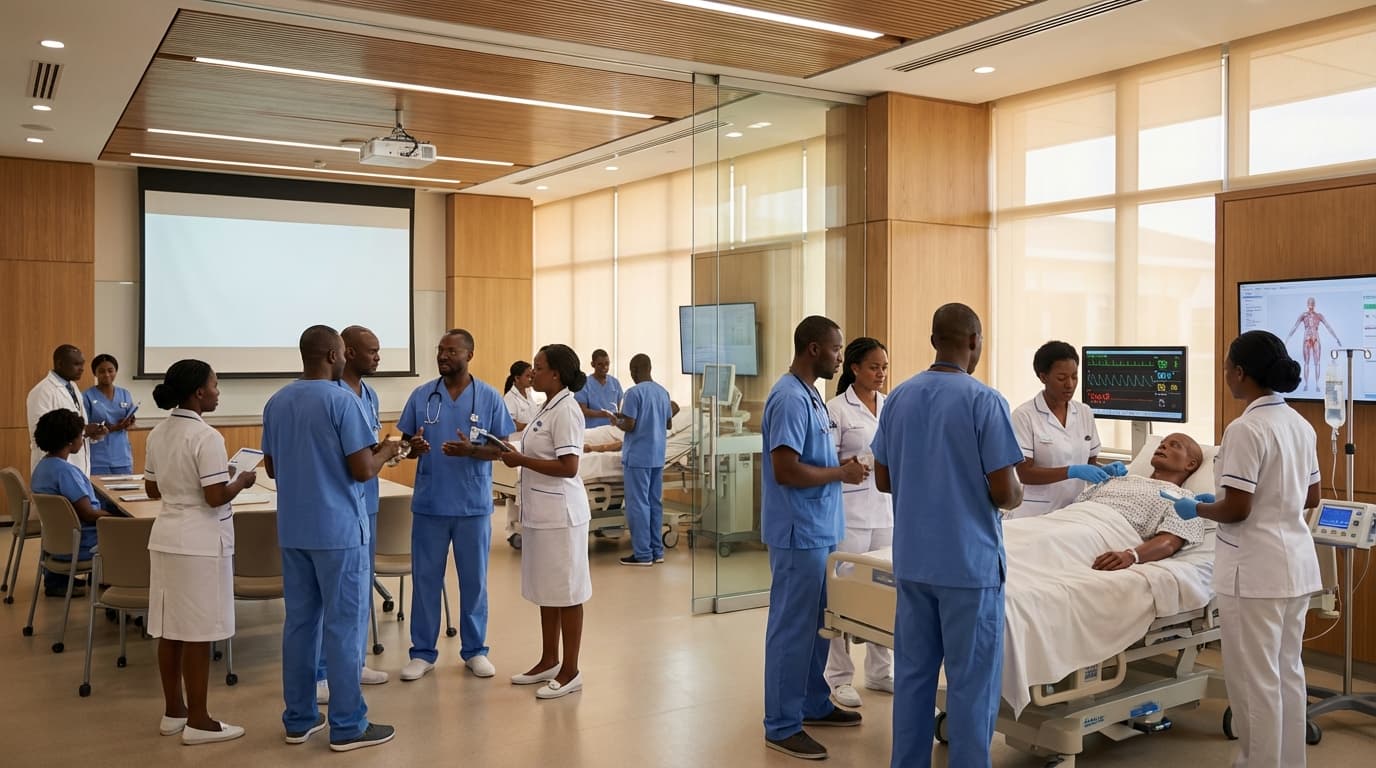
Equipment Training & Education in Togo
Engineering Excellence & Technical Support
Comprehensive equipment training and certification programs High-standard technical execution following OEM protocols and local regulatory frameworks.
Mobile Training Units for Remote Reach
Deployed fully-equipped mobile training units across Togo's rural regions, enabling hands-on instruction for agricultural machinery and essential equipment. This initiative overcomes geographical barriers, bringing critical skills directly to farming communities and fostering local expertise.
Digital Skill-Building Platform for Technicians
Launched an interactive digital platform featuring multilingual video tutorials, simulations, and quizzes for maintenance technicians. This resource standardizes technical education, improves diagnostic accuracy, and empowers local workforce with up-to-date equipment operational knowledge.
QR-Coded Equipment Manuals & Troubleshooting
Implemented QR codes on all critical machinery, linking directly to digital manuals, safety protocols, and on-demand troubleshooting guides accessible via smartphones. This innovation provides instant access to vital information, reducing downtime and enhancing on-site operational safety.
What Is Equipment Training & Education In Togo?
Equipment training and education in Togo refers to the systematic process of imparting knowledge and practical skills to individuals for the safe, efficient, and effective operation, maintenance, and troubleshooting of specific industrial, agricultural, or specialized equipment. This service is crucial for optimizing asset utilization, minimizing operational downtime, enhancing safety protocols, and ensuring compliance with regulatory standards within the Togolese economic landscape. It encompasses a range of instructional methodologies, from theoretical classroom-based learning to hands-on practical demonstrations and simulations, tailored to the complexity of the equipment and the proficiency level of the trainees.
| Who Needs Equipment Training & Education? | Typical Use Cases & Sectors |
|---|---|
| Industrial Operators & Technicians: Individuals directly involved in the daily operation and maintenance of machinery in manufacturing plants, processing facilities, and production lines. | Agricultural Workers: Farmers, farm managers, and cooperative members requiring training on tractors, harvesters, irrigation systems, and other agricultural machinery to improve yield and efficiency. |
| Construction Personnel: Machine operators, site supervisors, and maintenance staff needing expertise in operating heavy construction equipment (e.g., excavators, cranes, bulldozers) and ensuring site safety. | Healthcare Professionals: Biomedical technicians and nursing staff requiring training on medical equipment such as diagnostic imaging devices, patient monitoring systems, and surgical instruments. |
| Logistics & Transportation Staff: Warehouse personnel, truck drivers, and port operators involved with forklifts, conveyor systems, cranes, and other material handling equipment. | Energy Sector Employees: Technicians and engineers in power generation, distribution, and renewable energy sectors requiring training on turbines, generators, solar panels, and associated control systems. |
| Small & Medium Enterprises (SMEs): Business owners and employees who invest in equipment for their operations (e.g., printing presses, food processing machinery) but may lack in-house expertise. | Government & Non-Governmental Organizations (NGOs): Agencies implementing development projects requiring training on specialized equipment for infrastructure, health, or agricultural initiatives. |
Key Components of Equipment Training & Education in Togo
- Technical Proficiency Development: Equipping operators and technicians with the necessary skills to perform tasks such as starting, stopping, adjusting, and monitoring equipment performance.
- Safety Procedures & Protocols: Comprehensive instruction on hazard identification, risk assessment, personal protective equipment (PPE) usage, lockout/tagout procedures, and emergency response.
- Preventive & Routine Maintenance: Training on scheduled inspections, lubrication, cleaning, minor repairs, and troubleshooting common issues to prolong equipment lifespan and prevent failures.
- Diagnostic & Troubleshooting Skills: Developing the ability to identify root causes of equipment malfunctions and implement effective solutions.
- Operational Optimization: Educating users on best practices for maximizing efficiency, minimizing waste, and achieving optimal output from the equipment.
- Regulatory Compliance: Ensuring trainees understand and adhere to relevant national and industry-specific safety and operational regulations.
- Documentation & Record Keeping: Training on proper logging of operational data, maintenance activities, and incident reports.
Who Needs Equipment Training & Education In Togo?
Ensuring safe and effective operation of equipment is paramount across various sectors in Togo. Targeted training and education programs are essential for individuals and organizations that utilize machinery, tools, and technology in their daily operations. These programs not only enhance productivity and reduce errors but also significantly improve workplace safety, preventing accidents and costly downtime. Investment in equipment training translates to a more skilled workforce, increased operational efficiency, and a competitive edge for businesses operating in the Togolese economy.
| Sector | Key Departments/Roles | Types of Equipment Requiring Training |
|---|---|---|
| Agriculture | Farm Managers, Tractor Operators, Harvester Operators, Irrigation Technicians | Tractors, harvesters, plows, irrigation systems, processing machinery |
| Manufacturing & Industry | Production Line Workers, Machine Operators, Quality Control Technicians, Maintenance Staff | Assembly lines, CNC machines, welding equipment, packaging machines, material handling equipment |
| Construction | Heavy Equipment Operators (excavators, bulldozers, cranes), Site Managers, Carpenters, Electricians | Excavators, bulldozers, cranes, concrete mixers, power tools, scaffolding |
| Mining & Extractive Industries | Mine Operators, Driller Operators, Blasting Technicians, Maintenance Engineers | Drilling rigs, crushing and screening equipment, conveyor systems, haul trucks, heavy-duty machinery |
| Transportation & Logistics | Truck Drivers, Forklift Operators, Warehouse Managers, Logistics Coordinators | Forklifts, cranes, automated storage and retrieval systems, loading/unloading equipment |
| Healthcare | Medical Technicians, Radiologists, Laboratory Staff, Biomedical Engineers | X-ray machines, MRI scanners, laboratory analysers, surgical equipment, diagnostic tools |
| Energy (Oil & Gas, Renewables) | Drilling rig crews, refinery operators, solar panel installers, wind turbine technicians | Drilling equipment, refining machinery, solar panel installation tools, wind turbine maintenance equipment |
| Telecommunications | Tower climbers, fiber optic technicians, network engineers | Fiber optic splicing equipment, cable testing tools, antenna installation equipment |
| Government & Public Services | Municipal workers (sanitation, road maintenance), emergency responders, public works staff | Street sweepers, road paving equipment, fire trucks, rescue equipment |
Target Customers & Departments for Equipment Training & Education in Togo
- Individuals seeking to upskill or reskill for employment opportunities in technical fields.
- New employees requiring foundational knowledge and practical skills for their roles.
- Existing employees needing to learn about new equipment, upgrades, or updated operating procedures.
- Supervisors and managers responsible for overseeing equipment operation and ensuring safety compliance.
- Maintenance and repair technicians requiring specialized knowledge of specific equipment.
Equipment Training & Education Process In Togo
The Equipment Training & Education Process in Togo outlines the structured workflow for providing training and education on equipment to individuals and organizations. This process typically begins with an initial inquiry and progresses through needs assessment, program development, participant selection, training delivery, evaluation, and finally, ongoing support. The objective is to ensure users are proficient and safe in operating and maintaining the equipment.
| Stage | Description | Key Activities | Responsible Parties | Deliverables/Outcomes |
|---|---|---|---|---|
| Inquiry & Initial Contact | The process is initiated when an individual or organization expresses interest in equipment training. | Receiving inquiries (phone, email, in-person), initial information sharing about available training options. | Prospective Trainee/Organization, Training Provider | Acknowledged inquiry, preliminary information provided. |
| Needs Assessment | Determining the specific training requirements based on the equipment and the trainees' existing knowledge and skill levels. | Conducting interviews, surveys, skill assessments, understanding equipment specifics and operational context. | Training Provider, Prospective Trainee/Organization Representative | Training needs report, identification of skill gaps, specific training objectives. |
| Training Program Development | Designing a tailored training curriculum that addresses the identified needs and learning objectives. | Developing training modules (theory and practical), creating training materials (manuals, presentations, visual aids), selecting training methodologies. | Training Provider (Instructional Designers, Subject Matter Experts) | Training curriculum, training modules, training materials. |
| Participant Identification & Nomination | Selecting the appropriate individuals who will benefit from the training. | Receiving nominations from organizations, defining participant prerequisites, screening and confirming participants. | Organization's Management, Training Provider | List of confirmed participants. |
| Logistics & Scheduling | Arranging all practical aspects necessary for the training to take place effectively. | Setting training dates and times, booking training venues (on-site or off-site), arranging for equipment availability, preparing training facilities, coordinating travel and accommodation if applicable. | Training Provider, Host Organization | Confirmed training schedule, secured venue and equipment, logistical arrangements finalized. |
| Training Delivery | The actual execution of the training program, encompassing theoretical and practical components. | Conducting lectures, demonstrations, hands-on exercises, simulations, Q&A sessions, troubleshooting practical issues. | Certified Trainers/Instructors | Trainees acquiring knowledge and skills, practical proficiency demonstrated. |
| Evaluation & Feedback | Assessing the effectiveness of the training and gathering feedback for improvement. | Administering pre- and post-training assessments (quizzes, practical tests), collecting feedback through evaluation forms, debriefing sessions. | Training Provider, Participants | Assessment results, training evaluation report, feedback summary. |
| Certification & Documentation | Formally recognizing the successful completion of the training program. | Issuing certificates of completion or competency, maintaining training records, providing documentation of attendance and achievement. | Training Provider | Training certificates, official training records. |
| Post-Training Support & Follow-up | Providing ongoing assistance and reinforcement to ensure sustained competency. | Offering refresher courses, providing technical support, answering queries, conducting follow-up assessments (if required), sharing updates on equipment best practices. | Training Provider, Equipment Manufacturer/Supplier | Sustained user proficiency, ongoing problem resolution, updated knowledge base. |
Workflow Stages
- Inquiry & Initial Contact
- Needs Assessment
- Training Program Development
- Participant Identification & Nomination
- Logistics & Scheduling
- Training Delivery
- Evaluation & Feedback
- Certification & Documentation
- Post-Training Support & Follow-up
Equipment Training & Education Cost In Togo
The cost of equipment training and education in Togo is a critical consideration for businesses and individuals seeking to acquire new skills or ensure the proper operation of machinery. Several factors influence these costs, primarily driven by the type and complexity of the equipment, the duration and depth of the training, the qualifications of the trainers, and the location and facilities used. Demand for specific skills also plays a role in pricing. Training can range from basic operational introductions to advanced maintenance and troubleshooting. Local currency, the West African CFA franc (XOF), is used for all transactions. While precise, universally applicable price lists are rare due to the bespoke nature of much training, general ranges can be estimated. Factors like administrative overhead, materials provided, and any certifications awarded will also impact the final price.
| Training Category | Estimated Price Range (XOF) | Notes |
|---|---|---|
| Basic Equipment Operation (e.g., agricultural machinery, small construction tools) | 20,000 - 75,000 | Typically half-day to full-day sessions, often for a small group. |
| Intermediate Equipment Handling & Maintenance (e.g., industrial sewing machines, basic IT hardware) | 50,000 - 150,000 | 1-3 day courses, covering routine maintenance and troubleshooting. |
| Advanced Technical Skills & Specialised Equipment (e.g., heavy construction machinery, medical equipment, complex manufacturing systems) | 100,000 - 500,000+ | Can involve multi-week programs, potentially with simulator use or on-site factory training. Prices can vary significantly based on the specific equipment and trainer. |
| Software/IT Equipment Training (e.g., ERP systems, CAD software) | 30,000 - 200,000 | Depends on software complexity and customization needs. Often priced per user or per module. |
| Safety & Compliance Training (related to equipment use) | 25,000 - 100,000 | Often mandatory, focused on risk mitigation and best practices. Can be a standalone course or integrated. |
Key Pricing Factors for Equipment Training & Education in Togo
- Equipment Complexity: Simple tools vs. sophisticated industrial machinery.
- Training Duration & Depth: Short introductory sessions vs. multi-day intensive courses.
- Trainer Expertise & Qualifications: Local instructors vs. internationally certified specialists.
- Training Location: On-site at the client's facility vs. dedicated training centers.
- Training Format: Group sessions vs. one-on-one personalized coaching.
- Materials & Resources: Handouts, manuals, simulators, practical equipment access.
- Certification: Inclusion of accredited certifications.
- Provider Reputation: Established training institutions vs. smaller, emerging providers.
- Demand & Specialization: High demand for specific skills can drive up prices.
Affordable Equipment Training & Education Options
Investing in equipment training is crucial for operational efficiency, safety, and maximizing the lifespan of your assets. Fortunately, there are numerous affordable options available, and smart strategies can significantly reduce costs. This guide explores valuable training bundles and cost-saving tactics for acquiring essential equipment education.
| Value Bundle Type | Description | Cost-Saving Aspect |
|---|---|---|
| Comprehensive Equipment Certification Package | Includes theoretical knowledge, practical hands-on sessions, and assessments for multiple pieces of related equipment. | Bulk discount on individual modules, reduced per-participant cost for advanced certifications. |
| On-Site Training & Consultation | An instructor comes to your facility to train your team on your specific equipment, addressing real-world operational challenges. | Eliminates travel costs for employees, tailored to your exact needs, increased efficiency by training on actual machinery. |
| E-Learning Subscription with Practical Labs | Access to a library of online courses with optional virtual or in-person practical lab sessions. | Lower subscription fee than individual courses, flexibility for employees, scalable for multiple users. |
| Train-the-Trainer Programs | Equips internal staff with the skills and materials to deliver standardized training to other employees. | Long-term cost reduction, builds internal capacity, ensures consistent training delivery. |
| Manufacturer-Specific Skill Development Program | Focuses on advanced features and maintenance of a particular brand's equipment, often with access to specialized tools or simulators. | May include discounts on parts or service, enhanced equipment longevity and reduced repair costs through expert knowledge. |
Key Cost-Saving Strategies for Equipment Training
- {"title":"Leverage Online & Digital Learning","description":"Online courses, webinars, and e-learning modules offer flexibility and often a lower price point than in-person sessions. They eliminate travel and accommodation expenses and allow employees to learn at their own pace."}
- {"title":"Explore Manufacturer-Provided Training","description":"Many equipment manufacturers offer introductory or advanced training programs, sometimes included with the purchase of new equipment or available at a reduced cost for their customers."}
- {"title":"Form Training Partnerships","description":"Collaborate with other businesses in your industry that use similar equipment. You can share training resources, facilities, and potentially bulk discounts on external training providers."}
- {"title":"Develop In-House Expertise","description":"Train a few key employees as internal trainers. They can then disseminate knowledge to the rest of your workforce, creating a sustainable and cost-effective internal training program."}
- {"title":"Prioritize & Tier Training Needs","description":"Identify critical equipment and the most essential skills. Focus your budget on high-impact training first and consider less intensive or self-guided options for lower-priority areas."}
- {"title":"Seek Government & Industry Grants","description":"Research local, regional, or national grants and subsidies available for workforce development and technical training. These can significantly offset training expenditures."}
- {"title":"Utilize Free Resources","description":"Many reputable organizations and manufacturers offer free introductory guides, videos, and basic tutorials that can supplement formal training or serve as a starting point."}
Verified Providers In Togo
Ensuring access to quality healthcare is paramount, and in Togo, identifying verified healthcare providers is crucial for patient safety and effective treatment. This document outlines the significance of verified providers, focusing on Franance Health credentials and the compelling reasons why they represent the best choice for your healthcare needs.
| Credential Type | Verification Process | Benefits to Patients | Franance Health Standard |
|---|---|---|---|
| Medical Licenses & Certifications | Official validation of educational background and legal authorization to practice. | Ensures provider has met minimum educational and professional requirements. | Confirms all mandatory licenses and certifications are current and valid. |
| Professional Experience & Track Record | Review of past practice history, including patient outcomes and peer evaluations. | Indicates a provider's practical skills and experience in treating various conditions. | Thorough review of a substantial and reputable practice history. |
| Specialty Board Certifications | Certification by recognized boards in specific medical specialties. | Guarantees expertise in a particular field of medicine. | Verifies advanced training and proven competence in specialized areas. |
| Continuing Medical Education (CME) | Proof of ongoing learning and professional development. | Ensures providers are updated on the latest medical advancements and best practices. | Mandatory and documented participation in accredited CME programs. |
| Ethical Standing & Disciplinary Records | Background checks and review of any past disciplinary actions by regulatory bodies. | Protects patients from providers with a history of malpractice or unethical conduct. | Rigorous checks for any past or present ethical violations or disciplinary actions. |
Why Franance Health Credentials Matter
- Rigorous Vetting Process: Franance Health employs a stringent vetting process that goes beyond basic licensing. This includes thorough background checks, verification of qualifications, and assessment of professional ethics.
- Commitment to Excellence: Adherence to the highest standards of medical practice is a cornerstone of Franance Health's credentialing. This ensures providers are up-to-date with the latest medical knowledge and techniques.
- Patient-Centric Approach: Verified Franance Health providers are committed to a patient-centric approach, prioritizing patient well-being, clear communication, and informed consent.
- Continuous Quality Improvement: Franance Health mandates continuous professional development and ongoing quality assessments for its credentialed providers, ensuring sustained high performance.
- Trust and Reliability: Choosing a Franance Health credentialed provider offers a significant layer of trust and reliability, minimizing the risk of encountering unqualified or unethical practitioners.
Scope Of Work For Equipment Training & Education
This Scope of Work (SOW) outlines the requirements for providing comprehensive training and educational services for the newly acquired [Equipment Name/System]. The primary objective is to ensure that designated personnel gain the necessary knowledge and practical skills to operate, maintain, and troubleshoot the equipment effectively and safely. This SOW details the technical deliverables, standard specifications for the training program, and the expected outcomes.
| Deliverable | Description | Standard Specification/Requirement | Format | Timeline/Phase |
|---|---|---|---|---|
| Training Needs Analysis Report | Detailed assessment of the current skill levels and specific training needs of the target audience. | Must include breakdown by role, identified knowledge gaps, and recommended training modules. | PDF Report | Phase 1: Planning |
| Customized Training Curriculum | A structured learning plan tailored to the [Equipment Name/System] and the identified needs. | Should cover theoretical concepts, practical applications, safety procedures, and troubleshooting. | Document (Word/PDF) | Phase 1: Planning |
| Training Materials (Participant) | Comprehensive study guides, manuals, and handouts for each trainee. | Content must be accurate, up-to-date, and easy to understand. Includes diagrams, illustrations, and step-by-step procedures. | Digital (PDF) and/or Printed | Phase 2: Development & Delivery |
| Training Materials (Instructor) | Detailed instructor guide, lesson plans, presentation slides, and assessment tools. | Must include key talking points, activity instructions, and suggested timings. | Digital (PPT/PDF) | Phase 2: Development & Delivery |
| Hands-on Practical Training Sessions | Interactive sessions where trainees operate the actual [Equipment Name/System] under expert supervision. | Each trainee must have adequate access to the equipment. Sessions to cover operation, calibration, and basic maintenance. | On-site/Remote (as agreed) | Phase 2: Delivery |
| Simulated Scenario Training | Exercises designed to test troubleshooting and problem-solving skills in a controlled environment. | Scenarios should mimic common operational issues and emergency situations. | Practical Exercises | Phase 2: Delivery |
| Post-Training Assessment & Evaluation | Methods to measure trainee comprehension and skill acquisition. | Includes written tests, practical skill demonstrations, and feedback forms. | Written Exams, Practical Assessments, Feedback Surveys | Phase 2: Delivery & Phase 3: Evaluation |
| Certificate of Completion | Formal recognition of successful completion of the training program. | Issued to each trainee who meets the passing criteria. | Digital (PDF) or Printed | Phase 3: Evaluation |
| Post-Training Support Plan | Outline of resources available to trainees after the formal training period. | Includes access to FAQs, online forums, and contact information for technical support. | Document (PDF) | Phase 3: Evaluation |
| Training Report | Comprehensive summary of the training conducted, including attendance, assessment results, and feedback. | Must provide an overview of the training effectiveness and any recommendations for future training. | PDF Report | Phase 3: Evaluation |
Key Training Objectives
- Familiarize trainees with the fundamental principles and functionalities of the [Equipment Name/System].
- Develop proficiency in the safe and correct operation of all major components and features.
- Equip trainees with the skills to perform routine maintenance and basic troubleshooting.
- Ensure understanding of all safety protocols and emergency procedures related to the equipment.
- Provide documentation and resources for ongoing learning and reference.
Service Level Agreement For Equipment Training & Education
This Service Level Agreement (SLA) outlines the standards for Equipment Training & Education services, focusing on response times for support requests and uptime guarantees for provided training platforms and resources. This SLA is designed to ensure reliable and effective access to training materials and support, facilitating the successful adoption and utilization of the covered equipment.
| Service Category | Response Time Target | Definition | Uptime Guarantee | Definition |
|---|---|---|---|---|
| Technical Support (System Access, Platform Issues) | 4 Business Hours | Acknowledgement of the support request and initial assessment or workaround provided. | 99.5% Uptime (Monthly) | The training platform will be available and accessible for users, excluding scheduled maintenance and force majeure events. |
| Content Inquiries (Course Material Clarity, Navigation) | 8 Business Hours | Acknowledgement of the inquiry and provision of clarification or direction to relevant resources. | N/A | N/A |
| Training Platform Availability | N/A | N/A | 99.5% Uptime (Monthly) | The training platform will be available and accessible for users, excluding scheduled maintenance and force majeure events. |
| Scheduled Maintenance | 48 Hours Notice | Notification of planned downtime for updates or maintenance, including expected duration and impact. | N/A | N/A |
Key Service Components
- Response Time Targets for Support Requests
- Uptime Guarantees for Training Platforms
- Escalation Procedures
- Reporting and Review
Frequently Asked Questions

Ready when you are
Let's scope your Equipment Training & Education in Togo project in Togo.

Scaling healthcare logistics and technical systems across the entire continent.