
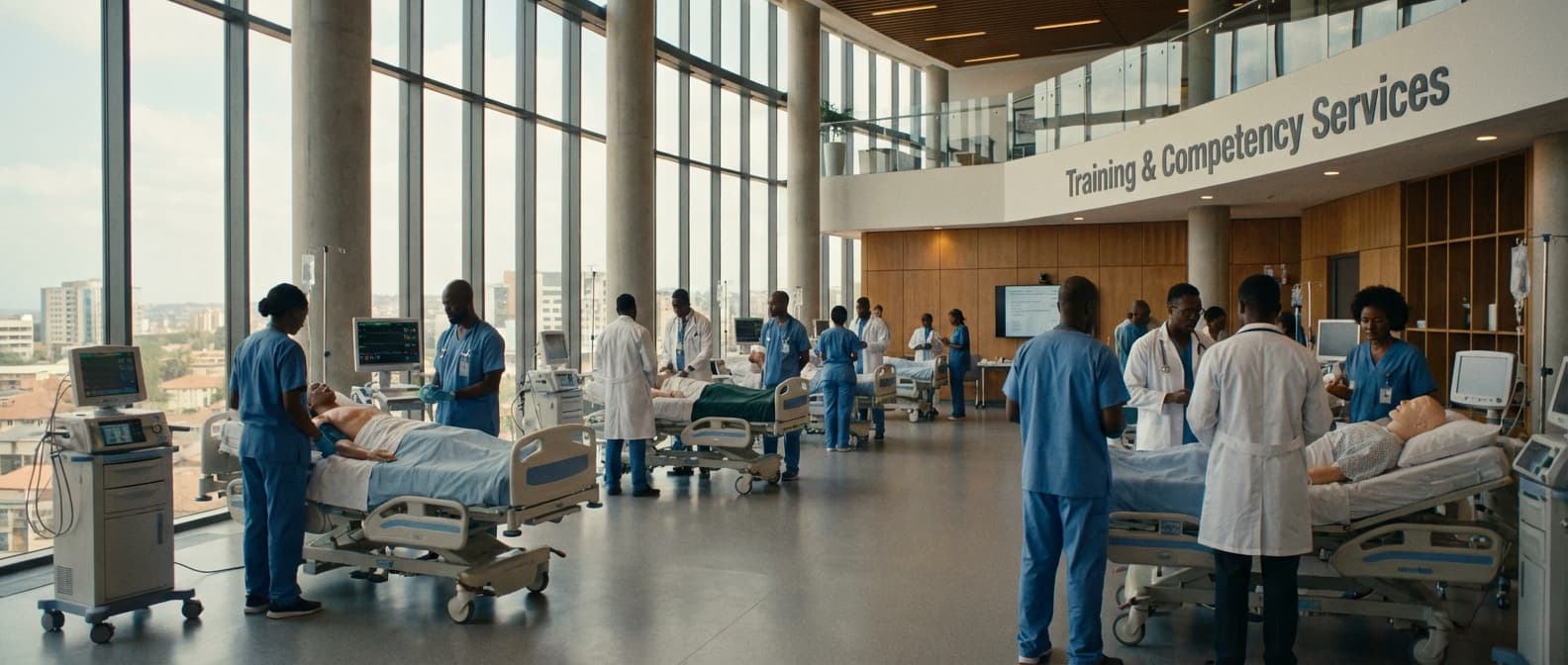
Ventilator User Training Service (Nurses) in Togo
Engineering Excellence & Technical Support
Ventilator User Training Service (Nurses) High-standard technical execution following OEM protocols and local regulatory frameworks.
Mastering Ventilator Settings for Optimal Gas Exchange
Understand and confidently adjust key ventilator parameters like tidal volume, respiratory rate, PEEP, and FiO2. Learn how to interpret ABGs to fine-tune settings for improved oxygenation and CO2 removal in common Togolese respiratory conditions.
Proactive Alarm Management & Troubleshooting
Identify and respond rapidly to critical ventilator alarms. This module focuses on recognizing the root causes of common alarms (e.g., high pressure, low volume) and implementing effective troubleshooting steps to ensure patient safety and continuous ventilation.
Hemodynamic Monitoring & Ventilator Synergy
Learn how to monitor vital signs and integrate them with ventilator data. Understand the impact of ventilator settings on hemodynamics and how to optimize ventilation strategies to support cardiac function, particularly in patients with co-morbidities prevalent in Togo.
What Is Ventilator User Training Service (Nurses) In Togo?
Ventilator User Training Service (Nurses) in Togo refers to specialized educational programs designed to equip registered nurses with the knowledge and practical skills necessary for the safe and effective operation of mechanical ventilators within the Togolese healthcare system. This service is critical for ensuring optimal patient outcomes in critical care settings, where mechanical ventilation is a life-sustaining intervention for patients experiencing respiratory failure.
| Who Needs Ventilator User Training? | Typical Use Cases | ||
|---|---|---|---|
| Registered Nurses working in Intensive Care Units (ICUs), Critical Care Units (CCUs), Neonatal Intensive Care Units (NICUs), and Emergency Departments within Togolese healthcare facilities. | Management of adult, pediatric, and neonatal patients experiencing acute respiratory failure due to conditions such as: Pneumonia, Acute Respiratory Distress Syndrome (ARDS), Sepsis, Neurological conditions (e.g., Guillain-Barré syndrome, myasthenia gravis), Post-operative respiratory complications, Obstructive sleep apnea (in severe cases requiring ventilatory support). | ||
| Nurses newly employed in critical care settings requiring initial competency assessment. | Transfer of patients requiring mechanical ventilation between departments or facilities. | Introduction of new ventilator models or software updates. | Refresher training to maintain and update skills, particularly for nurses with prior experience but intermittent ventilator use. |
Key Components of Ventilator User Training Service for Nurses in Togo
- Theoretical Foundations: Comprehensive instruction on respiratory physiology, pathophysiology of respiratory failure, principles of mechanical ventilation (e.g., volume-controlled, pressure-controlled, and assisted modes), ventilator waveforms, and understanding of various ventilator settings and their impact on patient hemodynamics and gas exchange.
- Equipment Familiarization: Hands-on training with specific models of mechanical ventilators commonly utilized in Togolese hospitals, covering setup, calibration, troubleshooting common alarms, and routine maintenance procedures.
- Patient Management: Education on patient assessment prior to intubation, securing endotracheal tubes, connecting the patient to the ventilator, monitoring patient response (e.g., vital signs, blood gases, SpO2), adjusting ventilator parameters based on clinical status, and weaning protocols.
- Complication Management: Training on identifying, preventing, and managing common ventilator-associated complications such as ventilator-associated pneumonia (VAP), barotrauma, volutrauma, tracheitis, and hemodynamic instability.
- Emergency Procedures: Simulation-based training for critical scenarios, including ventilator malfunction, accidental extubation, and emergency airway management.
- Infection Control: Emphasis on strict aseptic techniques and infection control protocols to minimize the risk of VAP and cross-contamination.
- Ethical and Legal Considerations: Discussion of ethical principles related to mechanical ventilation, informed consent, and documentation standards.
Who Needs Ventilator User Training Service (Nurses) In Togo?
Ventilator User Training Service is crucial for ensuring safe and effective patient care in critical settings. In Togo, the demand for such specialized training is particularly high within healthcare facilities that manage respiratory failure and critical illness. This training is essential for healthcare professionals who operate and manage mechanical ventilators, a vital piece of equipment for patients with severe respiratory distress.
| Customer Segment | Primary Department(s) | Reason for Training Need | Key Skills/Knowledge Acquired |
|---|---|---|---|
| Registered Nurses | Intensive Care Units (ICUs), Emergency Departments (EDs), Neonatal/Pediatric ICUs, Surgical Recovery | Direct patient management of ventilated patients, requiring in-depth understanding of ventilator operation, settings, monitoring, and troubleshooting. | Ventilator settings adjustment, weaning protocols, airway management, complication recognition (e.g., VAP, pneumothorax), alarms management, patient comfort and safety. |
| Nurses | General Wards / Medical-Surgical Units | May receive patients requiring short-term or emergent ventilatory support, requiring basic understanding of ventilator function and safe transfer procedures. | Basic ventilator operation, understanding of essential alarms, safe disconnection and transport procedures. |
| Specialist Physicians (Critical Care, Anesthesiology, Pulmonology) | ICUs, Operating Rooms, Pulmonology Clinics | Oversee complex ventilator management, make critical decisions on ventilator modes and strategies, and guide nursing staff. | Advanced ventilator modes, pathophysiology of respiratory failure, ventilator-induced lung injury (VILI) prevention, complex weaning strategies, interpretation of advanced monitoring data. |
Target Customers and Departments for Ventilator User Training Service in Togo:
- Nurses in Intensive Care Units (ICUs)
- Nurses in Emergency Departments (EDs)
- Nurses in Surgical Recovery Units
- Nurses in Neonatal Intensive Care Units (NICUs)
- Nurses in Pediatric Intensive Care Units (PICUs)
- Respiratory Therapists (if available, though nurses often cover these roles in many Togolese hospitals)
- Medical Doctors specializing in critical care, anesthesiology, and emergency medicine
- Nurses working in general wards of hospitals that may receive patients requiring ventilatory support during surges or emergencies.
Ventilator User Training Service (Nurses) Process In Togo
The Ventilator User Training Service for Nurses in Togo is designed to equip healthcare professionals with the necessary skills to operate and manage ventilators effectively. This process ensures a standardized and high-quality training experience. The workflow begins with an initial inquiry from a healthcare facility or individual nurse, leading through the planning and approval stages, culminating in the execution of the training, and finally concluding with post-training follow-up and evaluation. This structured approach guarantees that all participants receive comprehensive and relevant education.
| Stage | Key Activities | Responsible Parties | Deliverables/Outcomes |
|---|---|---|---|
| Healthcare facility or individual nurse expresses interest in ventilator training. Initial discussion to understand specific needs, number of participants, existing knowledge, and desired outcomes. | Prospective Client (Facility/Nurse), Training Provider Representative | Understanding of training requirements, initial needs assessment report. |
| Training provider designs a tailored training program based on the needs assessment. This includes curriculum outline, training methodology, duration, required resources, and a detailed cost quotation. | Training Provider (Curriculum Developers, Sales Team) | Formal training proposal, quotation, confirmation of training scope. |
| Review and negotiation of the training proposal. Signing of a service agreement or contract outlining terms, conditions, payment schedules, and responsibilities of both parties. | Prospective Client (Administration/HR), Training Provider (Legal/Management) | Signed service agreement/contract. |
| Detailed planning of the training logistics: identifying trainers, booking training venue, procuring/preparing training equipment (ventilators, simulators, etc.), and establishing the training schedule. | Training Provider (Training Coordinator, Logistics Team), Client (for facility access/scheduling) | Confirmed training schedule, identified trainers, secured training venue and equipment. |
| Communication with participants regarding the training schedule, prerequisites (if any), and learning objectives. Preparation of training materials (manuals, presentations, case studies). | Training Provider (Trainers, Administrative Staff), Client (for participant communication) | Participant list, distributed pre-training materials, confirmed participant attendance. |
| Delivery of theoretical knowledge and practical hands-on sessions covering ventilator operation, settings, troubleshooting, patient monitoring, and emergency procedures. This stage involves lectures, demonstrations, simulations, and interactive exercises. | Certified Trainers, Participants (Nurses) | Completion of training modules, hands-on practice sessions, active participation. |
| Evaluation of participant learning through written exams, practical assessments, and simulations. Successful participants receive a certificate of completion. | Certified Trainers, Participants (Nurses) | Assessment results, completion certificates for qualified nurses. |
| Collection of feedback from participants and the healthcare facility regarding the training content, delivery, trainers, and overall experience. This feedback is used for continuous improvement. | Participants (Nurses), Client (Facility Management), Training Provider (Evaluation Team) | Completed feedback forms, training evaluation report. |
| Provision of ongoing support to nurses and facilities, such as answering queries, providing additional resources, or scheduling refresher courses if needed. Review of training effectiveness in practice. | Training Provider (Support Team, Trainers), Client | Resolved queries, access to support resources, potential recommendations for further training. |
Ventilator User Training Service (Nurses) Workflow in Togo
- Inquiry & Needs Assessment
- Proposal Development & Quotation
- Agreement & Contract Finalization
- Training Planning & Scheduling
- Pre-Training Preparation
- Training Execution
- Post-Training Assessment & Certification
- Feedback & Evaluation
- Follow-up & Support
Ventilator User Training Service (Nurses) Cost In Togo
Providing ventilator user training for nurses in Togo involves several cost factors that influence the overall price. These costs can vary significantly based on the provider, the duration and intensity of the training, the location of delivery, and the specific equipment used. Understanding these elements is crucial for budgeting and resource allocation.
| Training Scope | Estimated Cost Range (XOF) | Notes |
|---|---|---|
| Basic Ventilator Operation & Monitoring (1-2 Days) | 50,000 - 150,000 | Covers fundamental principles, common modes, patient monitoring, and basic troubleshooting. May include simulation. |
| Intermediate Ventilator Management (3-4 Days) | 120,000 - 300,000 | Expands on basic training, including advanced modes, weaning protocols, airway management, and more complex troubleshooting. Significant hands-on practice. |
| Advanced Ventilator Therapy & Critical Care (5+ Days) | 250,000 - 600,000+ | In-depth training on specialized ventilation strategies, patient-specific settings, NIV, high-frequency ventilation, mechanical ventilation in specific pathologies, and equipment maintenance. Often includes case studies and critical scenarios. |
| On-Site Training (Per Day, Group Rate) | 75,000 - 200,000+ | This rate is for the provider's service and can vary greatly depending on the number of trainers, location, and specific needs. Excludes participant travel/accommodation if applicable. |
| Refresher/Update Training (1 Day) | 30,000 - 80,000 | Focuses on updates in protocols, new features, or reinforcing existing knowledge. |
Key Pricing Factors for Ventilator User Training (Nurses) in Togo:
- Trainer Expertise and Qualifications: Experienced and certified respiratory therapists or specialized medical educators will command higher fees.
- Training Curriculum and Content: Comprehensive training covering advanced ventilation modes, troubleshooting, and maintenance will be more expensive than basic introductory courses.
- Duration and Intensity: The number of training days, hours per day, and the inclusion of practical, hands-on sessions directly impact the cost.
- Location of Training: On-site training at a healthcare facility might incur additional travel and accommodation expenses for trainers, or if the training is conducted at a dedicated training center, facility rental costs will be factored in.
- Number of Participants: While not always a direct per-person cost, larger groups might require more trainers or resources, influencing the overall package price.
- Training Materials and Resources: The cost of printed manuals, digital resources, simulation equipment, and access to actual ventilators for hands-on practice.
- Certification and Assessment: Fees for examinations, certifications, and any post-training assessments.
- Provider Type: Training offered by private companies, NGOs, or government-affiliated institutions can have different pricing structures.
- Equipment Specificity: Training on a specific brand or model of ventilator might be more costly if specialized trainers or materials are required.
- Logistics and Administration: Costs associated with scheduling, communication, participant registration, and follow-up.
Affordable Ventilator User Training Service (Nurses) Options
This document outlines affordable ventilator user training service options specifically designed for nurses. It focuses on maximizing value through bundled services and implementing cost-saving strategies to ensure comprehensive and accessible training.
| Value Bundle Option | Included Services | Target Audience | Estimated Cost Range (per nurse) | Cost-Saving Strategies Applied |
|---|---|---|---|---|
| Basic Competency Package | Online modules for core principles, basic simulation exercises, certificate of completion. | New nurses, nurses transitioning to critical care. | $150 - $300 | Leverages online learning, bulk enrollment discounts, minimal instructor-led time. |
| Intermediate Skill Builder | Basic package + advanced simulation scenarios, hands-on troubleshooting workshops, immediate post-training support (limited). | Nurses with some ventilator experience, preparing for higher acuity roles. | $350 - $600 | Blended learning approach (online + in-person), group workshop discounts, train-the-trainer models for internal staff. |
| Comprehensive Critical Care Ready | Intermediate package + in-depth case studies, advanced troubleshooting simulations, dedicated online resource library, scheduled refresher sessions (annual). | Nurses in critical care units, those seeking advanced ventilator management skills. | $700 - $1200 | Long-term engagement with ongoing support, subscription-based access to resources, customized institutional training plans. |
| Custom Institutional Program | Tailored curriculum based on specific hospital equipment, patient populations, and internal protocols. Includes train-the-trainer, on-site simulations, and ongoing support. | Hospitals and healthcare systems requiring a standardized, high-quality training program. | Priced per contract (inquire for quote) | Volume discounts, integration with existing training infrastructure, reduced travel costs for trainers through remote options where applicable. |
Key Components of Affordable Ventilator User Training for Nurses
- Core Competency Modules: Essential knowledge on ventilator principles, modes, settings, patient monitoring, and common alarms.
- Hands-on Simulation Training: Practical application of skills using manikins and simulated patient scenarios.
- Troubleshooting and Emergency Response: Training on identifying and managing common ventilator-related complications.
- Documentation and Reporting: Best practices for accurate and timely recording of ventilator settings and patient status.
- Ongoing Support and Refresher Courses: Access to resources, expert advice, and periodic training to maintain proficiency.
Verified Providers In Togo
Navigating the healthcare landscape in Togo requires trust and confidence in the providers you choose. Franance Health stands out as a beacon of reliability, offering a network of meticulously vetted and credentialed healthcare professionals. This dedication to rigorous verification ensures that when you engage with a Franance Health provider, you are accessing quality care backed by proven expertise and ethical practice. Our commitment goes beyond simply listing names; we delve into the credentials, certifications, and professional histories of each provider, guaranteeing a standard of excellence that puts your well-being first. Choosing Franance Health means choosing peace of mind, knowing you are in the hands of Togo's most trusted and qualified healthcare professionals.
| Credential Type | Franance Health Verification | Why it Matters for Patients |
|---|---|---|
| Medical Licenses | Confirmed and active with Togolese Ministry of Health | Ensures legal and ethical practice of medicine. |
| Specialization Certifications | Verified with relevant professional bodies and institutions | Guarantees appropriate expertise for specific medical needs. |
| Academic Degrees | Confirmed with issuing universities and colleges | Validates foundational medical education and training. |
| Continuing Medical Education (CME) | Records reviewed to ensure up-to-date knowledge and skills | Confirms providers are current with medical advancements and best practices. |
| Professional Affiliations | Membership in reputable medical associations is checked | Indicates adherence to professional standards and ethical guidelines. |
| Criminal Background Checks | Conducted to ensure patient safety and trust | Protects patients from individuals with a history of misconduct. |
Why Franance Health Credentials Matter:
- Rigorous Verification Process: We go beyond surface-level checks to ensure each provider meets the highest standards.
- Certified Expertise: We confirm relevant certifications and specializations for accurate medical care.
- Professional History Review: We assess past performance and ethical conduct for trusted service.
- Commitment to Quality: Our focus is on ensuring you receive the best possible healthcare outcomes.
- Peace of Mind: Trust in our vetted network for secure and reliable medical services.
- Access to Top Talent: We connect you with Togo's leading and most qualified healthcare professionals.
Scope Of Work For Ventilator User Training Service (Nurses)
This Scope of Work (SOW) outlines the requirements for providing comprehensive ventilator user training services specifically tailored for nursing staff. The objective is to ensure nurses possess the necessary knowledge and practical skills to safely and effectively operate and manage ventilators in a clinical setting. This includes understanding ventilator modes, patient monitoring, troubleshooting, and emergency procedures.
| Module Title | Key Topics Covered | Learning Objectives (Nurses will be able to...) | Training Methodology | Assessment Method |
|---|---|---|---|---|
| Introduction to Mechanical Ventilation | Basic principles of ventilation, indications for mechanical ventilation, types of ventilators, essential terminology. | Define mechanical ventilation, identify common indications, differentiate between basic ventilator types, explain key terminology. | Lecture, Interactive discussion, Visual aids (diagrams, videos). | Q&A, Short quiz on terminology. |
| Ventilator Controls and Settings | Front panel layout, common ventilator modes (e.g., AC, SIMV, CPAP/PSV), key parameters (tidal volume, respiratory rate, PEEP, FiO2, flow rate, trigger sensitivity). | Identify essential controls and settings, describe the function of each parameter, explain the basic principles of common modes. | Demonstration (live or simulated), hands-on practice with a training ventilator, interactive exercises. | Practical demonstration of setting adjustments, case-based scenario quiz. |
| Patient Monitoring and Assessment | Understanding ventilator waveforms (pressure, flow, volume), interpretation of alarms, vital sign monitoring, patient assessment during ventilation. | Interpret basic ventilator waveforms, recognize common alarm conditions and their causes, correlate ventilator data with patient status. | Case studies with waveform analysis, simulated alarm scenarios, group discussion. | Analysis of provided waveforms, identifying potential issues based on alarms. |
| Ventilator Management and Troubleshooting | Routine checks, equipment maintenance, common troubleshooting steps for patient-ventilator dyssynchrony, secretion management, weaning parameters. | Perform daily ventilator checks, implement basic troubleshooting steps, identify potential causes of patient-ventilator asynchrony, recognize signs for weaning consideration. | Problem-based learning scenarios, role-playing common issues, interactive troubleshooting exercises. | Troubleshooting practical scenarios, case study analysis of management decisions. |
| Special Considerations and Safety | Ventilator-associated pneumonia (VAP) prevention, patient safety during ventilation, ethical considerations, high-risk patient populations (e.g., pediatrics, neonates - if applicable). | Implement VAP prevention strategies, identify safety risks associated with mechanical ventilation, understand basic ethical principles. | Lecture, case discussions on safety incidents, Q&A with subject matter experts. | Scenario-based questions on safety protocols and VAP prevention. |
Technical Deliverables
- Training Manuals (Digital and/or Print)
- Competency Assessment Checklists
- Case Study Scenarios
- Troubleshooting Guides
- Certificate of Completion Templates
- Post-Training Support Resources (e.g., FAQ, contact information)
- Training Session Evaluation Forms
Service Level Agreement For Ventilator User Training Service (Nurses)
This Service Level Agreement (SLA) outlines the guaranteed response times and uptime for the Ventilator User Training Service specifically for nursing staff. It defines the service levels and the remedies available to the Client in the event of non-compliance by the Service Provider.
| Service Component | Uptime Guarantee | Response Time (Critical Issue) | Response Time (Standard Query) |
|---|---|---|---|
| Virtual Training Platform Availability | 99.5% (excluding scheduled maintenance) | N/A (Platform availability is a prerequisite) | N/A (Platform availability is a prerequisite) |
| On-demand Virtual Training Sessions | N/A (Session delivery depends on user scheduling and trainer availability) | Within 2 business hours of confirmed scheduling for urgent needs. | Within 1 business day of confirmed scheduling for standard requests. |
| Pre-recorded Training Modules & Resources | 99.8% | N/A | N/A |
| Email and Chat Support | N/A | 15 minutes for critical issues during business hours (8 AM - 6 PM Local Time, Mon-Fri). | 4 business hours for standard queries during business hours. |
| Scheduled Refresher Training Sessions | N/A (Session delivery depends on user scheduling and trainer availability) | Within 4 business hours of confirmation for urgent rescheduling. | Within 2 business days of confirmation for standard scheduling. |
| Emergency Support (Critical Ventilator Usage Scenarios) | N/A | Within 30 minutes of notification, 24/7/365. | N/A |
Service Scope
- On-demand virtual training sessions for nurses on ventilator operation and protocols.
- Access to pre-recorded training modules and resources.
- Email and chat support for urgent training-related queries.
- Scheduled refresher training sessions.
- Emergency support for critical ventilator usage scenarios (defined below).
Frequently Asked Questions

Ready when you are
Let's scope your Ventilator User Training Service (Nurses) in Togo project in Togo.

Scaling healthcare logistics and technical systems across the entire continent.