
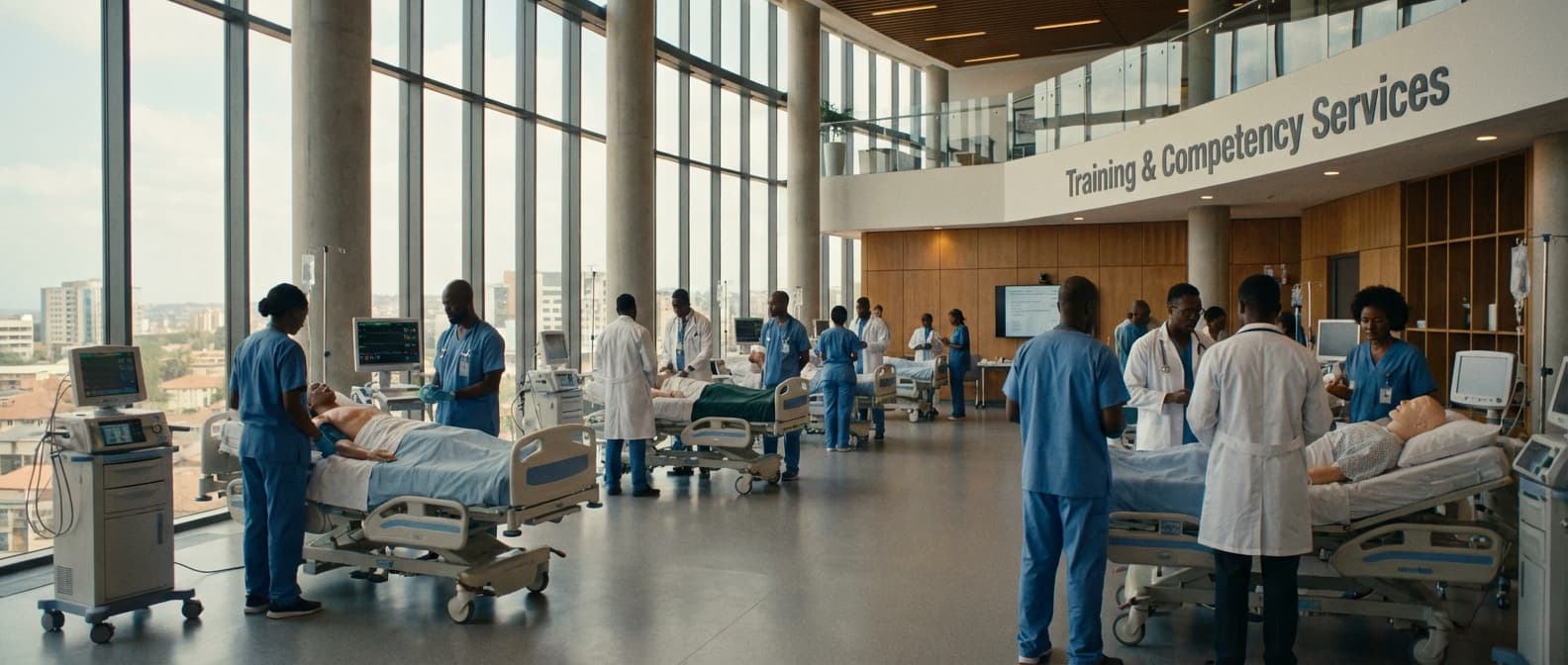
Ultrasound Application Training Service (Protocol-Based) in Togo
Engineering Excellence & Technical Support
Ultrasound Application Training Service (Protocol-Based) High-standard technical execution following OEM protocols and local regulatory frameworks.
Standardized Protocol Training
Our service offers in-depth, protocol-based ultrasound training tailored to Togolese healthcare professionals. We ensure consistent, high-quality image acquisition and interpretation through structured, step-by-step protocols for common diagnostic scenarios.
Hands-On Skill Development
Emphasis on practical application is key. Trainees receive extensive hands-on experience with real ultrasound equipment, guided by certified instructors who provide immediate feedback and reinforce proper probe manipulation and patient positioning specific to the Togolese context.
Accessible & Sustainable Training
We are committed to making advanced ultrasound training accessible in Togo. Our protocol-driven approach facilitates efficient knowledge transfer and skill retention, empowering local healthcare providers to enhance diagnostic capabilities and improve patient care with sustainable, locally relevant solutions.
What Is Ultrasound Application Training Service (Protocol-based) In Togo?
Ultrasound Application Training Service (Protocol-Based) in Togo refers to a structured educational program designed to equip healthcare professionals with the theoretical knowledge and practical skills necessary to perform diagnostic ultrasound examinations according to established clinical protocols. This service emphasizes standardized scanning techniques and interpretation methodologies to ensure consistent, reliable, and accurate diagnostic outcomes. The 'protocol-based' aspect signifies a departure from purely didactic or exploratory training, focusing instead on the systematic adherence to predefined sequences of ultrasound maneuvers and image acquisition criteria tailored to specific anatomical regions or clinical indications.
| Who Needs This Service? | Typical Use Cases | ||||||||||
|---|---|---|---|---|---|---|---|---|---|---|---|
| Radiologists: To enhance their diagnostic capabilities and standardize their ultrasound practice. | Obstetricians and Gynecologists: For routine antenatal scans, fetal anomaly screening, and gynecological assessments. | General Practitioners/Family Physicians: To gain proficiency in point-of-care ultrasound (POCUS) for initial patient assessment and triage. | Sonographers/Ultrasound Technicians: To acquire foundational skills or specialize in specific ultrasound applications. | Emergency Medicine Physicians: For rapid bedside assessments and fluid status evaluation. | Cardiologists: For echocardiography protocols and interpretation. | Surgeons: To guide interventional procedures or assess post-operative complications. | Veterinarians: For diagnostic imaging in animal health. | Medical Students and Residents: As part of their clinical rotations and specialty training. | Healthcare Institutions in Togo: To ensure a qualified workforce capable of delivering high-quality, standardized diagnostic imaging services. | New Graduates of Medical/Sonography Programs: To bridge the gap between theoretical knowledge and practical, protocol-driven application. | Professionals Seeking Specialization: To acquire expertise in sub-specialty ultrasound areas. |
| Abdominal Ultrasound: Assessment of liver, gallbladder, spleen, pancreas, kidneys, and aorta. | Obstetric Ultrasound: Early pregnancy dating, fetal biometry, anomaly screening, and fetal well-being assessment. | Gynecological Ultrasound: Evaluation of uterus, ovaries, fallopian tubes, and pelvic masses. | Vascular Ultrasound: Assessment of carotid arteries, peripheral arteries and veins, and venous thrombosis. | Musculoskeletal Ultrasound: Evaluation of joints, tendons, ligaments, and soft tissue masses. | Thyroid and Breast Ultrasound: Detection and characterization of nodules and lesions. | Pediatric Ultrasound: Assessment of various organ systems in neonates and children. | Echocardiography: Assessment of cardiac structure and function. | Point-of-Care Ultrasound (POCUS): Bedside imaging for rapid diagnostic information in emergency and critical care settings. | Guidance for Interventional Procedures: Ultrasound-guided biopsies, aspirations, and drainages. | Quality Assurance and Standardization: Implementing consistent diagnostic imaging practices across healthcare facilities. |
Key Components of Ultrasound Application Training Service (Protocol-Based)
- Didactic Instruction: Theoretical lectures covering ultrasound physics, instrumentation, safety, anatomy, physiology, and pathology relevant to specific applications.
- Protocol Adherence Training: Detailed instruction on standardized scanning protocols for various organ systems (e.g., abdominal, obstetric, gynecological, vascular, musculoskeletal). This includes learning the systematic approach to image acquisition, optimal probe manipulation, and data recording.
- Image Acquisition Mastery: Hands-on practice sessions under expert supervision to develop proficiency in acquiring high-quality ultrasound images according to defined protocols. This involves optimizing machine settings, transducer selection, and patient positioning.
- Anatomical Correlation and Interpretation: Training in correlating ultrasound findings with anatomical structures and identifying normal versus abnormal appearances. Emphasis is placed on recognizing key sonographic features of various pathologies.
- Case Study Analysis: Review and discussion of real-world ultrasound cases, demonstrating the application of protocols in diagnostic decision-making and differential diagnosis.
- Competency Assessment: Formal evaluation of trainees' knowledge and practical skills through written examinations, practical scanning assessments, and case reviews to ensure protocol adherence and diagnostic accuracy.
- Continuing Professional Development (CPD): Options for ongoing training to update knowledge on new protocols, technologies, and emerging clinical applications.
Who Needs Ultrasound Application Training Service (Protocol-based) In Togo?
This document outlines the critical need for Ultrasound Application Training Services (Protocol-Based) in Togo, focusing on identifying and detailing the primary target customers and departments that would benefit from such specialized training. Protocol-based training ensures standardized, accurate, and efficient ultrasound examinations, crucial for improving diagnostic capabilities and patient care across various healthcare settings.
| Department/Specialty | Primary Need for Protocol-Based Ultrasound Training | Key Benefits of Training |
|---|---|---|
| Radiology/Imaging Departments | Standardization of protocols across various imaging modalities (e.g., abdominal, pelvic, vascular, obstetric). | Improved diagnostic accuracy, reduced inter-observer variability, efficient workflow. |
| Obstetrics and Gynecology (OB/GYN) | Standardized protocols for routine antenatal scans, fetal anomaly screening, gynecological assessments, and fertility evaluations. | Enhanced fetal well-being monitoring, early detection of complications, improved patient counseling. |
| Pediatrics | Protocols for neonatal head scans, abdominal assessments in children, and screening for congenital anomalies. | Early diagnosis of pediatric conditions, improved management of neonates and children. |
| Internal Medicine/General Practice | Basic protocols for point-of-care ultrasound (POCUS) in emergency situations, fluid assessment, and basic abdominal imaging. | Quicker clinical decision-making, improved patient management at the bedside. |
| Emergency Medicine | Standardized protocols for FAST (Focused Assessment with Sonography for Trauma) scans, e-FAST, and assessment of critical conditions. | Rapid diagnosis of life-threatening conditions, timely intervention, improved patient survival rates. |
| Anesthesiology | Protocols for nerve blocks, vascular access, and fluid management guidance. | Increased success rates for procedures, reduced complications, improved patient safety. |
| Surgery | Post-operative assessment, identification of complications, and guidance during certain procedures. | Enhanced patient monitoring, faster recovery, improved surgical outcomes. |
| Cardiology (where applicable) | Basic protocols for echocardiography, especially in resource-limited settings. | Screening for cardiac abnormalities, initial assessment of cardiac function. |
Target Customers and Departments for Ultrasound Application Training Service (Protocol-Based) in Togo:
- {"title":"Public Healthcare Facilities","subList":["Regional Hospitals","District Hospitals","Health Centers (Centres de Santé)"],"description":"These facilities form the backbone of healthcare delivery in Togo and often face resource limitations. Standardized training is essential to maximize the effectiveness of existing equipment and personnel."}
- {"title":"Private Healthcare Providers","subList":["Private Clinics and Polyclinics","Independent Diagnostic Laboratories","Specialized Medical Centers"],"description":"As the private sector grows, ensuring a consistent quality of ultrasound services is vital for patient trust and effective referrals. Training helps maintain high standards across different private clinics and diagnostic centers."}
- {"title":"Teaching and Research Institutions","subList":["University Medical Schools","Nursing and Midwifery Schools","Medical Research Institutes"],"description":"These institutions are responsible for educating the next generation of healthcare professionals and advancing medical knowledge. Protocol-based training ensures that students and researchers are equipped with the latest and most accurate techniques."}
- {"title":"Non-Governmental Organizations (NGOs) and International Health Organizations","subList":["NGOs focusing on Maternal and Child Health","Organizations providing Emergency Medical Services","International Health Agencies operating in Togo"],"description":"Organizations involved in public health initiatives, maternal and child health, or emergency medical response often deploy ultrasound services in remote or underserved areas. Standardized training is key for consistent service delivery and data collection."}
Ultrasound Application Training Service (Protocol-based) Process In Togo
This document outlines the typical workflow for an Ultrasound Application Training Service (Protocol-Based) in Togo, from the initial client inquiry to the successful execution of the training program. The process is designed to be systematic, ensuring that client needs are understood, the training is tailored to specific protocols, and the delivery is efficient and effective within the Togolese context.
| Stage | Description | Key Activities | Responsible Party | Output/Outcome |
|---|---|---|---|---|
| The process begins when a potential client (e.g., hospital, clinic, training institution) expresses interest in ultrasound application training. | Client contacts service provider; Initial discussion of training needs, general ultrasound applications, and potential areas of interest. | Client, Service Provider | Understanding of initial client interest, preliminary scope definition. |
| Detailed understanding of the client's specific requirements, existing ultrasound infrastructure, and the protocols they wish to implement or improve. | Site visit (if feasible) or detailed remote discussion; Identification of specific ultrasound applications (e.g., obstetrics, abdominal, vascular); Confirmation of existing ultrasound machines and their capabilities; Identification of specific clinical protocols to be covered. | Service Provider, Client | Detailed training needs analysis, confirmed list of target ultrasound protocols. |
| Based on the needs assessment, a tailored training proposal is created, outlining the scope, objectives, methodology, duration, and cost. | Service provider develops a comprehensive training proposal; Includes curriculum details, trainer qualifications, training materials, proposed schedule, and a detailed cost breakdown; Proposal is submitted to the client for review. | Service Provider | Formal training proposal and quotation. |
| Formal agreement between the service provider and the client, outlining the terms and conditions of the training engagement. | Client reviews the proposal; Negotiation of terms (if necessary); Signing of a formal contract or service agreement; Advance payment/deposit may be required. | Client, Service Provider | Signed contract, commencement of training preparation. |
| Adapting and preparing all necessary training materials to align with the identified protocols and the client's specific context. | Development/customization of lecture notes, presentations, case studies, practical scanning guides, and any simulation materials based on identified protocols; Translation of materials if required (e.g., to French). | Service Provider (Trainers/Curriculum Developers) | Prepared and customized training materials, ready for delivery. |
| Arranging all practical aspects of the training, including venue, equipment, trainer travel, and participant registration. | Confirmation of training dates and times; Booking of training venue (if not on-site); Ensuring availability of ultrasound machines for practical sessions; Arrangement of trainer travel and accommodation (if applicable); Participant registration and communication. | Service Provider, Client | Confirmed training schedule, logistics finalized, participants registered. |
| The actual execution of the training program, involving theoretical sessions and hands-on practical scanning. | Conducting lectures and theoretical sessions covering ultrasound physics, image optimization, and specific protocol applications; Providing hands-on practical scanning sessions on simulated phantoms or live patients (under supervision); Q&A sessions and interactive learning. | Service Provider (Trainers) | Trained participants, enhanced ultrasound skills and knowledge. |
| Providing ongoing support and assessing the effectiveness of the training. | Answering participant queries after the training; Conducting post-training assessments (e.g., quizzes, practical evaluations); Gathering feedback from participants and the client on the training experience and outcomes. | Service Provider, Client | Participant feedback, training effectiveness evaluation report, identification of areas for improvement. |
| Issuing certificates of completion and maintaining a relationship for future training needs. | Issuing certificates of attendance or completion to participants who meet the training requirements; Offering follow-up consultation or advanced training options; Maintaining client records for future engagements. | Service Provider | Certified participants, ongoing client relationship, potential for repeat business. |
Ultrasound Application Training Service (Protocol-Based) Workflow in Togo
- Inquiry and Initial Consultation
- Needs Assessment and Protocol Identification
- Proposal Development and Quotation
- Agreement and Contract Finalization
- Training Material Customization and Preparation
- Logistics and Scheduling
- Training Delivery
- Post-Training Support and Evaluation
- Certification and Follow-up
Ultrasound Application Training Service (Protocol-based) Cost In Togo
The cost of Ultrasound Application Training Services (Protocol-Based) in Togo can vary significantly based on several factors. These services are crucial for healthcare professionals to effectively utilize ultrasound equipment for diagnostic purposes, following standardized protocols. The pricing structure is influenced by the depth and breadth of the training, the expertise of the instructors, the location of the training, and the duration of the program.
Key pricing factors include:
- Training Level/Specialization: Basic, intermediate, advanced, or specialized training (e.g., obstetrics, cardiology, abdominal). More advanced and specialized training commands higher fees.
- Duration of Training: The total number of hours or days dedicated to the training directly impacts the cost. Longer, more comprehensive programs will be more expensive.
- Instructor Expertise and Credentials: Highly experienced and certified sonographers or radiologists as trainers will generally charge more.
- Training Format: Whether the training is delivered in-person at a facility, on-site at the client's institution, or virtually. In-person and on-site training often include additional costs for travel, accommodation, and materials.
- Number of Participants: Group training can sometimes offer a lower per-person cost compared to individual training.
- Training Materials and Resources: The provision of comprehensive training manuals, practical simulation tools, and access to diagnostic imaging software can influence the overall price.
- Accreditation and Certification: Training programs that lead to recognized certifications may have higher costs associated with the accreditation process.
- Provider Reputation and Demand: Established training providers with a strong reputation and high demand might command premium pricing.
Cost Ranges in Local Currency (Togolese Franc - XOF):
It is important to note that specific pricing is highly dependent on quotes from individual training providers. However, based on general industry trends and the Togolese economic context, the following ranges are estimates for protocol-based ultrasound application training:
- Basic/Introductory Courses (e.g., 1-3 days): These might focus on fundamental principles and common applications. Estimated range: 150,000 XOF - 350,000 XOF per participant.
- Intermediate/Comprehensive Courses (e.g., 3-7 days): Covering a broader range of applications and more in-depth protocol adherence. Estimated range: 300,000 XOF - 750,000 XOF per participant.
- Advanced/Specialized Courses (e.g., 5+ days or modular): Focusing on specific organ systems or advanced techniques, often including extensive hands-on practice. Estimated range: 600,000 XOF - 1,500,000+ XOF per participant.
- On-site/Institutional Training: This may involve a package price for a group, often negotiated based on the specific needs and duration, potentially starting from 1,000,000 XOF upwards, depending on the number of participants and training duration.
These figures are indicative and potential clients are strongly advised to obtain detailed quotations from multiple reputable training providers in Togo to compare offerings and costs.
| Training Category | Estimated Duration | Estimated Cost Range (XOF) | Notes |
|---|---|---|---|
| Basic/Introductory | 1-3 days | 150,000 - 350,000 | Fundamentals, common applications |
| Intermediate/Comprehensive | 3-7 days | 300,000 - 750,000 | Broader applications, in-depth protocols |
| Advanced/Specialized | 5+ days or modular | 600,000 - 1,500,000+ | Specific organ systems, advanced techniques, hands-on practice |
| On-site/Institutional | Varies (negotiated) | Starting from 1,000,000+ | Package price for groups, depends on duration & participants |
Factors Influencing Ultrasound Training Costs in Togo
- Training Level/Specialization
- Duration of Training
- Instructor Expertise and Credentials
- Training Format (In-person, On-site, Virtual)
- Number of Participants
- Training Materials and Resources
- Accreditation and Certification
- Provider Reputation and Demand
Affordable Ultrasound Application Training Service (Protocol-based) Options
Our Affordable Ultrasound Application Training Service offers comprehensive, protocol-based education designed to equip sonographers and medical professionals with essential skills. We understand the importance of cost-effectiveness without compromising on quality. This service focuses on delivering practical, hands-on training aligned with established ultrasound protocols, ensuring trainees can confidently apply their knowledge in real-world clinical settings. Our tiered value bundles and strategic cost-saving approaches are designed to provide maximum return on investment for individuals and institutions.
| Training Bundle | Key Features | Ideal For | Estimated Cost Savings |
|---|---|---|---|
| Core Protocol Training | Foundational physics, machine operation, standard protocols (Abdomen, OB/GYN) | Entry-level sonographers, students, general practitioners | Up to 20% compared to individual module purchase |
| Specialty Application Bundle (e.g., Echocardiography) | In-depth protocols, advanced techniques, case reviews for a specific modality | Sonographers seeking specialization, experienced practitioners expanding expertise | Up to 25% compared to purchasing individual specialty modules |
| Comprehensive Skill Development | Core training + 2 specialty bundles, access to advanced resources | Career-focused sonographers, imaging departments aiming for multi-disciplinary proficiency | Up to 30% compared to individual bundle purchases |
| Institutional Package (5+ Participants) | Customizable training schedule, dedicated support, group discounts | Hospitals, clinics, diagnostic centers, educational institutions | Tiered discounts from 15% to 40% based on participant volume |
Value Bundles & Cost-Saving Strategies
- Core Protocol Training: Focuses on fundamental ultrasound physics, machine operation, and essential protocols for common examinations (e.g., Abdomen, OB/GYN). Ideal for new practitioners or those seeking to solidify foundational knowledge.
- Specialty Application Bundles: Offers in-depth training for specific ultrasound modalities (e.g., Echocardiography, Vascular, Small Parts, Musculoskeletal). These bundles are curated for professionals looking to specialize or expand their skill set.
- Comprehensive Skill Development Package: Combines core protocol training with a selection of specialty application bundles, offering a holistic approach to ultrasound competency.
- On-Demand Learning Modules: Access to a library of pre-recorded lectures, demonstrations, and case studies that can be reviewed at your own pace, reducing the need for synchronous training sessions.
- Group Discounts: Significant cost reductions for institutions enrolling multiple participants, encouraging team-wide skill enhancement.
- Early Bird Registration: Incentives for early commitment to training programs, allowing for budget planning and securing discounted rates.
- Bundled Equipment & Training: Partnerships with equipment providers to offer combined packages of ultrasound machines and training, reducing overall acquisition and education costs.
- Refresher & Advanced Protocol Updates: Specialized modules designed to keep existing practitioners updated on the latest protocol advancements and techniques, ensuring continued excellence.
Verified Providers In Togo
In Togo's evolving healthcare landscape, identifying and trusting verified providers is paramount for individuals seeking quality medical care. Franance Health stands out as a beacon of reliability and excellence. Their rigorous credentialing process ensures that all affiliated healthcare professionals and facilities meet the highest standards of competence, ethics, and patient safety. This commitment to verification provides peace of mind to patients, knowing they are in capable hands. Choosing a Franance Health verified provider means opting for a healthcare experience characterized by expertise, integrity, and a patient-centered approach.
| Provider Type | Franance Health Verification Benefits | Why This Matters to You |
|---|---|---|
| Hospitals & Clinics | Verified infrastructure, equipment, and adherence to hygiene protocols. Qualified medical staff. | Access to safe, well-equipped facilities with competent medical teams for comprehensive care. |
| Specialist Doctors | Verification of medical degrees, licenses, and specialization certifications. Background checks. | Confidence in receiving expert diagnosis and treatment from board-certified and ethical professionals. |
| Diagnostic Laboratories | Accreditation of laboratory procedures, equipment calibration, and quality control measures. Skilled technicians. | Reliable and accurate test results crucial for effective diagnosis and treatment planning. |
| Pharmacies | Verification of dispensing licenses, drug sourcing, and storage practices. Knowledgeable pharmacists. | Assurance of receiving genuine medications dispensed by qualified professionals. |
Why Franance Health Credentials Matter
- Ensures adherence to stringent medical and ethical standards.
- Verifies the qualifications and experience of healthcare professionals.
- Confirms that facilities meet established safety and operational requirements.
- Promotes transparency and accountability within the healthcare system.
- Reduces the risk of encountering unqualified or fraudulent providers.
- Facilitates access to a network of trusted and reputable healthcare services.
- Upholds a commitment to continuous quality improvement in healthcare delivery.
Scope Of Work For Ultrasound Application Training Service (Protocol-based)
This Scope of Work (SOW) outlines the services to be provided for a protocol-based ultrasound application training program. The objective is to equip participants with the necessary knowledge and practical skills to perform ultrasound examinations according to established protocols, ensuring consistent and high-quality diagnostic imaging. This SOW details the training methodology, technical deliverables, and standard specifications for the service.
| Category | Description | Standard Specifications / Deliverables |
|---|---|---|
| Training Methodology | A blended learning approach combining theoretical instruction with hands-on practical sessions. | Interactive lectures, case-based discussions, simulator-based practice (if applicable), and supervised scanning on phantoms and/or consenting human subjects (as per ethical guidelines and client agreement). |
| Curriculum Modules | Structured modules covering specific ultrasound applications and anatomical regions. | Modules designed to align with established international or national professional guidelines and the client's specific needs. Examples: General Abdomen, Pelvis, Obstetrics, Gynecology, Small Parts, Vascular, Echocardiography (as applicable). |
| Protocol Training | Detailed instruction on standardized scanning protocols for each module. | Provision of comprehensive, easy-to-follow scanning protocol guides (digital or hard copy) that outline probe selection, transducer positioning, acoustic windows, scanning planes, and required image acquisition for each protocol. |
| Image Acquisition & Optimization | Emphasis on achieving diagnostic quality images. | Training on techniques for artifact reduction, gain control, depth adjustment, focal zone positioning, and color/spectral Doppler application for optimal image visualization. |
| Participant Assessment | Evaluation of participants' knowledge and practical skills. | Pre- and post-training assessments (written and/or practical exams), image quality assessments, and competency checklists. Certificates of completion awarded upon successful completion of assessments. |
| Instructor Qualifications | Highly experienced and credentialed ultrasound professionals. | Instructors shall possess relevant professional certifications (e.g., RDMS, ARDMS, EACVI, BSUM), a minimum of [X] years of clinical experience in the specific ultrasound applications being taught, and proven teaching experience. |
| Training Materials | High-quality educational resources. | Presentation slides, comprehensive training manuals, sample case studies, reference images/videos, and access to online learning resources (if applicable). |
| Equipment Requirements | Adequate and appropriate ultrasound equipment for practical sessions. | Access to modern ultrasound machines with high-resolution displays, a range of functional transducers relevant to the protocols, and a sufficient number of machines to ensure a low participant-to-machine ratio (e.g., 1:2 or 1:3). |
| Training Environment | Conducive learning space. | Well-lit training room with comfortable seating, projection facilities, and adequate space for practical scanning sessions. Quiet and free from distractions. |
| Post-Training Support | Ongoing guidance and reinforcement. | Provision of contact information for instructors or a designated point of contact for post-training queries for a defined period (e.g., 30 days). Optional: Access to a community forum or Q&A sessions. |
| Reporting | Documentation of training activities and outcomes. | Summary report including participant attendance, assessment results, feedback on the training program, and any recommendations for future training or practice improvements. |
Training Objectives
- To familiarize participants with the fundamental principles of ultrasound physics and instrumentation relevant to the specified applications.
- To train participants on the proper operation of ultrasound equipment, including probe selection, machine settings, and image optimization.
- To impart in-depth knowledge of standardized ultrasound scanning protocols for a range of anatomical regions and clinical scenarios.
- To develop participants' ability to acquire high-quality ultrasound images that meet diagnostic criteria.
- To enhance participants' understanding of common ultrasound pathologies and their characteristic imaging appearances.
- To promote the development of critical thinking and problem-solving skills in ultrasound interpretation.
- To ensure adherence to safety standards and infection control procedures during ultrasound examinations.
Service Level Agreement For Ultrasound Application Training Service (Protocol-based)
This Service Level Agreement (SLA) outlines the performance standards and guarantees for the Ultrasound Application Training Service (Protocol-Based) provided by [Your Company Name]. It defines the expected response times for support requests and the minimum guaranteed uptime for accessing the training platform.
| Service Component | Service Level Objective (SLO) | Measurement Method | Remedy for Failure |
|---|---|---|---|
| Training Platform Uptime | 99.5% Monthly Uptime | Calculated as (Total Minutes in Month - Downtime Minutes) / Total Minutes in Month. Downtime is defined as the period during which the training platform is unavailable to users, excluding scheduled maintenance. | For each full 0.5% decrement in monthly uptime below 99.5%, a credit of 5% of the monthly subscription fee will be applied to the next invoice. Maximum credit of 25% per month. |
| Technical Support Response Time (Critical Issues) | Acknowledgement within 2 Business Hours; Resolution Target within 8 Business Hours | Measured from the time a support ticket is logged by the user through the designated support channel (email/portal). Critical issues are defined as complete platform inaccessibility or inability to complete core training modules. | For each critical issue where resolution target is missed, a credit of 2% of the monthly subscription fee will be applied to the next invoice. Maximum credit of 10% per month. |
| Technical Support Response Time (Non-Critical Issues) | Acknowledgement within 4 Business Hours; Resolution Target within 24 Business Hours | Measured from the time a support ticket is logged. Non-critical issues include minor bugs, feature requests, or clarification on training content. | For each non-critical issue where resolution target is missed, a credit of 1% of the monthly subscription fee will be applied to the next invoice. Maximum credit of 5% per month. |
Key Service Components
- Training Platform Access: Guaranteed availability of the online ultrasound application training platform.
- Technical Support: Availability of technical assistance for platform-related issues.
- Response Times: Defined timeframes for acknowledging and resolving support requests.
- Uptime Guarantees: Minimum percentage of time the training platform will be accessible.
Frequently Asked Questions

Ready when you are
Let's scope your Ultrasound Application Training Service (Protocol-Based) in Togo project in Togo.

Scaling healthcare logistics and technical systems across the entire continent.