
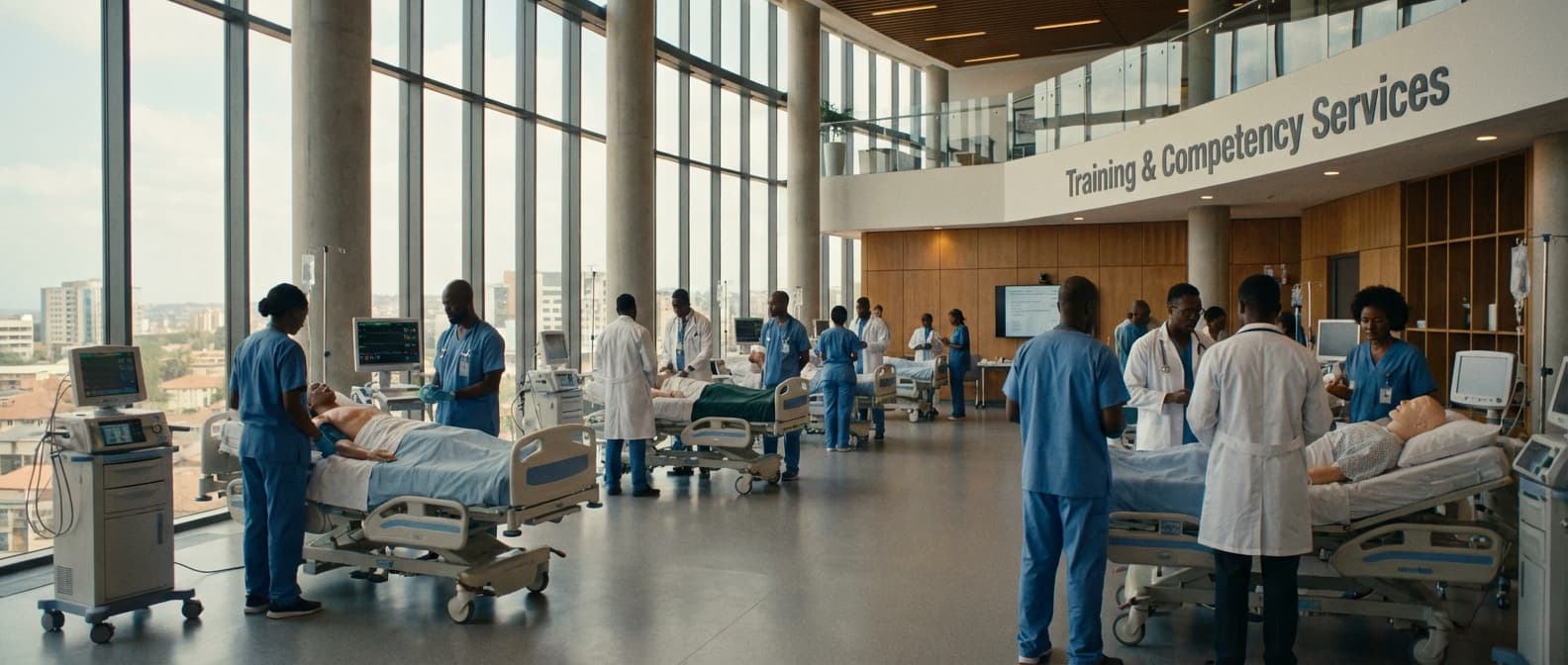
MRI Operator Training Service (Radiographers) in Togo
Engineering Excellence & Technical Support
MRI Operator Training Service (Radiographers) High-standard technical execution following OEM protocols and local regulatory frameworks.
Advanced MRI Protocol Optimization
Master cutting-edge MRI pulse sequences and contrast enhancement techniques tailored for common pathologies encountered in Togo, ensuring superior image quality and diagnostic accuracy.
Patient Safety & Comfort in Diverse Settings
Develop best practices for patient screening, monitoring, and comfort management, addressing unique considerations and common challenges faced by radiographers in Togo's healthcare landscape.
Efficient Workflow & Image Management
Learn streamlined MRI workflow strategies, including efficient patient positioning, scan parameter selection, and PACS integration, to maximize throughput and data integrity within resource-conscious environments.
What Is Mri Operator Training Service (Radiographers) In Togo?
MRI Operator Training Service (Radiographers) in Togo refers to specialized educational programs designed to equip radiographers with the necessary knowledge and practical skills to safely and effectively operate Magnetic Resonance Imaging (MRI) equipment. This training is crucial for ensuring diagnostic accuracy, patient safety, and optimal utilization of advanced medical imaging technology within healthcare facilities in Togo. The service typically encompasses theoretical instruction on MRI physics, safety protocols, image acquisition techniques, patient preparation, contrast agent administration, and post-processing, complemented by hands-on practical sessions using actual MRI scanners.
| Need for Service | Who Requires It | Typical Use Cases | ||||||||||
|---|---|---|---|---|---|---|---|---|---|---|---|---|
| Introduction of new MRI technology or upgrades in healthcare facilities. | Radiographers seeking specialized skills in MRI. | Hospitals and diagnostic imaging centers in Togo. | Radiology departments requiring certified MRI operators. | Government health initiatives to enhance diagnostic imaging capabilities. | Private clinics investing in advanced medical imaging equipment. | To improve diagnostic accuracy for neurological disorders (e.g., stroke, tumors, multiple sclerosis). | For musculoskeletal imaging, including joint injuries, spinal conditions, and soft tissue abnormalities. | To evaluate abdominal and pelvic organs for various pathologies (e.g., liver lesions, gynecological conditions). | Cardiac MRI for assessing heart structure, function, and disease. | Oncology imaging for staging, treatment monitoring, and recurrence detection. | Pediatric imaging, requiring specialized protocols and patient handling. | Research studies involving advanced MRI techniques. |
Key Components of MRI Operator Training Service
- MRI Physics Principles: Understanding fundamental concepts like magnetic fields, radiofrequency pulses, signal generation, and image reconstruction.
- MRI Safety Protocols: Comprehensive training on patient and staff safety, including screening for metallic implants, managing claustrophobia, and emergency procedures.
- Patient Preparation and Management: Educating on patient history assessment, contraindications, sedation (if applicable), and providing clear communication and comfort.
- Image Acquisition Techniques: Mastering various pulse sequences, field of view selection, and parameter optimization for specific anatomical regions and diagnostic purposes.
- Contrast Agent Administration: Understanding the indications, contraindications, administration guidelines, and potential adverse reactions of MRI contrast agents.
- Image Quality Assessment and Artifact Management: Developing the ability to evaluate image quality and identify/mitigate common imaging artifacts.
- Basic Troubleshooting and Maintenance: Familiarization with common operational issues and basic maintenance procedures.
- Ethical and Legal Considerations: Awareness of patient privacy (HIPAA equivalents), informed consent, and professional conduct.
- Hands-on Practical Experience: Supervised operation of MRI scanners with diverse patient cases and protocols.
Who Needs Mri Operator Training Service (Radiographers) In Togo?
MRI Operator Training Service (Radiographers) in Togo targets healthcare professionals who are involved in operating Magnetic Resonance Imaging (MRI) equipment. The primary goal is to enhance their skills, knowledge, and competency in performing MRI examinations safely and effectively, leading to improved diagnostic accuracy and patient care. This service is crucial for healthcare facilities in Togo that either have existing MRI units or are planning to acquire them, as well as for radiographers seeking to specialize or update their expertise in this advanced imaging modality.
| Customer Type | Department/Area of Focus | Reason for Training | Potential Benefit for Facility |
|---|---|---|---|
| Radiographers (General) | Radiology Department | Basic MRI operation, image acquisition protocols, patient safety | Improved operational efficiency, reduced errors, enhanced image quality |
| Radiographers (Specialized) | Neurology/Orthopedics/Cardiology Department | Advanced MRI techniques, specific protocols for neurological, musculoskeletal, or cardiac imaging | More accurate diagnosis for complex cases, specialized patient care |
| Senior Radiographers | Radiology Department | Refresher courses, advanced protocols, new MRI technologies, quality assurance | Mentorship for junior staff, leadership in adopting new technologies |
| Newly Qualified Radiographers | Radiology Department | Foundational MRI knowledge, hands-on practical training, patient handling | Accelerated onboarding, building a competent workforce |
| Healthcare Facilities (Public) | Radiology Department (Ministry of Health facilities) | Standardized training, capacity building for public health services | Wider access to MRI services, improved public health outcomes |
| Healthcare Facilities (Private) | Diagnostic Imaging Center | Competitive advantage through specialized skills, premium imaging services | Increased patient volume, enhanced reputation, higher revenue potential |
Target Customers and Departments in Togo
- {"items":["Radiographers (Diagnostic Imaging Technologists)","Radiology Technicians","Senior Radiographers seeking advanced skills","Newly qualified Radiographers","Radiographers in public and private healthcare sectors","Radiographers in teaching hospitals and academic medical centers"],"title":"Target Customers"}
- {"items":["Radiology Departments","Diagnostic Imaging Centers","Medical Imaging Units","Neurology Departments (for neuroimaging specialists)","Orthopedics Departments (for musculoskeletal imaging specialists)","Oncology Departments (for advanced imaging needs)","Cardiology Departments (for cardiac MRI specialists)"],"title":"Target Departments within Healthcare Facilities"}
Mri Operator Training Service (Radiographers) Process In Togo
This document outlines the typical workflow for an MRI Operator Training Service for radiographers in Togo, from initial inquiry to the successful execution of the training program. The process is designed to be comprehensive, ensuring all necessary steps are covered to deliver effective and compliant training.
| Phase | Key Activities | Responsible Party | Deliverables/Outcomes | Key Considerations for Togo |
|---|---|---|---|---|
| Inquiry & Needs Assessment | Initial contact from radiographers/institutions regarding training needs. Detailed discussion of specific training requirements, desired outcomes, number of participants, and existing skill levels. Assessment of the institution's MRI equipment and facilities (if applicable for on-site training). Understanding of local regulatory requirements for radiographer training. | Client (Radiographer/Institution) & Training Provider | Clear understanding of training objectives. Identified training scope and parameters. Initial participant profile. | Language proficiency (French is official, but local dialects may be present). Understanding of the Togolese healthcare system structure and specific needs of its radiology departments. |
| Proposal Development & Quotation | Development of a tailored training proposal outlining curriculum, methodology, duration, trainers, and assessment methods. Preparation of a detailed quotation including training fees, materials, travel, and accommodation (if applicable). Submission of the proposal and quotation to the client for review. | Training Provider | Comprehensive training proposal. Detailed cost breakdown and quotation. Timeline for training delivery. | Transparency in pricing is crucial. Consideration of local economic conditions and budget constraints for institutions. |
| Contract Negotiation & Agreement | Discussion and negotiation of contract terms, including payment schedules, cancellation policies, intellectual property, and liability. Formalization of the agreement through a signed contract or Memorandum of Understanding (MOU). Confirmation of training dates and logistics. | Client & Training Provider | Signed training contract/MOU. Confirmed training schedule and location. Advance payment/deposit secured. | Ensure contract clauses comply with Togolese labor and business laws. Clarity on visa/work permit requirements for foreign trainers if applicable. |
| Pre-Training Preparations | Development of training materials (presentations, handouts, case studies, practical exercises) in an appropriate language (likely French). Logistics planning: venue booking, equipment setup (if on-site), participant registration and communication. Trainer assignment and preparation. Pre-assessment of participants (optional, but recommended for tailored delivery). | Training Provider | Finalized training curriculum and materials. Confirmed venue and logistics. Participant list and communication. Pre-assessment results (if conducted). | Access to reliable internet and power for digital materials. Availability of suitable MRI facilities for practical sessions (if applicable). |
| Training Execution | Delivery of theoretical sessions covering MRI physics, safety, protocols, image interpretation, and quality assurance. Hands-on practical sessions on MRI equipment, including patient positioning, protocol selection, image acquisition, and troubleshooting. Interactive discussions, case study reviews, and Q&A sessions. Formative assessments to gauge understanding during training. | Trainer & Participants | Active engagement in learning. Acquisition of theoretical knowledge and practical skills. Demonstrated understanding of MRI procedures. | Encourage active participation and address language nuances. Adapt teaching style to accommodate diverse learning backgrounds. Emphasize safety protocols relevant to local healthcare settings. |
| Post-Training Evaluation & Certification | Summative assessment (e.g., written exam, practical demonstration) to evaluate learning outcomes. Collection of participant feedback on the training program. Issuance of training certificates to successful participants. Formal reporting to the institution on training outcomes and participant performance. | Training Provider & Participants | Assessment results. Participant feedback reports. Training certificates. Final training report. | Ensure assessment criteria are clear and fair. Certificates should be recognized by relevant Togolese authorities or professional bodies. |
| Follow-up & Support | Provision of post-training support, including answering queries and offering guidance. Periodic follow-up to assess the application of learned skills in practice. Potential for advanced training modules or refresher courses. | Training Provider | Continued participant engagement. Improved application of skills in professional practice. Long-term professional development. | Establish a clear channel for ongoing communication. Consider offering services that support continuous professional development within Togo's evolving healthcare landscape. |
MRI Operator Training Service (Radiographers) Process in Togo Workflow
- Inquiry & Needs Assessment
- Proposal Development & Quotation
- Contract Negotiation & Agreement
- Pre-Training Preparations
- Training Execution
- Post-Training Evaluation & Certification
- Follow-up & Support
Mri Operator Training Service (Radiographers) Cost In Togo
Acquiring specialized MRI operator training for radiographers in Togo involves a multifaceted cost structure. The price is not a fixed figure and is influenced by several key factors, leading to a variable range in local currency (West African CFA franc - XOF). These factors include the duration and intensity of the training program, the qualifications and reputation of the training provider, the level of expertise of the instructors, the extent of practical hands-on experience offered, and whether the training is conducted in-person or remotely. Additional costs might arise from materials, assessments, and certifications. Given the niche nature of MRI training, it's often provided by specialized medical imaging training centers, universities with medical faculties, or international organizations with a presence in the region. Local training opportunities may be less frequent than in more developed economies, potentially influencing price due to demand and limited supply. When considering training providers, it's crucial to inquire about the curriculum's alignment with international standards and the trainer's practical experience within an MRI environment.
| Training Type/Scope | Estimated Cost Range (XOF) | Notes |
|---|---|---|
| Basic MRI Physics and Safety (Short Course, e.g., 2-3 days) | 150,000 - 300,000 | Focus on fundamental principles. May be theoretical or have limited practical demonstration. |
| Introduction to MRI Protocols and Image Acquisition (Intermediate, e.g., 1 week) | 300,000 - 600,000 | Covers common MRI sequences, patient positioning, and basic protocol selection. Might include simulation or supervised practicals. |
| Comprehensive MRI Operator Training (Advanced, e.g., 2-4 weeks, potentially with clinical rotations) | 750,000 - 2,000,000+ | In-depth training on advanced techniques, troubleshooting, quality control, and patient management. Requires significant practical MRI scanner time. Costs can vary significantly based on the extent of clinical site integration. |
| Specialized MRI Modality Training (e.g., Neuro, MSK, Cardiac - Short Modules) | 200,000 - 500,000 per module | Focuses on specific anatomical areas or advanced applications. Often an add-on to a general MRI course. |
| Refresher/Continuing Professional Development Courses | 100,000 - 300,000 | Shorter courses for experienced operators to update skills or learn new techniques. |
Key Factors Influencing MRI Operator Training Costs in Togo
- Training Program Duration and Intensity
- Reputation and Accreditation of the Training Provider
- Instructor Qualifications and Experience
- Availability of Practical/Hands-on MRI Equipment Access
- Training Delivery Method (In-person vs. Online/Hybrid)
- Inclusion of Practical Assessments and Certifications
- Training Materials and Resources
- Location of Training (City, accessibility)
Affordable Mri Operator Training Service (Radiographers) Options
This document outlines affordable MRI operator training service options specifically designed for radiographers. We focus on providing high-value training that maximizes your investment while ensuring your team acquires the necessary skills for safe and efficient MRI operation. Understanding the importance of cost-effectiveness in healthcare settings, we present various value bundles and cost-saving strategies to make advanced MRI training accessible.
| Cost-Saving Strategy | Description | Benefit |
|---|---|---|
| Group Training Discounts | Enrolling multiple radiographers from the same institution for a single training program. | Significant per-person cost reduction, fostering a consistent skill level across your team. |
| Online/Blended Learning Options | Combining self-paced online modules with limited in-person practical sessions. | Reduces travel and accommodation expenses, offering flexibility for scheduling. |
| Train-the-Trainer Programs | Equipping experienced radiographers within your facility to train new staff on-site. | Long-term cost savings by building internal training capacity, ensuring ongoing knowledge transfer. |
| Modular Training Packages | Purchasing specific training modules rather than a full comprehensive course, allowing customization. | Pay only for the skills and knowledge your team genuinely needs, avoiding unnecessary expenditure. |
| Early Bird Registration & Loyalty Programs | Incentives for booking training well in advance or for repeat business. | Direct financial discounts on course fees. |
| Partnerships with Training Providers | Establishing long-term relationships or contracts with a chosen MRI training service. | Potentially negotiated bulk pricing or preferred rates on future training. |
Key Value Bundles for MRI Operator Training
- Foundation & Core Skills Bundle: Covers fundamental MRI physics, safety protocols, patient care, basic imaging sequences, and quality assurance. Ideal for new MRI operators or those transitioning from other modalities.
- Advanced Imaging Techniques Bundle: Expands on the foundational bundle with training in specialized sequences (e.g., DWI, FLAIR, FSE), contrast administration, and basic troubleshooting of common artifacts. Suitable for radiographers seeking to broaden their imaging capabilities.
- Specialty Modality Focus Bundle: Offers in-depth training for specific MRI applications such as neuroimaging, musculoskeletal (MSK) imaging, abdominal imaging, or cardiac MRI. This bundle is tailored for departments focusing on particular patient populations or advanced diagnostic areas.
- Comprehensive Career Development Bundle: Combines foundational, advanced, and specialty training with modules on quality improvement, advanced troubleshooting, and potentially leadership skills for MRI operations. Designed for radiographers aiming for long-term career growth in MRI.
Verified Providers In Togo
Navigating healthcare in a foreign country can be daunting. Togo, while offering promising medical advancements, requires careful selection of healthcare providers. This is where the importance of verified providers and trusted credentials, such as those offered by Franance Health, becomes paramount. Franance Health distinguishes itself by rigorously vetting its network of healthcare professionals and institutions, ensuring they meet the highest standards of quality, ethics, and patient care. Their credentialing process goes beyond mere licensing, examining experience, specialization, patient feedback, and adherence to international best practices. This meticulous approach guarantees that individuals seeking medical services in Togo through Franance Health are connected with practitioners who are not only qualified but also demonstrably committed to providing superior healthcare.
| Credential Type | Franance Health Verification | Benefit for Patients |
|---|---|---|
| Medical Licenses & Certifications | Verified against official Togolese and international bodies. | Confirms legal authorization and fundamental qualifications. |
| Specialty Board Certifications | Validated for specific areas of medical expertise. | Ensures access to highly specialized and experienced doctors. |
| Professional Affiliations & Memberships | Confirmed active membership in reputable medical associations. | Indicates engagement with the wider medical community and ongoing learning. |
| Continuing Medical Education (CME) | Proof of participation in accredited CME programs. | Guarantees providers are up-to-date with the latest medical advancements and techniques. |
| Clinical Experience & Track Record | Documented years of practice and successful patient outcomes. | Provides confidence in the provider's practical ability and reliability. |
| Patient Feedback & Reviews | Systematic collection and analysis of patient experiences. | Offers insights into bedside manner, communication, and overall patient satisfaction. |
Why Franance Health Credentials Matter:
- Rigorous Vetting Process: Franance Health employs a multi-faceted verification system.
- Emphasis on Experience and Specialization: Beyond basic qualifications, their network prioritizes demonstrated expertise.
- Commitment to Ethical Practices: Providers are assessed for their adherence to professional ethics and patient rights.
- Focus on Patient Outcomes: Success rates and patient satisfaction are key considerations.
- Adherence to International Standards: Ensuring alignment with global best practices in healthcare.
Scope Of Work For Mri Operator Training Service (Radiographers)
This Scope of Work (SOW) outlines the requirements for a comprehensive MRI Operator Training Service specifically tailored for Radiographers. The service aims to equip radiographers with the necessary theoretical knowledge and practical skills to safely and effectively operate MRI scanners, perform a variety of imaging protocols, and contribute to high-quality diagnostic imaging. The training will cover fundamental MRI principles, advanced techniques, patient care, safety protocols, and quality assurance measures. The technical deliverables will include comprehensive training materials, hands-on practical sessions, competency assessments, and a final certification upon successful completion.
| Technical Deliverable | Description | Standard Specification / Requirements | Verification Method |
|---|---|---|---|
| Training Manuals (Digital/Print) | Comprehensive documentation covering all training modules. | Clearly written, up-to-date, and relevant to current MRI technology and clinical practice. Includes theoretical content, diagrams, case studies, and glossary of terms. | Review by subject matter experts and trainee feedback. |
| Practical Training Sessions | Hands-on experience operating an actual MRI scanner or high-fidelity simulator. | Minimum of X hours (e.g., 20-40 hours) of supervised practical scanning. Sessions should cover patient positioning, protocol selection, image acquisition, and system operation. | Observation by certified trainer, scan log review, and practical competency assessment. |
| Case Study Library | Collection of diverse MRI cases with corresponding images and diagnostic reports. | Minimum of Y (e.g., 50) cases covering common and some rare pathologies. Cases should illustrate effective use of MRI protocols and contrast agents. | Review of case selection and trainee's ability to interpret images and relate them to protocols. |
| Competency Assessment Tools | Evaluations to measure the acquired knowledge and skills. | Includes written/online quizzes, practical scanning simulations, and oral examinations. Assessments should cover theoretical understanding, protocol application, and safety procedures. | Scoring by trainers based on predefined rubrics and pass/fail criteria. |
| Training Certificate | Formal recognition of successful completion of the training program. | Issued upon achieving a satisfactory score on all competency assessments. Certificate should clearly state the program name, duration, and issuer. | Issuance to trainees who meet all program requirements. |
| Post-Training Support (Optional) | Continued access to resources or consultation. | May include access to online forums, a period of remote support, or access to updated training materials. | Defined scope and duration of support agreed upon in contract. |
Key Training Modules and Objectives
- {"title":"Module 1: Fundamentals of MRI Physics","description":"Understand the basic principles of magnetism, RF pulses, signal generation, and image reconstruction. Objective: Radiographers will be able to explain the core physics behind MRI generation and data acquisition."}
- {"title":"Module 2: MRI Hardware and Components","description":"Familiarize with the anatomy of an MRI scanner, including magnets, gradients, RF coils, and the console. Objective: Radiographers will be able to identify and understand the function of key MRI system components."}
- {"title":"Module 3: Image Acquisition Techniques","description":"Learn about pulse sequences (spin echo, gradient echo, etc.), contrast mechanisms, and factors affecting image quality. Objective: Radiographers will be able to select and optimize appropriate pulse sequences for various anatomical regions and pathologies."}
- {"title":"Module 4: Patient Care and Safety","description":"Cover patient screening, contraindications, ferromagnetic detection, emergency procedures, and management of claustrophobia. Objective: Radiographers will be able to ensure patient safety and comfort throughout the MRI procedure."}
- {"title":"Module 5: Contrast Agents and Administration","description":"Understand the types of MRI contrast agents, their indications, contraindications, and safe administration practices. Objective: Radiographers will be able to safely administer MRI contrast agents as per protocol."}
- {"title":"Module 6: Common MRI Protocols","description":"Learn standard imaging protocols for various anatomical regions (e.g., brain, spine, musculoskeletal, abdomen). Objective: Radiographers will be able to perform and adapt common MRI protocols to clinical needs."}
- {"title":"Module 7: Artifacts and Quality Assurance","description":"Identify common MRI artifacts, their causes, and troubleshooting strategies. Understand quality assurance procedures for MRI scanners. Objective: Radiographers will be able to identify and mitigate artifacts to ensure diagnostic image quality."}
- {"title":"Module 8: Advanced Techniques (Optional/Advanced Tracks)","description":"Introduction to advanced techniques such as diffusion-weighted imaging (DWI), perfusion imaging, MR spectroscopy (MRS), functional MRI (fMRI). Objective: Radiographers will gain awareness of advanced MRI capabilities."}
Service Level Agreement For Mri Operator Training Service (Radiographers)
This Service Level Agreement (SLA) outlines the response times and uptime guarantees for the MRI Operator Training Service provided to radiographers. This SLA aims to ensure consistent and reliable access to training resources and prompt support for our clients.
| Service Component | Service Level Objective (SLO) | Measurement Method | Escalation Procedure |
|---|---|---|---|
| Support Ticket Response (Technical Issues) | 95% of tickets responded to within 4 business hours. | Ticket logging system timestamps for initial response. | If SLO not met, ticket automatically escalated to Senior Support Specialist. |
| Support Ticket Response (Content/Curriculum Queries) | 90% of tickets responded to within 8 business hours. | Ticket logging system timestamps for initial response. | If SLO not met, ticket automatically escalated to Training Manager. |
| Online Training Platform Uptime | 99.8% uptime during scheduled operating hours (08:00 - 18:00, Monday-Friday, excluding public holidays). | Automated monitoring tools tracking platform availability. | If platform experiences unscheduled downtime exceeding 1 hour, immediate incident response team is engaged. Remediation report provided within 24 hours of resolution. |
| Availability of Scheduled Virtual Training Sessions | 100% of scheduled virtual training sessions will commence on time. | Session start times logged by virtual meeting platform. | In the rare event of trainer unavailability, a replacement trainer will be assigned, or the session rescheduled with advance notification (minimum 24 hours) and offered alternative dates. |
| Access to Recorded Training Materials | 99.5% availability of pre-recorded training modules. | Automated monitoring of content hosting platform. | If recordings are unavailable, a notification will be sent to affected users, and the issue will be resolved within 4 business hours. |
Key Performance Indicators
- Response Time to Support Tickets
- Uptime Guarantee for Online Training Platform
- Availability of Scheduled Training Sessions
Frequently Asked Questions

Ready when you are
Let's scope your MRI Operator Training Service (Radiographers) in Togo project in Togo.

Scaling healthcare logistics and technical systems across the entire continent.