
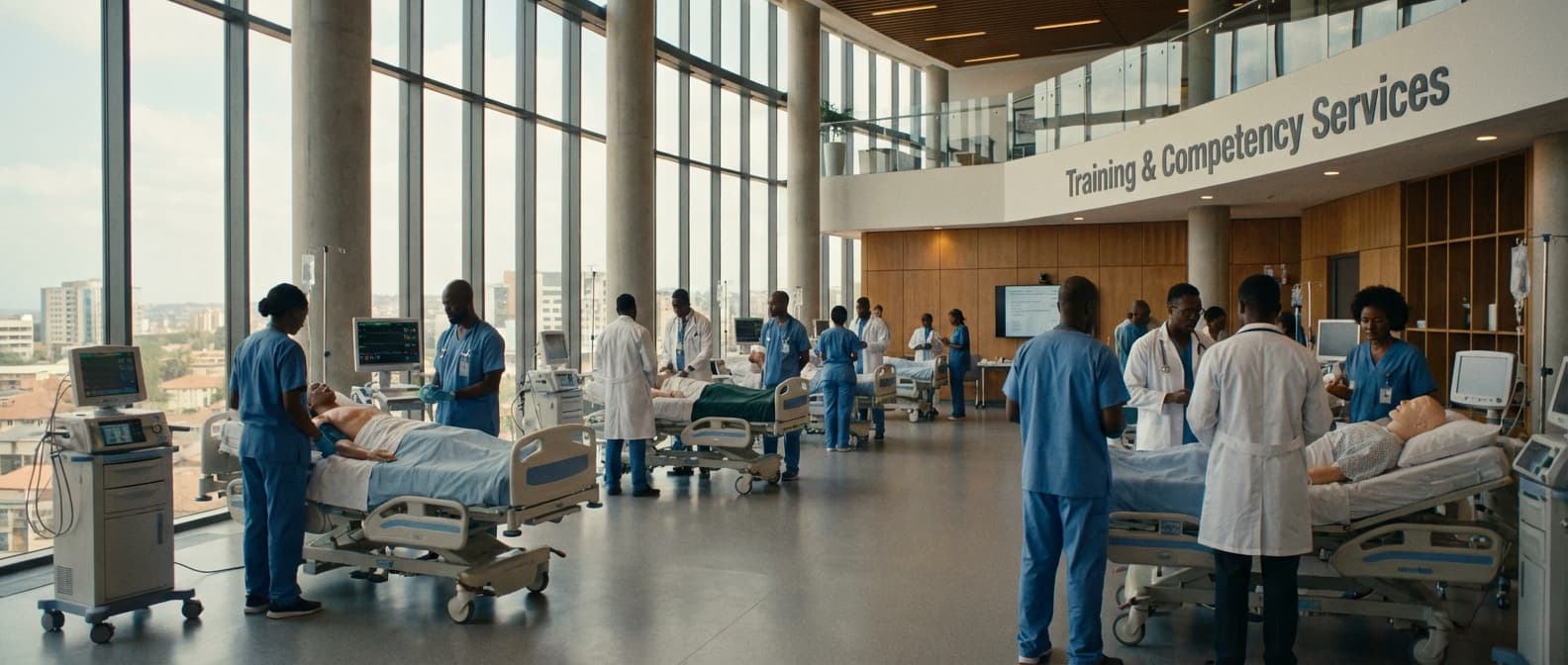
CT Operator Training Service (Radiographers) in Togo
Engineering Excellence & Technical Support
CT Operator Training Service (Radiographers) High-standard technical execution following OEM protocols and local regulatory frameworks.
Advanced Image Reconstruction Techniques
Master cutting-edge image reconstruction algorithms for enhanced diagnostic clarity and reduced radiation dose, ensuring optimal patient care and data integrity in CT scans.
Radiation Dose Optimization & Management
Implement and adhere to international best practices for radiation dose reduction and management, safeguarding patient and staff well-being through protocol optimization and ALARA principles.
Protocol Customization & Quality Assurance
Develop and refine specialized CT imaging protocols tailored to local pathologies and equipment, coupled with rigorous quality assurance procedures for consistent, high-fidelity diagnostic imaging.
What Is Ct Operator Training Service (Radiographers) In Togo?
CT Operator Training Service (Radiographers) in Togo refers to specialized educational programs designed to equip radiographers with the requisite knowledge and practical skills to operate Computed Tomography (CT) scanners safely and effectively. This service is crucial for ensuring optimal image quality, patient safety, radiation dose management, and compliance with national and international standards in diagnostic imaging. The training typically covers theoretical foundations of CT technology, image acquisition protocols, patient positioning, contrast media administration, artifact identification and reduction, radiation protection principles, and quality assurance procedures specific to CT imaging.
| Who Needs CT Operator Training? | Typical Use Cases |
|---|---|
| Certified Radiographers in Togo seeking to specialize in CT imaging. | Routine diagnostic CT examinations for various anatomical regions (e.g., head, chest, abdomen, pelvis). |
| Existing CT operators requiring refresher courses or training on new equipment/protocols. | Advanced CT applications, such as CT angiography (CTA), CT perfusion imaging, and dual-energy CT. |
| Medical imaging technologists working in hospitals, clinics, and diagnostic centers. | CT-guided interventional procedures (e.g., biopsies, drainages). |
| New graduates in radiologic technology entering the workforce. | CT screening programs (e.g., lung cancer screening, coronary artery calcium scoring). |
| Healthcare professionals involved in quality assurance and regulatory compliance for CT services. | Trauma imaging and emergency department CT protocols. |
Key Components of CT Operator Training Service:
- Theoretical modules covering CT physics, hardware, software, and image reconstruction principles.
- Practical hands-on training on specific CT scanner models, including system operation, parameter selection, and protocol management.
- Patient-centered training focusing on positioning, immobilization, communication, and management of patient anxiety.
- Radiation safety and protection training, including dose estimation, ALARA principles, and regulatory requirements.
- Contrast media administration and management, encompassing indications, contraindications, adverse reactions, and emergency protocols.
- Image interpretation basics and artifact recognition for quality control and troubleshooting.
- Quality assurance and quality control (QA/QC) protocols for CT equipment and imaging procedures.
- Ethical considerations and legal aspects related to CT imaging and patient care.
- Emergency preparedness and response within the CT imaging suite.
Who Needs Ct Operator Training Service (Radiographers) In Togo?
CT Operator Training Service for Radiographers in Togo is a critical need for various healthcare institutions and professionals aiming to enhance diagnostic imaging capabilities and patient care. The demand stems from the increasing adoption of CT technology and the necessity for skilled personnel to operate these complex machines safely and effectively. This service directly addresses the gap in specialized training for radiographers in Togo, ensuring they possess the latest knowledge and practical skills in CT operation, image acquisition, and quality control.
| Target Customer Group | Key Departments/Units Involved | Specific Needs/Benefits of Training |
|---|---|---|
| Public Hospitals | Radiology Department, Imaging Center | Enhance diagnostic accuracy, improve patient throughput, ensure safe operation, maintain equipment longevity. |
| Private Clinics and Diagnostic Centers | Radiology Department, CT Scan Unit | Competitiveness through advanced services, skilled workforce retention, efficient use of technology, client satisfaction. |
| University Teaching Hospitals | Radiology Department, Training and Research Units | Up-to-date curriculum for students, research capabilities, faculty expertise in CT technology. |
| Ministry of Health | Healthcare Planning and Human Resources Departments | Standardization of CT services, national capacity building, improved public health outcomes. |
| Individual Radiographers | Personal Professional Development | Career advancement, specialization, enhanced employability, improved patient care delivery. |
| Medical Equipment Suppliers | Sales, Technical Support, Customer Service | Client satisfaction, reduced technical issues, successful adoption of technology. |
| NGOs and International Aid Organizations | Program Management, Health Sector Development | Sustainable healthcare infrastructure, improved access to diagnostics, capacity building in local healthcare providers. |
Target Customers and Departments for CT Operator Training Service (Radiographers) in Togo
- Public Hospitals: Facilities under the Ministry of Health, particularly regional and national hospitals, which are often equipped with CT scanners and serve a large patient population. These institutions require their radiographers to be proficient in operating and maintaining CT equipment.
- Private Clinics and Diagnostic Centers: Growing private healthcare sector in Togo, where advanced diagnostic imaging is a key service offering. These entities invest in CT technology and need trained radiographers to maximize their return on investment and provide high-quality diagnostic services.
- University Teaching Hospitals: Institutions involved in training future medical professionals, including radiographers. They need to ensure their staff are up-to-date with the latest CT techniques to effectively train students and conduct research.
- Ministry of Health and National Health Agencies: Government bodies responsible for public health and healthcare infrastructure development. They may commission or fund training programs to improve the overall quality of diagnostic imaging services across the country.
- Radiographers Seeking Professional Development: Individual radiographers working in various settings who wish to specialize in CT imaging, upgrade their skills, or obtain certification in CT operation.
- Medical Equipment Suppliers and Distributors: Companies that sell and service CT scanners in Togo. They may partner with training providers to offer comprehensive solutions to their clients, including user training as part of the equipment package.
- Non-Governmental Organizations (NGOs) and International Aid Organizations: Organizations involved in healthcare projects and capacity building in Togo. They may fund or support training initiatives to strengthen local healthcare systems and improve access to advanced diagnostics.
Ct Operator Training Service (Radiographers) Process In Togo
This document outlines the comprehensive workflow for CT Operator Training Services specifically designed for Radiographers in Togo. It details the process from the initial inquiry to the successful execution of the training program.
| Phase | Step | Description | Key Activities | Responsible Parties | Deliverables/Outcomes |
|---|---|---|---|---|---|
| Phase 1: Inquiry & Needs Assessment | 1.1 Initial Inquiry | Prospective client (hospital, clinic, government health agency) expresses interest in CT operator training for their radiographers. | Contacting the training provider via phone, email, or website. | Client, Training Provider Sales/Inquiry Team | Acknowledgement of inquiry, initial contact made. |
| 1.2 Needs Assessment Meeting | Understanding the client's specific training requirements, current skill levels, existing equipment, and desired learning outcomes. | Discussions on number of trainees, specific CT modalities, desired certifications, training duration, budget, and scheduling constraints. | Client (HR, Radiology Department Head, IT), Training Provider (Training Consultant, Account Manager) | Detailed training needs report, identified learning objectives, scope of training defined. | |
| Phase 2: Proposal & Agreement | 2.1 Proposal Development | Based on the needs assessment, the training provider develops a tailored proposal outlining the training program. | Curriculum design, selection of trainers, proposed schedule, venue requirements, cost breakdown, and terms and conditions. | Training Provider (Curriculum Developers, Trainers, Sales) | Comprehensive training proposal. |
| 2.2 Proposal Review & Negotiation | The client reviews the proposal and may negotiate certain aspects. | Clarification of details, adjustments to curriculum or schedule, final cost confirmation. | Client, Training Provider (Sales, Management) | Agreement on training scope, schedule, and cost. | |
| 2.3 Contract & Agreement Signing | Formalizing the training service agreement between the client and the training provider. | Signing of contracts, payment terms, confidentiality agreements, and liability clauses. | Authorized representatives from Client and Training Provider | Signed training service agreement. | |
| Phase 3: Pre-Training Preparations | 3.1 Curriculum Finalization & Material Development | Finalizing the detailed training curriculum and developing all necessary training materials. | Lesson plans, presentations, practical exercises, case studies, assessment tools, participant handbooks. | Training Provider (Curriculum Developers, Trainers) | Finalized curriculum, ready-to-use training materials. |
| 3.2 Trainer Assignment & Briefing | Assigning qualified and experienced CT trainers and briefing them on the specific training objectives and client context. | Trainer selection based on expertise, briefing on client needs, and review of training materials. | Training Provider (Training Management) | Assigned and briefed trainers. | |
| 3.3 Logistics & Venue Preparation | Ensuring all logistical aspects for the training are in place, including venue, equipment, and accommodation if applicable. | Booking of training rooms, ensuring availability of CT scanners (if on-site), AV equipment, catering, and accommodation for trainers/participants. | Client (Facilities), Training Provider (Logistics Coordinator) | Prepared training venue, confirmed logistics. | |
| 3.4 Participant Registration & Communication | Collecting participant details and communicating essential pre-training information. | Registration forms, sending welcome packs, pre-training questionnaires, and schedule reminders. | Client (HR, Radiology Dept.), Training Provider (Administrator) | Registered and informed participants. | |
| Phase 4: Training Execution | 4.1 Theory Sessions | Delivering classroom-based theoretical knowledge and concepts related to CT operation. | Lectures, presentations, discussions, Q&A sessions, use of multimedia. | Assigned Trainers | Understanding of CT principles, physics, safety, and protocols. |
| 4.2 Practical Demonstrations & Hands-on Sessions | Providing hands-on experience with CT scanners and image acquisition techniques. | Demonstrations by trainers, supervised practice by participants on actual CT scanners or simulators. | Assigned Trainers, Participants | Proficiency in operating CT scanners, acquiring quality images, and troubleshooting. | |
| 4.3 Case Study Analysis & Problem-Solving | Applying theoretical knowledge to real-world scenarios and developing problem-solving skills. | Analyzing clinical cases, discussing imaging protocols, and identifying potential issues. | Assigned Trainers, Participants | Improved diagnostic reasoning and protocol selection skills. | |
| 4.4 Assessments & Feedback | Evaluating participant learning and providing constructive feedback. | Quizzes, practical assessments, written exams, and continuous feedback from trainers. | Assigned Trainers, Participants | Identification of learning gaps, reinforcement of knowledge and skills. | |
| Phase 5: Post-Training & Evaluation | 5.1 Post-Training Assessment | Administering final assessments to evaluate overall learning outcomes. | Comprehensive written and practical examinations. | Assigned Trainers, Training Provider (Assessment Lead) | Quantifiable assessment of participant competency. |
| 5.2 Certification Issuance | Awarding certificates to participants who successfully complete the training and assessments. | Issuance of official training certificates. | Training Provider (Certification Department) | Certified CT Operators. | |
| 5.3 Training Evaluation & Reporting | Collecting feedback from participants and the client to evaluate the effectiveness of the training program. | Post-training surveys, debriefing sessions with the client, compiling training reports. | Participants, Client, Training Provider (Evaluation Team) | Training effectiveness report, client satisfaction feedback. | |
| 5.4 Follow-up & Support | Providing ongoing support and addressing any post-training queries or needs. | Q&A sessions, access to training resources, follow-up consultations if required. | Training Provider (Support Team) | Continued professional development and client retention. |
CT Operator Training Service (Radiographers) Process in Togo: Workflow
- Phase 1: Inquiry & Needs Assessment
- Phase 2: Proposal & Agreement
- Phase 3: Pre-Training Preparations
- Phase 4: Training Execution
- Phase 5: Post-Training & Evaluation
Ct Operator Training Service (Radiographers) Cost In Togo
The cost of CT operator training (Radiographers) in Togo can vary significantly based on several factors, making it challenging to provide a single definitive price. These factors influence the overall expense of delivering quality training. Local currency is the XOF (West African CFA franc).
| Training Type/Level | Estimated Range (XOF) | Notes |
|---|---|---|
| Basic CT Operator Awareness/Introductory Course (1-2 days) | 50,000 - 150,000 XOF | Focuses on fundamental principles, safety, and basic image acquisition. May not include significant hands-on time. |
| Standard CT Operator Training (1-2 weeks) | 200,000 - 500,000 XOF | Covers a broader curriculum, including protocol management, image processing, and moderate hands-on practice. Often geared towards entry-level radiographers. |
| Advanced/Specialized CT Training (2-4 weeks or modular) | 600,000 - 1,500,000+ XOF | Focuses on specific CT applications (e.g., cardiac, neuro, interventional), advanced imaging techniques, troubleshooting, and extensive hands-on experience. May involve expert instructors. |
| Refresher/Continuing Education Workshops (1-3 days) | 75,000 - 250,000 XOF | Updates on new technologies, techniques, or safety protocols. Often modular and shorter in duration. |
Key Pricing Factors for CT Operator Training in Togo:
- Training Provider: Public institutions (like medical schools or university hospitals) might offer more affordable training, often subsidized. Private training centers or specialized medical imaging institutes will generally have higher fees due to their operational costs and perceived quality.
- Training Duration and Curriculum: Shorter, introductory courses will be less expensive than comprehensive, multi-module programs that cover advanced techniques, specific modalities (e.g., cardiac CT, interventional CT), and extensive hands-on practice. The depth and breadth of the curriculum directly impact the instructor hours and resources required.
- Instructor Expertise and Qualifications: Training delivered by highly experienced radiographers, radiologists, or international experts will command higher fees. Their specialized knowledge and practical experience are valuable assets.
- Location and Facilities: The cost of renting or maintaining training facilities, including the availability and maintenance of actual CT scanners for practical sessions, plays a role. Training conducted in major cities like Lomé might have different overhead costs compared to more remote areas.
- Accreditation and Certification: Training programs accredited by recognized medical bodies or leading to professional certifications will often be more expensive. The accreditation process itself involves costs for the provider, which are reflected in the course fees.
- Materials and Resources: The provision of comprehensive training manuals, textbooks, access to online resources, and simulation software can add to the overall cost.
- Class Size and Format: Smaller class sizes can allow for more individualized attention and hands-on practice, potentially leading to higher per-participant costs. Online or blended learning formats might sometimes be more cost-effective than fully in-person training.
- Equipment Access: The crucial factor is access to functioning CT scanners for practical training. If the training provider owns or has exclusive access to advanced CT equipment, this cost is factored in. If they need to rent time on hospital equipment, this expense will be passed on.
- Certification Exams: Fees for any external or internal certification examinations are usually separate from the training course fees.
Affordable Ct Operator Training Service (Radiographers) Options
This resource outlines affordable Computed Tomography (CT) operator training service options specifically tailored for radiographers. We'll explore various value bundles and effective cost-saving strategies to help you make informed decisions for your professional development or organizational training needs.
| Training Option | Typical Cost Range (USD) | Value Proposition | Cost-Saving Potential |
|---|---|---|---|
| Online CT Courses/Modules | $200 - $1,500 | Flexibility, self-paced learning, foundational knowledge, often includes quizzes/assessments. | High: Minimal travel, no accommodation costs, can be accessed from anywhere. Bulk discounts often available for institutions. |
| Hybrid CT Training (Online + Limited In-Person) | $800 - $2,500 | Combines theoretical online learning with practical, hands-on sessions. Balanced cost and experience. | Moderate: Reduced travel/accommodation compared to fully in-person. Can choose programs with strategically located practical sessions. |
| In-Person CT Workshops/Seminars | $1,000 - $3,000+ | Intensive, hands-on experience, direct interaction with instructors, networking opportunities. | Moderate to Low: Travel, accommodation, and course fees contribute to cost. Look for early bird discounts or group rates. |
| University/College CT Certificate Programs | $2,000 - $7,000+ | Comprehensive curriculum, academic rigor, formal certification, often includes clinical rotations. | Low: Higher upfront cost but can lead to more advanced career opportunities and potentially higher earning potential. |
| Manufacturer-Specific Training | Varies (often included with equipment purchase or fee-based) | Tailored to specific CT scanner models, practical operational skills for particular equipment. | Variable: Can be cost-effective if included with equipment. Negotiate training as part of a purchase agreement. |
Key Considerations for Affordable CT Operator Training
- {"title":"Training Modalities & Their Cost Implications","description":"Different training formats offer varying cost structures. Online courses are generally the most affordable, while in-person workshops and university programs tend to be more expensive but can offer deeper immersion and hands-on experience."}
- {"title":"Accreditation & Certification Value","description":"Ensure the training program is accredited by recognized bodies. While accredited programs might have a higher upfront cost, they provide verifiable credentials, essential for career advancement and employer recognition."}
- {"title":"Program Scope & Duration","description":"Shorter, focused courses on specific CT techniques may be more budget-friendly than comprehensive programs covering all aspects of CT. Assess your current needs and future career goals to select the appropriate scope."}
- {"title":"Provider Reputation & Reviews","description":"Research the reputation of training providers. Positive reviews and testimonials from other radiographers can indicate a high-quality, value-for-money training experience."}
- {"title":"Employer-Sponsored Training","description":"Inquire about employer sponsorship or tuition reimbursement programs. Many healthcare facilities invest in their staff's continued education, significantly reducing individual costs."}
Verified Providers In Togo
Ensuring access to quality healthcare is paramount, and in Togo, identifying verified providers is crucial for making informed decisions. Franance Health stands out as a premier organization committed to upholding the highest standards in healthcare delivery. This document outlines their credentials and explains why they represent the best choice for patients seeking reliable and trustworthy medical services.
| Credential Type | Franance Health Verification Standard | Patient Benefit |
|---|---|---|
| Medical Licenses & Certifications | Verified against official Togolese regulatory bodies and international standards. | Ensures providers are legally qualified and possess the necessary expertise. |
| Specialty Board Certifications | Confirmed through independent medical boards and professional organizations. | Guarantees a high level of specialization and proficiency in specific medical fields. |
| Continuing Medical Education (CME) | Evidence of participation in accredited CME programs is reviewed. | Confirms providers stay updated with the latest medical research and practices. |
| Professional Affiliations | Membership in recognized medical associations is verified. | Indicates adherence to professional ethics and collaborative practice standards. |
| Clean Disciplinary Record | Background checks and inquiries with relevant professional bodies are conducted. | Protects patients from practitioners with a history of malpractice or misconduct. |
| Facility Accreditation (where applicable) | Verification of adherence to national and international healthcare facility standards. | Ensures a safe, hygienic, and well-equipped environment for treatment. |
Franance Health Credentials and Why They Represent the Best Choice
- Rigorous Accreditation and Certification: Franance Health ensures all affiliated healthcare providers undergo a stringent vetting process, including verification of licenses, certifications, and adherence to national and international medical standards. This guarantees that patients are treated by qualified and competent professionals.
- Commitment to Patient Safety and Quality Care: The organization prioritizes patient well-being by promoting evidence-based practices, infection control protocols, and continuous quality improvement initiatives within its network. This dedication translates into safer and more effective medical outcomes.
- Comprehensive Network of Specialists: Franance Health boasts a diverse network of healthcare facilities and specialists across various medical disciplines. This breadth of expertise allows them to cater to a wide range of patient needs, from routine check-ups to complex medical conditions.
- Patient-Centric Approach and Accessibility: Franance Health is dedicated to providing a patient-centric experience, emphasizing clear communication, empathy, and ease of access to services. They strive to make healthcare more accessible and understandable for all.
- Transparency and Ethical Practices: The organization operates with a strong commitment to transparency in its operations and ethical conduct. Patients can trust that Franance Health prioritizes their best interests and upholds the highest moral standards in healthcare provision.
- Technological Integration for Enhanced Care: Leveraging modern technology, Franance Health facilitates efficient appointment scheduling, streamlined record-keeping, and improved communication channels, ultimately enhancing the patient experience and the efficiency of care delivery.
- Continuous Professional Development: Franance Health actively encourages and supports ongoing training and development for its healthcare professionals. This ensures that providers remain at the forefront of medical advancements and are equipped with the latest knowledge and skills.
- Reputation for Excellence and Trust: Over time, Franance Health has cultivated a strong reputation for delivering excellent healthcare services and building trust within the Togolese community. This established credibility is a testament to their consistent performance and dedication.
- Partnerships with Leading Medical Institutions: Collaborating with reputable local and international medical institutions, Franance Health ensures that its network offers access to advanced treatments and specialized medical expertise, further solidifying their position as a top choice.
- Empowering Patients with Information: Franance Health believes in empowering patients by providing them with comprehensive information about their health conditions, treatment options, and the credentials of their healthcare providers. This fosters informed decision-making and greater patient engagement.
Scope Of Work For Ct Operator Training Service (Radiographers)
This Scope of Work (SOW) outlines the requirements for a comprehensive training service for CT Operators (Radiographers). The training will cover theoretical knowledge, practical application, safety protocols, and quality assurance specific to Computed Tomography (CT) imaging. The objective is to ensure certified radiographers are proficient in operating CT scanners, producing high-quality diagnostic images, and adhering to all relevant safety and regulatory standards.
| Technical Deliverable | Description | Standard Specification / Requirement | Acceptance Criteria |
|---|---|---|---|
| Training Curriculum Document | Detailed outline of all training modules, learning objectives, and content. | Comprehensive, up-to-date, and aligned with current radiologic technology standards. | Approved by the client's designated training committee or lead radiologist. |
| Training Materials (Presentations, Handouts, Case Studies) | All supporting materials used during the training sessions. | High-quality, clear, concise, and visually engaging. Includes relevant images and diagrams. | Reviewed and approved by the client for accuracy and relevance. |
| Practical Training Sessions (On-site) | Hands-on experience with the client's specific CT scanner(s). | Sufficient duration and variety of cases to cover all operational aspects. Supervised by experienced CT instructors. | Demonstrated proficiency in CT scanner operation, protocol selection, and image acquisition by trainees. |
| Assessment Tools (Quizzes, Practical Exams, Case Reviews) | Methods for evaluating trainee comprehension and skill acquisition. | Includes theoretical knowledge assessment and practical skill evaluation. Pass/fail criteria clearly defined. | Trainees achieve a minimum score of 80% on all assessments. |
| Post-Training Report | Summary of training conducted, trainee performance, and recommendations. | Includes attendance records, assessment results, and any identified areas for improvement. | Submitted within 5 business days of training completion. |
| Certification of Completion | Document verifying successful completion of the training program. | Issued to each participant who meets the defined acceptance criteria. | Issued within 7 business days of training completion. |
| Instructor Qualifications | Documentation of the trainers' credentials and experience. | Certified radiographers with a minimum of 5 years of CT experience and documented teaching experience. | Provided upon request and approved by the client. |
| Equipment for Training (if not client-provided) | Any specialized equipment required for the training, such as simulation software or phantom devices. | In good working order and calibrated according to manufacturer specifications. | Demonstrated functionality and effectiveness during training. |
Key Training Modules and Objectives
- Module 1: Principles of CT Imaging - Understanding the fundamental physics of CT, image acquisition parameters, and reconstruction techniques. Objective: Participants will be able to explain the underlying principles of CT image formation and its relationship to imaging parameters.
- Module 2: CT Scanner Operation & Maintenance - Hands-on training on the specific CT scanner model(s), including patient positioning, protocol selection, image acquisition, and basic troubleshooting. Objective: Participants will demonstrate proficiency in operating the CT scanner according to established protocols and performing routine checks.
- Module 3: Image Quality & Optimization - Techniques for optimizing image quality, reducing artifacts, and ensuring diagnostic accuracy. Objective: Participants will be able to identify common CT artifacts and implement strategies to minimize or eliminate them.
- Module 4: Radiation Safety & Protection - Comprehensive understanding of radiation physics, dose optimization techniques (e.g., ALARA principle), patient and staff shielding, and regulatory compliance. Objective: Participants will demonstrate knowledge of radiation safety principles and their application in CT procedures.
- Module 5: Cross-Sectional Anatomy & Pathology - Review of relevant cross-sectional anatomy and common pathologies visualized with CT. Objective: Participants will be able to identify anatomical structures and recognize normal/abnormal findings on CT images.
- Module 6: CT Contrast Media & Administration - Principles of contrast media use, patient preparation, administration routes, recognition of adverse reactions, and emergency management. Objective: Participants will understand the role of contrast media in CT and the protocols for its safe administration.
- Module 7: Quality Assurance & Control - Implementing and participating in QA/QC programs for CT imaging, including phantom scans, data analysis, and documentation. Objective: Participants will be able to perform routine QA/QC tests and interpret the results.
- Module 8: Emergency Procedures & Patient Care - Protocols for managing medical emergencies within the CT suite and providing patient-centered care. Objective: Participants will be prepared to respond effectively to medical emergencies and provide compassionate patient care.
Service Level Agreement For Ct Operator Training Service (Radiographers)
This Service Level Agreement (SLA) outlines the guaranteed response times and uptime for the CT Operator Training Service provided to Radiographers. This SLA is intended to ensure consistent and reliable access to training resources and timely support for all users.
| Service Component | Metric | Service Level Objective (SLO) | Measurement Period | Remedy for Failure |
|---|---|---|---|---|
| CT Operator Training Platform | Platform Uptime | 99.5% Availability | Monthly | 10% discount on the next month's training fees for every 0.5% below 99.5% uptime. |
| Technical Support | Initial Response Time (Critical Issues) | Within 2 business hours | Per incident | Acknowledgement of receipt and preliminary diagnosis. Escalation to Level 2 support within 4 business hours. |
| Technical Support | Initial Response Time (Non-Critical Issues) | Within 8 business hours | Per incident | Acknowledgement of receipt and assignment for resolution. |
| Live Training Sessions | Session Availability | 98% of scheduled sessions conducted as planned | Monthly | Offer a makeup session or provide recorded content within 48 hours. For every missed scheduled session beyond the 2% allowance, a 5% credit towards future training will be applied. |
| Training Content Updates | Timely Notification of Updates | Notification at least 5 business days prior to deployment | Per update | Failure to provide timely notification may result in the option for users to defer the update for 2 business days. |
Key Performance Indicators
- Response Time for Support Tickets
- Uptime Guarantee for Training Platform
- Availability of Live Training Sessions
Frequently Asked Questions

Ready when you are
Let's scope your CT Operator Training Service (Radiographers) in Togo project in Togo.

Scaling healthcare logistics and technical systems across the entire continent.