
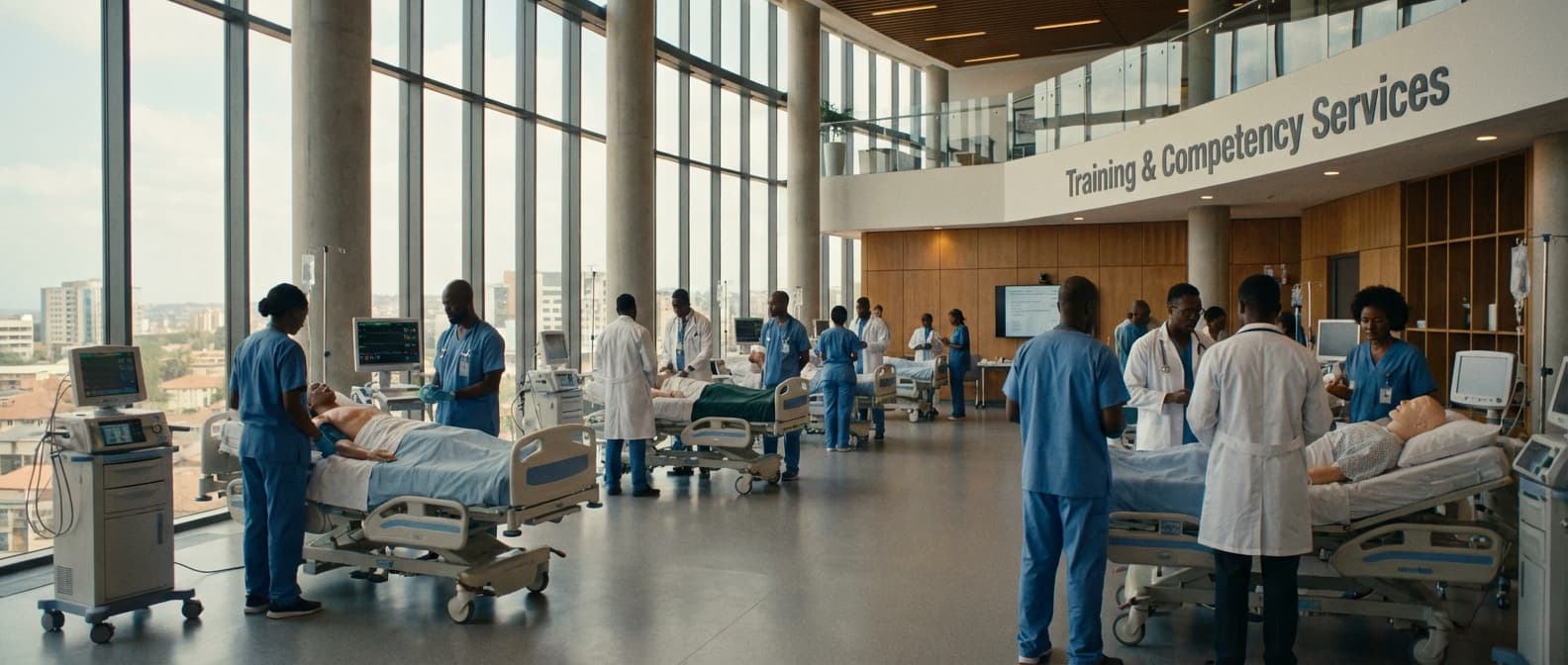
Biomedical Engineering First-Line Support Training Service in Togo
Engineering Excellence & Technical Support
Biomedical Engineering First-Line Support Training Service High-standard technical execution following OEM protocols and local regulatory frameworks.
Essential Biomedical Equipment Diagnostics
This module focuses on foundational troubleshooting techniques for common medical devices used in Togo's healthcare system, including vital signs monitors, infusion pumps, and basic imaging equipment. Trainees will learn to identify common malfunctions, perform routine checks, and implement initial corrective actions to ensure minimal disruption to patient care.
Sterilization and Disinfection Protocol Mastery
Gain critical knowledge on the proper sterilization and disinfection procedures for reusable biomedical instruments and equipment. This training covers different methods (autoclaving, chemical sterilization) and their application to prevent hospital-acquired infections, a vital aspect of maintaining a safe healthcare environment in Togo.
Preventive Maintenance & Documentation Best Practices
Learn to implement effective preventive maintenance schedules for medical equipment, extending its lifespan and reducing unexpected breakdowns. The training emphasizes the importance of accurate record-keeping and documentation of all maintenance and repair activities, crucial for compliance and efficient asset management within Togolese healthcare facilities.
What Is Biomedical Engineering First-line Support Training Service In Togo?
Biomedical Engineering First-Line Support Training Service in Togo refers to the foundational training provided to individuals responsible for the initial response to technical issues and basic maintenance of biomedical equipment within healthcare facilities. This service aims to equip personnel with the necessary knowledge and practical skills to identify, diagnose, and resolve common malfunctions, perform routine preventive maintenance, and ensure the safe and effective operation of medical devices, thereby minimizing downtime and optimizing resource utilization.
| Target Audience | Needs Addressed | Typical Use Cases |
|---|---|---|
| Hospital Technicians (non-biomedical specialized) | To handle immediate, common equipment failures, reduce reliance on external technicians for minor issues, and ensure basic functionality. | Troubleshooting malfunctioning vital signs monitors, performing battery replacements on portable devices, ensuring regular cleaning and calibration of basic laboratory equipment, responding to user-reported equipment faults. |
| Clinical Staff (nurses, doctors) with technical aptitude | To perform basic user-level troubleshooting, identify immediate problems, and ensure proper device usage, thus improving patient care continuity. | Rebooting equipment, checking power sources and connections, performing simple user maintenance (e.g., cleaning sensors), identifying and reporting complex issues promptly to designated support personnel. |
| Biomedical Engineering Department Personnel (entry-level) | To build a foundational understanding of diverse medical equipment, enabling them to perform routine tasks and gain experience before specialization. | Conducting routine preventive maintenance schedules, documenting equipment status, assisting senior biomedical engineers with more complex repairs, inventory management of spare parts. |
| Healthcare Facility Administrators/Managers | To understand the importance of skilled first-line support in reducing operational costs, minimizing equipment downtime, and ensuring patient safety. | Budgeting for training, assessing the effectiveness of support teams, ensuring compliance with equipment maintenance standards, facilitating procurement of appropriate diagnostic tools. |
Key Components of Biomedical Engineering First-Line Support Training:
- Introduction to Biomedical Equipment: Fundamentals of medical device classifications, operational principles, and essential safety standards.
- Basic Troubleshooting & Diagnostics: Methodologies for identifying common hardware and software faults, including error code interpretation and initial problem isolation.
- Preventive Maintenance (PM) Procedures: Training on scheduled inspection, cleaning, lubrication, and functional checks to prolong equipment lifespan and prevent failures.
- Safe Use and Handling: Protocols for the proper operation, disinfection, and transportation of biomedical devices, adhering to infection control guidelines.
- Record Keeping and Documentation: Training on maintaining accurate logs of maintenance activities, repairs, and equipment history.
- Basic Repair Techniques: Introduction to simple component replacement and calibration procedures for common issues.
- Interfacing with Specialized Support: Understanding when and how to escalate complex issues to higher-level technical support or manufacturers.
- Regulatory Compliance Awareness: Basic understanding of national and international regulations pertaining to medical device maintenance and safety.
Who Needs Biomedical Engineering First-line Support Training Service In Togo?
Biomedical Engineering First-Line Support Training Service in Togo aims to equip personnel with the fundamental skills and knowledge required to perform basic maintenance, troubleshooting, and routine checks on medical equipment. This training is crucial for ensuring the operational readiness and longevity of healthcare technology within the country's medical facilities. The service targets individuals who are the first point of contact for medical equipment issues, preventing minor problems from escalating and ensuring that more complex issues are accurately diagnosed before escalation to specialized technicians.
| Customer Type | Target Departments/Roles | Primary Needs Addressed | ||||||||||||
|---|---|---|---|---|---|---|---|---|---|---|---|---|---|---|
| Public Hospitals | Biomedical Engineering Department (Entry-level technicians, maintenance staff) | Basic troubleshooting of common equipment failures, routine preventive maintenance, initial assessment of equipment status. | Anesthesia Departments | Operational checks and basic troubleshooting of anesthesia machines and related equipment. | Radiology Departments | Routine cleaning, power checks, and initial troubleshooting of imaging devices. | Operating Theaters | Ensuring the readiness of surgical equipment through functional checks and basic maintenance. | Intensive Care Units (ICUs) | Monitoring and basic maintenance of critical care equipment like ventilators and patient monitors. | Laboratory Departments | Maintenance and calibration of basic laboratory equipment. | General Wards/Outpatient Clinics | Ensuring functionality of basic medical devices like thermometers, blood pressure monitors, and infusion pumps. |
| Private Clinics & Diagnostic Centers | In-house technical staff or designated personnel responsible for equipment upkeep. | Similar to public hospitals, focusing on maintaining the functionality of a range of diagnostic and therapeutic equipment. | ||||||||||||
| Medical Equipment Manufacturers/Distributors (Local Branches) | Field service technicians (entry-level), customer support staff, sales representatives who may need to perform basic demonstrations and troubleshooting. | Enabling local support to address immediate client needs, reduce response times, and improve customer satisfaction. | ||||||||||||
| Government Health Ministries and Agencies | Personnel involved in the management and oversight of public health infrastructure, potential trainers. | Developing a national capacity for first-line equipment support, standardizing maintenance practices, and informing procurement decisions. | ||||||||||||
| Non-Governmental Organizations (NGOs) involved in healthcare | Field staff, project managers responsible for healthcare infrastructure in remote or underserved areas. | Empowering local teams to manage and maintain essential medical equipment in challenging environments, ensuring project sustainability. |
Target Customers and Departments
- Healthcare Facilities (Hospitals, Clinics, Health Centers)
- Medical Equipment Manufacturers/Distributors (Local Branches)
- Government Health Ministries and Agencies
- Non-Governmental Organizations (NGOs) involved in healthcare
Biomedical Engineering First-line Support Training Service Process In Togo
This document outlines the standard workflow for the Biomedical Engineering First-Line Support Training Service in Togo. The process begins with an initial inquiry from a client, progresses through needs assessment and curriculum development, culminates in training execution, and concludes with post-training evaluation and support.
| Phase | Description | Key Activities | Responsible Party | Deliverables/Outcomes |
|---|---|---|---|---|
| The client initiates contact to express interest in first-line biomedical engineering support training. | Receive and acknowledge inquiry, schedule initial meeting, discuss general training needs and objectives. | Client, Training Provider (Biomedical Engineering Department) | Confirmed interest, initial understanding of client requirements. |
| Detailed understanding of the client's current technical capabilities, specific equipment requiring support, and skill gaps. | Conduct site visits (if applicable), interview key personnel, review existing documentation, identify specific training modules needed. | Training Provider (Biomedical Engineering Department), Client Stakeholders | Detailed training needs report, identified skill gaps, list of target equipment. |
| Tailoring existing training modules or developing new ones to meet the identified needs and incorporate specific equipment relevant to Togo's healthcare settings. | Review and adapt standard first-line support curricula, develop practical exercises and case studies, finalize training materials (manuals, presentations). | Training Provider (Biomedical Engineering Department) | Customized training curriculum, comprehensive training materials. |
| Organizing all practical aspects of the training delivery, ensuring a smooth and effective learning experience. | Schedule training dates and duration, confirm venue/online platform, arrange for trainers, procure necessary equipment for practical sessions, communicate with participants. | Training Provider (Biomedical Engineering Department), Client Administration | Approved training schedule, confirmed logistics, participant registration list. |
| The core phase where participants acquire the knowledge and skills for first-line biomedical engineering support. | Conduct lectures, demonstrations, hands-on practical sessions, troubleshooting exercises, simulations, and Q&A sessions. | Training Provider (Trainers) | Trained personnel with improved first-line support capabilities, practical skill development. |
| Measuring the effectiveness of the training and the participants' acquired knowledge and skills. | Administer pre- and post-training assessments (written tests, practical evaluations), gather participant feedback through surveys. | Training Provider (Trainers), Participants | Assessment results, participant feedback report, training effectiveness evaluation. |
| Ensuring continued learning and providing ongoing assistance to reinforce the training and address any emergent issues. | Provide access to training materials, offer follow-up Q&A sessions (if agreed), collect feedback on real-world application of learned skills, identify areas for future training. | Training Provider (Biomedical Engineering Department), Client | Ongoing support, identification of future training needs, successful integration of learned skills into daily operations. |
Biomedical Engineering First-Line Support Training Service Process in Togo
- Inquiry and Initial Consultation
- Needs Assessment and Gap Analysis
- Curriculum Development and Customization
- Training Planning and Logistics
- Training Delivery and Execution
- Assessment and Evaluation
- Post-Training Support and Feedback
Biomedical Engineering First-line Support Training Service Cost In Togo
Establishing reliable first-line support for biomedical engineering equipment is crucial for healthcare facilities in Togo. This service ensures the prompt identification and resolution of basic technical issues, minimizing downtime and maintaining the operational readiness of vital medical devices. The cost of such training services is influenced by several factors, leading to a range of pricing within the local currency, the West African CFA franc (XOF).
| Training Type/Scope | Estimated Price Range (XOF) | Notes |
|---|---|---|
| Basic Troubleshooting & Maintenance (e.g., for nurses/operators) | 50,000 - 150,000 | Typically a one-day workshop, covering fundamental checks, cleaning, and user-level error identification. |
| Introduction to Biomedical Equipment & Basic Maintenance (for junior technicians) | 150,000 - 400,000 | A few days to a week, focusing on common equipment types, safety checks, and preventative maintenance schedules. |
| Specialized First-Line Support (e.g., for specific imaging or lab equipment) | 300,000 - 800,000+ | Can be multi-day, highly technical, and often requires trainers with specific manufacturer certifications. Price highly dependent on equipment complexity. |
| On-site Training (per day, excluding trainer's travel/accommodation) | 75,000 - 250,000 | This is a common model for facilities in Togo. The rate often covers the trainer's time and expertise. |
| Remote/Online Training (per participant) | 25,000 - 100,000 | Can be cost-effective but may lack hands-on experience. Effectiveness depends on the participants' technical background. |
Key Pricing Factors for Biomedical Engineering First-Line Support Training in Togo
- Scope and Depth of Training: The breadth of equipment covered (e.g., general medical devices, imaging equipment, laboratory instruments) and the level of detail in the training (basic troubleshooting vs. minor repair techniques) directly impact cost. More comprehensive training programs will naturally be more expensive.
- Number of Participants: Training is often priced per participant. Larger groups may benefit from economies of scale, but the overall cost will increase with more attendees.
- Training Provider Expertise and Reputation: Highly experienced and reputable training organizations or individual consultants with a strong track record in biomedical engineering in Togo and the wider region will command higher fees.
- Duration of Training: The length of the training program, whether it's a one-day workshop or a multi-day comprehensive course, is a significant cost driver.
- Training Location and Logistics: Whether the training is conducted on-site at the healthcare facility, at a dedicated training center, or requires travel for the trainer, will influence costs. Travel, accommodation, and venue rental expenses are factored in.
- Training Materials and Resources: The provision of high-quality training manuals, simulation equipment, or access to online resources can add to the overall cost.
- Customization and Specialization: Tailoring the training to specific equipment models used by a particular facility or addressing unique local challenges can increase the service price.
- Post-Training Support and Follow-up: Some providers may offer limited post-training support, such as Q&A sessions or remote assistance, which can be bundled into the pricing or offered as an add-on.
Affordable Biomedical Engineering First-line Support Training Service Options
This document outlines affordable first-line support training service options for biomedical engineering departments, focusing on delivering comprehensive training without exceeding budgetary constraints. We explore various training modalities, value bundles, and cost-saving strategies to empower your support teams with essential skills for equipment maintenance, troubleshooting, and patient safety.
| Value Bundle Name | Included Modules/Services | Target Audience | Estimated Cost Range (per technician) | Key Value Proposition |
|---|---|---|---|---|
| Foundational Essentials Bundle | Basic Electrical Safety, Introduction to Biomedical Equipment, Common Diagnostic Tools, Documentation Best Practices | New Biomedical Technicians, Entry-Level Support Staff | $200 - $500 | Provides a strong baseline of essential knowledge for all new support personnel. |
| Core Equipment Proficiency Bundle | Foundational Essentials + Training on 3-5 High-Volume Equipment Categories (e.g., Infusion Pumps, Patient Monitors, ECG Devices) | Technicians Needing to Expand Skillset | $600 - $1200 | Develops practical skills for maintaining and troubleshooting the most frequently encountered medical devices. |
| Advanced Troubleshooting & Specialty Bundle | Core Equipment Proficiency + Advanced Troubleshooting Techniques, Root Cause Analysis, Specialized Equipment Training (e.g., Ventilators, Anesthesia Machines) | Experienced Technicians, Senior Support Staff | $1000 - $2500 | Enhances problem-solving abilities and prepares staff for complex equipment challenges and specialized areas. |
| Preventive Maintenance & Safety Certification Bundle | Foundational Essentials + Comprehensive PM Procedures for Key Equipment, Regulatory Compliance Training (e.g., FDA, Joint Commission) | All Support Staff, Team Leads | $400 - $900 | Ensures adherence to PM schedules and regulatory requirements, minimizing equipment downtime and risks. |
| Customized Departmental Bundle | Tailored to specific equipment inventory, departmental needs, and skill gaps identified through assessment. | Any Biomedical Department | Varies based on scope and customization | Maximizes training ROI by addressing unique organizational requirements. |
Key Training Modalities for First-Line Biomedical Support
- Online Self-Paced Modules: Flexible learning with pre-recorded lectures, interactive quizzes, and digital resources.
- Live Virtual Instructor-Led Training (VILT): Real-time interactive sessions with expert instructors, allowing for Q&A and practical demonstrations.
- On-Site Workshops: Intensive, hands-on training conducted at your facility, tailored to your specific equipment and workflows.
- Blended Learning Programs: Combining online modules with VILT or on-site sessions for a comprehensive and cost-effective approach.
- Train-the-Trainer Programs: Equipping your internal senior technicians to deliver ongoing training to new staff.
Verified Providers In Togo
In Togo's evolving healthcare landscape, identifying trustworthy and qualified medical professionals is paramount. Franance Health stands out as a beacon of reliability, offering a rigorously vetted network of healthcare providers. This commitment to verification ensures that individuals seeking medical assistance in Togo can do so with confidence, knowing they are engaging with practitioners who meet stringent standards of competence, ethics, and patient care. Franance Health's credentialing process goes beyond basic licensing, encompassing a comprehensive evaluation of qualifications, experience, and ongoing professional development. This dedication to excellence makes Franance Health the superior choice for accessing quality healthcare services in Togo.
| Provider Type | Franance Health Verification Criteria | Benefits for Patients |
|---|---|---|
| General Practitioners | Medical Degree & License Verification, Clinical Experience Assessment, Reference Checks | Accurate Diagnosis, Effective Treatment Plans, Primary Healthcare Management |
| Specialists (e.g., Cardiologists, Dermatologists) | Specialty Board Certification, Fellowship Completion, Peer Review | Expert Diagnosis & Management of Complex Conditions, Advanced Treatment Options |
| Surgeons | Surgical Residency Completion, Licensure for Surgical Practice, Case Review | Safe and Effective Surgical Procedures, Post-Operative Care Expertise |
| Dentists | Dental Degree & License, Specialization (if applicable), Practice Standards Review | Oral Health Maintenance, Treatment of Dental Issues, Preventive Care |
| Nurses | Nursing Degree & License, Clinical Competency Assessment, Ethical Conduct Review | Compassionate Patient Care, Assistance with Medical Procedures, Health Education |
Why Franance Health Providers are the Best Choice:
- Rigorous Credentialing Process: Franance Health employs a multi-faceted approach to vet providers, ensuring they possess the necessary qualifications and expertise.
- Commitment to Quality Care: Verified providers adhere to high standards of patient care, safety, and ethical practice.
- Enhanced Patient Trust: The verification process fosters confidence and peace of mind for individuals seeking medical services.
- Access to Competent Professionals: Patients are assured of connecting with skilled and experienced healthcare practitioners.
- Continuous Professional Development: Franance Health encourages and monitors ongoing training to keep providers updated with the latest medical advancements.
Scope Of Work For Biomedical Engineering First-line Support Training Service
This Scope of Work (SOW) outlines the requirements for a comprehensive first-line support training service for Biomedical Engineering (BME) personnel. The training will equip BME technicians with the necessary skills and knowledge to effectively troubleshoot, diagnose, and resolve common issues with medical devices, ensuring patient safety and operational efficiency. The service includes the delivery of training modules, practical exercises, assessment, and documentation, adhering to defined technical deliverables and standard specifications.
| Deliverable Category | Specific Deliverable | Description | Standard Specifications/Requirements | Acceptance Criteria |
|---|---|---|---|---|
| Training Material Development | Core Curriculum Modules | Development of comprehensive training modules covering essential BME first-line support topics. | Modules should be modular, easily digestible, and cover topics such as basic electrical safety, common device error codes, user interface troubleshooting, preventative maintenance checks, and reporting procedures. Content must be aligned with manufacturer specifications for targeted devices. | Modules are reviewed and approved by the BME department lead. Content is accurate, up-to-date, and relevant to the devices in use. |
| Training Material Development | Practical Exercise Scenarios | Creation of realistic hands-on scenarios and case studies for practical application of learned skills. | Scenarios should simulate common device failures, requiring participants to apply troubleshooting steps learned in the modules. Includes simulation of specific alarm conditions and error messages. | Scenarios are reviewed and approved by the BME department lead. Scenarios are diverse and representative of common issues. |
| Training Delivery | Instructor-Led Training Sessions | Delivery of interactive training sessions by qualified instructors. | Sessions should include theoretical explanations, live demonstrations (where feasible), Q&A sessions, and guided practical exercises. Training should be delivered in a format conducive to learning (e.g., small group sessions, on-site delivery). | Attendance records maintained. Participant engagement observed and feedback collected. |
| Training Delivery | Hands-on Practical Workshops | Dedicated sessions for participants to practice troubleshooting techniques on actual or simulated medical devices. | Workshop should utilize a range of common medical devices (as defined by the client) and provide opportunities for participants to diagnose and attempt basic resolutions under instructor supervision. Includes access to necessary tools and diagnostic equipment. | Participants successfully demonstrate the ability to perform troubleshooting steps for a defined set of device issues. Instructor observation and practical assessment. |
| Assessment and Evaluation | Knowledge Assessment Quizzes | Development and administration of quizzes to assess theoretical understanding of training content. | Quizzes should cover key concepts, safety procedures, and troubleshooting logic. Multiple-choice, short answer, and scenario-based questions. | Quizzes are graded, and a minimum passing score is established (e.g., 80%). Results provided to the BME department. |
| Assessment and Evaluation | Practical Skills Assessment | Evaluation of participants' ability to apply learned skills in practical scenarios. | Assessment will be conducted during hands-on workshops, observing participants' troubleshooting approach, diagnostic reasoning, and adherence to safety protocols. May involve a final practical exam. | Participants demonstrate competence in diagnosing and attempting to resolve a set of predefined device issues according to established protocols. Satisfactory performance rating. |
| Documentation and Reporting | Training Completion Certificates | Issuance of certificates of completion to participants who successfully meet the training objectives. | Certificates should include the participant's name, training title, date of completion, and the delivering organization's name. Can be digital or printed. | Certificates are issued to all participants who achieve the minimum passing scores for both knowledge and practical assessments. |
| Documentation and Reporting | Training Summary Report | Provision of a comprehensive report detailing the training delivery, participant performance, and recommendations. | Report should include total participants, attendance rates, average scores for knowledge and practical assessments, common areas of difficulty, and any suggestions for future training or process improvements. Includes a list of devices covered. | Report is delivered within X business days of training completion. Report is clear, concise, and actionable. |
| Documentation and Reporting | Troubleshooting Flowcharts/Guides | Development of simplified, visual troubleshooting flowcharts or quick reference guides for key device types. | These guides should be easy to follow for first-line support, outlining step-by-step diagnostic processes and common solutions. Developed in a format suitable for printing or digital access. | Flowcharts/guides are reviewed and approved by the BME department lead. They are accurate and clearly represent troubleshooting steps for targeted devices. |
Key Objectives
- To enhance the first-line troubleshooting capabilities of BME technicians for a defined range of medical devices.
- To reduce reliance on specialized engineering support for routine technical issues.
- To improve the response time and resolution rates for medical device malfunctions.
- To ensure adherence to safety protocols and manufacturer guidelines during troubleshooting and basic maintenance.
- To standardize the approach to first-line BME support across the organization.
Service Level Agreement For Biomedical Engineering First-line Support Training Service
This Service Level Agreement (SLA) outlines the terms and conditions for the Biomedical Engineering First-Line Support Training Service provided by [Your Company Name/Department]. It defines the expected response times for support requests and uptime guarantees for the training platform and related resources. This SLA is designed to ensure a high level of service and user satisfaction.
| Service Component | Uptime Guarantee | Response Time (Standard) | Response Time (Critical) | Resolution Target (Standard) | Resolution Target (Critical) |
|---|---|---|---|---|---|
| Training Platform Availability (Web Interface, LMS) | 99.5% during business hours (Mon-Fri, 8 AM - 5 PM local time) | N/A (System monitoring) | N/A (System monitoring) | N/A (System monitoring) | N/A (System monitoring) |
| Technical Support for Training Platform (Login issues, navigation errors) | N/A | 4 business hours | 1 business hour | 8 business hours | 4 business hours |
| Content Accessibility (Videos, documents, interactive modules) | N/A (Content dependent) | 1 business day | 4 business hours | 2 business days | 1 business day |
| Issue Resolution for Training Materials (Typos, broken links, factual errors in content) | N/A | 2 business days | 1 business day | 5 business days | 2 business days |
Key Service Components
- Training Platform Availability
- Technical Support for Training Platform
- Content Accessibility
- Issue Resolution for Training Materials
Frequently Asked Questions

Ready when you are
Let's scope your Biomedical Engineering First-Line Support Training Service in Togo project in Togo.

Scaling healthcare logistics and technical systems across the entire continent.