
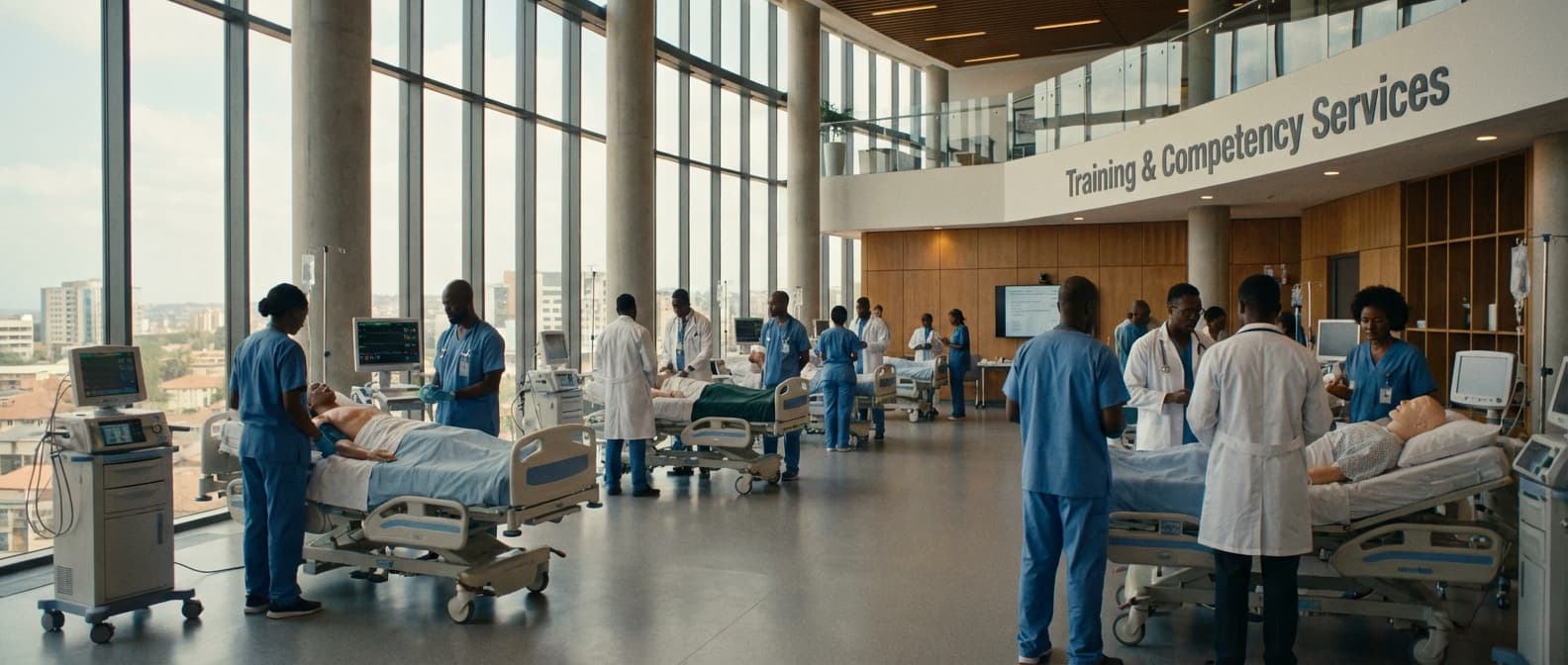
Anesthesia Workstation User Training Service in Togo
Engineering Excellence & Technical Support
Anesthesia Workstation User Training Service High-standard technical execution following OEM protocols and local regulatory frameworks.
On-Site Expert Training
Receive personalized, hands-on training for your anesthesia workstations directly at your facility in Togo. Our certified technicians provide in-depth instruction on all operational aspects, ensuring your medical staff gains confident proficiency.
Advanced Troubleshooting & Maintenance
Empower your team with the skills to identify and resolve common workstation issues quickly. Our training covers preventative maintenance and diagnostic procedures, minimizing downtime and maximizing equipment reliability.
Safety Protocols & Best Practices
Ensure the highest standards of patient safety with comprehensive training on workstation safety features, alarm management, and best practices in anesthetic gas delivery and monitoring. Adhere to international safety guidelines.
What Is Anesthesia Workstation User Training Service In Togo?
The Anesthesia Workstation User Training Service in Togo refers to specialized educational programs designed to equip healthcare professionals with the knowledge and practical skills necessary to safely and effectively operate anesthesia workstations. These workstations are complex medical devices that deliver anesthetic gases and ventilate patients during surgical and other medical procedures. The service focuses on comprehensive instruction, covering device functionalities, operational procedures, safety protocols, troubleshooting, and maintenance. It aims to enhance user competency, minimize the risk of medical errors, optimize patient outcomes, and ensure compliance with regulatory standards within the Togolese healthcare system.
| Target Audience | Justification/Need | Typical Use Cases |
|---|---|---|
| Anesthesiologists and Certified Registered Nurse Anesthetists (CRNAs) | Essential for safe and effective patient management during surgical and procedural interventions. Ensures competency in utilizing advanced anesthetic delivery and ventilation technologies. | Pre-operative assessment and preparation, intra-operative anesthetic management (induction, maintenance, emergence), post-operative recovery, and emergency resuscitation scenarios. |
| Anesthesia Technicians and Biomedical Engineers | Critical for device setup, calibration, routine maintenance, and prompt troubleshooting. Ensures the continuous availability and optimal performance of the workstation. | Routine pre-use checks and calibration, preventive maintenance schedules, responding to equipment malfunction alarms, and assisting anesthesiologists during complex procedures. |
| Nursing Staff (e.g., Operating Room Nurses, ICU Nurses) | Facilitates understanding of workstation capabilities and limitations, enabling appropriate monitoring and support of patients receiving anesthesia. Crucial for handover and collaborative care. | Monitoring of anesthetic parameters and patient vital signs, responding to device alarms, assisting with patient positioning and connection to the workstation, and understanding the flow of anesthetic gases. |
Key Components of Anesthesia Workstation User Training Service:
- Theoretical Instruction: Comprehensive overview of anesthetic gas delivery systems, ventilation modes, patient monitoring integration, and alarm management.
- Practical Operation: Hands-on training sessions covering device setup, parameter adjustment, patient connection, and simulated emergency scenarios.
- Safety Features & Protocols: In-depth understanding of built-in safety mechanisms, pre-use checks, and emergency procedures.
- Troubleshooting & Maintenance: Identification of common operational issues, basic maintenance procedures, and escalation protocols for technical support.
- Compliance & Best Practices: Adherence to national and international guidelines for anesthesia administration and equipment management.
- Specific Device Familiarization: Tailored training for particular makes and models of anesthesia workstations utilized in Togolese healthcare facilities.
Who Needs Anesthesia Workstation User Training Service In Togo?
Anesthesia workstation user training services are crucial for ensuring the safe, effective, and efficient operation of these complex medical devices. In Togo, a growing healthcare sector with increasing adoption of advanced medical technology necessitates specialized training for healthcare professionals. This service addresses the critical need for skilled personnel to operate anesthesia workstations, thereby improving patient care and outcomes in surgical and critical care settings. The training focuses on device functionality, troubleshooting, safety protocols, and integration with patient monitoring systems.
| Target Customers | Relevant Departments |
|---|---|
| Public Hospitals | Anesthesiology Department, Intensive Care Unit (ICU), Operating Rooms (OR) |
| Private Hospitals | Anesthesiology Department, Intensive Care Unit (ICU), Operating Rooms (OR) |
| Surgical Centers | Anesthesiology Department, Operating Rooms (OR) |
| University Teaching Hospitals | Anesthesiology Department, ICU, OR, Medical Education Departments |
| Medical Equipment Suppliers/Distributors | Technical Support Teams, Sales Teams (to train client staff) |
| Government Health Agencies | National Health Directorates, Training Institutions |
Who Needs Anesthesia Workstation User Training Service in Togo?
- Hospitals (Public and Private)
- Surgical Centers
- University Teaching Hospitals
- Healthcare Facilities undergoing technological upgrades
- Medical Equipment Suppliers/Distributors (for their clients)
- Government Health Agencies (for capacity building)
Anesthesia Workstation User Training Service Process In Togo
This document outlines the standard process for an Anesthesia Workstation User Training Service offered in Togo. The workflow is designed to ensure a smooth and effective training experience for healthcare professionals, from initial inquiry to the successful completion of the training.
| Phase | Key Activities | Responsible Party | Deliverables/Outcomes |
|---|---|---|---|
| Receive inquiry, understand client needs, identify specific workstations and skill levels. | Client & Service Provider | Understanding of training scope, identified learning objectives. |
| Develop customized training proposal, negotiate terms, sign contract. | Service Provider & Client | Approved training proposal, signed service agreement. |
| Finalize schedule, book venue, arrange equipment, prepare trainers. | Service Provider | Confirmed training schedule, prepared training environment and personnel. |
| Distribute pre-reading materials, set expectations. | Service Provider & Participants | Participants familiarized with basic concepts. |
| Conduct theoretical sessions, practical demonstrations, simulations, and interactive exercises. | Service Provider (Trainers) | Hands-on skill development, knowledge acquisition. |
| Administer practical and theoretical assessments, collect feedback. | Service Provider | Evaluation of participant competency and training effectiveness. |
| Award certificates, provide post-training resources and ongoing support. | Service Provider | Certified trainees, ongoing assistance for skill maintenance and problem-solving. |
Anesthesia Workstation User Training Service Process in Togo
- The process begins with an initial inquiry from a healthcare facility or individual seeking anesthesia workstation user training.
- A detailed needs assessment is conducted to understand the specific requirements, existing knowledge base of the participants, and the types of anesthesia workstations to be covered.
- A customized training proposal is developed, outlining the curriculum, duration, location, trainers, objectives, and associated costs.
- Upon acceptance of the proposal, a formal training agreement is signed between the service provider and the client.
- The training schedule is finalized, and all necessary logistical arrangements are made, including securing training venues and equipment.
- Pre-training materials are distributed to participants to familiarize them with the workstation's basic concepts and functions.
- The hands-on training sessions are conducted by qualified and experienced anesthesia professionals, covering theoretical aspects, practical demonstrations, and simulation exercises.
- Throughout the training, continuous assessment of participant understanding and skill development is performed.
- Post-training evaluation is conducted through assessments and feedback mechanisms to gauge the effectiveness of the training.
- Upon successful completion of the training and assessment, participants are awarded a certificate of completion.
- Post-training support is offered, including access to resources, follow-up consultations, and troubleshooting assistance.
Anesthesia Workstation User Training Service Cost In Togo
The cost of anesthesia workstation user training services in Togo can vary significantly due to several factors. These include the reputation and expertise of the training provider, the complexity and type of anesthesia workstation being trained on, the duration and depth of the training program, the number of participants, and whether the training is conducted on-site at a healthcare facility or at a dedicated training center. Travel and accommodation expenses for trainers, if applicable, also contribute to the overall cost. Given the current economic landscape in Togo, pricing is typically presented in West African CFA Franc (XOF).
| Service Component | Estimated Cost Range (XOF) |
|---|---|
| Basic User Training (e.g., 1-2 days, focusing on core functionalities) | 150,000 - 350,000 |
| Intermediate User Training (e.g., 3-4 days, covering advanced features and troubleshooting) | 300,000 - 700,000 |
| Comprehensive/Specialized Training (e.g., 5+ days, in-depth protocols, maintenance, specific clinical applications) | 600,000 - 1,500,000+ |
| On-site Training (additional for travel/accommodation) | Variable (often factored into the overall package) |
| Certification Fee (if applicable) | 20,000 - 50,000 per participant |
| Customized Training Program Development | 100,000 - 300,000 (one-time fee) |
Key Factors Influencing Anesthesia Workstation User Training Costs in Togo
- Provider Reputation and Expertise
- Anesthesia Workstation Model and Complexity
- Training Program Duration and Content Depth
- Number of Participants
- Training Location (On-site vs. Off-site)
- Inclusion of Hands-on Practical Sessions
- Certification or Accreditation
- Post-training Support and Follow-up
- Travel and Accommodation for Trainers (if applicable)
Affordable Anesthesia Workstation User Training Service Options
This service focuses on providing accessible and cost-effective training solutions for users of affordable anesthesia workstations. We understand the budget constraints faced by many healthcare facilities and aim to deliver high-quality training that maximizes the return on investment for your anesthesia equipment. Our offerings are designed to empower your clinical staff with the knowledge and skills to operate anesthesia workstations safely and efficiently, ensuring optimal patient care and minimizing operational risks. We achieve this through flexible training formats, tailored curricula, and strategic cost-saving measures.
| Training Component | Description | Cost-Saving Benefit |
|---|---|---|
| Online Learning Modules | Pre-recorded videos, interactive quizzes, downloadable guides. | Reduces travel, accommodation, and instructor time. Self-paced learning. |
| Train-the-Trainer Program | Equips internal staff to deliver training. | Significantly lowers long-term training expenditure and ensures consistent knowledge. |
| Group Discounts | Reduced per-participant cost for multiple attendees. | Lower overall training cost for larger teams. |
| Blended Learning | Combination of online and in-person sessions. | Optimizes instructor time and reduces on-site requirements, cutting travel costs. |
| Simulation-Based Training | Practice on virtual or mock equipment. | Minimizes wear on actual workstations and allows practice of high-risk scenarios without patient impact. |
Value Bundles and Cost-Saving Strategies for Affordable Anesthesia Workstation User Training
- Comprehensive Core Training Package: Covers essential operational procedures, safety protocols, and basic troubleshooting for your specific anesthesia workstation model. This foundational bundle ensures all users have a solid understanding of the equipment.
- Advanced Features & Troubleshooting Bundle: Builds upon core training, delving into advanced functionalities, specialized modes, and more complex troubleshooting scenarios. Ideal for experienced users or those transitioning to more sophisticated anesthesia techniques.
- Train-the-Trainer Program: Empowers key personnel within your facility to become internal trainers. This significantly reduces ongoing training costs and ensures consistent knowledge dissemination across your team.
- On-Demand Digital Learning Modules: Access to a library of pre-recorded video tutorials, interactive simulations, and downloadable resources for flexible, self-paced learning. Perfect for refreshers, new hires, or staff with varied schedules.
- Blended Learning Approach: Combines the efficiency of online modules with focused in-person practical sessions. This optimizes learning by leveraging the strengths of both methods, reducing travel and accommodation costs associated with purely in-person training.
- Group Training Discounts: Significant cost savings are available for training multiple staff members from the same facility simultaneously. The more participants, the lower the per-person cost.
- Multi-Site/Multi-Facility Packages: For organizations with multiple locations, we offer discounted packages to standardize training across all sites, ensuring consistent best practices and leveraging economies of scale.
- Customized Training Curricula: While we offer standard bundles, we can also tailor training content to your specific clinical needs and the unique functionalities of your affordable anesthesia workstations. This avoids paying for irrelevant content.
- Simulation-Based Training: Utilizing advanced simulators to provide hands-on experience in a safe, controlled environment. This reduces wear and tear on actual equipment and allows for practice of rare or critical scenarios without patient risk.
- Post-Training Support & Refresher Courses: Access to ongoing support channels and discounted rates for future refresher courses or training on new software updates, ensuring sustained competency and maximizing the lifespan of your training investment.
Verified Providers In Togo
In Togo's evolving healthcare landscape, ensuring access to verified and reputable healthcare providers is paramount for individuals seeking quality care. Franance Health stands out as a leading entity committed to credentialing and certifying healthcare professionals and facilities across the nation. Their rigorous verification process not only guarantees the competence and ethical standing of their listed providers but also offers peace of mind to patients navigating the healthcare system. This commitment to transparency and excellence makes Franance Health credentials a significant indicator of quality and a strong reason why their network represents the best choice for healthcare in Togo.
| Benefit for Patients | Franance Health's Role | Outcome for Togo's Healthcare |
|---|---|---|
| Confidence in Provider Competence | Rigorous credentialing and background checks | Reduced risk of medical errors and improved patient outcomes |
| Access to Ethical and Compassionate Care | Evaluation of ethical conduct and patient feedback mechanisms | Increased patient satisfaction and trust in the healthcare system |
| Streamlined Healthcare Navigation | Centralized platform of verified providers | Easier access to appropriate specialists and facilities |
| Promotion of Healthcare Excellence | Setting high standards for all accredited professionals and institutions | Elevated overall quality of healthcare services available in Togo |
Why Franance Health Credentials Mean the Best Choice for Healthcare in Togo:
- Uncompromising Verification Standards: Franance Health employs a multi-layered verification process, scrutinizing educational background, licensing, certifications, and professional experience of all providers.
- Commitment to Ethical Practice: Beyond technical qualifications, Franance Health assesses adherence to ethical guidelines and patient-centered care principles.
- Enhanced Patient Safety: By partnering with Franance Health, patients gain access to providers who have met stringent safety and quality benchmarks.
- Access to Specialized Expertise: The network includes a diverse range of specialists, ensuring patients can find the most appropriate care for their specific needs.
- Trust and Reliability: Franance Health credentials serve as a mark of trust, empowering patients to make informed decisions about their health.
- Continuous Quality Monitoring: Franance Health is dedicated to ongoing quality assurance, ensuring that accredited providers maintain high standards over time.
Scope Of Work For Anesthesia Workstation User Training Service
This Scope of Work (SOW) outlines the requirements for providing user training services for Anesthesia Workstations. The objective is to ensure that healthcare professionals are proficient in the safe and effective operation of the Anesthesia Workstation, including its features, functionalities, and emergency procedures. This document details the technical deliverables and standard specifications expected from the training provider.
| Deliverable | Description | Standard Specification / Requirement | Acceptance Criteria |
|---|---|---|---|
| Training Curriculum Development | Creation of a detailed training program tailored to the specific Anesthesia Workstation model. | Must cover all core functionalities, ventilation modes, patient monitoring, anesthesia delivery, and safety features. Include theoretical and practical modules. Curriculum must be reviewed and approved by the client's clinical team. | Approved training curriculum document, including learning objectives, modules, duration, and assessment methods. |
| Training Materials | Development of comprehensive and user-friendly training materials for participants. | Includes participant manuals, quick reference guides, presentation slides, and any necessary supplementary documents. Materials should be in English and use clear, concise language with relevant imagery. | High-quality, professionally designed training materials that are easy to understand and retain. |
| Trainer Qualifications | Provision of qualified and experienced anesthesia professionals as trainers. | Trainers must possess extensive clinical experience with anesthesia workstations, strong pedagogical skills, and relevant certifications. Proof of qualifications and experience required. | Resumes/CVs of trainers, verifiable credentials, and positive feedback from previous training engagements. |
| On-Site Training Delivery | Conducting of hands-on training sessions at the client's facility. | Training sessions must be conducted using the actual Anesthesia Workstation model(s) intended for use. Training must accommodate the client's schedule and number of participants. Practical exercises and case studies are mandatory. | Successful completion of scheduled training sessions, with active participation from attendees and successful demonstration of skills during practical assessments. |
| Simulation-Based Training | Incorporation of realistic patient scenarios to practice workstation operation. | Scenarios should simulate common and critical anesthesia situations, allowing users to apply their knowledge and skills in a safe environment. Use of simulators or manikins is encouraged. | Demonstrated ability of participants to manage simulated patient cases using the Anesthesia Workstation effectively. |
| Post-Training Support | Provision of ongoing support and Q&A opportunities after the formal training period. | Includes a defined period for answering user queries and providing clarification. This can be via email, phone, or scheduled follow-up sessions. | Availability of support resources and timely responses to user inquiries within the agreed-upon timeframe. |
| Training Effectiveness Assessment | Evaluation of the training program's effectiveness and participant comprehension. | Includes pre- and post-training knowledge assessments (e.g., quizzes, practical skills evaluations). Feedback forms from participants are also required. | Completion of assessment reports, including average scores, identified areas for improvement, and participant feedback summary. |
| Training Certification | Issuance of certificates to participants who successfully complete the training program. | Certificates should clearly state the training content, duration, and the participant's name, and be signed by the trainer and/or authorized representative. | Provision of official training certificates for all successful participants. |
Key Objectives of the Anesthesia Workstation User Training
- To equip users with a comprehensive understanding of the Anesthesia Workstation's hardware and software components.
- To enable users to perform routine setup, operation, and shutdown procedures accurately and efficiently.
- To train users on the correct interpretation of displayed parameters and alarm conditions.
- To ensure users can effectively manage ventilation modes, gas delivery, and agent administration.
- To familiarize users with the Anesthesia Workstation's safety features and emergency protocols.
- To provide hands-on experience with the Anesthesia Workstation in simulated clinical scenarios.
- To ensure compliance with relevant regulatory guidelines and institutional policies.
- To foster confidence and competence in users for independent operation of the Anesthesia Workstation.
Service Level Agreement For Anesthesia Workstation User Training Service
This Service Level Agreement (SLA) outlines the guaranteed response times and uptime for the Anesthesia Workstation User Training Service. This SLA is between [Your Company Name/Provider] and [Client Organization Name].
| Service Component | Uptime Guarantee | Response Time (Initial Contact) | Resolution Time Target |
|---|---|---|---|
| Anesthesia Workstation Training Platform (E-learning/Portal) | 99.5% Uptime | N/A (Self-service) | N/A (Self-service) |
| Instructor-Led Training Sessions (Remote/On-site) | Scheduled Availability | 24 business hours prior to scheduled session (for confirmation/rescheduling) | N/A (Focus on session delivery) |
| Training Support (Technical Issues & Inquiries via Email/Portal) | N/A (Service is about training delivery, not continuous platform operation) | 4 business hours | 8 business hours for initial diagnosis, 24 business hours for most common resolutions |
| Training Support (Technical Issues & Inquiries via Phone) | N/A | 1 business hour (during business hours) | 4 business hours for initial diagnosis, 12 business hours for most common resolutions |
Service Description
- Anesthesia Workstation User Training Service: This service provides comprehensive training for healthcare professionals on the safe and effective operation of the [Specific Anesthesia Workstation Model(s)] anesthesia workstations.
- Training Modalities: Training may be delivered via instructor-led sessions (on-site or remote), self-paced e-learning modules, or a hybrid approach.
- Support Channels: Training-related inquiries and technical issues will be supported through email, phone, and a dedicated online support portal.
Frequently Asked Questions

Ready when you are
Let's scope your Anesthesia Workstation User Training Service in Togo project in Togo.

Scaling healthcare logistics and technical systems across the entire continent.