
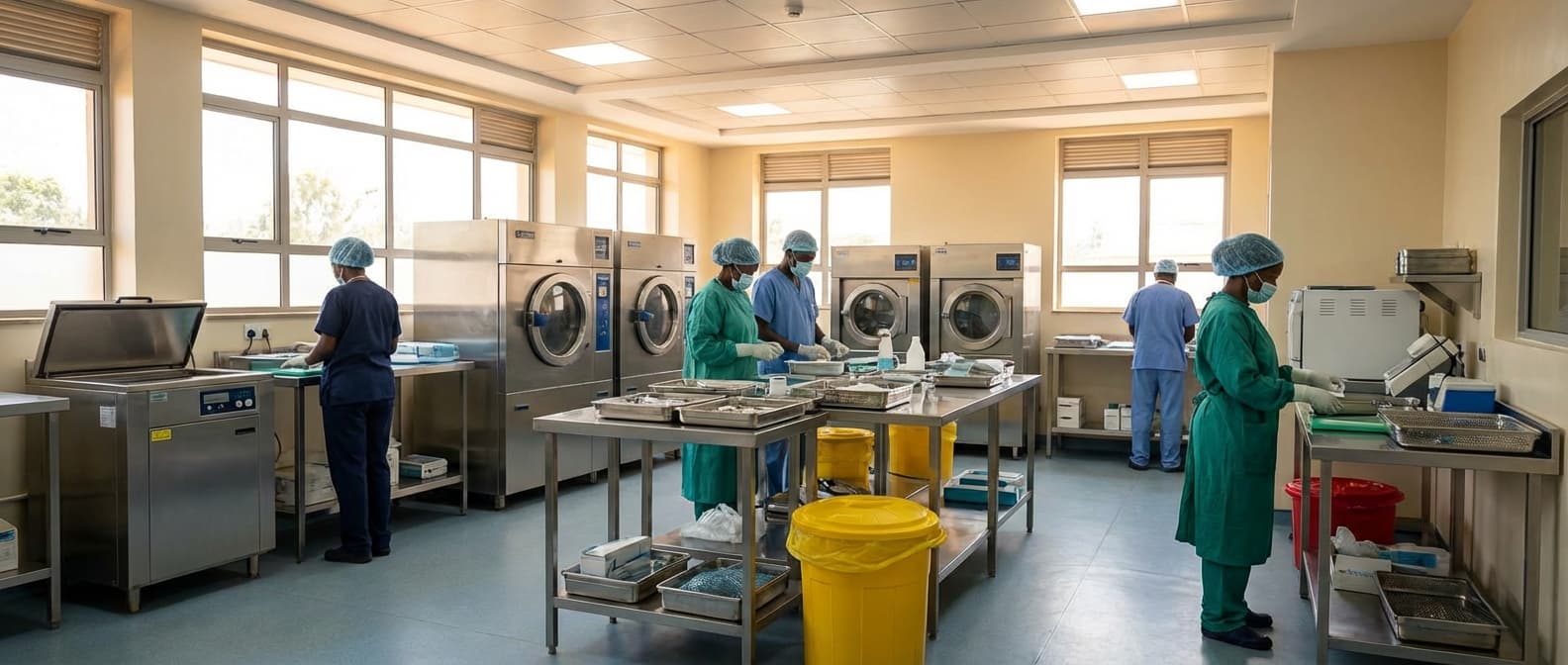
Autoclave Validation Support Service in Togo
Engineering Excellence & Technical Support
Autoclave Validation Support Service High-standard technical execution following OEM protocols and local regulatory frameworks.
Microbiological Challenge Studies
Ensuring effective sterilization by conducting rigorous microbiological challenge studies using biological indicators tailored to the specific autoclave cycles and load types used in Togo's healthcare and research facilities.
Comprehensive Temperature & Pressure Mapping
Utilizing advanced calibrated sensors to perform detailed temperature and pressure mapping of autoclaves across Togo, guaranteeing consistent and validated sterilization conditions throughout the chamber for maximum efficacy.
Regulatory Compliance Documentation
Providing meticulously documented validation reports and ongoing monitoring data that fully comply with Togolese health regulations and international sterilization standards, ensuring seamless audit readiness for clients.
What Is Autoclave Validation Support Service In Togo?
Autoclave validation support services in Togo are specialized technical offerings designed to ensure that steam sterilization equipment (autoclaves) consistently and reproducibly deliver a validated level of microbial inactivation. This service is critical for organizations that rely on steam sterilization to maintain the sterility of critical items, thereby preventing healthcare-associated infections (HAAs) and ensuring product safety and compliance. The process involves a comprehensive assessment of the autoclave's performance against established international standards and regulatory requirements. This includes verifying the physical parameters of the sterilization cycle (temperature, pressure, time, and steam quality) and demonstrating the efficacy of the sterilization process through biological and chemical challenge tests. The ultimate goal is to provide documented evidence that the autoclave performs as intended and meets the required sterility assurance level (SAL).
| Who Needs Autoclave Validation Support Service? | Typical Use Cases | ||
|---|---|---|---|
| Healthcare Facilities (Hospitals, Clinics, Dental Practices): For sterilization of surgical instruments, medical devices, and other patient-care items. | Sterilization of surgical instruments and medical equipment in operating theaters, sterilization units (CSSD), and dental clinics. | Ensuring the safety and efficacy of sterilized products for patient use. | Compliance with national and international healthcare regulations and accreditation standards. |
| Laboratories (Research, Diagnostic, Pharmaceutical): For sterilization of glassware, culture media, and equipment. | Sterilization of laboratory glassware, media, and equipment in research and development, quality control, and diagnostic laboratories. | Ensuring the absence of microbial contamination for experimental integrity and accurate diagnostic results. | Compliance with Good Laboratory Practices (GLP) and Good Manufacturing Practices (GMP) requirements. |
| Pharmaceutical and Biotechnology Companies: For sterilization of manufacturing equipment, consumables, and components. | Sterilization of critical components, equipment, and packaging materials in pharmaceutical manufacturing. | Ensuring product sterility and preventing contamination in the production of drugs and biologics. | Meeting stringent regulatory requirements from health authorities (e.g., national drug regulatory agencies). |
| Veterinary Clinics and Animal Research Facilities: For sterilization of veterinary surgical instruments and equipment. | Sterilization of instruments and equipment used in veterinary surgery and animal care. | Maintaining hygiene and preventing the spread of pathogens in animal health settings. | Adherence to animal welfare and biohazard control protocols. |
Key Components of Autoclave Validation Support Service
- Installation Qualification (IQ): Verifying that the autoclave is installed correctly according to manufacturer specifications and relevant industry standards.
- Operational Qualification (OQ): Testing the autoclave's operating parameters (temperature, pressure, time) at their operational ranges to ensure they are within acceptable limits.
- Performance Qualification (PQ): Challenging the autoclave with representative loads and validated biological indicators (BIs) and chemical indicators (CIs) under normal operating conditions to demonstrate consistent achievement of sterilization.
- Steam Penetration Studies: Assessing the ability of steam to penetrate all parts of the load, particularly for porous materials and complex instruments.
- Validation Documentation: Generating comprehensive reports detailing the validation process, results, and conclusions, which are essential for regulatory compliance and quality assurance.
- Revalidation Services: Performing validation studies at predetermined intervals or after significant maintenance or modifications to ensure continued compliance and performance.
Who Needs Autoclave Validation Support Service In Togo?
Autoclave validation is a critical process for ensuring the sterility of medical and laboratory equipment. In Togo, facilities that rely on autoclaves for sterilization require specialized support to maintain compliance with international standards and ensure patient safety. This service is essential for a variety of healthcare and research organizations.
| Customer Type | Key Departments Requiring Support | Specific Needs |
|---|---|---|
| Hospitals and Clinics | Sterilization/CSSD (Central Sterile Supply Department), Operating Rooms, Dental Units, Infection Control | Regular validation of autoclaves, performance qualification, calibration of sensors, documentation for regulatory compliance. |
| Laboratories | Microbiology, Molecular Biology, Biochemistry, Quality Control (Pharmaceutical/Food) | Validation of autoclaves for media preparation, ensuring sterility of experimental setups, compliance with GLP (Good Laboratory Practice). |
| Diagnostic Centers | Endoscopy Units, Pathology Labs (where sterilization of instruments is involved) | Ensuring the sterility of endoscopes and other reusable diagnostic tools. |
| Veterinary Clinics | Surgical Suites, Diagnostic Labs | Validation of autoclaves for veterinary surgical instruments and diagnostic equipment. |
| Government/Public Health | Regulatory Affairs, Quality Assurance Divisions | Setting and enforcing sterilization standards, auditing facilities, ensuring compliance with national and international guidelines. |
| NGOs/International Organizations | Procurement, Operations, Quality Management | Ensuring that facilities they support meet sterilization standards, training local staff on validation procedures. |
Target Customers and Departments for Autoclave Validation Support Service in Togo
- {"title":"Hospitals and Clinics","description":"All healthcare facilities performing surgical procedures, dental treatments, or any invasive diagnostics that require sterilized instruments."}
- {"title":"Laboratories (Medical, Research, and Industrial)","description":"Facilities that sterilize media, glassware, and equipment for biological, chemical, or pharmaceutical research and testing."}
- {"title":"Diagnostic Centers","description":"Centers offering diagnostic imaging or tests that involve procedures requiring sterile equipment."}
- {"title":"Veterinary Clinics and Animal Hospitals","description":"Facilities that sterilize surgical instruments used on animals."}
- {"title":"Government Health Agencies and Public Health Institutions","description":"Organizations responsible for overseeing public health standards and ensuring the safety of medical practices."}
- {"title":"NGOs and International Health Organizations","description":"Organizations operating healthcare facilities or providing medical supplies and training in Togo."}
Autoclave Validation Support Service Process In Togo
This document outlines the standard process for Autoclave Validation Support Services provided in Togo, from the initial inquiry to the successful execution of the validation. The process is designed to ensure a streamlined and efficient experience for clients, guaranteeing that their autoclaves meet regulatory requirements and operate effectively.
| Step | Description | Key Activities | Deliverables/Outcomes |
|---|---|---|---|
| 1. Initial Inquiry & Consultation | The client contacts the service provider to request autoclave validation. This is the starting point of the engagement. | Initial contact (email, phone, website form), discussion of client needs, autoclave type/size, purpose (e.g., medical, laboratory), regulatory requirements (if known), and preliminary scope definition. | Understanding of client requirements, identification of potential validation parameters, and scheduling of a follow-up consultation. |
| 2. Proposal & Quotation | Based on the initial consultation, a detailed proposal and cost estimate are prepared. | Site assessment (if required), scope finalization, selection of appropriate validation protocols (e.g., IQ, OQ, PQ), identification of necessary test equipment, development of a detailed service proposal, and provision of a quotation. | Formal service proposal outlining scope, methodology, timeline, and associated costs. Client acceptance of the proposal. |
| 3. Service Agreement & Scheduling | A formal agreement is established, and the validation schedule is confirmed. | Review and signing of the service agreement/contract, confirmation of the validation dates, identification of client personnel required on-site, and pre-arrival information sharing (e.g., site access, utility availability). | Signed service agreement. Confirmed validation schedule. Clear roles and responsibilities defined. |
| 4. Pre-Validation Preparation | The service provider and client prepare for the on-site visit. | Provider: Calibration of test equipment, preparation of validation documentation templates (SOPs, checklists, forms), and logistical arrangements. Client: Ensuring the autoclave is in good working order, accessible, and any required materials/consumables are available. | Validated test equipment. Ready-to-use validation documentation. Client's autoclave prepared for testing. |
| 5. On-Site Execution of Validation | The validation process is conducted at the client's facility by the service provider's qualified technicians. | Installation Qualification (IQ): Verifying correct installation and configuration. Operational Qualification (OQ): Testing the autoclave's functionality across its operating range. Performance Qualification (PQ): Challenging the autoclave with representative loads to demonstrate consistent and effective sterilization under normal operating conditions. Data logging and observation. | Raw validation data. Completed checklists and observation records. Initial assessment of autoclave performance. |
| 6. Data Analysis & Reporting | The collected data is analyzed to assess the autoclave's performance against predefined acceptance criteria. | Review and analysis of all collected data (temperature, pressure, time, Bowie-Dick tests, biological indicators if applicable), comparison against relevant standards (e.g., ISO, local health regulations), identification of any deviations or non-conformities. | Interim findings (if necessary). Draft validation report summarizing results and analysis. |
| 7. Final Report & Certification | A comprehensive report is generated, and a certificate of validation is issued upon successful completion. | Preparation of the final validation report detailing the scope, methodology, results, analysis, conclusions, and recommendations. Issuance of a formal validation certificate confirming the autoclave's compliance with specified criteria. | Final Autoclave Validation Report. Certificate of Validation. |
| 8. Post-Validation Support | Ongoing support is offered to the client after the validation is complete. | Clarification of report findings, recommendations for corrective actions (if needed), scheduling of re-validation or preventative maintenance, and continued technical advisory services. | Client satisfaction. Ensured continued compliance and optimal autoclave performance. |
Autoclave Validation Support Service Workflow in Togo
- 1. Initial Inquiry & Consultation:
- 2. Proposal & Quotation:
- 3. Service Agreement & Scheduling:
- 4. Pre-Validation Preparation:
- 5. On-Site Execution of Validation:
- 6. Data Analysis & Reporting:
- 7. Final Report & Certification:
- 8. Post-Validation Support:
Autoclave Validation Support Service Cost In Togo
The cost of autoclave validation support services in Togo can vary significantly based on several key factors. These factors influence the complexity of the validation process, the expertise of the service provider, and the overall scope of work required. Understanding these elements is crucial for budgeting and selecting the right service for your needs.
| Service Component/Scope | Estimated Cost Range (XOF) | Notes |
|---|---|---|
| Basic Performance Qualification (PQ) for a standard laboratory autoclave | 150,000 - 400,000 | Includes essential cycle testing and basic reporting. |
| Full IQ/OQ/PQ for a larger medical or industrial autoclave | 400,000 - 1,500,000+ | Comprehensive validation covering installation, operation, and performance. May involve specialized equipment and extended testing. |
| Re-validation or Calibration Services | 100,000 - 350,000 | Typically less extensive than initial validation, focuses on confirming performance after a period or maintenance. |
| Validation Protocol Development | 50,000 - 200,000 | Cost for creating a tailored validation plan based on specific needs and regulations. |
| On-site Technician Labor (per day) | 75,000 - 200,000 | This is often a component of the overall package, but can be quoted separately for specific tasks. |
| Travel and Accommodation (if applicable) | Variable | Dependent on the distance from the service provider's base to the client's location. |
Factors Influencing Autoclave Validation Support Service Costs in Togo:
- Type and Size of Autoclave: Larger and more complex autoclaves (e.g., those with advanced control systems, multiple chambers, or specialized sterilization cycles) generally incur higher validation costs due to the increased time and specialized equipment needed for testing.
- Number of Validation Cycles: The scope of validation often involves testing multiple cycles to demonstrate consistent performance under various conditions. More cycles mean more testing time and data analysis.
- Validation Protocol Complexity: The specific requirements of the validation protocol, whether it's a simple performance qualification (PQ) or a more comprehensive installation qualification (IQ), operational qualification (OQ), and performance qualification (PQ), will impact the cost. More detailed protocols demand more rigorous testing and documentation.
- Service Provider's Expertise and Reputation: Highly experienced and reputable validation service providers, particularly those with specialized certifications or a strong track record in healthcare or laboratory environments, may command higher fees.
- Geographic Location within Togo: While less of a factor for central services, travel and accommodation costs for technicians might be incorporated if your facility is in a remote or less accessible area.
- Downtime Requirements: If validation needs to be performed during specific off-peak hours to minimize disruption to your operations, this might incur additional charges for extended service hours.
- Additional Services: Beyond basic validation, services like recalibration, preventative maintenance, or training for your staff might be bundled or offered separately, affecting the overall cost.
- Regulatory Requirements: The specific regulatory standards your autoclave must meet (e.g., for medical device manufacturing, pharmaceutical production, or laboratory accreditation) can dictate the rigor and type of validation required, influencing the cost.
- Consumables and Equipment: The cost of biological indicators, chemical indicators, temperature probes, data loggers, and any other specialized equipment used during validation will be factored in.
- Report Generation and Documentation: The level of detail and format of the final validation report, including risk assessments and comprehensive data analysis, can contribute to the overall service cost.
Affordable Autoclave Validation Support Service Options
Ensuring the consistent and effective performance of autoclaves through regular validation is crucial for maintaining sterility and compliance. This service focuses on providing affordable autoclave validation support, emphasizing value bundles and cost-saving strategies to make essential validation accessible to a wider range of facilities. By understanding your specific needs and offering flexible options, we aim to deliver high-quality validation at a competitive price point.
| Service Offering | Description | Value Proposition | Cost-Saving Strategies |
|---|---|---|---|
| Basic Validation Package | Covers essential PQ testing for a standard autoclave type and load. Includes calibration of critical instruments. | Cost-effective for facilities with basic needs and regular validation schedules. | Bundled pricing for multi-site or multi-unit validations. Standardized test protocols reduce on-site time. |
| Comprehensive Validation Bundle | Includes IQ, OQ, and PQ for new installations or major equipment changes. Provides a full documented validation report. | Ideal for new equipment, facility upgrades, or when a complete validation history is required. | Discounted rates for bundled IQ/OQ/PQ services compared to individual services. Flexible scheduling to minimize operational disruption. |
| Annual/Biennial Maintenance & Validation | Combines scheduled preventative maintenance with necessary PQ validation. Ensures ongoing reliability and compliance. | Proactive approach to equipment upkeep, preventing unexpected failures and costly emergency repairs. | Service agreements offering reduced rates for recurring validation and maintenance. Early detection of potential issues minimizes repair costs. |
| Custom Validation Solutions | Tailored validation plans for unique or specialized loads, challenging sterilization processes, or specific regulatory requirements. | Addresses complex validation needs with expert guidance and customized testing protocols. | Focus on efficient protocol design to minimize the number of test runs. Remote support options for troubleshooting and guidance where applicable. |
| Consultation & Training | Expert advice on validation best practices, protocol development, and internal team training to enhance in-house capabilities. | Empowers your team with knowledge, reducing reliance on external validation services for minor tasks or initial guidance. | Group training sessions for cost-effectiveness. Online resources and webinars for ongoing learning. |
Understanding Autoclave Validation & Support Service Options
- What is Autoclave Validation? It's a documented process to confirm that an autoclave consistently sterilizes a defined load type under specified conditions.
- Why is Validation Important? Ensures patient safety, meets regulatory compliance (e.g., FDA, ISO, local health authorities), prevents costly reprocessing, and maintains product integrity.
- Common Validation Cycles: Installation Qualification (IQ), Operational Qualification (OQ), Performance Qualification (PQ).
- Types of Autoclave Validation: Steam autoclaves, gravity displacement, pre-vacuum, tabletop, large-scale industrial.
Verified Providers In Togo
In Togo's healthcare landscape, identifying reliable and credentialed providers is paramount for ensuring quality care. Franance Health stands out as a leading organization dedicated to verifying and promoting healthcare professionals who meet stringent standards. This commitment to excellence translates into a superior patient experience, characterized by trust, competence, and patient-centered approaches. Choosing a Franance Health-verified provider means opting for a healthcare professional who has undergone a rigorous vetting process, guaranteeing their qualifications, ethical conduct, and dedication to upholding the highest standards of medical practice. Their credentials represent a seal of approval, assuring you that you are in capable and trustworthy hands.
| Credential Aspect | Franance Health Verification | Patient Benefit |
|---|---|---|
| Educational Background | Verified degrees and certifications from recognized institutions. | Ensures foundational knowledge and competence. |
| Professional Licensing | Confirmed active and valid medical licenses. | Guarantees legal and ethical practice authorization. |
| Clinical Experience | Thorough review of practical experience and areas of expertise. | Indicates practical skill and specialized knowledge. |
| Ethical Conduct | Background checks and adherence to a strict code of ethics. | Promotes patient safety and builds trust. |
| Continuing Medical Education (CME) | Evidence of ongoing training and skill enhancement. | Ensures providers are up-to-date with medical best practices. |
Why Franance Health Credentials Represent the Best Choice:
- Rigorous Verification Process: Franance Health employs a comprehensive vetting system that scrutinizes educational background, professional licenses, clinical experience, and adherence to ethical guidelines.
- Commitment to Quality: Verified providers are committed to continuous professional development and staying abreast of the latest medical advancements, ensuring you receive up-to-date and effective care.
- Patient Safety and Trust: The verification process prioritizes patient safety, ensuring providers have a clean record and are dedicated to ethical practice, fostering a secure and trustworthy healthcare environment.
- Enhanced Accessibility to Credible Care: Franance Health acts as a trusted intermediary, simplifying the process of finding genuinely qualified healthcare professionals in Togo.
- Focus on Patient-Centricity: Verified providers are often recognized for their empathetic approach and dedication to understanding and addressing individual patient needs.
- International Standards Alignment: Franance Health's verification often aligns with international benchmarks for healthcare quality and professional conduct.
Scope Of Work For Autoclave Validation Support Service
This document outlines the Scope of Work (SOW) for Autoclave Validation Support Services. It details the technical deliverables and standard specifications required to ensure the consistent and effective performance of autoclaves within a validated environment. The services aim to provide comprehensive support for IQ, OQ, and PQ phases of autoclave validation, ensuring compliance with relevant regulatory standards and internal quality systems.
| Phase | Technical Deliverables | Standard Specifications / Acceptance Criteria | Key Activities |
|---|---|---|---|
| Installation Qualification (IQ) | IQ Protocol (document) | Confirmation of correct installation, identification, and documentation of all components, utilities, and environmental conditions. Manufacturer's Installation Checklist. | Review of site preparation, installation verification, calibration verification of instruments, utilities verification (power, water, steam quality), and documentation review. |
| IQ Report (document) | Signed and approved IQ protocol with all tests passed. | Traceability of all components and utilities to specifications. | Summary of findings, deviations (if any), and conclusions. |
| Operational Qualification (OQ) | OQ Protocol (document) | Verification of operational range, control system functionality, alarm testing, safety interlocks, and documented calibration of critical control points (e.g., temperature, pressure, time, steam quality). | Calibration verification, range finding studies (e.g., minimum/maximum cycle times, temperatures), control system checks, alarm verification, leak testing, and functional testing under various load conditions. |
| OQ Report (document) | Signed and approved OQ protocol with all tests passed. Demonstration of operational stability and functionality. | Performance within defined acceptable ranges for all critical parameters. | Summary of findings, deviations (if any), and conclusions on operational performance. |
| Performance Qualification (PQ) | PQ Protocol (document) | Demonstration of consistent performance under representative operational loads and conditions over a defined period. Use of biological indicators (BIs) and/or chemical indicators (CIs) to confirm efficacy. Minimum of 3 successful consecutive cycles. | Execution of validation cycles with representative product/loads, application of BIs/CIs, data collection, analysis of cycle parameters, and assessment of sterilization efficacy. |
| PQ Report (document) | Signed and approved PQ protocol with all tests passed. Documented evidence of consistent and effective sterilization/decontamination. | Successful reduction of microbial load to acceptable levels as per predefined criteria (e.g., SAL 10^-6 for BIs). | Summary of findings, deviations (if any), conclusions on process effectiveness, and recommendations for routine monitoring. |
| Calibration & Maintenance Procedures (document) | Updated or newly developed Standard Operating Procedures (SOPs) for routine calibration, preventive maintenance, and performance verification. | Frequency and methodology for calibration and maintenance aligned with manufacturer recommendations and regulatory requirements. | Development/review of SOPs, training of internal personnel. |
| Validation Summary Report (document) | Comprehensive report summarizing IQ, OQ, and PQ results, including all executed protocols and reports. | Overall conclusion on the validated status of the autoclave and its suitability for intended use. | Review and compilation of all validation documentation. |
Key Objectives of Autoclave Validation Support Service:
- To confirm that the autoclave is installed correctly and according to manufacturer specifications (Installation Qualification - IQ).
- To verify that the autoclave operates within its specified parameters and performs as intended under a range of operational conditions (Operational Qualification - OQ).
- To demonstrate that the autoclave consistently performs its intended function under normal operating conditions over an extended period (Performance Qualification - PQ).
- To ensure the process reliably sterilizes or decontaminates materials according to defined efficacy standards.
- To provide documented evidence of validation for regulatory compliance and internal quality assurance.
- To identify and mitigate any potential risks associated with autoclave operation and performance.
- To establish robust calibration and maintenance protocols for ongoing autoclave performance.
Service Level Agreement For Autoclave Validation Support Service
This Service Level Agreement (SLA) outlines the response times and uptime guarantees for the Autoclave Validation Support Service provided by [Your Company Name] to [Client Company Name]. This SLA is an addendum to the Master Service Agreement (MSA) dated [Date of MSA].
| Incident Severity | Response Time Target (During Service Hours) | Response Time Target (During Emergency Support Hours) | Resolution Time Target (During Service Hours) | Resolution Time Target (During Emergency Support Hours) |
|---|---|---|---|---|
| Critical Incident | 1 Hour | 30 Minutes | 4 Business Hours | 2 Business Hours |
| Major Incident | 2 Business Hours | 1 Business Hour | 8 Business Hours | 4 Business Hours |
| Minor Incident | 4 Business Hours | 2 Business Hours | 16 Business Hours | 8 Business Hours |
Key Definitions
- Autoclave Validation Support Service: Refers to the provision of services related to the validation of autoclaves, including but not limited to, technical support, troubleshooting, scheduled maintenance, and calibration services.
- Critical Incident: An event that renders the Autoclave inoperable or significantly impairs its functionality, preventing the client from performing critical operations that rely on the autoclave's performance (e.g., sterilization of essential materials).
- Major Incident: An event that degrades the performance of the Autoclave but does not render it completely inoperable. The client can continue to perform some operations, albeit with reduced efficiency or capacity.
- Minor Incident: An event that causes a minor disruption or inconvenience but does not affect the core functionality or ability to perform essential operations. This may include cosmetic issues or non-critical performance deviations.
- Service Hours: [Specify your standard business hours, e.g., Monday to Friday, 8:00 AM to 5:00 PM Local Time, excluding public holidays].
- Emergency Support Hours: [Specify any extended hours or 24/7 support if offered].
- Response Time: The maximum time allowed from the moment a support request is logged by the client until [Your Company Name] acknowledges the request and initiates an investigation or action.
- Resolution Time: The maximum time allowed from the initial reporting of an incident until the Autoclave is restored to full operational status or a mutually agreed-upon workaround is implemented.
- Uptime Guarantee: The percentage of time the Autoclave is expected to be operational and available for use, excluding scheduled maintenance and Force Majeure events.
Frequently Asked Questions

Ready when you are
Let's scope your Autoclave Validation Support Service in Togo project in Togo.

Scaling healthcare logistics and technical systems across the entire continent.