
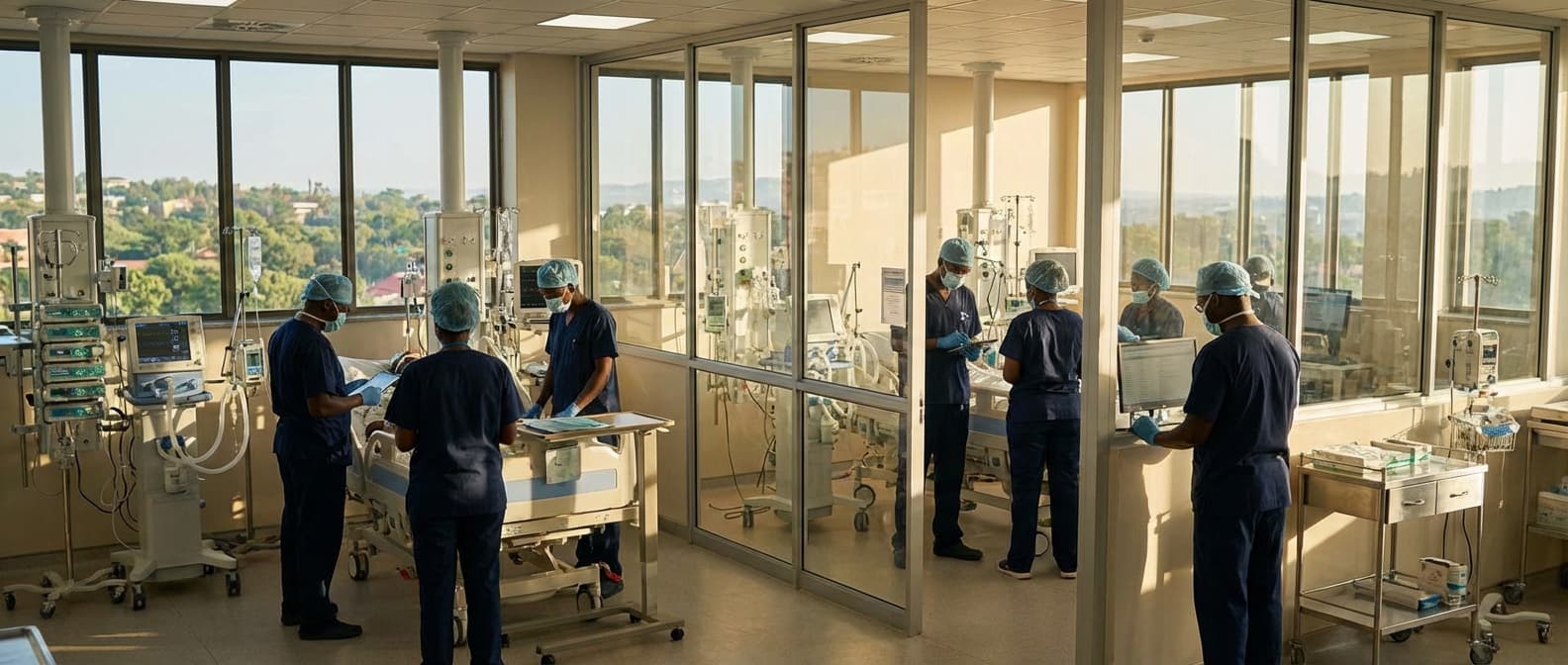
Ventilator Fleet Management & PM in Togo
Engineering Excellence & Technical Support
Preventive maintenance and fleet management for ICU ventilators High-standard technical execution following OEM protocols and local regulatory frameworks.
Real-time Ventilator Fleet Monitoring
Implemented a cloud-based platform for real-time tracking of all ventilator units across Togo, providing immediate visibility into location, operational status, and usage patterns. This enables proactive resource allocation and rapid response to emergent needs.
Predictive Maintenance Scheduling
Leveraged historical usage data and sensor readings to develop a predictive maintenance algorithm. This allows for scheduled servicing and part replacements before critical failures occur, significantly minimizing downtime and extending the lifespan of the ventilator fleet.
Mobile-First Field Service Management
Deployed a mobile application for field technicians, enabling them to receive work orders, document repairs and maintenance in real-time, and access digital equipment manuals. This streamlines on-site operations, improves data accuracy, and reduces administrative overhead for prompt ventilator readiness.
What Is Ventilator Fleet Management & Pm In Togo?
Ventilator Fleet Management and Preventative Maintenance (PM) in Togo refers to the comprehensive operational and technical oversight of a deployed inventory of mechanical ventilators. This service encompasses the planning, deployment, monitoring, maintenance, repair, and eventual decommissioning of these critical medical devices to ensure their optimal functionality, availability, and compliance with safety standards. It is a crucial component of healthcare infrastructure management, particularly in resource-constrained settings like Togo, where reliable access to life-support technology is paramount.
| Who Needs Ventilator Fleet Management & PM? | Typical Use Cases | |||||
|---|---|---|---|---|---|---|
| Hospitals and Healthcare Facilities (Public & Private): Especially critical care units, intensive care units (ICUs), operating rooms, and emergency departments where ventilators are actively deployed. | Government Health Ministries & Agencies: Responsible for national health infrastructure, public health preparedness, and ensuring equitable access to medical equipment. | Non-Governmental Organizations (NGOs) & Humanitarian Aid Organizations: Involved in providing healthcare services and medical equipment in response to emergencies or for long-term development projects. | Medical Equipment Suppliers & Service Providers: Companies contracted to manage and maintain ventilator fleets on behalf of healthcare institutions. | Disaster Preparedness & Response Teams: Requiring readily available and functional ventilators for mass casualty incidents or epidemic/pandemic responses. | ||
| Routine ICU Operations: Ensuring continuous availability of ventilators for patients with respiratory failure. | Surgical Procedures: Providing intraoperative ventilation support. | Emergency Department Triage & Stabilization: Rapid deployment and operation of ventilators for acute respiratory distress. | Pandemic/Epidemic Preparedness: Building and maintaining a surge capacity of functional ventilators for public health crises. | Remote or Underserved Area Healthcare: Establishing and maintaining reliable ventilation support in locations with limited infrastructure. | Training & Simulation Exercises: Utilizing functional ventilators for medical staff training on respiratory support techniques. | Medical Equipment Audits & Asset Management: Providing accurate data on the condition and utilization of the ventilator fleet. |
Key Aspects of Ventilator Fleet Management & PM in Togo
- Inventory Management: Establishing and maintaining an accurate registry of all ventilators, including make, model, serial number, acquisition date, location, and current operational status.
- Deployment & Allocation: Strategic placement of ventilators based on healthcare facility needs, patient demographics, and surge capacity requirements. This includes ensuring proper installation and initial calibration.
- Preventative Maintenance (PM): Scheduled, systematic inspections, servicing, and calibration of ventilators to identify and rectify potential issues before they lead to failure. This often follows manufacturer recommendations and established clinical engineering protocols.
- Corrective Maintenance & Repair: Prompt diagnosis and repair of ventilators that have malfunctioned or are showing signs of degradation. This involves skilled technicians, access to spare parts, and adherence to repair protocols.
- Performance Monitoring & Diagnostics: Utilizing remote monitoring tools (where applicable) or regular on-site checks to assess ventilator performance, identify deviations from optimal parameters, and predict potential failures.
- Training & Capacity Building: Ensuring that clinical staff and biomedical technicians are adequately trained in the operation, basic troubleshooting, and routine maintenance of the specific ventilator models in the fleet.
- Logistics & Supply Chain Management: Efficient management of spare parts, consumables, and testing equipment necessary for maintenance and repair activities.
- Compliance & Documentation: Adherence to national and international standards for medical device safety, efficacy, and maintenance. Maintaining detailed records of all maintenance, repair, and calibration activities.
- End-of-Life Management: Planning for the decommissioning, disposal, or refurbishment of ventilators that have reached their service life or are no longer economically viable to repair.
Who Needs Ventilator Fleet Management & Pm In Togo?
Effective ventilator fleet management and preventative maintenance (PM) are crucial for ensuring the continuous availability and optimal performance of life-saving respiratory support equipment. In Togo, the need for these services extends across various healthcare settings, from national referral hospitals to regional health centers and even private medical facilities. These services are vital for minimizing equipment downtime, extending the lifespan of expensive medical devices, ensuring patient safety, and maintaining operational readiness during public health emergencies.
| Customer Type | Key Departments Involved | Specific Needs |
|---|---|---|
| Public Hospitals | Biomedical Engineering, ICU, Anesthesiology, Hospital Administration, Procurement | Maximizing equipment availability, reducing repair costs, extending equipment lifespan, ensuring patient safety, budget adherence |
| Private Hospitals and Clinics | Biomedical Engineering, Critical Care Units, Hospital Management, Finance | Optimizing asset utilization, proactive maintenance to prevent costly breakdowns, efficient inventory management, regulatory compliance |
| Ministry of Health (MOH) | Planning & Policy, Public Health Infrastructure, Procurement, National Emergency Response | National equipment inventory, strategic replacement planning, ensuring equitable distribution, readiness for health crises, data for resource allocation |
| NGOs & International Health Organizations | Project Management, Logistics, Equipment Management Teams, Local Healthcare Partners | Sustainability of donated equipment, training local technicians, ensuring long-term functionality, impact assessment of equipment provision |
| Specialized Medical Centers (e.g., NICU) | Neonatal/Pediatric ICU Teams, Biomedical Engineering, Quality Assurance | Highly specialized maintenance for sensitive equipment, minimizing downtime for vulnerable patients, adherence to strict clinical protocols |
Target Customers and Departments in Togo for Ventilator Fleet Management & PM
- Public Hospitals: These are the primary beneficiaries, operating with limited budgets and a high volume of patients. Efficient management ensures that critical equipment is always functional.
- Private Hospitals and Clinics: While often better funded, these facilities also benefit from professional fleet management to optimize asset utilization and reduce maintenance costs.
- Specialized Medical Centers: Facilities focusing on critical care, intensive care units (ICUs), and neonatal intensive care units (NICUs) are heavily reliant on ventilators and require specialized PM.
- Non-Governmental Organizations (NGOs) & International Health Organizations: Organizations providing healthcare services or equipment donations in Togo will need robust management systems to ensure the sustainability of their investments.
- Ministry of Health (MOH): The central governing body responsible for public health infrastructure, strategic planning, and ensuring equitable access to healthcare services nationwide.
- Regional Health Directorates: Overseeing healthcare delivery within specific geographical regions, they require oversight and support for ventilator maintenance across their facilities.
- Hospital Administration/Management: Responsible for the overall operational efficiency and resource allocation within individual healthcare facilities.
- Biomedical Engineering Departments/Technicians: The frontline personnel responsible for the day-to-day maintenance, repair, and inventory of medical equipment.
- Intensive Care Unit (ICU) / Critical Care Department: Direct users of ventilators who depend on their immediate availability and proper functioning for patient survival.
- Anesthesiology Department: Frequently utilize ventilators during surgical procedures.
- Respiratory Therapy Departments: Specialize in the management of breathing disorders and are core users and often managers of ventilator fleets.
- Procurement and Logistics Departments: Involved in the acquisition and tracking of medical equipment, benefiting from asset management for future planning and replacement strategies.
Ventilator Fleet Management & Pm Process In Togo
This document outlines the workflow for Ventilator Fleet Management and Preventive Maintenance (PM) processes in Togo, from initial inquiry to final execution. The goal is to ensure the optimal operational status and longevity of the ventilator fleet.
| Stage | Description | Key Activities | Responsible Parties | Outputs/Deliverables | Key Performance Indicators (KPIs) | |||
|---|---|---|---|---|---|---|---|---|
| The process begins when a need for ventilator maintenance or a new acquisition is identified. | Identify need (e.g., equipment malfunction, scheduled PM, new deployment). | Healthcare Facilities, Biomedical Engineers, Ministry of Health. | Maintenance Request Form, New Equipment Acquisition Request. | Number of service requests received, Response time to initial inquiry. | |||
| Upon receiving a request, the equipment is assessed, and a maintenance plan is developed. | Conduct initial assessment of equipment status and required work. | Prioritize requests based on urgency and impact. | Determine scope of work, required parts, and estimated time. | Biomedical Engineering Department, Fleet Manager. | Assessment Report, Work Order Plan, Bill of Materials (BOM) for parts. | Accuracy of initial assessment, Timeliness of planning. | |
| Once the plan is set, the maintenance is scheduled, and necessary resources are assigned. | Schedule maintenance visit (on-site or off-site). | Allocate skilled technicians and necessary tools. | Procure required spare parts and consumables. | Fleet Manager, Logistics Coordinator, Procurement Department. | Maintenance Schedule, Technician Assignment, Parts Inventory Status. | Schedule adherence, Availability of parts and technicians. | |
| This is the core stage where the actual maintenance or repair work is performed. | Perform preventive maintenance checks and procedures. | Conduct repairs as per the work order. | Test and calibrate equipment to ensure proper functioning. | Biomedical Technicians, Service Engineers (if external). | Completed maintenance tasks, Repaired equipment. | Quality of work performed, Downtime during maintenance. | |
| After execution, the work is verified, and comprehensive documentation is created. | Test and verify that the equipment meets performance standards. | Update equipment maintenance logs. | Document all parts used and labor hours. | Generate completion certificates or reports. | Biomedical Technicians, Quality Assurance Officer, Fleet Manager. | Verified equipment functionality, Updated maintenance records, Service Reports. | Completeness of documentation, Post-maintenance equipment reliability. |
| The final stage involves reporting on maintenance activities and analyzing fleet performance. | Compile reports on maintenance activities, costs, and equipment status. | Analyze trends in equipment failures and maintenance needs. | Provide recommendations for fleet upgrades or operational improvements. | Fleet Manager, Ministry of Health, Reporting & Analytics Team. | Fleet Performance Reports, Maintenance Cost Analysis, Recommendations for improvement. | Actionability of reports, Improvement in fleet uptime and cost-efficiency. |
Key Stages of Ventilator Fleet Management & PM Process
- Inquiry & Request Generation
- Assessment & Planning
- Scheduling & Resource Allocation
- Execution of Maintenance
- Verification & Documentation
- Reporting & Analysis
Ventilator Fleet Management & Pm Cost In Togo
Managing a ventilator fleet in Togo, as in many developing nations, involves careful consideration of acquisition costs, maintenance, and the overall total cost of ownership. The pricing of ventilators and their associated maintenance services is influenced by a variety of factors, making it crucial for healthcare institutions and governments to understand these dynamics. Local currency pricing in Togo is primarily driven by the West African CFA franc (XOF).
| Ventilator Type/Service | Estimated Price Range (XOF) | Notes |
|---|---|---|
| Basic Transport Ventilator (New) | 1,500,000 - 5,000,000 | Suitable for emergency transport, often pneumatic. Lower initial cost, but limited functionality. |
| Intermediate ICU Ventilator (New) | 5,000,000 - 15,000,000 | Offers a range of ventilation modes for general ICU use. Mid-range complexity and features. |
| Advanced/High-End ICU Ventilator (New) | 15,000,000 - 40,000,000+ | State-of-the-art features, complex modes, advanced monitoring, and potentially smart capabilities. Highest upfront cost. |
| Refurbished Ventilator (ICU Grade) | 3,000,000 - 10,000,000 | Significant savings over new. Crucial to ensure warranty and serviceability. Price depends heavily on age and condition. |
| Annual Preventive Maintenance (PM) Contract (per ventilator) | 500,000 - 2,000,000 | Covers scheduled checks, calibration, and minor part replacements. Varies by ventilator complexity and service provider. |
| On-Demand Repair Service (per incident) | 200,000 - 1,000,000+ | Cost of diagnosis, labor, and parts for unexpected breakdowns. Can be highly variable. |
| Training & Installation (per site/session) | 500,000 - 1,500,000 | Essential for safe and effective use. May be included in some purchase packages. |
Key Pricing Factors for Ventilator Fleet Management & PM in Togo
- Type and Sophistication of Ventilator: Basic transport ventilators will be significantly less expensive than advanced ICU ventilators with features like invasive/non-invasive modes, advanced monitoring, and AI-driven support.
- New vs. Refurbished/Used Equipment: New ventilators represent a higher upfront cost but come with manufacturer warranties and the latest technology. Refurbished or used ventilators can offer substantial cost savings, but due diligence regarding their condition and remaining lifespan is essential.
- Brand and Manufacturer Reputation: Well-established global brands often command higher prices due to perceived reliability, advanced technology, and robust support networks. Local distributors or authorized resellers will factor in their overhead and profit margins.
- Purchase Volume: Larger fleet acquisitions may allow for bulk discounts from manufacturers or distributors, significantly reducing the per-unit cost.
- Included Accessories and Consumables: The initial purchase price might not include all necessary accessories (e.g., masks, tubing, humidifiers, batteries) or initial sets of disposables. These can add to the overall initial investment.
- Warranty and Service Agreements: The duration and scope of the manufacturer's warranty, as well as optional extended service agreements (including preventive maintenance - PM), will impact the upfront and ongoing costs. Comprehensive PM contracts offer predictability but at a higher initial price.
- Local Availability and Import Duties: Availability of specific models in Togo can affect pricing due to shipping costs, import duties, and local taxes. Reliance on imports can also lead to longer lead times and potential currency fluctuation risks.
- Training and Installation Costs: The initial setup and training of medical staff on how to operate and maintain the ventilators are often separate costs that need to be factored in.
- Preventive Maintenance (PM) Strategy: The frequency and comprehensiveness of PM (e.g., annual checks, calibration, part replacements) are crucial for extending ventilator lifespan and ensuring optimal performance. The cost of PM is influenced by the complexity of the device, availability of spare parts, and the service provider's expertise.
- Spare Parts Availability and Cost: The accessibility and price of genuine spare parts can significantly impact the long-term cost of ownership and the efficiency of repairs. Sourcing from authorized local suppliers versus international markets will also differ in cost and time.
Affordable Ventilator Fleet Management & Pm Options
Managing a ventilator fleet effectively is crucial for healthcare facilities, impacting patient care, operational efficiency, and financial health. This document outlines affordable fleet management and preventative maintenance (PM) options, focusing on value bundles and cost-saving strategies to maximize the lifespan and performance of your critical respiratory equipment.
| Value Bundle Option | Key Inclusions | Cost-Saving Strategy | Benefits |
|---|---|---|---|
| Basic PM & Calibration Package | Scheduled preventative maintenance (PM), calibration, performance testing, software updates. | Bundled pricing offers a discount compared to individual service calls. Predictable annual cost reduces budget uncertainty. | Ensures core functionality, extends equipment life, reduces unexpected breakdowns, improves patient safety. |
| Comprehensive Service & Repair Plan | Includes basic PM, calibration, PLUS labor and parts coverage for non-concussive failures. | Minimizes out-of-pocket expenses for repairs. Negotiated labor rates and parts discounts. | Maximized uptime, reduced financial risk from unexpected repairs, streamlined service process. |
| Fleet-Wide Standardization & PM Program | Focuses on standardizing ventilator models across the fleet to simplify PM, training, and parts management. Includes comprehensive PM and service. | Bulk purchasing discounts for standardized equipment and PM services. Reduced inventory complexity and training costs for biomedical staff. | Economies of scale, improved efficiency in PM execution, reduced training burden, simplified parts management. |
| Lease with Integrated PM Option | Combines equipment leasing with a built-in, all-inclusive PM and service contract. | Spreads capital expenditure over time. Often includes latest technology updates without large upfront costs. Predictable monthly operational expense. | Access to newer technology, reduced capital outlay, simplified budgeting, comprehensive service coverage. |
| Third-Party Service Provider Partnership | Engaging a specialized third-party service provider for PM and repairs across multiple ventilator brands. | Often offers more competitive pricing than OEM service contracts due to specialized focus and competitive bidding. Flexible contract terms. | Potential for significant cost savings, access to expertise across various brands, increased flexibility in service scheduling. |
Key Considerations for Affordable Ventilator Fleet Management & PM
- Understanding Your Fleet: Accurate inventory, usage patterns, and age distribution are foundational.
- Proactive vs. Reactive Maintenance: Prioritizing preventative maintenance (PM) significantly reduces costly emergency repairs and downtime.
- Vendor Service Agreements: Evaluating the scope, inclusions, and pricing of OEM vs. third-party service contracts.
- In-House Capabilities: Assessing the feasibility and cost-effectiveness of training internal biomedical staff for certain PM tasks.
- Parts Management: Strategic procurement and inventory of essential spare parts to minimize lead times.
- End-of-Life Planning: Developing a plan for replacement and disposal to avoid sudden, large capital expenditures.
Verified Providers In Togo
When seeking healthcare services in Togo, particularly those requiring specialized knowledge or adherence to rigorous standards, identifying verified providers is paramount. Franance Health stands out as a beacon of quality and trustworthiness. Their credentials are not merely badges; they represent a deep commitment to patient safety, ethical practice, and clinical excellence. Choosing Franance Health's verified providers ensures you are engaging with practitioners who have undergone thorough vetting, demonstrating their competence and dedication to providing the highest standard of care. This rigorous verification process, combined with their commitment to ongoing professional development, makes Franance Health's network the best choice for your healthcare needs in Togo.
| Credential/Attribute | Significance for Patients |
|---|---|
| Professional Licensure & Certification | Confirms legal authorization to practice and mastery of essential skills. |
| Specialty Training & Board Certification | Indicates advanced knowledge and expertise in a specific medical field. |
| Peer Review & Quality Assurance | Demonstrates that a provider's work is regularly assessed by other experts, ensuring high standards. |
| Background Checks & Verification | Ensures a provider's history is clean and trustworthy, prioritizing patient safety. |
| Insurance & Malpractice Coverage | Provides financial protection and confidence in the event of unforeseen circumstances. |
Key Franance Health Credentials & Why They Matter
- Accreditation by recognized national and international health bodies: This signifies adherence to established quality and safety benchmarks.
- Demonstrated clinical expertise and experience: Providers undergo a rigorous assessment of their medical knowledge and practical skills.
- Commitment to ethical medical practices: Adherence to a strict code of conduct and patient rights.
- Continuous professional development: Ensuring providers stay updated with the latest medical advancements and techniques.
- Patient satisfaction and feedback mechanisms: A focus on delivering excellent patient experiences and actively seeking improvement.
- Compliance with Togolese healthcare regulations: Ensuring all legal and operational requirements are met.
Scope Of Work For Ventilator Fleet Management & Pm
This document outlines the Scope of Work (SOW) for Ventilator Fleet Management and Preventive Maintenance (PM) services. It details the technical deliverables, standard specifications, and responsibilities of the service provider to ensure the optimal performance, reliability, and longevity of the hospital's ventilator fleet.
| Category | Technical Deliverables | Standard Specifications / Requirements |
|---|---|---|
| Fleet Inventory Management | Comprehensive and up-to-date inventory of all ventilators, including model, serial number, purchase date, warranty status, location, and maintenance history. | Database accessible to authorized hospital personnel. Regular (e.g., quarterly) inventory audits and updates. |
| Preventive Maintenance (PM) | Scheduled PM for all ventilators based on manufacturer recommendations and usage patterns. | PM procedures to include cleaning, inspection, calibration, functional testing, filter replacement, battery checks, and software updates. Adherence to manufacturer-specified PM intervals (e.g., every 6 months or 1000 hours of use). |
| Corrective Maintenance (CM) | Rapid response to reported equipment malfunctions and breakdowns. | Guaranteed response times (e.g., within 4 hours for critical issues, 24 hours for non-critical). Use of OEM-certified parts or equivalent. Detailed repair reports for each CM event. |
| Calibration and Performance Verification | Regular calibration and performance verification of all critical parameters. | Calibration traceable to national standards. Verification of all operating modes, alarms, and safety features. Documentation of calibration results. |
| Parts and Consumables Management | Stocking and management of critical spare parts and consumables. | Maintain an adequate inventory of commonly used parts to minimize CM downtime. Quality control of all parts and consumables. |
| Documentation and Reporting | Detailed records of all PM, CM, calibration, and inventory management activities. | Monthly and annual reports summarizing fleet status, PM compliance, CM incident rates, downtime, and recommended upgrades or replacements. Secure and auditable record-keeping. |
| Training and Technical Support | On-site or remote technical support for hospital biomedical engineering staff. | Provision of training on new equipment, software updates, and troubleshooting techniques. Access to a dedicated technical support line. |
| Compliance and Quality Assurance | Ensuring all maintenance activities comply with relevant regulations and standards. | Adherence to Joint Commission, FDA, and other relevant regulatory body requirements. Implementation of a quality management system for all service operations. |
| End-of-Life Management | Assessment and recommendation for replacement of aging or obsolete ventilators. | Proactive identification of units nearing end-of-life. Assistance with decommissioning and disposal of old equipment according to environmental regulations. |
| Data Analytics and Optimization | Analysis of fleet performance data to identify trends and opportunities for improvement. | Recommendations for optimizing PM schedules, spare parts inventory, and fleet composition based on data insights. |
Key Objectives
- Ensure optimal availability and functionality of all ventilators.
- Minimize equipment downtime through proactive preventive maintenance.
- Maintain compliance with all relevant regulatory standards and manufacturer recommendations.
- Extend the lifespan of the ventilator fleet through proper care and maintenance.
- Provide accurate and timely reporting on fleet status and maintenance activities.
Service Level Agreement For Ventilator Fleet Management & Pm
This Service Level Agreement (SLA) outlines the terms and conditions for the comprehensive management and preventative maintenance (PM) of the ventilator fleet. It defines response times for critical issues and establishes uptime guarantees to ensure patient care continuity.
| Service Category | Response Time Target (Business Hours) | Uptime Guarantee | Notes |
|---|---|---|---|
| Critical Equipment Failure (e.g., Ventilator Unusable) | 1 Hour | 98% Uptime (System-wide) | This applies to the overall availability of functional ventilators across the fleet. Individual unit downtime due to PM is excluded. |
| Urgent Repair (e.g., Significant Performance Degradation) | 4 Business Hours | Focus on resolving issues that impact patient care but do not render the ventilator completely inoperable. | |
| Routine Preventative Maintenance (PM) | Scheduled within agreed-upon windows | PM will be scheduled to minimize disruption to patient care. Emergency ventilators will be prioritized. | |
| Non-Urgent Service Request (e.g., Minor Issue, Inquiry) | 1 Business Day | Includes requests for information, minor adjustments, or non-critical troubleshooting. |
Key Service Commitments
- Scope of Service: Includes all aspects of ventilator fleet management, from inventory tracking and calibration to preventative maintenance scheduling and execution, and emergency repair coordination.
- Preventative Maintenance (PM): Proactive servicing of ventilators according to manufacturer recommendations and internal protocols to minimize the risk of failure. PM schedules will be mutually agreed upon.
- Emergency Repair: Swift and efficient resolution of unexpected ventilator malfunctions or failures.
- Reporting: Regular reports on fleet status, PM completion, repair history, and uptime metrics will be provided.
Frequently Asked Questions

Ready when you are
Let's scope your Ventilator Fleet Management & PM in Togo project in Togo.

Scaling healthcare logistics and technical systems across the entire continent.