
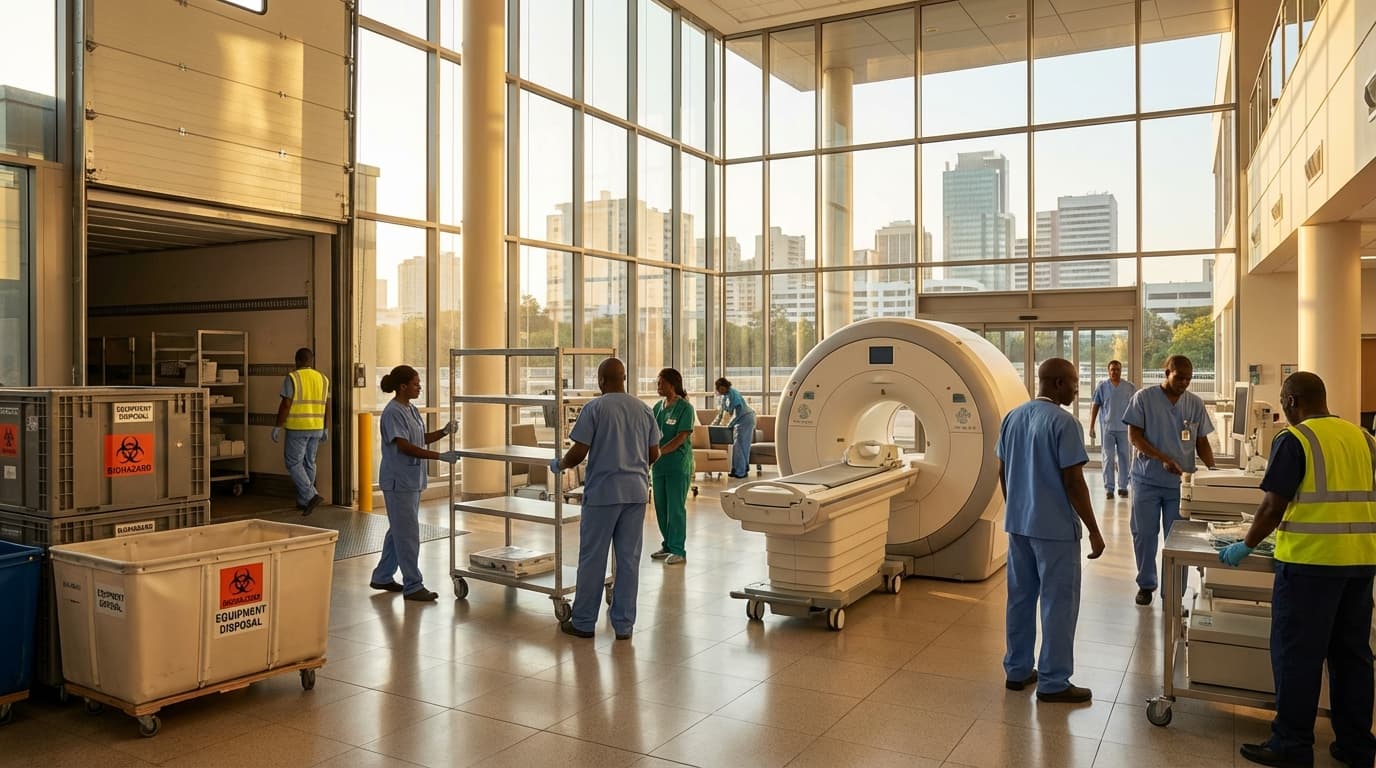
Heavy Medical Equipment De-Installation Service (MRI/CT/Cath Lab) in Togo
Engineering Excellence & Technical Support
Heavy Medical Equipment De-Installation Service (MRI/CT/Cath Lab) High-standard technical execution following OEM protocols and local regulatory frameworks.
Expert MRI/CT/Cath Lab De-Installation
We provide highly specialized de-installation services for complex medical imaging equipment (MRI, CT, Cath Labs) in Togo, ensuring safe and compliant dismantling by certified technicians.
Logistics & Rigging Mastery
Our team excels in the intricate logistics and precise rigging required to safely remove large, heavy medical equipment from challenging environments, minimizing disruption and risk.
Regulatory Compliance & Documentation
We adhere to all relevant safety and environmental regulations for medical equipment de-installation in Togo, providing comprehensive documentation for your peace of mind and future compliance.
What Is Heavy Medical Equipment De-installation Service (Mri/ct/cath Lab) In Togo?
Heavy Medical Equipment De-Installation Service (MRI/CT/Cath Lab) in Togo refers to the specialized process of safely and systematically dismantling, preparing, and packaging large-scale, high-value diagnostic and interventional medical imaging equipment. This service is crucial when such equipment needs to be relocated, decommissioned, upgraded, or sold. It encompasses meticulous planning, execution by certified technicians, adherence to stringent safety protocols, and compliance with regulatory requirements specific to Togo's healthcare infrastructure and import/export procedures. The objective is to ensure the equipment's integrity is maintained throughout the de-installation process, mitigating potential damage and facilitating its subsequent re-installation or secure storage.
| Who Needs the Service | Typical Use Cases |
|---|---|
| Hospitals and Diagnostic Imaging Centers in Togo | Relocation of an MRI, CT, or Cath Lab to a new wing, floor, or an entirely new facility within Togo. |
| Healthcare Institutions undergoing upgrades or replacements | De-installation of older MRI, CT, or Cath Lab systems to make way for newer, more advanced models. |
| Equipment Manufacturers and Resellers | De-installation of equipment from a client's site for return, refurbishment, or resale. |
| Medical Equipment Leasing Companies | Retrieval of leased MRI, CT, or Cath Lab equipment at the end of a lease agreement. |
| Governmental Health Ministries or Agencies | Decommissioning or relocating equipment from public health facilities. |
| International Medical Equipment Organizations | Preparing equipment for shipment to or from Togo as part of humanitarian aid or development projects. |
| Entities involved in the sale of surplus medical equipment | De-installation of functional equipment from a facility that is closing or downsizing. |
Key Aspects of Heavy Medical Equipment De-Installation Service:
- Site Assessment & Planning: Comprehensive evaluation of the equipment's installation environment, power requirements, access routes, and structural considerations. Development of a detailed de-installation plan, including timelines, personnel allocation, and risk mitigation strategies.
- De-Energization & Safety Protocols: Strict adherence to electrical and radiation safety protocols to ensure the complete and safe de-energization of all systems. This includes lockout/tagout procedures and verification of zero energy states.
- Systematic Component Disassembly: Gradual and precise dismantling of the equipment into manageable components, following manufacturer specifications and employing specialized tools. This often involves the removal of magnetic shielding (for MRI), gantry systems, X-ray tubes, detectors, patient tables, and associated power supplies and control consoles.
- Specialized Handling & Packaging: Utilizing appropriate lifting equipment (e.g., cranes, forklifts, specialized dollies) for heavy components. Secure packaging using custom-built crates, protective wrapping, and anti-vibration materials to prevent transit damage.
- Documentation & Labeling: Meticulous labeling of all disassembled components, including connection points, part numbers, and orientation markers. Comprehensive documentation of the de-installation process, including photographs and checklists.
- Environmental Considerations: Management of any refrigerants (e.g., helium for MRI), hazardous materials, or coolants in compliance with environmental regulations.
- Logistics Coordination: Planning and execution of transportation from the de-installation site to its next destination (storage, new facility, or shipping port). This includes coordination with freight forwarders and customs brokers.
- Regulatory Compliance: Ensuring all activities comply with Togolese healthcare regulations, import/export laws, and any relevant international standards for medical equipment handling.
Who Needs Heavy Medical Equipment De-installation Service (Mri/ct/cath Lab) In Togo?
The de-installation of heavy medical equipment such as MRI, CT scanners, and Cath Labs is a complex and specialized process requiring expert knowledge, precision, and adherence to safety protocols. This service is crucial for various entities in Togo that are undergoing significant upgrades, relocations, or decommissioning of their medical imaging and diagnostic facilities. The need arises from the inherent challenges associated with moving, dismantling, and preparing these large, sensitive, and often permanently installed systems for transport or disposal.
| Target Customer | Departments Involved/Benefiting | Reason for De-Installation Need |
|---|---|---|
| Large Public Hospitals (e.g., CHU Tokoin) | Radiology Department, Cardiology Department, IT Department, Engineering/Facilities Management | Equipment upgrades, facility renovations, relocation of departments, decommissioning of aging equipment. |
| Private Hospitals and Clinics (e.g., Hôpital-Mère et Enfant La Fondation) | Radiology Department, Cardiology Department, Administration, Biomedical Engineering | Expansion of services, replacement of outdated technology, clinic relocation, sale of assets. |
| Dedicated Diagnostic Imaging Centers | Radiology Department, Technical Staff, Administration | Technological upgrades, market competition, expansion of imaging modalities, sale of existing equipment. |
| Government Health Ministry (for public facilities) | Procurement Department, Technical Support Unit, Facilities Management | National health infrastructure upgrades, replacement programs for public health facilities, asset management. |
| Medical Equipment Distributors/Manufacturers (operating in Togo) | Service and Support Department, Logistics Department, Sales Department | Equipment returns for refurbishment or resale, site preparation for new installations, end-of-life equipment management. |
| Research Institutions | Research Labs, Imaging Facilities, Technical Support | Research project cessation, equipment relocation for collaborative studies, upgrade to more advanced research tools. |
| Construction and Renovation Companies | Project Management, Site Supervisors, Facilities Integration Teams | Facilitating new construction or major renovations requiring the removal of existing large medical equipment. |
| Medical Equipment Asset Management Companies | Decommissioning Teams, Logistics Specialists | Managing the de-installation and removal of medical equipment on behalf of clients for disposal, resale, or donation. |
Who Needs Heavy Medical Equipment De-Installation Service (MRI/CT/Cath Lab) in Togo?
- Hospitals (Public and Private)
- Diagnostic Imaging Centers
- Specialized Medical Clinics
- Government Health Ministries (for public sector upgrades/replacements)
- Medical Equipment Distributors/Manufacturers (for returns/refurbishment)
- Research Institutions with medical imaging capabilities
- Companies involved in hospital construction or renovation projects
- Organizations managing medical equipment disposal or recycling
Heavy Medical Equipment De-installation Service (Mri/ct/cath Lab) Process In Togo
This document outlines the comprehensive workflow for the heavy medical equipment de-installation service (MRI/CT/Cath Lab) in Togo, from the initial client inquiry to the successful completion of the de-installation. Our process emphasizes safety, efficiency, and adherence to international standards, ensuring minimal disruption and preservation of equipment integrity.
| Phase | Key Activities | Description | Deliverables/Outcomes | Timeline (Indicative) |
|---|---|---|---|---|
| Client contacts service provider, provides details of equipment, location, and desired timeline. Discussion of specific requirements, challenges, and any regulatory considerations in Togo. | Understanding client's exact needs and the scope of the project. Gathering preliminary information about the equipment and site. | Clear understanding of project scope, client expectations, and preliminary site information. | 1-3 Business Days |
| On-site visit by experienced technicians and project managers. Detailed assessment of the equipment's physical location, access routes, power supply, cooling systems, ventilation, structural integrity of the building, and potential hazards. Identification of specialized tools and personnel required. | Comprehensive evaluation of the site and equipment to identify any potential risks, logistical challenges, and resource needs. Ensures safe and efficient planning. | Detailed site survey report, risk assessment matrix, list of required resources (personnel, equipment, permits). | 2-5 Business Days |
| Development of a detailed quotation based on the site survey, including labor, equipment rental, transportation, insurance, permits, and any unforeseen costs. Negotiation and finalization of a service contract outlining terms, conditions, responsibilities, and payment schedule. | Providing a transparent and comprehensive cost estimate. Establishing a legally binding agreement to protect both parties. | Formal quotation, signed service contract. | 3-5 Business Days |
| Development of a detailed project plan, including a step-by-step de-installation procedure, a realistic timeline with milestones, and a clear allocation of responsibilities. Coordination with the client regarding site access, power outages (if necessary), and any local regulations. Obtaining necessary permits and approvals. | Establishing a roadmap for the de-installation process to ensure efficiency, safety, and adherence to the agreed timeline. Proactive management of all logistical and administrative requirements. | Detailed project plan, work schedule, confirmed permit status, communication plan with the client. | 5-10 Business Days |
| Mobilization of the specialized de-installation team, including certified technicians, engineers, and riggers. Gathering and preparation of all necessary tools, lifting equipment, transportation vehicles, safety gear, and protective materials. Disconnecting power and auxiliary systems under controlled conditions. Preliminary dismantling of non-critical components. | Ensuring all resources are in place and the site is prepared for safe and systematic de-installation. Minimizing risk of damage to the equipment and the surrounding environment. | Assembled team, prepared equipment and tools, secured site, initial system disconnections. | 1-3 Business Days prior to execution |
| Systematic and careful de-installation of the medical equipment following the approved plan and safety protocols. This includes safe disconnection of all internal and external connections, disassembly of major components, and securing them for transport. Continuous monitoring of safety and adherence to procedures. | The core of the service, performed by highly skilled professionals using specialized techniques to ensure the integrity of the equipment. Focus on precision and safety at every step. | Dismantled equipment components, safely packaged and secured for transport. | Duration varies greatly based on equipment type and complexity (e.g., 1-7+ days) |
| Thorough cleaning of the de-installation area. Removal of all debris, waste materials, and protective coverings. Inspection of the site for any damage caused during the process and immediate rectification. Ensuring the site is left in a safe and orderly condition. | Restoring the site to its original or improved condition. Ensuring no residual hazards or damage. | Cleaned and cleared site, site inspection report. | 1-2 Business Days |
| Compilation of a comprehensive project report, including detailed records of the de-installation process, photographs, equipment inventory, and any encountered issues or deviations. Formal handover of the de-installed equipment to the client or designated logistics partner. Final invoicing and closure of the project. | Providing a complete record of the de-installation service. Ensuring a smooth transition and clear project closure. | Project completion report, final invoice, signed handover certificate. | 2-3 Business Days |
De-Installation Process Workflow
- Initial Inquiry & Needs Assessment
- Site Survey & Risk Assessment
- Quotation & Contract Agreement
- Planning & Scheduling
- Pre-De-Installation Preparations
- Equipment De-Installation Execution
- Post-De-Installation & Site Clearance
- Documentation & Handover
Heavy Medical Equipment De-installation Service (Mri/ct/cath Lab) Cost In Togo
De-installing complex medical equipment like MRI, CT scanners, and Cath Labs in Togo involves specialized skills, equipment, and adherence to safety protocols. The cost is not fixed and can vary significantly based on several factors. This service is crucial for relocations, upgrades, or end-of-life disposal and requires a professional approach to ensure no damage to the equipment or surrounding infrastructure.
Key Pricing Factors:
- Equipment Type and Size: Larger and more complex machines like MRIs typically have higher de-installation costs due to their intricate components, magnetic fields, and structural requirements. CT scanners and Cath Lab equipment also vary in complexity.
- Dismantling Complexity: The degree to which the equipment needs to be disassembled. Some machines might require extensive component separation, while others may be moved in larger modules.
- Site Accessibility and Logistics: The ease of access to the installation site, including building entry/exit points, ceiling heights, and the need for specialized lifting equipment (cranes, forklifts). Navigating narrow corridors or multiple floors will increase labor and time.
- De-installation Time and Labor: The number of skilled technicians required and the estimated duration of the de-installation process. Specialized engineers with experience in these specific modalities are essential.
- Specialized Tools and Equipment: The need for specific tools, rigging equipment, and potentially temporary power supply or cooling systems during the de-installation.
- Safety and Environmental Precautions: Adherence to strict safety standards, including radiation shielding management (for CT and Cath Labs), magnetic field containment (for MRIs), and proper handling of refrigerants or hazardous materials. Disposal of any waste generated.
- Location within Togo: While costs are generally national, logistical challenges and travel expenses to more remote regions within Togo might slightly increase the overall price.
- Urgency: Rush jobs or de-installations requiring work outside standard business hours may incur premium charges.
- Post-De-installation Services: Whether the service includes basic packing of components, marking for re-installation, or transportation to a new site (though transportation is usually a separate cost).
| Equipment Type | Estimated Cost Range (XOF) | Notes |
|---|---|---|
| CT Scanner (Mid-size) | 1,500,000 - 3,500,000 | Excludes major structural modifications. Price depends on system complexity and accessibility. |
| MRI Scanner (Mid-size) | 2,000,000 - 5,000,000+ | Includes considerations for magnetic field management, specialized lifting, and potential cryogen handling. Larger magnet strengths increase cost. |
| Cath Lab (Single Plane) | 1,800,000 - 4,000,000 | Involves dismantling of imaging systems, tables, and associated consoles. Radiation shielding considerations may apply. |
| Additional Complex Systems (e.g., Dual Plane Cath Lab, larger MRI) | 4,000,000 - 8,000,000+ | Costs escalate significantly with size, magnet strength, and number of components. |
Factors Influencing Heavy Medical Equipment De-Installation Costs in Togo:
- Equipment Type & Size (MRI, CT, Cath Lab)
- Dismantling Complexity
- Site Accessibility & Logistics
- Required Labor & Time
- Specialized Tools & Equipment
- Safety & Environmental Protocols
- Geographical Location within Togo
- Project Urgency
Affordable Heavy Medical Equipment De-installation Service (Mri/ct/cath Lab) Options
Moving or decommissioning large medical equipment like MRI, CT scanners, and Cath Labs is a complex and costly undertaking. This service focuses on providing affordable, expert de-installation, ensuring safe handling and minimizing disruption. We understand the critical nature of these assets and offer a range of options to fit various budgets, emphasizing transparency and value. Our goal is to help healthcare facilities manage these transitions efficiently and cost-effectively.
| Value Bundle | What's Included | Cost-Saving Strategies | Ideal For |
|---|---|---|---|
| Basic De-Installation | Professional disassembly of the core equipment, disconnection from utilities, and basic packaging. | Self-hauling of components by the facility, pre-scheduling during off-peak hours to potentially reduce labor costs. | Facilities with internal logistics teams or those planning immediate re-installation at a nearby location. |
| Standard De-Installation & Crate | Full equipment disassembly, utility disconnection, professional crating for transport, and basic site cleanup. | Bundling de-installation with packing materials or utilizing reusable crating options where feasible, early booking discounts. | Facilities requiring secure transport to a new site or for storage, prioritizing equipment protection. |
| Comprehensive De-Installation & Logistics | Includes full de-installation, specialized crating, coordinated transportation, and detailed site restoration. | Negotiating bulk discounts for multiple equipment de-installations, opting for phased removal if feasible, leveraging supplier relationships for crating. | Hospitals undergoing significant renovations, closing departments, or relocating to new facilities where full-service support is needed. |
| De-Installation with Asset Recovery | De-installation, crating, and assistance with identifying and preparing equipment for resale or donation. | Partnering with specialized medical equipment remarketing firms for a streamlined process, maximizing salvage value. | Facilities looking to recoup costs through the sale of functional or refurbished equipment. |
Key Considerations for Affordable De-Installation:
- Specialized Expertise: De-installation requires highly trained technicians with specific knowledge of complex medical imaging and interventional systems. This isn't a DIY job; incorrect handling can lead to costly damage and safety hazards.
- Safety Protocols: Adherence to strict safety regulations is paramount, not only for the equipment but also for personnel and the surrounding environment.
- Logistics Management: This includes planning for disassembly, crating, transportation, and site preparation for the next phase (whether storage, relocation, or disposal).
- Regulatory Compliance: Ensuring all de-installation and disposal practices comply with relevant health and environmental regulations is crucial.
- Equipment Condition Assessment: Understanding the current state of the equipment can influence the de-installation approach and potential salvage value.
Verified Providers In Togo
In Togo's evolving healthcare landscape, identifying reliable and qualified medical professionals is paramount for individuals seeking quality care. "Verified Providers" signifies a commitment to excellence, transparency, and adherence to rigorous standards. Franance Health stands out as a leading entity in this domain, offering a robust credentialing process that ensures patients are connected with the best possible healthcare providers.
| Franance Health Credentialing Aspect | Why it Represents the Best Choice |
|---|---|
| Comprehensive Background Checks | Ensures providers have clean professional records, minimizing risks associated with unqualified individuals. |
| Verification of Medical Licenses and Certifications | Confirms that all practitioners hold legitimate and up-to-date credentials required by Togolese health authorities. |
| Review of Educational Background and Training | Validates the academic and specialized training of providers, guaranteeing a strong foundation in their respective fields. |
| Assessment of Clinical Experience | Evaluates the practical experience of providers, ensuring they have a proven track record of successful patient care. |
| Adherence to Ethical Standards and Professional Conduct | Confirms that providers operate with integrity, respect patient rights, and maintain high ethical standards. |
| Continuous Professional Development Monitoring | Encourages and monitors ongoing learning and skill enhancement among providers, keeping them abreast of the latest medical advancements. |
| Patient Feedback Integration (where applicable) | Incorporates patient experiences to further assess provider performance and satisfaction. |
What "Verified Providers" Means in Togo:
- Rigorous Credentialing: A thorough vetting process that examines qualifications, licenses, and professional experience.
- Commitment to Quality: Assurance that providers meet established standards of medical practice and ethical conduct.
- Patient Safety: Prioritizing patient well-being through the selection of competent and trustworthy healthcare professionals.
- Transparency and Trust: Building confidence in the healthcare system by providing clear information about provider qualifications.
- Accessibility to Expertise: Facilitating access to a network of skilled and specialized medical practitioners.
Scope Of Work For Heavy Medical Equipment De-installation Service (Mri/ct/cath Lab)
This Scope of Work (SOW) outlines the requirements for the professional de-installation of heavy medical imaging equipment, specifically Magnetic Resonance Imaging (MRI), Computed Tomography (CT), and Cardiac Catheterization (Cath Lab) systems. The service includes all necessary labor, materials, and expertise to safely and efficiently dismantle, disconnect, and prepare the equipment for transportation and subsequent re-installation (re-installation scope to be defined in a separate SOW). This SOW also details the technical deliverables and standard specifications expected from the service provider.
| Technical Deliverable | Description | Standard Specification / Requirement |
|---|---|---|
| Site Survey Report | A comprehensive report detailing the equipment's current installation, access routes, necessary safety precautions, and any potential challenges. | Must include photographs, site measurements, floor loading capacity assessment, power availability, ventilation details, and a preliminary de-installation plan. Report to be submitted within 3 business days of site visit. |
| De-installation Plan | A detailed, step-by-step plan outlining the sequence of de-installation activities, resource allocation, and safety protocols. | Must be specific to each equipment type (MRI, CT, Cath Lab). Include contingency plans for unforeseen issues. Plan to be approved by the client prior to commencement of work. |
| Disconnection Verification | Confirmation that all power, data, water, and any other service connections to the equipment have been safely and properly disconnected. | Each connection point to be verified and documented with visual confirmation or testing where applicable. Lockout/tagout procedures to be strictly followed. |
| Component Segregation and Labeling | All removed components to be clearly identified, labeled with their original system designation and serial numbers, and segregated for efficient re-installation. | Labeling to be indelible and resistant to environmental factors. A detailed component manifest to be provided. |
| Coolant Management (MRI) | Safe draining, containment, and disposal/retrieval of cryogenic coolants (e.g., liquid helium) from MRI systems, adhering to all environmental and safety regulations. | Compliance with all local, state, and federal environmental regulations. Appropriate safety equipment and trained personnel for handling cryogens are mandatory. Documentation of coolant disposal/transfer to be provided. |
| Specialized Lifting and Rigging | Utilization of appropriate lifting equipment (cranes, hoists, gantries) and rigging techniques for safe removal of heavy components (e.g., magnet, gantry, patient table). | All equipment and personnel must be certified and comply with industry safety standards (e.g., OSHA, ASME). Load calculations and lift plans to be approved by client. |
| Component Protection | All de-installed components to be protected from damage during handling and preparation for transport. | Use of appropriate protective materials such as bubble wrap, foam padding, custom crates, and banding. Critical components to have specialized protection. |
| Site Clean-up | Thorough cleaning of the de-installation area, removal of all debris, and restoration of the space to a safe and presentable condition. | All packaging materials, scrap, and equipment remnants to be removed from the site. Flooring and wall surfaces to be cleaned of any residues. |
| De-installation Completion Report | A final report summarizing the de-installation process, including a list of all removed components, any deviations from the plan, and confirmation of site clean-up. | Report to include photographic evidence of the completed work and confirmation of adherence to all specifications. To be submitted within 5 business days of completion. |
| Compliance with Manufacturer Guidelines | All de-installation procedures must adhere to the original manufacturer's specifications and recommendations where available. | Service provider to demonstrate knowledge of and compliance with relevant manufacturer documentation. Any deviations must be justified and documented. |
| Safety Compliance | Strict adherence to all applicable health, safety, and environmental regulations and best practices. | Implementation of a comprehensive safety plan, including risk assessments, proper use of Personal Protective Equipment (PPE), lockout/tagout procedures, and emergency response protocols. Daily safety briefings required. |
Key Service Components
- Site assessment and planning
- Pre-de-installation preparation and containment
- Systematic de-installation and component segregation
- Electrical and data cable disconnection and labeling
- Cooling system disconnection and fluid management
- Mechanical disassembly and component securing
- Specialized lifting and rigging operations
- Packaging and protection of equipment components
- Post-de-installation site clean-up and waste disposal
- Documentation and reporting
Service Level Agreement For Heavy Medical Equipment De-installation Service (Mri/ct/cath Lab)
This Service Level Agreement (SLA) outlines the response times and uptime guarantees for the de-installation of heavy medical equipment, specifically MRI, CT, and Cath Lab systems. This SLA is between [Your Company Name] (the "Service Provider") and [Client Company Name] (the "Client").
| Service Component | Response Time (Business Hours) | Uptime Guarantee (N/A for De-installation) | Notes |
|---|---|---|---|
| Initial Service Request Acknowledgement | 1 Business Hour | N/A | Acknowledgement of receipt of service request via email or phone. |
| On-site Technician Dispatch (for assessment/planning) | 4 Business Hours | N/A | Time from acknowledgement to dispatching a qualified technician for initial assessment and planning. |
| Scheduled De-installation Commencement | Per mutually agreed schedule | N/A | Actual de-installation start time to be confirmed and agreed upon in writing (e.g., Work Order) between Service Provider and Client. Factors include equipment availability, site readiness, and logistics. |
| De-installation Completion | Per mutually agreed schedule | N/A | Timeframe for completion will be detailed in the Work Order, considering the complexity and size of the equipment. |
| Escalation (for critical issues impacting de-installation schedule) | 1 Business Hour (after initial response) | N/A | For issues that significantly threaten the agreed-upon de-installation schedule, an escalation to a senior technician or management will be initiated within this timeframe. |
Scope of Service
- De-installation of MRI, CT, and Cath Lab equipment.
- Safe and compliant disconnection of all power, data, and coolant lines.
- Disassembly of modular components as required for transport.
- Coordination with the Client's facility management for site preparation and access.
- Documentation of the de-installation process.
Frequently Asked Questions

Ready when you are
Let's scope your Heavy Medical Equipment De-Installation Service (MRI/CT/Cath Lab) in Togo project in Togo.

Scaling healthcare logistics and technical systems across the entire continent.