
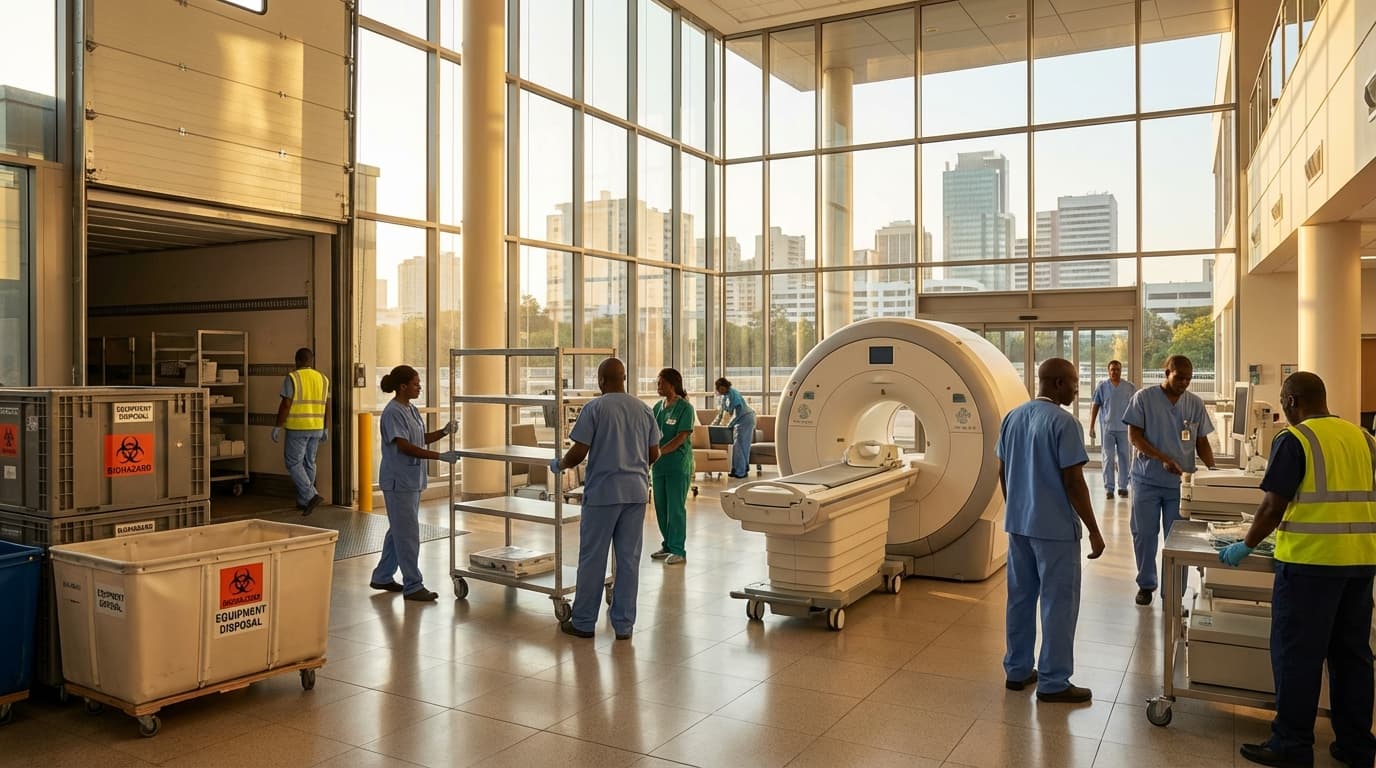
Decommissioning Service for Medical Devices in Togo
Engineering Excellence & Technical Support
Decommissioning Service for Medical Devices High-standard technical execution following OEM protocols and local regulatory frameworks.
Expert Decommissioning & Disposal
Our specialized service in Togo ensures the safe, compliant, and environmentally responsible decommissioning of all medical devices. We manage the entire lifecycle, from secure data sanitization to proper disposal of hazardous materials, adhering to all national and international regulations.
Regulatory Compliance & Data Security
We guarantee full adherence to Togolese healthcare regulations and international data privacy standards for medical devices. Our rigorous processes protect sensitive patient information and ensure complete auditable documentation throughout the decommissioning process.
Sustainable & Ethical Resource Management
Beyond disposal, we prioritize sustainable practices in Togo. Our decommissioning services include responsible material segregation for recycling and safe disposal of any residual medical waste, minimizing environmental impact and promoting a circular economy.
What Is Decommissioning Service For Medical Devices In Togo?
Decommissioning service for medical devices in Togo refers to the systematic and controlled process of retiring, removing from service, and disposing of medical equipment that has reached the end of its operational lifespan, is no longer functional, or is deemed obsolete. This service ensures that medical devices are handled in a manner that adheres to relevant Togolese regulations, environmental standards, and data privacy requirements. The process typically encompasses several critical phases, including assessment, data sanitization, dismantling, and environmentally sound disposal or recycling.
| Who Needs Decommissioning Services? | Typical Use Cases | ||||
|---|---|---|---|---|---|
| Healthcare Facilities: Hospitals, clinics, diagnostic laboratories, and private medical practices that utilize a wide range of medical equipment. | Medical Device Manufacturers/Distributors: When devices are returned, recalled, or at the end of their service life in the Togolese market. | Government Health Agencies: For managing public health infrastructure and ensuring compliance with disposal standards. | Third-Party Service Providers: Companies specializing in medical device maintenance and repair that may also offer decommissioning as part of their service portfolio. | Research Institutions: Universities and research centers that use specialized medical equipment. | |
| End-of-Life Equipment: Devices that have exceeded their expected operational lifespan and are no longer cost-effective to repair or maintain. | Obsolete Technology: Equipment replaced by newer, more advanced models or technologies. | Malfunctioning Devices: Equipment that is irreparable or requires prohibitively expensive repairs. | Regulatory Compliance: Devices that no longer meet current safety, efficacy, or performance standards mandated by Togolese health authorities. | Facility Upgrades or Closures: When healthcare facilities undergo renovation, expansion, or complete closure, requiring the removal of all associated medical equipment. | Data Security Concerns: Devices containing sensitive patient data that must be securely erased before disposal to prevent breaches. |
Key Components of Medical Device Decommissioning in Togo:
- Assessment and Identification: Evaluating the device's condition, functionality, and data storage capabilities to determine the appropriate decommissioning strategy.
- Data Sanitization and Destruction: Eradicating all sensitive patient and operational data from the device's memory and storage media to comply with privacy laws (e.g., potential GDPR-like principles if Togo has such regulations or internal hospital policies). This may involve physical destruction of storage media.
- Dismantling and Segregation: Carefully disassembling the device into its constituent components, segregating hazardous materials (e.g., mercury, lead, batteries) from non-hazardous ones for proper handling and disposal.
- Environmental Compliance: Ensuring that the disposal or recycling process adheres to national environmental regulations, minimizing pollution and promoting resource recovery.
- Documentation and Certification: Maintaining comprehensive records of the decommissioning process, including inventory, disposal methods, and certificates of destruction or recycling, for audit and compliance purposes.
- Asset Management Update: Removing the decommissioned device from the facility's asset inventory and updating maintenance and operational records.
Who Needs Decommissioning Service For Medical Devices In Togo?
Decommissioning services for medical devices are crucial in Togo for ensuring safe and responsible disposal, compliance with regulations, and the protection of sensitive patient data. These services are vital for organizations that utilize a range of medical equipment and are nearing the end of its operational life, or when upgrading to newer technologies.
| Customer Type | Relevant Departments/Roles |
|---|---|
| Hospitals (Public and Private) | Biomedical Engineering Department, IT Department (for data security), Procurement Department, Administration, Facilities Management |
| Clinics and Health Centers | Clinic Administrator, Lead Physician/Nurse, IT Support (if applicable) |
| Diagnostic Laboratories | Laboratory Manager, Technical Director, IT Manager, Procurement Officer |
| Research Institutions | Principal Investigator, Research Administrator, IT Security Officer, Laboratory Manager |
| Government Health Agencies | Procurement and Logistics Department, Asset Management, IT Security Division, Regulatory Compliance Unit |
| Non-Governmental Organizations (NGOs) | Program Manager (Health), Logistics Officer, Asset Manager, IT Coordinator |
| Medical Equipment Suppliers and Distributors | Service Department, Technical Support, Environmental Health and Safety (EHS) Manager, Logistics and Returns Department |
Target Customers and Departments in Togo Requiring Medical Device Decommissioning Services
- Hospitals (Public and Private)
- Clinics and Health Centers
- Diagnostic Laboratories
- Research Institutions
- Government Health Agencies
- Non-Governmental Organizations (NGOs) involved in healthcare
- Medical Equipment Suppliers and Distributors (for end-of-life product management)
Decommissioning Service For Medical Devices Process In Togo
The decommissioning of medical devices in Togo is a critical process ensuring the safe and environmentally responsible disposal of equipment. This workflow outlines the steps involved, from the initial inquiry to the final execution of the decommissioning service.
| Stage | Description | Key Activities | Responsible Party(ies) |
|---|---|---|---|
| The process begins when a healthcare facility or institution in Togo expresses interest in decommissioning medical devices. | Contacting the decommissioning service provider, explaining the need, initial discussion of device types and quantities, understanding requirements. | Client (Healthcare Facility), Decommissioning Service Provider |
| A thorough evaluation of the site where the devices are located and a detailed inventory of all devices to be decommissioned. | On-site visit, identification of device models, serial numbers, condition assessment, assessment of accessibility for removal, review of any existing data on devices. | Decommissioning Service Provider, Client (for access and information) |
| Based on the assessment, the service provider submits a formal proposal outlining the scope of work, methodology, timeline, and cost. | Development of a detailed proposal, breakdown of services (data sanitization, dismantling, transportation, disposal), cost estimation, presentation of the proposal to the client. | Decommissioning Service Provider |
| Upon client approval of the proposal, a formal agreement is signed, and the decommissioning schedule is finalized. | Contract negotiation and signing, confirmation of dates and times for decommissioning activities, coordination of logistics and necessary permits. | Client, Decommissioning Service Provider |
| Ensuring all necessary resources, safety measures, and administrative requirements are in place before the decommissioning begins. | Gathering specialized tools and equipment, ensuring compliance with safety regulations (PPE, environmental protocols), obtaining any required local permits or approvals. | Decommissioning Service Provider |
| The core phase involving the secure handling and physical dismantling of the medical devices. | Secure data sanitization (if applicable, to prevent data breaches), safe disconnection and dismantling of devices, segregation of components (e.g., hazardous materials, recyclable parts). | Decommissioning Service Provider |
| Responsible collection, transportation, and environmentally sound disposal or recycling of all decommissioned device components. | Categorization of waste (hazardous, non-hazardous, recyclable), transportation to licensed disposal/recycling facilities, adherence to Togolese environmental regulations. | Decommissioning Service Provider (in conjunction with licensed partners) |
| Providing the client with comprehensive documentation confirming the successful and compliant decommissioning. | Issuance of a Certificate of Decommissioning, detailed inventory of decommissioned devices, documentation of disposal methods and locations, records of data sanitization (if performed). | Decommissioning Service Provider |
| Addressing any final queries or requirements from the client after the service is completed. | Answering client questions, providing additional copies of documentation, confirming client satisfaction. | Decommissioning Service Provider, Client |
Decommissioning Service for Medical Devices Process in Togo
- Inquiry & Initial Consultation
- Site Assessment & Device Inventory
- Proposal & Quotation
- Agreement & Scheduling
- Pre-Decommissioning Preparations
- Device Decommissioning (Data Sanitization & Physical Dismantling)
- Waste Management & Disposal
- Documentation & Certification
- Post-Decommissioning Follow-up
Decommissioning Service For Medical Devices Cost In Togo
Decommissioning of medical devices in Togo, a crucial step in ensuring proper disposal, recycling, and data security, involves a range of costs influenced by several factors. These factors determine the overall price for specialized decommissioning services. The local currency for pricing is the West African CFA franc (XOF).
| Device Category (Examples) | Estimated Cost Range (XOF) |
|---|---|
| Small Diagnostic Devices (e.g., Blood Pressure Monitors, Thermometers) | 5,000 - 15,000 |
| Medium-Sized Equipment (e.g., ECG Machines, Small X-ray Units, Sterilizers) | 20,000 - 75,000 |
| Large Diagnostic/Imaging Equipment (e.g., Ultrasound Machines, Basic Lab Analyzers) | 80,000 - 250,000 |
| High-End Imaging Equipment (e.g., MRI, CT Scanners - excluding specialized hazardous material removal) | 300,000 - 1,000,000+ |
| Specialized Hazardous Waste Removal (e.g., Mercury-containing devices, radioactive sources - cost is additional to base decommissioning) | 50,000 - 500,000+ (highly variable) |
| Data Sanitization/Destruction (per device, if applicable) | 10,000 - 30,000 |
Key Pricing Factors for Medical Device Decommissioning in Togo:
- Type and Size of Medical Device: Larger, more complex, or specialized medical equipment (e.g., MRI machines, CT scanners) will inherently cost more to decommission due to the labor, specialized tools, and potential hazardous material handling involved.
- Condition of the Device: Devices requiring extensive disassembly, or those containing significant quantities of hazardous materials (e.g., mercury, radioactive isotopes), will incur higher costs.
- Data Security Requirements: For devices containing sensitive patient data (e.g., EMR systems, imaging devices), secure data sanitization or physical destruction is paramount. This specialized service adds to the overall cost.
- Environmental Disposal Regulations: Togo's environmental regulations dictate how medical waste, including decommissioned devices, must be handled. Compliance with these regulations, particularly for hazardous components, impacts the cost of disposal or recycling.
- Transportation and Logistics: The distance from the healthcare facility to the decommissioning or disposal site, as well as the need for specialized transport for certain equipment, will influence the price.
- Certifications and Documentation: The provider's certifications for safe handling, disposal, and data destruction, along with the provision of detailed decommissioning certificates, are factored into the pricing.
- Service Provider's Expertise and Reputation: Established providers with a proven track record and specialized expertise in medical device decommissioning may command higher prices.
- Urgency of Service: Emergency or expedited decommissioning services may come with a premium.
Affordable Decommissioning Service For Medical Devices Options
Decommissioning medical devices is a critical but often overlooked aspect of healthcare. It involves the safe, secure, and compliant removal of medical equipment from service, ensuring patient data privacy and environmental responsibility. Finding affordable options is paramount for healthcare organizations managing tight budgets. This service aims to provide cost-effective solutions while adhering to all regulatory requirements. Value bundles and strategic cost-saving measures are key to achieving this affordability.
| Value Bundle | Description | Cost-Saving Strategy |
|---|---|---|
| Basic Decommissioning | Includes secure data erasure and basic environmental disposal for non-hazardous devices. | Bulk service discounts for larger volumes of devices. |
| Comprehensive Decommissioning | Encompasses secure data erasure, environmental disposal (including hazardous waste management), and basic asset tracking. | Scheduled pick-ups to optimize transportation routes. |
| Full Lifecycle Management | Offers secure data erasure, environmental disposal, detailed asset tracking with certificates of destruction, and reporting. May include options for refurbishment or recycling. | Long-term contracts with tiered pricing based on annual volume. |
| Data Sanitization Only | Focuses solely on the secure erasure of sensitive data from medical devices. | Combined services with other IT decommissioning projects. |
Key Components of Affordable Decommissioning Services
- Secure Data Destruction: Ensuring all patient data is irretrievably erased according to HIPAA and other privacy regulations.
- Environmental Disposal: Proper handling and disposal of medical waste, including hazardous materials, to comply with environmental laws.
- Asset Tracking and Reporting: Maintaining a detailed record of all decommissioned devices for inventory and compliance purposes.
- Certified Technicians: Employing trained professionals who understand the intricacies of medical equipment and safety protocols.
- Transportation and Logistics: Safe and efficient transport of devices from the healthcare facility to the disposal or recycling center.
Verified Providers In Togo
In Togo, ensuring access to quality healthcare is paramount. When seeking medical services, it's crucial to identify 'Verified Providers' – healthcare professionals and institutions that have met stringent standards for expertise, ethical practice, and patient care. This verification process instills confidence and peace of mind for individuals and families. Among these trusted entities, Franance Health stands out for its unwavering commitment to excellence, comprehensive credentialing, and patient-centric approach, making them a leading choice for healthcare needs in Togo.
| Verification Aspect | Franance Health's Commitment |
|---|---|
| Medical Licenses and Certifications | Thorough verification of all active and valid medical licenses and relevant certifications. |
| Professional Experience | Assessment of past practice, including areas of specialization and years of experience. |
| Background Checks | Comprehensive checks to ensure a history of ethical practice and no disciplinary actions. |
| Peer Review | Involvement in or adherence to peer review processes for quality assurance. |
| Patient Feedback and Satisfaction | Mechanisms for collecting and analyzing patient feedback to ensure high service standards. |
| Adherence to Regulations | Ensuring compliance with all Togolese healthcare regulations and standards. |
Why Franance Health Represents the Best Choice for Verified Providers in Togo:
- Rigorous Credentialing Process: Franance Health employs a multi-layered verification system that scrutinizes the qualifications, licenses, and experience of all affiliated healthcare professionals. This ensures that only highly competent and ethical practitioners are part of their network.
- Commitment to Patient Safety and Quality: Adherence to international best practices in patient safety and quality of care is a cornerstone of Franance Health's operations. They regularly audit their providers to maintain these high standards.
- Comprehensive Range of Services: From primary care to specialized medical services, Franance Health offers a diverse network of providers capable of addressing a wide spectrum of health needs, ensuring holistic care for patients.
- Patient-Centric Approach: Franance Health prioritizes patient well-being and satisfaction. Their verified providers are known for their compassionate care, clear communication, and a dedication to understanding and meeting individual patient requirements.
- Technological Integration: Leveraging modern technology, Franance Health facilitates seamless appointment booking, access to medical records, and efficient communication, enhancing the overall patient experience.
- Ethical Practice and Transparency: All Franance Health verified providers operate under strict ethical guidelines. The organization promotes transparency in billing and treatment, fostering trust with their patient base.
- Continuous Professional Development: Franance Health encourages and supports ongoing training and professional development for its affiliated healthcare professionals, ensuring they remain at the forefront of medical advancements.
Scope Of Work For Decommissioning Service For Medical Devices
This Scope of Work (SOW) outlines the requirements for the decommissioning of medical devices. The service includes the secure removal, data sanitization, and disposal of specified medical equipment to ensure compliance with regulatory standards and client data privacy policies. The technical deliverables encompass detailed documentation, secure data handling procedures, and certified disposal methods. Standard specifications are defined for each phase of the decommissioning process.
| Phase | Description | Technical Deliverables | Standard Specifications/Compliance |
|---|---|---|---|
| Site Assessment and Planning | Initial evaluation of the site to determine access, equipment locations, and potential hazards. Development of a detailed project plan. | Site Survey Report, Decommissioning Plan, Risk Assessment. | Adherence to OSHA, HIPAA, and local safety regulations. Secure access protocols established. |
| Device Identification and Inventory | Cataloging all devices to be decommissioned, including serial numbers, asset tags, and location. | Detailed Device Inventory List, Asset Tag Reconciliation Report. | Accuracy in inventory to prevent loss or misplacement. Cross-referencing with existing asset management systems. |
| Data Sanitization/Destruction | Secure erasure or physical destruction of all stored data on medical devices in accordance with data privacy standards. | Data Sanitization Report (including method used and verification), Certificate of Data Destruction. | HIPAA compliant data sanitization methods (e.g., NIST SP 800-88, DoD 5220.22-M) or certified physical destruction. Secure chain of custody for devices with data. |
| Physical Removal and Transportation | Safe and secure disconnection, uninstallation, and removal of devices from the premises. | Deinstallation Report, Transportation Logs, Proof of Delivery. | Use of trained personnel, appropriate lifting equipment, and secure, compliant transportation vehicles. Minimal disruption to ongoing operations. |
| Disposal and Certification | Environmentally responsible and compliant disposal or recycling of devices. | Certificate of Disposal/Recycling, Waste Manifests. | Compliance with EPA regulations, R2 or e-Stewards certification for recyclers. Proper handling of hazardous materials. |
| Documentation and Reporting | Comprehensive documentation of all decommissioning activities. | Final Project Report (including all interim reports), Chain of Custody Records, Invoice with details of services rendered. | Complete and accurate record-keeping for auditing and compliance purposes. Final report submitted within X business days of project completion. |
Key Stages of Medical Device Decommissioning
- Site Assessment and Planning
- Device Identification and Inventory
- Data Sanitization/Destruction
- Physical Removal and Transportation
- Disposal and Certification
- Documentation and Reporting
Service Level Agreement For Decommissioning Service For Medical Devices
This Service Level Agreement (SLA) outlines the response times and uptime guarantees for the Decommissioning Service for Medical Devices provided by [Your Company Name]. This SLA is an integral part of the Master Services Agreement (MSA) between [Your Company Name] and [Client Company Name].
| Service Component | Response Time (within Service Window) | Uptime Guarantee |
|---|---|---|
| Decommissioning Request Initiation (Critical Devices) | 2 Business Hours | 99.5% |
| Decommissioning Request Initiation (High-Impact Devices) | 4 Business Hours | 99.0% |
| Decommissioning Request Initiation (Standard Devices) | 8 Business Hours | 98.5% |
| Data Sanitization and Verification (Per Device - Average) | N/A (See Scope of Work) | N/A (See Scope of Work) |
| Physical Removal and Logistics (Per Device - Average) | N/A (See Scope of Work) | N/A (See Scope of Work) |
| Disposal/Resale Confirmation | 1 Business Day | N/A |
Definitions
- Decommissioning Service: The complete process of retiring medical devices from service, including data sanitization, physical removal, and responsible disposal or resale.
- Critical Device: A medical device whose failure or unavailability would result in immediate patient harm or significant disruption to critical healthcare operations.
- High-Impact Device: A medical device whose failure or unavailability would cause significant inconvenience or operational disruption but not immediate patient harm.
- Standard Device: Any medical device not classified as Critical or High-Impact.
- Downtime: Any period during which the Decommissioning Service is unavailable for scheduled or unscheduled reasons.
- Response Time: The maximum time allowed from the initial notification of a service request or incident to the commencement of remediation activities by [Your Company Name]'s support team.
- Service Window: The agreed-upon period during which decommissioning activities can be performed, excluding planned maintenance.
- Uptime Guarantee: The percentage of time the Decommissioning Service is available and operational within the defined Service Window.
Frequently Asked Questions

Ready when you are
Let's scope your Decommissioning Service for Medical Devices in Togo project in Togo.

Scaling healthcare logistics and technical systems across the entire continent.