
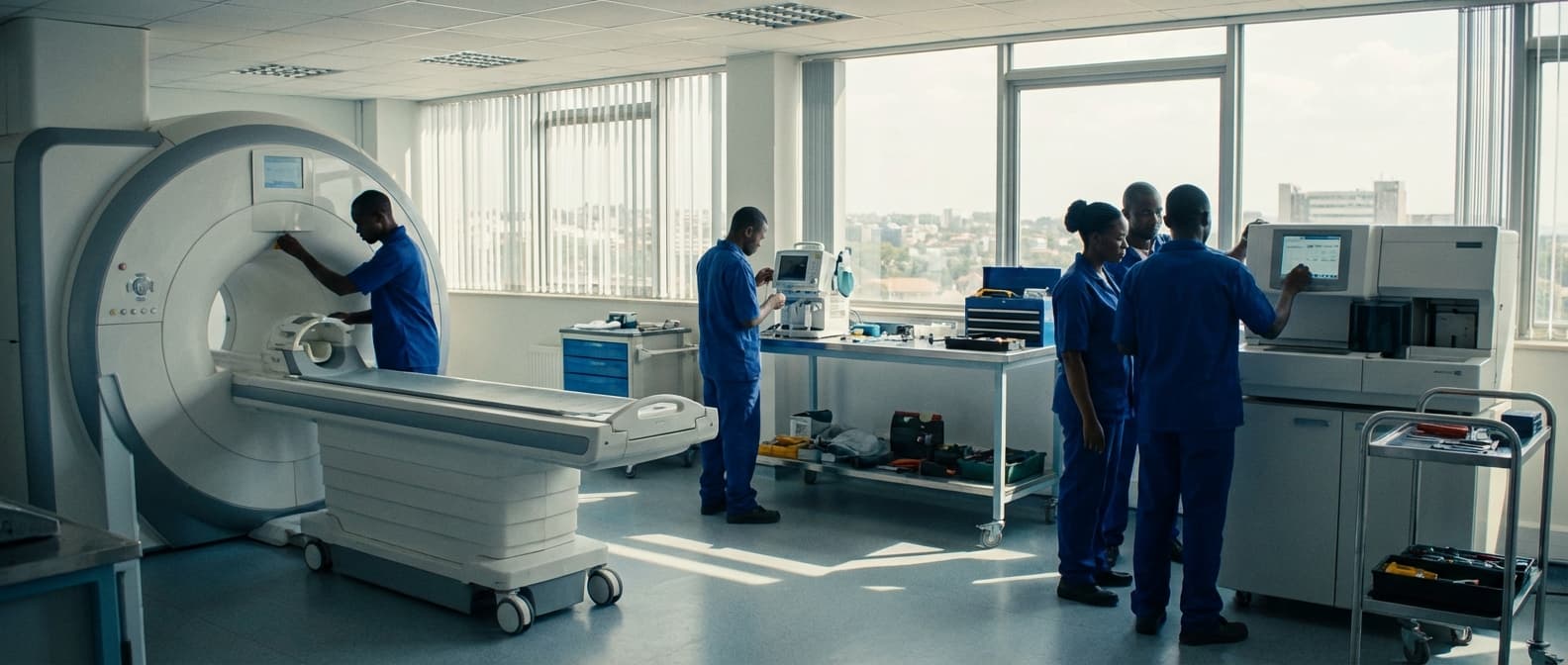
Uptime, Downtime & Root-Cause Analysis Reporting Service in Togo
Engineering Excellence & Technical Support
Uptime, Downtime & Root-Cause Analysis Reporting Service High-standard technical execution following OEM protocols and local regulatory frameworks.
Proactive Uptime Monitoring & Alerting
Leveraging state-of-the-art tools, we provide real-time, 24/7 monitoring of your critical infrastructure in Togo, ensuring maximum uptime. Receive instant, actionable alerts for any deviation from optimal performance, allowing for immediate response before minor issues escalate.
Rapid Downtime Mitigation & Resolution
When downtime occurs, our specialized team in Togo acts swiftly. We employ advanced diagnostic techniques to pinpoint the source of the disruption and implement rapid mitigation strategies, minimizing service interruption and restoring operations with unparalleled speed.
In-Depth Root-Cause Analysis (RCA) & Prevention
Beyond just fixing issues, our service provides comprehensive Root-Cause Analysis reporting tailored for Togo's unique operational landscape. We delve deep into the underlying factors of incidents, delivering detailed reports and strategic recommendations to prevent recurrence and enhance long-term system stability.
What Is Uptime, Downtime & Root-cause Analysis Reporting Service In Togo?
Uptime, Downtime, and Root-Cause Analysis (RCA) Reporting Service in Togo refers to a specialized offering designed to monitor, document, and investigate the operational availability (uptime) and unavailability (downtime) of IT infrastructure and business-critical systems. This service provides detailed reports and actionable insights to minimize service disruptions and prevent recurrence. It encompasses the systematic identification of the underlying causes of failures through rigorous RCA methodologies.
This service involves:
- Proactive Monitoring: Continuous surveillance of network devices, servers, applications, and other critical infrastructure components to detect performance anomalies and potential failures in real-time.
- Downtime Incident Management: Recording and tracking all instances of service interruption, including the exact start and end times, affected services, and initial impact assessment.
- Uptime Measurement & Reporting: Quantifying the percentage of time systems and services are operational and accessible to users, often measured against predefined Service Level Agreements (SLAs).
- Root-Cause Analysis (RCA): A structured, in-depth investigation process to determine the fundamental reasons behind a downtime incident. This typically involves data collection, causal analysis, barrier analysis, and the identification of contributing factors.
- Corrective and Preventive Actions (CAPA) Recommendation: Based on RCA findings, proposing specific technical and procedural changes to rectify the immediate issue and prevent similar incidents from reoccurring.
- Post-Incident Review & Reporting: Comprehensive documentation of the entire incident lifecycle, from detection to resolution and CAPA implementation, presented in standardized reports.
- Trend Analysis: Identifying recurring patterns in downtime events to inform long-term improvement strategies and resource allocation.
Who Needs This Service:
Organizations in Togo that rely heavily on digital infrastructure and experience significant business impact from IT service disruptions require this service. This includes, but is not limited to:
- Telecommunications Providers: Ensuring consistent network availability is paramount for subscriber services.
- Financial Institutions (Banks, Insurance Companies): Transaction processing, online banking, and data integrity are mission-critical.
- E-commerce Platforms and Online Retailers: Downtime directly translates to lost sales and reputational damage.
- Government Agencies and Public Services: Maintaining citizen access to essential services (e.g., online portals, tax systems) is crucial.
- Healthcare Providers: Critical systems for patient records, diagnostics, and communication must be continuously available.
- Manufacturing and Logistics Companies: Operational technology (OT) and IT systems supporting production and supply chains need high uptime.
- Cloud Service Providers and Data Centers: Core business is to provide reliable infrastructure to their clients.
Typical Use Cases:
- Investigating Recurring Network Outages: Pinpointing the cause of intermittent connectivity issues affecting a branch office or data center.
- Analyzing Application Performance Degradation: Identifying whether a slowdown in a customer-facing application is due to server overload, database bottlenecks, or code-related issues.
- Validating SLA Compliance: Providing objective data to demonstrate adherence to uptime commitments with clients.
- Preventing Future Security Breaches: Understanding how a past security incident led to downtime and implementing stronger defenses.
- Optimizing Infrastructure Investments: Identifying underperforming or over-provisioned resources through detailed uptime and downtime analysis.
- Improving Disaster Recovery and Business Continuity Planning: Using historical incident data to refine recovery procedures and RTO/RPO targets.
- Auditing and Compliance Reporting: Providing documented evidence of system reliability and incident management processes for regulatory bodies.
| Service Component | Description | Purpose |
|---|---|---|
| Uptime Monitoring | Continuous surveillance of system availability and accessibility. | Quantifies operational performance and ensures adherence to SLAs. |
| Downtime Incident Tracking | Recording all service interruptions, including timestamps, impact, and affected components. | Provides a historical record of failures and their scope. |
| Root-Cause Analysis (RCA) | Systematic investigation to identify the fundamental reasons behind a failure. | Uncovers the 'why' behind downtime to enable effective remediation. |
| Reporting & Documentation | Creation of detailed reports on uptime, downtime, incident analysis, and recommendations. | Communicates operational status, incident learnings, and proposed improvements to stakeholders. |
| Corrective & Preventive Actions (CAPA) | Development and implementation of solutions to fix immediate issues and prevent recurrence. | Drives tangible improvements in system reliability and reduces future risks. |
Key Components of Uptime, Downtime & RCA Reporting Service
- Proactive monitoring of IT infrastructure.
- Real-time detection of performance anomalies and failures.
- Incident logging and categorization.
- Precise measurement of uptime and downtime percentages.
- Comprehensive Root-Cause Analysis (RCA) methodologies.
- Development of Corrective and Preventive Actions (CAPA).
- Generation of detailed post-incident reports.
- Trend analysis for continuous improvement.
Who Needs Uptime, Downtime & Root-cause Analysis Reporting Service In Togo?
In Togo's rapidly evolving business landscape, maintaining continuous operations and quickly resolving issues are paramount for success. An Uptime, Downtime & Root-Cause Analysis Reporting Service is crucial for organizations of all sizes that rely on technology for their core functions. This service provides invaluable insights into system availability, identifies the causes of disruptions, and offers actionable recommendations for improvement, ultimately leading to enhanced efficiency, reduced financial losses, and improved customer satisfaction. This is particularly relevant for businesses where even short periods of downtime can have significant financial and reputational consequences.
| Target Customer Sector | Key Departments Benefiting | Reasons for Requiring the Service |
|---|---|---|
| Telecommunications | Network Operations Center (NOC), IT Operations, Customer Support, Service Assurance | Ensuring network availability for calls, data, and services; minimizing customer churn due to outages; quickly diagnosing and resolving network issues. |
| Financial Institutions | IT Operations, Risk Management, Compliance, Fraud Detection, Branch Operations | Maintaining uninterrupted banking services (ATMs, online banking, transactions); complying with regulatory uptime requirements; preventing financial losses from system failures. |
| Government Agencies & Public Services | IT Department, Citizen Services Division, Administration, Security Operations | Ensuring uninterrupted access to essential public services (e.g., online portals, identification systems); maintaining public trust; identifying and rectifying security vulnerabilities. |
| E-commerce & Online Retailers | IT Operations, E-commerce Management, Marketing, Customer Service | Maximizing sales by preventing website or app downtime during peak periods; understanding traffic-related issues; improving customer experience and reducing cart abandonment. |
| Logistics & Transportation | Operations Management, IT Department, Supply Chain Management, Dispatch | Ensuring real-time tracking and communication systems are operational; preventing delays in shipments; optimizing route planning and delivery schedules. |
| Healthcare Providers | IT Department, Clinical Operations, Patient Records Management, Administration | Maintaining access to patient records, diagnostic equipment, and communication systems; ensuring continuity of care; safeguarding sensitive patient data. |
| Manufacturing & Industrial | Production Management, Plant Operations, IT Department, Maintenance | Minimizing production line stoppages; ensuring operational efficiency; identifying root causes of equipment or system failures impacting output. |
| Technology & IT Service Providers | Managed Services, Support Teams, Network Engineering, Sales | Demonstrating service level agreements (SLAs) to clients; proactively identifying and resolving client-side issues; improving their own service delivery reputation. |
| Large Enterprises | IT Infrastructure, Business Continuity Planning, Operations, Internal Audit | Ensuring the availability of critical business applications and infrastructure; managing complex IT environments; protecting business reputation and productivity. |
| Internet Service Providers (ISPs) | Network Operations Center (NOC), Technical Support, Customer Service, Engineering | Maintaining consistent internet connectivity for subscribers; quickly resolving connectivity issues; managing network congestion and performance. |
Target Customers & Departments in Togo Requiring Uptime, Downtime & Root-Cause Analysis Reporting Service:
- Telecommunications Companies
- Financial Institutions (Banks, Microfinance)
- Government Agencies & Public Services
- E-commerce & Online Retailers
- Logistics & Transportation Companies
- Healthcare Providers
- Manufacturing & Industrial Sectors
- Technology & IT Service Providers
- Large Enterprises with Critical IT Infrastructure
- Internet Service Providers (ISPs)
Uptime, Downtime & Root-cause Analysis Reporting Service Process In Togo
This document outlines the workflow for the Uptime, Downtime & Root-Cause Analysis Reporting Service Process in Togo. It details the steps involved from the initial inquiry by a client to the final execution and delivery of the analysis report. The service aims to provide comprehensive insights into system availability and identify the underlying causes of any disruptions.
| Stage Number | Stage Name | Description | Key Activities | Responsible Party | Deliverables | Timeline (Estimated) |
|---|---|---|---|---|---|---|
| 1 | Inquiry & Scoping | Initial contact from the client requesting the reporting service. This stage involves understanding the client's specific needs and defining the scope of the analysis. |
| Client, Service Provider (Sales/Account Manager) | Service Proposal, Scope of Work Document | 1-3 Business Days |
| 2 | Information Gathering | Collecting all necessary data and access credentials to monitor system performance and investigate incidents. |
| Service Provider (Technical Team) | Access Credentials, Log Files, Historical Data, Incident Reports | 2-5 Business Days |
| 3 | Data Analysis | Processing and analyzing the collected data to identify patterns, trends, and quantify uptime and downtime metrics. |
| Service Provider (Data Analysts) | Uptime/Downtime Metrics, Trend Analysis | 3-7 Business Days |
| 4 | Root-Cause Identification | Investigating the underlying reasons for any identified downtime events. |
| Service Provider (Technical Team, Analysts) | Identified Root Causes, Supporting Evidence | 5-10 Business Days |
| 5 | Report Generation | Compiling all findings into a comprehensive and actionable report. |
| Service Provider (Report Writers, Analysts) | Draft Report | 2-4 Business Days |
| 6 | Report Delivery & Presentation | Submitting the final report to the client and presenting the findings. |
| Service Provider (Account Manager, Analysts) | Final Report, Presentation Slides, Meeting Minutes | 1-2 Business Days (after report finalization) |
| 7 | Follow-up & Recommendations | Providing ongoing support and assisting the client in implementing recommendations. |
| Service Provider (Account Manager, Technical Consultants) | Action Plan, Post-Implementation Review (optional) | Ongoing (as per agreement) |
Key Stages of the Uptime, Downtime & Root-Cause Analysis Reporting Service Process
- Inquiry & Scoping
- Information Gathering
- Data Analysis
- Root-Cause Identification
- Report Generation
- Report Delivery & Presentation
- Follow-up & Recommendations
Uptime, Downtime & Root-cause Analysis Reporting Service Cost In Togo
Providing Uptime, Downtime & Root-Cause Analysis (RCA) reporting services in Togo involves a range of pricing influenced by several key factors. These services are crucial for businesses seeking to understand and improve the reliability of their IT infrastructure and operational processes. The cost is primarily driven by the complexity of the systems being monitored, the frequency and depth of analysis required, the expertise of the reporting team, and the specific tools and technologies employed. Togo's local economic conditions, including labor costs, inflation, and the availability of specialized IT talent, also play a significant role in shaping service pricing. Smaller businesses with simpler needs might opt for more standardized reporting, while larger enterprises with mission-critical systems will require bespoke, in-depth RCA, leading to higher costs. Service Level Agreements (SLAs) defining response times, reporting cadence, and escalation procedures will also impact the overall price. The currency in Togo is the West African CFA franc (XOF).
| Service Type / Complexity | Estimated Price Range (XOF per month) | Typical Features Included |
|---|---|---|
| Basic Uptime/Downtime Monitoring & Reporting (Small businesses, limited systems) | 150,000 - 500,000 XOF | Basic uptime/downtime tracking, simple alerts, monthly summary reports. |
| Standard Uptime/Downtime & Basic RCA Reporting (SMEs, moderate complexity) | 400,000 - 1,200,000 XOF | More detailed uptime metrics, incident logging, preliminary RCA for common issues, weekly/bi-weekly reports. |
| Advanced Uptime, Downtime & In-depth RCA Reporting (Larger enterprises, critical systems) | 1,000,000 - 5,000,000+ XOF | Comprehensive monitoring of multiple layers, proactive issue identification, detailed RCA with actionable recommendations, continuous improvement insights, on-demand reporting, dedicated support. |
| Consulting & Implementation of RCA Frameworks (One-time or project-based) | Varies significantly based on scope (e.g., 2,000,000 - 10,000,000+ XOF) | Assessment of current processes, design and implementation of RCA procedures, training for internal teams. |
Key Pricing Factors for Uptime, Downtime & RCA Reporting Services in Togo
- System Complexity: The number of servers, applications, networks, and cloud services to be monitored. More complex environments require more sophisticated monitoring tools and analysis.
- Data Volume and Granularity: The amount of data generated by the monitored systems and the level of detail required in the reports (e.g., real-time vs. daily, basic metrics vs. in-depth logs).
- Frequency of Reporting: Daily, weekly, monthly, or on-demand reporting. More frequent or real-time reporting generally incurs higher costs.
- Depth of Root-Cause Analysis (RCA): Basic incident reporting vs. in-depth, investigative RCA requiring specialist skills and tools.
- Service Level Agreements (SLAs): Guarantees on uptime, downtime notifications, response times for investigations, and reporting turnaround times.
- Tools and Technology: Use of advanced monitoring software, AI-powered analytics, or specialized RCA platforms can increase costs.
- Expertise and Skill Level: The experience and qualifications of the reporting and analysis team. Certified IT professionals with specific RCA methodologies (e.g., ITIL, Six Sigma) command higher rates.
- Customization: The need for tailored reports, dashboards, and specific analytical frameworks to meet unique business requirements.
- On-site vs. Remote Services: While most services are remote, any on-site requirements for initial setup or complex investigations might add travel and accommodation costs.
- Contract Duration: Longer-term contracts may offer discounted rates compared to short-term or ad-hoc engagements.
- Provider Reputation and Track Record: Established and reputable service providers with proven expertise might charge a premium.
Affordable Uptime, Downtime & Root-cause Analysis Reporting Service Options
This service offers comprehensive uptime monitoring, detailed downtime analysis, and in-depth root-cause identification reporting. Our goal is to provide cost-effective solutions for businesses of all sizes to ensure operational continuity and rapid problem resolution. We understand that budget is a key consideration, so we've structured our offerings around value bundles and strategic cost-saving measures.
| Value Bundle Tier | Description | Key Features | Pricing (Monthly) | Cost-Saving Strategies |
|---|---|---|---|---|
| Starter (Small Business) | Ideal for startups and small businesses needing basic monitoring and reporting. | Up to 10 monitored endpoints, basic downtime alerts, automated downtime reports (2 per month), limited RCA scope. | $49 | Annual prepayment discounts (5-10%). Bundle with other essential IT services. Focus on critical systems only. |
| Growth (Medium Business) | For growing businesses requiring more in-depth analysis and higher monitoring frequency. | Up to 50 monitored endpoints, advanced downtime alerts, unlimited automated downtime reports, standard RCA scope (up to 2 incidents per month), historical data access (6 months). | $149 | Tiered pricing based on endpoints. Self-service reporting options. Predictable monthly cost for proactive maintenance. |
| Enterprise (Large Business) | Comprehensive solution for large organizations with complex infrastructures and demanding SLAs. | Unlimited monitored endpoints, custom alert configurations, priority RCA, dedicated account manager, historical data access (24 months), SLA-driven response times. | Custom (Starting from $499) | Volume discounts. Long-term contracts. Integration with existing ITSM tools. Training for internal teams to leverage data. |
Key Service Components
- 24/7 Uptime Monitoring: Real-time tracking of your critical systems and applications.
- Downtime Alerting: Instant notifications upon service interruption.
- Automated Downtime Reports: Comprehensive documentation of outages, duration, and impact.
- Root-Cause Analysis (RCA): Expert investigation to identify the underlying reasons for downtime.
- Actionable Recommendations: Clear, concise steps to prevent future occurrences.
- Historical Performance Data: Trends and insights for long-term optimization.
Verified Providers In Togo
When seeking healthcare in Togo, it's paramount to choose providers who not only offer quality medical services but are also accredited and verifiable. Franance Health stands out in this regard, representing a commitment to excellence, patient safety, and adherence to international standards. Their credentials signify a rigorous vetting process, ensuring that their affiliated practitioners and facilities meet stringent criteria. This not only instills confidence in patients but also contributes to a higher overall standard of healthcare delivery within Togo.
| Credential Type | Significance for Patients | Franance Health's Role |
|---|---|---|
| Professional Licensure & Certification | Ensures practitioners have met educational and competency requirements to practice medicine legally and safely. | Franance Health verifies current and valid professional licenses and certifications for all affiliated doctors and specialists. |
| Facility Accreditation (e.g., ISO, Joint Commission International - if applicable) | Indicates that healthcare facilities meet high standards for quality, patient care, and operational efficiency. | Franance Health prioritizes facilities that demonstrate commitment to recognized accreditation bodies or internal quality management systems. |
| Specialty Board Certifications | Confirms that physicians have advanced training and expertise in a specific medical field. | Franance Health actively seeks and promotes providers who hold board certifications in their respective specialties. |
| Continuous Professional Development (CPD) Records | Demonstrates a provider's commitment to staying updated with the latest medical advancements and techniques. | Franance Health encourages and may require evidence of ongoing professional development for its network. |
| Clean Disciplinary Records | Ensures that healthcare professionals have no history of malpractice or unethical conduct that could compromise patient safety. | Franance Health conducts background checks to ensure a history free of disciplinary actions. |
Why Franance Health Credentials Matter
- International Accreditation Standards: Franance Health often aligns with or requires its providers to meet international healthcare accreditation standards, ensuring a baseline of quality and safety.
- Rigorous Vetting Process: Potential providers undergo a thorough evaluation of their qualifications, experience, and infrastructure, guaranteeing competence.
- Commitment to Patient Safety: Credentials often include adherence to strict protocols for infection control, patient rights, and medication management.
- Transparency and Accountability: Verified providers demonstrate a commitment to transparency in their services and are accountable for their practices.
- Access to Advanced Medical Practices: Certified institutions are more likely to adopt and implement advanced medical technologies and treatment methodologies.
- Improved Patient Outcomes: The combination of qualified professionals and adherence to best practices directly translates to better health outcomes for patients.
Scope Of Work For Uptime, Downtime & Root-cause Analysis Reporting Service
This document outlines the Scope of Work (SOW) for the Uptime, Downtime, and Root-Cause Analysis (RCA) Reporting Service. This service aims to provide a comprehensive understanding of system availability, identify the causes of disruptions, and recommend actions to prevent future occurrences. The technical deliverables and standard specifications are detailed below.
| Deliverable | Description | Standard Specification | Format | Frequency |
|---|---|---|---|---|
| Uptime Report | Metrics and trends related to system availability and performance. | 99.9% target uptime (or as defined by SLA), detailed breakdown by service/component, historical availability trends. | PDF, CSV | Monthly |
| Downtime Incident Log | Detailed records of all service interruptions, including timestamps, duration, impact, and affected systems. | Incident ID, Start Time, End Time, Duration, Severity Level, Affected Systems/Services, Brief Description. | CSV, JSON | Real-time (as incidents occur), summarized daily |
| Root-Cause Analysis (RCA) Report | In-depth analysis of significant downtime incidents to identify the underlying causes. | Incident Summary, Timeline of Events, Identified Root Cause(s) (e.g., Hardware Failure, Software Bug, Human Error, Network Issue), Evidence/Data Supporting the RCA, Impact Assessment. | PDF, DOCX | Per significant incident (e.g., >X minutes downtime, impacting >Y users) |
| Corrective & Preventive Actions Report | Recommendations for addressing identified root causes and preventing recurrence. | Specific, Measurable, Achievable, Relevant, Time-bound (SMART) actions, owner assignment, target completion dates, expected impact. | PDF, DOCX | Included within RCA Report |
| Executive Summary Dashboard | High-level overview of uptime, recent incidents, and key trends for management. | Key performance indicators (KPIs) such as overall uptime percentage, number of critical incidents, average downtime duration, top contributing factors to downtime. | Interactive Web Dashboard (e.g., Grafana, Power BI), PDF export | Weekly |
| Detailed Performance Metrics | Granular data on system performance and availability at a component level. | Latency, response times, error rates, resource utilization (CPU, memory, disk I/O), network traffic. | CSV, JSON, API endpoint | Daily, or upon request |
Key Service Components
- Uptime Monitoring & Reporting
- Downtime Incident Tracking & Analysis
- Root-Cause Analysis (RCA)
- Corrective & Preventive Action Recommendations
- Reporting & Visualization
Service Level Agreement For Uptime, Downtime & Root-cause Analysis Reporting Service
This Service Level Agreement (SLA) outlines the guaranteed uptime, permissible downtime, and root-cause analysis reporting procedures for the Uptime, Downtime & Root-Cause Analysis Reporting Service provided by [Your Company Name] (hereinafter referred to as "Provider") to [Client Name] (hereinafter referred to as "Client"). This SLA is an integral part of the overarching service agreement between the Provider and the Client.
| Service Component | Uptime Guarantee | Maximum Monthly Unscheduled Downtime | Response Time for Critical Incidents |
|---|---|---|---|
| Core Service Availability | 99.9% of the Measurement Period | Approximately 43.8 minutes | 15 minutes for initial acknowledgement, 1 hour for diagnosis |
| Reporting Module Availability | 99.5% of the Measurement Period | Approximately 3 hours 30 minutes | 30 minutes for initial acknowledgement, 2 hours for diagnosis |
| Data Ingestion & Processing | 99.7% of the Measurement Period | Approximately 1 hour 30 minutes | 20 minutes for initial acknowledgement, 1.5 hours for diagnosis |
Definitions
- Uptime: The period during which the Service is operational and available for use by the Client, as measured by the Provider's monitoring systems.
- Downtime: The period during which the Service is unavailable or significantly degraded, preventing the Client from accessing or utilizing its core functionalities.
- Scheduled Downtime: Planned periods of unavailability for maintenance, upgrades, or other essential operational activities. The Client will be notified in advance of any Scheduled Downtime.
- Unscheduled Downtime: Any Downtime that is not Scheduled Downtime, typically caused by unexpected technical issues, hardware failures, or external disruptions.
- Downtime Event: A continuous period of Unscheduled Downtime. Multiple interruptions within a defined measurement period, separated by less than [e.g., 5] minutes of restored service, will be considered a single Downtime Event.
- Root-Cause Analysis (RCA): A systematic process of identifying the underlying causes of a Downtime Event or performance degradation to prevent recurrence.
- Service Credit: A financial credit applied to the Client's account as compensation for failing to meet the Uptime guarantees outlined in this SLA.
- Measurement Period: A calendar month for the purpose of calculating Uptime percentages and applying Service Credits.
Frequently Asked Questions

Ready when you are
Let's scope your Uptime, Downtime & Root-Cause Analysis Reporting Service in Togo project in Togo.

Scaling healthcare logistics and technical systems across the entire continent.