
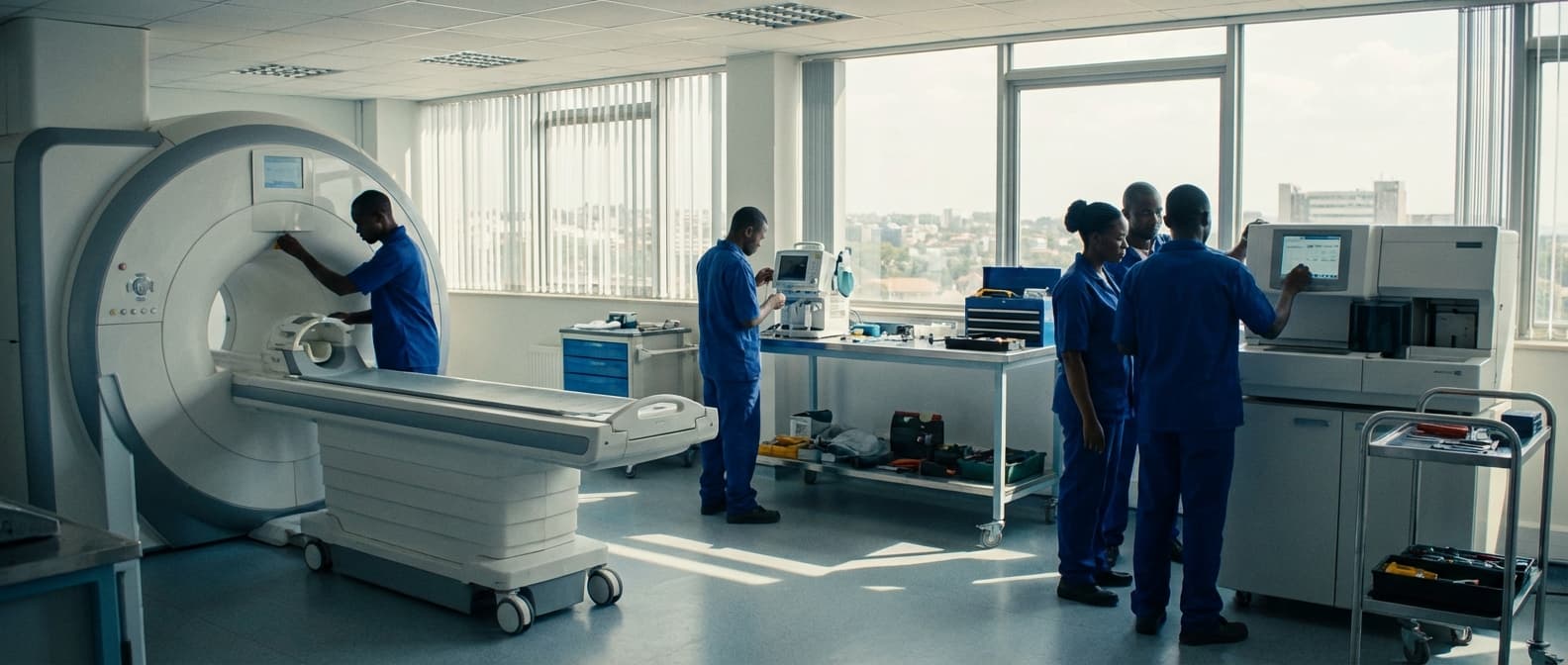
Planned Shutdown Coordination Service for Critical Equipment in Togo
Engineering Excellence & Technical Support
Planned Shutdown Coordination Service for Critical Equipment High-standard technical execution following OEM protocols and local regulatory frameworks.
Proactive Maintenance Scheduling
Our service leverages advanced predictive analytics and real-time sensor data to meticulously plan and schedule critical equipment shutdowns. This ensures maintenance occurs during optimal low-demand periods, minimizing operational disruption and maximizing asset lifespan.
Optimized Resource Logistics
We orchestrate the seamless flow of specialized personnel, critical spare parts, and necessary equipment to the shutdown location in Togo. Our robust logistics network guarantees timely arrival, reducing downtime and associated costs associated with delays.
Tailored Technical Intervention
Our expert engineers design and execute shutdown plans precisely tailored to the specific make, model, and operational history of your critical equipment. This includes detailed risk assessments, rigorous safety protocols, and precise execution for efficient and effective maintenance.
What Is Planned Shutdown Coordination Service For Critical Equipment In Togo?
The Planned Shutdown Coordination Service for Critical Equipment in Togo is a specialized operational support function designed to facilitate and manage the scheduled cessation of operation (shutdown) for essential industrial and infrastructure assets. This service is crucial for ensuring that maintenance, repair, upgrade, or decommissioning activities are conducted with minimal disruption to ongoing operations and societal services, while prioritizing safety, regulatory compliance, and resource optimization. It encompasses a comprehensive suite of activities aimed at de-risking and efficiently executing planned outages. The service acts as a central hub for planning, scheduling, resource allocation, risk assessment, and stakeholder communication throughout the shutdown lifecycle.
| Service Component | Description | Criticality for Togo |
|---|---|---|
| Scope Definition and Planning | Establishing precise objectives, boundaries, and deliverables for the shutdown. This includes identifying all equipment, systems, and processes requiring intervention. | Ensures that all necessary work is identified upfront, preventing scope creep and ensuring efficient resource allocation for Togo's limited industrial capacity. |
| Detailed Scheduling and Sequencing | Developing a comprehensive, time-bound plan outlining the order of operations, dependencies, and critical path activities. This involves detailed Gantt charts and workflow diagrams. | Maximizes asset availability by minimizing downtime, which is vital for Togo's economic sectors relying on continuous industrial output. |
| Resource Management | Coordinating the availability and deployment of skilled labor, specialized tools, spare parts, and supporting equipment required for the shutdown. | Optimizes the utilization of scarce technical expertise and equipment within Togo, reducing costs and lead times for critical maintenance. |
| Risk Assessment and Mitigation | Identifying potential hazards, operational risks, and technical challenges associated with the shutdown and developing proactive mitigation measures and contingency plans. | Enhances safety for personnel and the public, crucial in an environment where resources for emergency response may be constrained. |
| Permitting and Regulatory Compliance | Ensuring all necessary permits, licenses, and approvals from national and local authorities are obtained prior to and during the shutdown, adhering to Togolese regulations. | Guarantees legal operational continuity and avoids penalties for non-compliance, essential for infrastructure reliability and public trust in Togo. |
| Safety Management | Implementing and enforcing rigorous safety protocols, including Lockout/Tagout (LOTO), permit-to-work systems, and environmental protection measures. | Prioritizes the well-being of workers and the environment, aligning with international best practices for industrial operations in Togo. |
| Communication and Stakeholder Engagement | Establishing clear communication channels with all relevant parties, including operational staff, management, contractors, regulatory bodies, and potentially affected communities. | Facilitates transparent information flow, manages expectations, and ensures coordinated efforts, vital for maintaining public support and operational harmony in Togo. |
| Performance Monitoring and Post-Shutdown Analysis | Tracking progress against the schedule, identifying deviations, and conducting a thorough review of the shutdown's execution, effectiveness, and lessons learned. | Drives continuous improvement in shutdown processes, leading to greater efficiency and reliability of critical assets in Togo for future operations. |
| Contingency Planning | Developing pre-defined actions and resource allocations to address unforeseen events or deviations that may occur during the shutdown. | Minimizes the impact of unexpected issues, ensuring a swift return to normal operations and maintaining the integrity of essential services in Togo. |
Key Components of Planned Shutdown Coordination Service
- Scope Definition and Planning
- Detailed Scheduling and Sequencing
- Resource Management (Human, Material, Equipment)
- Risk Assessment and Mitigation Strategy Development
- Permitting and Regulatory Compliance Assurance
- Safety Management and Execution Oversight
- Communication and Stakeholder Engagement
- Performance Monitoring and Post-Shutdown Analysis
- Contingency Planning and Emergency Preparedness
Who Needs Planned Shutdown Coordination Service For Critical Equipment In Togo?
Planned Shutdown Coordination Service for Critical Equipment in Togo is essential for organizations that rely on the continuous operation of vital machinery and infrastructure. These services ensure that scheduled maintenance, upgrades, or repairs are executed efficiently and with minimal disruption to operations, production, and safety. By meticulously planning and coordinating these shutdown periods, businesses can prevent costly unexpected downtime, optimize resource allocation, and maintain compliance with regulatory standards.
| Customer Type | Key Departments Involved |
|---|---|
| Mining Operations | Operations, Maintenance, Engineering, Safety, Logistics |
| Oil & Gas Facilities | Production, Maintenance, Inspection, Safety, Environmental Compliance, Supply Chain |
| Power Generation Plants | Plant Operations, Mechanical Maintenance, Electrical Maintenance, Instrumentation, Safety, Compliance |
| Telecommunications Infrastructure Providers | Network Operations, Field Services, Engineering, Planning, Asset Management |
| Water Treatment and Distribution Facilities | Operations, Maintenance, Engineering, Quality Control, Public Health |
| Large-Scale Manufacturing Plants | Production, Plant Engineering, Maintenance (Mechanical, Electrical, Automation), Quality Assurance, Supply Chain Management |
| Port and Logistics Hubs | Terminal Operations, Maintenance, Engineering, Safety, Security, Supply Chain |
| Hospitals and Healthcare Networks | Facilities Management, Biomedical Engineering, IT Department, Patient Care Services (indirectly impacted by equipment downtime) |
| Major Transportation Infrastructure | Operations, Maintenance, Engineering, Safety, Regulatory Affairs, Security |
Target Customers in Togo
- Mining Operations
- Oil & Gas Facilities
- Power Generation Plants
- Telecommunications Infrastructure Providers
- Water Treatment and Distribution Facilities
- Large-Scale Manufacturing Plants
- Port and Logistics Hubs
- Hospitals and Healthcare Networks (for critical medical equipment)
- Major Transportation Infrastructure (e.g., airports, railway systems)
Planned Shutdown Coordination Service For Critical Equipment Process In Togo
This document outlines the workflow for the Planned Shutdown Coordination Service for Critical Equipment in Togo, from initial inquiry to successful execution. This service aims to minimize disruption, ensure safety, and optimize maintenance schedules for essential industrial and infrastructural equipment.
| Stage | Description | Key Activities | Deliverables | Responsible Parties | Timeline (Indicative) |
|---|---|---|---|---|---|
| The client expresses a need for a planned shutdown for critical equipment maintenance. | Receive client's inquiry, conduct initial meeting, understand general requirements and equipment type. | Initial meeting minutes, preliminary understanding of client needs. | Client, Service Provider (Togo) | 1-3 Days |
| Detailed assessment of the equipment, maintenance scope, and feasibility. | On-site inspection, technical assessment of critical equipment, defining specific maintenance tasks, estimating duration, identifying potential risks, and developing preliminary safety protocols. | Detailed scope of work, preliminary risk assessment, draft shutdown plan, equipment list for maintenance. | Service Provider (Togo), Client's Technical Team | 3-7 Days |
| Optimizing resources and establishing a firm shutdown schedule. | Identifying and confirming availability of specialized technicians, required tools and equipment, spare parts, and necessary permits. Developing a detailed shutdown schedule, including critical path activities and buffer times. Coordinating with relevant local authorities and other stakeholders. | Confirmed schedule, resource allocation plan, procurement list for materials/tools, permit applications submitted. | Service Provider (Togo) - Project Manager, Client's Operations Team, Local Authorities | 5-10 Days |
| Finalizing all arrangements before the shutdown commences. | Securing all necessary permits, procuring all required parts and consumables, mobilizing personnel and equipment to the site, conducting pre-shutdown safety briefings and toolbox talks, finalizing communication protocols. | All permits secured, all resources on-site, final safety plan, communication matrix. | Service Provider (Togo), Client's Safety Officer, Logistics Team | 2-5 Days (leading up to shutdown) |
| Implementing the planned maintenance activities during the scheduled shutdown period. | Safely shutting down critical equipment according to procedure, performing all agreed-upon maintenance, repair, and inspection tasks. Continuous monitoring of progress, adherence to safety protocols, and immediate reporting of any deviations or unforeseen issues. | Completed maintenance tasks, progress updates, incident reports (if any). | Service Provider (Togo) - Technicians & Supervisors, Client's Operations & Safety Team | Variable (depending on scope) |
| Ensuring the equipment is functional and documenting the work performed. | Testing and commissioning of the maintained equipment, conducting final quality checks, preparing a comprehensive post-maintenance report detailing all work performed, materials used, any challenges encountered, and recommendations for future maintenance. Handover of the equipment back to operations. | Tested and commissioned equipment, final maintenance report, handover documentation. | Service Provider (Togo) - Quality Assurance, Client's Technical Team, Operations Manager | 2-5 Days |
| Concluding the service and gathering feedback for continuous improvement. | Final invoicing, formal closure of the service, gathering feedback from the client on the service provided, identifying lessons learned for future operations. | Final invoice, service closure document, client feedback form. | Service Provider (Togo) - Administration & Project Management, Client | 1-3 Days |
Workflow Stages
- Inquiry & Initial Consultation
- Scope Definition & Planning
- Resource Allocation & Scheduling
- Pre-Shutdown Preparations
- Execution of Shutdown & Maintenance
- Post-Shutdown Verification & Reporting
- Service Closure & Feedback
Planned Shutdown Coordination Service For Critical Equipment Cost In Togo
Coordinating planned shutdowns for critical equipment in Togo involves a multi-faceted approach to ensure minimal disruption to operations. The costs associated with this service are influenced by several key factors, including the complexity of the equipment, the duration of the shutdown, the number of technicians and specialists required, the level of safety protocols and regulatory compliance, and the specific location within Togo. Emergency or expedited shutdown coordination will generally incur higher costs due to the urgency and potential for overtime or rush mobilization.
| Service Level/Scope | Estimated Range (XOF - Togolese Franc) | Typical Inclusions |
|---|---|---|
| Basic Shutdown Coordination | 150,000 - 500,000 | Liaison with internal teams, scheduling core activities, basic risk identification. |
| Standard Shutdown Coordination | 500,000 - 1,500,000 | Detailed planning, resource scheduling, risk assessment and mitigation, basic safety oversight, progress reporting. |
| Comprehensive Shutdown Management | 1,500,000 - 5,000,000+ | End-to-end project management, detailed engineering support, specialized personnel mobilization, advanced safety management, regulatory compliance, extensive reporting, contingency management, potential spare parts coordination. |
| Expedited/Emergency Shutdown Coordination | Add 30% - 70% to standard/comprehensive rates | Urgent planning, rapid mobilization, overtime labor, priority resource allocation. |
Key Pricing Factors for Planned Shutdown Coordination in Togo
- Equipment Complexity and Criticality: Highly complex or essential machinery requiring specialized knowledge and tools will increase costs.
- Shutdown Duration: Longer planned shutdowns naturally lead to higher labor and resource expenses.
- Personnel Requirements: The number and type of technicians (e.g., mechanical, electrical, automation specialists) and project managers needed.
- Safety and Compliance: Adherence to Togolese safety regulations, environmental standards, and specific client protocols can add to administrative and training costs.
- Location: Accessibility and logistical challenges for personnel and equipment mobilization to remote sites in Togo.
- Scope of Work: Basic coordination versus comprehensive project management including planning, execution, and post-shutdown analysis.
- Materials and Spares: If the service includes sourcing or managing spare parts and consumables.
- Contingency Planning: Developing and managing backup plans for unforeseen issues.
- Travel and Accommodation: Costs associated with bringing in external expertise if local resources are insufficient.
- Reporting and Documentation: Creation of detailed reports, progress updates, and post-shutdown evaluations.
Affordable Planned Shutdown Coordination Service For Critical Equipment Options
Our Affordable Planned Shutdown Coordination Service is designed to minimize downtime and maximize efficiency for your critical equipment maintenance. We understand that unexpected shutdowns are costly, and planned shutdowns, while necessary, require meticulous planning to avoid further disruptions. This service offers flexible value bundles to suit your specific needs and budgets, along with proven cost-saving strategies to ensure your investment delivers maximum return.
| Cost-Saving Strategy | Description | Benefit |
|---|---|---|
| Optimized Scheduling & Phasing: | Careful sequencing of tasks and grouping of similar activities to reduce overall shutdown duration and minimize equipment idle time. | Reduced labor costs, faster return to production, less inventory holding. |
| Proactive Resource Management: | Ensuring all necessary parts, tools, and personnel are available on-site and on-time, preventing delays due to shortages. | Minimized waiting times, efficient use of workforce, reduced overtime expenses. |
| Streamlined Communication & Collaboration: | Establishing clear communication channels and regular update meetings among all involved parties, including internal teams, external contractors, and suppliers. | Fewer misunderstandings, quicker problem resolution, reduced rework. |
| Risk Mitigation & Contingency Planning: | Identifying potential risks and developing pre-defined action plans to address them, minimizing the impact of unforeseen issues. | Reduced costly emergency interventions, less production loss due to unexpected problems. |
| Leveraging Predictive Maintenance Data: | Integrating insights from predictive maintenance programs to optimize shutdown scope and timing, addressing potential issues before they escalate. | Reduced scope of 'just-in-case' maintenance, more targeted and efficient interventions. |
| Negotiated Contractor & Supplier Rates: | Utilizing our established network and experience to negotiate favorable terms with third-party service providers. | Lower procurement costs for specialized services and materials. |
Value Bundles for Planned Shutdown Coordination
- Basic Coordination: Includes essential scheduling, communication facilitation between stakeholders, and basic risk assessment for routine maintenance. Ideal for smaller operations or less complex equipment.
- Standard Coordination: Builds upon the basic package with enhanced risk management, detailed work package development, resource allocation planning, and preliminary safety procedure integration. Suitable for most standard planned shutdowns.
- Premium Coordination: Our comprehensive solution, offering advanced predictive maintenance integration, complex multi-system shutdown planning, detailed logistical support, performance monitoring during the shutdown, and post-shutdown analysis and reporting. Perfect for critical, large-scale, or intricate shutdown events.
Verified Providers In Togo
Navigating the healthcare landscape in Togo can be challenging. However, for those seeking reliable and high-quality medical services, understanding and identifying "Verified Providers" is paramount. This designation signifies that a healthcare professional or facility has met stringent standards of competence, ethical practice, and operational excellence. Among these verified entities, Franance Health stands out as a leading example, demonstrating a commitment to patient well-being that makes them the best choice for your healthcare needs.
| Provider Type | Franance Health Verification Criteria | Benefits to Patients |
|---|---|---|
| Physicians | Valid medical license, board certification, peer review, malpractice insurance, ongoing professional development. | Access to qualified specialists, accurate diagnoses, evidence-based treatments, reduced risk of medical errors. |
| Hospitals & Clinics | Accreditation from recognized bodies, adherence to safety protocols, availability of essential equipment, qualified medical staff. | Safe and sterile environment, access to advanced diagnostic and treatment facilities, coordinated care pathways. |
| Specialist Centers (e.g., Cardiology, Oncology) | Demonstrated expertise in their field, advanced diagnostic capabilities, multidisciplinary teams, patient outcome tracking. | Targeted and effective treatment for complex conditions, access to the latest medical advancements, improved prognosis. |
| Diagnostic Laboratories | Accreditation, use of certified reagents and equipment, adherence to quality control standards, timely reporting of results. | Accurate and reliable diagnostic tests, timely information for treatment decisions, prevention of misdiagnosis. |
Why Franance Health is the Best Choice for Verified Healthcare in Togo:
- Rigorous Credentialing: Franance Health exclusively partners with providers who have undergone comprehensive vetting processes, ensuring all practitioners are licensed, board-certified, and possess a proven track record.
- Commitment to Quality Care: Beyond basic credentials, Franance Health prioritizes providers who demonstrate a dedication to patient-centered care, utilizing modern medical practices and advanced technologies.
- Ethical Practice Standards: All Franance Health verified providers adhere to the highest ethical guidelines, guaranteeing transparency, patient confidentiality, and respectful treatment.
- Comprehensive Service Offerings: From general consultations to specialized treatments, Franance Health connects you with a wide network of verified specialists across various medical disciplines.
- Patient-Centric Approach: Their focus is on empowering patients with informed choices, offering clear communication and accessible healthcare solutions.
- Continuous Improvement: Franance Health actively monitors and evaluates its network to ensure ongoing adherence to quality and patient satisfaction.
Scope Of Work For Planned Shutdown Coordination Service For Critical Equipment
This Scope of Work (SOW) outlines the services required for the coordination and execution of planned shutdown activities for critical equipment. The objective is to ensure minimal disruption to operations, maintain safety standards, and facilitate efficient and effective maintenance, repair, or upgrade activities. This SOW covers the technical deliverables and standard specifications that will guide the service provider.
The Planned Shutdown Coordination Service is crucial for maintaining the reliability and performance of critical assets. This includes but is not limited to generators, turbines, pumps, reactors, and control systems. The service provider will be responsible for all aspects of shutdown planning, scheduling, execution oversight, and post-shutdown reporting.
| Technical Deliverable | Description | Standard Specification / Requirement |
|---|---|---|
| Shutdown Master Schedule | A comprehensive timeline outlining all shutdown activities, milestones, dependencies, and critical path elements. | Utilize project management software (e.g., Primavera P6, Microsoft Project). Schedule must be updated daily during shutdown. Include Gantt charts and resource histograms. |
| Work Package Documentation | Detailed instructions for each maintenance task, including scope, procedures, required resources, safety precautions, and quality checks. | Standardized work order format. Include P&IDs, isometric drawings, relevant OEM manuals, and permits to work. |
| Risk Assessment and Mitigation Plan | Identification of potential risks associated with the shutdown and development of strategies to mitigate them. | Utilize HAZOP, JSA, or similar methodologies. Document identified risks, their probability and impact, and specific mitigation actions. |
| Resource Plan (Labor, Material, Equipment) | Detailed breakdown of all personnel, materials, tools, and equipment required for the shutdown. | Includes skill matrix for personnel, material criticality analysis, and equipment availability checks. Vendor mobilization plans. |
| Safety Plan | Comprehensive plan outlining safety procedures, emergency response protocols, and SHE training requirements for all personnel involved. | Compliance with OSHA, local regulations, and client SHE policies. Include LOTO procedures, confined space entry permits, and hot work permits. |
| Quality Control Plan | Procedures for ensuring that all maintenance and repair work meets defined quality standards and specifications. | Includes inspection points, testing procedures, and acceptance criteria. Reference relevant industry codes and standards (e.g., ASME, API). |
| Daily Progress Reports | Regular updates on shutdown progress, including completed tasks, upcoming activities, issues encountered, and proposed resolutions. | Standardized report template. Include KPI tracking (e.g., schedule adherence, safety incidents, quality deviations). |
| Post-Shutdown Report | A comprehensive summary of the entire shutdown, including a review of performance against objectives, lessons learned, and recommendations for future shutdowns. | Include as-built documentation, final cost report, equipment performance data, and a detailed lessons learned matrix. |
| Permit to Work (PTW) System Integration | Ensuring seamless integration and management of the PTW system throughout the shutdown. | Adherence to client's established PTW procedures. Verification of all required permits before work commencement. |
| Technical Query (TQ) Management | System for addressing and resolving technical queries that arise during the shutdown in a timely manner. | Establish a clear TQ submission and approval workflow with defined response times. |
Key Service Areas
- Shutdown Planning and Strategy Development
- Detailed Work Package Development
- Resource Management and Mobilization
- On-Site Coordination and Supervision
- Safety, Health, and Environment (SHE) Management
- Quality Assurance and Control (QA/QC)
- Risk Management and Contingency Planning
- Communication and Stakeholder Management
- Post-Shutdown Review and Reporting
Service Level Agreement For Planned Shutdown Coordination Service For Critical Equipment
This Service Level Agreement (SLA) outlines the terms and conditions for the Planned Shutdown Coordination Service for Critical Equipment, focusing on response times for scheduling and coordination, and uptime guarantees for the coordination platform itself. The primary objective is to ensure minimal disruption to operations during planned maintenance activities.
| Service Component | Response Time Target | Uptime Guarantee | Measurement Period | Remedy for Failure |
|---|---|---|---|---|
| Shutdown Request Acknowledgment | Within 2 business hours of submission | N/A (Service availability) | Continuous | Escalation to Senior Coordinator and notification to requester |
| Initial Shutdown Proposal (availability of coordination) | Within 2 business days of request acknowledgment | N/A (Service availability) | Continuous | Escalation to Senior Coordinator and notification to requester |
| Coordination Platform Availability | N/A (Focus on accessibility) | 99.5% | Monthly | Service Credit equivalent to 5% of monthly coordination service fee for every 1% or portion thereof the uptime falls below 99.5% |
| Status Update Communication (during planned shutdown) | Within 30 minutes of scheduled update time or upon significant deviation | N/A (Service availability) | During active planned shutdowns | Immediate escalation to designated incident manager |
Scope of Service
- Coordination and scheduling of planned shutdown windows for critical equipment.
- Communication management between operational teams, maintenance teams, and stakeholders.
- Facilitation of pre-shutdown, during-shutdown, and post-shutdown meetings and status updates.
- Management of shutdown request submissions and approvals.
- Provision of a centralized platform for shutdown planning and tracking.
Frequently Asked Questions

Ready when you are
Let's scope your Planned Shutdown Coordination Service for Critical Equipment in Togo project in Togo.

Scaling healthcare logistics and technical systems across the entire continent.