
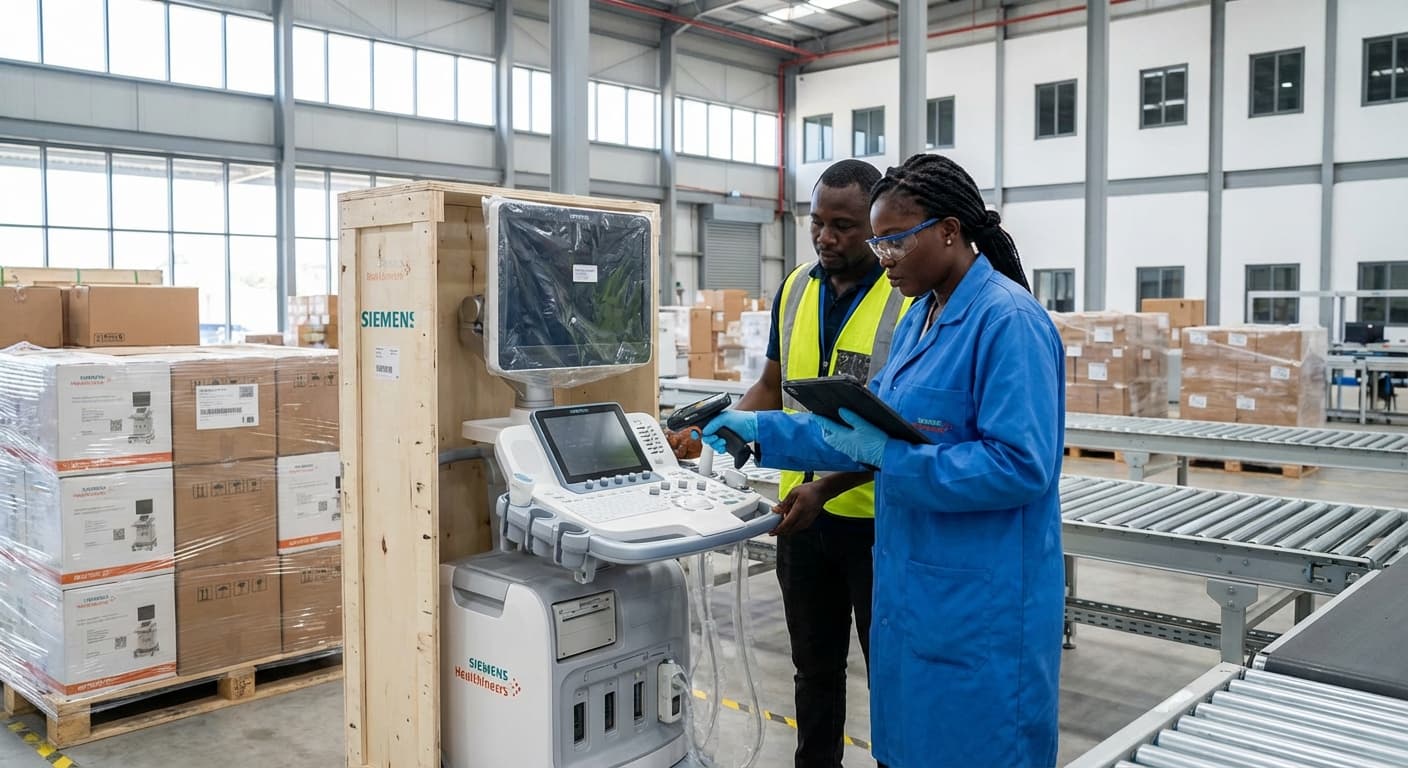
Warehouse Receiving Inspection Service (Medical Equipment) in Togo
Engineering Excellence & Technical Support
Warehouse Receiving Inspection Service (Medical Equipment) High-standard technical execution following OEM protocols and local regulatory frameworks.
Meticulous Quality Assurance for Medical Equipment
Our comprehensive receiving inspection service ensures every piece of medical equipment entering Togo meets stringent quality and safety standards. We conduct visual inspections, functional tests, and documentation verification against international regulations and manufacturer specifications.
Traceability and Compliance Tracking
Leveraging advanced barcode scanning and digital logging, we provide unparalleled traceability for all received medical equipment. This meticulous tracking facilitates compliance with Togolese healthcare regulations, import/export requirements, and inventory management.
Expert Identification of Defects and Discrepancies
Our highly trained inspectors possess deep expertise in medical equipment. We meticulously identify any manufacturing defects, damage incurred during transit, or discrepancies between ordered and received items, safeguarding patient safety and operational efficiency.
What Is Warehouse Receiving Inspection Service (Medical Equipment) In Togo?
Warehouse Receiving Inspection Service (Medical Equipment) in Togo refers to a specialized quality control process conducted upon the arrival of medical equipment at a designated warehouse facility within Togo. This service is designed to verify the integrity, compliance, and readiness of medical devices and supplies before they are accepted into inventory and subsequently distributed. The inspection ensures that received items match procurement orders, are free from damage, meet specified quality standards, and comply with relevant Togolese regulatory requirements for medical equipment. This proactive measure aims to mitigate risks associated with substandard, damaged, or incorrect medical equipment, thereby safeguarding public health, optimizing resource utilization, and ensuring the efficacy of healthcare delivery.
| Who Needs This Service? | Typical Use Cases | |||
|---|---|---|---|---|
| Healthcare Facilities: Hospitals, clinics, health centers, and diagnostic laboratories in Togo that procure and stock medical equipment and supplies. | Medical Equipment Suppliers and Distributors: Companies operating within Togo that import, store, and distribute medical devices and consumables. | Government Health Ministries and Agencies: Public health organizations responsible for national procurement, inventory management, and quality assurance of medical supplies. | Non-Governmental Organizations (NGOs) and International Aid Organizations: Entities involved in the provision of medical aid and equipment to Togo, requiring assurance of quality and compliance. | Pharmaceutical Wholesalers and Importers: Businesses dealing with the import and distribution of medical devices and related pharmaceutical products. |
| New Equipment Procurement: Upon receipt of newly purchased medical devices, instruments, or diagnostic kits from local or international vendors. | Donated Medical Supplies: Inspection of medical equipment and consumables received as donations to ensure they meet safety and efficacy standards before deployment. | Bulk Stock Replenishment: Verifying incoming shipments of regularly used medical supplies and equipment to maintain inventory levels. | Post-Repair/Maintenance Returns: Inspecting equipment returned from repair or maintenance to ensure it has been properly serviced and is functional. | Importation of Specialized Medical Technology: Ensuring that advanced or novel medical equipment complies with Togolese import regulations and quality benchmarks. |
Key Components of Warehouse Receiving Inspection Service (Medical Equipment) in Togo
- Documentation Verification: Cross-referencing received items against purchase orders, invoices, packing lists, certificates of origin, and any other relevant shipping and compliance documents.
- Physical Inspection: Assessing the external condition of packaging and the equipment itself for signs of damage, tampering, or defects. This includes checking for dents, scratches, leaks, or compromised seals.
- Quantity and Description Check: Verifying that the quantity and specific model/type of medical equipment received precisely match the documented order.
- Functional Testing (where applicable): For certain types of equipment, conducting basic functional tests to confirm operational status and adherence to manufacturer specifications. This may involve powering on devices, checking essential features, or verifying calibration parameters.
- Labeling and Marking Verification: Ensuring that all equipment and packaging are correctly labeled with product identifiers, serial numbers, expiry dates (if applicable), and any required regulatory markings (e.g., CE marking, ISO certification).
- Regulatory Compliance Check: Confirming that the medical equipment meets Togolese standards and regulations pertaining to import, safety, efficacy, and registration as mandated by the Ministry of Health and relevant authorities.
- Temperature and Environmental Monitoring (if applicable): For temperature-sensitive items (e.g., pharmaceuticals, certain reagents), verifying that storage and transit conditions (e.g., temperature, humidity) were maintained within specified ranges.
- Inventory Management Integration: Recording inspection results and updating inventory management systems with accurate details of received and accepted items.
Who Needs Warehouse Receiving Inspection Service (Medical Equipment) In Togo?
Warehouse receiving inspection services for medical equipment in Togo are crucial for ensuring the quality, safety, and compliance of incoming medical devices. These services are essential for organizations that import, store, and distribute medical equipment within the country. The primary goal is to verify that the received equipment meets all specified requirements, including functionality, calibration, packaging integrity, and adherence to regulatory standards. This meticulous process helps mitigate risks associated with faulty or substandard equipment, protecting patient health and organizational reputation. It also aids in efficient inventory management and adherence to supply chain best practices.
| Target Customer Type | Key Departments Involved | Reasons for Inspection Need |
|---|---|---|
| Hospitals and Healthcare Facilities | Procurement Department, Biomedical Engineering Department, Quality Assurance Department, Stores/Inventory Management | Ensuring patient safety, equipment functionality, compliance with purchase orders, and maintaining accurate inventory. |
| Medical Equipment Distributors and Importers | Logistics Department, Quality Control Department, Sales Department, Warehouse Management | Verifying shipment integrity, compliance with import regulations, ensuring product quality for resale, and managing stock effectively. |
| NGOs and International Aid Agencies | Procurement Unit, Logistics Team, Program Management, Monitoring and Evaluation | Confirming receipt of donated or purchased equipment aligns with project needs, ensuring usability for intended beneficiaries, and maintaining accountability for aid. |
| Government Health Ministries and Agencies | Procurement Division, Central Medical Stores, Regulatory Affairs Department, Quality Control Unit | Ensuring public funds are used for compliant and functional equipment, maintaining national health standards, and managing the national medical stockpile. |
| Medical Equipment Manufacturers | Quality Assurance Department, Logistics/Supply Chain, Local Representatives | Confirming outbound quality control is maintained upon arrival, addressing any transit damage, and ensuring brand reputation through product integrity. |
| Research Institutions and Laboratories | Research Coordinators, Laboratory Managers, Procurement Officers, Technical Staff | Guaranteeing the accuracy and reliability of equipment for research outcomes, ensuring adherence to laboratory standards, and preventing research delays due to faulty equipment. |
Target Customers and Departments for Medical Equipment Warehouse Receiving Inspection Service in Togo:
- {"title":"Hospitals and Healthcare Facilities","description":"Public and private hospitals, clinics, diagnostic centers, and specialized medical institutions that procure and receive significant quantities of medical equipment."}
- {"title":"Medical Equipment Distributors and Importers","description":"Companies that import medical devices into Togo for sale and distribution to healthcare providers."}
- {"title":"Non-Governmental Organizations (NGOs) and International Aid Agencies","description":"Organizations involved in providing medical aid, equipment donations, and healthcare services in Togo, often receiving bulk shipments."}
- {"title":"Government Health Ministries and Agencies","description":"National and regional health authorities responsible for public health procurement, regulation, and management of medical equipment for public healthcare systems."}
- {"title":"Medical Equipment Manufacturers (Local and International with local presence)","description":"Companies that have a manufacturing or assembly presence in Togo, or those with representatives responsible for their product quality upon arrival."}
- {"title":"Research Institutions and Laboratories","description":"Academic institutions and private laboratories that require specialized and accurately functioning medical equipment for research and diagnostic purposes."}
Warehouse Receiving Inspection Service (Medical Equipment) Process In Togo
This document outlines the workflow for the Warehouse Receiving Inspection Service for Medical Equipment in Togo, covering the process from initial inquiry to the final execution of the inspection.
| Stage | Description | Key Activities | Responsible Party | Deliverables |
|---|---|---|---|---|
| Inquiry & Scoping | Initial contact from the client requesting the inspection service. | Receive and acknowledge inquiry, understand client's needs, clarify scope of inspection (type of equipment, quantity, standards to be met), identify client's location and desired timeline. | Client, Inspection Service Provider (ISP) | Initial understanding of requirements, preliminary scope definition. |
| Proposal & Agreement | Formal offer from the ISP detailing the service and its terms. | Prepare and submit a detailed proposal (including scope, methodology, personnel, timeline, pricing), negotiate terms, finalize contract/agreement. | ISP, Client | Formal Proposal, Signed Contract/Agreement |
| Pre-Inspection Planning | Preparation for the on-site inspection to ensure efficiency and effectiveness. | Develop a detailed inspection plan, gather relevant documentation (manufacturer specifications, quality certificates, import permits), schedule inspection dates and times, confirm access to the warehouse, brief inspection team. | ISP | Detailed Inspection Plan, Confirmed Schedule, Briefed Inspection Team |
| On-Site Inspection Execution | The physical inspection of the medical equipment at the warehouse. | Arrive at the warehouse, verify equipment against documentation (model numbers, serial numbers, quantities), visually inspect for damage or defects, check packaging integrity, verify compliance with pre-defined standards (e.g., WHO, local regulations), perform basic functional checks if specified, document findings (photos, notes). | ISP Inspection Team | Detailed Inspection Records, Photographic Evidence |
| Reporting & Documentation | Compilation and submission of the inspection findings to the client. | Analyze inspection data, prepare a comprehensive inspection report (including findings, deviations, recommendations), submit the report to the client for review. | ISP | Comprehensive Inspection Report |
| Follow-up & Closure | Addressing any queries and finalizing the service. | Respond to client queries regarding the report, facilitate any necessary corrective actions (if within scope), obtain client's final acceptance of the service, archive records, issue invoice and close the engagement. | ISP, Client | Resolved Queries, Final Acceptance, Archived Records, Closed Engagement |
Key Stages of the Warehouse Receiving Inspection Service
- Inquiry & Scoping
- Proposal & Agreement
- Pre-Inspection Planning
- On-Site Inspection Execution
- Reporting & Documentation
- Follow-up & Closure
Warehouse Receiving Inspection Service (Medical Equipment) Cost In Togo
The cost of warehouse receiving inspection services for medical equipment in Togo can vary significantly based on several key factors. These services are crucial to ensure the quality, safety, and compliance of imported medical devices before they are stored and distributed. Understanding these pricing determinants is essential for budget planning and selecting the right service provider. Local currency, the West African CFA franc (XOF), is used for these transactions.
| Inspection Scope | Estimated Cost Range (XOF) | Notes |
|---|---|---|
| Basic Visual Inspection & Documentation Check (for simple items) | 30,000 - 75,000 | Covers initial assessment of packaging integrity and presence of basic documentation. |
| Standard Inspection (Visual, Basic Functionality, Documentation Review) | 75,000 - 200,000 | Includes more detailed checks on product appearance, basic operational checks (if applicable), and verification of primary documents. |
| Comprehensive Inspection (In-depth functional testing, quality control sampling, regulatory checks) | 200,000 - 750,000+ | Applicable for complex or high-value equipment, requiring specialized tools, expert analysis, and potentially laboratory testing. |
| Per Item Fee (for very high volume, standardized items) | 2,000 - 15,000 per item | This rate is often applied for large quantities of identical, less complex items. The range depends heavily on the item type. |
| Urgent/Expedited Service Surcharge | 15% - 50% of base cost | An additional fee applied for rapid turnaround times. |
Key Pricing Factors for Warehouse Receiving Inspection Services in Togo
- Nature and Complexity of Medical Equipment: Highly specialized, complex, or sensitive medical equipment (e.g., diagnostic imaging machines, surgical robots) requires more in-depth and technically skilled inspection, leading to higher costs compared to simpler devices like syringes or bandages.
- Volume and Quantity of Equipment: The number of items to be inspected directly impacts the time and resources required. Larger shipments generally incur higher overall inspection fees, though per-unit costs might decrease with bulk.
- Scope of Inspection: The extent of the inspection (e.g., visual check, functional testing, documentation review, sampling for quality control) significantly influences the price. A comprehensive inspection involving multiple checks will be more expensive.
- Required Documentation and Certifications: If the inspection needs to verify specific regulatory compliance (e.g., CE marking, FDA approval, local Ministry of Health approvals), it adds to the complexity and cost as auditors need to cross-reference documentation.
- Urgency of the Inspection: Expedited inspection services, often required to clear goods quickly, usually come with a premium charge.
- Location of the Warehouse: The proximity of the warehouse to the inspection service provider's offices can affect travel costs. Inspections at remote locations might incur additional transportation and accommodation fees.
- Experience and Reputation of the Inspection Agency: Established and reputable inspection firms with specialized medical equipment expertise may command higher prices due to their proven track record and advanced capabilities.
- Specific Client Requirements and Customization: Tailored inspection protocols or specific client demands beyond standard procedures can increase the cost.
- Market Competition: The number of available inspection service providers in Togo and their pricing strategies will influence the overall market rates.
Affordable Warehouse Receiving Inspection Service (Medical Equipment) Options
Finding affordable warehouse receiving inspection services for medical equipment is crucial for ensuring compliance, patient safety, and preventing costly errors. This service involves a thorough examination of incoming medical devices to verify their condition, documentation, and adherence to specifications before they are accepted into inventory. Leveraging value bundles and implementing smart cost-saving strategies can significantly reduce operational expenses without compromising quality.
| Value Bundle Option | Description | Cost-Saving Strategy | Benefits | |
|---|---|---|---|---|
| Basic Incoming Verification | Focuses on essential checks: PO matching, visual inspection for damage, and documentation review. | Standardized checklist for rapid processing; limited functional testing. | Cost-effective for low-risk, high-volume items; reduces inspection time. | Ideal for routine consumables or less complex equipment. |
| Standard Inspection Package | Includes basic verification plus basic functional checks (power on, core functionality test). | Batch processing of similar items; technician specialization. | Balances cost with essential quality assurance; identifies common issues early. | Suitable for most general medical devices. |
| Comprehensive Equipment Audit | Extensive checks: visual, functional, calibration verification (if applicable), detailed documentation review, and sample testing. | Dedicated inspection teams; multi-point quality control. | Highest level of assurance; minimizes risk of costly recalls or equipment failure. | Recommended for high-value, critical, or complex medical equipment. |
| Customizable Service Tiers | Allows clients to select specific inspection points based on equipment type, risk profile, and regulatory requirements. | Flexible service agreements; pay only for needed services. | Tailored approach optimizes cost and risk management. | Adaptable to diverse medical equipment portfolios. |
Key Components of Medical Equipment Receiving Inspection
- Verification of incoming shipment against purchase orders and packing lists.
- Physical inspection for damage, defects, or tampering.
- Confirmation of serial numbers and lot numbers.
- Review of accompanying documentation (certificates of analysis, sterilization records, user manuals, etc.).
- Initial functional testing (where applicable and safe).
- Proper logging and reporting of findings.
- Quarantine or rejection of non-conforming items.
Verified Providers In Togo
In Togo's evolving healthcare landscape, identifying reliable and qualified medical professionals is paramount for ensuring quality patient care. "Verified Providers in Togo" aims to illuminate the credentials of leading healthcare institutions and practitioners, with a particular focus on Franance Health. This section will delve into why Franance Health stands out as a premier choice for individuals seeking trusted medical services in the country.
| Credential Aspect | Franance Health's Commitment | Why it Matters for Patients |
|---|---|---|
| Medical Licensure & Board Certification | All practitioners hold current and valid Togolese medical licenses and relevant board certifications. | Guarantees that doctors have met the minimum legal and professional requirements to practice medicine. |
| Educational Background | Emphasis on graduates from reputable medical schools and institutions with strong academic records. | Ensures a solid foundation in medical knowledge and understanding. |
| Specialty Training & Experience | Proven track record in specific medical fields, with ongoing professional development. | Provides access to experts for complex conditions and specialized procedures. |
| Ethical Standards & Professional Conduct | Adherence to a strict code of ethics and patient privacy regulations. | Builds trust and ensures patients are treated with respect and confidentiality. |
| Facility Accreditation & Safety Protocols | Meets national and international standards for healthcare facility operations and patient safety. | Ensures a safe and sterile environment for treatment and procedures. |
| Technological Integration | Investment in modern diagnostic and treatment equipment. | Facilitates accurate diagnoses and more effective, less invasive treatments. |
Key Advantages of Choosing Verified Providers, Especially Franance Health:
- Rigorous Credentialing: Verified providers undergo a thorough vetting process, ensuring they meet high standards of education, training, and ethical practice.
- Specialized Expertise: Franance Health boasts a team of specialists across various medical disciplines, offering advanced diagnostics and treatments.
- Patient-Centric Approach: Prioritizing patient well-being, verified providers like Franance Health focus on personalized care, clear communication, and compassionate service.
- State-of-the-Art Facilities: Access to modern equipment and technology, crucial for accurate diagnosis and effective treatment, is a hallmark of top-tier providers.
- Commitment to Continuous Improvement: Verified institutions actively engage in ongoing professional development and adopt the latest medical advancements.
- Trust and Transparency: A verified status provides assurance to patients that they are receiving care from legitimate and competent professionals.
- Franance Health's Dedication: Their consistent investment in training, technology, and patient satisfaction solidifies their position as a leader.
Scope Of Work For Warehouse Receiving Inspection Service (Medical Equipment)
This Scope of Work (SOW) outlines the requirements for Warehouse Receiving Inspection Service for medical equipment. The service provider will be responsible for performing thorough inspections of all incoming medical equipment to ensure it meets the specified quality, functionality, and documentation standards before being accepted into the warehouse. This SOW details the technical deliverables and standard specifications that will govern the inspection process.
| Inspection Area | Standard Specification / Criteria | Inspection Method / Tooling |
|---|---|---|
| Visual Inspection (Exterior) | No visible damage (dents, scratches, cracks, corrosion); Proper labeling (product name, model, serial number, manufacturer); Secure packaging intact; Protective seals present and unbroken. | Visual examination, calibrated measuring tapes, magnifiers (if needed). |
| Packaging and Handling Damage | Packaging intact, free from punctures, tears, water damage, or crushing; Pallets secure; No signs of mishandling during transit. | Visual examination, palpation, examination of shipping labels and handling instructions. |
| Documentation Verification | Complete set of required documents received (User Manual, Service Manual, Certificate of Analysis/Conformance, calibration certificates, sterilization records, warranty information); Documents match equipment serial/model numbers; Documents are current and valid. | Document review, cross-referencing with purchase orders and equipment manifests. |
| Identification and Labeling | Equipment serial number, model number, and manufacturer name/logo clearly visible and legible on the equipment; Serial number matches documentation; Lot/batch numbers (if applicable) are present and correct. | Visual examination, handheld scanners (if applicable), comparison with documentation. |
| Completeness of Components | All accessories, attachments, power cords, manuals, and other specified components are present and correct as per purchase order and product specifications. | Checklist-based verification against packing lists and product specifications. |
| Initial Functional Check (Basic) | Equipment powers on (if applicable); Basic user interface functions correctly; No immediate error messages or alarms; Mechanical components move freely and smoothly (if applicable). | Power-on test, basic button/switch operation test, visual/auditory checks. |
| Physical Dimensions and Weight | Equipment dimensions and weight are within ±5% of specified values (unless otherwise noted in PO). | Calibrated measuring tapes, scales. |
| Environmental Condition Check | Equipment stored in appropriate environmental conditions prior to inspection (temperature, humidity); No signs of exposure to extreme conditions. | Environmental monitoring logs (if provided), visual inspection. |
| Security Seals and Tamper Evidence | All security seals and tamper-evident features are intact. | Visual inspection. |
| Expiration Dates (Consumables/Sterile Items) | Expiration dates are verified and meet defined minimum shelf-life requirements; Lot/batch traceability is confirmed. | Visual examination of labels, comparison with stock rotation policies. |
Technical Deliverables
- Incoming Equipment Inspection Reports (Detailed, summarizing findings and recommendations).
- Non-Conformance Reports (NCRs) for any equipment failing to meet specifications.
- Acceptance/Rejection Certificates for each batch of received equipment.
- Updated inventory records reflecting the status of inspected equipment.
- Root Cause Analysis (RCA) reports for recurring non-conformances (if applicable).
- Summary inspection performance metrics and trend analysis (monthly/quarterly).
- Secure digital storage and retrieval of all inspection documentation.
Service Level Agreement For Warehouse Receiving Inspection Service (Medical Equipment)
This Service Level Agreement (SLA) outlines the guaranteed response times and uptime for the Warehouse Receiving Inspection Service for Medical Equipment provided by [Your Company Name] to [Client Company Name]. This SLA aims to ensure efficient and reliable inspection of incoming medical equipment, minimizing delays and ensuring compliance with regulatory standards.
| Service Metric | Target | Measurement | Downtime Definition | Remedy for Non-Compliance |
|---|---|---|---|---|
| Inspection Readiness Response Time (Confirmation of readiness for inspection after notification of incoming shipment) | 2 Business Hours | Time elapsed from notification of incoming shipment to confirmation of readiness for inspection. | Failure to confirm readiness within the specified time after receiving notification. | 10% discount on the inspection fee for the affected shipment. |
| Initial Inspection Completion Time (For standard, non-complex shipments) | 8 Business Hours (per standard shipment volume) | Time elapsed from the commencement of inspection to the issuance of the initial inspection report. | Failure to complete the initial inspection and issue the report within the specified timeframe for a standard shipment. | 5% discount on the inspection fee for the affected shipment. |
| Critical Issue Escalation Response Time (For identification of critical damage or non-compliance) | 1 Business Hour | Time elapsed from identification of a critical issue to the notification of the designated client contact. | Failure to escalate a critical issue within the specified time after identification. | Dedicated support resource for the remainder of the inspection, and a 15% discount on the inspection fee for the affected shipment. |
| Uptime Guarantee (Availability of inspection personnel and systems) | 99.5% | Percentage of scheduled business hours during which the inspection service is available and operational. Scheduled maintenance will be communicated 48 hours in advance. | Any period exceeding 0.5% of scheduled business hours where the inspection service is unavailable due to [Your Company Name]'s fault (excluding scheduled maintenance, force majeure events, or client-initiated delays). | A pro-rata service credit equivalent to the value of the downtime, applied to the next monthly invoice. |
Scope of Services
- Initial inspection of incoming medical equipment upon delivery to the designated warehouse.
- Verification of equipment against purchase orders, packing lists, and relevant documentation.
- Visual inspection for damage, defects, and proper packaging.
- Basic functional checks (where applicable and defined in pre-agreed test protocols).
- Documentation of inspection findings, including discrepancies, damage, and compliance status.
- Issuance of inspection reports within specified timeframes.
- Escalation of critical issues to designated client contacts.
Frequently Asked Questions

Ready when you are
Let's scope your Warehouse Receiving Inspection Service (Medical Equipment) in Togo project in Togo.

Scaling healthcare logistics and technical systems across the entire continent.