
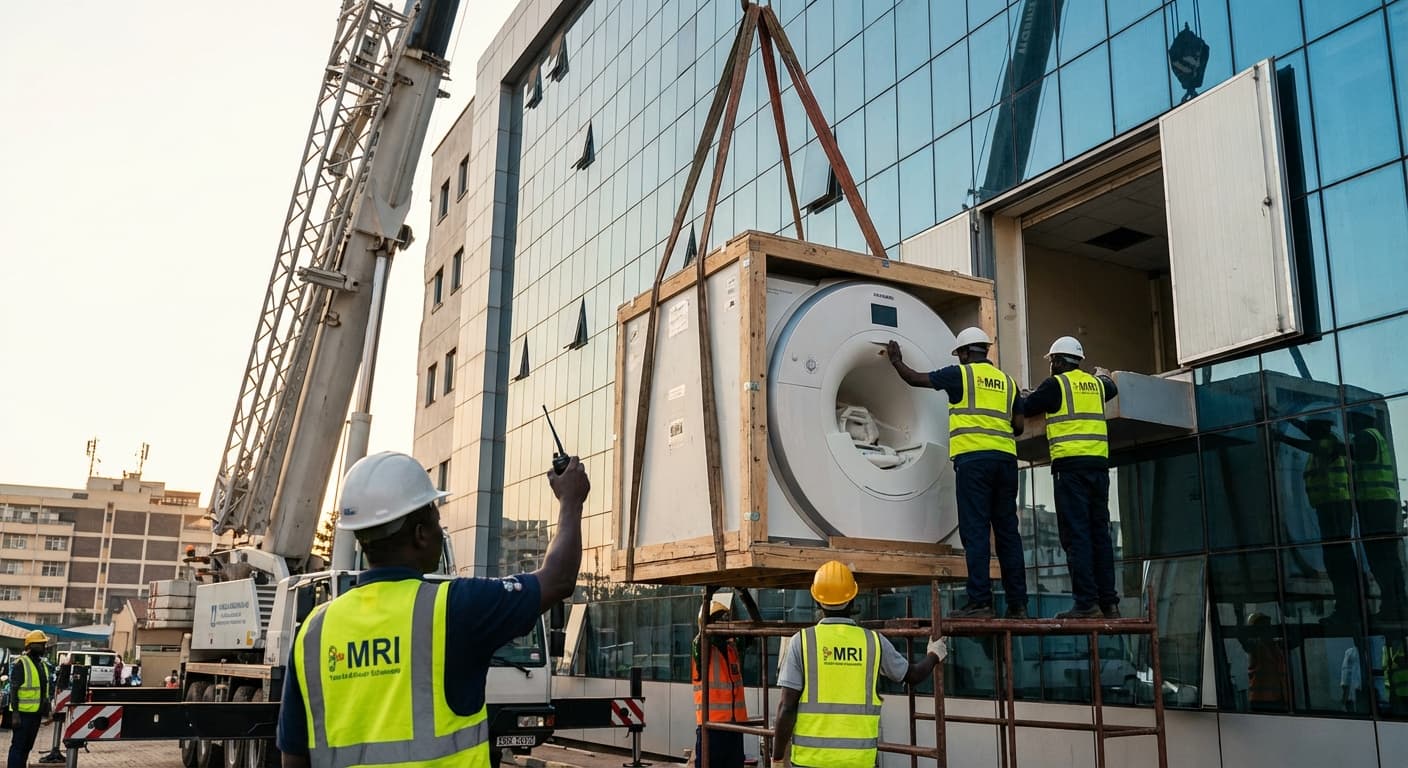
Cranage & Rigging Supervision Service in Togo
Engineering Excellence & Technical Support
Cranage & Rigging Supervision Service High-standard technical execution following OEM protocols and local regulatory frameworks.
Expert Load Planning & Risk Mitigation
Leveraging advanced simulation software and decades of experience, our supervisors meticulously plan every lift, identifying and mitigating potential hazards. We ensure adherence to rigorous safety protocols and optimal equipment selection, guaranteeing secure and efficient operations for your most critical lifts in Togo.
On-Site Safety Oversight & Compliance Assurance
Our dedicated supervisors provide constant, on-the-ground oversight, ensuring all rigging operations strictly adhere to international safety standards and Togolese regulations. We empower your teams with expert guidance, conduct regular safety inspections, and foster a proactive safety culture to prevent incidents and minimize downtime.
Optimized Efficiency & Cost-Effective Solutions
Beyond safety, our technical expertise focuses on optimizing rigging workflows and resource allocation. We identify opportunities for improved efficiency, reduced cycle times, and smarter equipment utilization, delivering cost-effective solutions that enhance productivity for your projects in Togo.
What Is Cranage & Rigging Supervision Service In Togo?
Cranage and Rigging Supervision Service in Togo refers to the professional oversight and management of lifting operations involving cranes and associated rigging equipment. This service ensures that all lifting activities are conducted safely, efficiently, and in compliance with Togolese regulations, international standards, and client-specific requirements. It involves the strategic planning, execution, and monitoring of lifting processes to mitigate risks, prevent accidents, and optimize resource utilization.
| Who Needs Cranage & Rigging Supervision Service in Togo? | Typical Use Cases |
|---|---|
| Construction Companies: Undertaking building construction, infrastructure development (bridges, roads, ports), and industrial facility erection where heavy components need to be lifted and positioned. | Erection of steel structures, placement of pre-cast concrete elements, lifting of HVAC units, and installation of heavy machinery in construction projects. |
| Oil and Gas Industry: Involved in exploration, production, and maintenance activities, particularly in offshore and onshore facilities where large equipment and modules are handled. | Installation of drilling derricks, lifting of subsea equipment, module assembly, and maintenance of offshore platforms or onshore processing plants. |
| Port and Terminal Operators: Managing cargo handling operations for various types of vessels and commodities. | Loading and unloading of heavy containers, project cargo (e.g., wind turbine components, industrial machinery), and bulk materials at seaports and inland terminals. |
| Manufacturing and Industrial Plants: For installation, relocation, or maintenance of heavy machinery and production equipment. | Installation of new manufacturing lines, relocation of existing heavy machinery, and maintenance interventions requiring the lifting of large components. |
| Mining and Quarrying Operations: For the installation and maintenance of heavy mining equipment and material handling systems. | Installation of crushers, conveyors, haul trucks, and other large mining machinery, as well as maintenance activities. |
| Project Cargo Handlers: Companies specializing in the transportation and installation of oversized and overweight loads. | Coordinating and executing complex lifts as part of larger logistical projects involving the movement of specialized equipment and structures. |
| Event Management and Entertainment Industry: For the setup of stages, lighting rigs, and sound systems at large-scale events. | Lifting and rigging of large stage structures, sound towers, and complex lighting grids for concerts, festivals, and sporting events. |
| Emergency and Disaster Relief Operations: Where heavy lifting is required for rescue or recovery efforts. | Removal of debris, lifting of damaged structures, and placement of temporary support systems during disaster response. |
Key Components of Cranage & Rigging Supervision Service
- Pre-Lifting Planning & Assessment: This includes site surveys, load analysis, route planning, development of lift plans, risk assessments, and the identification of potential hazards. It also involves verifying the suitability of lifting equipment and personnel.
- Equipment Inspection & Verification: Thorough inspection and certification of all lifting appliances (cranes, hoists, winches) and rigging gear (slings, shackles, spreader beams) to ensure they meet safety standards and are fit for purpose. This includes pre-use checks and periodic inspections.
- Personnel Competency Verification: Confirmation that all personnel involved in the lifting operation (crane operators, riggers, signalers, supervisors) possess the necessary qualifications, certifications, and experience to perform their roles safely and effectively.
- Execution Monitoring & Control: On-site supervision during the lifting operation to ensure adherence to the approved lift plan, safe operating procedures, and communication protocols. This involves monitoring load stability, swing, and clearances.
- Communication & Coordination: Establishing clear communication channels between all parties involved in the lifting operation, including the crane operator, riggers, spotters, and site management, often through radio communication and hand signals.
- Emergency Response Planning: Development and implementation of procedures for responding to potential emergencies during lifting operations, such as equipment malfunction, dropped loads, or personnel injury.
- Post-Lifting Review & Reporting: Documentation of the lifting operation, including incident reports (if any), lessons learned, and recommendations for future operations. This also includes verification of load placement and securing.
- Regulatory Compliance: Ensuring all lifting activities comply with relevant Togolese occupational health and safety laws, environmental regulations, and any industry-specific standards applicable in Togo.
Who Needs Cranage & Rigging Supervision Service In Togo?
Cranage & Rigging Supervision Service in Togo is essential for a wide range of industries and projects that involve the lifting, moving, and placement of heavy or oversized loads. Our expert supervision ensures safety, efficiency, and compliance with international standards. We cater to clients who prioritize risk mitigation and operational excellence in their critical lifting operations. Our services are vital for preventing accidents, minimizing downtime, and optimizing the use of expensive equipment and personnel. The demand for reliable and professional cranage and rigging supervision is growing with the development of infrastructure, industrial expansion, and the energy sector in Togo.
| Customer Type | Key Departments/Personnel Involved | Specific Needs & Scenarios |
|---|---|---|
| Construction Companies | Project Management, Site Engineering, Health & Safety, Operations | Supervising the lifting of pre-fabricated modules, heavy structural steel, concrete elements, and crane operations on large-scale construction sites (e.g., roads, bridges, buildings, dams). |
| Oil and Gas Companies | Offshore/Onshore Operations, Project Engineering, HSEQ (Health, Safety, Environment, Quality), Logistics | Overseeing the installation and decommissioning of platforms, the lifting of heavy process equipment, pipe racks, modules, and vessels, both onshore and offshore. |
| Mining Companies | Operations, Maintenance, Engineering, Safety | Supervising the installation and maintenance of heavy mining equipment (e.g., crushers, conveyors, draglines), and the movement of large ore-bearing machinery. |
| Port and Terminal Operators | Operations, Maintenance, Safety, Cargo Handling | Ensuring safe and efficient lifting of shipping containers, heavy project cargo, and oversized equipment for import/export through the port. |
| Manufacturing and Industrial Facilities | Production, Maintenance, Engineering, Safety | Managing the installation of new heavy machinery, the relocation of existing equipment, and routine maintenance operations requiring significant lifting. |
| Heavy Equipment Rental Companies | Operations, Fleet Management, Safety | Providing expert oversight for their clients' lifting operations to ensure safe and proper use of their rented cranes and lifting gear. |
| Project Management Companies | Project Directors, Engineering Leads, HSEQ Managers | Ensuring all lifting activities within their managed projects adhere to best practices, safety regulations, and client specifications. |
| Energy Sector | Project Engineering, Construction Management, HSEQ | Supervising the installation of large turbines, generators, transformers, and solar panel arrays, especially in challenging environments. |
| Logistics and Freight Forwarding Companies | Operations, Project Cargo Specialists, Safety Coordinators | Coordinating and supervising the loading and unloading of exceptionally large or heavy project cargo from ships, trucks, and other transport modes. |
Target Customers and Departments for Cranage & Rigging Supervision Service in Togo
- Construction Companies (Civil, Industrial, and Infrastructure Projects)
- Oil and Gas Companies (Onshore and Offshore Operations)
- Mining Companies
- Port and Terminal Operators
- Manufacturing and Industrial Facilities
- Heavy Equipment Rental Companies
- Project Management Companies
- Energy Sector (Power Plants, Renewable Energy Projects)
- Logistics and Freight Forwarding Companies
Cranage & Rigging Supervision Service Process In Togo
This document outlines the Cranage & Rigging Supervision Service Process in Togo, detailing the workflow from the initial inquiry to the successful execution of services. This process ensures clarity, efficiency, and adherence to safety standards throughout the project lifecycle.
| Stage | Description | Key Activities | Deliverables/Outcomes | Responsible Party |
|---|---|---|---|---|
| Inquiry & Requirement Gathering | Initial contact from the client to understand their cranage and rigging needs. | Client submits inquiry detailing project scope, type of equipment, lift requirements, location, dates, and any specific safety concerns. Service provider conducts initial discussion to clarify requirements. | Clear understanding of client's needs and project scope. | Client & Service Provider |
| Proposal & Quotation | Based on gathered requirements, the service provider prepares a detailed proposal and cost estimate. | Service provider assesses complexity, required equipment, personnel, and duration. Develops a comprehensive proposal including methodology, risk assessment, safety plan outline, and a detailed quotation. | Formal proposal document, detailed quotation. | Service Provider |
| Contractual Agreement | Formalization of the agreement between the client and service provider. | Client reviews and accepts the proposal/quotation. Negotiation of terms and conditions. Signing of a formal service contract. | Signed service contract. | Client & Service Provider |
| Pre-Execution Planning & Site Visit | Thorough planning and preparation before commencing on-site activities. | Detailed site assessment, identification of potential hazards, confirmation of access routes, lift planning, development of Method Statements and Risk Assessments (MSRA), equipment suitability checks, personnel assignment, and coordination with client's site personnel. This may involve an on-site visit. | Approved MSRA, detailed lift plans, confirmed logistics, assigned team, finalized schedule. | Service Provider & Client |
| Resource Mobilization & Deployment | Gathering and deploying all necessary resources to the project site. | Procurement or mobilization of cranes, rigging equipment, transport, and deployment of qualified supervisors, riggers, and other personnel to the site. Ensuring all equipment is certified and personnel are adequately trained. | On-site presence of certified equipment and competent personnel. | Service Provider |
| On-Site Execution & Supervision | The core service delivery phase where cranage and rigging operations are performed under expert supervision. | Execution of lifts according to approved lift plans and MSRA. Continuous supervision by experienced cranage and rigging supervisors. Monitoring of all operations for safety, efficiency, and adherence to procedures. Real-time communication and problem-solving. | Safe and efficient execution of planned lifts. | Service Provider (Supervisors & Personnel) |
| Quality Control & Reporting | Ensuring quality of service and providing transparent documentation. | Daily progress reports, incident reports (if any), safety audits, and photographic/video documentation of operations. Post-operation equipment inspection. | Daily/weekly progress reports, incident reports, final operational report, photographic/video evidence. | Service Provider |
| Project Closure & Finalization | Concluding the service engagement and formalizing project completion. | Final review of deliverables with the client, obtaining client sign-off on completed services, submission of final project report and invoices. Demobilization of equipment and personnel. | Client sign-off, final project report, settled invoices, demobilized resources. | Service Provider & Client |
Service Workflow Stages
- Inquiry & Requirement Gathering
- Proposal & Quotation
- Contractual Agreement
- Pre-Execution Planning & Site Visit
- Resource Mobilization & Deployment
- On-Site Execution & Supervision
- Quality Control & Reporting
- Project Closure & Finalization
Cranage & Rigging Supervision Service Cost In Togo
Cranage and rigging supervision services in Togo are crucial for ensuring the safe and efficient execution of heavy lifting operations. The cost of these services is influenced by several factors, leading to a range of pricing in local currency (CFA Franc - XOF). Understanding these factors is vital for accurate budgeting and service selection.
| Service Component | Typical Range (XOF/day) | Notes |
|---|---|---|
| Lead Rigging Supervisor | 75,000 - 150,000 | Experienced and certified supervisor with overall responsibility for the rigging operation. |
| Rigging Supervisor/Foreman | 50,000 - 100,000 | Supervises a specific team or aspect of the rigging operation. |
| Lift Planner/Engineer (if required) | 100,000 - 250,000+ | For highly complex lifts requiring detailed engineering analysis and planning. |
| Safety Officer (dedicated) | 40,000 - 80,000 | Ensures adherence to safety protocols and regulations. |
| Basic Supervision (general oversight) | 30,000 - 60,000 | For simpler lifts with less complex rigging, a less experienced supervisor might suffice. |
| Project-Based Supervision (package) | Negotiable (based on scope & duration) | Many companies offer tailored packages for entire projects, which can be more cost-effective than daily rates. |
Key Pricing Factors for Cranage & Rigging Supervision in Togo:
- Scope and Complexity of the Lift: Simple lifts requiring basic oversight will be less expensive than complex operations involving multiple heavy components, intricate rigging configurations, and tight tolerances.
- Duration of the Service: Projects requiring supervision for a few hours will naturally cost less than those spanning multiple days or weeks.
- Crane and Equipment Type: The type and size of the crane and rigging equipment used directly impact the supervision requirements and thus the cost. Supervising a small mobile crane differs significantly from overseeing a large crawler crane or specialized lifting equipment.
- Personnel Expertise and Qualifications: The experience, certifications, and specialization of the supervision team (e.g., certified lift supervisors, experienced riggers, safety officers) will influence the hourly or daily rates.
- Location and Accessibility: Projects in remote or difficult-to-access locations might incur additional costs for travel, accommodation, and logistics for the supervision team.
- Risk Assessment and Planning: The level of detail and rigor in the pre-lift planning, risk assessment, and method statement development will influence the time and expertise required from the supervision team.
- Regulatory Compliance: Adherence to Togolese safety regulations and industry best practices may require specific supervision protocols and documentation, impacting the overall cost.
- Client-Specific Requirements: Any unique client demands regarding reporting, communication, or additional safety measures can also affect pricing.
- Emergency or Urgent Services: Expedited or emergency supervision services typically command higher rates due to the urgency and potential disruption involved.
Affordable Cranage & Rigging Supervision Service Options
Securing reliable and cost-effective cranage and rigging supervision is crucial for project success. This service ensures heavy-duty equipment is lifted, moved, and positioned safely and efficiently, preventing costly delays and potential accidents. We offer a range of service options designed to meet diverse project needs and budgets, emphasizing transparency in pricing and providing practical cost-saving strategies. Understanding our value bundles and implementing smart planning can significantly reduce overall project expenditures.
| Cost-Saving Strategy | Description | Benefit |
|---|---|---|
| Early Planning & Consultation | Engage our team early in the project lifecycle to discuss lift requirements, site logistics, and potential challenges. This allows for optimal selection of equipment and strategies. | Avoids last-minute changes, equipment underutilization, and potential delays. Identifies cost-effective solutions from the outset. |
| Accurate Load Weight & Center of Gravity Determination | Provide precise information about the weight and center of gravity of the items to be lifted. This prevents over or under-specification of crane capacity and rigging. | Ensures the correct, most cost-efficient crane is selected, reducing rental costs and preventing potential damage or safety risks. |
| Optimized Crane & Equipment Selection | Based on accurate load data and site constraints, we recommend the most appropriate crane size and type, as well as the necessary rigging gear, avoiding over-spec'ing. | Minimizes equipment rental costs. Ensures efficient use of resources. |
| Bundle Services for Comprehensive Coverage | Leverage our value bundles to consolidate services. Purchasing a package often provides better value than procuring individual components. | Streamlines procurement, reduces administrative overhead, and often offers discounted rates compared to standalone services. |
| Off-Peak Scheduling | Where feasible, consider scheduling lifts during non-peak hours or days to potentially benefit from reduced rates or better equipment availability. | Can lead to lower rental costs and ensure priority service. |
| Clear Site Access & Preparation | Ensure the lift area is clear, stable, and accessible to the crane and personnel before the scheduled arrival. This includes proper ground preparation. | Minimizes setup time, reduces the risk of delays, and prevents additional costs associated with site modification or delays. |
| Experienced & Certified Personnel | Our highly experienced and certified operators and supervisors are skilled at executing lifts efficiently and safely, minimizing the need for repeated attempts or costly rework. | Reduces project timelines, prevents accidents and associated costs, and ensures quality execution. |
| Long-Term Project Agreements | For projects requiring ongoing cranage and rigging services, we can offer customized long-term agreements with potential volume discounts. | Provides predictable costs, secures dedicated resources, and can offer significant savings over time. |
Understanding Our Value Bundles
- {"title":"Basic Cranage & Supervision Package","description":"Ideal for straightforward lifts or smaller projects with less complex requirements. Includes: \n- Certified Crane Operator\n- Certified Rigging Supervisor\n- Basic Lifting Gear (slings, shackles)\n- On-site Supervision during lift operations\n- Pre-lift safety checks"}
- {"title":"Standard Cranage & Rigging Package","description":"Our most popular option, suitable for a wider range of industrial and construction projects. Includes everything in the Basic Package, plus:\n- Specialized Lifting Gear (as required)\n- Detailed Lift Plan Development & Review\n- On-site Safety Coordination\n- Communication Equipment (radios)"}
- {"title":"Premium Cranage, Rigging & Planning Package","description":"Designed for complex, high-risk, or large-scale operations requiring meticulous planning and execution. Includes everything in the Standard Package, plus:\n- Advanced Rigging Engineering Support\n- 3D Lift Planning & Visualization\n- Dedicated Site Safety Officer\n- Project Management Integration\n- Post-lift analysis and reporting"}
- {"title":"Customizable Project-Specific Bundles","description":"We understand that every project is unique. We work closely with clients to tailor packages that precisely match their specific needs, equipment, site conditions, and budget constraints. This can include incorporating additional personnel, specialized equipment rentals, or extended supervision hours."}
Verified Providers In Togo
In the quest for reliable healthcare in Togo, identifying verified providers is paramount. Franance Health stands out as a beacon of quality and trustworthiness, offering a comprehensive network of accredited medical professionals and institutions. Their rigorous credentialing process ensures that every provider affiliated with Franance Health meets the highest standards of expertise, ethical practice, and patient care. This commitment to verification not only safeguards patients but also streamlines access to superior medical services. Choosing Franance Health means opting for peace of mind, knowing you are in capable and trusted hands.
| Credential Type | Franance Health Verification Standard | Patient Benefit |
|---|---|---|
| Medical Licenses | Confirmed current and valid licensing with relevant Togolese medical boards. | Ensures providers are legally authorized and qualified to practice. |
| Specializations & Certifications | Verification of all relevant postgraduate qualifications and certifications. | Guarantees access to specialized expertise for specific medical needs. |
| Professional Experience | Thorough review of past professional roles, employment history, and peer references. | Confirms practical experience and established professional competence. |
| Ethical Conduct & Disciplinary Record | Checks for any past disciplinary actions or ethical breaches. | Assures patient safety and trust through adherence to ethical guidelines. |
| Facility Accreditation (for institutions) | Confirmation of accreditation from recognized healthcare quality bodies. | Indicates that facilities meet stringent standards for equipment, hygiene, and patient care. |
Why Franance Health is the Best Choice for Verified Providers in Togo:
- Rigorous Credentialing Process: Franance Health employs a multi-faceted vetting system to ensure all affiliated providers possess valid licenses, specialized training, and a proven track record of excellence.
- Commitment to Ethical Practice: Beyond medical competence, Franance Health verifies that providers adhere to the highest ethical standards and patient-centric care principles.
- Extensive Network: Access a broad spectrum of medical specialties and healthcare facilities, all pre-vetted and readily available through the Franance Health platform.
- Enhanced Patient Safety: By partnering exclusively with verified providers, Franance Health significantly reduces the risk of medical errors and ensures a safer healthcare experience.
- Streamlined Access to Quality Care: Franance Health simplifies the process of finding and connecting with trusted medical professionals, saving you time and reducing stress.
- Continuous Quality Assurance: Franance Health maintains ongoing oversight to ensure providers consistently meet and exceed established quality benchmarks.
Scope Of Work For Cranage & Rigging Supervision Service
This Scope of Work (SOW) outlines the services required for Cranage and Rigging Supervision to ensure safe and efficient lifting operations. It details the technical deliverables expected and references applicable standard specifications.
| Section | Description | Technical Deliverables | Standard Specifications/References |
|---|---|---|---|
| 1.0 Site Mobilization and Pre-Lifting Inspections | Mobilization of qualified supervision personnel and pre-activity inspections of all lifting equipment and site conditions. |
|
|
| 2.0 Lifting Operations Supervision | On-site supervision and guidance during all lifting activities. |
|
|
| 3.0 Load Handling and Placement | Ensuring safe and precise placement of lifted loads. |
|
|
| 4.0 Lifting Equipment Maintenance and Certification | Ensuring all lifting equipment remains in a safe and serviceable condition. |
|
|
| 5.0 Reporting and Documentation | Maintaining comprehensive records of all lifting operations. |
|
|
| 6.0 Emergency Response and Planning | Preparedness for emergency situations during lifting operations. |
|
|
| 7.0 Personnel Qualifications and Training | Ensuring all personnel involved in lifting operations are adequately qualified and trained. |
|
|
Objectives of Cranage & Rigging Supervision
- To ensure all lifting operations are conducted in accordance with relevant safety regulations, industry best practices, and project-specific requirements.
- To provide expert oversight and guidance to crane operators, riggers, signal persons, and other personnel involved in lifting activities.
- To verify the suitability and integrity of lifting equipment, including cranes, slings, shackles, and other rigging gear.
- To identify and mitigate potential hazards associated with lifting operations.
- To maintain accurate records of all lifting operations.
- To ensure effective communication and coordination among all parties involved.
- To promote a culture of safety and continuous improvement in lifting operations.
Service Level Agreement For Cranage & Rigging Supervision Service
This Service Level Agreement (SLA) outlines the response times and uptime guarantees for the Cranage & Rigging Supervision Service provided by [Provider Name] to [Client Name]. This agreement is effective as of [Start Date] and remains in effect until [End Date] unless terminated earlier in accordance with the underlying contract.
1. Service Description:
The Cranage & Rigging Supervision Service involves providing qualified and experienced personnel to oversee and direct crane operations and rigging activities to ensure safety, efficiency, and compliance with all relevant industry standards and regulations during [Specify Project/Scope].
2. Response Times:
Response times are defined as the time elapsed from when a service request is officially logged by [Client Name] through the designated communication channel to [Provider Name] until a qualified supervisor is actively engaged in addressing the request. The designated communication channel is [Specify Channel, e.g., dedicated phone line, email address, portal].
3. Uptime Guarantees:
Uptime for the Cranage & Rigging Supervision Service refers to the availability of a qualified supervisor to perform their duties as per the agreed schedule and scope of work. This guarantee assumes that the client provides the necessary site access, information, and support for the supervisor to perform their role effectively. Downtime is defined as the period during scheduled work hours when a supervisor is unavailable due to reasons solely attributable to [Provider Name], excluding force majeure events or client-caused delays.
| Service Type / Scenario | Response Time Target | Uptime Guarantee | Remedy for Failure |
|---|---|---|---|
| Emergency Call-Out (e.g., critical safety issue, unplanned immediate need for supervision) | Within 1 hour of official notification | N/A (Focus is on immediate response) | Priority deployment of available personnel. If unable to deploy within target, [Provider Name] will provide regular updates and alternative solutions. |
| Scheduled Supervision (e.g., pre-planned lift operations, routine rigging activities) | Supervisor to be on-site and ready to commence at the scheduled start time. Any delays in arrival beyond 30 minutes of the scheduled start time will be addressed. | 98% during scheduled work hours | For response time failure: A credit of [Specify %]% of the hourly rate for the delayed period. For uptime failure: A credit of [Specify %]% of the hourly rate for each hour of downtime exceeding the guaranteed uptime. Credits will be applied to the next invoice. |
| Non-Emergency Support Request (e.g., consultation, planning assistance) | Within 4 business hours of official notification | N/A (Focus is on timely consultation) | [Provider Name] will acknowledge receipt and provide an estimated time for resolution or provision of requested information. |
Key Definitions
- Service Request: A formal notification from the client to the provider requesting the initiation or continuation of the Cranage & Rigging Supervision Service.
- Qualified Supervisor: An individual employed or contracted by [Provider Name] who possesses the necessary certifications, experience, and knowledge to safely and effectively supervise cranage and rigging operations.
- Scheduled Work Hours: The agreed-upon hours and days during which the Cranage & Rigging Supervision Service is expected to be provided, as detailed in the underlying contract.
- Force Majeure: Events beyond the reasonable control of either party, including but not limited to natural disasters, acts of war, terrorism, or governmental actions, which prevent or delay performance.
- Client-Caused Delay: Any delay in service delivery that is a direct result of the client's actions or inactions, such as insufficient site preparation, lack of access, or failure to provide necessary information.
Frequently Asked Questions

Ready when you are
Let's scope your Cranage & Rigging Supervision Service in Togo project in Togo.

Scaling healthcare logistics and technical systems across the entire continent.