
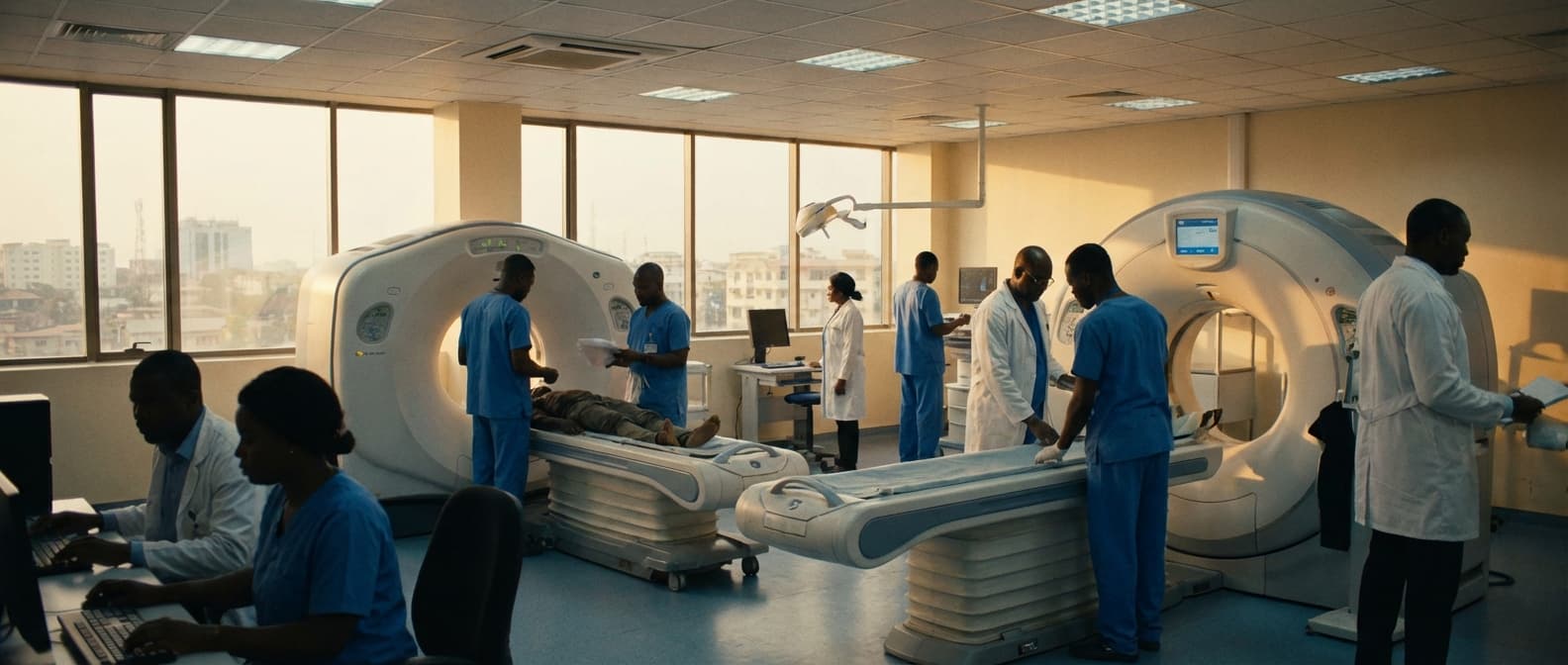
Imaging Acceptance Testing & QA in Togo
Engineering Excellence & Technical Support
Commissioning and periodic QA for CT/MRI/X‑ray/US/Mammo. High-standard technical execution following OEM protocols and local regulatory frameworks.
Advanced Imaging QA for Enhanced Diagnostics
Implementing robust Image Acceptance Testing protocols and Quality Assurance frameworks to ensure the accuracy, reliability, and diagnostic integrity of all medical imaging equipment in Togo. This includes rigorous calibration, resolution, contrast, and artifact testing to meet international standards.
AI-Driven Anomaly Detection in Imaging
Leveraging Artificial Intelligence (AI) tools for automated anomaly detection within medical images during acceptance testing. This significantly improves the efficiency and sensitivity of identifying subtle abnormalities, leading to earlier and more accurate diagnoses for Togolese patients.
Standardized Workflow & Performance Validation
Establishing and enforcing standardized imaging workflows and performance validation procedures across all healthcare facilities in Togo. This ensures consistent image quality regardless of location or specific equipment, facilitating seamless data exchange and improving overall patient care pathways.
What Is Imaging Acceptance Testing & Qa In Togo?
Imaging Acceptance Testing & QA in Togo refers to the rigorous verification and validation processes applied to medical imaging systems and their associated software before they are deployed and utilized in clinical settings within Togo. This service ensures that imaging equipment (e.g., X-ray, CT, MRI, Ultrasound machines) and Picture Archiving and Communication Systems (PACS), Radiology Information Systems (RIS), and other digital imaging software function accurately, reliably, and in compliance with established medical imaging standards and regulatory requirements applicable to Togo. It is a critical phase in the lifecycle of medical imaging technology, guaranteeing that the deployed systems meet the defined specifications and are safe and effective for diagnostic and therapeutic purposes.
| Who Needs Imaging Acceptance Testing & QA? | Typical Use Cases | ||||||||
|---|---|---|---|---|---|---|---|---|---|
| Healthcare Facilities in Togo: Hospitals (public and private), specialized clinics, diagnostic imaging centers, and radiology departments acquiring or upgrading medical imaging equipment and IT systems. | Procurement of New Imaging Equipment: Before installation and clinical use of new X-ray, CT, MRI, Ultrasound, Mammography, Fluoroscopy, or Nuclear Medicine systems. | Installation of PACS/RIS: Implementing or upgrading Picture Archiving and Communication Systems (PACS) and Radiology Information Systems (RIS). | Integration of Imaging Software: Deploying new image viewing software, post-processing workstations, or AI-powered diagnostic aids. | Upgrades to Existing Systems: After major software or hardware upgrades to existing imaging modalities or PACS/RIS infrastructure. | Ensuring Regulatory Compliance: To meet national healthcare IT regulations and international imaging standards (e.g., DICOM, IHE profiles) mandated or recommended within Togo. | Quality Management Programs: As a component of a broader healthcare quality assurance framework to ensure patient safety and diagnostic accuracy. | Third-Party Service Providers: Companies involved in the installation, maintenance, or sale of medical imaging equipment and software in Togo. | Medical Device Manufacturers and Distributors: To demonstrate product readiness and compliance for the Togolese market. | Routine Quality Control: Periodic re-testing and validation of imaging systems as part of ongoing QA programs to maintain performance standards. |
Key Components of Imaging Acceptance Testing & QA in Togo
- Hardware Verification: Assessing the physical integrity, performance parameters, and calibration of imaging hardware against manufacturer specifications and clinical requirements. This includes image quality assessments (e.g., spatial resolution, contrast, noise), radiation output verification, and mechanical functionality checks.
- Software Validation: Rigorous testing of imaging software, including PACS, RIS, and image processing applications, to ensure functionality, data integrity, security, interoperability (DICOM compliance, HL7 integration), and user interface usability.
- Image Quality Assurance (IQA): Objective and subjective evaluation of image quality across various imaging modalities. This involves phantom studies, clinical image reviews, and adherence to established image quality metrics to ensure diagnostic efficacy.
- Workflow and Integration Testing: Evaluating how the imaging system integrates with existing hospital IT infrastructure, including EMR/EHR systems, and testing end-to-end clinical workflows from patient registration to image archiving and retrieval.
- Performance and Reliability Testing: Assessing system uptime, response times, data throughput, and stability under various load conditions to ensure consistent performance in a clinical environment.
- Security and Compliance Audits: Verifying adherence to data privacy regulations (e.g., related to patient health information), cybersecurity protocols, and any specific Togolese healthcare IT standards.
- User Training and Documentation Review: Ensuring that end-users are adequately trained on the system and that all user manuals and technical documentation are accurate and comprehensive.
- Site Preparation and Environmental Checks: Verifying that the installation site meets all technical and environmental requirements for the imaging equipment.
Who Needs Imaging Acceptance Testing & Qa In Togo?
Imaging Acceptance Testing & QA is crucial for any healthcare provider in Togo that utilizes medical imaging technology. Ensuring that imaging equipment functions correctly, produces accurate diagnostic images, and integrates seamlessly with existing IT infrastructure is vital for patient safety, diagnostic accuracy, and efficient workflow. Without proper testing and quality assurance, the risks of misdiagnosis, equipment failure, data loss, and non-compliance with regulatory standards increase significantly, impacting both patient outcomes and the operational efficiency of healthcare facilities.
| Customer Type | Key Departments Involved | Specific Needs/Benefits |
|---|---|---|
| Hospitals (Public and Private) | Radiology, PACS Administration, IT Department, Clinical Departments (e.g., Cardiology, Neurology, Oncology) | Ensuring diagnostic image quality for accurate diagnosis, verifying data integrity and security of patient images, seamless integration with Electronic Health Records (EHR), compliance with international imaging standards, reducing equipment downtime and maintenance costs. |
| Clinics and Diagnostic Centers | Radiology Technologists, Center Management, IT Support | Verifying the accuracy and reliability of imaging equipment for outpatient diagnostics, ensuring consistent image quality across all imaging modalities, optimizing workflow for patient throughput, cost-effective validation of new equipment. |
| Medical Equipment Vendors and Service Providers | Technical Support, Installation Teams, Quality Assurance Departments | Pre-installation verification of imaging equipment functionality, post-installation acceptance testing for clients, ongoing QA to ensure equipment remains within specifications, providing evidence of compliance to regulatory bodies, enhancing customer satisfaction through reliable equipment performance. |
| Government Health Agencies | Regulatory Affairs, Public Health Oversight, Procurement Departments | Establishing and enforcing imaging quality standards, ensuring patient safety across all healthcare facilities, verifying the performance of imaging equipment procured with public funds, facilitating the adoption of new imaging technologies. |
| Research Institutions | Research Scientists, Imaging Specialists, IT Departments | Ensuring the reproducibility and accuracy of imaging data for research studies, validating imaging protocols, troubleshooting imaging artifacts, maintaining the integrity of research datasets. |
Target Customers and Departments in Togo for Imaging Acceptance Testing & QA:
- Hospitals (Public and Private)
- Clinics and Diagnostic Centers
- Radiology Departments
- Oncology Centers
- Cardiology Departments
- Neurology Departments
- Emergency Departments
- Medical Equipment Vendors and Service Providers
- Government Health Agencies (for oversight and standards)
- Research Institutions utilizing imaging
Imaging Acceptance Testing & Qa Process In Togo
This document outlines the standard workflow for Imaging Acceptance Testing and Quality Assurance (QA) processes in Togo. It details the steps involved from the initial customer inquiry through the execution and final sign-off of the testing.
| Phase | Key Activities | Primary Responsibility | Deliverables |
|---|---|---|---|
| Inquiry & Requirements Gathering | Customer engagement, needs assessment, scope definition. | Sales/Account Management, Technical Pre-Sales | Customer Requirements Document |
| Solution Design & Proposal | Technical solution development, proposal creation, customer review. | Engineering Team, Sales | Approved Solution Design, Signed Proposal |
| Test Plan Development | Defining test objectives, cases, environment, and reporting. | QA Team/Lead | Approved Imaging Acceptance Test Plan |
| Test Environment Setup | Hardware, network, and software configuration for testing. | IT Operations/Engineering | Configured and Validated Test Environment |
| Test Execution | Running test cases, documenting results, identifying defects. | QA Testers | Executed Test Cases with Results |
| Defect Management & Retesting | Logging, prioritizing, resolving, and retesting defects. | QA Team, Development/Engineering Team | Resolved Defects, Confirmed Fixes |
| Reporting & Sign-off | Summarizing test outcomes, presenting report, obtaining customer acceptance. | QA Lead, Project Manager | Final Test Report, Customer Sign-off |
| Handover & Support | Transferring solution and documentation, providing post-deployment assistance. | Project Manager, Support Team | Successful Handover, Support Agreement |
Imaging Acceptance Testing & QA Process Workflow in Togo
- 1. Inquiry & Requirements Gathering:
- Trigger: A customer (internal or external) expresses a need for imaging services or requests specific imaging testing.
- Process:
- Initial contact is made via designated channels (e.g., email, phone, ticketing system).- A qualified representative (e.g., Sales Engineer, Technical Account Manager) engages with the customer.- Detailed requirements are gathered, including:- Type of imaging (e.g., disk imaging, BIOS imaging, firmware imaging).- Target devices/hardware (e.g., specific models, configurations).- Operating systems and software to be included.- Desired imaging method (e.g., network boot, USB deployment, pre-imaging).- Specific configurations, security settings, and compliance requirements.- Testing scope and deliverables.- Timeline and any critical deadlines.- Clarification questions are asked and answered to ensure mutual understanding.- Output: A comprehensive document detailing customer requirements and scope of work.
- 2. Solution Design & Proposal:
- Trigger: Completion of requirements gathering.
- Process:
- An engineering team designs a solution that meets the gathered requirements.- This may involve selecting appropriate imaging tools, hardware, network configurations, and deployment strategies.- A detailed proposal is created, outlining:- Technical approach and methodology.- Estimated timeline for testing and execution.- Required resources (personnel, hardware, software).- Costing and pricing.- Assumptions and exclusions.- The proposal is presented to the customer for review and feedback.- Output: Approved solution design and signed proposal.
- 3. Test Plan Development:
- Trigger: Approved solution design and proposal.
- Process:
- A dedicated QA team or lead develops a comprehensive test plan based on the requirements and solution design.- The test plan includes:- Test objectives and success criteria.- Test cases covering various scenarios (e.g., successful deployment, error handling, specific feature validation).- Test environment setup instructions.- Data required for testing.- Roles and responsibilities of testers.- Reporting procedures and defect tracking mechanisms.- The test plan is reviewed and approved by the customer and relevant stakeholders.- Output: Approved Imaging Acceptance Test Plan.
- 4. Test Environment Setup:
- Trigger: Approved test plan.
- Process:
- The designated testing environment is prepared.- This includes:- Provisioning of target hardware for testing.- Setting up network infrastructure and connectivity.- Installing and configuring necessary imaging software and tools.- Preparing any required test data or source images.- Ensuring all security and access controls are in place.- Output: Fully configured and validated test environment.
- 5. Test Execution:
- Trigger: Test environment setup completion and availability of test plan.
- Process:
- Testers execute the test cases as defined in the approved test plan.- This involves performing the imaging process on the target devices.- Each test case is documented, including:- Steps performed.- Actual results observed.- Pass/Fail status.- Screenshots or other evidence as needed.- Any deviations from expected results are logged as defects.- Output: Executed test cases with documented results.
- 6. Defect Management & Retesting:
- Trigger: Identification of defects during test execution.
- Process:
- Defects are logged in a defect tracking system (e.g., Jira, Bugzilla).- Defects are analyzed, prioritized, and assigned to the development/engineering team for resolution.- Resolved defects are re-tested by the QA team to confirm the fix.- This is an iterative process until all critical and high-priority defects are resolved.- Output: Resolved defects and confirmation of fixes.
- 7. Reporting & Sign-off:
- Trigger: Completion of all test cases and resolution of critical defects.
- Process:
- A comprehensive test report is generated, summarizing:- Test scope and objectives.- Number of test cases executed.- Pass/Fail rates.- Summary of defects found and resolved.- Any outstanding issues or recommendations.- The test report is presented to the customer for review.- Upon customer acceptance of the test results and the delivered imaging solution, formal sign-off is obtained.- Output: Final Imaging Acceptance Test Report and Customer Sign-off.
- 8. Handover & Support (if applicable):
- Trigger: Customer sign-off.
- Process:
- The imaging solution and its documentation are handed over to the customer or the relevant operational team.- Post-implementation support is provided as per the agreed-upon terms.- Output: Successful handover and ongoing support engagement.
Imaging Acceptance Testing & Qa Cost In Togo
Imaging Acceptance Testing & Quality Assurance (QA) in Togo is crucial for ensuring medical equipment functions optimally and safely. The cost of these services can vary significantly based on several factors. These factors include the complexity and type of imaging equipment (e.g., X-ray, CT scanner, MRI, ultrasound), the vendor's reputation and experience, the scope of the testing (basic functional checks vs. comprehensive performance evaluations), the need for specialized calibration equipment, and the geographic location within Togo (labor and travel costs can differ). Demand and availability of qualified technicians also play a role. Pricing is typically quoted per device or per testing session. While specific official price lists are not readily available publicly, we can outline general pricing factors and estimated ranges in Togolese Franc (XOF).
| Service Type | Estimated Cost Range (XOF) | Notes |
|---|---|---|
| Basic Functional Acceptance Testing (per device) | 75,000 - 200,000 | Covers essential operational checks and basic safety features. |
| Comprehensive Performance QA (per device) | 150,000 - 500,000+ | Includes detailed image quality assessment, calibration verification, and advanced safety checks. Costs increase for complex modalities like CT/MRI. |
| Specialized Calibration Services (e.g., CT dose, MRI field uniformity) | 200,000 - 800,000+ | Often requires specialized equipment and expertise. Prices are highly dependent on the modality and specific calibration required. |
| Preventive Maintenance with QA Integration (annual) | 200,000 - 700,000+ per device/year | Bundled services can offer cost efficiencies. Depends on frequency and scope of PM. |
| On-site Travel and Logistics | Variable | Additional charges may apply for remote locations or urgent call-outs. |
| Remote Diagnostics and Support | 50,000 - 150,000 | For less complex issues or initial assessments. |
Key Pricing Factors for Imaging Acceptance Testing & QA in Togo:
- Type and Complexity of Imaging Equipment
- Scope of Testing (Functional vs. Performance)
- Vendor Reputation and Expertise
- Need for Specialized Calibration Tools
- Geographic Location within Togo
- Urgency of Service
- Service Level Agreements (SLAs)
Affordable Imaging Acceptance Testing & Qa Options
Ensuring the quality and reliability of imaging systems through Acceptance Testing (AT) and Quality Assurance (QA) is crucial for accurate diagnoses and patient safety. However, these essential processes can represent a significant investment for healthcare facilities. This guide explores affordable imaging AT & QA options, focusing on value bundles and cost-saving strategies to make these critical services more accessible without compromising on quality.
| Strategy/Bundle | Description | Cost-Saving Aspect | Best For |
|---|---|---|---|
| Modular/Phased AT Packages | Breaking down comprehensive AT into smaller, distinct packages based on modality (e.g., X-ray, CT, MRI) or functional area. Facilities can select and purchase only the modules they need. | Pay-as-you-go, reduces upfront investment, allows for budget allocation over time. | Facilities with diverse imaging portfolios, budget constraints, or those looking to gradually build out their QA program. |
| Remote/Hybrid AT Services | Utilizing remote access and software tools for initial data collection and analysis, supplemented by on-site visits for critical checks. Some tests can be performed by facility staff under remote guidance. | Reduces travel costs and time for external engineers, faster turnaround for some tests. | Facilities with geographically dispersed sites or those seeking to minimize disruption. |
| Bundled Modality AT | When purchasing new imaging equipment, negotiate AT as part of the equipment acquisition package, often at a reduced bundled rate compared to standalone service. | Significant discount when integrated with equipment purchase, streamlined process. | Organizations acquiring new imaging systems. |
| Managed Service Agreements (MSAs) with AT/QA Inclusion | Long-term contracts with third-party service providers that include routine QA, performance monitoring, and AT for specific modalities or an entire imaging department. | Predictable costs, proactive monitoring, economies of scale, potential for bundled pricing across multiple modalities. | Facilities looking for comprehensive, ongoing QA and risk management, aiming to outsource the burden. |
| Software-Based QA Tools & Automation | Investing in software solutions that automate routine QA tasks, data analysis, and reporting. Can often be licensed on a subscription basis. | Reduces manual labor, improves consistency, enables faster data processing, potentially lower per-test cost over time. | Facilities with high imaging volumes, seeking to improve efficiency and accuracy. |
| Vendor-Provided Training & Documentation | Leveraging vendor-specific training for internal staff to perform certain basic AT/QA checks, or utilizing their standardized documentation and templates. | Empowers internal staff, reduces reliance on external consultants for simpler tasks, ensures consistency with manufacturer recommendations. | Organizations with dedicated biomedical or IT staff capable of basic technical tasks. |
| Partnerships with Academic Institutions | Collaborating with university medical imaging departments or research programs. They may offer AT/QA services at reduced rates or as part of research collaborations. | Potentially lower cost, access to cutting-edge knowledge and testing methodologies. | Smaller hospitals, clinics, or research-focused facilities. |
Key Considerations for Affordable Imaging AT & QA
- Define Scope Clearly: Precisely identify the tests and parameters required for your specific imaging modalities and clinical needs. Avoid over-testing.
- Leverage Existing Resources: Explore if internal IT or biomedical engineering teams can handle certain aspects of testing or data collection.
- Prioritize Critical Systems: Focus rigorous AT/QA on high-volume, high-risk, or newly implemented imaging systems first.
- Phased Implementation: Consider rolling out comprehensive AT/QA programs in phases rather than all at once.
- Long-Term Partnerships: Building relationships with vendors or service providers can lead to better pricing and dedicated support.
- Standardization: Adopting standardized testing protocols and documentation can streamline the process and reduce external costs.
Verified Providers In Togo
Navigating healthcare in Togo can be challenging, but identifying verified providers is crucial for ensuring quality and safety. Franance Health stands out as a leading credentialing body, meticulously vetting healthcare professionals and facilities. Their rigorous process ensures that only the most competent and ethical providers meet their standards. Choosing a Franance Health-verified provider means prioritizing your well-being with the assurance of expertise and adherence to best practices.
| Provider Type | Franance Health Verification Benefits for Patients | Key Indicators of Trust |
|---|---|---|
| Doctors (General & Specialists) | Ensures specialized knowledge, up-to-date medical practices, and a patient-centered approach. | Verified qualifications, clean disciplinary record, positive patient feedback (where applicable). |
| Hospitals & Clinics | Confirms adherence to safety protocols, quality of facilities, and availability of essential medical equipment and trained staff. | Accredited facilities, infection control measures, qualified medical team, robust emergency services. |
| Laboratories & Diagnostic Centers | Guarantees accuracy and reliability of test results through quality control measures and experienced technicians. | Certified equipment, qualified laboratory personnel, adherence to international testing standards. |
| Pharmacies | Ensures the authenticity and proper storage of medications, dispensed by qualified pharmacists. | Licensed pharmacists, controlled medication storage, verification of drug sourcing. |
Why Franance Health Credentials Represent the Best Choice:
- Rigorous Vetting Process: Franance Health employs a multi-stage verification that includes professional license checks, background screenings, and a thorough review of educational qualifications and experience.
- Commitment to Ethical Practice: Beyond technical skills, Franance Health assesses a provider's commitment to patient care, ethical conduct, and adherence to international healthcare standards.
- Continuous Monitoring: Verification is not a one-time event. Franance Health conducts ongoing monitoring and re-evaluation to ensure providers maintain their high standards.
- Patient Safety Focus: The primary objective of Franance Health is to safeguard patient well-being by directing individuals towards demonstrably qualified and trustworthy healthcare professionals.
- Enhanced Trust and Transparency: Their credentials offer a clear mark of quality, building trust between patients and providers and promoting transparency within the Togolese healthcare landscape.
Scope Of Work For Imaging Acceptance Testing & Qa
This document outlines the Scope of Work (SOW) for Imaging Acceptance Testing and Quality Assurance (QA) activities. It details the technical deliverables, standard specifications, and testing methodologies to ensure the successful deployment and ongoing performance of the imaging system. The objective is to verify that the imaging solution meets all functional, performance, and usability requirements as defined by the project stakeholders and industry best practices.
| Category | Testing Phase | Technical Deliverables | Standard Specifications / Requirements | Key Activities | Acceptance Criteria |
|---|---|---|---|---|---|
| System Functionality | Acceptance Testing | Functional Test Cases, Test Scripts | System Requirements Specification (SRS), Use Cases | Execute functional test cases, record results, identify and track defects. | All critical and high-priority defects resolved and re-tested successfully. All medium-priority defects addressed as per agreed severity. |
| Performance & Load | Acceptance Testing | Performance Test Reports, Load Test Results | Performance Metrics (e.g., response times, throughput), Scalability Requirements | Conduct performance and load tests under simulated user conditions. | System operates within specified performance thresholds under peak load conditions. No system crashes or significant degradation. |
| Data Integrity & Security | Acceptance Testing & QA | Data Validation Reports, Security Audit Findings | Data Standards (e.g., DICOM, HL7), Security Policies, Compliance Requirements (e.g., HIPAA, GDPR) | Verify data accuracy, consistency, and security controls. Conduct vulnerability assessments. | No data corruption or loss. All security vulnerabilities addressed. Compliance requirements met. |
| Integration & Interoperability | Acceptance Testing | Integration Test Reports, Interface Specifications | Interface Control Documents (ICDs), Protocol Specifications (e.g., HL7, FHIR, DICOM) | Test data exchange and workflow integration with other systems (e.g., EHR, PACS). | Successful bi-directional data flow and communication between integrated systems. Data mapping accuracy. |
| Usability & User Experience | Acceptance Testing | Usability Test Feedback, User Training Materials | UI/UX Guidelines, User Workflow Definitions | Involve end-users in testing to gather feedback on ease of use and efficiency. | Positive user feedback on intuitiveness and workflow efficiency. Minimal user errors during critical tasks. |
| Reporting & Documentation | QA & Acceptance Testing | Test Plan, Test Summary Report, Defect Log, Sign-off Document | Project Management Plan, Quality Assurance Plan | Develop and maintain all testing documentation. Finalize and submit acceptance reports. | All required documentation is complete, accurate, and approved by stakeholders. Formal acceptance sign-off obtained. |
| System Configuration & Deployment | QA | Configuration Verification Report, Deployment Checklist | System Configuration Guides, Deployment Procedures | Verify correct configuration settings and successful deployment in the target environment. | System deployed as per configuration guidelines. All deployment steps executed successfully. |
Key Objectives
- Validate the functionality of all imaging features and workflows.
- Ensure the system meets defined performance benchmarks (e.g., image acquisition speed, processing time).
- Verify data integrity and security for all image-related data.
- Confirm compatibility with existing or required infrastructure and integrations.
- Assess user interface (UI) and user experience (UX) for ease of use and efficiency.
- Document all test results, defects, and resolutions.
- Provide a formal sign-off upon successful completion of acceptance testing.
Service Level Agreement For Imaging Acceptance Testing & Qa
This Service Level Agreement (SLA) outlines the performance and availability commitments for Imaging Acceptance Testing and Quality Assurance (QA) services. It defines the expected response times for critical issues and the guaranteed uptime for the testing environment.
| Service Component | Uptime Guarantee | Response Time (Critical Issue) | Response Time (Major Issue) | Response Time (Minor Issue) |
|---|---|---|---|---|
| Imaging Acceptance Testing & QA Environment | 99.5% (excluding scheduled maintenance) | 1 Business Hour | 4 Business Hours | 8 Business Hours |
Definitions
- Uptime: The percentage of time the Imaging Acceptance Testing & QA environment is accessible and operational, excluding scheduled maintenance.
- Downtime: Any period when the Imaging Acceptance Testing & QA environment is unavailable or not operational.
- Response Time: The maximum time allowed from the initiation of a support request (ticket) to the first acknowledgement and initial assessment by the support team.
- Resolution Time: The maximum time allowed to resolve a reported issue, based on its severity level.
- Critical Issue: An issue that renders the Imaging Acceptance Testing & QA environment completely unusable or significantly impacts the ability to perform core testing functions, affecting multiple users or critical workflows.
- Major Issue: An issue that significantly degrades performance, affects a limited number of users, or impacts non-critical testing functions.
- Minor Issue: An issue that has minimal impact on functionality or performance, such as a cosmetic defect or an inconvenience that does not prevent core testing.
Frequently Asked Questions

Ready when you are
Let's scope your Imaging Acceptance Testing & QA in Togo project in Togo.

Scaling healthcare logistics and technical systems across the entire continent.