
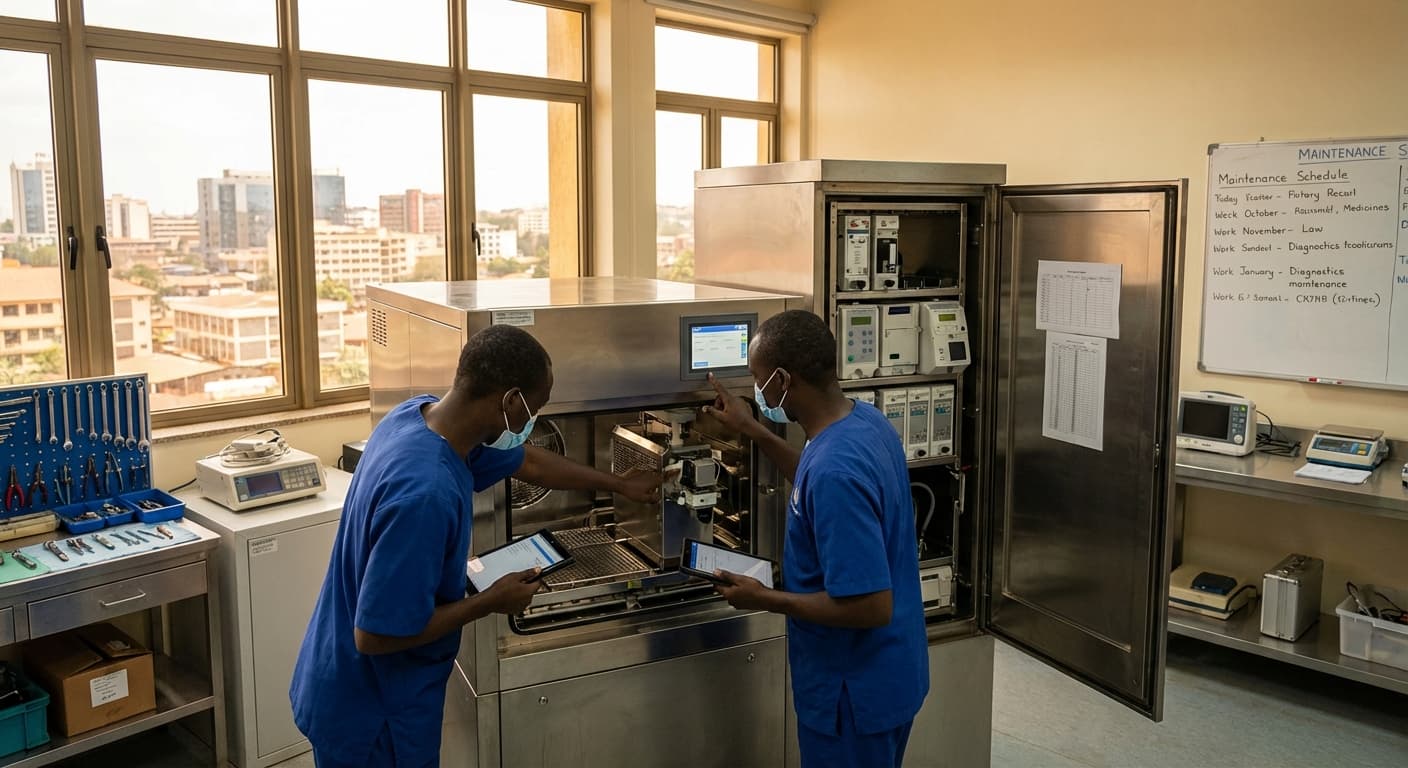
Total Cost of Ownership (TCO) & Lifecycle Budgeting Service in Togo
Engineering Excellence & Technical Support
Total Cost of Ownership (TCO) & Lifecycle Budgeting Service High-standard technical execution following OEM protocols and local regulatory frameworks.
Optimized Asset Performance & Predictive Maintenance
Leveraging advanced analytics and IoT integration, our TCO & Lifecycle Budgeting service in Togo identifies critical asset failure points and forecasts maintenance needs. This proactive approach minimizes downtime, extends asset lifespan, and significantly reduces unexpected repair costs, ensuring predictable operational expenditure.
Energy Efficiency & Sustainability Integration
We embed energy efficiency and sustainable practices directly into your lifecycle budgeting. By analyzing energy consumption patterns and recommending best-in-class, eco-friendly technologies and operational strategies, our service in Togo lowers long-term energy costs and contributes to your environmental, social, and governance (ESG) goals.
Risk Mitigation & Lifecycle Financial Resilience
Our comprehensive TCO analysis in Togo extends beyond initial purchase. We meticulously identify and quantify risks associated with regulatory changes, technological obsolescence, and market fluctuations. This allows for the development of robust, resilient lifecycle budgets that safeguard your organization against unforeseen financial shocks.
What Is Total Cost Of Ownership (Tco) & Lifecycle Budgeting Service In Togo?
Total Cost of Ownership (TCO) & Lifecycle Budgeting (LCB) services in Togo represent a comprehensive financial management discipline focused on quantifying and projecting all expenses associated with an asset, system, or project throughout its entire lifespan. TCO encompasses direct and indirect costs from acquisition through disposal, while LCB specifically addresses the budgetary implications of these costs over time. This service is crucial for strategic decision-making, risk mitigation, and optimizing resource allocation within the Togolese economic context.
| Who Needs TCO & LCB Services in Togo? | Typical Use Cases |
|---|---|
| Government Agencies & Public Sector Organizations: For infrastructure projects (roads, utilities, public buildings), fleet management (vehicles, machinery), and IT systems. Essential for public fund accountability and long-term service delivery planning. | Infrastructure Development: Evaluating the long-term costs of new roads, bridges, power plants, water treatment facilities, and telecommunication networks. Public Transportation: Assessing the TCO of acquiring and operating buses, trains, and other transportation assets. Government IT Procurement: Determining the true cost of ownership for enterprise software, hardware, and cloud services, including maintenance, upgrades, and training. Energy Sector: Analyzing the lifecycle costs of renewable energy installations (solar, wind) versus traditional power generation. Real Estate & Facility Management: Budgeting for the entire lifespan of public buildings, including construction, operation, maintenance, and eventual renovation or demolition. |
| Large Private Enterprises & Corporations: For significant capital investments in machinery, equipment, fleet vehicles, IT infrastructure, and real estate. Crucial for profitability and competitive advantage. | Industrial Asset Management: Calculating the TCO of manufacturing machinery, production lines, and heavy equipment to optimize replacement cycles and maintenance strategies. Fleet Management: Determining the most cost-effective vehicle acquisition, operation, maintenance, and disposal strategies for commercial fleets. IT Infrastructure Investments: Evaluating the long-term costs of data centers, servers, networking equipment, and software licenses. Real Estate Development & Management: Assessing the TCO of commercial buildings, factories, and logistics centers, including operational, maintenance, and energy costs. Supply Chain & Logistics: Optimizing the cost of warehousing, transportation assets, and related technologies. |
| Non-Governmental Organizations (NGOs) & International Development Agencies: For managing donor-funded assets, ensuring sustainability of projects, and demonstrating financial prudence. | Project Asset Management: Tracking the TCO of equipment and vehicles used in development projects (e.g., medical equipment, agricultural machinery) to ensure long-term operational viability. Sustainable Infrastructure: Evaluating the lifecycle costs of environmentally friendly infrastructure solutions funded by international aid. Programmatic Budgeting: Integrating LCB into program budgets to account for the long-term costs of assets required for ongoing operations. |
| Financial Institutions & Investors: For assessing the financial viability and risk associated with asset-heavy investments or lending to businesses with significant capital assets. | Project Finance: Evaluating the TCO of assets used in projects seeking financing to determine loan repayment capacity and profitability. Due Diligence: Conducting TCO assessments as part of the due diligence process for mergers, acquisitions, or investment opportunities. Risk Management: Identifying potential financial risks associated with the lifecycle costs of assets held by borrowers. |
What the Service Involves:
- TCO Analysis: Involves identifying, quantifying, and categorizing all costs incurred during an asset's life. This includes initial acquisition (purchase price, installation, commissioning), operational costs (energy consumption, maintenance, repairs, consumables, personnel), and end-of-life costs (decommissioning, disposal, recycling, site remediation).
- Lifecycle Budgeting: Develops detailed financial projections for each phase of an asset's lifecycle. This includes forecasting capital expenditures (CAPEX), operating expenditures (OPEX), and potential revenue streams or salvage value. It integrates TCO findings into long-term financial planning.
- Risk Assessment & Mitigation: Identifies potential cost overruns, performance degradation, and obsolescence risks within the lifecycle. Develops strategies to mitigate these risks through proactive maintenance, technology upgrades, or alternative sourcing.
- Scenario Planning & Sensitivity Analysis: Models the impact of various economic, technological, and operational factors on the overall TCO and LCB. This enables robust decision-making under uncertainty.
- Benchmarking & Performance Metrics: Establishes performance indicators to track actual costs against projected budgets and compare TCO with industry standards or alternative solutions.
- Reporting & Documentation: Generates comprehensive reports detailing TCO calculations, LCB forecasts, risk assessments, and recommended strategies for stakeholders.
- Data Collection & Validation: Establishes methodologies for accurate and consistent data collection across all lifecycle stages. This often involves integration with existing enterprise resource planning (ERP) systems or specialized asset management software.
Who Needs Total Cost Of Ownership (Tco) & Lifecycle Budgeting Service In Togo?
Organizations in Togo looking to optimize their investments in IT infrastructure, fleet management, construction projects, and operational equipment can significantly benefit from Total Cost of Ownership (TCO) and Lifecycle Budgeting services. These services provide a comprehensive financial roadmap, moving beyond initial purchase prices to encompass all expenses over an asset's lifespan, including acquisition, operation, maintenance, and disposal. This holistic approach leads to better decision-making, reduced hidden costs, improved financial predictability, and ultimately, enhanced profitability and sustainability.
| Customer Segment | Typical Assets/Investments | Key Benefits of TCO & Lifecycle Budgeting |
|---|---|---|
| Large Enterprises & Conglomerates | IT infrastructure (servers, software, networks), fleet vehicles, industrial machinery, office buildings | Optimized capital allocation, reduced operational expenses, improved asset utilization, enhanced strategic investment decisions |
| Government Ministries & Agencies | Public infrastructure (roads, utilities), IT systems, vehicles (police, public transport), defense equipment | Improved public fund management, long-term budget predictability, identification of cost-saving opportunities, enhanced accountability |
| International Organizations & NGOs | Programmatic assets (vehicles, equipment for development projects), office infrastructure, IT systems | Efficient use of donor funds, sustainable project planning, mitigation of unexpected costs, enhanced reporting and accountability |
| Financial Institutions | IT infrastructure, branch networks, ATMs, data centers, office equipment | Secure and cost-effective IT investments, optimized operational efficiency, improved risk management related to asset obsolescence |
| Telecommunications Companies | Network infrastructure (base stations, fiber optics), IT systems, vehicles for maintenance | Strategic network expansion planning, optimized operational costs, reliable service delivery through proactive maintenance budgeting |
| Mining & Extractive Industries | Heavy machinery (excavators, trucks), processing plants, exploration equipment, vehicles | Accurate budgeting for high-cost asset replacement, operational risk mitigation, optimized maintenance schedules, improved safety through well-maintained equipment |
| Manufacturing & Industrial Companies | Production machinery, automation systems, factory infrastructure, logistics equipment | Minimized downtime, optimized production costs, strategic equipment upgrade planning, enhanced competitiveness |
| Logistics & Transportation Providers | Trucks, vans, forklifts, warehouse equipment, IT systems for tracking and management | Reduced fuel and maintenance costs, optimized fleet size and utilization, improved route planning efficiency, predictable replacement cycles |
| Construction & Real Estate Developers | Construction equipment, project management software, office infrastructure | Accurate project cost forecasting, optimized equipment rental or purchase decisions, efficient resource allocation, improved profitability |
| Hospitality & Tourism Businesses | Hotel infrastructure (rooms, amenities), IT systems, vehicles (shuttles), kitchen equipment | Optimized guest experience through reliable infrastructure, predictable maintenance and replacement costs, efficient energy management budgeting |
Target Customers & Departments in Togo for TCO & Lifecycle Budgeting Services
- {"items":["Large Enterprises & Conglomerates","Government Ministries & Agencies","International Organizations & NGOs","Financial Institutions (Banks, Insurance Companies)","Telecommunications Companies","Mining & Extractive Industries","Manufacturing & Industrial Companies","Logistics & Transportation Providers","Construction & Real Estate Developers","Hospitality & Tourism Businesses"],"title":"Target Customers"}
- {"items":["Finance & Accounting Departments","Procurement & Purchasing Departments","IT Departments","Operations & Facilities Management","Fleet Management","Asset Management","Project Management Offices (PMOs)","Strategic Planning Departments","Risk Management Departments"],"title":"Key Departments Involved"}
Total Cost Of Ownership (Tco) & Lifecycle Budgeting Service Process In Togo
This document outlines the typical workflow for a Total Cost of Ownership (TCO) & Lifecycle Budgeting service process within Togo, from initial client inquiry to the final execution and reporting. This structured approach ensures comprehensive understanding, accurate budgeting, and informed decision-making for clients regarding their asset investments.
| Phase | Description | Key Activities | Deliverables/Outcomes | Togo-Specific Considerations |
|---|---|---|---|---|
| The client expresses interest in TCO & Lifecycle Budgeting services. This phase involves understanding their needs and assessing project feasibility. | Client contacts service provider. Initial meeting/call to discuss general needs. High-level overview of service benefits. Fee proposal discussion. | Understanding of client's core requirements. Preliminary project scope. Agreed-upon next steps and potential proposal. | Building trust and rapport with Togolese businesses. Understanding local business culture and communication styles. Initial assessment of client's familiarity with TCO concepts. |
| Detailed definition of the project's boundaries, assets to be included, and collection of all relevant cost data. | Detailed needs assessment interview. Identification of specific assets/projects for TCO analysis. Agreement on the project scope and objectives. Data request to the client (e.g., purchase price, operational costs, maintenance records, disposal plans). | Formalized Project Scope Document. Comprehensive list of required data. Data collection plan. | Navigating local data availability challenges. Potential need for on-site visits to verify asset conditions. Understanding local regulatory frameworks that might impact operational or disposal costs. |
| Constructing a detailed model that accounts for all direct and indirect costs over the lifecycle of the asset(s). | Defining the lifecycle period. Identifying all cost categories (acquisition, operation, maintenance, repair, upgrade, disposal). Assigning cost drivers and assumptions. Building the TCO spreadsheet or software model. | Functional TCO model. Clearly defined cost assumptions and drivers. | Adapting cost categories to common Togolese business operations. Incorporating local inflation rates and currency fluctuations. Considering the availability and cost of skilled labor for maintenance and repair. |
| Forecasting future costs based on the TCO model and integrating them into a comprehensive lifecycle budget. | Projecting future costs for each lifecycle stage. Incorporating discount rates for Net Present Value (NPV) calculations. Developing scenario analyses (e.g., best-case, worst-case). Estimating financing costs. | Detailed lifecycle budget. Financial projections over the asset's lifespan. NPV and other financial metrics. | Understanding local financing options and interest rates. Assessing the impact of potential political or economic instability on long-term projections. Considering government incentives or taxes related to asset ownership. |
| Analyzing the generated TCO and lifecycle budget data to identify key cost drivers, risks, and opportunities. | Interpreting TCO results. Identifying significant cost variances. Analyzing sensitivity to key assumptions. Quantifying risks and potential savings. Drafting the TCO & Lifecycle Budget Report. | Comprehensive TCO & Lifecycle Budget Report. Identification of critical cost factors. Risk assessment and mitigation strategies. | Ensuring the report is presented in a clear and accessible manner, considering the client's level of financial expertise. Highlighting cost-saving opportunities relevant to the Togolese market. |
| Communicating the findings of the TCO analysis and providing actionable recommendations to the client. | Presenting the TCO report to stakeholders. Explaining key findings and their implications. Providing specific, data-driven recommendations for asset acquisition, operation, and disposal. Facilitating Q&A. | Client understanding of TCO findings. Agreed-upon strategic recommendations. Decision support for asset management. | Tailoring the presentation style to be culturally appropriate and engaging for Togolese business leaders. Emphasizing practical implementation steps and potential ROI. |
| Assisting the client in putting the recommendations into practice. | Developing implementation plans. Assisting with procurement processes. Supporting operational changes. Training relevant personnel. | Successful implementation of recommendations. Improved asset management practices. | Understanding local procurement processes and regulatory requirements. Identifying local suppliers and service providers. Providing on-the-ground support and troubleshooting. |
| Periodically reviewing the TCO model and budget against actual performance and making necessary adjustments. | Tracking actual costs against budget. Assessing the accuracy of initial assumptions. Updating the TCO model with new data. Providing updated lifecycle budget forecasts. | Refined TCO model. Accurate ongoing lifecycle budgets. Continuous improvement in asset management. | Establishing a regular review cycle that aligns with Togolese business reporting cadences. Proactively addressing changes in the local economic or regulatory landscape that might impact asset costs. |
TCO & Lifecycle Budgeting Service Process Workflow in Togo
- Inquiry & Initial Consultation
- Scope Definition & Data Gathering
- TCO Model Development
- Lifecycle Budgeting & Financial Projections
- Analysis & Reporting
- Presentation & Recommendations
- Implementation Support (Optional)
- Post-Implementation Review & Updates
Total Cost Of Ownership (Tco) & Lifecycle Budgeting Service Cost In Togo
The Total Cost of Ownership (TCO) and Lifecycle Budgeting service costs in Togo are influenced by several factors, making precise pricing challenging without detailed project scope. These services are crucial for businesses to understand the true financial implications of an asset or project throughout its entire lifespan, from acquisition to disposal.
Key pricing factors in Togo include:
- Scope and Complexity of the Project/Asset: Larger, more intricate projects or assets with numerous components will naturally incur higher TCO and lifecycle budgeting costs. This includes the number of stages to be analyzed, data points to be considered, and the depth of the analysis required.
- Data Availability and Quality: The ease of accessing reliable data (historical costs, performance data, maintenance records, disposal values) significantly impacts the time and effort required for analysis. Poor data quality may necessitate more extensive research and validation, increasing costs.
- Expertise of the Service Provider: The experience, reputation, and specialization of the TCO and lifecycle budgeting consultant or firm play a vital role. Highly experienced professionals with a proven track record in Togo's specific economic and regulatory environment may command higher fees.
- Duration of the Lifecycle: The longer the projected lifecycle of an asset or project, the more detailed and complex the budgeting and forecasting will be, leading to higher service costs.
- Technology and Tools Utilized: While specialized TCO software can streamline the process, the cost of acquiring or licensing these tools, or the time spent by consultants manually building models, will be factored into the pricing.
- Regulatory and Compliance Requirements: Specific Togolese regulations or industry standards that need to be considered during the lifecycle analysis can add to the complexity and cost.
- Level of Detail and Reporting: The depth of analysis and the format/detail of the final report (e.g., executive summaries vs. in-depth technical reports) will influence the pricing.
- Geographic Location within Togo: While less of a primary driver for professional services, if on-site data collection or stakeholder consultations are required across different regions, travel and accommodation costs might be indirectly factored in.
| Service Component/Scope | Typical Pricing Range (XOF) | Notes |
|---|---|---|
| Initial Consultation & Scoping (per hour/day) | 25,000 - 75,000 XOF | For defining project objectives, scope, and initial data assessment. |
| Small-Scale Asset TCO Analysis (e.g., single vehicle, basic IT equipment) | 150,000 - 500,000 XOF | Covers acquisition, operation, maintenance, and disposal for a single asset over its lifecycle. Data gathering is relatively straightforward. |
| Medium-Scale Project TCO & Lifecycle Budgeting (e.0g., office building renovation, fleet of vehicles) | 500,000 - 2,000,000 XOF | More complex with multiple sub-components, varied operational costs, and longer lifespans. Requires more in-depth data analysis and modeling. |
| Large-Scale Enterprise/Infrastructure TCO & Lifecycle Budgeting (e.g., industrial plant, major construction project) | 2,000,000 - 10,000,000+ XOF | Highly complex, involving extensive data collection, scenario planning, risk assessment, and potentially specialized software. Pricing is often project-specific and can be significantly higher. |
| Data Collection & Validation (per day/project) | 30,000 - 100,000 XOF | If significant on-site work or external data sourcing is required. |
| Model Development & Customization (per project) | 100,000 - 750,000 XOF | Building bespoke TCO models based on client needs and data. |
| Risk Assessment & Sensitivity Analysis (per project) | 75,000 - 300,000 XOF | Analyzing potential financial impacts of unforeseen events. |
| Final Report & Presentation (per project) | 50,000 - 200,000 XOF | Includes detailed reports, executive summaries, and stakeholder presentations. |
Factors Influencing TCO & Lifecycle Budgeting Service Costs in Togo
- Scope and Complexity of the Project/Asset
- Data Availability and Quality
- Expertise of the Service Provider
- Duration of the Lifecycle
- Technology and Tools Utilized
- Regulatory and Compliance Requirements
- Level of Detail and Reporting
- Geographic Location within Togo
Affordable Total Cost Of Ownership (Tco) & Lifecycle Budgeting Service Options
Our Affordable Total Cost of Ownership (TCO) and Lifecycle Budgeting services are designed to provide you with comprehensive insights into the true cost of your assets, from acquisition to disposal. We offer flexible value bundles and implement proven cost-saving strategies to ensure your long-term financial health. Understanding and managing TCO is crucial for making informed procurement decisions, optimizing operational efficiency, and minimizing unexpected expenses. Our services empower you to budget effectively across the entire lifecycle of your investments, leading to significant savings and improved financial predictability.
| Cost-Saving Strategy | Description | TCO/Lifecycle Impact |
|---|---|---|
| Predictive Maintenance | Utilizing data analytics to anticipate equipment failures and schedule maintenance proactively. | Reduces unexpected repair costs, minimizes downtime, and extends asset lifespan. |
| Energy Efficiency Upgrades | Investing in energy-efficient equipment and implementing energy-saving operational practices. | Significantly lowers utility costs throughout the asset's operational life. |
| Standardization of Assets | Consolidating to a limited range of equipment models for easier maintenance, training, and parts management. | Reduces inventory costs, simplifies training, and streamlines repair processes. |
| Extended Warranties & Service Agreements | Negotiating favorable terms for extended coverage to mitigate future repair expenses. | Provides cost certainty and protection against unforeseen repair bills. |
| Optimized Procurement | Leveraging bulk purchasing, competitive bidding, and strategic supplier relationships. | Lowers initial acquisition costs and ensures competitive pricing for ongoing consumables. |
| Responsible Disposal & Recycling | Planning for environmentally sound and cost-effective asset retirement. | Minimizes disposal fees and potential environmental fines, while potentially recovering residual value. |
Our Value Bundles
- Basic TCO Assessment: Includes initial asset inventory, acquisition cost analysis, and projected operational expenses for a defined period.
- Standard TCO & Lifecycle Budgeting: Expands on the Basic package with detailed operational cost breakdown, maintenance and repair forecasting, end-of-life disposal cost estimation, and basic risk assessment.
- Premium TCO Optimization & Strategic Budgeting: Our most comprehensive offering, encompassing full lifecycle analysis, scenario planning, identification of cost-saving opportunities, recommendation of maintenance schedules, and development of a multi-year strategic budget aligned with organizational goals.
Verified Providers In Togo
In Togo, ensuring access to quality healthcare is paramount. Choosing verified healthcare providers is the most responsible approach for individuals and families. This is where Franance Health distinguishes itself. Franance Health is not just a platform; it's a commitment to excellence in healthcare delivery. Their rigorous vetting process and dedication to patient well-being make their credentialed providers the unequivocally best choice in Togo. Franance Health focuses on several key areas to guarantee the competence and ethical practice of their network, offering peace of mind to those seeking medical attention.
| Credential Aspect | Franance Health's Standard | Benefit to Patients |
|---|---|---|
| Licensing and Accreditation | Mandatory verification of all official medical licenses and accreditations. | Ensures providers are legally qualified to practice and meet national healthcare standards. |
| Educational Background | Review of medical degrees, diplomas, and postgraduate qualifications. | Confirms a strong foundational understanding of medical science and practice. |
| Specialty Training | Verification of specialized training and certifications in relevant medical fields. | Guarantees that practitioners have the expertise for specific health conditions and treatments. |
| Work History and References | Assessment of past professional experience and, where applicable, professional references. | Provides insight into practical application of knowledge and professional conduct. |
| Commitment to Continuing Education | Encouragement or requirement for ongoing professional development. | Ensures providers stay updated with the latest medical advancements and best practices. |
Why Franance Health Credentials Represent the Best Choice:
- Rigorous Verification of Medical Licenses and Certifications: Franance Health ensures that all listed providers hold valid and current medical licenses and certifications recognized within Togo.
- Emphasis on Professional Experience and Specialization: Beyond basic credentials, Franance Health assesses the practical experience and specific specializations of their healthcare professionals to match patients with the most suitable experts.
- Commitment to Ethical Practices and Patient-Centered Care: Franance Health actively screens for providers who demonstrate a strong ethical code and prioritize patient comfort, clear communication, and informed decision-making.
- Ongoing Professional Development and Quality Assurance: The platform encourages and may even require continuous learning and adherence to evolving medical standards, ensuring their network remains at the forefront of healthcare.
- Accessibility and Transparency: Franance Health strives to make finding verified providers easy and transparent, providing clear information about each practitioner's qualifications and areas of expertise.
- Patient Feedback Integration: Mechanisms for patient feedback are often incorporated to maintain high standards and address any potential concerns promptly.
Scope Of Work For Total Cost Of Ownership (Tco) & Lifecycle Budgeting Service
This Scope of Work (SOW) outlines the services to be provided for a Total Cost of Ownership (TCO) and Lifecycle Budgeting analysis. The objective is to establish a comprehensive understanding of all costs associated with an asset, system, or project throughout its entire lifespan, from acquisition to disposal. This includes identifying, quantifying, and forecasting all direct and indirect costs, as well as potential revenue streams or savings. The service will deliver detailed reports, budget models, and recommendations for optimizing long-term financial performance.
| Technical Deliverable | Description | Standard Specification/Format |
|---|---|---|
| TCO Analysis Report | A comprehensive document detailing the identified cost categories, assumptions, methodologies, and the calculated TCO for the subject asset/system/project over its lifecycle. Includes an executive summary and detailed breakdowns. | PDF, Word Document. Minimum 20 pages excluding appendices. Includes executive summary, methodology, detailed cost breakdown, sensitivity analysis, and recommendations. |
| Lifecycle Budgeting Model | A dynamic financial model that projects all lifecycle costs and potential savings over a defined period. This model will allow for scenario analysis and 'what-if' planning. | Microsoft Excel (.xlsx) or equivalent spreadsheet software. Includes clear tabs for assumptions, cost categories (OPEX, CAPEX, decommissioning), revenue/savings, and scenario analysis. Must be auditable and easily updatable. |
| Cost Driver Identification Matrix | A table or matrix outlining the key factors that influence costs throughout the lifecycle, along with their potential impact and how they are being tracked or managed. | Excel Spreadsheet or dedicated database format. Columns may include: Cost Driver, Description, Impact on TCO, Quantification Method, Current Status, Mitigation Strategy. |
| Risk Register (Lifecycle Costing Perspective) | A document identifying potential risks that could impact the projected lifecycle costs, along with their probability, impact, and proposed mitigation strategies. | Excel Spreadsheet or Project Management Software export. Columns may include: Risk ID, Risk Description, Probability, Impact, Risk Score, Mitigation Strategy, Owner, Status. |
| Presentation Deck | A visual presentation summarizing the TCO and lifecycle budgeting findings, key insights, and strategic recommendations for stakeholders. | Microsoft PowerPoint (.pptx) or equivalent. Minimum 15 slides. Includes executive summary, methodology overview, key findings, actionable recommendations, and Q&A section. |
| Data Validation Report | Documentation of the process undertaken to collect, clean, and validate all input data used in the TCO and lifecycle budgeting analysis. | Word Document or PDF. Details data sources, validation methods, identified discrepancies, and their resolution. |
| Benchmarking Report | A comparative analysis of the subject asset/system/project's lifecycle costs against industry peers or established best practices. | PDF or Word Document. Includes identified benchmarks, comparison metrics, and insights on areas for improvement. |
| Optimization Recommendations Report | A focused report detailing specific strategies and actions recommended to reduce TCO and improve lifecycle financial performance. | PDF or Word Document. Prioritized list of recommendations with estimated cost savings/impact and implementation considerations. |
Key Services Provided
- TCO Framework Development
- Lifecycle Costing Analysis
- Data Collection and Validation
- Cost Modeling and Forecasting
- Risk Assessment and Mitigation
- Benchmarking and Best Practice Identification
- Optimization Strategies and Recommendations
- Reporting and Presentation
Service Level Agreement For Total Cost Of Ownership (Tco) & Lifecycle Budgeting Service
This Service Level Agreement (SLA) outlines the guaranteed response times and uptime for the Total Cost of Ownership (TCO) & Lifecycle Budgeting Service. This service provides clients with comprehensive tools and support for analyzing, predicting, and managing the full cost implications of their assets and projects over their entire lifecycle. The objective is to ensure timely access to critical data and support for informed financial and strategic decision-making.
| Service Component | Severity Level | Definition | Response Time Guarantee | Resolution Target | Uptime Guarantee |
|---|---|---|---|---|---|
| TCO Calculation Engine | Critical (Service Unavailable) | The TCO Calculation Engine is inaccessible or completely non-functional, preventing all users from accessing its core features. | 15 minutes | 4 hours | 99.9% |
| TCO Calculation Engine | High (Major Functionality Impaired) | A significant portion of the TCO Calculation Engine's functionality is unavailable or severely degraded, impacting core calculations or data access for multiple users. | 30 minutes | 8 hours | 99.9% |
| TCO Calculation Engine | Medium (Minor Functionality Impaired) | A non-critical feature or a limited aspect of the TCO Calculation Engine is experiencing issues, but core functionality remains accessible. | 2 hours | 24 hours | 99.9% |
| TCO Calculation Engine | Low (Inquiry/General Question) | A general question or request for information regarding the TCO Calculation Engine's features or best practices. | 4 business hours | N/A (informational) | N/A |
| Lifecycle Budgeting Forecasting Module | Critical (Service Unavailable) | The Lifecycle Budgeting Forecasting Module is inaccessible or completely non-functional, preventing all users from accessing its core features. | 15 minutes | 4 hours | 99.9% |
| Lifecycle Budgeting Forecasting Module | High (Major Functionality Impaired) | A significant portion of the Lifecycle Budgeting Forecasting Module's functionality is unavailable or severely degraded, impacting core forecasting or budgeting for multiple users. | 30 minutes | 8 hours | 99.9% |
| Lifecycle Budgeting Forecasting Module | Medium (Minor Functionality Impaired) | A non-critical feature or a limited aspect of the Lifecycle Budgeting Forecasting Module is experiencing issues, but core forecasting remains accessible. | 2 hours | 24 hours | 99.9% |
| Lifecycle Budgeting Forecasting Module | Low (Inquiry/General Question) | A general question or request for information regarding the Lifecycle Budgeting Forecasting Module's features or best practices. | 4 business hours | N/A (informational) | N/A |
| Data Integration and Import Tools | Critical (Service Unavailable) | The ability to integrate or import data into the TCO/Lifecycle platform is completely blocked for all users. | 30 minutes | 6 hours | 99.5% (due to potential external dependencies) |
| Data Integration and Import Tools | High (Major Functionality Impaired) | A significant portion of data integration or import processes are failing or severely degraded. | 1 hour | 12 hours | 99.5% |
| Reporting and Analytics Dashboard | Critical (Service Unavailable) | The Reporting and Analytics Dashboard is inaccessible or completely non-functional. | 30 minutes | 4 hours | 99.9% |
| Reporting and Analytics Dashboard | High (Major Functionality Impaired) | Key reports or analytical functions are not generating correctly or are severely delayed. | 1 hour | 8 hours | 99.9% |
| Technical Support for Platform Usage | Standard Inquiry | Questions regarding platform features, how-to guides, and general operational queries. | 8 business hours | N/A (informational) | N/A |
| Technical Support for Platform Usage | Issue Resolution | Assistance required for resolving platform-related errors or unexpected behavior. | 4 business hours | 24 business hours | N/A |
Service Components Covered
- TCO Calculation Engine (web-based platform)
- Lifecycle Budgeting Forecasting Module (web-based platform)
- Data Integration and Import Tools
- Reporting and Analytics Dashboard
- Technical Support for Platform Usage
- Consultative Support for TCO/Lifecycle Modeling (as per contract)
Frequently Asked Questions

Ready when you are
Let's scope your Total Cost of Ownership (TCO) & Lifecycle Budgeting Service in Togo project in Togo.

Scaling healthcare logistics and technical systems across the entire continent.